How to read water for trout fishing
Have you ever stood on the bank of a beautiful Oregon river, staring at the water, and felt that pang of frustration because you just know there are trout in there, but you have no idea where they're hiding? It's a common feeling, and it’s truly disheartening to cast blindly, hoping for a bite, only to come up empty-handed. This guide is all about helping you overcome that, teaching you the art of "reading water" so you can pinpoint those elusive trout and make your fishing trips far more successful and enjoyable.
What is "Reading Water" and Why It's Crucial for Trout Fishing?
Reading water isn't some mystical ability reserved for seasoned guides; it's a skill, much like casting or knot tying, that anyone can learn and improve upon. At its heart, reading water means observing the river or lake environment – the currents, the ripples, the structures, the depth changes – and interpreting what these visual cues tell you about where a trout might be holding. Think of it as detective work, where every glint of sun on a seam of current or a subtle change in water color is a clue.
The Frustration of Blind Casting
There's nothing quite as deflating as making cast after cast into seemingly good water, only to be met with silence. You might feel like you're just randomly throwing your line, wasting precious fishing time and energy. This "blind casting" approach is often a result of not knowing what to look for, or simply hoping that sheer luck will lead a fish to your fly or lure. It’s an inefficient and often unrewarding way to fish. The goal of reading water is to eliminate much of that guesswork, allowing you to cast with purpose and confidence, knowing you're presenting your offering to a high-probability spot.
More Than Just a "Spot"
When we talk about where trout "hold," it's not just about a single, static spot. Trout are constantly seeking prime real estate: a place where they can conserve energy while still having easy access to food. This balance is key to their survival. A good holding lie offers protection from predators, a break from strong currents, and a steady flow of oxygenated water, all while being adjacent to a food source. Understanding this dynamic – that trout are strategic and opportunistic – transforms your approach from merely fishing in the water to actively fishing to the fish. It's about understanding their world, their needs, and their daily routines based on what the water reveals.
Key Features to Look For: Trout Habitats and Holding Water
Trout are creatures of habit and efficiency. They're not just scattered randomly throughout a body of water; they gravitate towards specific types of environments that meet their needs for food, safety, and comfort. Learning to identify these key features is the bedrock of reading water. It's like knowing the prime neighborhoods in a city—you wouldn't just knock on any door; you'd go to the areas where people want to live.
Structure and Cover: The Trout's Safe Haven
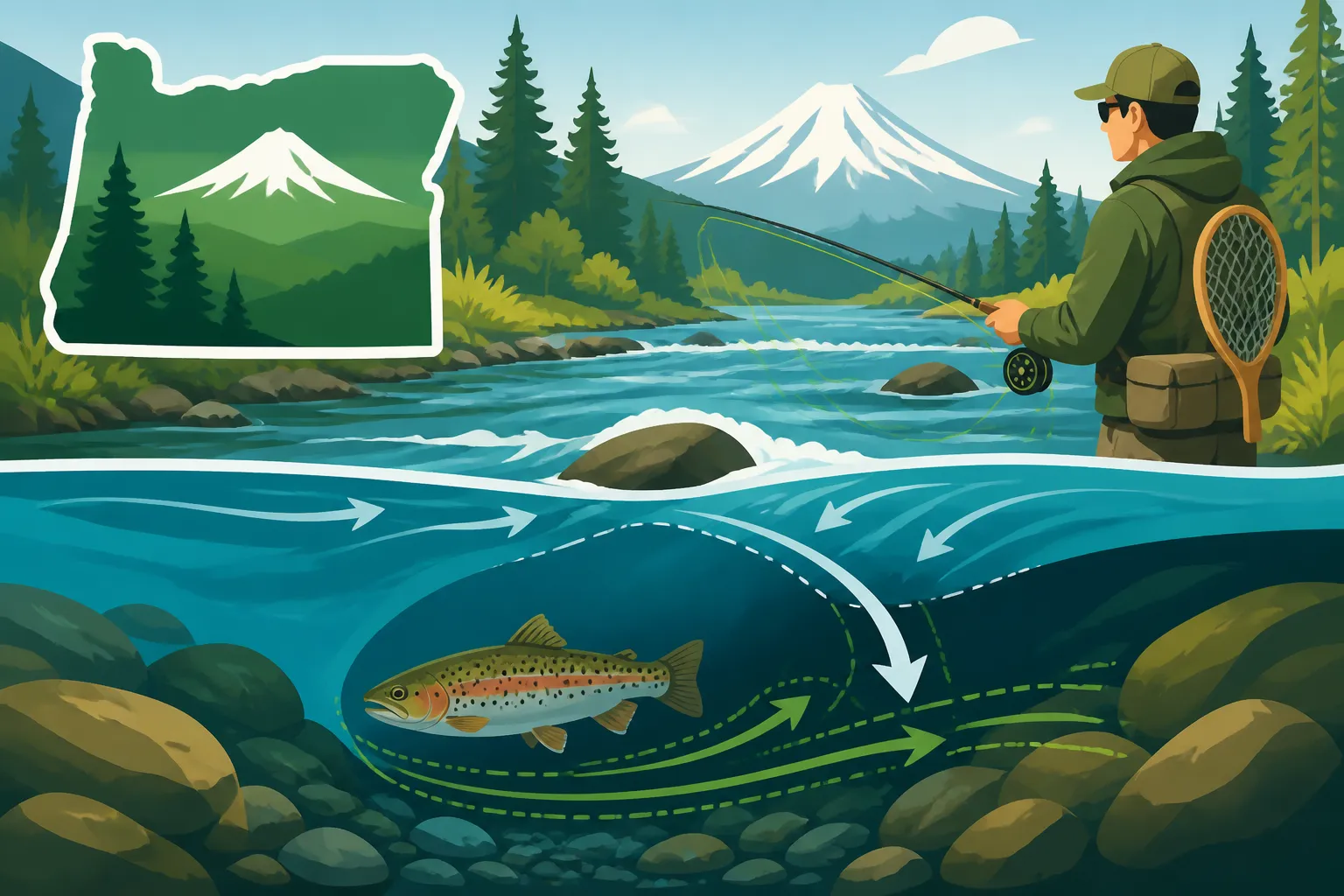
Just like we seek shelter from the elements, trout look for cover. This could be anything from fallen logs and submerged branches (often called "woody debris") to large rocks, undercut banks, or even deep pools. This structure provides them with a sense of security from overhead predators like eagles and ospreys, and from larger fish. Moreover, these features disrupt the current, creating slower water on the downstream side where a trout can rest without expending too much energy.
Imagine fishing a stretch of the Deschutes River Fishing Guide. You're looking for a large boulder in the middle of a riffle. The swift current rushes over and around it, but right behind that rock is a calm pocket of water. That's a perfect lie for a trout. They can sit there comfortably, letting the current deliver insects and small fish to them without having to fight the main flow. Similarly, an undercut bank on a slower river like parts of the Willamette River Fishing Guide offers a dark, shaded hideaway during bright conditions, where trout can feel safe while still being close to drifting food. Don't overlook these often-obvious hiding spots; they're fish magnets.
Current Seams and Eddies: The Food Delivery System
Current is arguably the most important factor in a trout's life, as it dictates food delivery. Trout position themselves in "feeding lanes" where the current brings them sustenance. A current seam is where two different currents meet, or where a fast current brushes against a slower one. These seams act like conveyor belts, concentrating insects, nymphs, and other edibles. Trout will often sit just inside the slower water, right next to the fast current, darting out to grab a meal as it passes by.
Eddies are circular currents that form behind obstructions or in deeper pockets, creating a swirling calm. These are often prime feeding grounds, as food gets trapped in the eddy's rotation, giving trout multiple opportunities to strike. Picture a bend in a creek where the main flow hugs the outside bank, but an eddy forms on the inside bend. Fish will stack up in that eddy, waiting. Learning to spot these subtle differences in water speed and direction is critical. It’s not about casting into the fastest water, but casting into the edge of it, or the slightly calmer water adjacent to it.
Depth and Subsurface Contours: Hidden Highways
While much of reading water focuses on surface cues, what lies beneath the surface is just as important. The depth of the water and the contours of the riverbed or lake bottom significantly influence where trout reside. Deep pools offer thermal refuge during hot summer days and protection during colder periods, as water temperature is more stable at depth. Drop-offs, shelves, and humps create natural current breaks and ambush points for predatory trout.
Consider a lake like Wallowa Lake Fishing Guide. While surface activity might be visible, the majority of trout and kokanee salmon will be holding at specific depths, often near submerged features or where the lake bottom drops off sharply. Using a depth finder can reveal these hidden highways. Even in rivers, a sudden change from a shallow riffle to a deep pool will almost always hold fish at the transition point. Trout often travel and feed along these subsurface contours, using them as highways. They prefer areas where they can quickly move into deeper, safer water if threatened, or easily access shallower feeding zones.
Decoding Current: Where Trout Conserve Energy
Understanding current is fundamental to trout fishing. It's not just about how fast the water is moving, but how that movement interacts with the riverbed and bankside features. Trout, especially larger ones, are incredibly efficient. They won't fight a strong current if they don't have to; they'll find places to rest and ambush food.
Understanding Current Speed and Its Impact
Different current speeds dictate different trout behaviors. Fast, turbulent water, often found in "riffles" or "runs," is highly oxygenated and often rich in insect life. However, maintaining position in such water requires significant energy. Therefore, trout in these areas will seek out subtle breaks: behind rocks, in small depressions, or along the edges where the current softens. They dart out to grab food and then quickly retreat to their resting spot.
Slower, deeper water, typically found in "pools," offers a less strenuous environment. Trout here might cruise more openly, but they still prefer the edges, or areas with submerged structure. The key is to look for transitions – where fast water meets slow, where a smooth glide turns into a broken riffle, or where the current changes direction around an obstacle. These dynamic zones are where the most active feeding opportunities arise for trout.
Finding Soft Water in Fast Flow
This is perhaps the most critical aspect of reading current: identifying the "soft water" pockets within seemingly aggressive flows. A boulder, a fallen tree, an abrupt change in the bank – all these create micro-eddies and current shadows where a trout can hold comfortably. Imagine fishing a powerful Oregon stream during a Winter Steelhead Run Timing in Oregon. Steelhead, while robust, will still conserve energy. They won't be out in the middle of the raging torrent; they'll be tucked behind large structures, along the inside bend of a curve, or in the calmer water at the tail-out of a deep pool.
These soft water areas are where trout spend most of their time, waiting for food to drift past. Your job is to accurately place your fly or lure into these pockets and allow it to drift naturally, mimicking the food sources that the current delivers. This often means casting upstream of the target, letting your offering sink or drift into the zone, and maintaining a drag-free presentation for as long as possible. Sometimes, the soft water is a mere foot wide, but it's all a trout needs.
Oxygen and Temperature: Silent Factors
Beyond simply speed, current also plays a crucial role in delivering oxygen and regulating water temperature. Trout, especially the various Oregon Trout Species Guide like Rainbows and Cutthroats, thrive in cold, well-oxygenated water. Fast-moving water aerates itself, which is why riffles and rapids are often so productive, particularly in warmer months.
Conversely, during periods of high temperatures, trout will seek deeper, cooler pools or areas where cold tributary streams enter the main river. Even subtle springs or seeps can create tiny thermal refuges. Paying attention to these often-invisible factors, especially as they relate to current, can unlock otherwise unproductive water. If you're fishing on a scorching summer day, you might find more success concentrating on the deepest, shadiest pools or spots where cold water is entering the river, as highlighted in guides like Oregon Fishing Seasons Explained.
Seasonal and Environmental Influences on Trout Lies
Trout aren't static; their preferred holding lies change dramatically with the seasons and immediate environmental conditions. A spot that was hot in spring might be barren in summer, and vice-versa. Understanding these shifts helps you adjust your water reading skills throughout the year.
Spring and Runoff Conditions
Spring in Oregon often brings increased water flows due to snowmelt and rain. Rivers swell, become colder, and clarity can decrease. During these "runoff" periods, trout will typically move out of the main, fast currents and seek refuge closer to the banks, in slower side channels, behind larger structures, or in eddies where the current is less powerful. The water closer to the banks is usually slower, slightly warmer, and provides better visibility for feeding. It's also often where terrestrial insects like worms and drowned bugs are washed into the river. When rivers are roaring, look for seams where the main current barely touches the bank, or any noticeable backwater.
Summer's Heat and Low Flows
Summer brings warmer temperatures and often lower, clearer water, especially in many of Oregon's pristine rivers and streams. In these conditions, trout become more cautious. They'll seek deeper pools, shady spots under overhanging vegetation, or areas with cold subsurface springs. Early mornings and late evenings become prime feeding times as water temperatures are cooler and light levels are lower. During the bright, hot midday, they'll be hunkered down, conserving energy in their cool, dark refuges. This is when deep presentations, mimicking nymphs or sculpins, can be most effective. Understanding Oregon Trout Fishing Techniques for specific seasons is critical here.
Fall's Bounty and Winter's Chill
Fall can be an incredible time for trout fishing. Water temperatures become ideal, and trout are often actively feeding to bulk up for winter. They can be found in a wider variety of lies, including riffles and runs, as insect hatches can be prolific. As winter sets in, water temperatures drop significantly, and trout metabolism slows down. They'll move into the deepest, slowest pools, often congregating in larger numbers to conserve energy. Bites can be subtle, and presentations need to be slow and deep. This is where patience truly pays off, and understanding patterns for specific species, perhaps after reviewing the Oregon Fishing Regulations Explained, becomes even more valuable.
Light, Weather, and Water Clarity
Beyond the seasons, daily conditions also play a huge role. Bright sunlight pushes trout into deeper water or shaded areas, making them less visible and more cautious. Overcast days or periods of light rain can encourage trout to move into shallower, more exposed feeding lies. Water clarity is another major factor. In murky water, trout will rely more on scent and vibrations, often moving closer to the bottom or the banks where food concentrates. In crystal clear water, they'll be incredibly spooky, requiring longer casts, stealthy approaches, and precise presentations.
Practical Tips for On-the-Water Application
Alright, you've got the theory down. Now, how do you actually put this into practice when you're standing by the water, eager to cast? It's about observation, patience, and a bit of trial and error.
Start High, Observe Low
One of the best pieces of advice for reading water is to approach a stretch of river from downstream and observe the water ahead of you before you even make a cast. Or, if approaching from above, stand back and observe from a distance. Get up high on a bank if possible. Look for subtle movements: dimples on the surface from rising trout, the flash of a fish turning, or even just the subtle movement of a current seam. Take five or ten minutes to just watch. Where is the current slowest? Where are the dark spots that indicate depth? Are there any shadows from trees or banks?
Identify the most promising areas before you put your waders in the water. Remember, once you step into the river, you're disturbing the environment. The more you can learn from a distance, the better your chances. This "start high, observe low" strategy also applies to individual features. When you see a large rock, look behind it and to the sides for those softer water pockets. You're not just looking at the obstacle itself, but how it interacts with the water around it.
Practice Makes Perfect (and Patience)
Reading water is a skill that improves with every single outing. Don't expect to be an expert on your first try. Go out and actively practice identifying different types of water, even if you're not fishing. Visit various Best Places to Fish in Oregon and simply observe the currents, the depths, and the structures. Take mental notes of where you think a trout would hold, and then try to confirm it with a cast.
Patience is your best friend here. Don't rush your casts. Instead, take your time, analyze the water in front of you, and choose your target wisely. If your first few casts into a promising spot don't yield results, don't immediately move on. Try changing your fly or lure, or adjusting your depth. Sometimes, a trout just needs a slightly different presentation. It’s a bit like a chess game – thinking a few moves ahead about where the fish will be and how your presentation will reach it. For those just starting out, there are many excellent resources on Oregon Fishing Techniques for Beginners that can help lay a solid foundation.
Using Technology and Local Knowledge
While your eyes are your primary tools, modern technology can certainly assist. Portable fish finders are invaluable for identifying depth changes and submerged structures in larger rivers or lakes. Even a simple pair of polarized sunglasses can dramatically improve your ability to see beneath the surface glare, revealing rocks, logs, and even trout themselves. You can find excellent options for such gear on platforms like Amazon, which offers a wide array of polarized eyewear and compact depth sounders.
Don't underestimate the power of local knowledge either. Talk to anglers at bait shops, consult online fishing forums for specific areas like the Sandy River Fishing Guide, or hire an Oregon Fishing Guide Services for a day. They often have years of experience reading the specific waters you're targeting and can point out nuances you might miss. While you're there, grab some new leaders or a fly box from Amazon for your next trip, it never hurts to be prepared! And remember, knowing which Best Bait for Oregon Trout Fishing or Best Dry Fly Patterns for Oregon Trout to use is only half the battle; knowing where to present them is the other.
A good angler isn't just someone who can cast far; it's someone who understands the water they're fishing and can anticipate where the fish will be. Reading water gives you that edge, turning frustration into fulfillment, and blind casting into targeted, confident angling.
| Water Feature | What it Looks Like | What it Indicates for Trout | Recommended Approach |
|---|---|---|---|
| Current Seam | Line where fast and slow water meet, often with foam | Trout sit in slow water, dart into fast to feed. | Cast into slow water, drift into seam. |
| Eddy / Backwater | Swirling, calm water behind obstruction or in bend | Food collects here, less energy needed for trout. | Cast into the eddy, let lure/fly circulate naturally. |
| Undercut Bank | River bank eroded underneath, creating a overhang | Excellent cover from predators, shade, and current break. | Cast tight to the bank, let lure/fly drift under the overhang. |
| Submerged Boulder/Log | Visible or barely visible dark shape under surface | Current break directly behind, ambush point for food. | Cast upstream of obstruction, drift past the downstream side. |
| Riffle/Shallow Run | Fast, turbulent, oxygenated water, often with bubbles | Active feeding lanes, trout hide in small depressions/breaks. | Use weighted flies/lures to get down quickly, short drifts. |
| Deep Pool | Dark, slow-moving, calm surface | Refuge from heat/cold, larger trout, often near structure. | Fish deep and slow, especially in summer or winter. |
| Pocket Water | Small, calm pockets between rocks in fast current | Prime resting and feeding spots in turbulent areas. | Precise, short casts into each pocket, quick retrieve/drift. |
Disclaimer
This article is for general informational purposes only and does not constitute professional advice. Laws, prices and regulations vary by location and change over time. Consult a qualified professional for guidance on your specific situation.