How to catch surfperch from the beach
There’s nothing quite like the salty air, the roar of the ocean, and the thrill of feeling a tug on your line right from the sandy Oregon coast. But for many, especially those new to saltwater fishing, the idea of successfully catching fish from the vast expanse of the beach can feel pretty daunting. You might wonder where to even begin, what gear you need, or how to read those intimidating waves. This comprehensive guide is here to demystify surfperch fishing from the beach, giving you all the practical, real-world advice you need to enjoy a fantastic day of angling and hopefully, bring home some delicious fish.
Understanding Oregon Surfperch: Your Beachside Target
When you're standing on an Oregon beach, staring out at the seemingly endless Pacific, it's easy to assume there's not much going on right under the waves. But trust me, those sandy shallows are teeming with life, and one of the most accessible and fun targets is the humble, yet feisty, surfperch. These aren't your typical lake dwellers; they're perfectly adapted to life in the turbulent surf.
Common Species on the Oregon Coast
While there are several species of surfperch, two stand out as the most common and sought-after on the Oregon coast:
- Redtail Surfperch: These are often the stars of the show for Oregon surf anglers. Easily identified by their reddish fins and often a faint reddish tint on their tails, redtails are chunky, strong fighters that can grow to a respectable size, sometimes over a pound! They love to hang out in the turbulent white water, feeding on invertebrates stirred up by the waves. Catching a nice Redtail Surfperch is a pure joy.
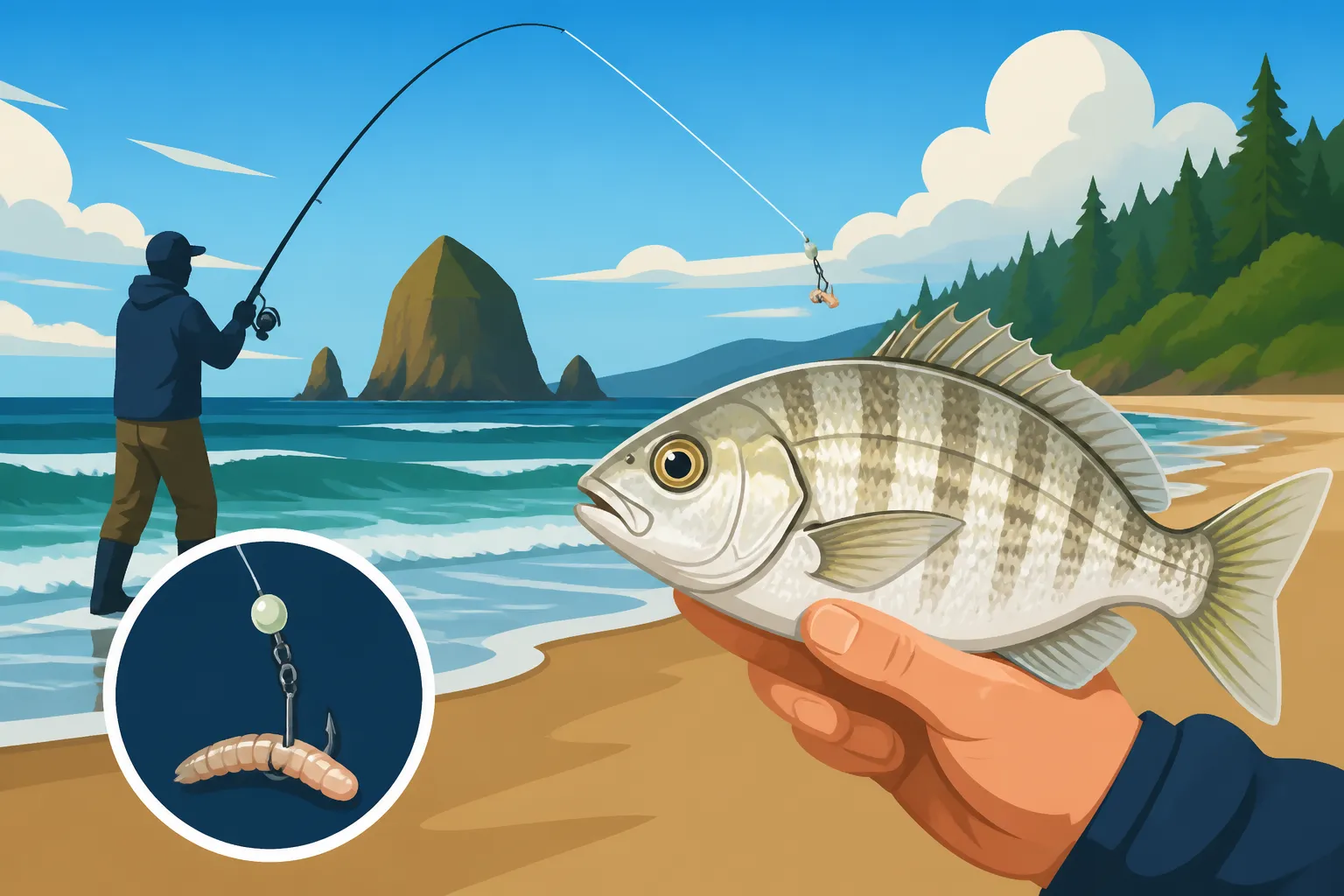
- Barred Surfperch: Though perhaps more commonly associated with California beaches, barred surfperch do make an appearance in Oregon, particularly in the southern stretches. They get their name from the distinct vertical bars along their sides. They have a similar diet and habitat preference to redtails, making them another common catch for beach anglers. You might also encounter smaller species like Silver Surfperch or Walleye Surfperch, especially if you're fishing near jetties or rocky areas, but Redtails are definitely the main event for pure sandy beach action.
Their Habits and Preferred Habitat in the Surf Zone
Surfperch are perfectly designed for their environment. They live right in the "surf zone" – that area where the waves are constantly breaking and retreating. This isn't just a random preference; it's where their food source is most abundant.
They are opportunistic feeders, constantly grubbing for small crustaceans, marine worms, sand crabs, and other tiny creatures that get dislodged and exposed by the relentless movement of the ocean. Imagine walking along the beach after a wave has pulled back, and you see those little "V" marks or tiny bubbles in the sand – those are often signs of sand crabs or other invertebrates, exactly what surfperch are hunting.
Their preferred spots are where food collects, which means you'll find them near:
- Troughs: These are deeper areas running parallel to the beach, often between the shore and a sandbar. Waves break, push water over a sandbar, and then the water funnels back out through these troughs, creating a current that concentrates food.
- Rip Currents: While these can be dangerous for swimmers, for surfperch, a mild rip current is like a conveyor belt of food, pulling delicious morsels out from the shallows.
- Structure: Anything that breaks up the uniform sandy bottom, even subtle changes, can hold fish. This might be a rock outcrop, a log submerged by the tides, or even just a slightly deeper pocket.
- "Cuts" or "Gutters": These are areas where waves aren't breaking as consistently, creating a slightly calmer channel where fish can hold and ambush food.
Understanding these habits is key. You're not just casting blindly into the ocean; you're looking for where these fish are likely to be foraging. It's a bit like a treasure hunt, and when you start to "read" the water, it becomes incredibly rewarding.
Essential Gear for Successful Oregon Surfperch Fishing
One of the best things about surfperch fishing from the beach is that you don't need a boat, a ton of expensive gear, or highly specialized knowledge to get started. It's a relatively simple setup, which makes it perfect for beginners or anyone looking for a relaxing day by the water. However, having the right basic components will make a world of difference.
Rod and Reel Selection for the Surf
For surfperch, you need a setup that can handle casting a fair distance and standing up to the corrosive saltwater environment.
- The Rod: Look for a spinning rod between 8 and 10 feet long. Some anglers prefer even longer, up to 12 feet, especially if they need to cast over a prominent outer sandbar, but for most Oregon beaches, 9 feet is a sweet spot. The action should be medium to medium-heavy, offering enough backbone to cast weighted rigs, yet sensitive enough to feel the often subtle bites of a surfperch in the waves. A fast action tip is a bonus for detecting those taps. Graphite or composite rods are popular for their sensitivity and lighter weight.
- The Reel: A saltwater-specific spinning reel in the 3000 to 5000 size range is ideal. It needs to be durable, resistant to corrosion from salt spray and occasional dunkings, and have a smooth drag system. While you don't need a huge amount of line capacity for surfperch, having enough to make a good cast and fight a decent fish is important. Many excellent options are available from brands like Penn or Shimano, and you can find a wide variety of these items on platforms like Amazon.
Line, Terminal Tackle, and Essential Accessories
This is where the rubber meets the road – or rather, where your bait meets the fish.
- Fishing Line: I highly recommend using braided line for your main line, typically 15 to 20 lb test. Braid offers incredible sensitivity, minimal stretch, and excellent casting distance. Plus, its thinner diameter means less drag in the current. Always use a leader with braided line, as braid can be visible to fish and doesn't have much abrasion resistance if rubbed against sand or shell. A fluorocarbon leader of 12 to 15 lb test, about 2-3 feet long, is perfect. Fluorocarbon is nearly invisible underwater and is more abrasion-resistant.
- Hooks: Size 2 or 4 bait holder hooks are generally good. Some anglers prefer Kahle hooks or small octopus hooks. The key is to match the hook size to your bait and the mouth size of the surfperch. You don't want anything too big that a perch can't get its mouth around.
- Weights (Sinkers): This is crucial for keeping your bait in the strike zone despite the waves and current. Pyramid sinkers are fantastic because their shape helps them dig into the sand and hold bottom. Egg sinkers are also an option if you prefer a sliding rig. You’ll need a variety of sizes, typically from 1/2 ounce to 2 ounces, depending on wave conditions and current strength. On a calm day, you might get away with lighter weights, but when the surf is up, you’ll need heavier lead.
- Swivels and Snaps: Ball bearing swivels (size 7-10) help prevent line twist, especially when using lighter tackle or if your bait tends to spin. Snaps can make changing rigs or weights quicker and easier.
- Surf Perch Rigs: While you can tie your own, pre-tied surfperch rigs are widely available and very effective. These usually consist of a main leader with two dropper loops for hooks and a snap swivel at the bottom for your weight. The idea is to present multiple baits at different depths. For example, a popular rig uses two dropper loops, with a hook on each, and the sinker at the very bottom. This allows one bait to be near the bottom and another slightly higher, covering more of the water column.
- Sand Spike/Rod Holder: A simple PVC pipe pushed into the sand or a dedicated sand spike will save your arms and protect your rod while you wait for a bite.
- Pliers/Forceps: Essential for removing hooks safely and quickly, especially if you plan to catch-and-release some fish.
- Towel and Cooler: A towel for wiping sand and slime, and a cooler with ice to keep your catch fresh if you plan on taking some home for dinner.
- Measuring Tape/Scale: To ensure you're adhering to any size limits (though surfperch typically don't have strict size limits, it's good practice to know).
- Oregon Fishing License Guide: Don't forget your fishing license! You'll need an Oregon fishing license before you even step foot on the beach. Make sure you understand the Oregon fishing license age requirements.
The Best Bait for Oregon Surfperch
Surfperch aren't overly picky, which is great news for anglers. However, some baits are definitely more effective than others.
| Bait Type | Pros | Cons | Tips for Use |
|---|---|---|---|
| Sand Shrimp | Natural, highly effective, strong scent | Can be fragile, harder to keep on the hook, can be expensive | Use smaller pieces, thread onto hook, good for sensitive bites |
| Clam Necks | Extremely effective, tough, stays on hook well | Can be messy to prepare, sometimes harder to find fresh | Cut into small, dime-sized pieces, thread through several times for security |
| Mussel Meat | Very effective, readily available in some areas | Can be fragile, sometimes less scent than clam | Use small, firm pieces; good alternative if clams are scarce |
| Artificial Baits | Convenient, durable, easy to store (e.g., Gulp! Sandworms) | Less natural scent, may not always entice finicky fish | Great for beginners, good backup, can be tipped with natural bait for extra scent |
| Squid | Tough, stays on hook, readily available | Less preferred by surfperch compared to shrimp/clam | Cut into small strips, good for adding durability to softer baits |
My absolute go-to is sand shrimp (ghost shrimp). Their natural scent and wiggle are irresistible to surfperch. You can sometimes pump them yourself at low tide in certain bays, or buy them fresh or frozen from bait shops. Cut them into small, bite-sized pieces; you don't need a whole shrimp on the hook.
Another incredibly effective bait is clam necks. These are tough, hold well on the hook, and release a powerful scent. You can often buy them pre-packaged at tackle shops. Cut them into small, roughly dime-sized pieces.
For convenience, especially if you're just starting or don't want to deal with live/fresh bait, artificial baits like Berkley Gulp! Sandworms or Gulp! Peeler Crabs are surprisingly effective. They're scented and mimic the natural forage. While they may not always outperform fresh bait, they're a fantastic backup and require no refrigeration. Using Best bait for redtail surfperch will definitely improve your chances.
Reading the Beach and Finding the Fish
This is arguably the most critical skill for successful surfperch fishing. The ocean isn't a uniform bathtub; it's a dynamic environment with constantly shifting currents, sandbars, and troughs. Learning to "read the water" will help you pinpoint where the fish are likely to be feeding. It’s like knowing the prime hunting grounds for an animal – you wouldn’t just wander aimlessly into the forest, would you?
Tides and Their Impact on Surfperch Activity
Tides are the breath of the ocean, and they dictate when and where surfperch feed.
- Incoming Tide (Flood Tide): This is often the prime time for surfperch. As the tide comes in, it pushes baitfish and invertebrates closer to shore and into the shallow troughs and gutters. The rising water covers new ground, allowing fish to move into areas they couldn't access at low tide. This is when surfperch are most actively foraging. You'll want to be on the beach ideally 2-3 hours before high tide and fish through the high tide mark.
- Outgoing Tide (Ebb Tide): While not as consistently productive as the incoming tide, the early outgoing tide can still be good. As the water begins to recede, it can create currents that wash food out of the shallows, making it easy pickings for fish. However, as the water gets too low, the fish will retreat further out.
- Slack Tide (High or Low): The period of minimal water movement right at the peak of high or low tide. Fishing can slow down during this time as the currents that bring food to the fish diminish.
Always check the tide charts for your specific Oregon beach before you go. It's truly one of the most important factors for timing your trip. You should also consider the Best time of year to fish in Oregon for broader seasonal trends.
Identifying Productive Structures: Rips, Troughs, and Sandbars
This is where the detective work begins. Before you even cast, spend some time observing the waves and the beach. Look for these key features:
- Troughs and Gutters: These are deeper channels that run parallel to the beach. They are essentially underwater highways for fish. You can spot them by looking for areas where waves are breaking further out, then reforming, and breaking again closer to shore. The calmer, darker water between those two break lines is often a trough. This is prime holding water for surfperch.
- Sandbars: These are elevated areas of sand offshore. Waves typically break on sandbars. The back side of a sandbar (the ocean side) and the front side (the beach side) can both be productive, as food gets washed over or off them.
- Rip Currents (or "Rips"): These are narrow, strong currents of water moving from the shore back out to sea. You can often spot a rip by an area of calmer, darker water where waves aren't breaking, often flanked by breaking waves. While rips can be dangerous for swimmers, they are like a buffet line for fish, as they funnel food seaward. Casting into the edges of a mild rip can be very productive.
- Points and Indentations: Any slight curve or point in the shoreline can create unique current patterns that concentrate bait.
- Discolored Water: Sometimes, a slightly darker or murkier patch of water indicates a depression or trough where sand and food particles are suspended, making it attractive to feeding fish.
It takes practice, but the more time you spend observing the surf, the better you’ll become at spotting these subtle clues. Remember, these features are dynamic; they change with every storm and tide cycle, so what was a hot spot last week might be barren today.
Safety First: Navigating Wading and Waves
Fishing in the surf is exhilarating, but the ocean demands respect.
- Never Turn Your Back on the Ocean: This is the golden rule. A sneaker wave can come out of nowhere and knock you off your feet, even in seemingly calm conditions. Always be aware of incoming waves.
- Wading Depth: For surfperch, you generally don't need to wade out very far, if at all. Many times, the fish are in the first trough, just a few feet from the water's edge. If you do wade, go slowly, shuffle your feet (to avoid stingrays, though less common in Oregon), and be mindful of the bottom. A good pair of studded wading boots can provide better grip.
- Hypothermia: Oregon's ocean water is cold, even in summer. If you plan on wading, invest in a good pair of waders (neoprene or breathable with layers underneath) and a wading jacket. Even standing on the sand, a cold breeze and spray can chill you quickly.
- Fishing with a Buddy: It's always a good idea to fish with a friend, especially in unfamiliar territory.
- Know Your Limits: Don't push yourself into dangerous situations for a fish. If the surf looks too big, the currents too strong, or you feel uncomfortable, find another spot or call it a day. There's always another tide.
Effective Techniques for Catching Surfperch
Now that you've got your gear and know how to read the beach, it's time to talk about the actual fishing. Surfperch fishing is generally a fairly active pursuit, not just setting your rod in a holder and waiting for hours.
The Basic Cast and Retrieve
Surfperch are typically found in the moving water of the surf zone, so your presentation needs to account for that.
- Casting: The goal is to cast your rig into the productive areas you've identified – those troughs, rips, and the edges of sandbars. With your surf rod, you'll want to use a smooth, powerful cast to get your weighted rig out there. Don't try to whip it too hard; a slow, deliberate sweep will generate more power and distance. Aim to land your bait just beyond where you think the fish are, allowing it to settle into the strike zone.
- Let it Settle: Once your rig hits the water, let it sink to the bottom. The pyramid sinker should dig in and hold its position against the current. This is crucial; you want your bait to be presented naturally near the bottom where the perch are feeding.
- The "Slow Drift" Retrieve: This isn't a fast retrieve like you'd use for bass. Instead, allow the waves and current to naturally "drift" your rig along the bottom. Keep your rod tip slightly elevated, watching your line for any movement. You'll feel the weight settling, then sometimes getting dislodged and rolling a bit with the wave action. This natural movement is often what triggers a bite.
- Small Adjustments: Every minute or so, you might give your rod a very slow, short lift or a half-crank of the reel to subtly move your bait and prevent it from getting buried or stuck. This also helps you feel if a fish has picked it up.
You'll be surprised how close to shore these fish can be. Often, the first trough, just a short cast out, is the most productive. Don't feel like you always have to cast "to the horizon."
Targeting Different Zones and Depths
While surfperch generally feed on the bottom, the surf zone has varying depths and conditions.
- The First Trough: As mentioned, this is often a goldmine. It's the trough closest to the beach, where waves break and then pull back. Cast just beyond the whitewater of the first wave and let your bait settle into this channel.
- Outer Sandbars and Second Troughs: On some beaches, there might be multiple sandbars further out with deeper troughs between them. If the first trough isn't producing, try casting further out to explore these deeper areas. A longer rod will definitely help with this.
- The "Wash": Sometimes, especially on a very active incoming tide, surfperch will dart right into the foamy "wash" – the very shallow water where the waves are breaking and rushing up the beach. Don't be afraid to cast into this bubbly chaos; it's often full of dislodged food.
Vary your casting distance until you find where the fish are holding on that particular day. One cast might be short, the next medium, the next long. Think of it like a fan pattern, covering all possible areas. For more Oregon Fishing Techniques for Beginners, explore our other guides.
Feeling the Bite and Setting the Hook
Surfperch bites can range from a gentle tap to a solid thud, depending on the fish's size and aggression.
- The Subtle Nibble: Often, especially with smaller fish or in strong current, you'll feel a series of very light taps on your line. It might feel like your weight is just bouncing, but pay close attention.
- The Solid Thud: Sometimes, a larger perch will hit your bait with conviction, giving you a distinct thud or a steady pull on your rod tip.
- The "Slack Line" Bite: This is a tricky one. Occasionally, a fish will pick up your bait and swim towards you, causing your line to go slack. This is why keeping an eye on your line is as important as feeling for bites. If your line suddenly goes slack when it shouldn't, reel down quickly until you feel tension.
Setting the Hook: When you feel a bite, don't yank too hard right away. Often, a firm but controlled sweep of the rod tip upwards or to the side is enough to set the hook. With a braided main line and sharp hooks, you usually don't need a huge, dramatic hookset. Once the hook is set, keep steady pressure on the fish and reel it in smoothly. They can be strong fighters in the current, so enjoy the battle!
Handling Your Catch and Ensuring Sustainability
Once you've landed a beautiful surfperch, you'll want to handle it properly, whether you plan to keep it or release it.
- Unhooking: Use your pliers or forceps to quickly and carefully remove the hook. If the hook is deeply set, consider cutting the line as close to the hook as possible, especially if you plan to release the fish.
- Keeping Fish: If you're keeping your catch (and always check current Oregon Fishing Season Dates and Limits to be sure of any regulations, though surfperch are generally open all year with generous limits), immediately place it on ice in your cooler. This ensures the best quality meat.
- Releasing Fish: If you're releasing, try to handle the fish as little as possible. Wet your hands before touching it to protect its slime coat. Support its weight horizontally, avoid squeezing, and release it gently back into the water, allowing it to swim away on its own power.
- Cleaning: Surfperch are delicious pan-fried or baked. They're pretty easy to fillet, but be aware they have some smaller bones. You can also scale and gut them to cook whole.
- Don't Waste: Only keep what you can eat. The ocean provides, but we should always be respectful of its resources.
Getting out on the Oregon coast, breathing the fresh air, and feeling that tug on your line as you reel in a surfperch you caught from the sand is one of life's simple, pure pleasures. With a little bit of preparation and understanding, you'll be well on your way to enjoying this accessible and rewarding type of fishing. Happy angling!
Disclaimer
This article is for general informational purposes only and does not constitute professional advice. Laws, prices and regulations vary by location and change over time. Consult a qualified professional for guidance on your specific situation.