How to Fish for Spring Chinook on the Willamette
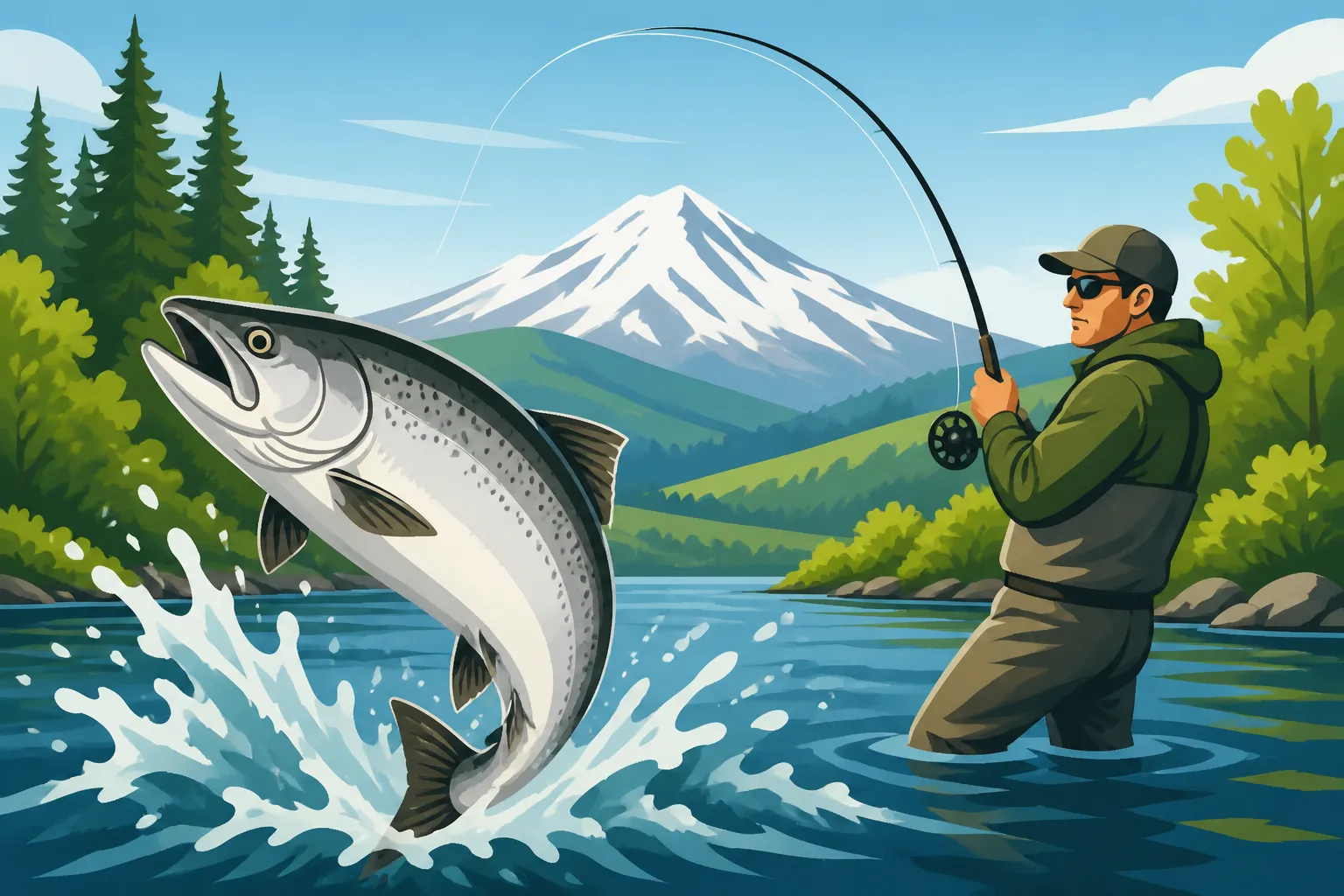
Oh, the elusive spring Chinook! If you've spent any time on the Willamette River in late winter and spring, you know the frustration and the sheer excitement that comes with chasing these incredible fish. They're legendary for their fighting power and delicious taste, but they certainly don't make it easy. This comprehensive guide is here to demystify the process, walking you through everything you need to know to increase your chances of hooking into one of these magnificent "springers" right here in Oregon's heartland.
Understanding the Spring Chinook Run on the Willamette
Chasing spring Chinook on the Willamette isn't just about putting a line in the water; it's about understanding the fish itself. These are not your average salmon; they've earned their reputation for a reason.
The Life Cycle and Timing of Springers
Spring Chinook, often affectionately called "springers," are a unique run of Chinook salmon that enter freshwater much earlier than their fall counterparts. While fall Chinook typically arrive in late summer and early fall, springers begin their migration into the Willamette River system as early as February, with the run peaking through April and May. What makes them so special is that they enter the river in prime condition, carrying a high fat content because they still have a long journey ahead to their spawning grounds in the upper reaches of the Willamette and its tributaries, like the Clackamas and Santiam rivers. This fat content is what gives them their distinctive bright, chrome-silver appearance and, frankly, their unmatched flavor.
Their journey is a testament to endurance. Unlike fall salmon that are already mature and often focused solely on spawning, springers are still actively feeding and growing as they navigate the river. This means they're more likely to strike a well-presented bait or lure, even though their primary drive is migration. The exact timing can vary year to year based on water conditions, snowmelt, and ocean temperatures, but generally, by mid-March, anglers are starting to see consistent action. Understanding this unique biological imperative – their need to migrate and their excellent condition – is your first step to success. For a broader look at when these majestic fish are typically found throughout the state, check out our guide on Spring Chinook Season Timing in Oregon.
Key Holding Water and Migration Patterns
Once these springers enter the Willamette from the Columbia, they don't just swim aimlessly upstream. They follow predictable patterns and utilize specific types of water as they make their way towards their spawning grounds. They prefer to hold in deeper holes, especially those with slower current seams adjacent to faster flows. These spots offer them a place to rest and conserve energy while remaining close to the main migratory path. You'll often find them at the confluence of tributaries, behind islands, or along distinct ledges and drop-offs where the riverbed changes depth dramatically.
The lower Willamette, particularly around the Portland Harbor area and up to Oregon City Falls, is a major migration corridor and holding zone. Below the falls, fish tend to stack up, waiting for optimal conditions or their biological cue to navigate the fish ladders. Above the falls, they disperse into various stretches of the river and into tributaries. Factors like water temperature and flow volume heavily influence their movement. During periods of high, turbid water, springers might stick to the edges or seek out less turbulent pockets. Conversely, in lower, clearer water, they might be more inclined to travel quickly or hold in deeper, darker pools for security. Learning to "read the water" and identify these prime holding areas is crucial. Don't underestimate the power of observing other successful anglers; they're often fishing a known travel lane or holding spot.
Essential Gear and Tackle for Willamette Spring Chinook
You wouldn't show up to a marathon in flip-flops, and you shouldn't show up to fish for spring Chinook with inadequate gear. These fish are powerful, and they will test your tackle. Investing in the right equipment isn't just about catching fish; it's about ensuring a fair fight and minimizing stress on both you and the fish.
Rods, Reels, and Line Selection
When it comes to spring Chinook, you need gear that can handle a serious tug-of-war. For rod selection, think powerful yet sensitive. A rod in the 9 to 10.5-foot range with a medium-heavy action is often ideal. This length provides good leverage for casting heavier weights and fighting strong fish, while the medium-heavy action gives you the backbone to turn a big salmon's head when it decides to run. Some anglers even prefer slightly longer rods, up to 12 feet, especially for certain bank fishing techniques like plunking, which we'll discuss later. Brands like Lamiglas and Okuma offer excellent rods designed specifically for salmon fishing.
For reels, a sturdy baitcasting reel is typically preferred for boat fishing, especially when trolling or back-trolling. Look for one with a smooth, powerful drag system that can withstand long, screaming runs. Shimano and Daiwa make some fantastic options that will stand up to the abuse. Capacity is also key; you want to be able to hold at least 200-300 yards of line. When it comes to line, most anglers opt for braided mainline, typically 50 to 65-pound test, due to its incredible strength and lack of stretch, which provides excellent sensitivity. However, braid is highly visible, so you'll always want to tie on a fluorocarbon leader, usually 25 to 40-pound test, which is virtually invisible underwater and offers good abrasion resistance. You can find a wide array of reliable braided lines and fluorocarbon leaders on Amazon, ensuring you're ready for anything the Willamette throws at you. Having a reliable setup is paramount, so consider exploring our more in-depth Oregon Bait and Lure Guide for additional recommendations on what specific types of line excel in different situations.
Bait, Lures, and Scents that Get Bites
Spring Chinook, despite their migratory drive, can be coaxed into biting with the right presentation. There's no single "magic bullet," but certain baits and lures consistently produce results. For natural bait, cured salmon eggs are a time-honored classic. Anglers spend hours preparing their "secret recipes" of eggs, often using various cures to enhance color, scent, and durability. Prawns, either whole or cut, are another highly effective bait, particularly when soaked in a strong scent.
When it comes to artificial lures, a few stand out. Plugs, like the always popular Kwikfish or FlatFish, often wrapped with a sardine fillet or a prawn, are incredibly effective, especially when back-trolled. Spinners, such as the ever-popular Rooster Tail or Blue Fox Vibrax, can also work, particularly in shallower or less turbulent water. In recent years, scent-infused soft plastics and pre-rigged "Super Baits" like Brad's Super Bait, often packed with herring or sardine paste, have become staples for many anglers, mimicking wounded baitfish while emitting a powerful scent trail. And speaking of scent, it's absolutely critical. Commercial scents like Pro-Cure, Mike's Lure Oil, or Pautzke Nite-Glo can significantly enhance the attractiveness of your bait or lure. They come in various flavors, from Anise to Herring to Krill, and experimenting with a few can make a big difference on a tough day. Don't be shy about slathering it on – these fish are following their noses! Many of these proven baits, lures, and scents are readily available on Amazon, allowing you to stock up before your next outing.
Proven Techniques for Catching Willamette Springers
The Willamette River offers diverse fishing environments, from wide-open stretches to narrower channels and bank access points. Matching your technique to the location and conditions is key to success.
Boating Techniques: Trolling and Anchoring
For boat anglers, trolling and anchoring are the two primary methods for targeting spring Chinook on the Willamette. Trolling involves moving slowly through the water, usually with the current or slightly against it, dragging your bait or lure behind the boat. The most common setup involves a diver (like a Big Al's Fish Flash or a traditional lead diver) attached to your mainline, followed by a leader and your lure (often a Kwikfish or a spinner). The diver takes your presentation down to the desired depth, and the flashers attract attention. Trolling speed is critical; generally, 1.5 to 3 mph is a good starting point, but you'll need to adjust based on the lure's action and the fish's mood. Changing speeds, making slight turns, and varying depths can all trigger bites. Many seasoned anglers will swear by a specific color combination for their flashers and plugs, and it often changes with water clarity and light conditions. For more advanced boat fishing strategies, our Oregon Trolling and Boat Fishing Techniques guide offers a deeper dive.
Anchoring is another highly effective method, especially in known holding water like deep holes or current seams. When anchored, anglers typically "bounce" or "drift" their bait or lures just off the bottom. This usually involves heavy lead (4-12 oz, sometimes more depending on current), a three-way swivel, and a leader with a wrapped Kwikfish, a cluster of cured eggs, or a prawn. The goal is to keep your bait in the strike zone, often within a foot or two of the bottom, allowing it to tumble naturally with the current. Sometimes, simply letting your lure sit and wobble in the current is enough. Positioning your boat correctly above a known holding area, even just a few feet, can make all the difference. Patience is paramount when anchored; sometimes, it's a waiting game, but when a school moves through, the action can be furious.
Bank Fishing Strategies
Don't have a boat? No problem! Many anglers successfully target spring Chinook from the banks of the Willamette. The primary technique for bank anglers is often "plunking" or "still fishing." This involves casting out a heavy weight (often a pyramid sinker) that holds your bait or lure in a specific spot in the current, usually attached via a diver and a short leader. Popular choices for plunking include Spin-N-Glos, large yarnies soaked in scent, or a cluster of cured eggs. The idea is to let the current work your presentation, creating movement and dispersing scent to attract passing salmon.
Key locations for bank anglers include known access points with deeper water and current breaks. Think public parks with river access, jetties, or points where the river narrows. Popular spots along the Willamette include Cathedral Park, Swan Island, Meldrum Bar Park, and various stretches closer to Oregon City. Always scout your location at different tide levels (if applicable on the lower river) and river flows to understand how the water changes. Having a sturdy rod holder is essential, as you might be waiting for a while, and a salmon strike can be sudden and violent. Many successful bank anglers bring multiple rods, each with a slightly different setup or bait, to cover more water and test what the fish are preferring that day. For a complete overview of fishing from shore, check out our Bank Fishing Techniques for Oregon Rivers article.
Understanding Current and Water Conditions
Water conditions are arguably the most critical factor when fishing for spring Chinook on the Willamette. These fish are highly sensitive to changes in flow, clarity, and temperature, and understanding these elements will dictate your approach.
- Flow: The Willamette's flow rate can fluctuate dramatically, especially in spring with snowmelt and rainfall. High, fast water often pushes fish to the edges of the main current or into slower pockets where they can rest. In these conditions, you might need heavier weights to get your presentation down, and bright, high-contrast lures or strong-scented baits become more important. Conversely, in lower, clearer flows, fish can be more spooky, requiring lighter leaders and more subtle presentations.
- Clarity: Clear water often means fish can see your line and tackle more easily, necessitating fluorocarbon leaders and natural-looking baits. In turbid (muddy) water, visibility is low, so fish rely more on scent and vibration. This is when bright, fluorescent colors (chartreuse, orange) and lures that produce strong vibrations (like Kwikfish or Spin-N-Glos) really shine, coupled with potent scents.
- Temperature: Spring Chinook prefer specific temperature ranges. Extremely cold water can make them sluggish, while excessively warm water can also deter them. As the water warms in late spring, fish tend to be more active, but also might move faster through the system. Pay attention to water temperature reports; a few degrees can make a world of difference. Generally, a rising or stable water temperature is more favorable than a rapidly falling one. Local fishing reports and online resources often provide real-time data on these conditions, giving you a distinct advantage.
Navigating Regulations and Ethical Practices
Fishing in Oregon comes with responsibilities, especially when targeting prized species like spring Chinook. Ignoring the rules isn't just illegal; it can harm the fishery we all cherish.
Oregon Fishing Regulations for Spring Chinook
Before you even think about putting a line in the water, you absolutely must be familiar with the current Oregon fishing regulations. These rules are put in place by the Oregon Department of Fish and Wildlife (ODFW) to manage fish populations, ensure sustainability, and provide fair fishing opportunities. For spring Chinook on the Willamette, key regulations include:
- Daily Bag Limits: There will be a specific number of adult Chinook you can retain per day. This limit can vary, sometimes including "jacks" (smaller, early returning salmon).
- Annual Limits: There may also be an annual harvest limit for Chinook salmon.
- Size Restrictions: Often, there are minimum or maximum size limits for retention.
- Fin Clipping: In many areas, only fin-clipped (hatchery) salmon can be retained. Wild salmon, identifiable by an intact adipose fin, must be immediately released unharmed. This is a critical distinction to learn.
- Open and Closed Seasons/Areas: Specific stretches of the river might have different opening and closing dates, or certain areas might be temporarily closed to protect spawning fish or for other management reasons.
It's your responsibility to know these rules before you go. The ODFW publishes a new regulation booklet annually, and it's available online or at license vendors. Always consult the most current guide, as rules can change even mid-season due to emergency closures or quota adjustments. Don't forget, you'll also need an Oregon Fishing License Guide and often a Oregon Combined Angling Tag Guide to legally pursue these fish, as well as being aware of Oregon Salmon and Steelhead Tag Requirements. Without the proper licenses and tags, you could face hefty fines.
Catch and Release Best Practices
Even if you're planning to keep your catch, you might encounter wild fish that need to be released, or you might simply want to release a fish for conservation reasons. Knowing how to properly catch and release a salmon is vital for its survival.
- Use Barbless Hooks: This is often a regulation for wild fish and makes hook removal much easier, minimizing damage to the fish's mouth. If your hooks aren't barbless, crimp down the barbs with pliers.
- Minimize Fight Time: While exciting, a prolonged fight can exhaust a fish, making it less likely to survive. Use appropriate tackle to bring the fish in efficiently.
- Keep the Fish in the Water: As much as possible, keep the fish submerged while unhooking it. Removing a fish from water, especially a large, heavy one, can cause internal organ damage and remove its protective slime layer.
- Wet Hands Only: If you must handle the fish, wet your hands thoroughly first. Dry hands can strip away the fish's protective slime, leaving it vulnerable to disease. Avoid putting your fingers in the gills or eyes.
- Use Pliers: A good pair of long-nosed pliers or a de-hooking tool can help you quickly and safely remove hooks.
- Revive the Fish: If the fish seems sluggish after the fight, hold it gently in the current, facing upstream, until it regains its strength and can swim away on its own. It should be able to hold itself upright and respond to touch. Don't just toss it back; give it time to recover.
Practicing ethical angling ensures that future generations can also enjoy the thrill of fishing for these magnificent springers.
Prime Willamette River Fishing Spots for Spring Chinook
The Willamette River is a long and varied waterway, offering numerous opportunities for spring Chinook anglers. Knowing where to focus your efforts can save you a lot of time and frustration.
Lower Willamette River Hotspots
The lower Willamette River, from its confluence with the Columbia River upstream to Oregon City, is arguably the most popular and productive stretch for spring Chinook. This is the main migration highway, and fish will often stack up in key areas.
- Portland Harbor Area: This stretch, including the waters around Swan Island and the numerous docks, can be excellent. Fish often move along the edges of the shipping channels and use the deeper water and structure as holding spots. Trolling here, especially near shipping lanes and where deeper water meets shallower flats, is a common and effective tactic.
- Ross Island Bridge to Sellwood Bridge: This section features diverse depths and currents, with several known holes and current seams that attract migrating salmon. Both boat and bank anglers can find success here. Bank access can be limited but exists in various parks.
- Milwaukie/Meldrum Bar: Meldrum Bar Park is a legendary bank fishing spot, particularly for plunkers. The deep water and strong current provide an ideal setup for fixed-line fishing, especially during the peak of the run. Boats also troll and anchor in the deeper channels around this area.
- Up to Oregon City Falls: As springers get closer to the falls, they often concentrate. The water directly below the falls, with its turbulent flows and deep pools, can be a magnet for fish waiting to ascend. This area is heavily fished by both boat and bank anglers, so be prepared for company. Understanding the specific nuances of fishing the Willamette River Fishing Guide can further enhance your success in these areas.
Above Oregon City Falls and Tributaries
While the lower river gets a lot of attention, spring Chinook continue their journey upstream after navigating the fish ladders at Oregon City Falls. The fishing above the falls tends to be less crowded but can still be highly productive.
- Upper Willamette River: Beyond Oregon City, the river continues to hold migrating salmon. While they become more spread out, the fish that make it this far are often strong and aggressive. Areas with defined channels, gravel bars, and deeper pools can be good targets for both trolling and back-bouncing techniques from a boat. Bank access becomes more sporadic, but there are still opportunities near towns and bridge crossings.
- Clackamas River: A significant tributary of the Willamette, the Clackamas River sees a strong return of spring Chinook. Once they enter the Clackamas, they continue upstream towards their spawning grounds. Fishing here often involves drift fishing, bobber and jig, or small plugs. The Clackamas is known for its beautiful scenery and strong runs, making it a favorite for many anglers.
- Sandy River: Another important tributary, the Sandy River, also hosts a spring Chinook run. While perhaps not as large as the Clackamas, it offers excellent opportunities. Similar techniques to the Clackamas apply, focusing on drift fishing and bobber presentations in the river's runs and pools. When considering specific techniques for these tributary systems, sometimes knowledge from similar fisheries, like How to Fish for Fall Chinook on the Columbia, can offer transferable insights, despite the different timing and locations.
Remember, the fish are always on the move, so checking local fishing reports, ODFW updates, and even asking fellow anglers (politely, of course!) can provide invaluable, real-time information on where the bite is hot.
Essential Willamette Spring Chinook Gear Overview
To help you get organized, here's a quick look at some of the key gear components that will set you up for success when chasing spring Chinook on the Willamette.
| Gear Category | Item | Key Characteristics | Why it's Important |
|---|---|---|---|
| Rods | 9-10.5 ft Salmon Rod | Medium-Heavy Action, Fast Taper | Power for fighting fish, sensitivity for detecting bites, length for casting/leveraging |
| Reels | Baitcasting Reel (e.g., Shimano, Daiwa) | Smooth & Powerful Drag, High Line Capacity (200-300 yds) | Handles long runs, durable for heavy use, sufficient line for big fish |
| Mainline | Braided Line | 50-65 lb Test, Zero Stretch | Extreme strength, excellent sensitivity, cuts through water |
| Leader Line | Fluorocarbon Leader | 25-40 lb Test, Low Visibility, Abrasion Resistant | Nearly invisible to fish, stands up to rough conditions |
| Baits | Cured Salmon Eggs | Various colors/scents (red, orange, pink), Durable | Natural food source, powerful scent trail |
| Baits | Fresh or Cured Prawns | Whole or cut, soaked in scent | Irresistible natural bait, strong scent dispersal |
| Lures | Kwikfish/FlatFish Plugs | Various sizes/colors, often wrapped with sardine/prawn | Aggressive wobbling action, scent-holding capability |
| Lures | Brad's Super Bait/Wobblers | Hollow cavity for scent, various colors | Mimics baitfish, holds strong scent, effective when trolled or back-bounced |
| Lures | Spinners (e.g., Rooster Tail, Blue Fox) | Sizes 4-6, bright colors | Flash and vibration attract fish, good for varying conditions |
| Scent | Pro-Cure, Pautzke Nite-Glo | Various flavors (Anise, Herring, Krill) | Enhances attraction of baits/lures, crucial in turbid water |
| Terminal Tackle | Divers/Flashers | Big Al's Fish Flash, Triangle Divers, Lead Divers | Gets lures to depth, attracts attention with flash and vibration |
| Terminal Tackle | Weights | Pyramid, Cannonball, Slinky (4-12 oz+) | Gets bait to bottom, holds position in current |
| Terminal Tackle | Swivels, Leaders, Hooks | High-quality, appropriate strength | Prevents line twist, ensures strong connection, barbless options |
This table provides a concise overview, but remember that specific conditions on any given day might require slight adjustments. Always be prepared to adapt!
Disclaimer
Fishing involves inherent risks, including but not limited to adverse weather conditions, encounters with wildlife, and boating accidents. Always prioritize safety, wear appropriate personal flotation devices when on the water, and be aware of your surroundings. Fishing regulations are subject to change; it is the angler's responsibility to consult the latest Oregon Department of Fish and Wildlife (ODFW) regulations before fishing. This guide is for informational purposes only and does not guarantee fishing success.