What size hook for trout bait fishing
We've all been there, standing by a crystal-clear Oregon stream or a quiet high-mountain lake, eyes peeled for that tell-tale twitch of the line. You've got your favorite bait, you're sure of it, but then the bites are light, you're missing hook-sets, or worse, you're bringing in fish that are deeply hooked, making catch-and-release a real challenge. The frustration often boils down to one surprisingly overlooked detail: hook size. Choosing the right hook for trout bait fishing in Oregon can feel like a guessing game with all the numbers and styles out there, but this guide is here to clear the waters, ensuring your next angling adventure is more successful and responsible.
Understanding Hook Sizing: The Basics
Before we even talk about specific baits or trout species, it’s absolutely crucial to grasp the fundamentals of hook sizing. It's not as intuitive as you might think, and a little knowledge here goes a long way in preventing those "why am I missing so many bites?" moments. Anglers often struggle because the numbering system feels backwards, and the sheer variety of hooks can be overwhelming. Let's demystify it so you can choose with confidence.
The Numbering System: What "Size 12" Really Means
When you see hook sizes like #10, #12, #18, or even 1/0, 2/0, it can be a bit confusing because the lower the number (for sizes without the '/0'), the larger the hook. So, a size #10 hook is actually larger than a size #12 hook, and a size #18 is tiny, often used for fly fishing or very delicate bait presentations. This numbering system primarily applies to hooks typically used for trout and other smaller game fish.
Then there's the other system: 1/0 (one aught), 2/0, 3/0, and so on. These hooks are larger than any of the numbered hooks (like #1), and again, the higher the number, the larger the hook. For example, a 3/0 hook is much larger than a 1/0 hook. While these 'aught' sizes are usually for bigger fish like salmon, steelhead, or bass, understanding the inverse relationship for the smaller, numbered hooks is key for trout fishing. When you're standing in the tackle aisle, remember that for trout, you're generally looking for higher numbers – indicating a smaller hook – to match the delicate nature of their mouths and the baits you'll be using.
Beyond just the number, hooks also vary in shank length and wire gauge. A hook can be a "size 10 short shank" or a "size 10 long shank." The shank is the straight part of the hook from the eye to the bend. A short shank is great for compact baits or when you want the bait to be the star, while a long shank can be useful for threading on longer worms or giving the bait more movement. Wire gauge refers to the thickness of the metal wire used to make the hook. Lighter wire hooks are less visible and can be more easily swallowed by finicky fish, but they might straighten out on a larger, more powerful trout. Heavier wire hooks are more robust but can be more conspicuous. It's all about finding that sweet spot for your target species and presentation.
Key Hook Components and Their Impact
Every part of a fishing hook serves a purpose, and understanding these components can significantly improve your hook-up ratio and, just as importantly, the welfare of the fish you catch. It's not just a bent piece of metal; it's an engineered tool. Paying attention to these details can elevate your bait fishing game in Oregon's diverse waters.
Let's break down the critical elements: the point, barb, gap, throat, and eye. The point is obvious—it's what pierces the fish's mouth. A sharp, needle-like point is paramount for quick, secure hook-sets. Dull hooks lead to frustrating misses and can even injure a fish without properly hooking it. The barb is the small protrusion behind the point that helps keep the hook firmly in place once it's set. While effective, barbs can cause more tissue damage, especially if a fish is deeply hooked. Many anglers in Oregon, particularly those practicing catch-and-release, opt for barbless hooks or crimp down the barb with pliers. This is not only often a regulatory requirement in certain waters, but it also minimizes harm to the fish, allowing for a quick and clean release, which is incredibly important for maintaining healthy fish populations.
The gap is the distance from the point to the shank, and the throat is the distance from the bend to the point. These dimensions determine how much of the fish's mouth the hook can encompass and effectively hold. A wider gap is generally better for bulkier baits or larger-mouthed fish, allowing for more flesh to be caught. Conversely, a smaller gap might be needed for tiny baits where a larger hook would overwhelm the presentation. The eye is where you tie your fishing line. Eyes can be up-turned, down-turned, or straight. The type of eye can influence how your knot sits and how the hook moves in the water, which can subtly affect your bait's presentation. Always ensure your knot is strong and snug against the eye, no matter its configuration. Ultimately, selecting a hook isn't just about size, but how all these components work together to optimize your chances of a solid, ethical hook-up.
Matching Hook Size to Trout Species and Bait Type
This is where the rubber meets the road! Oregon is home to a fantastic array of trout, from the feisty stocked rainbows in urban ponds to elusive wild cutthroat in coastal rivers and robust brook trout in high Cascade lakes. Each species, and the bait you choose, will guide your hook selection. The goal is always to present your bait as naturally as possible, making it irresistible without making the hook obvious.
Small Baits, Small Hooks: PowerBait, Worm Pieces, Corn
When you're targeting those eager, often pan-sized trout, especially in heavily stocked lakes and ponds across Oregon, going small with your hook is usually the winning strategy. These fish, primarily Rainbow Trout in Oregon and Brook Trout Fishing, often have relatively small mouths and can be quite finicky, especially if they've seen a lot of fishing pressure. Your bait choice dictates the hook.
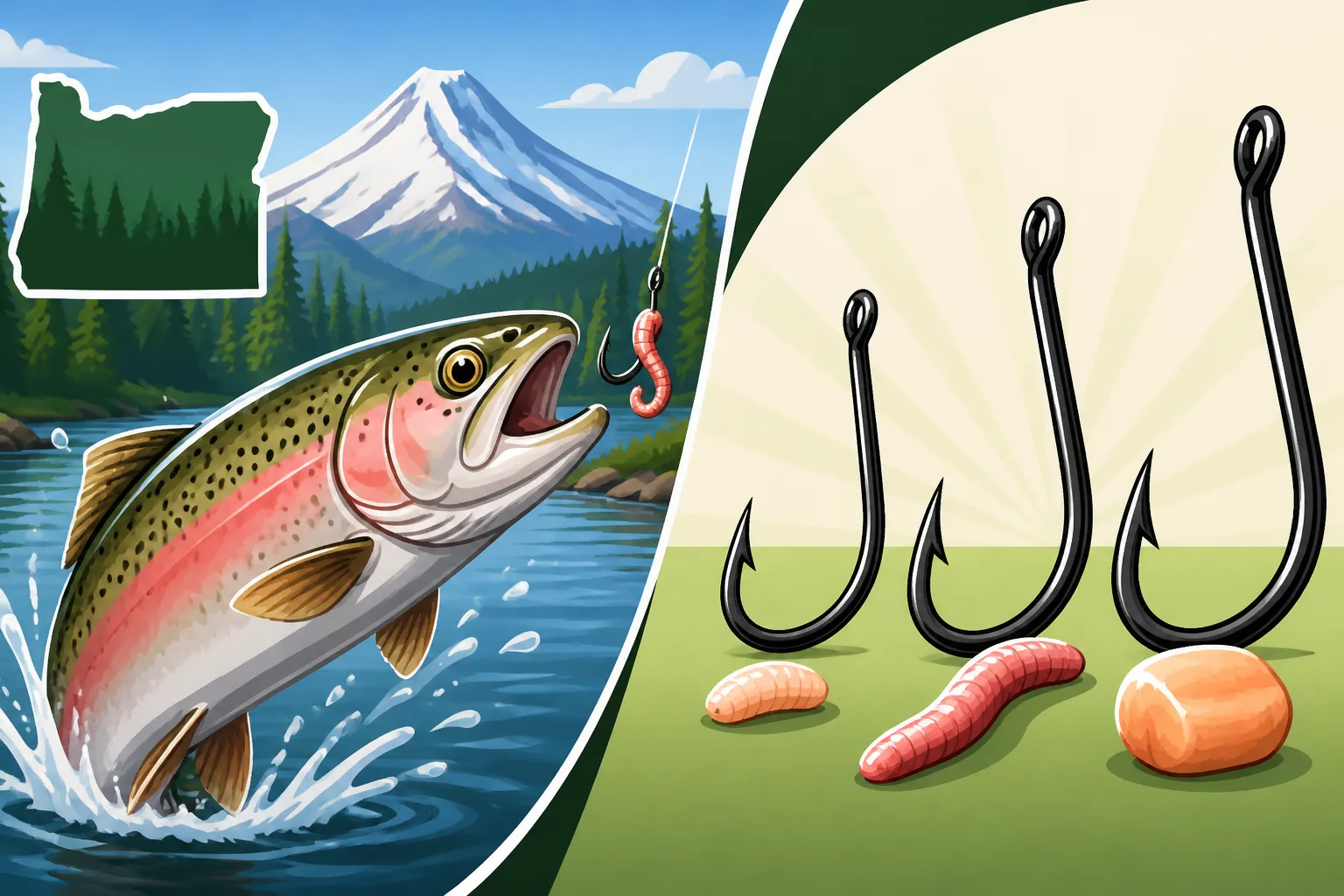
For popular baits like PowerBait (whether dough or nuggets), small pieces of nightcrawler, corn, or even single salmon eggs, you'll want hooks ranging from a size #10 all the way down to a #18. A size #14 or #16 often hits that sweet spot for PowerBait, allowing you to completely cover the hook, presenting a natural-looking blob of scent and color. When using small pieces of worm, a size #12 or #14 can work wonders, letting the worm wriggle naturally without being hampered by a heavy, oversized hook. The key here is subtlety. A tiny hook is easier for the trout to suck in completely, leading to a much better hook-up. If you find you're getting a lot of nibbles but no solid bites, or the bait is being stolen without a proper hook-set, your hook might be too large. Don't be afraid to go even smaller, sometimes down to a #18, especially for very light bites or shy trout. For more tips on this, check out our guide on How to Catch Trout in Stocked Oregon Lakes. When stocking up on these smaller hooks, you can find a huge variety of brands and types on Amazon, from plain shank to snelled hooks for convenience.
Medium Baits, Medium Hooks: Whole Worms, Salmon Eggs, Shiners
As you step up your bait game or target slightly larger trout, your hook size will need to adjust accordingly. This category often applies to bigger stocked trout, robust wild Cutthroat Trout in Oregon, or even smaller, early-run steelhead that might be enticed by a larger natural offering. These fish typically have larger mouths and are looking for a more substantial meal, meaning you can get away with a slightly larger hook without deterring them.
For whole nightcrawlers or larger cluster of salmon eggs, hooks in the #6 to #10 range are ideal. A size #8 or #10 is a fantastic all-around choice for a full nightcrawler, allowing you to thread it on securely while leaving enough exposed worm to entice a bite. When presenting a cluster of salmon eggs, a #8 or #6 hook might be necessary to adequately hold the bait. The goal is still to conceal the hook as much as possible, or at least integrate it seamlessly into the bait. For instance, with a nightcrawler, you can thread it up the shank and over the eye, leaving only the point exposed or just barely covered. Small shiners or minnows, if allowed and used as bait, would also call for hooks in this range, perhaps even a #4 depending on the size of the baitfish. You're aiming for a strong enough hook to handle a more aggressive take and a potentially larger, stronger fish, while still maintaining that crucial natural presentation. Remember to check local regulations for bait restrictions, especially concerning live baitfish, as these can vary widely across Oregon's diverse waterways.
Larger Baits, Larger Hooks: Plugs, Big Minnows
While this guide specifically focuses on "trout bait fishing," it's worth a brief mention that if you're targeting truly trophy-sized trout – think substantial Brown Trout in Oregon in specific lakes, or very large, aggressive rainbow trout – you might occasionally use larger baits that necessitate larger hooks. However, for most traditional bait fishing for trout, the sizes discussed above will cover 90% of your needs. When we talk about "larger baits" like plugs or big minnows, we're often moving into a different style of fishing, usually casting and retrieving lures rather than passive bait presentation.
If you are using a larger natural bait like a whole substantial dead shiner or a large chunk of cut bait for a monster trout (where permitted), hooks in the #2 to #6 range could come into play. These hooks are much more robust and have a wider gap, designed to handle a powerful strike and the thicker mouth parts of a truly big fish. This is where your 'aught' sizes might even start to creep in, though rarely for trout specific fishing. For instance, if you were targeting massive lake trout (Mackinaw) with large dead bait, a 1/0 or 2/0 might be considered. However, always prioritize the regulations; some of Oregon's most prized trophy trout species, like Bull Trout, are heavily protected and often require specific catch-and-release practices, sometimes even special permits, so understanding Oregon Trout Species Guide and their regulations is paramount before considering larger gear for these rare giants. It's a fine line between targeting big fish and staying within ethical and legal boundaries, particularly when discussing protected species.
Tips for Effective Bait Fishing with the Right Hook
Choosing the right hook size is just the first step. To truly elevate your trout bait fishing success in Oregon, you need to combine that knowledge with smart presentation and responsible angling practices. These tips will help ensure your bait is irresistible and your hook-sets are solid, while also respecting the fish and the environment.
The "Hide the Hook" Philosophy
This might sound obvious, but it's probably the single most important principle in successful trout bait fishing: always strive to hide your hook completely within or behind your bait. Trout, especially larger and wilder ones, are incredibly wary. They have excellent eyesight and can easily be spooked by a glint of metal or an unnatural protrusion from what should be a tasty morsel. If you're using PowerBait, mold it carefully around the hook so no part of the metal is visible. For worms, thread the worm up the shank, leaving just enough wiggling tail to entice, but burying the hook point within the worm itself.
The goal is to present your bait as naturally as possible, as if it were simply floating or drifting in the current, untouched by human hands. A visible hook will often lead to tentative bites, or the trout simply mouthing the bait and spitting it out before you can set the hook. They're smart, and they learn quickly. By concealing the hook, you increase the chances that the trout will confidently take the entire bait into its mouth, giving you a better opportunity for a solid hook-set in the corner of its jaw, which is ideal for both landing the fish and ensuring a healthy release. This careful presentation really sets experienced bait anglers apart from those who struggle.
Sharpen Your Hooks, Always
A dull hook is a missed fish waiting to happen. It's a simple truth that's often overlooked by even seasoned anglers. No matter how perfectly sized your hook is, or how enticing your bait, if the point isn't needle-sharp, it won't penetrate cleanly into the fish's mouth. Instead, it might just scrape, causing a momentary tug that feels like a bite, but results in a frustrating empty retrieve. Trout mouths can be surprisingly tough, especially around the cartilaginous parts of the jaw.
Always check the sharpness of your hooks before you start fishing and periodically throughout the day, especially if you've snagged on rocks or logs. You can do this easily by lightly dragging the hook point across your thumbnail; if it digs in and doesn't slide, it's sharp. If it slides, it's time to sharpen it. Invest in a good quality hook sharpener – a small file or stone – and keep it readily accessible in your tackle box. You can find excellent, compact options on Amazon that are perfect for carrying on the water. A few quick strokes can revive a dull point, transforming a potential missed opportunity into a solid hook-up. This simple habit can dramatically improve your success rate and is a mark of a truly prepared angler.
Consider Barbless Hooks
In Oregon, being a responsible angler often means embracing practices that prioritize fish welfare, and using barbless hooks is a prime example. While some hooks come straight out of the package with a barb, it's incredibly easy to take a pair of pliers and gently crimp the barb down flat against the hook shank. This makes the hook "barbless." There's a growing movement and, in many specific waters across Oregon, a requirement to use barbless hooks, particularly for certain species like wild steelhead or salmon. You'll find this information clearly laid out in the Oregon Fishing Regulations Explained booklet.
The main benefit of barbless hooks is significantly reduced injury to the fish, especially when practicing catch-and-release. A barbless hook slides out much more easily, causing less tissue damage and reducing the time the fish is out of water during release. This dramatically increases the fish's chances of survival. For dedicated catch-and-release anglers, it's a no-brainer. Even if you plan to keep your catch, a barbless hook makes unhooking much quicker and safer for both you and the fish. It also makes removing incidental catches of non-target species or protected fish much simpler. Always be aware of the specific rules for the body of water you're fishing. Many pristine trout streams or areas managed for wild fish require them, so always check the current regulations. Familiarize yourself with Oregon barbless hook requirements to ensure you're always compliant.
Common Mistakes and How to Avoid Them
Even with the right hook size, anglers can still fall into common traps that hinder their success or compromise the health of the fish. Being aware of these pitfalls and knowing how to steer clear of them will make you a more effective and ethical trout angler in Oregon.
Going Too Big or Too Small
It's a delicate balance, and often, anglers err on one side or the other. We've talked about the inverse numbering system, which can trick newcomers into picking hooks that are far too large for trout bait fishing. The consequence of a hook that's too big is simple: the trout either can't fit the hook into its mouth along with the bait, or it tries, realizes something is wrong, and spits it out before you can react. You'll get those frustrating light taps or see your bait disappear without a solid hook-set. Imagine trying to eat a pea with a shovel – it's just not practical!
Conversely, going too small with your hook can also lead to problems. While tiny hooks are great for finicky bites, an undersized hook might be swallowed too easily by an aggressive trout, leading to a "gut-hooked" fish. This significantly reduces its chances of survival, even if you try to release it. An overly small hook might also be too weak to handle a larger trout, bending or breaking under pressure. The sweet spot is a hook that is just big enough to securely hold your bait, strong enough for the fish you expect, and small enough to be easily taken into the trout's mouth without being overly conspicuous. For example, if you're using a single salmon egg, a size #14 or #16 is likely perfect. If you're using half a nightcrawler, a #10 or #12 might be more appropriate. It requires a bit of intuition and observation, but learning this balance is key.
Neglecting Hook Material and Strength
Often overlooked, the material and strength of your hook wire play a significant role in your fishing success, especially when targeting larger or more aggressive trout. Not all hooks are created equal. Most modern hooks are made from carbon steel, which is strong but can rust if not cared for. Some specialty hooks might be stainless steel, offering greater corrosion resistance, which is excellent for saltwater but sometimes sacrifices a bit of initial sharpness. The key, however, is the wire gauge, or the thickness of the metal.
Thin-wire hooks are incredibly stealthy and can penetrate easily, making them ideal for delicate presentations and wary trout. However, if you hook into a surprisingly large rainbow or a strong Summer Steelhead in Oregon (if you're fishing for trout with bait and one happens to bite), a light-wire hook might straighten out under the strain. On the other hand, heavy-wire hooks are incredibly robust and won't bend easily, but their increased visibility and weight can sometimes deter finicky biters, and they might require more force to set. Consider the strength of the fish you're realistically expecting to encounter. For standard stocked trout, medium to light wire is perfectly adequate. For bigger, stronger wild trout in rivers with current, or in lakes known for trophy fish, opting for a slightly heavier wire hook can prevent heartbreaking break-offs. It's a balance between stealth and stopping power. When buying in bulk, especially from online retailers like Amazon, pay attention to these details in the product descriptions to ensure you're getting hooks appropriate for your target and conditions.
Not Checking Local Regulations
This might sound like a broken record, but it bears repeating: you absolutely must check the local fishing regulations for the specific body of water you intend to fish in Oregon. Relying solely on general advice about hook sizes, while helpful, can land you in hot water if you're not compliant with specific, localized rules. Oregon has incredibly diverse fisheries, and regulations can change not just by river or lake, but even by section of a river, time of year, or target species.
For instance, some waters might explicitly require barbless hooks (as discussed above) or restrict the number of hooks per line. There might be specific bait restrictions, making your perfectly sized bait hook irrelevant if the bait itself is illegal. In sensitive areas, there could be size limits for trout, or even tackle restrictions, like fly-fishing only sections where bait fishing is entirely prohibited. Where to find the Oregon fishing regulations booklet is your absolute best friend here. Always carry a copy, either physical or digital, and consult it before casting your first line. How often do Oregon fishing regulations change can be quite frequently, with updates published annually and emergency closures or rule changes announced throughout the year. Don't risk a fine or, worse, harming a fish population by being uninformed. Your general Oregon Fishing License Guide is a great start, but the specific regulations are where the real details live.
| Bait Type | Target Trout Species | Recommended Hook Size | Notes |
|---|---|---|---|
| PowerBait (dough/nuggets) | Stocked Rainbows, Pan-sized Trout | #12 to #18 | Aim to completely conceal hook. Smaller for wary fish. |
| Single Salmon Eggs | Stocked Rainbows, Brook Trout | #14 to #18 | Delicate presentation, hide hook point within egg. |
| Small Worm Pieces | Stocked Rainbows, Wild Cutthroat (small) | #10 to #14 | Allow natural wiggling, bury hook point. |
| Whole Nightcrawlers | Larger Stocked Trout, Wild Cutthroat | #6 to #10 | Thread worm up shank, leave tail free. |
| Clusters of Salmon Eggs | Larger Stocked Trout, Wild Cutthroat | #6 to #8 | Good for scent, requires larger hook to hold bait. |
| Small Dead Minnows/Shiners | Trophy Trout (e.g., Brown Trout) | #2 to #6 | Check regulations for baitfish use. Ensure strong wire. |
Disclaimer
This article is for general informational purposes only and does not constitute professional advice. Laws, prices and regulations vary by location and change over time. Consult a qualified professional for guidance on your specific situation.