How does barometric pressure change fish behavior
Ever had one of those days on the water where everything feels right – the gear, the spot, the weather – but the fish just aren't biting? Or maybe you hit the river just before a storm broke, and it was a non-stop bite? It's incredibly frustrating when your hard work doesn't pay off, or exhilarating when it does, and often, the invisible hand at play is barometric pressure. This comprehensive guide will pull back the curtain on how changes in atmospheric pressure affect fish behavior in Oregon waters and, more importantly, how you can adapt your fishing strategy to improve your chances of success, no matter what the barometer is doing.
Understanding Barometric Pressure and Its Role in Fishing
Before we dive into how fish react, let's get a handle on what barometric pressure actually is. It's not some mystical force, but a very real, measurable aspect of our environment that profoundly influences everything from our own mood to the way fish behave.
What is Barometric Pressure, Anyway?
Simply put, barometric pressure is the weight of the air pressing down on the Earth's surface. Think of it like a giant, invisible blanket of air that surrounds our planet. When this blanket is heavier, we have high pressure. When it's lighter, we experience low pressure. This weight isn't static; it's constantly changing with weather patterns. A rapidly dropping pressure usually signals an approaching storm, while a steady rise often means fair, stable weather is on its way.
For us anglers, it's a factor that's often overlooked in favor of more obvious things like water temperature, clarity, or current. But imagine being under a constant, subtle squeeze or release – that's what fish experience, and it directly impacts their comfort and activity levels. Ignoring this critical element can leave you scratching your head when the bite mysteriously shuts down or inexplicably heats up.
How Fish "Feel" Pressure Changes
You might be wondering, "How does a fish even know the air pressure is changing?" The secret lies largely in their swim bladder, an internal, gas-filled organ that helps fish maintain buoyancy at different depths. Think of it as an internal dive tank that they can inflate or deflate to stay neutral in the water column.
When atmospheric pressure changes, the pressure on the water surface changes, and this change transmits through the water. As the outside pressure increases (high pressure), the swim bladder is compressed, making the fish feel heavier. Conversely, as outside pressure decreases (low pressure), the swim bladder expands, making the fish feel lighter. Fish actively adjust the gas in their swim bladder to compensate, but rapid or significant changes can cause discomfort or even pain, much like how our ears pop when we change altitude quickly. This sensation directly affects their desire to move, feed, and overall activity. Different fish species have varying sensitivities to these changes, but generally, all fish are impacted.
High Pressure: Fair Weather, Tricky Fishing
We all love those beautiful, clear-sky days on the water, right? The sun is shining, the air is still, and it just feels good to be out there. However, these postcard-perfect conditions often coincide with high barometric pressure, and that can make for some seriously challenging fishing.
The Effects of Stable High Pressure
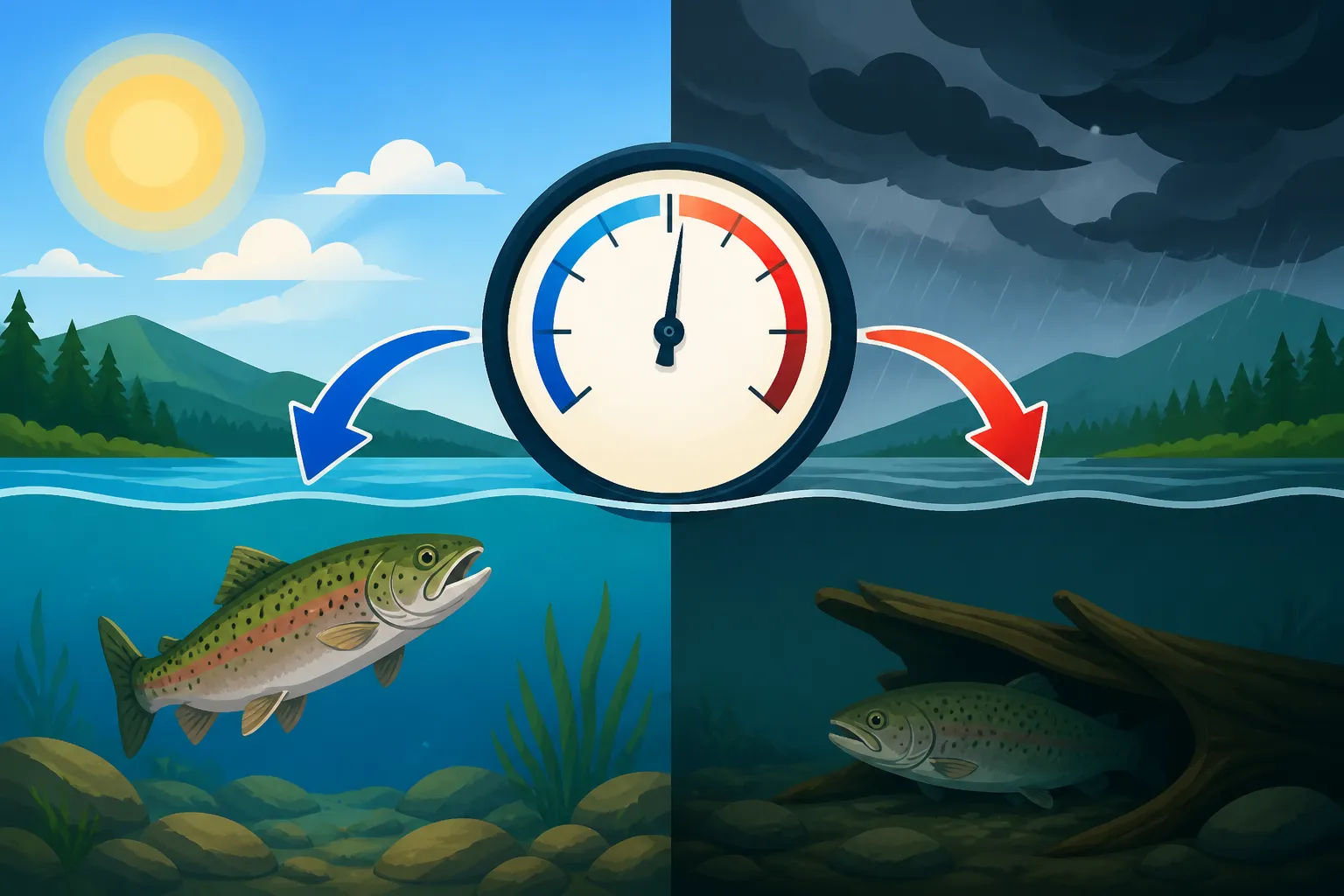
When a strong, stable high-pressure system settles over Oregon, you'll typically see those gorgeous, clear blue skies, often with light winds or none at all. The air feels crisp and still. While this might be lovely for a picnic, it often translates to tough fishing. Under high pressure, the increased weight of the air pushes down on the water, which in turn compresses a fish's swim bladder. To compensate, fish have to expend energy to maintain their buoyancy. This physical effort, combined with the often clearer water and brighter light that accompanies high pressure, tends to make fish more lethargic, less aggressive, and more wary.
They'll often retreat to deeper, darker, or more structured areas where they feel safer and more comfortable. Their metabolism might slow down, leading to reduced feeding activity. You might find them suspended in the water column, unwilling to chase bait, or hugging the bottom, seemingly ignoring everything that swims by. This is why those "perfect" days can leave you scratching your head wondering where all the fish went.
Adapting Your Approach for High Pressure
Don't despair when the barometer is high! It just means you need to shift gears and become a little more stealthy and patient. Your typical go-to lures and aggressive retrieves might not cut it.
- Go Slow and Subtle: Think finesse. Use smaller baits, lighter lines, and slower presentations. If you're using lures, a slow jigging action or a soft plastic twitched gently can be more effective than a fast retrieve. For bait fishing, try a simpler rig with less weight, letting your bait drift naturally.
- Fish Deeper: Since fish often seek comfort in deeper water under high pressure, target these areas. Look for deep holes, ledges, drop-offs, or the shaded sides of structures like submerged logs or undercut banks. If you're on a lake, the thermocline can also be a prime target, as fish often suspend just above or within it.
- Target Low Light: Fish tend to be more active during dawn and dusk under high-pressure conditions when the light is dim and they feel less exposed. These can be prime windows to catch trout, bass, or even salmon that might be otherwise dormant. For specific species, learning the Best Time of Year to Fish in Oregon can also help narrow down your efforts.
- Adjust Lures and Colors: With clearer water, fish have better visibility. Opt for natural bait colors, or lures that mimic local forage precisely. Sometimes a dull, matte finish on a lure can outperform a shiny, reflective one when conditions are bright and clear. You can find a huge variety of options, from tiny jigs to lifelike swimbaits, on platforms like Amazon.
Low Pressure: Stormy Skies, Active Fish?
Now, let's talk about the other end of the spectrum: low pressure. This is often associated with changing weather, clouds, and storms. While it might not be as pleasant for the angler, it can frequently lead to some fantastic fishing, especially right before a significant weather event.
The Approach of a Low-Pressure Front
As a low-pressure system moves in, you'll notice the sky growing cloudier, winds picking up, and possibly a sense of humidity or a change in the air. This is when the atmospheric pressure begins to drop. For fish, this decrease in pressure causes their swim bladders to expand, making them feel lighter. To compensate, they often move shallower. More importantly, many species seem to interpret this approaching weather change as a cue to feed aggressively, almost as if they're stocking up before conditions become truly unfavorable during the storm itself.
This "pre-front bite" is legendary among anglers. Fish can become incredibly active, bolder, and more willing to chase down a meal. You'll often find them cruising shallower flats, near submerged vegetation, or along current seams, actively hunting for forage. This is a prime time to capitalize on their increased aggression.
Fishing During a Stable Low Pressure or Post-Front
The immediate pre-front window is often the best, but what about during the storm or after it passes?
- During Stable Low Pressure (e.g., prolonged rain): If a low-pressure system settles in for an extended period, perhaps bringing several days of steady rain, the fishing can remain good. The consistent low pressure, coupled with reduced light from cloud cover, often keeps fish comfortable and active. The rain can also wash insects and nutrients into the water, stirring up the food chain. You might still find fish actively feeding, though perhaps not with the same frantic energy as just before the storm hit.
- Post-Front (after the storm passes, but pressure still low): This can be a trickier time. Once a strong storm has truly passed, and especially if there was a rapid pressure drop followed by a rapid rise, fish can become scattered and inactive. They've either gorged themselves during the pre-front bite or are simply recovering from the tumultuous conditions. The water might also be muddy from runoff, making it harder for fish to see and hunt. Often, this is the toughest window to fish, sometimes even more challenging than stable high pressure.
Adjusting Strategies for Low Pressure
When low pressure is on the horizon or holding steady, you can often be more assertive with your presentations.
- Aggressive Presentations: This is the time to throw those larger, flashier lures, crankbaits, spinnerbaits, or noisy topwater baits that might spook fish under high pressure. Fast retrieves can trigger reaction strikes from eager fish. For species like Oregon Salmon Fishing Techniques or How to Fish for Spring Chinook on the Willamette, this might mean faster trolling speeds or more aggressive jigging.
- Cover More Water: Since fish are often more active and spread out, focus on covering different depths and structures. Fan casting and moving along shorelines, especially in shallower water, can yield great results.
- Focus on Shallower Areas: As their swim bladders expand, fish often move into shallower water where the pressure is less intense. Look for them on flats, near weed lines, or in areas with slightly warmer water.
- Take Advantage of Reduced Light: Cloudy skies and rain naturally reduce light penetration, making fish feel safer and more inclined to feed throughout the day. You don't always have to wait for dawn or dusk.
Rapid Pressure Changes: The Toughest Conditions
While knowing how fish react to stable high or low pressure is valuable, it's the rapid changes in barometric pressure that can truly make or break a fishing trip. These quick shifts are often the most challenging conditions an angler can face.
Sudden Drops or Spikes in Pressure
Imagine a sudden, violent thunderstorm rolling in – the barometer takes a nosedive. Or perhaps a cold front blasts through overnight, clearing the skies dramatically and sending the pressure soaring. These abrupt shifts are incredibly disorienting and uncomfortable for fish. Their swim bladders can't adjust quickly enough, leading to physical stress. When the pressure drops very rapidly, fish might bolt for deeper water to equalize. Conversely, a sudden spike can send them scurrying for cover, hugging the bottom or dense structure.
During these volatile periods, fish often "shut down." Their primary concern isn't feeding; it's simply surviving and finding comfort. They become inactive, non-responsive, and incredibly difficult to entice. This is particularly true for sensitive species like trout and steelhead. If you're out fishing for Oregon Steelhead Fishing Techniques and a major weather shift occurs, you might notice the bite simply vanish.
Fishing When the Pressure is Volatile
Let's be honest: these are often the times when it's best to stay home, tie flies, or clean your gear. However, if you're already on the water or committed to fishing, there are a few things you can try, but set your expectations accordingly.
- Extreme Finesse: If fish are shutting down, you need to go to extremes. Think the absolute lightest line, smallest baits, and the slowest, most delicate presentations possible. A tiny nymph barely drifting, or a micro-jig barely twitched, might be the only thing to tempt a stressed fish.
- Focus on Sanctuary: Fish will seek comfort. Look for deep pockets, heavy cover, dense weed beds, or the very bottom of structure where they can feel secure and less exposed to the changing conditions. They might be nestled in close to a log or a rock pile.
- Wait it Out: Sometimes, the best strategy is simply patience. If the pressure changes quickly, give the fish an hour or two to adjust once things stabilize, even slightly. Often, a brief window of activity might emerge once the initial shock wears off. This is a good time to consult your Oregon Fishing Season Dates and Limits or Oregon Daily Bag Limits Explained to ensure you're fishing legally and responsibly, even during tough conditions.
Practical Tips and Tools for Oregon Anglers
Understanding the theory is one thing, but putting it into practice on Oregon's diverse waters is where the real magic happens. By integrating barometric pressure into your decision-making, you'll be well on your way to more consistent catches.
Monitoring Barometric Pressure
The good news is that monitoring barometric pressure is easier than ever thanks to modern technology.
- Smartphone Apps: Most advanced weather apps for your phone include a barometric pressure reading, often with a trend indicator (rising, falling, stable). Apps like AccuWeather, Dark Sky, or even the built-in weather app on many phones can give you a quick snapshot. Pay less attention to the absolute number and more to the trend – is it rising or falling, and how quickly?
- Dedicated Fishing Barometers: For more precise readings, many anglers invest in dedicated fishing barometers. These devices are designed to track pressure changes specifically for fishing and sometimes even offer predicted "bite windows." You can find a good selection of these, often combined with thermometers and altimeters, on Amazon. They are rugged and built for outdoor use, making them a great addition to your tackle box.
- Observing Natural Indicators: Before smartphones, anglers relied on natural signs. Look at the sky: high, wispy clouds can indicate an approaching low, while a clear, deep blue sky often signals high pressure. Observe wildlife: birds might fly lower before a storm (low pressure), and insects can become more active or disappear entirely. Pay attention to how the wind changes – a sudden shift or increase often accompanies pressure changes. This old-school knowledge, combined with tech, gives you a powerful edge.
Putting Knowledge into Practice in Oregon
Oregon's fisheries are incredibly varied, from the big rivers like the Columbia and Willamette to high mountain lakes and the vast Pacific Ocean. How you apply barometric pressure knowledge will depend on where you are and what you're targeting.
- River Fishing (e.g., How to Fish for Summer Steelhead on the Deschutes): On rivers, rapid pressure drops before a storm can trigger aggressive bites in areas like riffles and runs. Under high pressure, steelhead might be tucked into deeper pools or behind structure. Pay attention to changes in water levels and clarity that often accompany pressure fronts, as these are also huge factors.
- Lake & Reservoir Fishing (e.g., Oregon Trout Fishing Techniques): In stillwater environments, fish have more freedom to move vertically. High pressure often means trout go deep, while a falling barometer might bring them to shallower flats or near weed lines. Trolling depths or adjusting your bobber stop can be crucial.
- Ocean Fishing (e.g., How to Fish for Winter Steelhead on the Oregon Coast): While water pressure itself is more significant in the ocean, atmospheric pressure still influences overall fish activity. Bottom fish might become more sluggish under high pressure, while pelagic species like tuna could be influenced by changing currents or baitfish movements related to large weather systems. Consider How weather fronts affect Oregon fishing when planning your coastal trips.
- Journaling is Key: The best way to learn how barometric pressure affects your specific fishing spots and target species in Oregon is to keep a detailed fishing journal. Record the date, time, location, species caught (or not caught!), water conditions, and importantly, the barometric pressure and its trend. Over time, you'll start to see patterns emerge that will guide your future trips. This combined data, along with your Oregon Bait and Lure Guide insights, will become your most valuable tool.
Remember, barometric pressure is just one piece of the complex puzzle that is fishing. Water temperature, current, forage availability, light levels, and time of year (Best Time of Year to Fish in Oregon) all play significant roles. However, by understanding and factoring in atmospheric pressure, you gain a powerful insight that many anglers overlook, ultimately helping you to make more informed decisions and enjoy more successful days on the beautiful waters of Oregon.
Disclaimer
This article is for general informational purposes only and does not constitute professional advice. Laws, prices and regulations vary by location and change over time. Consult a qualified professional for guidance on your specific situation.