How to Fish for Summer Steelhead on the Deschutes
Fishing for summer steelhead on the Deschutes River isn't just a casual outing; it's a rite of passage, a challenge that many anglers find both maddeningly frustrating and incredibly rewarding. If you've ever spent hours casting into the perfect run, only to come up empty, you know the unique blend of hope and despair this river can inspire. This guide is here to unravel the mysteries of Deschutes summer steelhead, helping you understand their behavior, master the techniques, and ultimately, find success on this legendary Oregon waterway.
Understanding the Deschutes River Summer Steelhead Fishery
The Deschutes River is truly special, known globally for its wild, strong-fighting summer steelhead. Unlike many other rivers where hatchery fish supplement wild populations, the Deschutes is primarily a wild steelhead fishery, making every hook-up a truly significant event. This unique characteristic also means these fish are often more elusive and demanding, presenting a distinct challenge that seasoned anglers relish.
The Unique Challenge of Deschutes Steelhead
Fishing for summer steelhead on the Deschutes isn't like targeting hatchery trout in a stocked pond. These are wild creatures, honed by millions of years of evolution, making their journey from the Pacific Ocean back to their natal waters. They are acutely aware of their surroundings, incredibly sensitive to pressure, and often less aggressive feeders once they've entered the river and moved upstream. You're not just casting a line; you're engaging in a subtle dance of stealth, presentation, and persistence. The fish here are often described as "finicky," and that's not just angler lore—it's a reflection of their wild instincts and the challenging environment they inhabit. Many days will be spent with no fish to hand, but the one you do land will be etched into your memory forever.
Seasonal Timing and Runs
Understanding when and where summer steelhead enter and hold in the Deschutes is paramount to success. These fish begin their migration from the Columbia River into the Deschutes in late spring, typically around May and June, continuing through the summer and into the early fall. The run usually peaks in July and August, when numbers are highest, though fishing can remain excellent into September and even October, especially as cooler weather arrives and the fish become more active. Early season fish are often found lower in the river, pushing upstream as the season progresses. By late summer, they can be found throughout the middle and upper river sections accessible to anglers. For a deeper dive into specific run timing, you might want to check out our detailed guide on the Summer Steelhead Run Timing on the Deschutes.
As the season progresses, water temperatures play a crucial role. Steelhead prefer cooler water, so during the heat of summer, they often seek out deep, oxygenated pockets or congregate near tributary mouths where colder water enters the main stem. This is why paying close attention to water conditions and local reports is vital. Early mornings and late evenings are often the most productive times during the peak summer heat, as the sun is lower and temperatures are more favorable for active fish.
Key Characteristics of Deschutes Summer Steelhead
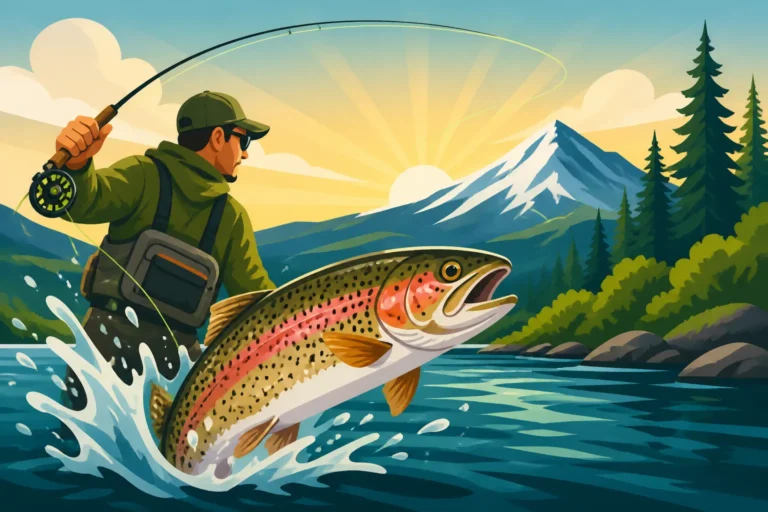
Deschutes summer steelhead are known for their incredible fight, often leaping clear of the water multiple times and making powerful, line-peeling runs. They are typically bright, chrome-colored upon entering the river, gradually darkening as they spend more time in fresh water. These fish are not actively feeding on a caloric basis once they leave the ocean and enter the Deschutes; rather, they strike out of aggression, territoriality, or curiosity. This means your presentation needs to be impeccable, mimicking something that irritates or entices them, rather than a direct food source.
Their diet in the ocean consists mainly of smaller fish and crustaceans, but once in the Deschutes, their interest shifts. They might occasionally take a stonefly nymph or a caddis larva, but more often, they are reacting to a swung fly or a well-drifted presentation that triggers an instinctual strike. Learning how to tell a wild steelhead from a hatchery steelhead is also important here, as regulations often differ. Wild fish, identifiable by their intact adipose fin, are typically catch-and-release only in many sections of the Deschutes, emphasizing the conservation aspect of this fishery.
Essential Gear for Deschutes Summer Steelhead
Having the right equipment is non-negotiable when pursuing Deschutes summer steelhead. The river's character, combined with the fish's fighting prowess, demands reliable and appropriately matched tackle. Don't skimp on quality here; a broken rod or snapped line due to subpar gear can quickly turn a dream trip into a nightmare.
Rods, Reels, and Lines
When it comes to rods for Deschutes summer steelhead, you'll see a mix of single-handed and two-handed (Spey) setups. For single-handed rods, a 9' to 10' rod in an 8-weight is a versatile choice, offering enough backbone to handle large fish and cast heavy lines or flies. Many anglers, however, favor two-handed Spey rods for the Deschutes, especially for covering larger water and executing long, graceful casts without needing a lot of back-cast room. A 12' to 13' rod in a 6 or 7-weight is a popular Spey choice. For those new to two-handed casting, these lighter rods are more forgiving and still perfectly capable of handling Deschutes steelhead.
Your reel should have a smooth, reliable drag system and ample backing capacity (at least 200 yards of 20-30 lb test is a good baseline). Steelhead are notorious for blistering runs, and a reel that can withstand the pressure is critical. Fly lines are equally important:
- For single-handed rods: A weight-forward floating line with a sink tip or an integrated sinking line (like a Rio Outbound Short or Scientific Anglers Sonar Titan) is often preferred to get your fly down to the fish in deeper, faster runs.
- For Spey rods: Skagit or Scandi style lines are popular. Skagit lines excel at casting heavy tips and flies, while Scandi lines are better for delicate presentations with lighter flies.
You can find a wide range of these specialized fly lines and reels on platforms like Amazon, often with helpful reviews from other steelhead anglers. Investing in quality lines ensures better casting performance and durability.
Fly Selection: What Works and Why
Choosing the right fly for Deschutes summer steelhead can feel overwhelming, but it boils down to understanding what triggers a strike. Remember, these fish aren't usually feeding. Flies often mimic baitfish, leeches, or simply present an aggressive profile that provokes a reaction. Here’s a quick overview of popular categories:
| Fly Type | Description & Purpose | Best Conditions | Common Patterns |
|---|---|---|---|
| Intruders | Large, heavily weighted, often articulated flies designed to create movement and bulk. | Higher, colored water; aggressive fish; swinging techniques. | Hoh Bo Spey, Fish Taco, Skunk |
| Tube Flies | Flies tied on a plastic or metal tube, allowing for interchangeable hooks and larger profiles. | Similar to Intruder, often used for bigger fish or when more weight is needed. | Prom Queen, Mega Dolly Llama, Copper Tube |
| Leech Patterns | Mimic leeches or other dark, wriggling prey; often tied with rabbit strip or marabou. | Any water conditions; effective when fish are sluggish or in low light. | Black Leech, Pick Pocket, Morrish Medusa |
| Shrimp/Prawn | Bright, sometimes weighted, to imitate crustacean movement. | Clearer water; can be very effective for aggressive strikes. | General Practitioner, Boss, Green-Butt Skunk |
| Classic Wet Flies | Traditional patterns, often swung, that create subtle movement and profile. | Lower, clearer water; more subtle approach; can be deadly when fish are spooky. | Green Butt Skunk, Purple Peril, Freight Train |
| Nymphs | Larger stonefly or caddis nymphs, sometimes fished under an indicator. | When fish are holding deep and less reactive to swung flies; off-peak times. | Pat's Rubber Legs, Copper John, Prince Nymph |
For specific recommendations, our guide on Fly Selection for Oregon Steelhead delves much deeper into patterns and when to use them. Experimentation is key, but having a box with a variety of sizes, colors, and weights will set you up for success. Don't be afraid to try something new if what you're doing isn't working.
Waders, Boots, and Accessories
Comfort and safety are paramount when wading the Deschutes. The riverbed can be rocky and slippery, and flows can be strong.
- Waders: Breathable stockingfoot waders are the standard. Look for durable construction that can withstand bushwhacking to access prime spots. Brands like Simms and Patagonia are popular for their quality and longevity, offering excellent waterproofness and breathability. You can often find great deals and a wide selection of waders and boots on Amazon.
- Wading Boots: Felt soles offer superior grip on slick, algae-covered rocks, but many areas now have restrictions or outright bans on felt to prevent the spread of invasive species like whirling disease. Rubber soles with studs are a great alternative, providing excellent traction without the environmental concern. Ensure your boots fit well over your wader booties to prevent blisters and offer good ankle support.
- Accessories: A wading staff is almost mandatory for navigating the Deschutes' powerful currents and uneven bottom. It provides crucial stability and helps you gauge water depth. A good quality vest or pack to carry your fly boxes, tippet, nippers, and other essentials is also vital. Polarized sunglasses are essential for spotting fish, reading water, and protecting your eyes from errant casts. Don't forget a hat for sun protection and a net with a long handle to safely land and release your prized catch. A robust net ensures minimal stress on the fish during handling.
Proven Techniques for Success on the Deschutes
Fishing for Deschutes summer steelhead is often synonymous with fly fishing, particularly given the river's clear waters and the fish's wariness. While traditional gear fishing can be effective in some river sections, fly fishing techniques are generally considered the most rewarding and respectful approach to these magnificent wild fish.
Spey Casting and Two-Handed Rods
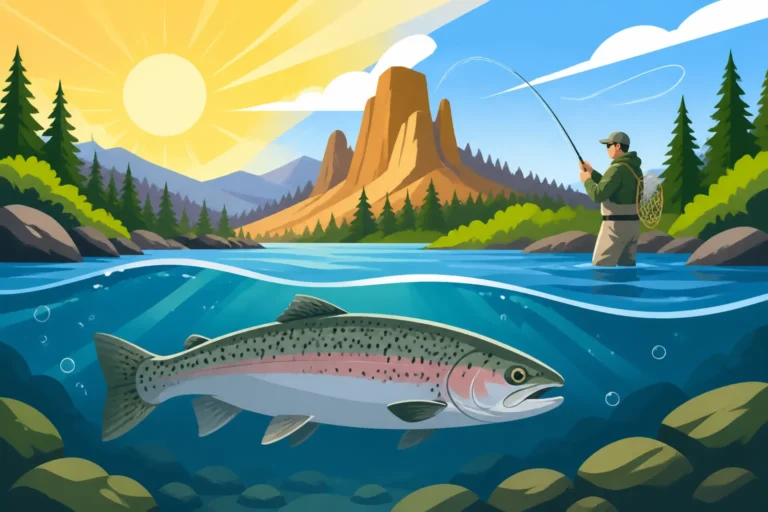
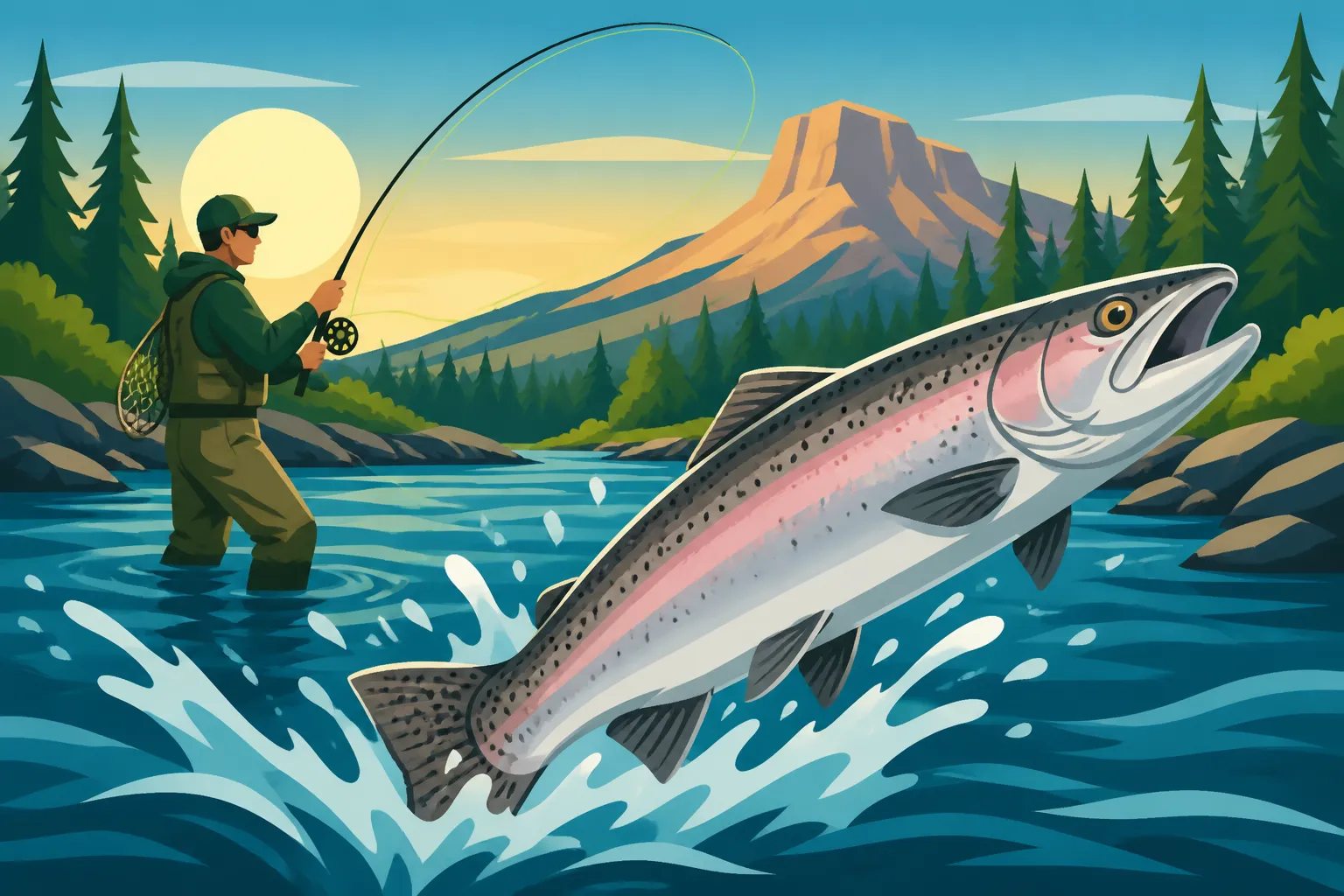
Spey casting with two-handed rods is incredibly popular on the Deschutes, and for good reason. It allows you to cast long distances with minimal effort, even in tight quarters with high banks or dense riparian vegetation behind you. This means you can cover more water efficiently, presenting your fly to untouched lies that might be inaccessible with a single-handed rod. The primary technique for summer steelhead is swinging flies. This involves casting your fly across and slightly downstream, allowing the current to carry it in an arc (or "swing") across the river. The idea is to present the fly in a way that suggests a living, moving organism, triggering an aggressive strike from a steelhead.
To execute a successful swing, you'll need to control your line speed and the depth of your fly. Depending on the current and the depth of the run, you might use a floating line with a heavy sink tip or a full sinking line. Learning to mend your line effectively during the swing is crucial to control the fly's speed and depth. Often, a slow, deliberate swing that keeps the fly in the "zone" for as long as possible is what prompts a strike. The take can be subtle—just a slight pause or tug—or it can be a violent jerk that nearly rips the rod from your hands. Mastering the various Spey casts, such as the Snap-T, Perry Poke, or Double Spey, will significantly enhance your ability to fish different river features and conditions. It's a truly elegant and effective way to chase these powerful fish.
Single-Handed Fly Fishing Approaches
While Spey casting gets a lot of attention, single-handed fly fishing remains a highly effective method for Deschutes summer steelhead, especially in certain types of water or when fish are holding in more accessible lies.
- Nymphing: Fishing nymphs under an indicator is a highly productive technique, particularly in faster, broken water where steelhead might be holding close to the bottom. This method focuses on getting your fly down to the fish quickly and keeping it in the strike zone for an extended period. You'll use heavier nymphs like Pat's Rubber Legs or large stonefly patterns, often with a split shot or two to ensure they sink adequately. The indicator helps you detect subtle takes that might otherwise go unnoticed. This method is excellent for covering pocket water and runs where fish are hunkered down.
- Dry Fly Opportunities: While rare, there are magical moments on the Deschutes when summer steelhead will rise to a dry fly, often in the late evenings during a heavy caddis hatch. This is typically a sight-fishing game, targeting active fish. When it happens, it's an exhilarating experience, but don't expect it to be a daily occurrence. It's a special bonus.
- Traditional Swinging with Single Hand Rods: You can also swing flies with a single-handed rod, particularly in smaller runs or when you want a more precise presentation. Using a floating line with a sinking leader or a short sink tip can be very effective. The principles are similar to Spey swinging, but the range and line control might be more limited. This technique is often more subtle and can be incredibly rewarding when fish are a bit spooky in lower, clearer water. For general fly fishing knowledge, you can also refer to our guide on How to Fly Fish in Oregon.
Reading the Water: Where Steelhead Hold
Successfully fishing the Deschutes River demands an ability to "read the water" – to identify potential holding lies where steelhead might be resting or ambushing prey. These fish are powerful swimmers, but they're also efficient, conserving energy by seeking out seams and current breaks.
- Pocket Water: This refers to areas with numerous rocks and boulders that create small, relatively calm pockets of water amid faster currents. Steelhead often tuck into these pockets, using the broken water as cover and a resting spot. Focus on casting your fly to drift through these pockets.
- Runs: Long, relatively uniform stretches of river with a consistent flow are called runs. Steelhead will often line up in these runs, especially along the deeper seams where faster current meets slower water. Pay attention to changes in depth and current speed; these are prime areas.
- Riffles: Shallower, faster sections of the river, often with a rocky bottom, are riffles. While steelhead don't typically hold directly in the fastest part of a riffle, they will often be found in the deeper, slower water at the head or tail of a riffle, or in the transition zones where the riffle drops into a deeper pool.
- Tailouts of Pools: As water exits a deep pool and begins to accelerate into a shallower run or riffle, the "tailout" area is a classic steelhead lie. Fish will stack up here, waiting for the optimal current.
- Seams and Current Breaks: These are perhaps the most important features to identify. Anywhere a fast current meets a slower current, or where current is deflected by a rock, log, or bank, a "seam" is created. These are energy-efficient lanes for fish, and they often hold right in or adjacent to them. Pay close attention to subtle changes in water texture and speed. Learning to effectively read these subtle cues is a skill that develops over time, and it's invaluable for all types of Oregon Steelhead Fishing Techniques.
Navigating the River: Access and Etiquette
The Deschutes River is a popular destination, and knowing where you can go and how to behave on the water is essential for a good experience and for preserving the fishery for everyone.
Public Access Points and Regulations
The Lower Deschutes River, stretching from Pelton Dam down to the Columbia River, offers extensive public access. Much of it is managed by the Bureau of Land Management (BLM) and Oregon State Parks. Key access points include Maupin, the Deschutes River State Recreation Area, and various BLM campgrounds and boat launches. These areas provide parking, and sometimes facilities, to get you to the river. However, be aware that some of the most productive water requires a bit of a hike or floating in a drift boat. Always consult an up-to-date map and local regulations provided by the Oregon Department of Fish and Wildlife (ODFW). Our Oregon Fishing Regulations Explained guide can provide a general overview, but specific Deschutes River rules are often very detailed and subject to change.
Remember that a valid Oregon Fishing License Guide is required, often with specific endorsements for salmon and steelhead. It's also critical to know the boundaries of the Warm Springs Indian Reservation, as different regulations and tribal permits apply to fishing on reservation lands. Always carry your license and any required tags, as game wardens frequently patrol the river. Knowing the Oregon Fishing Zones Explained can help clarify specific regulations for different stretches of the Deschutes.
River Etiquette and Conservation
The Deschutes is a cherished resource, and proper etiquette ensures that everyone has a pleasant and productive experience.
- Share the Water: Expect to encounter other anglers, especially during peak season. Give others ample space, typically at least 100 yards, especially when swinging flies. If you're coming downstream, respect anglers who are already set up in a run.
- Rotation: On popular runs, a common practice is a "downstream rotation." Anglers start at the top of a run and make a few casts, then take a few steps downstream, allowing the next angler to move into their spot. This ensures everyone gets a turn.
- Wade Wisely: Avoid wading unnecessarily into prime fishing water if you can fish from the bank or a shallower edge. Your presence can spook fish. Also, be mindful of spawning areas (redd protection) and avoid disturbing the riverbed in those sensitive zones.
- Leave No Trace: Pack out everything you pack in. This includes all trash, broken leader material, and discarded fishing line. Let's keep this beautiful river pristine.
- Respect Private Property: While much of the Deschutes is publicly accessible, always respect private property signs and do not trespass.
Dealing with Challenges: Wind, Crowds, and Water Levels
Fishing the Deschutes isn't always idyllic. You'll face challenges that test your patience and skill.
- Wind: The Deschutes canyon can be notoriously windy, especially in the afternoons. Strong gusts can make casting incredibly difficult and make boat control challenging. Practice casting in windy conditions, and consider using heavier line tips or flies to punch through the wind. A good pair of polarized sunglasses will also help you battle the glare and keep your eyes protected.
- Crowds: During peak summer steelhead season, popular access points and runs can get crowded. If you prefer solitude, consider exploring less accessible areas by hiking further, or fishing during off-peak times like weekdays or very early mornings. Being flexible with your chosen spots can make a big difference.
- Water Levels and Temperature: ODFW and local fly shops often provide daily updates on river flows and water temperatures. High water can make wading dangerous and spread fish out, while extremely low and warm water can make fish sluggish and stressed. Adapt your approach based on these conditions. For instance, in higher water, you might use heavier sink tips and larger flies to get down to the fish. In lower, clearer water, a more subtle approach with lighter tippet and smaller flies might be more effective. Monitoring current Oregon fishing regulation updates can help you stay informed about any emergency closures due to water conditions.
Beyond the Catch: Conservation and Enjoyment
Ultimately, fishing for summer steelhead on the Deschutes is about more than just numbers. It's about connecting with nature, challenging yourself, and contributing to the conservation of a truly magnificent wild resource.
Catch and Release Best Practices
Because Deschutes summer steelhead are predominantly wild fish, catch and release is not just a suggestion; it's a critical practice for the long-term health of the fishery. Even when retention is allowed, many anglers choose to release these precious fish.
- Minimize Fight Time: Use appropriate tackle that can subdue the fish quickly, reducing stress.
- Keep Fish in Water: Avoid removing the fish from the water entirely. This helps protect their delicate slime coat and gills. Use a net to control the fish while you remove the hook.
- Barbless Hooks: Most regulations (and good practice) require barbless hooks for steelhead. They make hook removal much easier and cause less damage to the fish.
- Gentle Handling: Handle the fish with wet hands, supporting its belly. Avoid squeezing or touching its gills.
- Revive Carefully: If the fish seems sluggish, hold it gently in the current, facing upstream, until it regains its strength and can swim away on its own. Don't push it; let it decide when it's ready.
Our comprehensive guide on Oregon Catch-and-Release Rules provides even more detailed advice on how to safely release fish.
The Experience: More Than Just Catching Fish
Even on days when the fish aren't biting, the Deschutes River offers an incredible experience. The stunning basalt canyons, the abundant wildlife, and the sheer beauty of the high desert landscape are reasons enough to visit. You might see deer, osprey, eagles, and even bighorn sheep. The challenge itself is part of the allure; the pursuit of a wild Deschutes steelhead can teach patience, persistence, and humility.
It's about the casting rhythm, the sound of the river, the quiet camaraderie with fellow anglers, and the profound satisfaction of being in such a wild and special place. Whether you land a trophy steelhead or simply enjoy a day on the water, the Deschutes will leave an indelible mark. It's one of the Best Rivers to Fish in Oregon for a reason, offering an unparalleled fly fishing adventure that resonates deep within the soul of any dedicated angler. Embrace the journey, respect the resource, and cherish every moment spent on this incredible river.
Disclaimer
Fishing conditions and regulations in Oregon can change frequently due to environmental factors, fish populations, and management decisions. Always consult the latest Oregon Department of Fish and Wildlife (ODFW) regulations before planning your trip. This guide is for informational purposes only and does not supersede official ODFW publications.