Oregon Salmon Species Guide
If you've ever stood on the banks of an Oregon river, watching the water churn with unseen life, you know the thrill and, let's be honest, sometimes the sheer confusion, that comes with identifying the majestic salmon species that grace our waters. It can feel overwhelming trying to keep track of what's what, especially with varying seasons and regulations. This comprehensive guide is here to untangle the mystery, helping you understand the different types of salmon in Oregon, where to find them, and how to tell them apart so you can fish confidently and legally.
Understanding Oregon's Salmon Species: A Quick Overview
Oregon is a truly special place for anglers, offering some of the most diverse and exciting salmon fishing opportunities in the Lower 48. But it's not just about catching fish; it's about understanding the incredible creatures themselves. Each species has its own unique characteristics, life cycle, and preferred habitats, all of which influence when and where you'll find them. Knowing these distinctions is key to becoming a more successful and conservation-minded angler.
Why Salmon Matter So Much to Oregon
Salmon aren't just fish; they're an icon of the Pacific Northwest, deeply woven into the ecological, cultural, and economic fabric of Oregon. For generations, they've sustained indigenous peoples, provided livelihoods for commercial fishermen, and brought joy to countless recreational anglers. Their epic migrations from freshwater rivers to the vast ocean and back again are a testament to nature's resilience, and they play a vital role in the health of our river systems by transporting marine nutrients far inland. When you're out there on the water, you're not just pursuing a catch; you're participating in a timeless tradition and connecting with a cornerstone of Oregon's natural heritage.
The Life Cycle of Pacific Salmon
The journey of a Pacific salmon is one of the most remarkable feats in the animal kingdom, a true testament to instinct and endurance. It begins in the gravel beds of freshwater rivers and streams, where eggs are laid and nurtured. Once hatched, tiny alevin, then fry, emerge, spending critical time in freshwater habitats, growing and learning to navigate currents. As they mature into smolts, a profound physiological change occurs, allowing them to adapt from freshwater to saltwater, and they embark on their arduous migration to the ocean. Here, they spend years feeding and growing, sometimes traveling thousands of miles, before an innate drive calls them back to their natal streams. This homeward journey is their final act, where they spawn, completing the cycle, and ultimately contributing their spent bodies to the nutrient cycle of the river. Understanding this cycle deepens your appreciation for every fish you encounter and the importance of healthy habitats.
The King of the River: Chinook Salmon
Often considered the pinnacle of salmon fishing, Chinook salmon (also known as King salmon) are revered for their impressive size, powerful fights, and delicious, rich flesh. They are the largest of the Pacific salmon species, and catching one is often a lifelong dream for many anglers. In Oregon, we're fortunate to have both spring and fall runs, each offering distinct fishing experiences.
Spring Chinook: The Highly Prized Run
Ah, Spring Chinook! If you've ever heard anglers whisper about "Springer," they're talking about these magnificent fish. These are arguably the most sought-after salmon in Oregon. What makes them so special? They enter our river systems, like the mighty Willamette or the grand Columbia, in the late winter and early spring, carrying a high fat content because they won't spawn until late summer or fall. This translates to incredibly firm, buttery, and flavorful meat that's considered a true delicacy. The anticipation of the Spring Chinook Season Timing in Oregon is palpable each year, and the fishing techniques for these early arrivals often involve careful boat control, specific bait setups, and a good dose of patience. When that rod finally bends over, you know you're in for a battle.
Fall Chinook: Abundance and Opportunity
While Springers get a lot of the glory, Fall Chinook offer incredible fishing opportunities, often in greater numbers, particularly in the lower Columbia River. These fish typically enter the rivers later in the summer and fall, with spawning happening relatively soon after their return. While their flesh might be a little less fatty than their spring cousins as they get closer to spawning, they still provide an exhilarating fight and excellent table fare. Places like the Columbia River during the Fall Chinook Season Timing on the Columbia become a hub of activity, with boats and bank anglers targeting these powerful fish. It's a fantastic time for many families and groups to get out on the water, as the sheer volume of fish can lead to some truly memorable days. How to Fish for Fall Chinook on the Columbia effectively often involves trolling with bait or large spinners, but bank anglers also have success plunking or casting spoons.
Identifying Chinook Salmon
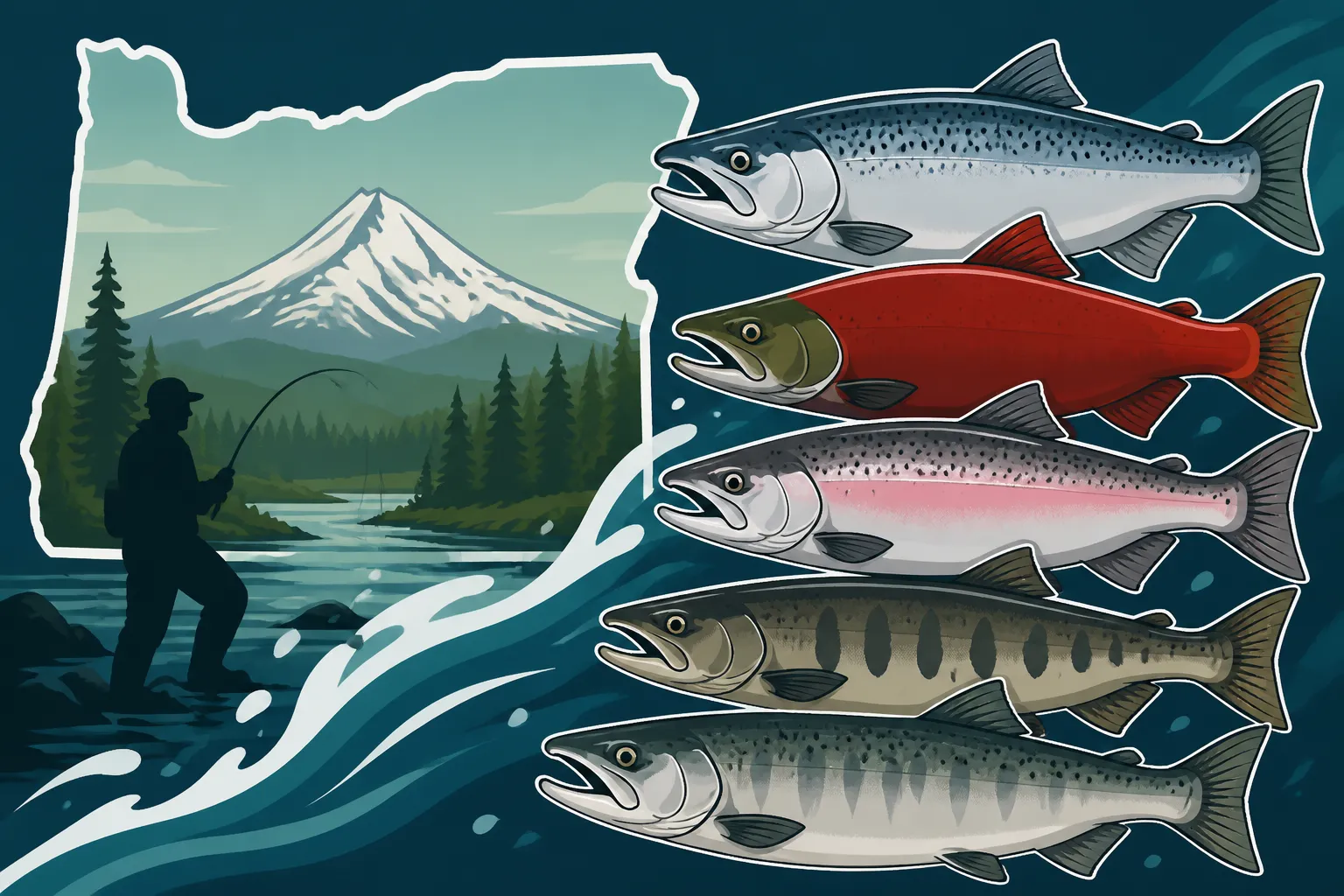
Identifying a Chinook salmon on the water can be pretty exciting. They are characterized by their large size, typically ranging from 20 to 50 pounds, though some true monsters can exceed 70! Look for black gums and a mouth that is often entirely black inside. Their tail fins are usually heavily spotted on both lobes, and their backs are dark, often with a bronze or olive hue, fading to silvery sides. Unlike some other salmon, their spots usually extend all the way down their backs and onto their tail. A quick visual check of these features, especially the black gums and heavy tail spotting, will generally confirm you've got a King on the line. When buying tackle, you'll find specialized gear for Chinook on sites like Amazon, from heavy-duty rods to specific bait holders.
The Silver Streak: Coho Salmon
Coho salmon, affectionately known as "silvers," are another incredibly popular salmon species in Oregon, particularly for their acrobatic fights and their tendency to bite aggressively. While generally smaller than Chinook, they make up for it with their feisty nature and beautiful, bright silver flanks when fresh from the ocean. They provide a fantastic fishing experience, especially for those who enjoy active casting or trolling.
The Coastal Coho Runs
Oregon's coastal rivers, such as the Nestucca, Alsea, and Siletz, are famous for their healthy Coho runs. These fish tend to enter the rivers from late summer through fall, and their arrival often signals the peak of the fall salmon season for many coastal communities. Unlike the often deep-holding Chinook, Coho can be found in a wider range of water types, from deeper pools to faster riffles, making them accessible to a variety of fishing methods. The opportunity to catch a bright, ocean-fresh Coho, still shimmering with its iridescent silver, is a highlight for many anglers. These runs are a critical part of the coastal ecosystem and a big draw for local tourism and sport.
Identifying Coho Salmon
Coho salmon are generally smaller than Chinook, typically weighing between 8 to 15 pounds, though larger ones are certainly caught. Their most distinguishing features are their bright silver sides (hence "silver salmon") and a tail fin that is not heavily spotted on both lobes. You might see some spots on the upper lobe of the tail, but they won't be as dense or cover the entire tail like a Chinook's. Their gums are often white or pale, in contrast to the dark gums of a Chinook. They also tend to have a more slender body shape compared to the bulkier Chinook. When you hook into a Coho, their aerial displays and strong runs are often the biggest giveaway – they love to jump! Keeping track of Oregon Coho Salmon regulations is important, as wild Coho are often protected, requiring careful identification.
The Inland Gem: Kokanee Salmon
Not all salmon make the epic journey to the ocean. Kokanee salmon are a unique and often overlooked species in Oregon, living their entire lives in freshwater lakes and reservoirs. These landlocked Sockeye salmon offer a completely different fishing experience, often pursued by trolling enthusiasts or those looking for a delicious, smaller pan-sized fish. They might not be as large as their ocean-going cousins, but they provide plenty of excitement and a tasty reward.
Where to Find Kokanee in Oregon
Kokanee thrive in many of Oregon's deeper, colder lakes and reservoirs, particularly those in the Cascades and central Oregon. Popular spots include Wallowa Lake, Lake Billy Chinook, and Odell Lake. These fish are primarily plankton feeders, which dictates much of their behavior and how anglers target them. They tend to school up in open water, often at specific depths, making trolling a highly effective method. Targeting Kokanee Salmon in Oregon requires specialized gear, like downriggers or leaded line, to get your lures or bait down to where the schools are holding. It's a tranquil yet engaging form of fishing, often done with stunning mountain backdrops.
Identifying Kokanee Salmon
Kokanee salmon are much smaller than other Pacific salmon, typically ranging from 10 to 20 inches in length and weighing anywhere from a half-pound to a few pounds. When caught, they are usually a beautiful bright silver with a bluish back. As they get closer to spawning, their bodies undergo a dramatic transformation, with males developing a distinct red body, green head, and a pronounced humped back, much like their Sockeye relatives. Their mouth usually lacks teeth, or they are very small. If you're out on a high mountain lake and catch a small, silvery fish with no significant spots, chances are you've got a Kokanee. They are fantastic eating, often smoked or grilled whole. For specific Kokanee tackle, from specialized dodgers to small hoochies, you can find a wide array of options on Amazon.
Other Salmonid Species You Might Encounter (and Confuse!)
While Chinook, Coho, and Kokanee are the primary salmon species anglers target in Oregon, our diverse waterways are home to other salmonids that sometimes get mistaken for their more famous cousins. Knowing these less common, but equally interesting, species can help you stay compliant with regulations and deepen your understanding of Oregon's rich aquatic biodiversity.
Sockeye Salmon: A Rare Sight
Sockeye salmon are incredibly unique and, unfortunately, quite rare in Oregon's sport fisheries. Unlike other salmon, Sockeye primarily feed on zooplankton throughout their marine and freshwater lives, which gives their flesh its distinctive deep red color. Most Sockeye runs in Oregon are critically endangered or protected, and they are generally not a targeted species for recreational anglers. If you happen to encounter one, it's often an incidental catch, and you'll need to know the rules for release. Their most notable identifying feature when returning to spawn is their brilliant red body with a green head, a striking coloration that leaves no doubt about their identity. Always check the latest Oregon Fishing Regulations Explained to ensure you understand specific rules if you accidentally hook into a Sockeye.
Chum Salmon: The "Dog Salmon"
Chum salmon, sometimes called "dog salmon" due to their impressive canine-like teeth developed during spawning, are another less commonly targeted species in Oregon. While they are a vital commercial species in Alaska and parts of Washington, their runs in Oregon are smaller and often concentrated in specific coastal drainages. They are perhaps best known for their dramatic spawning colors, with males developing vertical bars of green and purple on their flanks, along with those pronounced teeth and a hooked snout. When fresh from the ocean, they are silvery with faint vertical bars. Due to their lower oil content compared to Chinook or Coho, they are generally not as highly prized for eating, but they still provide a powerful fight. You're more likely to encounter them in specific coastal rivers during late fall, often as an unexpected bonus catch.
Hatchery vs. Wild Salmon: What You Need to Know
One of the most crucial distinctions every angler needs to understand in Oregon, especially when it comes to salmon, is the difference between hatchery-reared and wild-born fish. This isn't just an academic point; it directly impacts what you can legally keep and contributes significantly to the conservation efforts of these vital species. Respecting these differences is a hallmark of a responsible angler.
The Importance of Fin-Clipping
To help anglers and enforcement officers easily distinguish between hatchery and wild salmon, most hatchery-reared salmon in Oregon are "fin-clipped" before they are released into the wild. This usually involves removing the adipose fin, a small, fleshy fin located on the fish's back between the dorsal fin and the tail. It's a quick, painless procedure for the fish that leaves a clear, permanent mark. When you catch a salmon, the very first thing you should do after landing it (and before deciding whether to keep it) is check for that missing adipose fin. A fish with a missing adipose fin is a hatchery fish, while one with an intact adipose fin is considered wild. This simple check is fundamental to adhering to catch limits and protecting wild populations.
Conservation and Regulation Differences
The distinction between hatchery and wild salmon is paramount for conservation. Wild salmon populations face numerous threats, including habitat loss, climate change, and competition, making their protection a top priority. Hatcheries play a role in supplementing fish numbers, but the goal is to protect the genetic diversity and natural resilience of wild stocks. Because of this, regulations often allow anglers to retain hatchery-clipped salmon but require the immediate, careful release of wild, unclipped salmon. Understanding these rules is critical. Failing to release a wild fish, or not being able to properly identify one, can lead to Oregon Fishing Violations and Penalties. Always carry a copy of the current Oregon Fishing Regulations Explained or have it accessible on your phone, and make sure you know your Oregon Catch-and-Release Rules. It's not just about avoiding a fine; it's about being a good steward of Oregon's natural resources.
Essential Gear and Techniques for Salmon Fishing in Oregon
To successfully pursue these magnificent fish, having the right gear and understanding effective techniques is paramount. While salmon fishing can be as simple as casting from the bank, many approaches and specialized tools can dramatically increase your chances of success, especially for larger species like Chinook. Don't be intimidated; let's break down some of the essentials.
Rods, Reels, and Line Choices
For most Oregon salmon fishing, whether you're targeting Spring Chinook on the Willamette or Fall Chinook on the Columbia, you'll want a medium-heavy to heavy action rod, typically between 8 to 10.5 feet long. These longer rods help with casting distance from shore and provide leverage when fighting powerful fish from a boat. Reels should be robust, with a smooth drag system capable of handling long, powerful runs. Level-wind baitcasting reels are very popular for boat fishing, while spinning reels work well for both boat and bank applications, especially for those new to salmon fishing.
Line choice is also critical. Many anglers opt for braided main lines, ranging from 30-pound test for Coho up to 65-pound test or more for heavy Chinook, due to their strength and lack of stretch. However, you'll almost always use a monofilament or fluorocarbon leader, often between 20-pound and 40-pound test, depending on water clarity and target species. These leaders provide a bit of stretch and are often less visible to the fish. You can find excellent quality rods, reels, and fishing lines on platforms like Amazon, often with reviews from fellow anglers.
Effective Baits and Lures
Salmon in Oregon are caught using a wide variety of baits and lures, and often, what works best depends on the species, the time of year, and the specific river conditions. For Chinook, cured salmon roe (eggs) is a perennial favorite, often drifted or fished under a float. Herring and anchovies, trolled behind a dodger or flasher, are also incredibly effective, especially in the larger rivers and bays. For Coho, spinners, spoons, and jigs can be deadly, particularly when fish are actively biting. Plugs and diving lures are also popular, especially for trollers.
For those pursuing Kokanee, small dodgers, wedding rings, or even tiny hootchies tipped with corn are popular choices, trolled at specific depths. Knowing the Best Lures for Oregon Salmon Fishing for your chosen species and location is key. Always check local tackle shops for what's currently working, as conditions can change rapidly. Having a selection of different baits and lures, ready to swap out, will give you the best chance of success.
Navigating Seasons and Regulations for Oregon Salmon
Fishing for salmon in Oregon is an incredible experience, but it's one that comes with a responsibility to understand and adhere to the ever-changing rules. Regulations are in place for a good reason – to protect our precious salmon resources and ensure healthy runs for future generations. Ignoring them can lead to disappointment or worse.
General Season Considerations
Oregon's salmon fishing seasons are complex and vary significantly by species, river system, and even specific zones within a river. It's never a "one size fits all" situation. For example, the season for Spring Chinook on the Willamette River will be very different from the season for Fall Chinook on the Columbia, or Coho on a coastal river. Ocean salmon seasons are managed differently still, with quotas and varying open days. The best place to start is always the official Oregon Department of Fish and Wildlife (ODFW) regulation booklet. This critical document will detail the Oregon Fishing Season Dates and Limits for specific areas and species. Don't rely on word-of-mouth; always confirm the regulations yourself before heading out.
Understanding Daily Bag and Size Limits
Beyond knowing when you can fish, you absolutely need to know what you can keep. Daily bag limits specify how many salmon of a certain species you can retain in a 24-hour period, and these can vary wildly. Some areas might have a limit of one fin-clipped Chinook, while others might allow two Coho. Size limits also come into play, requiring fish to be above or between certain lengths to be legally kept. And let's not forget the crucial Do you need a tag to keep a salmon in Oregon? – often, a Combined Angling Tag or specific salmon/steelhead tags are required in addition to your general fishing license, and you'll need to accurately record your catch on a Oregon Catch Record Card Requirements. It's a lot to keep track of, but it's essential. Make sure you have a reliable measuring device on hand and know how to use it, and remember that when in doubt, it's always best to release the fish unharmed.
Disclaimer
This article is for general informational purposes only and does not constitute professional advice. Laws, prices and regulations vary by location and change over time. Consult a qualified professional for guidance on your specific situation.