Oregon Bait and Lure Guide
There’s nothing quite like the thrill of a fish hitting your line, but let’s be honest: standing on the bank or boat, staring at a tackle box overflowing with options, wondering if you’ve got the right bait or lure for Oregon’s incredibly diverse waters can be genuinely overwhelming. From the raging rivers to the calm lakes, and out into the vast Pacific, every body of water and every fish species has its own preferences. This guide is here to cut through the confusion, helping you understand the best bait and lure choices to increase your chances of success across the Beaver State.
Understanding Oregon's Diverse Fisheries
Oregon is a true angler's paradise, boasting an incredible array of fishing opportunities. But this diversity, while wonderful, means there isn't a one-size-fits-all solution when it comes to bait and lures. What works wonders for a trout in a high mountain lake might be completely ignored by a salmon battling its way up the Columbia. To truly stack the odds in your favor, you've got to understand the fundamental differences in these environments and the fish that call them home.
Freshwater vs. Saltwater Nuances
Think about the world beneath the surface: it’s vastly different depending on whether you're in a freshwater river or the salty ocean. These environments dictate everything from the available forage to how fish perceive their surroundings.
In freshwater rivers and lakes, fish are typically adapted to feeding on insects, smaller baitfish, crustaceans like crayfish, and even terrestrial creatures that fall into the water. The currents in rivers mean fish often position themselves to intercept food drifting downstream, making presentation key. Lures that mimic these natural food sources, or baits that release a tempting scent into the current, tend to be highly effective. The water can range from crystal clear in a mountain stream to murky after a heavy rain, and your choices need to adapt. For instance, in clear water, subtle, natural-looking presentations are often best, while in stained water, brighter colors and more vibration can grab a fish's attention. Understanding the specific water you're fishing – whether it's the swift currents of the Deschutes River or the calm depths of a stocked lake – is paramount.
Out in the ocean or in the brackish estuaries where rivers meet the sea, the game changes dramatically. Here, fish are often larger, more aggressive, and accustomed to preying on a wider variety of marine organisms. Baitfish like herring and anchovies become primary food sources, as do squid, various crustaceans, and smaller rockfish. Ocean fishing often involves covering vast expanses of water, so lures designed for trolling or deep jigging are common. The sheer volume and depth of the ocean mean that scent trails can be less effective over long distances, and visual appeal, vibration, and depth control often take precedence. For species like halibut, you might be fishing hundreds of feet down, requiring heavy gear and highly visible, often large, baits or lures.
Species-Specific Considerations
Every fish species in Oregon has its own unique personality, preferred diet, and hunting strategy. What a rainbow trout finds irresistible is often completely different from what a Chinook salmon or a smallmouth bass will strike. This is why a keen understanding of your target species is so crucial.
Let's consider the humble trout. Whether you're chasing wild rainbow trout in a remote stream or stocked trout in a popular lake, they primarily feed on insects (both aquatic and terrestrial), small minnows, and even fish eggs. For these finicky eaters, presentations that mimic their natural forage, like small spinners, fly patterns, or natural baits like worms, are often the ticket.
Then you have the mighty salmon and steelhead. These anadromous fish are often focused on their migration and reacting to instinct rather than hunger. They might strike out of aggression, territoriality, or simply because something looks like a vulnerable food source. For these powerful fighters, larger, flashy lures that create a strong vibration, or baits that offer a potent scent trail like cured roe, are incredibly effective. Techniques such as drift fishing for steelhead or trolling for salmon are common, each requiring specific lure types and rigging. You can dive deeper into the tactics for these incredible fish in our Oregon Salmon Fishing Techniques and Oregon Steelhead Fishing Techniques guides.
Warmwater species like smallmouth bass and largemouth bass are ambush predators, often hiding near structure and striking aggressively at anything that resembles a baitfish, crawfish, or frog. For them, jigs, crankbaits, and soft plastics that can be worked around submerged logs, rocks, or weed beds are often the best choices. They are more opportunistic feeders compared to trout, and their predatory instincts can often be triggered by erratic movements or loud rattling lures. Understanding these behaviors helps you select the right tool for the job.
Essential Bait for Oregon's Freshwater Anglers
When you're casting your line into Oregon's countless rivers, streams, and lakes, sometimes the simplest, most natural offerings are the most effective. Freshwater fish, especially trout and panfish, often have a strong preference for things they'd naturally encounter in their environment. But there's also a place for prepared baits designed to attract them with potent scents and flavors.
Live Bait and Natural Offerings
Live bait has been a staple of fishing for centuries, and for good reason: it’s alive! The natural movement, scent, and texture are incredibly appealing to many freshwater species.
Worms: The classic nightcrawler or a handful of red wigglers are often unbeatable for a wide variety of fish, especially trout, panfish (like crappie and bluegill), and even smaller bass. You can buy them at virtually any bait shop, and they’re also readily available on Amazon if you prefer to stock up. The key with worms is to present them naturally. A whole nightcrawler hooked once through the head, allowed to drift with the current, or suspended under a bobber in still water, can be incredibly effective. Red wigglers are smaller and great for panfish or finicky trout. The wiggling action sends out subtle vibrations that fish can detect from a distance, and the natural scent trail is a powerful attractant. They're particularly effective after a rain, when natural worms are often washed into the waterways.
PowerBait: This isn't technically "live" bait, but it mimics natural food sources so well that it's often grouped with them. PowerBait, specifically the dough and nugget forms, is a true superstar for stocked trout in Oregon's lakes and ponds. It comes in a kaleidoscope of colors and scents (garlic, cheese, corn, salmon egg, etc.). The beauty of PowerBait is its buoyancy; when rigged with a small treble hook and a sliding sinker, it floats off the bottom, putting it right in a trout's feeding zone. The slow release of scent and attractive colors make it irresistible. Many anglers swear by specific color combinations, like chartreuse and rainbow, especially in heavily fished areas. For more tips on this, check out our Best Bait for Oregon Trout Fishing guide.
Cured Salmon and Steelhead Eggs: This is gold for targeting salmon and steelhead in rivers, and even some larger trout. These eggs are packed with scent and protein, mimicking a natural food source that these fish readily encounter. Curing them in various brines (often containing borax, scents, and dyes) enhances their shelf life, color, and scent release. You can buy them pre-cured, or learn to cure your own. Presentation is crucial: typically, a small cluster of eggs is tied into an "egg sack" with netting material, then drift fished along the bottom or suspended under a float. The slow dispersion of scent as the eggs tumble in the current is what really draws fish in. It's often the bait of choice for savvy anglers targeting migratory fish.
Prepared Baits and Scents
Beyond the classics, there's a whole world of prepared baits and artificial scents designed to give you an edge, especially when fish are being picky or when regulations limit the use of live bait.
Dough Baits and Pastes: Similar to PowerBait but often with different formulations, these products are designed to be molded onto a hook. Brands like Berkley PowerBait still dominate this category, but other niche brands exist too. They come in various textures, colors, and scent profiles, often targeting specific species like catfish (with stronger, smellier concoctions) or carp (often corn-based). These are especially useful in calmer waters where a stationary bait can soak and release its attractants over time. The key is to mold it firmly around your hook, ensuring it stays on during casting and retrieval. Some anglers even mix their own "secret sauce" dough baits using ingredients like flour, cornmeal, cheese, and various flavorings.
Scent Gels, Sprays, and Attractants: This is where you can truly enhance your artificial lures. Scent plays a huge role in a fish's decision to strike and hold onto a bait. Products like Pro-Cure, Mike’s Glo-Scent, and various Gulp! Alive! sprays can be applied directly to spinners, spoons, jigs, or soft plastics. They come in a vast array of "flavors" mimicking everything from herring and crawfish to garlic and anise. The idea is to add an olfactory stimulus to your visual and vibrational lures. In murky water, where visibility is low, a strong scent trail can be the difference between a missed opportunity and a bite. Some anglers even dab these scents on their live baits for an extra boost. For example, a little Pro-Cure "Anise Plus" on a worm might make it even more irresistible to a hungry trout. Many of these effective scent products can easily be found and ordered online through retailers like Amazon.
Top Lures for Oregon's Rivers and Lakes
While natural baits have their place, artificial lures offer incredible versatility, covering vast amounts of water and appealing to a fish's predatory instincts with flash, vibration, and erratic movements. For Oregon's diverse freshwater environments, mastering a few key lure types can significantly boost your success.
Spinners and Spoons
These are often among the first lures an angler learns to use, and for good reason: they are incredibly effective across a wide range of species and conditions.
Spinners: A spinner typically consists of a weighted body, a shaft, and a rotating blade that spins when retrieved through the water. This spinning action creates flash and vibration, mimicking a small, distressed baitfish or insect. Popular brands like Mepps, Rooster Tail, Blue Fox, and Panther Martin are staples in tackle boxes across Oregon. For trout in rivers and lakes, small spinners in sizes #0 to #2 are often ideal. Colors can vary; silver and gold blades are universal, while fluorescent colors like chartreuse or orange can be deadly in stained water or for aggressive fish like steelhead. The key to fishing spinners is a steady retrieve, just fast enough to get the blade spinning. In rivers, casting upstream and retrieving just faster than the current allows the spinner to "swim" naturally. For trout, exploring our Oregon Trout Fishing Techniques guide can provide more detailed strategies.
Spoons: Spoons are essentially curved pieces of metal designed to wobble and flash as they're retrieved or trolled. They imitate a wounded baitfish with their erratic action. Brands like Kastmaster, Little Cleo, Dick Nite, and Crocodile are highly regarded. Spoons come in various weights and sizes, making them suitable for everything from panfish and trout to salmon and steelhead. Smaller, lighter spoons are great for casting in lakes for trout, while heavier, larger spoons are excellent for trolling for kokanee salmon in reservoirs or casting in big rivers for Chinook salmon or steelhead. Silver, gold, and brass are classic colors, often with painted accents like red or orange. In some cases, a highly polished silver spoon can be a fantastic choice for targeting coho salmon in clear coastal estuaries. Many anglers find a good selection of quality spoons available through Amazon for convenience.
Plugs and Crankbaits
These hard-bodied lures are designed to dive, wobble, and sometimes rattle, imitating baitfish or other prey items. They are indispensable for targeting aggressive fish in both rivers and still waters.
Plugs: In Oregon, plugs are particularly famous for salmon and steelhead fishing. Brands like Kwikfish, Flatfish, and Yakima Bait's Mag Lip are legendary on rivers like the Columbia, Willamette, and coastal streams. These lures are often designed to dive to specific depths and have a wide, aggressive wobble that salmon and steelhead can't resist. They are typically fished by back-trolling (using a boat to hold the lure in the current) or by casting and retrieving in slower water. Adding scent to the plug, either by injecting it into a hollow body or by applying an external gel, is a common and effective tactic. The larger sizes are for Chinook salmon, while smaller, more subtle plugs might entice a reluctant steelhead. For targeting spring Chinook, specific strategies involving these lures are detailed in our How to Fish for Spring Chinook on the Willamette guide.
Crankbaits: While plugs are often associated with salmon and steelhead, crankbaits are the bread and butter for bass anglers. These lures typically have a plastic lip (bill) that causes them to dive when retrieved. The size and angle of the lip determine the diving depth. Brands like Rapala, Strike King, and Spro offer a massive range of crankbaits. For smallmouth bass in rocky rivers like the John Day or largemouth bass in lakes like Henry Hagg Lake, crankbaits that mimic crawfish or baitfish are highly effective. Colors should match local forage or provide a contrast in murky water. Fishing crankbaits involves casting them out and reeling them in, often with an erratic retrieve or "cranking and pausing" to trigger strikes.
Jigs and Soft Plastics
Jigs and soft plastics are perhaps the most versatile lure categories, capable of imitating a vast array of prey and being fished in countless ways.
Jigs: A jig is essentially a weighted head with a hook, often adorned with a skirt of hair, feathers, or synthetic materials. Marabou jigs are famous for steelhead, offering a soft, pulsating action in the water. Smaller jigs tipped with a grub or PowerBait are deadly for trout and panfish. In deeper water, lead head jigs with plastic bodies are excellent for bass. Jigs are designed to be fished with an up-and-down motion ("jigging"), allowing them to flutter and fall. They can be cast and retrieved, vertically jigged from a boat, or drifted under a float. For targeting crappie in reservoirs, a tiny jig under a bobber can be incredibly effective.
Soft Plastics: This category is enormous, encompassing everything from curly-tail grubs and worms to creature baits and swimbaits. Made from soft, flexible plastic, they can be rigged in countless ways (Texas rig, Carolina rig, drop shot, Ned rig, wacky rig) and mimic nearly anything a fish eats. For bass, soft plastic worms and creature baits are staple presentations, often fished slowly along the bottom or through cover. For panfish, tiny grubs or tubes on a light jig head can be irresistible. Swimbaits, which look like realistic baitfish, are effective for larger predatory fish like bass and even some salmon and steelhead. The key with soft plastics is to choose the right shape, size, and color to match the forage and conditions, and then to impart lifelike action through rod movements. Many anglers purchase their bulk soft plastics and jig heads from large online retailers like Amazon due to the wide selection and competitive pricing.
Bait and Lure Choices for Oregon's Ocean and Estuaries
Stepping away from freshwater, Oregon's coastline, bays, and estuaries offer an entirely different kind of angling adventure. The sheer scale and depth of the Pacific Ocean, combined with the unique dynamics of river mouths, demand specialized baits and lures designed to attract marine species.
Targeting Salmon and Halibut
When it comes to two of Oregon's most prized ocean catches, Chinook salmon and Pacific halibut, you need gear that's up to the task and presentation that truly shines in the vast blue.
Cut-plug Herring and Anchovies for Salmon: These are the undisputed kings of bait for ocean salmon. Herring and anchovies are natural food sources for salmon, and when properly prepared as a "cut-plug," they create an erratic, wounded-fish swimming action that is incredibly enticing. The bait is cut diagonally and rigged with two hooks to impart a tight, natural spin when trolled. Scent is also key here; many anglers soak their bait in brine solutions with various oils or scents (like anise or herring oil) to maximize appeal. Troll speed, depth, and presentation are all critical to success. Whether you're targeting fall Chinook on the Columbia near Buoy 10 or trolling the open ocean off Newport, correctly rigged herring or anchovies are often the most effective. Learning How to Fish for Fall Chinook on the Columbia will give you an edge in these specific scenarios.
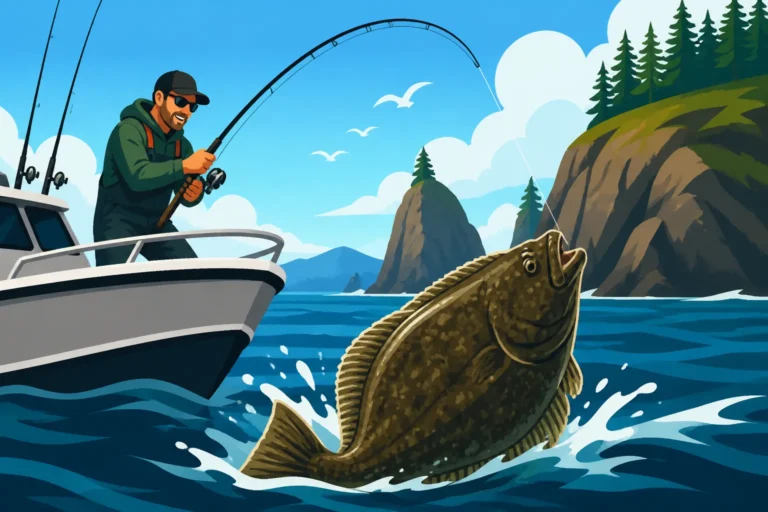
Large Jigs for Halibut: Halibut are big, bottom-dwelling predators, and they respond well to large, heavy jigs dropped right into their strike zone. Jigs weighing from 8 ounces up to 2 pounds (or even more in strong currents) are common. Brands like P-Line, Berkley, and Zoga offer excellent options. These jigs are often equipped with large, sturdy hooks and sometimes feature skirts or plastic tails for added attraction. Colors can vary, but white, glow-in-the-dark, and natural baitfish patterns are popular. The technique involves dropping the jig to the bottom and then rhythmically lifting and dropping it, mimicking a wounded fish. Sometimes, tipping the jig with a piece of herring or octopus can provide an irresistible scent-and-sight combination. Halibut fishing often requires an Oregon Ocean Endorsement in addition to your angling license.
Rockfish and Lingcod Strategies
Oregon's rocky nearshore reefs and kelp beds are teeming with bottom dwellers like various rockfish species (black, blue, yellowtail, vermilion) and the formidable lingcod. These species are aggressive predators that respond well to lures designed for vertical jigging and working close to structure.
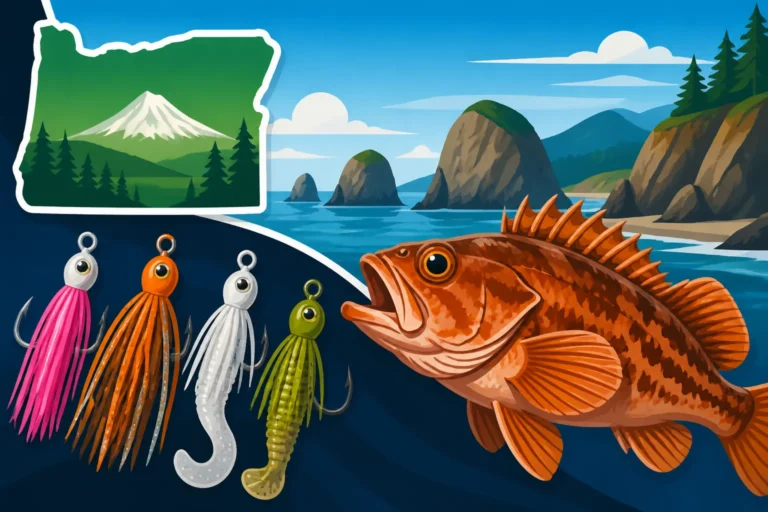
Heavy Jigs and Swimbaits: For rockfish and lingcod, heavy lead-head jigs adorned with large curly-tail grubs, paddle-tail swimbaits, or even octopus skirts are incredibly effective. Sizes range from 4 ounces to 12 ounces, depending on depth and current. Natural colors like green, brown, and black often work well, mimicking various baitfish or crustaceans. Bright colors like chartreuse or orange can also be deadly, especially on days with lower light penetration. The technique is typically vertical jigging: dropping the lure to the bottom and working it with sharp lifts and drops. Lingcod are particularly aggressive and will often strike large swimbaits or metal jigs retrieved with a fast, erratic action near rocky pinnacles.
Shrimp Flies and Sabiki Rigs: While not strictly "lures" for large fish, these are invaluable for catching baitfish (like herring or mackerel) which can then be used as live or cut bait for larger predators. They are also highly effective for catching smaller rockfish or other panfish-like species found in the bays and nearshore. A Sabiki rig consists of multiple small, flashy hooks (often with small plastic shrimp or fish skin imitations) tied in series on a single line. Dropped into a school of baitfish, they can quickly fill a livewell, providing you with fresh, natural offerings for your main target species.
Crabbing Bait
While not strictly fishing, crabbing is a hugely popular activity along the Oregon Coast and often done by anglers. If you're dropping crab pots or rings, you'll need the right attractant to entice those delicious Dungeness crab.
Chicken and Fish Carcasses: Dungeness crabs are scavengers, and they are incredibly attracted to strong, oily scents. The most common and effective baits are chicken (especially drumsticks or backs, as they are tough and last a while) and oily fish carcasses (like salmon or tuna heads, frames, or guts). These baits are typically placed in a bait cage within the crab pot or ring. The stronger and smellier the bait, the better! The goal is to create a powerful scent plume that drifts with the current, drawing crabs from a distance. You can often get fish carcasses from local fish processing plants or from your own salmon and halibut cleaning.
Matching Bait and Lure to Oregon's Seasons and Conditions
Oregon's weather and water conditions are notoriously dynamic, and what worked yesterday might be a bust today. Successful angling here means being adaptable, constantly evaluating the environment, and choosing your bait and lures accordingly. It’s like being a detective, looking for clues in the water, the air, and even the calendar.
Seasonal Preferences
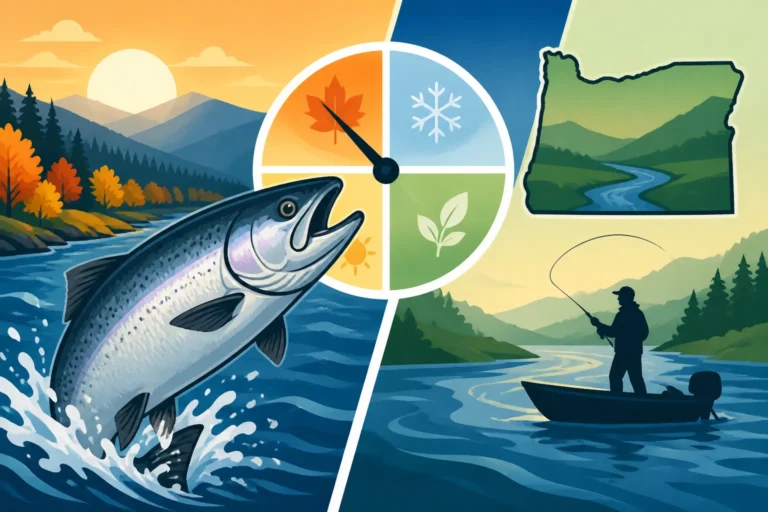
Fish behavior is heavily influenced by the seasons, which dictate everything from water temperature to spawning cycles and food availability. Understanding these shifts is critical for choosing the right presentation.
Spring (March-May): As temperatures rise and rivers swell with snowmelt, many fish become more active. Spring is prime time for trout in stocked lakes and ponds, where PowerBait, worms, and small spinners often excel. It's also the start of the incredible spring Chinook salmon runs on rivers like the Willamette and Columbia. For these powerful fish, large plugs, wobblers, and prawn baits are highly effective, often fished in deeper, slower stretches. Bass also become more active, moving into shallower areas to feed and spawn, making crankbaits and jigs productive.
Summer (June-August): Oregon summers bring warmer water, lower river flows, and often clear conditions. For trout, this means they often retreat to deeper, cooler water in lakes or seek shaded, faster-moving sections of rivers. Small dry flies, nymphs, and very subtle lures are best in clear rivers. High mountain lakes, now ice-free, become excellent for fly fishing or casting small spinners. Summer steelhead runs are strong on rivers like the Deschutes, where marabou jigs, swung flies, and drift-fished baits are top choices. Ocean fishing for salmon, halibut, and tuna is in full swing, requiring cut-plug herring, large jigs, and tuna jigs, respectively.
Fall (September-November): This is a transitional season, often marked by salmon spawning runs and aggressive feeding by many species preparing for winter. Fall Chinook and coho salmon flood coastal rivers and the Columbia. Large spinners, plugs, and cured salmon eggs are deadly for these fish. Bass fishing can be fantastic as they feed heavily. Trout, too, become more active and less finicky as water temperatures cool. Worms, egg patterns, and larger spinners can be effective. This is an exciting time to be an angler, with many species biting readily. Our Oregon Fishing Season Dates and Limits guide offers a comprehensive look at what to expect throughout the year.
Winter (December-February): Cold temperatures and often heavy rain define Oregon winters. Fishing slows down, but the dedicated angler can find incredible opportunities, especially for winter steelhead on coastal rivers like the Nestucca or Wilson. For these resilient fish, presentation needs to be slow and subtle. Drift-fished cured eggs, small jigs under a float, or slow-swinging flies are often the most productive. Bottom fishing for rockfish and lingcod in the ocean can also be excellent on calm weather days, using heavy jigs and swimbaits in deep water. Trout fishing in rivers can be tough, but some stillwater lakes remain productive with patience and subtle bait presentations.
Water Conditions
Beyond the seasons, the immediate water conditions on any given day can dictate your bait and lure choices more than anything else.
Water Clarity:
- Clear Water: In crystal-clear rivers or lakes, fish are more wary and have excellent visibility. This calls for natural colors (silver, gold, browns, greens), smaller baits/lures, and subtle presentations. Fluorocarbon leaders are essential for their low visibility. Think delicate dry flies, small natural-colored spinners, or natural baits like worms.
- Stained or Murky Water: When the water is off-color (from rain, snowmelt, or algae bloom), fish rely more on scent and vibration. This is where brighter colors (chartreuse, orange, pink, hot red) come into their own. Lures with strong vibration (e.g., lipped crankbaits, larger spinners) and baits with potent scents (cured eggs, PowerBait with garlic) will be more easily detected by fish.
Water Temperature:
- Cold Water: In winter or early spring, fish are generally lethargic. Slow, deliberate presentations are key. Baits that release a strong scent over time (cured eggs, PowerBait) or lures that can be worked very slowly (jigs, soft plastics) often get the bite. Fish are less likely to chase.
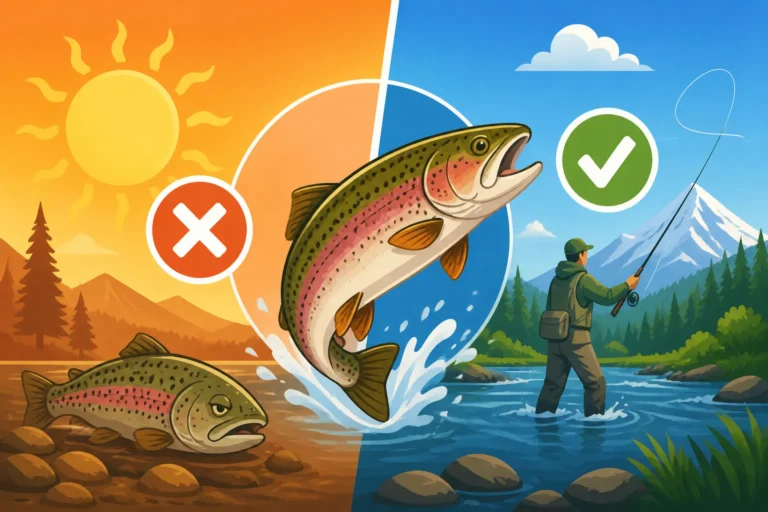
- Warm Water: In summer, fish can be very active. They might chase fast-moving lures (spinners, crankbaits, topwater baits for bass). However, in extremely warm water, some species (especially trout) become stressed and seek deeper, cooler refuges. In these cases, fishing during cooler parts of the day (early morning, late evening) or targeting specific depths becomes important.
Water Flow (Rivers):
- High Water: After heavy rains or snowmelt, rivers are often high and fast. Fish will move to slower water out of the main current, behind obstructions, or close to the banks. Use heavier baits/lures that can get down quickly and stay in the strike zone. Plugs and larger drift-fished baits can be effective near the edges.
- Low Water: In late summer or fall, rivers can run very low and clear. This makes fish extremely spooky. Stealth is paramount. Use longer casts, lighter lines, smaller and more natural-looking presentations. Wade carefully, or approach from downstream to avoid spooking fish. Fly fishing with small, delicate patterns is often effective in these conditions.
Advanced Tips for Bait and Lure Success in Oregon
Beyond just picking the right bait or lure, how you use it can make all the difference. The subtle nuances of presentation, combined with intelligent choices in color and scent, are what separate a good day from a great day on Oregon's waters.
Scent and Attractants
Fish possess an incredibly keen sense of smell, often far superior to our own. This makes scent a powerful, often overlooked, weapon in your angling arsenal, especially in Oregon's diverse and sometimes murky waters.
Understanding the Role of Scent: Think of scent as an invisible calling card for fish. It can attract them from a distance, tell them something is edible, or even trigger an aggressive reaction. In stained or turbulent waters, where visual cues are limited, scent becomes even more critical. Fish can follow a scent trail upstream or across a lake, leading them directly to your offering. Furthermore, a good scent applied to an artificial lure can mask any human odors transferred during handling, making the lure more natural and increasing the chances a fish will hold onto it longer.
Popular Scent Products: Oregon anglers have a few go-to brands for scent attractants. Pro-Cure is a local favorite, offering a vast array of scents like "Herring Anise," "Crawfish," "Trout & Steelhead," and "Garlic Plus." These often come in gel or liquid form and can be easily applied to any bait or lure. Other popular options include Mike's Glo-Scent, available in various fish-attracting flavors, and the entire Gulp! Alive! line of soft plastics that are essentially pre-scented and soaked in a powerful attractant liquid. You can find a fantastic selection of these powerful fish attractants on Amazon, making it easy to experiment with different scents for your local waters.
Application Techniques:
- For Artificial Lures: Apply scent gels or sprays generously to your spinners, spoons, plugs, and soft plastics. Reapply frequently, especially after a few casts or if you haven't had a bite in a while, as the scent can wash off. Some lures, particularly plugs like Kwikfish, even have internal cavities designed for scent injection.
- For Natural Baits: While live bait has its own natural scent, a little extra can't hurt. Dab a bit of gel on your worms or cured eggs. Some anglers will even inject liquid scents directly into baitfish.
- For Crab Baits: When crabbing, supplementing your chicken or fish carcasses with a potent crab attractant can significantly boost your pot's drawing power.
Color and Size Selection
Fish are visual predators, and the color and size of your bait or lure can be the deciding factor in whether you get a strike. It's not just about what looks good to you – it's about what looks right to the fish.
Matching the Hatch (or Forage): The golden rule for color is often to "match the hatch." This means selecting colors that closely resemble the natural food sources available in the water you're fishing. If fish are feeding on small emerald shiners, a lure with silver and green tones is a good bet. If there are abundant crawfish, a brown or reddish-orange pattern will be effective for bass. For fly fishing, this concept is paramount, where specific fly patterns mimic various aquatic insects.
Visibility and Contrast:
- Clear Water: In clear water, natural, subtle colors are generally best. Think muted greens, browns, grays, and silver. Too much flash or unnatural color can spook wary fish.
- Stained/Murky Water: When water visibility is low, you need colors that stand out. Bright fluorescents like chartreuse, hot pink, and orange are highly visible and can create a strong silhouette. Glow-in-the-dark lures are also excellent for deep or very murky conditions.
- Light Conditions: On bright, sunny days, lures with reflective properties (silver, chrome) can create dazzling flashes. On overcast days or in low light, matte finishes or darker colors can provide better contrast.
Size Matters:
- Big Baits for Big Fish: Generally, larger lures or baits target larger fish. A trophy salmon or sturgeon isn't going to expend energy chasing a tiny panfish grub.
- Matching Forage Size: Pay attention to the size of the predominant baitfish or insect in the area. If trout are feeding on tiny midges, a size 0 spinner or a small nymph is more appropriate than a large spoon.
- Finicky Fish: Sometimes, when fish are pressured or not actively feeding, downsizing your bait or lure can trick them into biting. A smaller, more subtle presentation can seem less threatening or easier to catch.
Rigging and Presentation Techniques
Even the best bait or lure is useless if not presented correctly. "Presentation" refers to how your bait or lure moves through the water, mimicking natural prey. Mastering various rigging and presentation techniques is crucial for consistent success.
Drift Fishing: This is a hallmark technique for river fishing, especially for steelhead and salmon. It involves allowing your bait (cured eggs, yarn, worms) or lure (small jigs, often called "drift bobbers") to tumble naturally along the bottom with the current. The goal is to present the offering as if it were a dislodged piece of food or an injured baitfish. Rigging typically involves an in-line sinker or a "slinky" weight that allows the bait to bounce along the bottom without snagging. Good line control is essential to feel the subtle takes. For more on this, our Drift Fishing Techniques for Oregon Rivers guide is a fantastic resource.
Bobber and Jig/Bait: A versatile setup for both still and moving water. A bobber (or float) suspends your bait or jig at a predetermined depth. This is excellent for targeting fish that are feeding suspended in the water column or for keeping your bait off snaggy bottoms. For steelhead, using a large float with a marabou jig or a small egg sack can be incredibly effective, especially in slower pools or when fish are holding in distinct lanes. For trout in lakes, a PowerBait nugget under a bobber keeps it floating just above the weeds. The bobber also provides a clear visual strike indicator.
Trolling: Primarily used in lakes, reservoirs, and the ocean, trolling involves dragging lures or baits behind a moving boat. This allows you to cover large areas of water and present your offering at specific depths. Downriggers are often used to get lures like spoons, plugs, or even cut-plug herring down to precise depths for kokanee, Chinook, or halibut. The speed of the troll is critical, as it affects the action of the lure. Experimentation with speed and depth is often necessary to find the fish. Our Trolling Techniques for Oregon Reservoirs guide offers specific advice.
Casting and Retrieving: This is the most fundamental technique for lures. Cast your spinner, spoon, crankbait, or soft plastic to a target area and retrieve it, imparting action with your rod tip. Vary your retrieve speed, add pauses, or twitch the rod to create erratic movements that mimic injured prey. This is particularly effective for bass, trout, and many smaller predatory fish in rivers and lakes.
Twitching and Jerking: For plugs, especially smaller ones for steelhead, a twitching retrieve can be incredibly effective. Cast the plug, let it dive, and then impart sharp, short twitches with your rod tip, interspersed with pauses. This makes the plug dart and flash, often triggering an aggressive strike from a reluctant fish.
Navigating Oregon's Bait and Lure Regulations
Oregon is serious about protecting its diverse fisheries, and that means anglers need to be serious about understanding and following the rules. Nothing ruins a fishing trip faster than a run-in with a game warden or, worse, unknowingly harming a protected fish population. It’s not just about avoiding penalties; it’s about being a responsible steward of our natural resources.
Prohibited Baits and Waters
Oregon’s fishing regulations are designed to minimize harm to sensitive fish populations, prevent the spread of invasive species, and maintain the ecological balance of specific waterways. This means certain baits are strictly forbidden in some areas.
No Live Bait Fish: A crucial regulation to be aware of across much of Oregon is the prohibition of using live bait fish. This rule is in place to prevent the introduction of invasive species into new waters. Imagine accidentally introducing an aggressive species into a lake or river where it doesn't belong – it could devastate native fish populations. So, while you might use live minnows in other states, it's generally a no-go in Oregon. Always check the current Oregon Fishing Regulations Explained booklet to be absolutely sure, as there might be very specific exceptions in certain waters.
Bait Restrictions in Fly-Fishing-Only Waters: Many of Oregon's pristine rivers and streams, such as significant stretches of the Metolius River or sections of the Deschutes River, are designated as "fly-fishing only" or "artificial flies and lures only." In these waters, the use of any natural bait, scented artificial baits (like PowerBait), or even soft plastics designed to hold scent, is strictly prohibited. The idea is to promote catch-and-release fishing, minimize hooking mortality, and preserve the challenge and unique experience of fly fishing. Always look for signage at access points or consult the regulations for the specific body of water you intend to fish. Fishing with bait in a fly-fishing-only area can lead to significant fines and penalties.
Species-Specific Bait Bans: In some areas, or during certain times of the year, there might be specific bait bans to protect vulnerable species. For instance, sometimes areas might restrict bait use during sensitive spawning periods for certain species. These regulations are highly localized and can change, so always check the current Oregon Department of Fish and Wildlife (ODFW) regulations. They are easily accessible online and often have specific maps or tables detailing these restrictions by zone.
Barbless Hooks and Gear Restrictions
Beyond bait, Oregon also has specific rules regarding the design of your hooks and the type of gear you can use, again with the aim of protecting fish.
Barbless Hooks are Essential: In many of Oregon's rivers and lakes, particularly those with wild steelhead, wild salmon, or other sensitive populations that are frequently caught and released, barbless hooks are mandatory. The reason is simple: a barbless hook causes less damage to a fish's mouth and is much easier to remove quickly, minimizing stress and increasing the chances of survival for released fish. If you plan to fish for wild steelhead, for example, on rivers that are known for strong wild runs, ensure all your hooks – whether on lures, flies, or bait rigs – have been crimped or ground down so they are truly barbless. If you buy new hooks, check to see if they are advertised as "barbless." If not, use a pair of pliers to gently crimp down the barb against the shank of the hook. This is a critical rule to follow, as fishing with barbed hooks in a barbless-only area can result in significant penalties. You can find detailed information on these requirements in our Oregon Catch-and-Release Rules guide.
Single-Point Hook Rules: Some regulations may specify that only single-point hooks are allowed, especially in certain river sections during particular seasons. This means no treble hooks, even if barbless. Again, this is often tied to reducing harm to fish, as single hooks generally cause less damage than multiple hooks. Always check the specific regulations for the water body you are fishing, as these rules can vary widely.
Weight and Line Restrictions: While less common for general bait and lure fishing, certain specialized techniques or fragile fisheries might have restrictions on line weight or the amount of weight you can use. For instance, fly-fishing rules often imply limitations on leaders and tippets. For conventional anglers, the main concern is often to ensure your gear is appropriate for the target species and doesn't pose undue harm or make it impossible to land and release a fish safely. Using excessively heavy gear for small fish or extremely light gear for large, powerful fish can both lead to problems.
Ultimately, ignorance of the rules is never an excuse. Before every trip, especially when venturing to a new body of water, make it a habit to check the latest ODFW fishing regulations. They are updated annually and sometimes have in-season changes due to fish runs or environmental conditions. Staying informed ensures you have a legal, safe, and enjoyable time on Oregon's beautiful waters.
Oregon Bait and Lure Comparison
To help you quickly navigate the best options for different situations, here's a handy comparison of common baits and lures in Oregon. Keep in mind that local conditions, fish preferences, and specific regulations always warrant further investigation.
| Bait/Lure Type | Target Species | Best Conditions | Pros | Cons |
|---|---|---|---|---|
| Nightcrawlers/Worms | Trout, Panfish, Bass, Sturgeon | All-around, slightly murky water | Natural movement, strong scent, affordable | Fragile, can attract unwanted species |
| PowerBait | Stocked Trout | Lakes, ponds, still water | Buoyant, strong scent, bright colors | Less effective for wild fish, not live |
| Cured Salmon Eggs | Salmon, Steelhead, Trout | Rivers, current, varied clarity | High scent, natural food for anadromous | Messy, requires specific rigging, regulated |
| Spinners | Trout, Steelhead, Panfish, Bass | Rivers, lakes, varied current | Flash & vibration, versatile, easy to use | Can tangle, less effective for slow bite |
| Spoons | Trout, Salmon, Steelhead, Halibut | Lakes, ocean, trolling, casting | Mimics wounded baitfish, good distance | Can snag, action dependent on retrieve |
| Plugs (Kwikfish, Mag Lip) | Salmon, Steelhead | Rivers, back-trolling, current | Aggressive wobble, good scent carrier | Less versatile, can be expensive |
| Jigs (Marabou, Lead Head) | Steelhead, Bass, Rockfish, Trout | Rivers, deep water, varied retrieve | Versatile, can be fished slow or fast | Requires skill to impart action |
| Soft Plastics (Grubs, Worms) | Bass, Panfish, Trout, Rockfish | Rivers, lakes, structure, slow retrieve | Highly imitative, subtle, varied rigging | Can be torn by fish, less natural scent |
| Cut-Plug Herring/Anchovies | Ocean Salmon, Halibut | Ocean, trolling, deep water | Natural food, strong scent | Requires preparation, messy, perishable |
| Crab Bait (Chicken, Fish Carcasses) | Dungeness Crab | Bays, estuaries, still water | Strong scent, highly attractive to crabs | Messy, can attract unwanted marine life |
Disclaimer
Fishing regulations, seasons, and limits in Oregon can change frequently. This guide is intended for informational purposes only and should not be considered legal advice. Always consult the most current Oregon Department of Fish and Wildlife (ODFW) regulations before heading out on your fishing trip. Ensure you have the proper licenses and endorsements for the waters and species you intend to fish.