Difference between summer and winter steelhead
There's nothing quite like the thrill of chasing steelhead in Oregon, but if you've spent any time on our rivers, you've probably heard anglers talk about "summer-run" and "winter-run" fish. For many, especially those new to this incredible fishery, distinguishing between these two distinct types can feel like trying to solve a complex puzzle. You might wonder if they're even the same fish, or why understanding the difference matters. Well, it absolutely does! Knowing these distinctions is crucial not just for successful fishing, but also for respecting conservation efforts and adhering to specific regulations. This guide will unravel the mysteries of summer and winter steelhead, helping you understand their unique traits, preferred habitats, and the best ways to target them, ensuring your next Oregon fishing adventure is both informed and rewarding.
Biological and Behavioral Distinctions
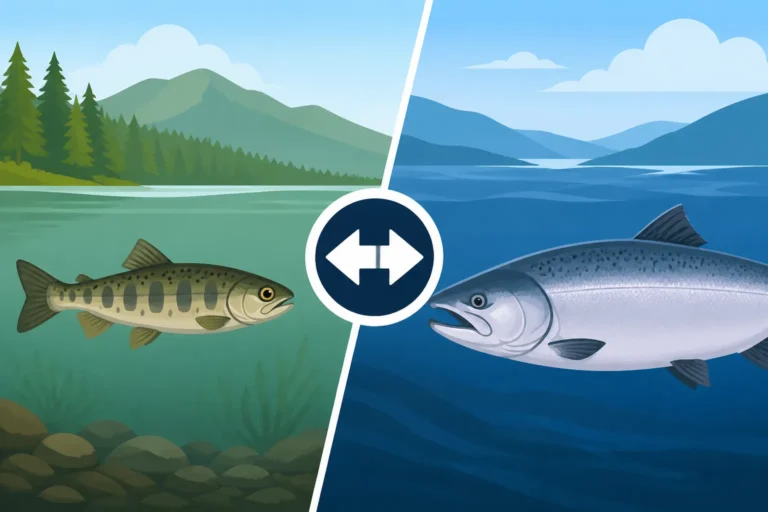
It's easy to assume that all steelhead are the same, especially when you're admiring their chrome brilliance fresh from the ocean. However, summer and winter steelhead are distinct groups, classified by when they enter freshwater from the ocean to begin their spawning migration. These differences go much deeper than just the calendar, affecting everything from their appearance to how they behave once they're in the river systems.
Run Timing and River Entry
The most fundamental difference, and the one that gives them their names, is their run timing. Summer steelhead typically begin their journey from the ocean into freshwater rivers from late spring through early fall. Think of them as the adventurers who arrive early to scout the territory. They'll spend many months, sometimes up to a year, holding in the freshwater environment, maturing sexually before they actually spawn the following spring. This extended stay in the river means they endure varying conditions, often in lower, clearer, and warmer water.
Winter steelhead, on the other hand, are on a much tighter schedule. They make their appearance from late fall through early spring, entering the rivers already sexually mature or nearly so. They're often referred to as "ready to go," and their freshwater residency is usually much shorter, typically only a few weeks or months, before they spawn in the same season they entered. Their migration often coincides with increased river flows and colder, often turbid, water conditions, making them a different kind of challenge for anglers. Understanding these distinct run timings is key to knowing which rivers to target and when, as detailed in our comprehensive guide to Oregon Fishing Season Dates and Limits.
Physical Characteristics and Appearance
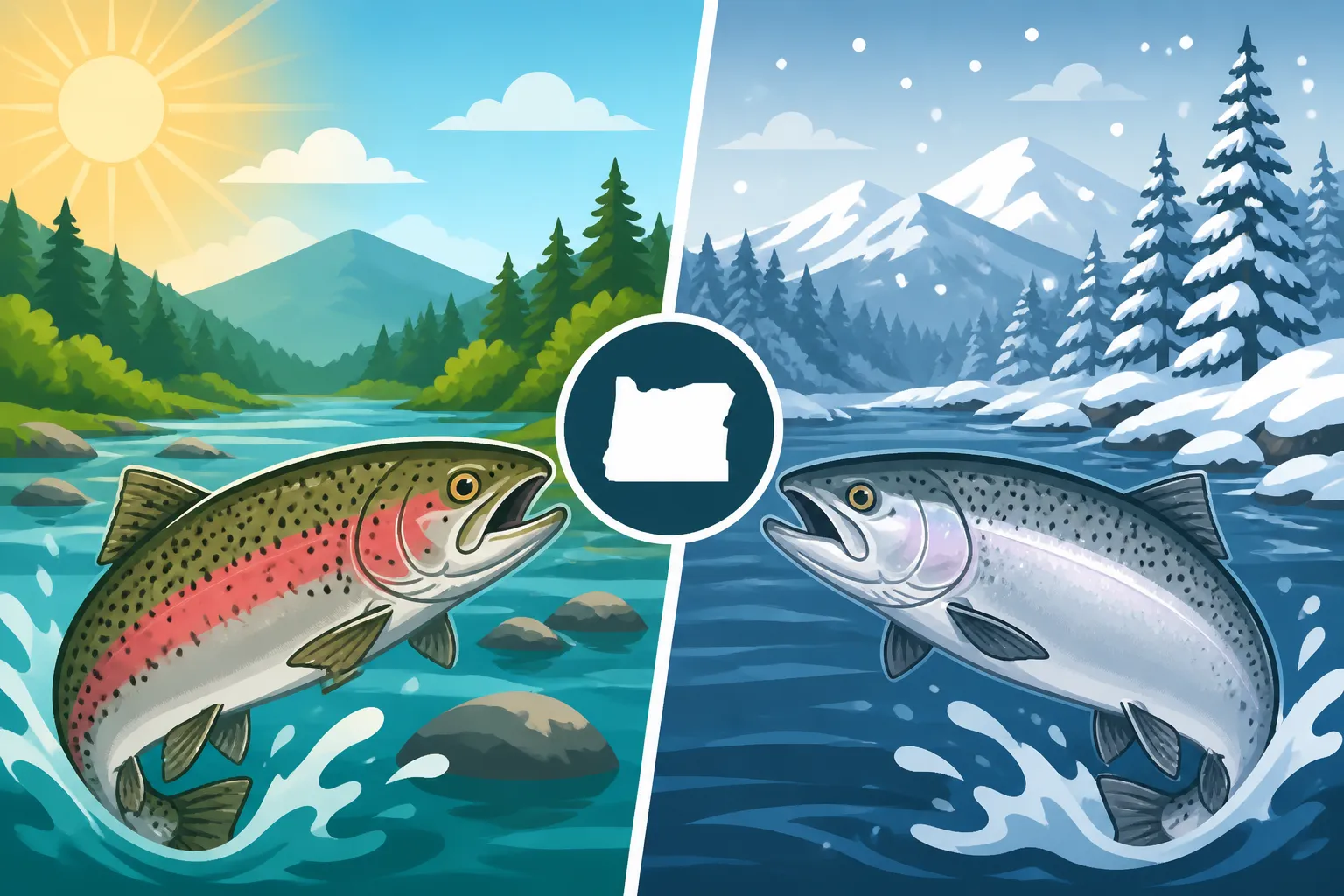
While both are essentially rainbow trout that have migrated to the ocean (anadromous), there are often subtle yet noticeable physical differences between summer and winter steelhead, particularly once they’ve been in freshwater for a while. Summer steelhead, having spent months in the river prior to spawning, tend to be leaner and more agile. When they first enter the river, they are often bright chrome, almost like polished silver, but as they hold in freshwater, they can begin to darken, developing a more iridescent sheen with a pronounced red stripe along their lateral line, especially as spawning season approaches. They are generally smaller than their winter counterparts.
Winter steelhead, by contrast, often appear thicker, heavier, and more robust when they enter the river. Because they are closer to spawning, they tend to carry more girth and body mass, reflecting their readiness to reproduce. Their coloration when fresh from the ocean is also a brilliant chrome, but they may quickly darken once in the river, showing deeper greens and purples on their backs, and their red stripe can also become quite vibrant. While individual fish vary greatly, a common "rule of thumb" among seasoned anglers is that winter steelhead tend to average larger in size overall. It’s a bit like comparing a marathon runner (summer) to a powerlifter (winter) – both are incredibly strong, but built for different stages of their journey.
Spawning Habits and Life Cycles
The differences in run timing directly influence their spawning habits and overall life cycles. Summer steelhead enter freshwater in a pre-spawning condition, meaning they are not yet fully mature. They spend the entire summer, fall, and winter holding in deep pools, under logjams, or in other prime holding lies, feeding minimally (if at all) as they mature. This prolonged freshwater residency makes them incredibly challenging and often moody. They finally spawn the following spring, often in March or April, alongside the previous year's winter runs. After spawning, many, especially the younger, smaller ones, will return to the ocean to potentially spawn again, earning them the title of "repeat spawners."
Winter steelhead, conversely, enter the rivers already mature or very close to it. Their primary mission once they hit freshwater is to find suitable spawning grounds as quickly as conditions allow. They typically spawn much sooner after entering the river, usually in late winter or early spring, often from January through April, depending on the river system and local conditions. Their shorter freshwater stint means they are often still carrying a lot of fight and vitality from the ocean. While repeat spawning does occur with winter steelhead, their survival rates after spawning might be slightly lower due to the energy expended in their rapid migration and spawning process. Understanding these life cycle nuances is vital for appreciating the resilience of these fish, as explored in our Oregon Steelhead Guide.
When and Where to Find Them in Oregon
Oregon is a steelhead paradise, offering opportunities for both summer and winter runs across various regions. However, knowing when and where to focus your efforts is paramount, as their migratory patterns and environmental preferences are quite distinct. It’s not just about what time of year it is, but also the specific conditions of the river and the region you’re fishing.
Seasonal Availability in Oregon Rivers
As their names suggest, summer steelhead are available primarily during the warmer months. You can typically find them in Oregon's rivers from late spring (think May or June) all the way through the fall (into October or November). Rivers like the Deschutes River are legendary for their prolific summer steelhead runs, offering fantastic fly-fishing opportunities throughout the season. Other rivers in the Umpqua and Rogue systems also see strong summer returns. These fish enter the river and slowly make their way upstream, taking their time, often holding in deeper, cooler sections during the heat of summer. For specific timing, checking resources like Summer Steelhead Run Timing on the Deschutes can be incredibly helpful.
Winter steelhead, true to their name, are the targets of choice during the colder, wetter months. Their season generally kicks off in late fall (November or December) and runs strong through early spring (March or April). The Oregon Coast is particularly famous for its incredible winter steelhead fisheries, with rivers like the Nestucca, Wilson, Siletz, and Alsea being prime destinations. These rivers swell with rain, offering the high, dark water that winter steelhead often prefer for their rapid upstream migration. Anglers bundle up, brave the elements, and pursue these powerful fish. For detailed information on their arrival, consult guides like Winter Steelhead Run Timing in Oregon.
Preferred Water Temperatures and Conditions
Water temperature plays a crucial role in steelhead behavior and preference. Summer steelhead are often found in rivers with cooler, more stable water temperatures, typically between 45°F and 65°F. They are more active in these temperatures, but as the water warms, they'll seek out thermal refuges – deep pools, shaded areas, or tributaries with colder flows. Lower, clearer water is often characteristic of summer steelhead fisheries, which demands a more stealthy and refined approach from anglers.
Winter steelhead thrive in colder water, often between 38°F and 50°F. Their metabolism slows down in these temperatures, making them generally less aggressive than summer runs. They also often prefer higher, off-color water that comes with winter rains, as this provides cover during their upstream push and can make them feel more secure. This means anglers often contend with challenging conditions, but the reward of a big, chrome winter steelhead is well worth it. Understanding how water conditions impact fish activity is a key aspect of successful angling, regardless of the season.
Geographic Distribution Across the State
Oregon's diverse geography means different regions offer distinct steelhead experiences. Summer steelhead are predominantly found in the larger river systems of interior Oregon and Southern Oregon, such as the Deschutes, John Day, Umpqua, and Rogue rivers. These rivers, with their longer migratory paths and often more stable summer flows, provide ideal habitats for summer-run fish to hold and mature.
Winter steelhead, however, are king on Oregon's coastal rivers. Nearly every major coastal river, from the mighty Columbia River tributaries down to the smaller streams of the Southern Coast, hosts a winter steelhead run. These rivers are typically shorter, steeper, and more responsive to rainfall, creating the perfect conditions for winter steelhead to surge upstream. You'll also find some winter runs in the Willamette Valley system, though coastal rivers are generally the most popular targets. Knowing which Oregon Fishing Zones Explained host which runs can help you plan your trips efficiently.
Fishing Techniques and Gear Differences
Once you understand the fundamental distinctions between summer and winter steelhead, it becomes clear that a "one-size-fits-all" approach to fishing them just won't cut it. Their different behaviors, preferred conditions, and metabolic rates necessitate different techniques and gear choices. Anglers who adapt their methods significantly increase their chances of success.
Approach and Presentation Strategies
Fishing for summer steelhead, particularly those that have been in the river for a while, often requires a more finessed and persistent approach. These fish are generally less aggressive feeders and can be incredibly selective. Fly fishing is a hugely popular and effective method, often involving nymphing, dry fly techniques (especially during hatches), or swinging small, sparsely tied flies. For gear anglers, drift fishing with small baits or jigs, or casting subtle spinners and spoons, can be productive. The key is often a delicate presentation and repeatedly working likely holding water. These fish are often found in clearer, lower flows, so stealth is crucial. If you're wading, minimize disturbance.
Winter steelhead fishing, conversely, often calls for a more robust and aggressive approach, matching the fish's powerful nature and the often-turbid river conditions. While fly fishing is still done, it often involves larger, heavier flies, and often "indicator nymphing" or "chuck-and-duck" methods to get flies down in fast, deep water. Gear anglers frequently rely on bait (like roe, sand shrimp, or cured prawns), jigs under floats, or larger, brighter lures such as spinners and plugs. The aim is often to get your offering directly in front of a fish that might not be actively feeding but will strike out of instinct or annoyance. Covering water systematically and effectively punching through heavy current are common strategies. Oregon Fishing Techniques for Beginners offers a broader look at various methods that can be adapted.
Recommended Rods, Reels, and Lines
Your equipment setup will vary significantly depending on whether you're targeting summer or winter steelhead and your chosen technique.
For Summer Steelhead:
- Fly Rods: A common choice is a 7- to 9-weight rod, 10 to 11 feet long, for swinging flies or nymphing. Lighter 5- or 6-weight rods might be used for dry-fly specific situations, especially on smaller waters like the Metolius.
- Fly Reels: A quality reel with a smooth drag is essential, capable of holding plenty of backing for those strong runs.
- Fly Lines: Weight-forward floating lines are standard, but anglers might use sink-tip lines for swinging larger patterns in deeper currents.
- Gear Rods: Medium-light to medium power spinning or casting rods, typically 8.5 to 10.5 feet long, are excellent for drift fishing lighter tackle or casting small lures.
- Lines: 8-12 lb monofilament or fluorocarbon main lines are common, with lighter leaders.
For Winter Steelhead:
- Fly Rods: Spey or switch rods are very popular for winter steelhead, ranging from 7- to 9-weight and 11 to 14 feet long, allowing for easier casting of heavy sink-tips and large flies. Single-hand rods, 8- to 10-weight and 9 to 10 feet long, are also used.
- Fly Reels: A robust reel with a powerful, sealed drag is a must, designed to handle large, strong fish in challenging conditions.
- Fly Lines: Heavy Skagit or Scandi lines with various sink-tips (T-11, T-14, T-17) are commonly used to get flies deep.
- Gear Rods: Medium-heavy to heavy power spinning or casting rods, 9 to 12 feet long, are favored for handling heavier weights, larger baits, and powerful fish in strong currents. You can find a good selection of these on Amazon.
- Lines: 15-25 lb monofilament or braided line is typical for main lines, often paired with 10-20 lb leaders.
Effective Baits, Lures, and Flies
Matching your offerings to the fish's mood and the river conditions is paramount.
For Summer Steelhead:
- Flies: Dry flies like Green Butt Skunks, Purple Perils, and skaters can be effective during evenings. Nymphs such as Prince Nymphs, Copper Johns, and various stonefly imitations are great for subsurface work. Small leech patterns and sparse streamers also work. Check out Fly Selection for Oregon Steelhead for more insights.
- Lures: Small, natural-colored spinners (like those from Blue Fox or Mepps in sizes 2-4), small spoons, or tiny plugs can entice summer runs.
- Baits: Often used sparingly due to regulations on many fly-only sections, but small pieces of roe or worms can be effective in allowed areas.
For Winter Steelhead:
- Flies: Larger, flashier flies with more bulk and movement are key. Intruders, tube flies, and general attractor patterns in black, blue, pink, purple, or chartreuse are popular. Weighted nymphs and large egg patterns are also effective.
- Lures: Heavier, brighter spinners (sizes 4-6), large spoons, and diving plugs in bright or contrasting colors are excellent for getting noticed in stained water.
- Baits: Cured salmon roe (often presented in an egg loop or bobber-dogging rig), sand shrimp, and cured prawns are classic winter steelhead baits. These can be easily found for purchase on platforms like Amazon.
- Jigs: Marabou jigs in various colors (pink, chartreuse, black, purple) fished under a float are incredibly effective, especially in slower currents and drift lanes.
| Feature | Summer Steelhead | Winter Steelhead |
|---|---|---|
| Run Timing | Late spring to early fall | Late fall to early spring |
| Freshwater Residency | Longer (months to a year), mature in river | Shorter (weeks to months), enter river mostly mature |
| Water Preference | Lower, clearer, warmer (45-65°F) | Higher, often turbid, colder (38-50°F) |
| General Size | Typically smaller, leaner | Often larger, more robust |
| Fishing Approach | Finesse, stealth, delicate presentation | Robust, aggressive, often punching through current |
| Preferred Flies | Nymphs, small streamers, dry flies, sparse patterns | Intruders, tube flies, larger streamers, weighted patterns |
| Preferred Lures/Baits | Small spinners, spoons; limited bait (roe, worms) | Larger spinners, plugs; roe, sand shrimp, jigs |
| Rod/Line Setup | Lighter fly rods (7-9wt), longer gear rods, lighter line | Spey/Switch rods (7-9wt), heavier gear rods, stronger line |
Conservation and Regulations
The differences between summer and winter steelhead aren't just fascinating from an angling perspective; they also have significant implications for conservation and the regulations set by the Oregon Department of Fish and Wildlife (ODFW). Steelhead populations face numerous challenges, and careful management is crucial to ensuring these magnificent fish continue to thrive in Oregon's rivers for generations to come.
Hatchery vs. Wild Steelhead Identification
One of the most critical distinctions in Oregon steelhead fishing is between hatchery-reared and wild (native) steelhead. This is important for both summer and winter runs. Hatchery steelhead are typically marked with a clipped adipose fin (the small, fleshy fin on their back between the dorsal and tail fins). This fin clip is the universal sign that a fish originated from a hatchery program. Wild steelhead, conversely, will have an intact adipose fin. Learning How to Tell a Wild Steelhead from a Hatchery Steelhead is absolutely essential, as regulations often differ dramatically for these two groups. You can even find detailed guides and illustrations on platforms like Amazon to help you learn these identification markers.
The reason for this distinction is conservation. Wild steelhead populations are often considered more genetically robust and vital to the long-term health of the species. Hatchery programs are designed to supplement fisheries and provide harvest opportunities, thereby reducing pressure on wild stocks. Knowing the difference allows anglers to comply with regulations aimed at protecting and rebuilding wild populations.
Oregon's Specific Catch and Release Rules
Oregon has very specific and often complex catch-and-release rules for steelhead, largely tied to whether the fish is wild or hatchery. In many rivers, especially for wild populations, all wild steelhead must be immediately released unharmed. This is a non-negotiable rule aimed at protecting these precious native fish. For hatchery steelhead, there are usually specific bag limits and retention rules, which vary by river and season. For example, a river might allow retention of one hatchery steelhead per day, but require the release of all wild fish.
These rules apply to both summer and winter runs. It's not uncommon for a section of river to have a general release for wild fish but allow harvest of hatchery fish, or even for certain river sections or times of year to be entirely catch-and-release for all steelhead. Understanding and strictly adhering to these rules is a fundamental responsibility of every angler. Heavy penalties, including significant fines and loss of fishing privileges, can be imposed for violations. Always consult the most current Oregon Fishing Regulations Explained before heading out.
Impact of Environmental Factors
Both summer and winter steelhead populations are significantly affected by environmental factors, though the specific challenges might differ. Summer steelhead are highly vulnerable to warm water temperatures and low river flows, especially during prolonged droughts or heatwaves. These conditions can lead to thermal stress, increased susceptibility to disease, and hinder their ability to migrate. Conservation efforts often focus on protecting cold-water refuges and ensuring adequate stream flows during critical summer months.
Winter steelhead face challenges related to intense winter storms, floods, and associated habitat degradation. Extreme high flows can make upstream migration difficult, scour spawning beds, and displace eggs and fry. Conversely, insufficient winter rain can lead to low flows, blocking access to spawning grounds. Habitat loss and degradation, including logging, urbanization, and agricultural runoff, impact both runs by reducing spawning and rearing habitat, and affecting water quality. Climate change is also introducing new complexities, altering historical run timings and increasing the frequency of extreme weather events. Anglers have a role to play by practicing responsible fishing, minimizing their impact on riparian zones, and supporting organizations dedicated to steelhead habitat restoration. Adhering to guidelines like Oregon Catch-and-Release Rules is a simple yet powerful way to contribute to the health of these vital fisheries.
Disclaimer
This article is for general informational purposes only and does not constitute professional advice. Laws, prices and regulations vary by location and change over time. Consult a qualified professional for guidance on your specific situation.