Oregon Panfish Guide
For many of us, the joy of fishing started with a bobber, a worm, and a sunny afternoon spent chasing those feisty, delicious little fish that seemed to be everywhere. If you've ever felt that pull on your line and landed a scrappy bluegill or a plump crappie, you know the simple, undeniable pleasure of panfishing. This comprehensive guide is dedicated to unlocking the world of panfish in Oregon, helping you identify these accessible species, find their favorite haunts, and master the techniques to fill your cooler or simply enjoy a relaxing day on the water.
What Exactly are "Panfish," Anyway?
Before we dive into the nitty-gritty of specific species, let's clear up what we mean when we talk about "panfish." It's not a scientific classification, but rather a wonderfully practical term coined by anglers, and it points directly to their primary appeal: they're typically small enough to fit comfortably in a frying pan and incredibly fun to catch.
Defining Panfish and Their Appeal
So, what characteristics make a fish a "panfish"? Generally, we're talking about smaller, freshwater species that are prolific, widely distributed, and relatively easy to catch, making them perfect targets for anglers of all skill levels, especially beginners and families with kids. Think of fish that might measure anywhere from a few inches up to a foot or so, often thriving in warmer, shallower waters. They might not offer the screaming runs of a salmon or the brutal head shakes of a steelhead, but what they lack in raw power, they more than make up for in sheer numbers and consistent action.
The appeal of panfish is multi-layered. First and foremost, it's about accessibility. You often don't need fancy boats or expensive gear; a simple rod, some basic tackle, and a container of worms can set you up for success. This low barrier to entry makes panfishing an incredible gateway into the angling world, teaching fundamental skills like casting, baiting a hook, and understanding how fish relate to structure. Secondly, they're abundant. In many Oregon lakes, ponds, and slow-moving rivers, panfish populations thrive, meaning more bites and more fish caught, which is fantastic for keeping enthusiasm high, especially for young anglers who might lose interest quickly if the action is slow. And let's not forget the dinner table! Panfish, when properly cleaned and cooked, offer some of the freshest, most delicious fillets you can bring home. They're often seen as a sustainable harvest, given their rapid reproduction rates in many waters.
Why Oregon is a Panfish Paradise
Oregon, with its incredible diversity of waterways, truly is a panfish paradise, sometimes overlooked by those solely focused on salmon, steelhead, or trophy trout. While our state is famous for those iconic fisheries, there's a vast network of lakes, reservoirs, ponds, and slow river sections that are absolutely teeming with panfish. From the dense urban ponds near Portland to the sprawling reservoirs of Central Oregon and the placid sloughs of the Willamette Valley, these fish are widespread and readily available.
The beauty of Oregon's panfish opportunities lies in their sheer ubiquity. You don't have to embark on a multi-hour journey to find them. Many community parks have stocked ponds where bluegill and crappie thrive, offering convenient fishing access. Larger reservoirs, initially built for irrigation or power, often provide miles of shoreline and abundant submerged structure that serve as perfect panfish habitat. Even slower sections of major rivers, like the lower Willamette or backwaters of the Columbia, can hold fantastic populations of certain panfish, especially bullheads and yellow perch. This widespread availability means that whether you're a seasoned angler looking for a relaxing day or a parent introducing a child to the sport, a productive panfish spot is usually just a short drive away.
The Abundant Bluegill: A Sunny Delight
If there's a poster child for panfish in Oregon, it's undoubtedly the bluegill. These little sunfish are practically synonymous with warm summer days and childhood fishing memories, and for good reason! They're tenacious fighters for their size and incredibly cooperative.
Bluegill Identification and Characteristics
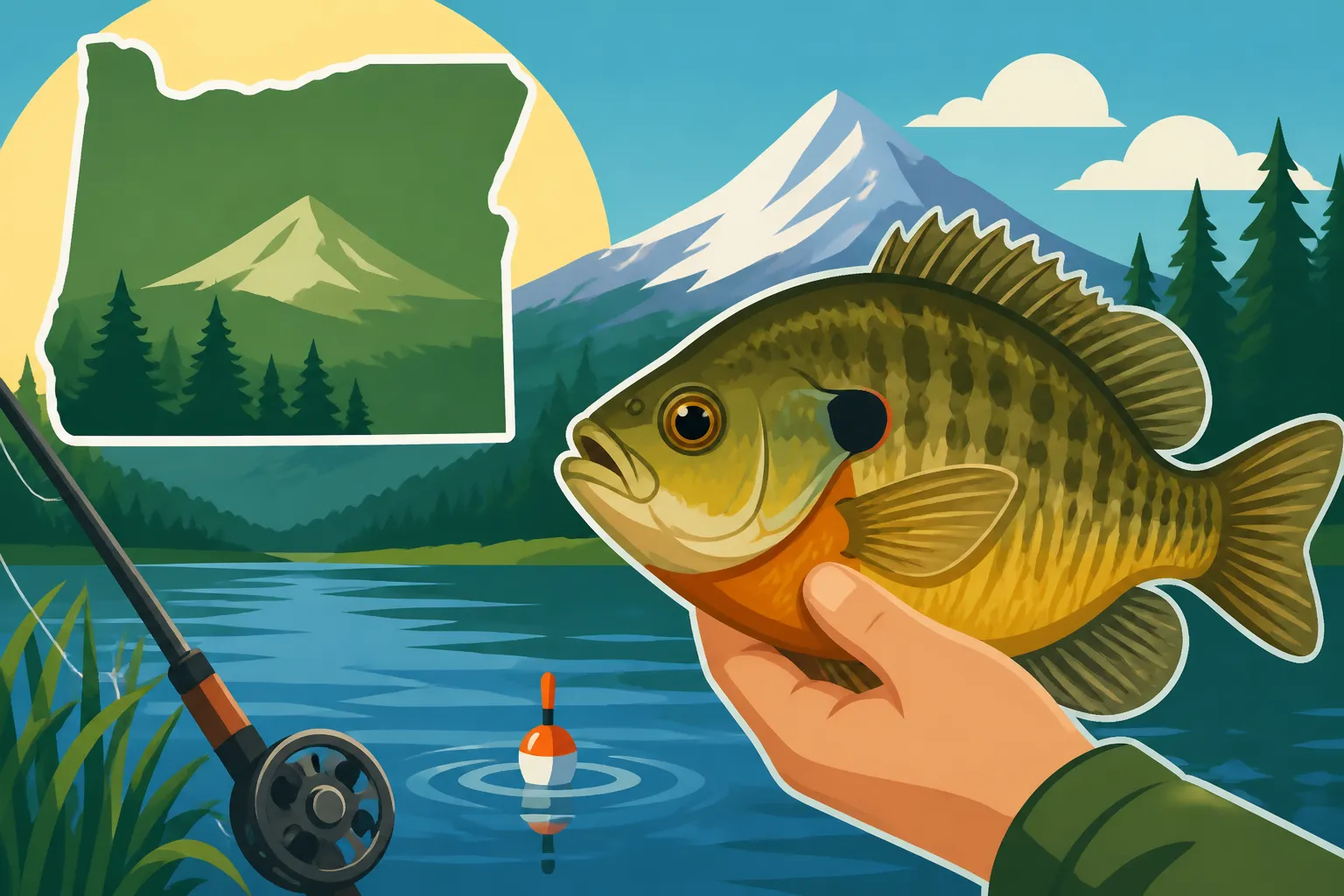
Bluegill ( Lepomis macrochirus ) are easily recognizable once you know what to look for. They typically have a deep, compressed body, meaning they're thin from side to side but tall from back to belly. Their most distinctive feature, and the one that gives them their name, is the dark, often iridescent blue-black "ear flap" on the back edge of their gill cover. You'll also notice a small mouth – a key identifier among sunfish – and often several faint, dark vertical bars along their sides, especially on younger fish. Colors can vary quite a bit depending on the water clarity and diet, ranging from olive green to yellowish-brown, but they often have a yellowish or orange belly.
These prolific fish rarely grow very large in Oregon, with most adults measuring between 6 to 9 inches, though occasionally you'll hear tales of a 10 or 11-inch "dinner plate" bluegill. They thrive in warm, clear to moderately murky water, and absolutely love aquatic vegetation. Think lily pads, submerged weed beds, fallen trees, and docks – anything that provides cover from predators and ambush points for their insect prey. Bluegill are highly social, typically schooling in groups, which means when you find one, you've likely found a whole bunch! During spawning season, typically late spring through summer when water temperatures are consistently warm, male bluegill will fan out shallow, dinner-plate-sized nests on the bottom, often in colonies. This makes them particularly easy to target as they aggressively guard their territory.
Where to Find Bluegill in Oregon
Bluegill are among the most widespread panfish in Oregon, truly making them accessible to almost everyone. You'll find them in a huge variety of stillwater environments, from small farm ponds to large reservoirs, and even in the calmer, backwater sections of our bigger rivers. They really prefer places that offer warmth and plenty of cover.
Some of the best spots to target bluegill include well-known recreational lakes like Henry Hagg Lake Fishing Guide near Forest Grove, which boasts a healthy population, or Fern Ridge Reservoir Fishing Guide outside of Eugene, where they often congregate around submerged timber and weed lines. Local community ponds, often managed by the Oregon Department of Fish and Wildlife (ODFW) for family fishing, are also fantastic places to find bluegill. These ponds are usually easy to access and offer designated fishing areas. Even urban parks sometimes have small ponds that hold surprisingly good numbers of bluegill, providing a quick fishing fix without a long drive. Look for coves, sheltered bays, and any areas with docks, submerged brush, or lily pads – these are classic bluegill hideouts. On slower rivers, like the lower Willamette River, seek out oxbows, sloughs, and protected backwaters where the current is minimal and vegetation can take hold.
Top Techniques for Bluegill Success
Catching bluegill is incredibly straightforward, which is precisely why they're so beloved by beginners. You don't need a lot of specialized gear, just a basic understanding of what they like.
A lightweight spinning rod, often an ultralight action, paired with a small spinning reel spooled with 2 to 4-pound test monofilament line, is absolutely perfect. This setup allows for sensitive feel and exciting fights, even from smaller fish. The classic technique involves a small hook (sizes #8 to #12 work well), a tiny split shot weight a few inches above the hook, and a small bobber to suspend your bait at the desired depth. Worms are king for bluegill. Red wigglers, nightcrawlers (pinched in half), or even grub worms are irresistible. Crickets are also a fantastic choice, especially in late summer. For artificial presentations, try tiny jigs tipped with a piece of worm or scented soft plastic, or even micro-spinners that mimic small insects.
Still fishing near cover is incredibly effective. Cast your bobber setup near a weed line, a dock piling, or a submerged log and wait for that tell-tale bobber dip. You can also sight fish for bluegill, especially during their spawning season when they're congregated on their nests in shallow water. Be mindful of casting shadows or making too much noise in these situations. The ODFW frequently stocks many ponds with bluegill alongside trout, so checking their stocking schedules can sometimes tip you off to a prime location. For even more specific tactics, check out our guide on Bluegill Fishing.
Yellow Perch: The Striped Fighters
Often overlooked in favor of their more famous cousins, the yellow perch are a fantastic sport fish and a delectable table fare. They offer a bit more of a challenge than bluegill and can grow to a respectable size, making them a rewarding target for anglers.
Identifying Yellow Perch and Their Habitat
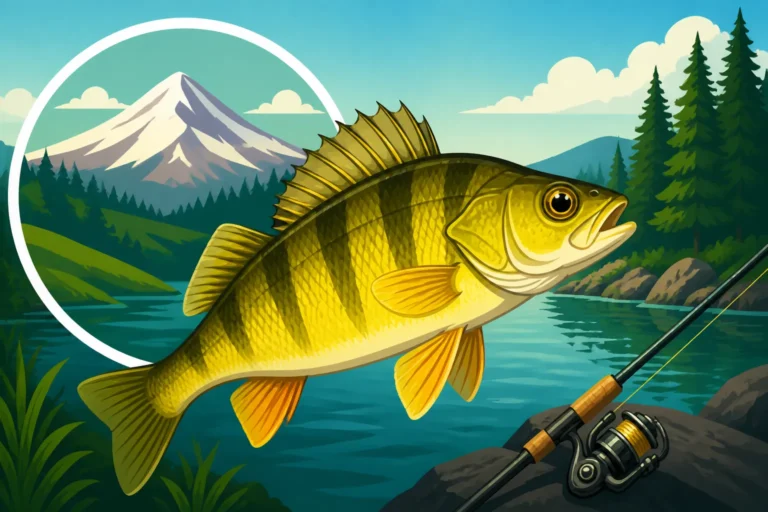
Yellow perch ( Perca flavescens ) are distinct from bluegill and other sunfish. Their most striking feature is their coloring: a beautiful golden-yellow to brassy green body marked with 6-8 prominent, dark vertical bars that extend from their back down their sides. They have two dorsal fins, the first of which is spiny, and their bodies are more elongated and less compressed than a bluegill's. Their mouth is also larger than a bluegill's, capable of swallowing bigger prey. Typical size in Oregon ranges from 7 to 12 inches, but 14 to 15-inch "jumbo" perch are certainly possible in productive waters, offering a surprisingly stout fight on light tackle.
Unlike bluegill, which prefer warmer, vegetated shallows, yellow perch tend to favor cooler, deeper waters, especially in larger lakes and reservoirs. They are often found in schools, cruising along drop-offs, near submerged humps, or over rocky bottoms, always on the lookout for smaller fish, aquatic insects, and crustaceans. While they appreciate some cover, they are less tied to dense weed beds than bluegill and are more likely to be found in open water or along the edges of structure. Their schooling behavior is a huge advantage for anglers – if you find one yellow perch, you're usually in for a lively session!
Prime Oregon Waters for Yellow Perch
Yellow perch are prevalent in many of Oregon's larger lakes and reservoirs, particularly those with good forage bases and cooler, deeper sections. These are often the same waters where anglers target trout or even kokanee salmon.
Notable locations for yellow perch include Crane Prairie Reservoir, famous for its trophy trout but also home to a robust perch population, and Odell Lake in the Cascades, which boasts excellent perch fishing, particularly during the winter months when ice fishing is an option. Other productive waters include Detroit Lake, Prineville Reservoir, and Lake Billy Chinook, where they provide a fun alternative or complementary catch to other species. Even sections of the lower Columbia River and its tributaries, especially in backwater sloughs and calmer bays, can hold good numbers of yellow perch. These fish are less common in small, shallow community ponds that heat up quickly in summer. When searching for them, look for areas with a mix of depths, especially those with structure like submerged trees, rock piles, or old roadbeds, which often concentrate schools of baitfish and, in turn, the hungry perch.
Effective Strategies for Catching Yellow Perch
Yellow perch respond well to a variety of techniques, often requiring a slightly more active approach than still-fishing for bluegill. Since they often school in deeper water, jigs and small lures are excellent choices.
Vertical jigging with small spoons, blade baits, or lead-head jigs tipped with bait is a fantastic method, especially from a boat or kayak over deeper submerged structure. If fishing from shore, casting and slowly retrieving small spinners (like Mepps or Rooster Tail in sizes #0 to #2), or tiny crankbaits can be very effective. For bait fishing, pieces of nightcrawler are a go-to, as are small live minnows (where legal) or artificial grubs and scented soft plastics. Many anglers have great success using a "drop-shot" rig, which allows the bait to suspend above the sinker, keeping it visible to the perch hovering off the bottom. Remember their schooling nature: if you get a bite, drop your bait back down to the same depth immediately. Pay attention to your fish finder if you have one, as it will reveal those dense schools. Check out Yellow Perch in Oregon for more in-depth techniques tailored to these striped fighters.
Crappie: The Delicious Slab-Sided Eaters
Crappie are another beloved panfish species in Oregon, famed for their generous size, fighting spirit, and exceptional table quality. Anglers often refer to larger crappie as "slabs" due to their deep, compressed bodies, and catching a mess of them can make for a truly memorable day on the water.
Black and White Crappie Differences and Identification
In Oregon, you'll primarily encounter black crappie (Pomoxis nigromaculatus), though white crappie (Pomoxis annularis) are also present in some waters. While they look quite similar, there are a few key differences. Black crappie typically have 7 or 8 dorsal spines and their dark spots are scattered irregularly over their silvery-green body, giving them a speckled appearance. White crappie, on the other hand, usually have 6 dorsal spines and often display their dark spots in distinct vertical bands or rows along their sides. Both species share that characteristic deep, compressed body shape and a relatively large mouth compared to bluegill.
Crappie can grow larger than bluegill or yellow perch, with many anglers regularly catching fish in the 9 to 12-inch range, and genuine "slab" crappie pushing 14 to 16 inches or more are not uncommon in prime habitats. They tend to be more sensitive to water clarity than bluegill, often preferring slightly stained or turbid water, and are highly associated with submerged structure. Brush piles, fallen trees, old stumps, dock pilings, and even bridge abutments are all prime crappie hangouts. They are also schooling fish, often suspended in open water near structure, making them a fantastic target once you locate a school.
Best Crappie Fishing Lakes and Reservoirs in Oregon
Crappie can be found throughout Oregon, particularly in larger, warmer lakes and reservoirs that offer abundant submerged cover and a good forage base. They're definitely a target worth seeking out.
Some of Oregon's most renowned crappie fisheries include Fern Ridge Reservoir, where the submerged trees and stumps provide ideal habitat for large schools. Tenmile Lake on the coast is another excellent spot, known for its crappie and other warmwater species. Suttle Lake in Central Oregon, while known for kokanee, also harbors a healthy population of crappie. Other productive waters include the calm backwaters of the Umpqua River and Columbia River, and numerous smaller reservoirs across the state such as Detroit Lake, and even some urban ponds that have suitable habitat. The key to finding crappie is to think "structure." They use these underwater features for cover, ambush points, and often for spawning. Early mornings and late evenings tend to be the most productive times, especially during the warmer months, as crappie can be light-sensitive.
Master Crappie Fishing Techniques
Crappie fishing can be incredibly rewarding, and a few key techniques will significantly boost your success. Because they often relate to submerged structure, getting your bait or lure into the right zone is critical.
One of the most popular and effective methods is jigging with small plastics or marabou jigs. Tiny 1/32 to 1/8 ounce jigs in white, chartreuse, or black, tipped with a small minnow (where legal) or a scented plastic grub, are crappie magnets. These can be cast and slowly retrieved, or vertically jigged around submerged brush. Another classic technique is to use a small minnow suspended under a bobber. This allows the minnow to swim naturally at the crappie's depth, often enticing a strike when other methods fail. For boat anglers, "spider rigging" – using multiple rods with different bait depths – is a highly effective way to cover water and find schools. Look for crappie suspended just above or within brush piles, or along ledges and drop-offs. Their bites can sometimes be incredibly subtle, feeling like just a slight tap or pressure, so a sensitive rod is a real asset. For more detailed crappie strategies, check out our guide on Crappie in Oregon.
Bullheads and Catfish: The Bottom Dwellers
While perhaps not as glamorous as salmon or steelhead, the various species of catfish, particularly brown bullhead and channel catfish, offer some incredibly accessible and exciting fishing opportunities in Oregon. These whiskered bottom dwellers are often robust fighters and are excellent table fare, making them a popular target, especially for those who enjoy a more relaxed style of fishing.
Understanding Brown Bullhead and Channel Catfish
Oregon hosts a few different species of catfish, but the most commonly targeted are the brown bullhead (Ameiurus nebulosus) and the channel catfish (Ictalurus punctatus). They belong to the Ictaluridae family and share some distinct characteristics, most notably their lack of scales, smooth skin, and prominent barbels (whiskers) around their mouths, which they use to taste and feel in murky water.
Brown Bullheads are typically smaller, often in the 8 to 14-inch range, though they can get larger. They have a square or slightly emarginate (not deeply forked) tail and are usually dark brown or olive green on their back, fading to a lighter belly. They are incredibly hardy and tolerant of poor water quality, making them common in small ponds, sluggish rivers, and muddy sloughs. They are primarily nocturnal but will feed during the day.
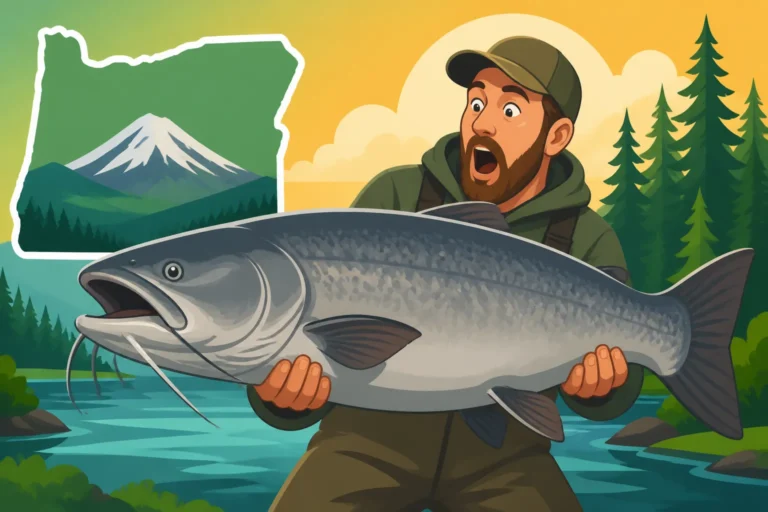
Channel Catfish are the larger, more sought-after species, often reaching impressive sizes in Oregon. They have a distinctly forked tail, making them easy to distinguish from bullheads, and their body is generally slender and silvery-gray, often with scattered dark spots on younger fish (which fade with age). Channel cats are typically more active and aggressive feeders than bullheads, often found in larger rivers and reservoirs. They can grow to several pounds, with trophy fish exceeding 15-20 pounds in some Oregon waters.
Where to Hook into Catfish and Bullheads
Both bullheads and channel catfish prefer warm, slow-moving or still water with soft, muddy bottoms and plenty of submerged cover. They aren't picky about water clarity and will thrive in places that might deter other species.
For brown bullheads, think small, often muddy ponds, backwater sloughs of the Willamette River, or quiet coves in larger reservoirs. Locations like Henry Hagg Lake Fishing Guide or the quieter sections of the Willamette and Columbia River tributaries are prime spots. They often hide under lily pads, brush piles, or undercut banks during the day, emerging to feed in the evenings and at night.
Channel catfish tend to be found in larger bodies of water, particularly reservoirs and major rivers. Prineville Reservoir is a known hotspot for channel cats, as are the lower sections of the Willamette River and many parts of the Columbia River, especially in the slower channels and backwaters. They prefer deeper holes during the day and will move into shallower feeding flats during low light conditions. Look for them around structure like submerged timber, rock ledges, or deep current breaks.
Baits and Methods for Bottom Fishing Success
Catching bullheads and channel catfish is all about getting your bait on the bottom, where they primarily feed. They are scavengers with an excellent sense of smell, so scent is often key.
The most common and effective setup is a simple bottom fishing rig: a heavy sinker (like an egg sinker or pyramid sinker) that slides freely on your main line, tied to a swivel, with a 12-24 inch leader (8-20 pound test monofilament or fluorocarbon) leading to a sturdy hook (sizes #1 to 4/0, depending on target size). This "slip sinker rig" allows the fish to pick up the bait without feeling the weight of the sinker.
For bullheads, live worms (nightcrawlers are excellent) are hard to beat. They also readily take prepared "stink baits" or even pieces of hot dog. Fishing these baits directly on the bottom, often near cover, is the best strategy.
For channel catfish, the bait options expand. Traditional cut baits (like pieces of sardine, shad, or anchovy), chicken livers, and specially formulated "stink baits" are all incredibly effective. Many anglers swear by homemade concoctions involving cheese or other pungent ingredients. Night fishing is particularly productive for channel cats, as they become more active under the cover of darkness. Casting your bait out, letting it settle on the bottom, and waiting for the rod tip to slowly bend over is the name of the game. A rod holder is a wise investment! For more detailed advice, refer to Channel Catfish in Oregon and Brown Bullhead Catfish Fishing.
Other Notable Panfish and Warmwater Species
While bluegill, yellow perch, crappie, and catfish are the main panfish players in Oregon, our state's diverse aquatic environments are also home to a few other species that might surprise you, or which often share the same waters as their more popular cousins.
Pumpkinseed and Green Sunfish: The Smaller Cousins
Oregon's sunfish family tree extends beyond just the bluegill. You might also encounter Pumpkinseed Sunfish (Lepomis gibbosus) and Green Sunfish (Lepomis cyanellus). Both are smaller, more diminutive cousins to the bluegill, and while not as widespread or abundant in pure numbers as bluegill, they are certainly present in many of the same warm, shallow, vegetated waters.
Pumpkinseed are true gems, known for their incredibly vibrant and iridescent coloration. They often have bright blue-green wavy lines on their cheek and gill plate, with a distinctive red or orange spot on the opercular (gill) flap. They are relatively small, rarely exceeding 6-8 inches, and are particularly beautiful fish to catch. They feed primarily on insects and snails.
Green Sunfish have a larger mouth than bluegill or pumpkinseed, extending back past the front of the eye. They typically have a more robust, cylindrical body shape than the disc-like bluegill, and their coloring is often a mottled olive green to brownish-yellow. They also feature bright blue or green spots on their opercula and often a faint dark spot on the dorsal fin. Green sunfish are aggressive for their size, and despite not growing very large, can be a fun surprise catch.
Both of these species can be caught using the exact same simple methods and baits as bluegill: small hooks, worms, crickets, and tiny artificial jigs. If you're targeting bluegill in a quiet, weedy pond, don't be surprised if one of these colorful sunfish makes an appearance on your hook!
Dealing with Bass and Other Warmwater Encounters
One of the fun aspects of panfishing in Oregon is that the same lakes and rivers that hold abundant panfish also often host a variety of other warmwater species, most notably largemouth and smallmouth bass. This means you always have the exciting possibility of a bigger, harder-fighting fish at the end of your line!
It's common to be fishing for crappie with a small jig and suddenly feel the powerful tug of a Smallmouth Bass (Micropterus dolomieu). These bronze-colored warriors love rocky structures, current, and deeper water, but they will readily chase smaller baits and are frequently found in the same waters as yellow perch and even crappie, especially in reservoirs and rivers. They're known for their acrobatic jumps and strong pulls. Our guide on Smallmouth Bass in Oregon offers more specific details on targeting these exciting fish.
Similarly, in weedier, shallower, and warmer lakes, you might encounter Largemouth Bass (Micropterus salmoides) while targeting bluegill or crappie. These green giants are ambush predators that hide in dense cover, waiting for unsuspecting prey, including smaller panfish. Their explosive strikes and powerful dives are truly thrilling on light panfish tackle. If you're interested in learning more about them, check out Largemouth Bass in Oregon.
Occasionally, you might even hook into a Walleye (Sander vitreus) in certain Oregon fisheries, particularly the John Day River or parts of the Columbia. While not a panfish, they share similar bottom-dwelling habitats with catfish and perch and are highly prized for their delicious fillets. Our Walleye in Oregon guide can tell you more about where and how to pursue them. The beauty of these multi-species waters is that you never quite know what you'll catch next, adding an extra layer of excitement to every fishing trip!
Gear Up for Panfish Fun
One of the most attractive aspects of panfishing is that you don't need a massive investment in gear to get started. In fact, keeping it simple and light is often the most effective and enjoyable approach.
Essential Rods, Reels, and Line for Panfish
For panfish, the name of the game is sensitivity and finesse. You want to feel those subtle taps and twitching bites, and you want the fight of even a small fish to be exciting without overpowering your gear.
Rods: An ultralight to light action spinning rod, typically between 5 to 7 feet long, is absolutely ideal. Look for a rod with a fast or moderate-fast tip, meaning the tip bends easily but the backbone is still strong enough to set the hook. This type of rod will let you cast those tiny baits and lures with ease and telegraph even the slightest nibble. Graphite composite rods offer a good balance of sensitivity and durability.
Reels: Pair your light rod with a small spinning reel, often in the 1000 to 2000 size range. These reels are lightweight and designed to handle light lines smoothly. Make sure the drag system is smooth, as even a small crappie or perch can snap light line if the drag sticks.
Line: For most panfishing, 2 to 6-pound test monofilament or fluorocarbon line is perfect. Monofilament is very forgiving and easy to tie, while fluorocarbon offers more sensitivity and is less visible underwater. Braided line can also be used, especially if you're fishing in areas with abrasive cover, but you'll want to use a short fluorocarbon leader for stealth. You can find excellent, affordable combos for panfish on platforms like Amazon, making it easy to get started without breaking the bank. These beginner-friendly kits often include a rod, reel, and pre-spooled line, offering a fantastic starting point.
Tackle Box Staples for Panfish
Your panfish tackle box doesn't need to be huge or expensive, but it should contain a few essential items to cover different situations.
Hooks: A selection of small, sharp hooks is crucial. Sizes #6, #8, and #10 are common for bluegill and crappie, while #4 or even #2 might be better for larger perch or if you're using slightly bigger baits for crappie or bullheads. Bait-holder hooks with barbs on the shank are great for keeping worms in place.
Weights: A variety of small split shot weights (sizes BB to 7) will help you get your bait down to depth. Also, a few small egg sinkers (1/8 to 1/2 oz) are handy for bottom fishing for catfish or using a slip sinker rig for crappie.
Bobbers: Both fixed bobbers (the kind that clip directly to your line) and slip bobbers (which slide freely on the line and are stopped by a bobber stop) are useful. Fixed bobbers are great for shallow water, while slip bobbers are indispensable for fishing at precise depths in deeper water.
Lures: Even when bait fishing, it's good to have a few artificials on hand. Tiny jig heads (1/32 to 1/8 oz) paired with small plastic grub bodies, tubes, or curly-tail baits are deadly for crappie and perch. Small inline spinners (like Mepps, Panther Martin, or Rooster Tail in sizes #0 to #2) can also entice these fish, as can tiny spoons or micro-crankbaits. Stocking up on a variety of small jigs and soft plastics is a smart move, and many anglers find great bulk deals for these essential items on Amazon, allowing them to experiment with different colors and shapes.
The Best Baits to Entice Panfish
When it comes to panfish, bait is often king. They are opportunistic feeders, and a natural, scented offering can be irresistible.
Live Bait: This is almost always the most effective choice.
- Worms: Red wigglers (garden worms) are bluegill and crappie candy. Nightcrawlers, pinched in half or in smaller pieces, work for everything from bluegill to perch and catfish.
- Crickets: A fantastic choice for bluegill and other sunfish, especially in late summer.
- Mealworms/Waxworms: These are often sold in bait shops and are excellent for enticing picky panfish.
- Minnows: Small live minnows (check local regulations for legality and size limits) are dynamite for crappie and larger yellow perch.
Prepared Baits: Many commercial baits are designed specifically for panfish. Products like Berkley PowerBait or Gulp! come in various shapes and scents that mimic worms or insects and can be very effective, especially when tipped onto a small jig.
Household Items: Don't underestimate the power of simple household items. Small pieces of corn, bread balls, or even tiny chunks of hot dog can tempt various panfish. Always check specific regulations for bait restrictions in certain waters, but for general panfishing, these are often fair game. For those who prefer not to dig their own worms, live bait options or even durable artificial alternatives can often be purchased with convenient delivery through Amazon, ensuring you're always ready for your next fishing adventure.
Regulations, Conservation, and Responsible Angling
While panfish are often abundant and have liberal limits, it's crucial to remember that we are all stewards of Oregon's natural resources. Understanding and following regulations, practicing good ethics, and contributing to conservation efforts ensures these fun fisheries remain healthy for generations to come.
General Panfish Regulations in Oregon
Unlike highly regulated fisheries for salmon or steelhead, panfish typically have very generous or even non-existent bag and size limits in Oregon. This is often because many panfish species are prolific breeders, and in some cases, overpopulation can even lead to stunted fish. However, this doesn't mean there are no rules.
It is absolutely essential to always consult the current Oregon Sport Fishing Regulations Synopsis published by the Oregon Department of Fish and Wildlife (ODFW) before you head out. These regulations are updated annually and are the definitive source for bag limits, size restrictions, open seasons, and bait restrictions for specific bodies of water. You'll find that for most bluegill, crappie, and yellow perch, there might be no daily limit or a very high one, such as 25 fish per day. Catfish often have more moderate limits. Remember that a fishing license is required for anyone age 14 and older to fish in Oregon. For comprehensive details, be sure to read our full guide on Oregon Fishing Regulations Explained and learn more about who needs a license in Oregon Fishing License Age Requirements. You'll find these regulations broken down by various Oregon Fishing Zones Explained, so always know which zone you're in.
Catch and Release vs. Keeping Your Catch
One of the great things about panfishing is the flexibility it offers: you can easily enjoy a relaxing day of catch-and-release, or you can bring home a delicious meal for the family.
Keeping Your Catch: Panfish, particularly crappie, yellow perch, and catfish, are renowned for their flaky, white meat and excellent flavor. If you plan to keep fish, bring a cooler with ice to preserve their freshness. Harvest only what you will eat, and be mindful of any applicable daily limits. Removing smaller, stunted panfish can sometimes even benefit a population by reducing competition for food, allowing the remaining fish to grow larger.
Catch and Release: For those who prefer to release their catch, especially if targeting larger "trophy" panfish or simply enjoying the sport, practicing proper catch-and-release techniques is vital.
- Handle fish gently: Minimize the time the fish is out of the water.
- Use wet hands: Dry hands can remove the fish's protective slime coat, making it vulnerable to disease.
- Avoid excessive handling: Hold the fish firmly but gently.
- Use a de-hooker: If the fish has swallowed the hook, a de-hooking tool can help remove it cleanly without damaging the fish's gills or throat. If the hook is deeply swallowed and difficult to remove, sometimes it's best to cut the line as close to the hook as possible, as studies show many fish can survive with hooks left in.
- Revive tired fish: If a fish seems sluggish, hold it gently in the water, facing into the current (if any), until it regains its strength and swims away on its own.
Protecting Panfish Habitats and Future Fishing
Responsible angling extends beyond just following the rules; it's about actively contributing to the health of our fisheries and their surrounding environments. Panfish, like all aquatic species, depend on healthy habitats.
Leave No Trace: Always pack out everything you pack in, and perhaps even pick up a little extra litter you find. Monofilament fishing line is particularly harmful to wildlife, so ensure all scraps are properly disposed of. Avoid leaving bait containers, food wrappers, or any other trash behind.
Preventing the Spread of Invasive Species: This is a critical concern in Oregon. Many panfish species themselves are non-native to certain waters, and while established, we must prevent the introduction of new invasive species that can decimate native populations. Always clean, drain, and dry your boat, waders, and fishing gear before moving between different bodies of water. This helps prevent the spread of aquatic hitchhikers like quagga mussels, New Zealand mudsnails, or invasive plant seeds.
Educating Others: As experienced anglers, we have a role to play in educating new or younger anglers about responsible fishing practices. Teaching them not just how to catch fish, but how to respect the resource, will ensure that the joy of panfishing continues for future generations. Knowing Oregon Fishing License Guide is the first step towards being a responsible angler in the state.
Oregon Panfish Species Comparison
To help you quickly identify and understand the key differences between Oregon's most popular panfish, here's a handy comparison table.
| Species | Key Identification Features | Preferred Habitat | Common Baits/Lures | Typical Size Range (Oregon) |
|---|---|---|---|---|
| Bluegill | Small mouth, dark "ear flap", vertical bars (faint) | Warm, shallow, vegetated lakes, ponds, slow river sections | Worms, crickets, corn, tiny jigs, flies | 6-9 inches |
| Yellow Perch | Golden-yellow with 6-8 dark vertical bars, two dorsal fins | Cooler, deeper lakes, reservoirs, river backwaters | Worms, minnows, small jigs, spinners, spoons | 7-12 inches |
| Black Crappie | Speckled body, 7-8 dorsal spines, large mouth | Lakes, reservoirs with abundant submerged brush/structure | Minnows, small jigs/plastics, tiny crankbaits | 9-14 inches |
| Brown Bullhead | Dark brown, square tail, smooth skin, barbels | Muddy, slow-moving ponds, rivers, sloughs | Worms, stink baits, chicken livers | 8-14 inches |
| Channel Catfish | Silvery-gray, forked tail, scattered spots (young), barbels | Larger rivers, reservoirs, deep holes | Cut bait, stink baits, chicken livers | 15-30+ inches |
Disclaimer
This article is for general informational purposes only and does not constitute professional advice. Laws, prices and regulations vary by location and change over time. Consult a qualified professional for guidance on your specific situation.