How to tell a wild steelhead from a hatchery steelhead
It's happened to every angler out there: you hook into a beautiful steelhead, the fight is on, and as you bring it closer, a nervous knot forms in your stomach. Is it wild? Is it hatchery? The pressure is real, especially in Oregon where regulations around wild steelhead retention are strict and for good reason. Misidentifying your catch can lead to serious legal trouble and, more importantly, can harm crucial conservation efforts. This guide is here to walk you through the clear distinctions, giving you the confidence to correctly identify your steelhead on the water every single time.
The Crucial Difference: Why Identification Matters for Oregon Anglers
Angling in Oregon isn't just about the thrill of the catch; it's deeply intertwined with a commitment to conservation. Our rivers, like the iconic Deschutes or the many coastal streams, are home to both wild, native steelhead populations and hatchery-raised fish. These two groups, while genetically similar, play very different roles in the ecosystem and, consequently, are subject to different fishing regulations. Understanding how to tell them apart isn't just a recommendation; it's a fundamental responsibility for anyone holding a rod in Oregon waters.
Understanding Oregon's Conservation Ethic
Oregon takes its wild fish populations incredibly seriously, and for good reason. Wild steelhead are the genetic cornerstone of future runs, naturally adapted to their local environments, resilient to disease, and vital for maintaining healthy ecosystems. Hatchery programs, while essential for supplementing fishing opportunities and mitigating habitat loss, are designed to reduce pressure on these wild stocks. The goal is often to provide enough fish for anglers to harvest without impacting the precious wild fish. This means that many river systems in Oregon, particularly those with strong wild steelhead populations, operate under strict catch-and-release rules for wild fish. You can find a deep dive into these protections in our Oregon Fishing Regulations Explained guide.
Imagine you're fishing on the Rogue River, a river known for its incredible steelhead runs. You might encounter both wild fish that have completed their entire life cycle naturally, and hatchery fish that were raised in a controlled environment and released. The survival and prosperity of the wild population depend heavily on anglers knowing the difference and releasing those precious wild fish unharmed. It’s a collective effort, and your careful identification is a huge part of that.
Legal Implications of Misidentification
The consequences of mistakenly keeping a wild steelhead are significant. Oregon Department of Fish and Wildlife (ODFW) regulations are very clear: wild steelhead often fall under strict catch-and-release mandates, meaning any wild fish caught must be immediately and carefully released. Retaining a wild steelhead in an area or during a season where it's prohibited can result in hefty fines, loss of fishing privileges, and even confiscation of gear. These aren't minor infractions; they reflect the state's dedication to protecting these fish.
Think about it this way: a game warden patrolling the river isn't just checking your Oregon Fishing License Guide; they're also ensuring that anglers are adhering to species-specific rules. If you're caught with a wild steelhead in your cooler where it's not allowed, ignorance isn't a valid defense. It’s a responsibility you take on when you decide to fish in Oregon. By learning to distinguish between wild and hatchery fish, you’re not only protecting yourself from potential legal trouble but also actively contributing to the long-term health of Oregon's invaluable fisheries. Our Oregon Fishing Violations and Penalties article goes into more detail about what to expect if you're non-compliant.
The Fin Clip: Your Primary Indicator
When it comes to telling the difference between a wild and hatchery steelhead in Oregon, there's one incredibly reliable, almost foolproof method that trumps all others: looking for the adipose fin clip. This isn't some old wives' tale; it's a standardized practice used by fisheries managers across the Pacific Northwest to clearly mark hatchery-origin fish. It’s the first thing you should always look for when you land a steelhead.
What is an Adipose Fin Clip?
The adipose fin is a small, fleshy fin located on the back of the fish, between the dorsal fin and the tail fin. Unlike the large, fan-like dorsal fin or the powerful caudal (tail) fin, the adipose fin doesn't contain any rays or spines; it's just a fatty, skin-covered appendage. This makes it an ideal spot for a "clip" because removing it causes no harm to the fish's swimming ability, survival, or overall health, and it doesn't regenerate.
Hatcheries perform this quick, harmless procedure on juvenile steelhead before they are released into the wild. It serves as a permanent, unmistakable mark. When you catch a steelhead in Oregon, if that small adipose fin is missing, it tells you with almost 100% certainty that the fish originated from a hatchery. If the adipose fin is present and intact, it indicates a wild-origin fish. It's a simple, elegant system designed to make identification straightforward for anglers and enforcement officers alike.
How to Spot a Fin Clip
Spotting an adipose fin clip is usually quite easy once you know what you’re looking for. When you bring a steelhead to hand, gently cradle it and locate the area on its back behind the dorsal fin and in front of the tail.
Here’s a quick visual guide:
- Hatchery Steelhead: You will see a smooth, flat area where the adipose fin should be. There might be a slight scar or a faint outline, but the fin itself will be completely absent. It's not torn or damaged; it's simply not there.
- Wild Steelhead: The adipose fin will be clearly visible and intact. It will be a small, soft fin, often perfectly formed and rounded, sticking up from the fish's back.
Sometimes, especially if you’re fishing a river with high flow or in low light, it can be a bit tricky. That’s why it’s always a good idea to bring a small, waterproof field guide or even a compact magnifying glass – you can find excellent, durable options on Amazon – to help you confirm. Don't rush this step, especially if you plan to retain the fish. Take your time, ensure the fish is calm and secure, and make a positive identification before making any decisions. Remember, many Oregon Fishing Zones Explained require immediate release of wild steelhead, so certainty is key.
Beyond the Clip: Secondary Clues to Distinguish Steelhead
While the adipose fin clip is your go-to identifier, sometimes a fish might have a partially clipped fin from an imperfect procedure, or you might just want an extra layer of confirmation. That's where secondary physical characteristics come in handy. These aren't as definitive as a fin clip, but when combined, they can paint a clearer picture and help you feel more confident in your identification. They speak volumes about a fish's life story in the wild versus a controlled hatchery environment.
Condition of Fins and Scales
A fish's fins and scales can tell you a lot about its journey. Think about it: a wild steelhead lives a life of constant navigation through currents, dodging predators, and rubbing against rocks and logs. This often leaves subtle, yet noticeable, wear and tear.
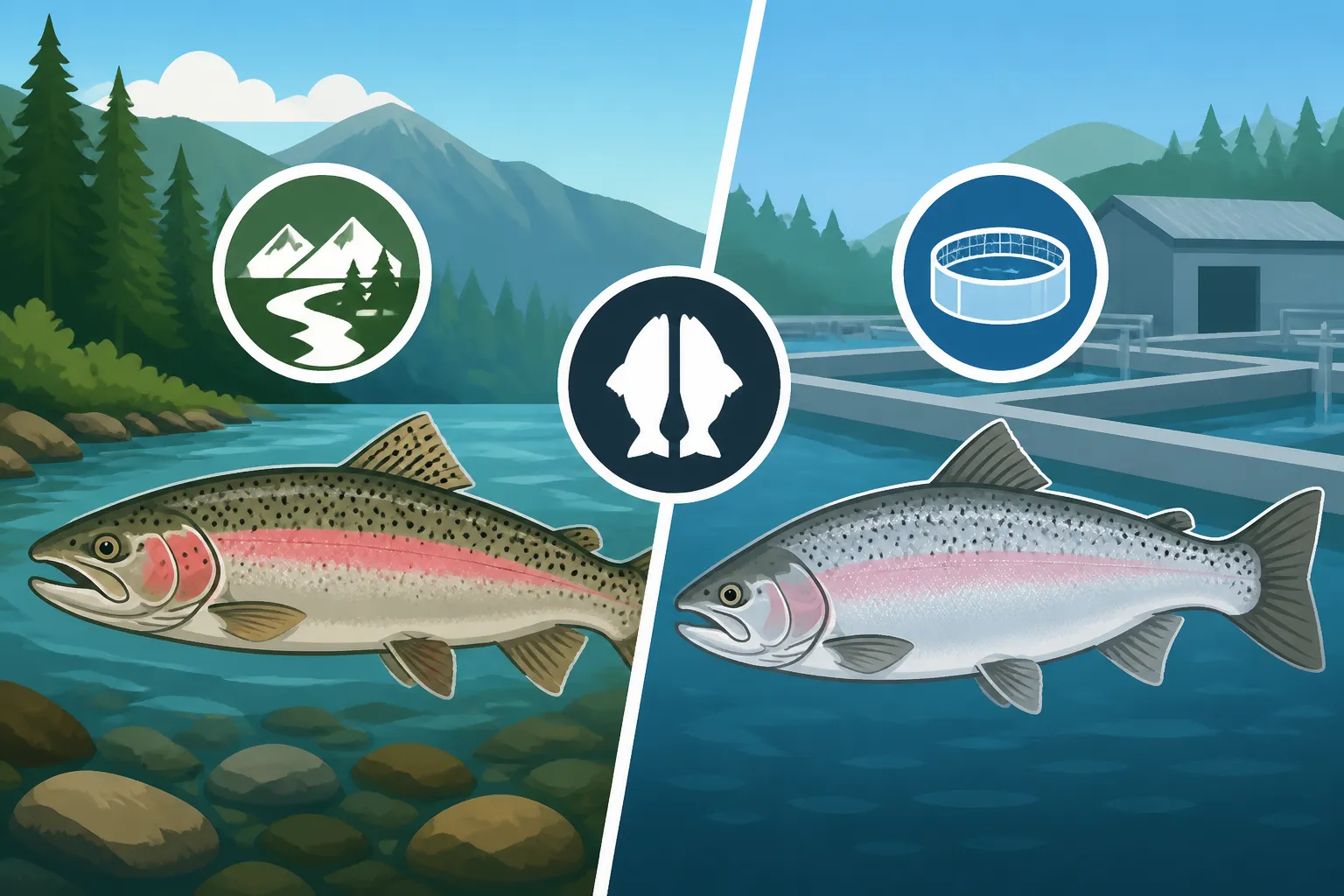
- Wild Steelhead: Tend to have more pristine, perfectly formed fins – especially their dorsal, pectoral, and tail fins. While they might have minor nicks or tears from natural encounters, they generally appear well-proportioned and symmetrical. Their scales, too, often look more uniform and intact.
- Hatchery Steelhead: Often exhibit more frayed, rounded, or even deformed fins. Growing up in crowded concrete raceways or ponds, they frequently rub against other fish and the walls of their enclosure. This constant abrasion can lead to permanently stunted, split, or worn fins that never fully recover their natural shape, even after spending time in the river. Their scales might also show more signs of irregular growth or scarring from their early life in a dense, artificial environment.
This difference in fin quality can be a pretty strong secondary indicator. If you see a fish with perfectly sharp, well-defined fins, and an intact adipose fin, it's almost certainly wild. If the fins look a bit rough around the edges, in conjunction with an absent adipose fin, you're likely holding a hatchery fish.
Overall Body Shape and Coloration
The overall physical appearance of a steelhead – its body shape and coloring – can also offer clues, although these are more subtle and can vary greatly depending on the specific river, water conditions, and time of year.
- Wild Steelhead: Often display a more streamlined, athletic body shape. Their coloration tends to be more vibrant and pronounced, with deeper, richer greens, blues, and grays along their backs, and a more distinct, often iridescent, lateral band. Their spots might be sharper and more defined. This is a testament to their natural diet and active life in varied river environments.
- Hatchery Steelhead: Can sometimes appear slightly heavier-bodied or less streamlined, especially if they were raised on a consistent diet in a less active environment. Their coloration might be a bit more subdued or faded, sometimes described as a "washed out" look, though this is less reliable than the fin clip or fin condition. The spots on a hatchery fish might also be less distinct or more mottled. However, a hatchery fish that has spent a significant amount of time in the river can begin to take on many of the characteristics of a wild fish, making this particular indicator less reliable on its own. It's a good general observation but shouldn't be the sole basis for your decision.
Gill Plate Anomalies and Scars
Another, less common, but sometimes useful indicator can be found on the gill plates and body of the fish. These are typically accidental markings from their hatchery upbringing.
- Hatchery Steelhead: Occasionally, you might observe deformities or scars on the gill plates of a hatchery fish. These can range from slight indentations to more pronounced malformations that occurred due to overcrowding, stress, or minor injuries during their early life. While not present on all hatchery fish, a noticeable gill plate anomaly, combined with a missing adipose fin, further reinforces its hatchery origin. You might also see other non-natural scars or rub marks on their body that suggest an unnatural upbringing environment.
- Wild Steelhead: Generally have smooth, perfectly formed gill plates and fewer irregular scars that aren't clearly from natural predation or spawning activities. Their bodies reflect a life in a natural river system.
It's important to remember that these secondary indicators are best used in combination and after you’ve checked for the adipose fin clip. No single secondary characteristic is definitive on its own, but together, they can significantly increase your confidence in your identification.
Here's a handy table summarizing the key differences:
| Feature | Wild Steelhead | Hatchery Steelhead |
|---|---|---|
| Adipose Fin | ALWAYS PRESENT and intact (key indicator) | ALWAYS ABSENT (clipped off) |
| Other Fins | Typically pristine, well-formed, symmetrical | Often frayed, rounded, worn, or malformed |
| Scales | Uniform, intact, generally smoother | Can be irregular, scarred, or show signs of abrasion |
| Body Shape | Streamlined, athletic, naturally proportioned | Can sometimes appear heavier-bodied, less refined |
| Coloration | Vibrant, deep, pronounced, distinct lateral band | Can be more subdued, "washed out" (less reliable) |
| Gill Plates/Scars | Smooth, naturally formed; few irregular scars | May show deformities, indentations, or unnatural scars |
Practical Tips for On-the-Water Identification and Handling
Knowing how to identify a steelhead is one thing, but actually doing it on the river, often in challenging conditions, requires some practical skills and the right mindset. Your goal should always be a quick, positive identification, followed by appropriate action – whether that's careful release or legal retention. Remember, responsible angling is a huge part of the Oregon fishing experience.
When in Doubt: Release Safely
This is perhaps the single most important piece of advice: if there is any doubt whatsoever about whether a steelhead is wild or hatchery, always err on the side of caution and release the fish safely. The conservation of wild steelhead populations far outweighs the desire to keep a fish. It's the ethical choice and the safest legal choice.
When releasing any fish, especially a potentially wild steelhead, quick and gentle handling is paramount. Keep the fish in the water as much as possible. Use a rubber-mesh net, which is much kinder to fish scales and slime coats than traditional nylon nets. If you need to remove the hook, use needle-nose pliers or a de-hooking tool. Avoid touching the fish with dry hands, as this can remove their protective slime layer. Once the hook is out, hold the fish gently facing into the current until it vigorously swims away on its own. You can learn more about specific techniques in our article on Oregon Catch-and-Release Rules. This mindful approach ensures the fish has the best chance of survival.
Essential Gear for Responsible Angling
Having the right tools can make all the difference in quickly and safely identifying and handling your catch, especially when dealing with the powerful runs and jumps of a steelhead.
- Rubber-Mesh Net: As mentioned, these nets are far superior for catch-and-release. The soft, knotless rubber prevents damage to fins, scales, and the fish's protective slime coat, which is crucial for their survival after release. You can find many excellent options on Amazon, often specifically designed for steelhead and salmon.
- Forceps or Needle-Nose Pliers: These are absolutely essential for quickly and safely removing hooks, especially if the fish has taken the bait deeply or you're using barbless hooks, which are often required for Oregon Salmon and Steelhead Tag Requirements on certain rivers. Keep them easily accessible.
- Waterproof Field Guide/Identification Card: While the adipose clip is primary, having a small, laminated card or a compact, waterproof field guide specific to Oregon fish species can be incredibly helpful for confirming other characteristics or identifying different types of fish you might encounter. Some anglers even keep a small, powerful flashlight or magnifying glass, especially for low-light conditions or if a fin clip seems ambiguous.
- Measuring Tape: Even if you plan to release, knowing the fish's length can be helpful for personal records, and if you are legally able to retain a hatchery fish, you'll need to ensure it meets any minimum or maximum size limits outlined in the Oregon Daily Bag Limits Explained.
Being prepared with these few key pieces of gear means you can handle every fish responsibly, minimize stress, and make informed decisions on the water. It ensures that your time spent fishing in Oregon is not only enjoyable but also contributes positively to the health of its remarkable fisheries.
Disclaimer
The information provided in this guide is for general informational purposes only and is not a substitute for the official Oregon Department of Fish and Wildlife (ODFW) regulations. Fishing rules and regulations can change frequently. Always consult the most current ODFW fishing regulations pamphlet or website before heading out to fish.