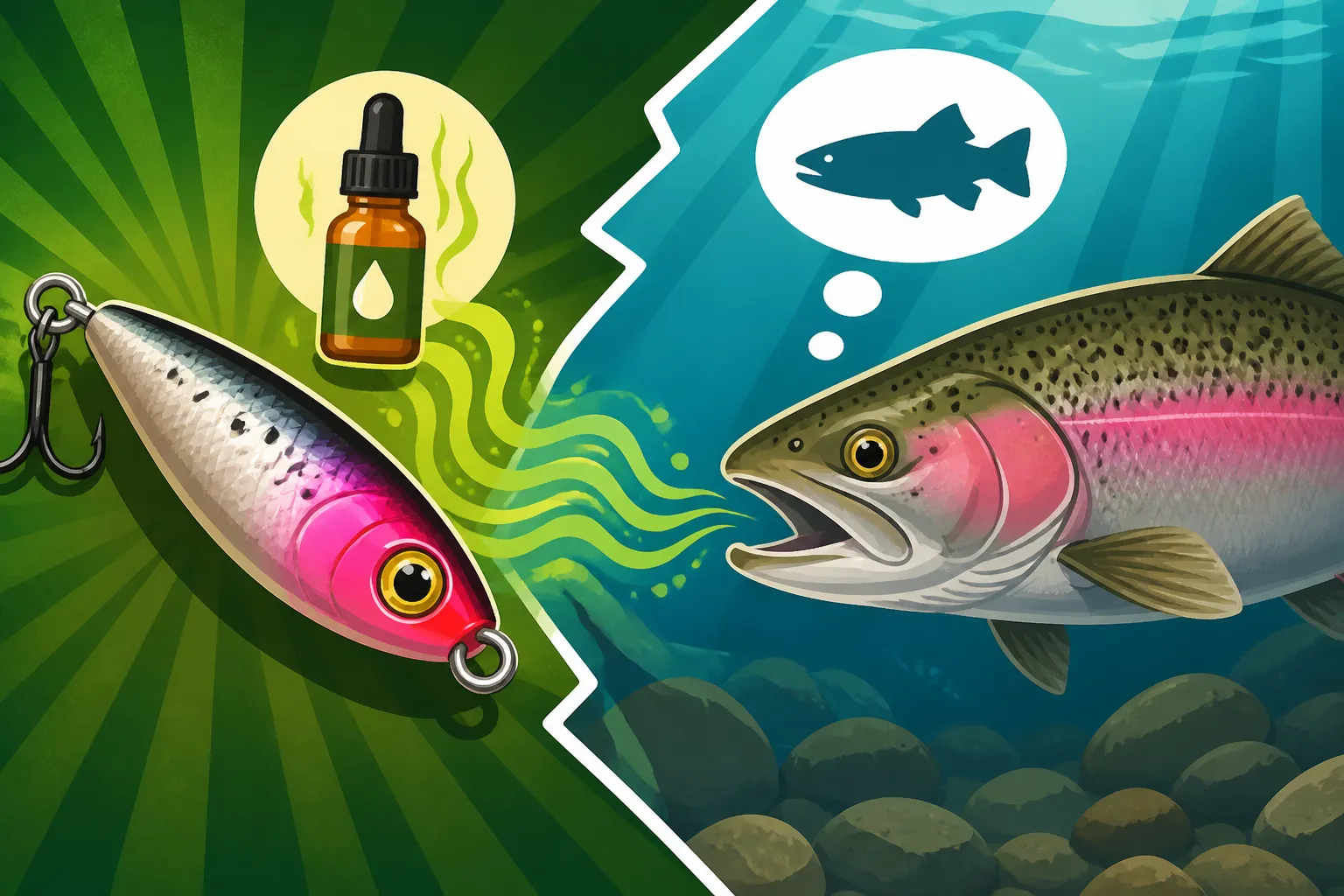
Does scent matter for steelhead lures?
It’s a question that has sparked endless debates around campfires and on the riverbanks across Oregon: does scent actually make a difference when you’re trying to entice a steelhead to bite your lure? Many anglers pour over gear choices, presentation styles, and water conditions, but the role of scent often remains a mystery, leading to frustration and uncertainty on the water. This guide will dive deep into the world of steelhead senses and scent technology to help you understand when, why, and how scent can play a role in your steelhead fishing success.
The Age-Old Debate: Does Scent Really Matter?
The conversation around scent in steelhead fishing is as old as the sport itself, full of passionate arguments from both sides. Some seasoned anglers swear by it, meticulously applying fresh scent before every cast, convinced it’s the secret sauce that coaxes a reluctant steelhead into striking. Others dismiss it as a gimmick, relying solely on presentation, lure action, and the visual appeal of their offering. The truth, as with most things in fishing, isn't always black and white, and often lies somewhere in the nuanced interaction between the fish, the environment, and your technique. It’s not just about spraying something on your lure; it’s about understanding how steelhead perceive their world.
Understanding Steelhead Senses: Vision, Lateral Line, and Smell
To truly grasp the potential impact of scent, we first need to appreciate how steelhead navigate, hunt, and react in their underwater environment. Unlike us, who rely primarily on sight, steelhead possess a sophisticated array of senses that allow them to thrive in diverse and often challenging river conditions. Their world is a complex tapestry of currents, shadows, vibrations, and faint chemical signals.
Firstly, vision is undoubtedly critical, especially in clear water and during daylight hours. Steelhead are highly visual predators, and the flash, color, and movement of your lure are often the initial triggers for a strike. They can detect subtle shifts in light, movement patterns, and contrast against the riverbed or surface. Many lures are designed specifically to exploit this visual acuity, mimicking the look of natural prey or simply provoking an aggressive reaction.
Secondly, and perhaps less understood by casual anglers, is the lateral line system. This remarkable sensory organ runs along both sides of a steelhead's body and allows them to detect vibrations and pressure changes in the water. Think of it as an internal sonar system. It helps them navigate in murky water, detect prey, avoid predators, and even hold their position in strong currents. A wobbling spoon, a diving plug, or a drifting jig all create distinct vibrations that the lateral line can pick up from a distance. This is why lure action, whether it's the erratic flutter of a spoon or the tight wiggle of a plug, is so paramount to success. A lure that moves naturally and appropriately for the current can be incredibly effective, even if it lacks any added scent.
Finally, we arrive at the sense of smell, or chemoreception. Steelhead, like all salmonids, have an incredibly acute sense of smell. They use it to navigate back to their natal streams from thousands of miles away, to identify other fish, and to locate food. While on their spawning migration, their primary focus isn't typically feeding, but they are still highly sensitive to chemical cues in the water. These cues can signal distress, the presence of prey, or even just the subtle organic compounds found in their environment. The question then becomes, can we harness this potent sense to our advantage when they aren't actively foraging? This is where the debate truly begins.
The "Clean Bait" vs. "Scented Lure" Philosophy
Anglers often fall into one of two camps when it comes to scent on lures. On one side, you have the "clean bait" proponents. These folks meticulously ensure their lures are free of foreign odors like bug spray, gasoline, or even human hands. They believe that any unnatural scent is a deterrent to wary steelhead, who are already highly sensitive to their environment. They argue that the visual and vibrational aspects of a well-presented lure are more than enough to trigger a strike, and adding artificial scent only complicates matters or introduces something that might alarm the fish. Their focus is on natural presentation and avoiding anything that might make the fish suspicious.
Conversely, the "scented lure" enthusiasts firmly believe that adding a fish-attracting scent significantly increases their chances. They argue that even if a steelhead isn't actively feeding, a familiar or appealing scent can still pique its curiosity, mask human odors, or even trigger an instinctual bite. They'll often apply generous amounts of scent to their lures, especially when fishing in off-color water where visual cues are diminished, or in very cold water where fish metabolism and aggression might be lower. For these anglers, scent provides an extra layer of appeal, a silent calling card that can turn a look into a take. It’s also seen as a way to potentially hold a fish on the lure longer, allowing it more time to inhale the bait. Many would say, "What's the harm in trying?"
Anecdotes abound from both sides. One angler might swear they never get a bite until they apply their favorite shrimp scent, while another will proudly show off a limit caught on a plain, unscented spoon. The reality is that both arguments hold some weight depending on a multitude of variables. It's not necessarily about one being "right" and the other "wrong," but rather about understanding the conditions where each approach might be most effective. The prevailing wisdom suggests that while scent may not always be the primary trigger, it can often be a crucial secondary factor, especially in challenging situations or as a subtle enticement.
How Scent Works (or Doesn't Work) with Lures
If you decide to incorporate scent into your steelhead fishing, it's essential to understand the different forms it comes in and how it interacts with the underwater environment. Not all scents are created equal, and their effectiveness can vary dramatically based on how they're applied and the conditions you're fishing in. It's not magic, but rather a science of chemistry and water dynamics.
Types of Scent Applications: Sprays, Gels, and Impregnated Lures
The market for fishing scents has exploded, offering anglers a bewildering array of options. Understanding the pros and cons of each type can help you make a more informed decision for your specific fishing situation.
Scent Sprays: These are typically liquid-based formulas that come in a spray bottle. They are perhaps the most convenient option for quick application and reapplication on the go. You simply spritz your lure a few times, and you're good to go. Sprays often dry relatively quickly, forming a thin, scented film on the lure's surface. However, their major drawback is longevity; the scent can wash off quite rapidly, especially in strong currents or after repeated casts. This means frequent reapplication is necessary, which can be a hassle in cold weather or when you're in a hot bite. Many anglers keep a bottle handy to refresh their offerings every few minutes. You can find a huge variety of these, from popular brands like Pro-Cure and Mike's Salmon Eggs, readily available on platforms like Amazon.
Scent Gels/Pastes: Gels and pastes offer a more viscous, longer-lasting alternative to sprays. These products are thicker and designed to adhere to your lure for a longer period. They typically come in tubes or small jars and are applied by squeezing or spreading a small amount onto the lure. The thicker consistency means they slowly release scent into the water, providing a more continuous scent trail. Gels are excellent for conditions where you don't want to reapply scent constantly, such as when running diving plugs or fishing jigs through deep pools. While they last longer, they can sometimes alter the subtle action of very lightweight lures, and some anglers find them a bit messier to apply. They also tend to be a bit more expensive per application than sprays.
Scent-Impregnated Lures: This category includes soft plastics, jigs, and even some hard baits that have scent infused directly into the material during manufacturing. Brands like Berkley PowerBait and Gulp! are famous for this technology. The advantage here is convenience and consistency; the scent is part of the lure itself, so there's no need for external application. The scent is released gradually as the lure moves through the water, and often the lure will retain its scent for a significant period, even if it dries out. This can be a game-changer for anglers who prefer a "set it and forget it" approach or who find external applications too messy. The downside is that once the scent dissipates completely (which it eventually will), you can't easily replenish it without adding an external spray or gel. Still, for many, the initial built-in appeal is worth it. For example, some soft plastic worm offerings designed for steelhead will come pre-scented, and you can usually find these in bulk on Amazon.
Water Conditions and Scent Effectiveness
The environment in which you're fishing plays a massive role in how effective scent will be. It's not a universal enhancer; its utility waxes and wanes with the specific characteristics of the river. Understanding these nuances is key to knowing when to double down on scent and when to rely more on other factors.
Water Clarity: This is perhaps the most significant factor. In crystal-clear water, where steelhead can easily see your lure from a distance, the visual presentation (color, flash, action) often takes precedence. Scent might still provide a subtle edge, perhaps convincing a wary fish to commit, but it's less likely to be the primary attractant. However, in murky or stained water, where visibility is low, scent can become incredibly important. When a steelhead's vision is compromised, its other senses, particularly its lateral line and smell, become paramount. A strong, appealing scent trail can guide a fish directly to your lure, acting as a beacon in the murk. This is a situation where many anglers find scent to be indispensable.
Water Temperature: The temperature of the water directly affects a steelhead's metabolism and activity levels. In colder water (think winter steelhead season), fish are generally less active, move slower, and may be less inclined to chase a lure aggressively. In these conditions, a strong, persistent scent can be crucial. It gives the fish more time to detect the lure and can trigger a more passive, investigative bite rather than an aggressive chase. The colder water also means scent disperses more slowly, leading to a more concentrated and lasting "plume" around your lure. Conversely, in warmer water (like during summer steelhead runs), fish are often more active and aggressive. They might strike purely out of instinct or territoriality, making visual and vibrational cues more dominant. However, even then, scent can provide an advantage by mimicking natural food sources or covering human odors.
Water Flow/Current: The speed and power of the current also dictate how scent behaves. In fast, turbulent water, scent can be quickly washed away from your lure, diluting its effectiveness and requiring frequent reapplication. Gels and pastes, which adhere better, tend to perform better here than sprays. In slower, softer currents or in still back-eddies, scent can create a more concentrated and lingering cloud, effectively drawing fish in from a wider area. Think of a subtle plume of attractant drifting downstream, leading steelhead right to your offering. When How river flow affects steelhead fishing is strong, a powerful scent can still cut through, but it needs to be robust and frequently refreshed.
Integrating Scent into Your Oregon Steelhead Strategy
So, you're convinced that scent could give you an edge. Now, how do you actually put this into practice on Oregon's diverse steelhead rivers? It's not just about haphazardly dousing your gear; there's an art and science to effective scent application that can maximize its potential.
Best Practices for Applying Scent to Lures
Proper application is just as important as choosing the right scent. A poorly applied scent might do more harm than good, or simply be a waste of time and product.
- Start with a Clean Lure: Before applying any scent, ensure your lure is clean and free of any unnatural odors. A quick wipe-down with a scent-free cloth or a rinse in river water can help. Many anglers even store their lures in separate containers to prevent cross-contamination of scents or other smells.
- Apply Liberally, But Thoughtfully: Don't be shy with gels and pastes. Squeeze a generous dab onto the body of your plug, the skirt of your jig, or the surface of your spoon. For sprays, apply several direct bursts. The goal is to create a noticeable scent trail. However, be mindful of how the scent might affect lure action. Too much heavy gel on a very small, sensitive lure could potentially dampen its subtle movement.
- Focus on Key Areas: For plugs, concentrate the scent on the belly, bill, and tail section, as these areas are constantly moving and dispersing scent. On jigs, apply to the skirt or any soft plastic trailer. For spoons, coat both sides. Some anglers even dab scent onto their leader line, creating a longer scent trail.
- Reapply Frequently: This is crucial, especially with sprays and in strong currents. A good rule of thumb for sprays is to reapply every 10-15 casts, or after every fish caught. For gels, you might get away with 30-60 minutes between reapplications, depending on the current and how aggressively the lure is being worked. Make it part of your routine. Keep your chosen scent readily accessible, perhaps clipped to your waders or in a vest pocket.
- Let it Soak (When Possible): If you're using soft plastics or jigs, applying scent and letting it sit for a few minutes before casting can allow the material to absorb it better, potentially leading to a slower, more consistent release.
- Consider Scent Pads/Wicks: Some anglers will attach small, absorbent scent pads or cotton balls to their lures, especially plugs or divers. These can hold a significant amount of liquid scent and release it slowly, providing a longer-lasting effect. You can often rig these with a small piece of wire or by integrating them into the existing hardware.
Recommended Scents for Oregon Steelhead
While there's no single "magic" scent that works every time, certain profiles have proven consistently effective for steelhead anglers in Oregon. These scents typically mimic natural food sources or known attractants that trigger a positive response from salmonids.
- Anise: This licorice-like scent is an old-school favorite for many types of fish, including steelhead. It's believed to be a universal attractant or, at the very least, an excellent cover scent for human odors. It’s a subtle yet persistent aroma.
- Shrimp/Krill: Steelhead consume crustaceans in both their ocean and freshwater phases, so shrimp and krill scents are natural choices. These scents mimic a common food source and provide a strong, appealing aroma that steelhead seem to key into. Many anglers consider shrimp or prawn-based scents to be a top contender, especially for winter steelhead.
- Garlic: While perhaps less intuitive for a fish, garlic is another scent that has a loyal following. Some believe it acts as a general attractant, while others think it might stimulate fish to bite due to its strong, somewhat pungent nature. It’s certainly distinctive and can cut through water effectively.
- Roe/Egg Scents: Given that salmon and steelhead eggs are a natural and highly nutritious food source for many fish, including juvenile steelhead, roe scents are a logical choice. These often have a subtle, sweet, and rich aroma that can be very appealing. This is especially true when fishing areas where spawning activity might be occurring or when using egg imitations.
- General Fish Attractants: Many brands offer proprietary "fish formula" scents that are a blend of various attractants, often including components from the above categories. Experimentation is key here to find what works best on your local rivers.
- Natural Fish Oils: Some anglers will simply use pure krill oil, sardine oil, or other natural fish oils to add a potent and familiar scent to their lures. These are often messy but highly effective.
It's a good idea to have a few different scent profiles on hand. What works one day or on one river might not work on another. Consider starting with a shrimp or krill-based gel for longevity, and an anise or roe-based spray for quick reapplication. These scents, along with various brands of pre-scented soft plastics, are widely available, and you can stock up easily by browsing online stores like Amazon. Remember, the goal is to enhance, not replace, the effectiveness of a well-chosen and properly presented lure. When considering Oregon Steelhead Fishing Techniques, integrating scent can be a powerful addition.
Beyond Scent: Other Factors for Steelhead Success
While scent can be a valuable tool in your steelhead fishing arsenal, it's crucial to remember that it's just one piece of a much larger puzzle. Relying solely on scent without mastering other fundamental aspects of steelhead fishing will likely lead to disappointment. Steelhead are complex creatures, and a successful outing often hinges on a combination of factors working in harmony.
Presentation and Action: The Visual Appeal
No amount of scent can compensate for a poor presentation. Steelhead, especially in clear water, are highly visual. The way your lure behaves in the water, its movement, and its retrieve speed are often the primary triggers for a strike. A lure that tumbles naturally, jigs enticingly, or swims with a lifelike wiggle is far more likely to get a reaction than a stationary or unnatural-looking one, even if it's heavily scented.
- Drift Fishing: For techniques like drift fishing with jigs or bait, the key is to achieve a natural, drag-free drift that mimics a free-floating food item. The lure should move at the same speed as the current, allowing it to tumble and flutter enticingly without being pulled unnaturally. This is where subtle lure action, like a soft plastic worm wiggling in the current or a yarn egg bouncing along the bottom, becomes paramount. Mastering How to Drift Fish for Steelhead is foundational.
- Plugs and Spoons: When fishing plugs or spoons, the action imparted by the lure itself, combined with your retrieve or trolling speed, is what makes it irresistible. A plug that dives and wobbles with an erratic, wounded-baitfish action, or a spoon that flashes and flutters like a fleeing minnow, are designed to provoke an aggressive strike. Your ability to get these lures into the right zone and maintain their optimal action is far more important than any added scent.
- Jigging: For jigging techniques, the action is entirely in your hands. The subtle lifts, drops, and pauses you impart to the jig make it look like a struggling or injured creature. This vertical movement is highly effective, and while scent can help, the jig's dance is what initially catches the steelhead's eye and triggers a reaction.
Color and Contrast: Matching the Hatch and Water Conditions
The color of your lure plays a critical role in its visibility and appeal, often more so than scent in many situations. Steelhead can be incredibly particular about color, and what works one day might be ignored the next.
- Water Clarity Dictates Color: In clear water, natural, muted tones like olive, brown, black, or subtle metallics often perform best, mimicking the natural forage. In stained or murky water, bright, fluorescent colors like chartreuse, hot pink, or orange become highly effective because they stand out and are more easily seen by the fish. The contrast against the background is also vital; a dark lure against a bright sky, or a light lure against a dark river bottom, can make all the difference.
- Weather and Light Conditions: On bright, sunny days, lures with more flash or reflective properties can be highly visible. On overcast days, duller or matte finishes might be more effective, creating a more subtle silhouette. Experimentation is key; always have a range of colors in your tackle box. This applies whether you're choosing Best Lures for Oregon Salmon Fishing (and by extension, steelhead) or selecting your favorite jig.
Location and Timing: Being Where the Fish Are
Ultimately, no lure, no matter how perfectly scented or presented, will catch a fish if there aren't any fish to catch. Understanding where steelhead hold in a river and when they are likely to be there is the single most important factor in steelhead fishing.
- Reading the Water: Learn to identify classic steelhead holding water: current seams, eddies, deep pools, tail-outs, submerged structure, and areas with good cover. Steelhead seek out places where they can rest, conserve energy, and feel secure. This skill is developed over time and through experience, but it’s invaluable. Knowing How to find holding water for steelhead is fundamental to success.
- Run Timing: Steelhead have distinct run timings. Winter Steelhead Run Timing in Oregon and Summer Steelhead Run Timing on the Deschutes are prime examples. Knowing when different runs are expected on specific rivers will put you in the right place at the right time. Pay attention to fish counts, river reports, and local knowledge. This helps ensure you're targeting fish that are actually present in the river system.
- Water Temperature and Flow: As mentioned earlier, water temperature and flow significantly impact fish behavior and location. Understand how these factors influence where steelhead will be holding and how active they might be. During low, clear water, they might be in deeper, shadier pools. During high, murky flows, they might tuck into softer current seams closer to the bank. Understanding What water temperature is best for salmon fishing (and steelhead) can dramatically improve your chances.
In conclusion, while scent can provide a subtle, yet sometimes crucial, advantage in steelhead fishing, it functions best as an enhancer to a solid foundation of proper presentation, appropriate lure choice, and understanding fish behavior and location. Don't overlook it, but don't let it be your only trick either. Combine a smart scent strategy with mastery of other techniques, and you'll be well on your way to more successful steelhead adventures on Oregon's beautiful rivers.
Disclaimer
This article is for general informational purposes only and does not constitute professional advice. Laws, prices and regulations vary by location and change over time. Consult a qualified professional for guidance on your specific situation.