What water temperature is best for salmon fishing
There’s nothing quite as frustrating as heading out to your favorite Oregon salmon fishing spot, full of anticipation, only to find the bite is completely off. You've got the right gear, the perfect bait, and you've timed your trip for what should be peak season, yet the fish just aren't interested. Often, the silent culprit behind a slow day isn't your technique, but the water temperature. Understanding the thermal preferences of salmon can be the key to unlocking consistent success, and this guide will dive deep into how water temperature dictates salmon behavior and how you can use this knowledge to your advantage.
The Critical Role of Water Temperature in Salmon Behavior
Imagine stepping into a room that's either freezing cold or stifling hot. You wouldn't be very active, would you? You'd conserve energy, perhaps hide away, and certainly wouldn't be thinking about a big meal. Salmon are no different. Water temperature isn't just a number; it's a fundamental environmental factor that dictates almost every aspect of a salmon's life, from its metabolism to its migration patterns and even its will to bite your lure.
Salmon Metabolism and Thermal Comfort Zones
The metabolic rate of a cold-blooded creature like a salmon is directly tied to the surrounding water temperature. When the water is too cold, their metabolism slows down significantly. They become sluggish, conserve energy, and their need for food decreases. Think of it like a car running on low fuel – it's not going to accelerate quickly or travel long distances. Conversely, if the water gets too warm, their metabolism can actually speed up to an unhealthy degree. This increases their oxygen demand, which can be critical in warmer water that holds less dissolved oxygen.
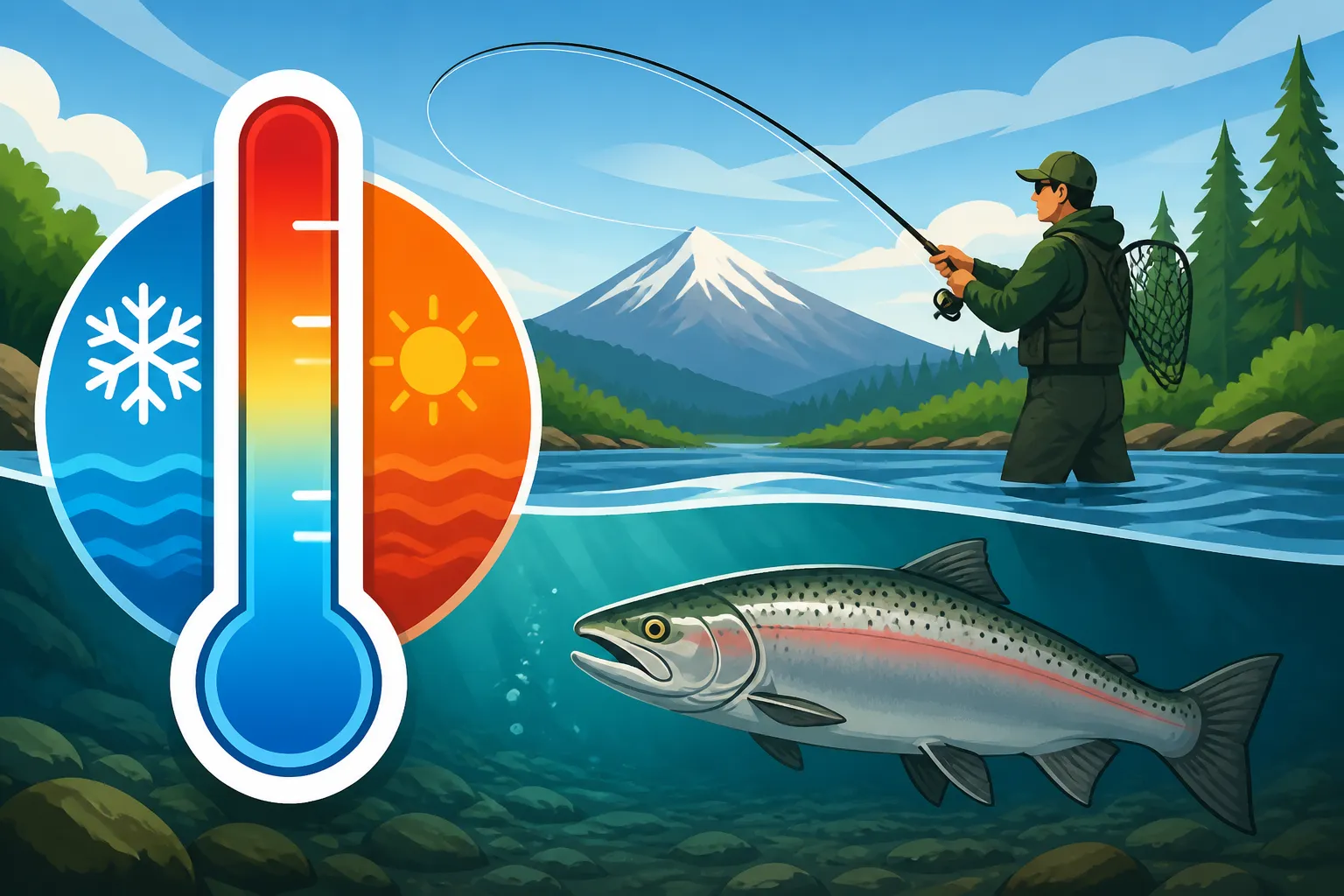
Salmon are constantly seeking their "thermal comfort zone," a range where they can maintain optimal energy levels without being stressed. Outside of this zone, they prioritize survival over feeding. Too cold, and they'll be lethargic and uninterested. Too warm, and they'll be stressed, seeking cooler depths or thermal refuges, and again, unlikely to feed actively. This stress can also make them more susceptible to disease, which is a major concern for wild fish populations, especially during hot summer months. Understanding this basic principle is your first step to predicting where salmon might be and what they might be willing to do.
Impact on Feeding, Migration, and Spawning
Water temperature acts as a powerful cue for salmon throughout their life cycle, influencing when and where they feed, migrate, and reproduce. During their ocean phase, temperature fronts often concentrate baitfish, leading salmon to follow these thermal boundaries for feeding opportunities. As they transition to freshwater for their spawning runs, temperature becomes even more critical.
Migration, for instance, is often triggered by specific temperature drops that signal favorable conditions for moving upstream. If river temperatures are too high, salmon may "hold" in cooler, deeper pools or at the mouths of tributaries, waiting for conditions to improve. This waiting period can be stressful and makes them less likely to bite. When temperatures are just right, they're more likely to be on the move, burning energy, and therefore, potentially more aggressive towards a well-presented offering. Their drive to spawn is incredibly powerful, but even that can be delayed or impacted by unfavorable thermal conditions. For more detailed information on the various species you might encounter, check out our comprehensive guide on Oregon Salmon Species Guide.
Optimal Temperature Ranges for Oregon's Salmon Species
Oregon is blessed with several incredible salmon species, each with its own preferred thermal comfort zone. Knowing these ranges is crucial for targeting them effectively. While these are general guidelines, local conditions, recent weather, and specific river systems can always play a role.
Chinook Salmon (King Salmon)
Chinook salmon, often called "Kings," are the largest and most sought-after salmon in Oregon. They have distinct runs, primarily Spring Chinook and Fall Chinook, and their temperature preferences can vary slightly.
-
Spring Chinook: These incredible fish enter freshwater rivers like the Columbia and Willamette early in the year, often when water temperatures are still quite cool. Their ideal feeding and migratory range tends to be between 45°F and 58°F (7°C – 14°C). When water temperatures hover in the low 50s, spring Chinook are often more active and willing to strike. If the water gets too cold, say below 45°F, they can become lethargic and hold in deeper pools. Conversely, if the rivers heat up too quickly into the low 60s, they may "shut down," seek cooler sanctuaries, and their migration can slow. Understanding these nuances is key to success. You can learn more about these powerful fish in our article on Chinook Salmon in Oregon.
-
Fall Chinook: As the name suggests, these salmon arrive later in the year, typically from late summer into fall. The water temperatures they encounter are generally warmer than their spring counterparts, then cool down as the season progresses. Their optimal range for active fishing is often between 55°F and 65°F (13°C – 18°C). In the late summer, when water temperatures might still be in the upper 60s or even low 70s, Fall Chinook can be sluggish and difficult to entice. However, as the fall rains arrive and cool the rivers, dropping temperatures into that optimal window, these fish become much more aggressive. A sudden drop in temperature after a long hot spell can often trigger a strong bite.
Coho Salmon (Silver Salmon)
Coho salmon, known for their acrobatic fights and delicious meat, tend to prefer slightly cooler water than Chinook. They are prevalent in Oregon's coastal rivers and estuaries.
- Coho Preferences: Coho generally thrive in water temperatures between 48°F and 60°F (9°C – 16°C). They are often less tolerant of warmer water than Fall Chinook. When coastal rivers are experiencing higher temperatures, Coho will often hold in estuaries or near the river mouths, waiting for cooler water to push in. A good rain event in late summer or early fall that drops river temperatures into the low 50s can really turn on the Coho bite. They become incredibly aggressive, chasing down spoons, spinners, and flies with enthusiasm. Conversely, if temperatures dip too low, below 45°F, they can also become less active, though typically not as dramatically as with excessive warmth. For specific tips on catching these energetic fish, refer to our Coho Salmon in Oregon guide.
Other Salmonids (Sockeye/Kokanee, Steelhead)
While our primary focus is on anadromous salmon, it's worth briefly touching on other salmonids in Oregon that also have distinct thermal preferences.
-
Kokanee Salmon: These landlocked sockeye salmon are popular in many Oregon lakes and reservoirs, such as Wallowa Lake and Lake Billy Chinook. They are extremely temperature sensitive and prefer much colder, oxygen-rich water, typically between 45°F and 55°F (7°C – 13°C). You'll often find them at specific depths where these conditions are met, especially during warmer months. Trolling for them requires precise depth control to stay in their comfort zone. Our guide on Kokanee Salmon in Oregon offers more insights into targeting these tasty fish.
-
Steelhead: Although technically a rainbow trout, steelhead share the anadromous life cycle and many behavioral traits with salmon. Both summer and winter steelhead runs are heavily influenced by water temperature. Optimal temperatures for active steelhead fishing generally fall between 40°F and 55°F (4°C – 13°C). Winter steelhead, for example, thrive in colder, often rain-swollen rivers, while summer steelhead on rivers like the Deschutes will seek out thermal refuges during hot spells. A slight warm-up in winter or a cool down in summer can often trigger a more aggressive bite. For a deeper dive into these magnificent fish, be sure to read our Oregon Steelhead Guide.
Here's a quick overview of optimal ranges:
| Salmon Species | Optimal Temperature Range (°F) | Optimal Temperature Range (°C) | Behavior in Range |
|---|---|---|---|
| Spring Chinook | 45°F – 58°F | 7°C – 14°C | Active migration, feeding, more aggressive. |
| Fall Chinook | 55°F – 65°F | 13°C – 18°C | Strong bite, active. Tolerant of slightly warmer. |
| Coho Salmon | 48°F – 60°F | 9°C – 16°C | Highly active and aggressive. Less tolerant of heat. |
| Kokanee Salmon | 45°F – 55°F | 7°C – 13°C | Depth-specific, seeking cold, oxygenated water. |
| Steelhead | 40°F – 55°F | 4°C – 13°C | Active migration and feeding (varies by run). |
Reading the Water: Monitoring Temperatures and Adapting Your Strategy
Knowing the optimal temperature ranges is one thing; actually measuring and reacting to them in real-time is another. This is where you elevate your fishing game from hopeful casting to strategic angling.
Essential Tools for Temperature Monitoring
You might be surprised how easy it is to start monitoring water temperature. You don't need a high-tech lab, just some basic tools and an understanding of how to use them.
- Handheld Thermometers: These are perhaps the simplest and most accessible tools. Many fly fishing shops and sporting goods stores carry basic digital or analog thermometers that you can dip into the water. If you're wading or fishing from the bank, a quick dip at your fishing spot can give you valuable information. You can often find a reliable, waterproof water temperature gauge on Amazon, perfect for clipping to your vest or bag.
- Boat-Mounted Sensors: For those fishing from a boat, many modern fish finders and depth sounders come equipped with built-in water temperature sensors. These provide continuous readings, allowing you to track changes as you move across a lake or up and down a river. This is particularly useful for finding thermoclines – distinct layers of water with different temperatures – which can be crucial for locating fish in deeper lakes and reservoirs.
- Understanding Thermoclines: In lakes and deeper pools, especially during warmer months, water can stratify into layers. The upper layer (epilimnion) is warmer, the middle layer (thermocline) is where the temperature changes rapidly, and the bottom layer (hypolimnion) is colder. Salmon, especially kokanee, often suspend right in or just below the thermocline where cooler, oxygenated water is available, even if the surface is too warm. Learning to use your electronics to locate this depth can be a game-changer.
Interpreting Temperature Changes and Adjusting Tactics
Once you have your temperature readings, the real skill comes in interpreting them and adjusting your approach. This isn't just about finding the "right" temperature, but understanding how changes impact salmon behavior.
- Daily Fluctuations: Water temperatures often fluctuate throughout the day. Early mornings are typically the coolest, with temperatures rising towards mid-day and afternoon before gradually cooling again overnight. This means salmon might be more active and willing to chase in the cooler hours. In warm water conditions, targeting first light or last light can significantly increase your chances.
- Post-Rain Temperature Drops: A significant rain event, especially in late summer or early fall, can dramatically cool river temperatures. This sudden drop can invigorate salmon, triggering aggressive bites and pushing dormant fish to migrate. Pay close attention to weather forecasts and river flow data.
- Lure Presentation and Depth: In colder water, salmon are often less inclined to chase. A slower retrieve, a deeper presentation, or even switching to a bait that sits in the strike zone longer might be more effective. Conversely, in optimal temperatures, a faster, more aggressive retrieve might trigger a reaction strike. Your choice of bait can also be critical; sometimes in warmer water, a subtle presentation is best, while in cooler water, something with more flash and vibration can draw attention. For more ideas on how to adjust your approach, check out our guide on Oregon Fishing Techniques for Beginners and Oregon Bait and Lure Guide.
Finding Thermal Refuges and Productive Zones
When conditions aren't ideal, salmon don't just disappear; they seek refuge. Knowing where these thermal refuges are can lead you to fish when others are struggling.
- Deeper Pools and Shade: Deeper water retains cooler temperatures longer. Look for the deepest holes in rivers, especially those with overhead cover from trees or cliffs that provide shade throughout the day.
- Tributary Mouths: Smaller tributaries, especially those fed by springs or snowmelt, often discharge cooler water into larger, warmer rivers. The confluence of a cool tributary with a warmer mainstem river can create a perfect thermal oasis where salmon will hold. This is a common strategy on rivers like the Columbia.
- Upwellings and Seeps: In some lakes and large rivers, underwater springs or seeps can introduce cooler water, creating localized thermal pockets. These can be harder to detect without specialized equipment, but local knowledge or observant anglers might point them out.
- Estuaries: During periods of very warm freshwater, salmon will often stack up in the cooler, oxygen-rich waters of estuaries before making their move upstream. This is a common scenario in many of Oregon's coastal river systems. Exploring different Best Rivers to Fish in Oregon can reveal many such opportunities.
Beyond Temperature: Other Factors Influencing Salmon Bites
While water temperature is undeniably a critical factor, it's part of a larger ecological puzzle. A truly successful angler considers temperature in conjunction with other environmental variables.
Water Clarity and Flow
Temperature doesn't operate in a vacuum. Water clarity and flow rates are also huge determinants of salmon behavior and your fishing success.
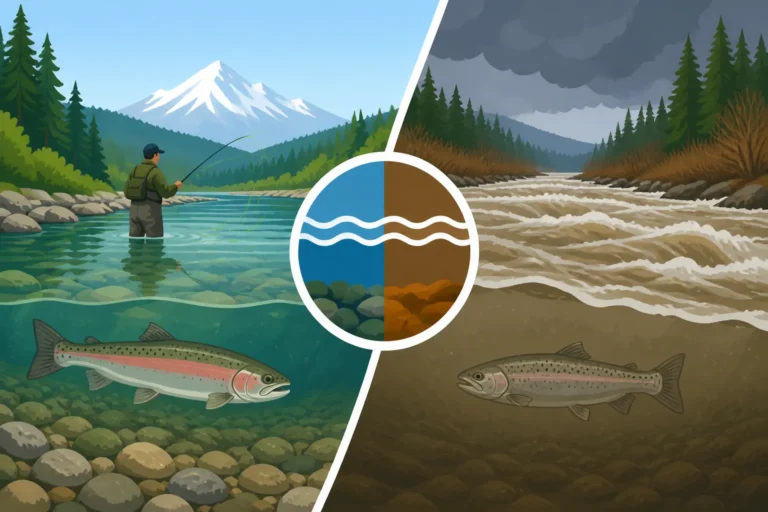
- Turbidity: After heavy rains, rivers often become high and muddy (turbid). While the water might be cooling, the poor visibility can make it hard for salmon to locate your presentation, or they might simply be put off by the changed conditions. In these scenarios, bright, contrasting lures or baits with strong scents can sometimes be effective, as salmon rely more on their lateral line and sense of smell. As the water begins to clear, fish activity usually picks up.
- Flow Rates: High flow rates from heavy rains or dam releases can make salmon conserve energy by holding tight to cover, in eddies, or behind structure. They might not be as willing to chase a lure. Conversely, very low flows can also stress fish, making them lethargic. Optimal flow conditions, where fish can move comfortably without expending excessive energy, often coincide with good bites. Sometimes, too, specific Oregon Fishing Regulations Explained might be in effect based on flow or clarity.
Time of Day, Weather, and Barometric Pressure
The time of day, general weather conditions, and even the subtle shifts in atmospheric pressure all play a role in whether salmon will bite.
- Diurnal Patterns: Just like humans, salmon have daily rhythms. As discussed, cooler parts of the day (early morning, late evening) can be more productive, especially in warmer seasons. Overcast skies can also extend these productive periods, as they prevent rapid heating of the water. For more on timing your trips, check out our guide on the Best Time of Year to Fish in Oregon.
- Barometric Pressure: Many experienced anglers swear by the impact of barometric pressure. A stable, high-pressure system often leads to stable fishing, while a rapidly dropping barometer (indicating an approaching storm front) can sometimes trigger a feeding frenzy right before the weather changes. Conversely, a rapidly rising barometer after a storm can sometimes result in a slower bite as fish adjust. Understanding How weather fronts affect Oregon fishing can provide another layer of insight into fish behavior. The best approach is to consider all these elements together: if the water temperature is optimal and the barometer is stable, you're likely in for a great day!
Disclaimer
This article is for general informational purposes only and does not constitute professional advice. Laws, prices and regulations vary by location and change over time. Consult a qualified professional for guidance on your specific situation.