How long does it take to catch a tiger muskie
If you've ever dreamt of battling a formidable tiger muskie in Oregon, you're not alone. Many anglers wonder just how much time, effort, and sheer luck it takes to actually land one of these elusive predators. It's a question rooted in the muskie's well-earned reputation for being incredibly challenging to catch, and this guide is here to give you a realistic breakdown of what to expect, from the frustrating "follows" to the exhilarating moment of truth.
Understanding the Elusive Tiger Muskie in Oregon
Ah, the tiger muskie. Just the name conjures images of powerful, toothy beasts lurking in the depths. In Oregon, these impressive hybrid fish are a true trophy, offering an angling experience unlike almost any other. But let's be real, their allure comes with a heavy dose of difficulty, and understanding why they're so elusive is the first step toward appreciating the journey.
What Makes Tiger Muskie So Challenging?
The reputation of the muskie as the "fish of a thousand casts" isn't just an old wives' tale; it's a testament to their intelligent and often frustrating nature. Unlike some fish that seem to bite anything that moves, tiger muskie are incredibly predatory and discerning. They hunt by sight and vibration, often following a lure right up to the boat before turning away at the last second, leaving anglers with a racing heart and an empty net. This behavior is precisely why the question of "how long does it take" is so pertinent. It's not just about finding them; it's about convincing them to commit. Their natural habitat in Oregon, primarily Lake Billy Chinook Fishing Guide, provides ample cover and deep-water structure, allowing them to remain hidden and ambush prey, further enhancing their elusive quality.
Beyond their natural wariness, tiger muskie are also a relatively low-density fish in the waters where they're found. You're not casting into a school of hungry panfish; you're often targeting a solitary, territorial predator. This means that even in prime muskie waters, the sheer number of potential targets is limited. Add to this their sharp eyesight and sensitivity to pressure, and you begin to understand why catching one is a monumental achievement rather than a casual afternoon's endeavor. They are truly one of the most challenging Oregon Warmwater Fish Species to consistently entice.
Factors Influencing Your Chances of Success
When it comes to tiger muskie, many elements conspire to dictate your success, or lack thereof. It's rarely a single factor, but rather a confluence of conditions. For instance, the time of year plays a massive role. During cooler months, muskie can be more active, feeding aggressively to build reserves, while in the heat of summer, they might retreat to deeper, cooler waters, becoming more lethargic. Understanding Oregon Fishing Seasons Explained can give you a general idea, but specific muskie behavior within those seasons is key.
Water conditions are equally critical. Clear water allows them to see your presentation from a distance, but also allows them to spot you or any imperfections in your retrieve. Stained water, on the other hand, might make them rely more on vibration but reduces their visual range. Weather, barometric pressure, and even moon phases are hotly debated among muskie anglers as factors that can either turn the bite on or shut it down completely. Ultimately, the angler's skill in reading these conditions, presenting the right lure, and maintaining an unwavering positive attitude significantly influences the time it takes to get that strike.
Typical Timeframes and Expectations for Landing a Tiger Muskie
So, the burning question: how long does it really take? If you're hoping for a simple answer like "an hour or two," you're likely setting yourself up for disappointment. The reality of tiger muskie fishing is a test of patience and persistence, often stretching over many hours, if not multiple trips.
The "Average" Experience: More Than Just a Few Casts
For many anglers targeting tiger muskie in Oregon, an "average" outing might involve several hours of casting, retrieving, and working various lures without a single bite. It's not uncommon to spend an entire day, from dawn till dusk, making thousands of casts. Think of it less like typical trout fishing where you might catch several in an afternoon, and more like big game hunting where the reward is singular and hard-won. The "thousand casts" adage isn't far from the truth for many, meaning it could literally take multiple full days on the water before you get your first legitimate opportunity.
I've heard countless stories from seasoned muskie anglers about trips where they put in 10-12 hours of intense effort, switching baits, changing locations, and grinding it out, only to come home empty-handed. Then, on another day, after just 30 minutes, bam – a muskie explodes on their lure. This unpredictable nature is part of the mystique and the challenge. It means that while the average attempt involves significant time, the average successful catch can happen at any moment within that extended period. It truly demands a mindset of focused, continuous effort, knowing that the next cast could be the cast.
What a Successful Day Might Look Like
When you do have a "successful" day, it rarely means you're hauling in a stringer full of muskie. A truly banner day might involve one, maybe two, fish landed. These are not schooling fish, and they don't typically feed in frenzies. Instead, a successful day often culminates in a single, heart-stopping event. You might be meticulously working a bucktail along a weed line, feeling nothing for hours, when suddenly, your rod is nearly ripped from your hands.
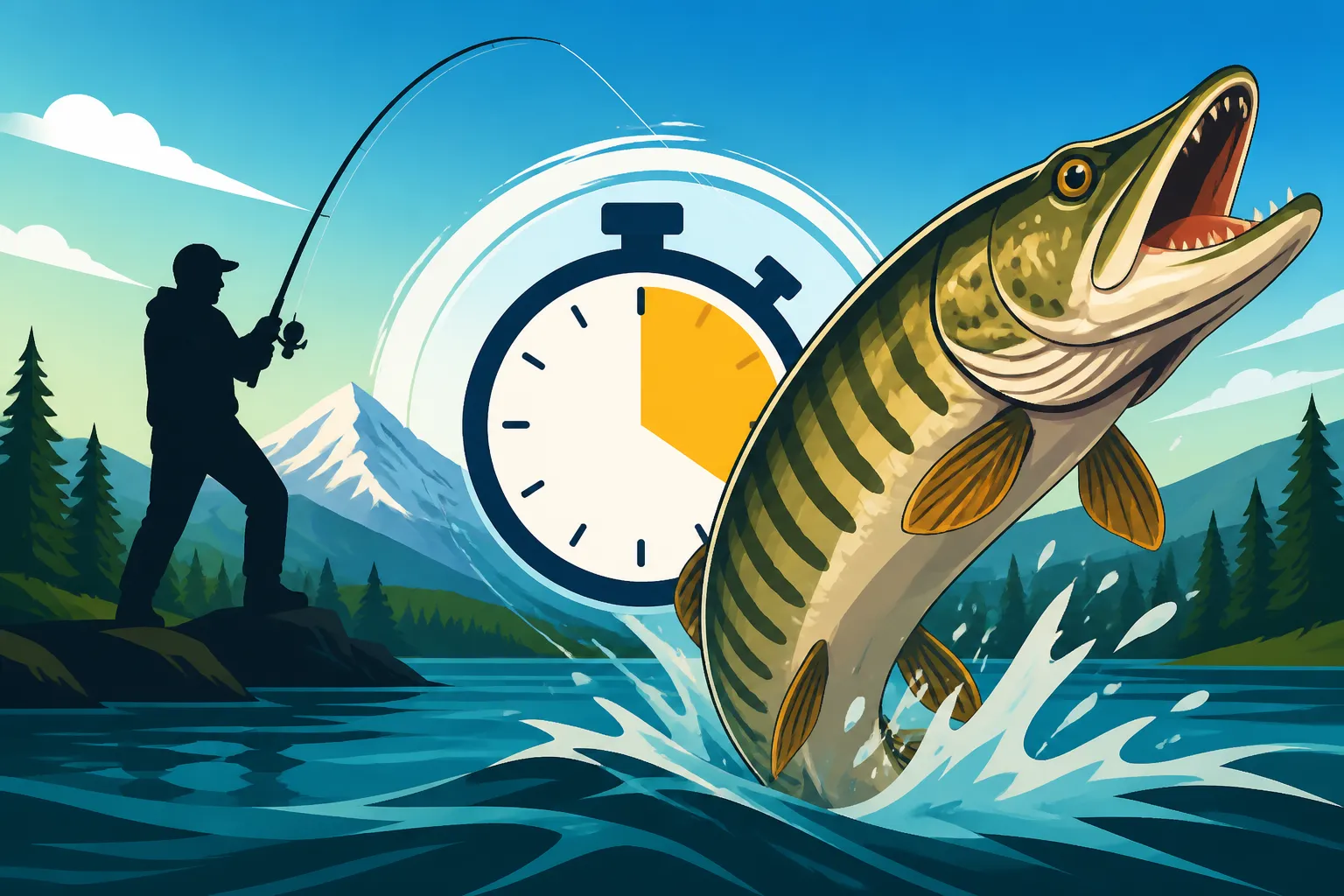
The fight itself is usually intense and brief, a powerful display of head shakes, runs, and maybe even aerial acrobatics. The time spent battling the fish, from strike to net, might only be a few minutes, but it's the culmination of all the hours and casts leading up to that moment. It's about that one explosive encounter that makes all the previous effort, the cold hands, the sore shoulders, and the endless casting, completely worth it. Every muskie angler I know remembers the details of each fish they've landed precisely because of the immense effort and excitement involved.
The Role of "Follows" and Near Misses
One of the most maddening yet exhilarating aspects of muskie fishing is the "follow." You'll be retrieving your lure, building anticipation with every turn of the reel, when out of nowhere, a massive shadow materializes behind your bait. It follows, perfectly paced, right up to the boat. Your heart pounds, your hands might even tremble, and you immediately initiate a figure-eight pattern with your rod tip, trying to coax the fish into biting at the boat.
These follows, where a muskie inspects your lure but doesn't commit, are incredibly common. They don't count as a catch, but they certainly add to the "time spent" engaging with the fish. Sometimes they'll follow for what feels like an eternity before slowly turning away. Other times, they might bump the lure without fully taking it. These near misses are both frustrating and incredibly motivating, letting you know that the fish are there, they're interested, and you're doing something right – just not quite right enough. Many hours of muskie fishing are filled with these tantalizing follows, pushing anglers to refine their technique and presentation even further.
Strategies to Increase Your Odds and Reduce Your Wait Time
While muskie fishing inherently demands patience, there are definitely strategies you can employ to stack the odds in your favor and, hopefully, reduce the overall time it takes to get that coveted strike. It's about working smarter, not just harder.
Gear Up for Success: Rods, Reels, and Lures
Fishing for tiger muskie is not a finesse game; it's a power sport. You need heavy-duty gear that can handle large lures, powerful casts, and an explosive fight. This means investing in a stout baitcasting rod, typically 7.5 to 9 feet long, with a heavy or extra-heavy action. Pair that with a robust baitcasting reel capable of holding a significant amount of heavy braided line, usually 65-80 pound test. These aren't your everyday trout setups; they're designed for battling true freshwater giants.
When it comes to lures, muskie anglers have a specialized arsenal. Large bucktails, crankbaits, jerkbaits, and soft plastic swimbaits are standard fare. Bucktails are often a go-to, as their pulsating skirts and flash can trigger aggressive strikes. Topwater lures, particularly during low light conditions, can offer some of the most exciting blow-ups. For specialized muskie gear, many anglers find a great selection online; for example, if you're looking for durable muskie lures or a heavier rod, you can often find a wide array of choices on Amazon. Having a variety of colors and sizes is also crucial, as muskie can be particular. Consider exploring specific lure types covered in an Oregon Bait and Lure Guide to get an idea of the general principles that apply to muskie.
Prime Times and Locations
Knowing when and where to fish can drastically cut down on your "wait time." In Oregon, Lake Billy Chinook Fishing Guide is the premier destination for tiger muskie. Within Lake Billy Chinook, focus on areas with submerged timber, rock piles, ledges, and extensive weed beds, especially points where these features intersect. These are classic ambush points for muskie. Tributary mouths can also be productive during certain times of year as baitfish congregate.
Seasonally, late spring through early summer and then again in the fall are often considered prime times for muskie. In spring, as water temperatures rise, muskie become more active and are often found in shallower areas. Fall brings cooler water, and muskie go on a feeding binge before winter, making them incredibly aggressive. Early mornings and late evenings, or overcast, rainy days, are often the most productive, as these low-light conditions make muskie feel more comfortable hunting in shallower water. Researching Oregon Fishing Season Dates and Limits can provide broader context for seasonal changes that impact fish behavior.
Effective Techniques and Presentation
Casting volume is important, but casting effectively is paramount. Make sure every cast is purposeful, covering prime structure. A consistent retrieve is often key for bucktails and crankbaits. For jerkbaits and glide baits, a more erratic, stop-and-go retrieve can be deadly, mimicking an injured baitfish. Always vary your retrieve speed and cadence until you find what the fish are responding to on a given day.
The "figure-eight" at the boat is a non-negotiable technique. As soon as your lure nears the boat at the end of a retrieve, don't just pull it out of the water. Keep your rod tip in the water and make a large, sweeping figure-eight pattern next to the boat. Many muskie will follow a lure all the way in and strike during this figure-eight maneuver, especially if it looks like the "prey" is trying to escape. This single technique can turn a frustrating "follow" into a thrilling catch. Persistence, attention to detail, and a willingness to adapt your strategy are the hallmarks of successful muskie anglers, building on the foundational Oregon Fishing Techniques for Beginners but taking them to a specialized level.
The Unforgettable Moment: Hooking and Landing a Tiger Muskie
After all the hours, the casts, the follows, and the near misses, there's nothing quite like the moment a tiger muskie finally commits. It's an experience that burns into your memory, often defining the entire trip.
The Sudden Strike and the Fight
A muskie strike is rarely subtle. It's often described as a sudden, violent explosion. Your lure, which moments before was just an inert piece of plastic or metal, is suddenly engulfed with astonishing force. The strike can feel like hitting a submerged log, only that log immediately starts fighting back with incredible power. Many anglers will tell you their first muskie strike nearly ripped the rod from their hands, such is the ferocity.
Once hooked, a tiger muskie will put up a formidable fight. Expect powerful head shakes, deep dives, and strong runs. They are notorious for trying to throw the hook, often jumping clear of the water in a thrashing attempt to dislodge the lure. It's critical to keep a tight line, maintaining constant pressure, and using your heavy gear to control the fish. This isn't a long, drawn-out battle typically; it's a series of short, intense power surges that demand your full attention and strength. You'll need every bit of your heavy rod and reel to bring such a powerful fish to the net.
Safe Handling and Release Practices
Tiger muskie in Oregon are managed as a trophy fishery, which means most are intended for catch-and-release to sustain the population. Safe handling and quick release are absolutely paramount for the fish's survival. Before you even cast, have your tools ready: a large, rubberized landing net (not knotted mesh, which can damage fins), long-nose pliers or jaw spreaders, and heavy-duty bolt cutters for hooks (in case of deep hooking). When the fish is netted, keep it in the water as much as possible.
Minimize the time the fish is out of the water for photos. Get your measurements (for future reference, if you want to know What is the minimum length to keep a tiger muskie in Oregon), snap a quick picture, and get the fish back in the water promptly. If you need to remove hooks, use your pliers to do so carefully. Never hold a muskie by the gills or vertically by the jaw; support its belly and tail. If the fish seems sluggish, hold it gently in the water by the tail, facing into a current, until it regains its strength and swims away on its own. These Oregon Catch-and-Release Rules are vital for preserving the incredible tiger muskie fishery for future generations.
| Factor | Impact on Catch Time | Tips to Reduce Time |
|---|---|---|
| Muskie Density | Low density means fewer targets, increasing time between opportunities. | Fish known muskie hotspots (e.g., Lake Billy Chinook) with high success rates. |
| Angler Experience | New anglers might take longer due to learning curve. | Consider hiring an Oregon Fishing Guide Services specializing in muskie. |
| Gear Selection | Inappropriate gear (rods, lines, lures) can lead to missed fish or no bites. | Use heavy-duty muskie-specific rods, reels, and a variety of proven lures. |
| Conditions | Unfavorable weather/water can shut down the bite. | Pay attention to forecasts; fish during prime low-light or overcast conditions. |
| Persistence & Focus | Lapses in attention or giving up early drastically reduce chances. | Maintain continuous, deliberate casting; practice the figure-eight. |
| Lure Presentation | Incorrect retrieve speed, depth, or pattern won't entice a strike. | Experiment with retrieve styles; learn to "read" the water and structure. |
Disclaimer
This article is for general informational purposes only and does not constitute professional advice. Laws, prices and regulations vary by location and change over time. Consult a qualified professional for guidance on your specific situation.