Brook Trout Fishing
Ah, the brook trout! These beautifully speckled fish hold a special place in the hearts of many Oregon anglers, often found in those pristine, quiet corners of our state. But for newcomers, or even seasoned veterans looking to explore new waters, figuring out where to find these elusive beauties, what gear to use, and how to fish responsibly can feel like trying to untangle a particularly stubborn knot. This comprehensive guide is here to unravel all those mysteries, offering deep insights into everything you need to know to successfully and ethically fish for brook trout across Oregon's diverse landscapes.
The Intriguing World of Brook Trout in Oregon
Brook trout, with their vibrant colors and distinctive patterns, are truly captivating fish. While they might not be as widely discussed as our anadromous salmon and steelhead, or even the ubiquitous rainbow trout, they offer a unique and rewarding fishing experience. Understanding these fish is the first step to finding them and enjoying your time on the water.
Identifying Oregon's Brook Trout
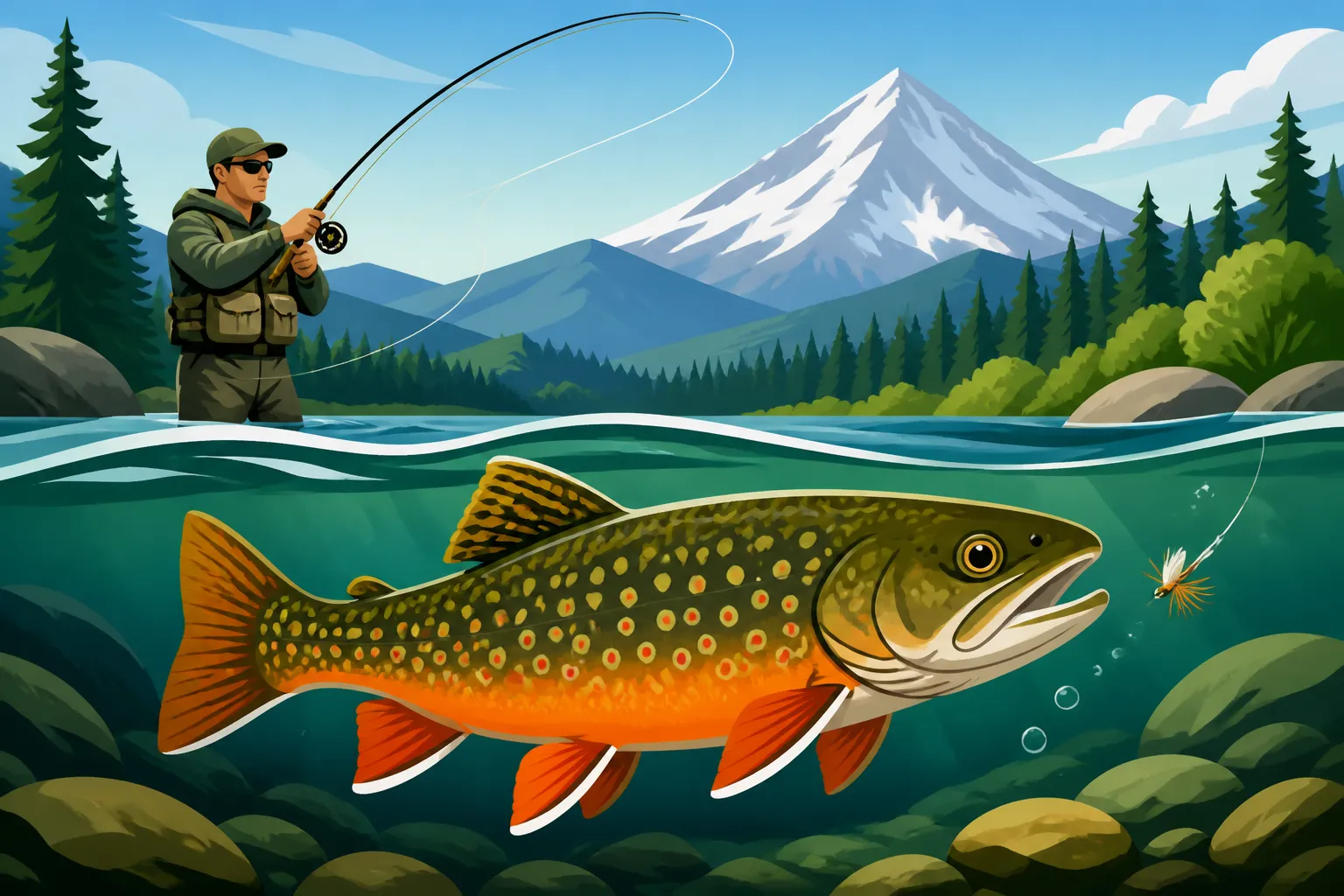
When you pull a brook trout from the water, you're immediately struck by its beauty. These fish, Salvelinus fontinalis, are technically char, not true trout, which is a neat little biological fact that often surprises people. Their coloration is usually a dark green to brown marbled pattern on their backs and sides, fading to a creamy white belly. What really sets them apart, though, are the distinctive red spots, often with blue halos around them, scattered along their sides. Their lower fins (pelvic, anal, and caudal) have striking white leading edges, followed by a black stripe, and then often an orange or reddish hue. This "white-tipped fin" is a dead giveaway.
Compared to other trout species you might encounter in Oregon, brook trout tend to be smaller in most populations, especially in the high mountain lakes where they often proliferate. A 10-inch brook trout is a respectable catch, though they can certainly grow larger in waters with abundant food and less competition. Their mouths are also quite large for their body size, extending past the eye, which is another helpful identifier. They have a more streamlined, torpedo-like body shape compared to some of the deeper-bodied rainbows. Keep an eye out for these subtle differences, as misidentification could lead to unknowingly violating Oregon Fishing Regulations Explained or failing to contribute to proper fisheries management.
Native vs. Non-Native: Understanding Their Role in Oregon's Ecosystem
Here's where things get a little more complex and interesting. While brook trout are native to eastern North America, they are not native to Oregon. They were introduced to our western waters over a century ago, primarily for sport fishing, and have since established self-sustaining populations in many areas. This non-native status is a critical piece of information because it impacts how fisheries managers view and manage brook trout populations, and consequently, how anglers are often encouraged to interact with them.
In many high-elevation lakes and headwater streams, brook trout have thrived, sometimes at the expense of native species like cutthroat trout or even the federally protected bull trout. They can outcompete native fish for food and habitat, and in some cases, even hybridize with native char species where populations overlap. For this reason, in many parts of Oregon, particularly in wilderness areas and waters supporting native populations of Cutthroat Trout in Oregon or other sensitive species, anglers are often encouraged to harvest brook trout. There might be liberal or even no bag limits on them, precisely because reducing their numbers can help restore balance to the ecosystem. This isn't about eradicating them, but about managing their population to protect the natural biodiversity of Oregon's unique aquatic environments.
Where to Find Them: General Habitat Preferences
Brook trout are creatures of cold, clear water. If you're looking for them, think high elevation, pristine environments, and oxygen-rich flows. They absolutely thrive in streams and lakes that are fed by cold springs or snowmelt, where water temperatures remain low even during the warmest summer months. These fish prefer structured environments, meaning they love hiding spots. Look for them around fallen logs, undercut banks, large rocks, and deep pools in streams. In lakes, they'll congregate around submerged structures, points, inlets where colder water enters, and drop-offs.
They are less tolerant of warm water and degraded habitats than some other trout species, which is why you won't typically find them in the warmer, slower stretches of large, lowland rivers. Instead, focus your efforts on the higher reaches of mountain streams, alpine lakes, and feeder creeks in wilderness areas. Their preference for these often-remote, wild places adds to the adventure of chasing them, making brook trout fishing as much about the journey and the beautiful surroundings as it is about the catch itself.
Top Oregon Destinations for Brook Trout Fishing
Oregon offers a surprising array of brook trout fishing opportunities, especially for those willing to lace up their hiking boots or explore a bit off the beaten path. While they might not inhabit every waterbody, the places they do call home are often incredibly scenic and rewarding.
High Mountain Lakes: A Backpacker's Paradise
Without a doubt, Oregon's high mountain lakes are the quintessential brook trout destination. These often-pristine, glacier-carved lakes, tucked away in the Cascades, Wallowas, and other mountain ranges, are frequently teeming with brook trout. Many of these lakes were historically barren of fish and were stocked with brook trout (and other species) decades ago, leading to self-sustaining populations that now offer fantastic angling. Because these populations can sometimes become overpopulated and stunt in size due to limited food, harvesting them is often encouraged.
Think about areas like the Three Sisters Wilderness near Bend, where countless small lakes offer incredible solitude and eager brook trout. Many lakes accessible from the Mount Jefferson Wilderness or the Eagle Cap Wilderness in the Wallowas are also prime spots. You might not catch a trophy-sized fish in every lake, but the sheer numbers and vibrant colors of these brookies make for an unforgettable experience. These high-elevation jewels often require a hike, sometimes a substantial one, but the reward of a quiet lake and cooperative fish is well worth the effort. For more ideas, you might consult resources like Best high mountain lake fishing near Bend or other guides focused on alpine fishing. Always check trail conditions and carry proper safety gear, as mountain weather can change rapidly.
Productive Streams and Smaller Rivers Known for Brook Trout
While the high lakes get a lot of attention, many of Oregon's smaller, colder streams and the headwater sections of larger river systems also hold healthy brook trout populations. These are often the feeder creeks and tributaries that eventually flow into major rivers, maintaining cooler temperatures and abundant cover. Areas within the Umpqua National Forest or the Rogue-Umpqua Divide Wilderness, for example, have numerous small streams where brook trout thrive.
Look for streams with a good gradient, plenty of riffles and pools, and overhead cover from trees and brush. These fish will hide in the shadows, under logjams, and in any deeper pockets of water they can find. The challenge in these stream environments often lies in navigating the dense riparian vegetation and making accurate, subtle presentations in tight quarters. It's a completely different experience from fishing a wide-open river like the Willamette River Fishing Guide, demanding more finesse and stealth. These smaller waters are also prime habitat for other native species, so careful identification is key to adhering to specific regulations.
Identifying Promising Waters on Your Own
Part of the joy of brook trout fishing is the discovery. To find your own secret spots, start with good maps – topographical maps are your best friend here. Look for waterbodies at higher elevations, especially those with minimal road access or those requiring a hike. Small, isolated lakes and the upper reaches of tributary streams are prime candidates. Online resources from the Oregon Department of Fish and Wildlife (ODFW) can also be invaluable, as they often publish stocking schedules (though brook trout often sustain themselves and aren't regularly stocked in many spots) and general fishing reports.
Pay attention to details like cold springs feeding into a lake or stream. These are magnets for brook trout. When you're on the water, observe the environment. Is the water crystal clear and cold? Is there plenty of cover? Are there signs of insect life? These are all indicators of healthy brook trout habitat. Don't be afraid to explore. Sometimes the most rewarding brook trout experiences come from bushwhacking to a remote pond that rarely sees an angler, armed with just your rod and a small pack.
Gearing Up for Oregon Brook Trout
While you don't need a boatload of specialized gear, having the right tackle can make a significant difference in your brook trout success and overall enjoyment. Remember, these are often smaller fish in sometimes challenging environments, so thinking light and agile is often the best approach.
Rods, Reels, and Line Choices
For stream fishing, an ultralight spinning rod, around 5 to 6 feet in length, paired with a small spinning reel spooled with 2 to 4-pound test monofilament or fluorocarbon line, is a fantastic setup. This light gear allows for delicate presentations of small lures and baits, and even a modest-sized brook trout will provide a spirited fight on such a setup. If you're hitting the high mountain lakes, a slightly longer rod, maybe 6.5 to 7 feet, can help with casting from the bank. When searching on a platform like Amazon, look for combos labeled "ultralight trout combo" to get a good starting point without breaking the bank.
Fly anglers will find a 2 to 4-weight fly rod, 7 to 8 feet long, to be ideal. This light action allows for precise casts with small dry flies and nymphs and makes even a 6-inch brookie feel like a monster. Pair it with a matching fly reel and a weight-forward floating line. A lightweight packable rod and reel setup can be a lifesaver for those long hikes into wilderness areas. Choosing a compact, multi-piece rod (4-piece or more) is especially beneficial for backpacking, making it easy to strap to your pack.
Effective Baits, Lures, and Flies
Brook trout are often opportunistic feeders, which makes them quite receptive to a variety of offerings. For spin fishing, small spinners like Rooster Tails or Mepps in sizes #0 or #1, in colors like black fury, white, or rainbow trout patterns, are incredibly effective. Tiny spoons, such as the Kastmaster or Little Cleo in sizes 1/16 to 1/8 ounce, can also tempt strikes. Small soft plastics, like Berkley Gulp! maggots or PowerBait, rigged on a tiny jig head or under a bobber, are deadly, especially in lakes. You can find a huge selection of these specific items on Amazon, often with convenient multi-packs.
Fly anglers have a wealth of options. Dry flies like an Elk Hair Caddis, Royal Wulff, Adams, or Parachute Adams in sizes #12-18 are excellent choices, especially during insect hatches or warm afternoons. When fish are not rising, small nymphs such as a Pheasant Tail, Hare's Ear, or Prince Nymph in sizes #14-20 will often get results. For a more aggressive presentation, small streamers like a Woolly Bugger (black, olive, or brown) can be irresistible. Always carry a variety, as brook trout can be finicky one day and ravenous the next. A good Oregon Bait and Lure Guide can offer broader insights into what works for trout throughout the state.
Essential Backcountry and Wading Gear
Given that many prime brook trout spots are in remote, high-elevation areas, having the right non-fishing gear is just as important as your rod and reel. A comfortable and appropriately sized backpack is crucial for carrying your tackle, food, water, first-aid kit, and extra layers. Proper hiking boots are a must for navigating uneven terrain. Always pack layers of clothing, as mountain weather can change rapidly from sunny and warm to cold and rainy, even in summer.
If you plan on fishing streams or wading into lakes for better casting positions, lightweight wading boots and breathable waders can be a game-changer. These keep you dry and comfortable in cold water. Don't forget essentials like a map, compass or GPS device, headlamp, fire starter, and enough water and snacks. A small tackle box or vest for your lures/flies, forceps or pliers for hook removal, and a small net for safely landing fish are also highly recommended. When you’re stocking up before your trip, Amazon is a convenient place to find everything from backpacking gear to those specific small fishing accessories.
Mastering Brook Trout Fishing Techniques
Brook trout might be eager biters, but that doesn't mean you should just chuck a line out there. Employing thoughtful techniques will not only increase your success but also enhance your connection to the sport and the environment. Different methods excel in different situations, so having a few tricks up your sleeve is always a good idea. For a broader overview of catching trout, consider reviewing Oregon Trout Fishing Techniques.
Fly Fishing: A Classic Approach
Fly fishing for brook trout is, for many, the purest form of the sport. It's about matching the hatch, presenting a delicate imitation, and experiencing the subtle tug of a fish on a lightweight setup. In streams, accurate casting to pockets, riffles, and undercut banks is key. Watch for rising fish, indicating they are feeding on the surface, and present a dry fly upstream of them, allowing it to drift naturally. If surface activity is minimal, switch to nymphing, drifting weighted nymphs along the bottom or under a strike indicator. Stealth is paramount in smaller streams; approach quietly and keep a low profile to avoid spooking fish.
In high mountain lakes, fly fishing can be incredibly productive. Cast dry flies near shorelines, over submerged structures, or where insects are congregating. If fish are deep, a sinking line or a weighted nymph/streamer pattern fished with a slow retrieve can be very effective. Observing local insect activity – whether it's caddis, mayflies, or terrestrials like grasshoppers – will give you clues on what patterns to tie on. It's a dance between observation, imitation, and presentation that truly captures the essence of How to Fly Fish in Oregon.
Spin Fishing Strategies
Spin fishing offers a highly accessible and often very productive way to catch brook trout, perfect for beginners or those who prefer a more active approach. For stream fishing, casting small spinners or spoons upstream and retrieving them just fast enough to get the blade spinning, allowing the current to impart a natural drift, is often deadly. Work your way upstream, casting into every likely-looking spot: behind boulders, into deep pools, and along current seams. Keep your retrieve varied, sometimes pausing or twitching your lure to entice a strike.
In lakes, casting and retrieving small lures from the bank or a float tube can cover a lot of water. If the fish are deeper, adding a small split shot to your line above a bait (like a worm or PowerBait) and fishing it under a bobber or on the bottom can be effective. Trolling with small lures from a float tube or kayak is another fantastic strategy for covering larger areas of a lake, especially when trying to locate schools of fish. The beauty of spin fishing is its versatility and the ease with which you can adapt to different conditions and fish behaviors.
Tips for Maximizing Your Catch
Regardless of your chosen method, a few universal tips can significantly boost your brook trout success. First, stealth is crucial. Brook trout in clear, small waters are easily spooked. Move slowly, avoid loud noises, and keep your silhouette low, especially when bank fishing small streams. Second, read the water. Learn to identify holding water – those areas where fish are likely to hide and feed. This includes current seams, eddies, deep pools, undercut banks, and submerged cover. Third, match the hatch (or the forage). While brook trout aren't always picky, presenting something that mimics their natural food source, whether it's an insect, a small baitfish, or even a worm, will always be more effective.
Finally, don't be afraid to experiment with different depths, retrieves, and patterns until you find what's working. These fish can change their preferences rapidly depending on light, weather, and time of day. If you're fishing in a wilderness lake known for stunted brook trout, feel free to keep a mess of them for a delicious shore lunch – they are excellent table fare! However, if you're in a mixed fishery where native trout are present, practicing Oregon Catch-and-Release Rules for those native species is always a good idea.
Navigating Oregon's Brook Trout Regulations and Conservation
Understanding the specific rules and regulations surrounding brook trout fishing in Oregon is not just about staying legal; it's about being a responsible angler and contributing to the health of our fisheries. Because brook trout are non-native in Oregon, their management often differs significantly from that of native trout species.
Understanding Bag Limits and Size Restrictions
Oregon's fishing regulations are detailed and can vary significantly by waterbody and Oregon Fishing Zones Explained. For brook trout, you'll often find more liberal regulations compared to native species. In many high-elevation lakes and streams where brook trout are abundant and can negatively impact native fish populations, there might be higher bag limits, or even no limit at all, on brook trout. This is an encouragement to harvest them. However, it's absolutely vital to check the current ODFW Sport Fishing Regulations for the specific body of water you plan to fish. Never assume that a blanket "no limit" rule applies to all waters.
For instance, a general statewide trout regulation might allow for a certain number of fish per day, but a specific lake known for brook trout overpopulation could have a separate rule encouraging unlimited harvest of brook trout. Conversely, if you're in a mixed fishery containing native cutthroat or rainbow trout, the general Oregon daily bag limit for trout would apply to those native fish, while brook trout might still have a more liberal limit. Always carry a copy of the regulations (digital or physical) and double-check before you head out.
Special Regulations for Wilderness Lakes
Many of the best brook trout fishing spots are nestled within designated wilderness areas. These areas often come with their own set of specific regulations, not just for fishing, but for camping, campfires, and general wilderness conduct. While brook trout fishing might be encouraged, the surrounding environment demands extra care. "Leave No Trace" principles are paramount: pack out everything you pack in, minimize your impact, and respect wildlife.
Some wilderness lakes might also have special tackle restrictions, such as "artificial flies and lures only," or even "fly fishing only" rules, to protect sensitive native species. These rules will always be clearly outlined in the ODFW regulations. Always double-check these specific regulations before your trip to ensure your gear and practices align with the area's conservation goals. The pristine nature of these wilderness areas is a treasure, and it's up to every angler to help preserve it.
The Role of Anglers in Managing Non-Native Populations
As anglers, we play a direct and important role in fisheries management, particularly concerning non-native species like brook trout. Where brook trout are overpopulated and outcompeting native fish, harvesting them isnades a valuable contribution to the ecosystem's health. This might feel counterintuitive for some, who are used to practicing catch-and-release, but in these specific contexts, it's a responsible and encouraged action.
Conversely, if you happen to catch a native trout in a brook trout-dominated water, such as a large bull trout or a rare redband trout, ethical practice dictates careful catch-and-release to protect those native populations. Knowing the difference between brook trout and other species is critical for making these responsible decisions. If you're unsure, it's always best to err on the side of caution and release the fish unharmed. This approach ensures that we can continue to enjoy the fantastic brook trout fishing opportunities while also doing our part to protect Oregon's incredible native fish heritage. Always remember that possessing a valid Oregon Fishing License Guide is the first step in responsible angling.
| Feature | Brook Trout | Rainbow Trout | Coastal Cutthroat Trout |
|---|---|---|---|
| Scientific Name | Salvelinus fontinalis (Char) | Oncorhynchus mykiss (True Trout) | Oncorhynchus clarkii clarkii (True Trout) |
| Body Color | Dark green/brown marbled, light belly | Silvery to olive green, pink/red stripe | Greenish-brown back, silver sides |
| Spots | Red spots with blue halos, light spots on dark background | Small, dark spots, often heavily speckled on tail | Small, dark spots, concentrated on tail |
| Distinctive | White leading edges on lower fins (pelvic, anal, caudal) | Prominent pink/red stripe (often) | Red/orange slash mark under lower jaw (cutthroat) |
| Tail Fin | Square or slightly forked | Moderately forked | Slightly forked to square |
| Native to Oregon | No (Introduced) | Yes (Native in many areas) | Yes (Native) |
| Mouth | Large, extends past eye | Does not extend past eye | Typically extends past eye |
Disclaimer
This article is for general informational purposes only and does not constitute professional advice. Laws, prices and regulations vary by location and change over time. Consult a qualified professional for guidance on your specific situation.