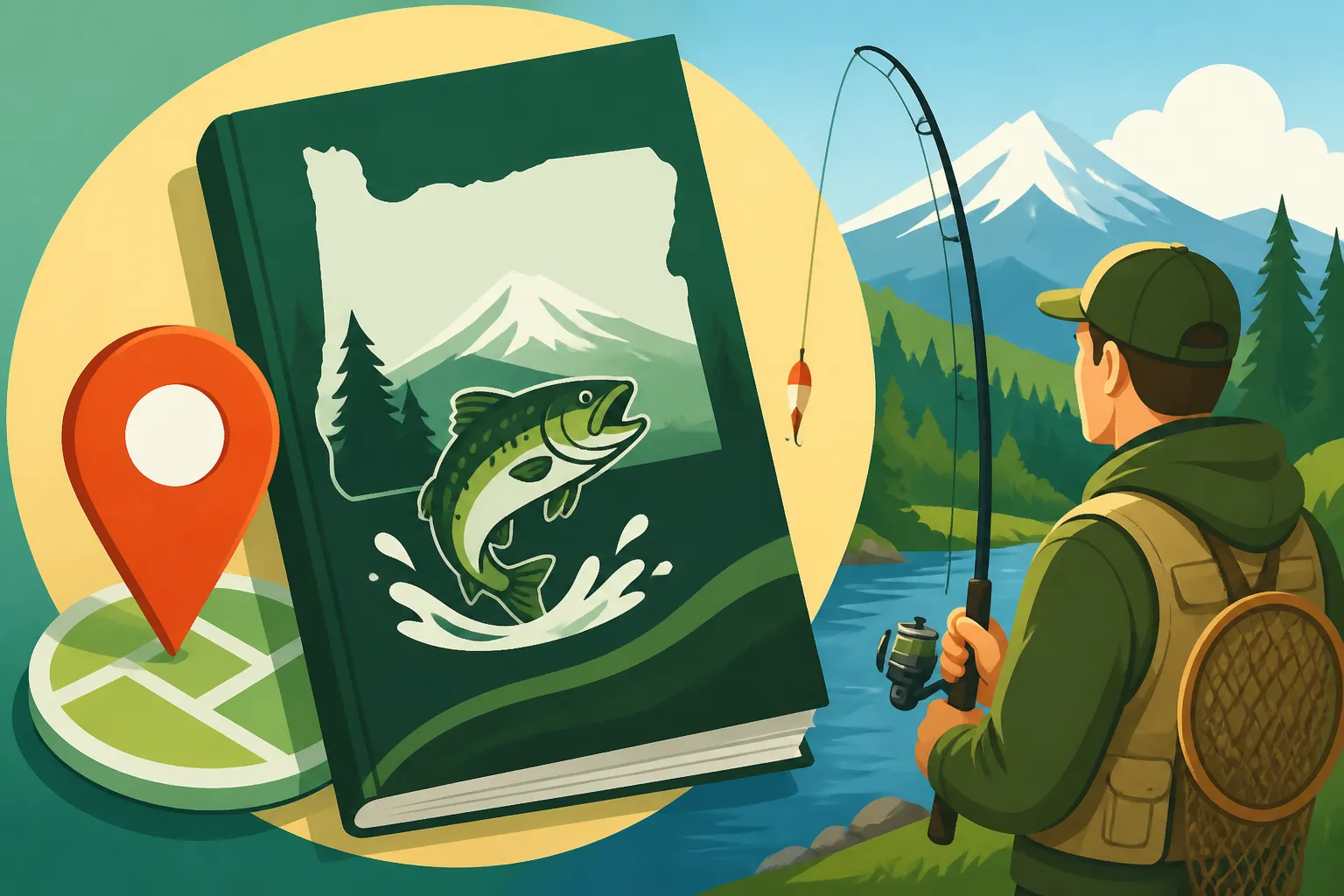
Where to find the Oregon fishing regulations booklet
It can feel like a treasure hunt trying to track down the most current Oregon fishing regulations, especially when you're just eager to get out on the water. Between online versions, printed copies, and sudden updates, it's easy to get overwhelmed and even miss a crucial detail. This guide is here to simplify that process, showing you exactly where to find the official Oregon fishing regulations booklet and how to stay reliably informed so your next trip is worry-free.
The Official Sources for Your Oregon Fishing Regulations Booklet
Let's face it, nobody wants to get a citation because they missed a small but significant rule change. Finding the official Oregon fishing regulations booklet is the first, and arguably most important, step in preparing for any fishing adventure in our beautiful state. Thankfully, the Oregon Department of Fish and Wildlife (ODFW) makes these critical documents available through several reliable channels, both digital and physical.
The Oregon Department of Fish and Wildlife Website: Your Digital Lifeline
In this modern age, the ODFW website is truly your best friend for up-to-the-minute information. They host the complete, current version of the Oregon Sport Fishing Regulations booklet as a downloadable PDF. This means you can access it from your computer, tablet, or even your smartphone, which is incredibly convenient. I always recommend having the latest PDF saved directly to your phone, just in case you lose cell service on the river. It’s like having a digital copy right in your pocket.
Beyond the full booklet, the ODFW website also often provides individual summaries for specific zones or species, which can be super helpful if you're targeting something particular, like Oregon Salmon Species Guide or Oregon Steelhead Guide. These individual pages often highlight recent changes or emergency closures more prominently than digging through the entire booklet. Bookmark the main fishing regulations page – it's a habit that will save you a lot of headaches and keep you on the right side of the law.
Picking Up a Physical Copy: License Agents and ODFW Offices
For many of us, there’s still something reassuring about holding a physical booklet in our hands. You can highlight, dog-ear pages, and it doesn't run out of battery! The good news is that printed copies of the Oregon Sport Fishing Regulations booklet are widely distributed. The most common places to snag one are the same locations where you can Where to Buy an Oregon Fishing License. Think tackle shops, sporting goods stores like Bi-Mart or Dick's Sporting Goods, and many larger grocery stores. These businesses act as ODFW license agents and typically receive new batches of booklets as soon as they're printed for the season.
You can also visit one of the ODFW's regional offices located throughout the state. Places like the ODFW office in Bend, Newport, or Clackamas often have a stack of booklets available. The added benefit of visiting an ODFW office is that you might be able to chat with staff who can answer specific questions you have about complex regulations or local fishing conditions. However, remember to call ahead to confirm their hours and availability, especially if you're making a special trip.
Supplemental Resources and Unofficial Guides
While the official ODFW booklet is absolutely paramount, sometimes you want more context, visuals, or a different way of looking at the rules. Many anglers find value in supplemental guides, often found online or even available for purchase. For instance, I’ve often found waterproof field guides or fish identification charts on Amazon that summarize regulations or species information in a quick-reference format. These can be incredibly handy to keep in your tackle box or boat bag, especially for new anglers who are still learning to differentiate between different trout species or salmon types.
However, a huge caveat here: always cross-reference any third-party information with the official ODFW regulations. Unofficial guides, even reputable ones, might not be updated as frequently as the official ODFW publications, which can change rapidly due to conservation efforts, environmental factors, or in-season adjustments. Think of these supplemental resources as helpful companions, but never as the definitive legal source. They can help you understand how to fish, but the ODFW booklet tells you where, when, and what you can legally keep.
Why Keeping Current with Regulations Isn't Just Good Practice, It's Essential
It’s easy to think, "Oh, I fished here last year, the rules are probably the same." But that's a gamble you really don't want to take in Oregon. The state's diverse ecosystems and dynamic fish populations mean that regulations are constantly evolving. Staying current isn't just about being a responsible angler; it's about protecting your wallet, avoiding legal trouble, and contributing to the health of our fisheries for years to come.
Avoiding Costly Mistakes and Oregon Fishing Violations and Penalties
Believe me, the frustration of getting a ticket for something you didn't even know was a rule is truly disheartening. Fishing without a valid license, exceeding daily bag limits, or fishing during a closed season are common violations that can lead to significant fines, confiscation of gear, and even loss of future fishing privileges. Imagine spending a glorious day on the Deschutes, only to find out you kept a wild steelhead when the rule for that section was "Hatchery only." The joy of the catch quickly evaporates into a hefty penalty.
A common scenario I've seen is anglers unknowingly fishing in a "fly-fishing only" section or using bait where it's prohibited. These rules are usually clearly outlined in the regulations booklet. For example, some parts of the Metolius River are strictly fly-fishing only, and using bait there, even by accident, can lead to a citation. The cost of a new booklet or a quick check online pales in comparison to the financial and emotional toll of a violation. Understanding Oregon Fishing Violations and Penalties is crucial, and the first step to avoiding them is knowing the rules.
The Ever-Changing Landscape of Oregon Fishing Regulations
Oregon's fisheries are incredibly complex, influenced by everything from rainfall and river flows to ocean conditions and fish returns. This means that the rules you learned last year, or even last month, might not be the same today. Emergency closures due to low fish returns, temporary rule changes for specific species like salmon or sturgeon, or even shifts in designated fishing zones are not uncommon. These changes are often announced by ODFW via their website, social media, and local news outlets.
For example, a sudden warm spell could lead to elevated water temperatures in a river like the Sandy, prompting an emergency "hoot owl" closure where fishing is only allowed during cooler morning hours to protect stress-out fish. Or, salmon seasons can be adjusted mid-year based on updated forecasts of returning fish, directly impacting Oregon Fishing Season Dates and Limits. Having the current booklet and knowing how to quickly check for updates means you're prepared for these unforeseen circumstances, keeping you compliant and effective on the water.
Decoding the Details: What to Look For in Your Regulations Booklet
Alright, you’ve got the booklet in hand or loaded on your device. Now what? The Oregon Sport Fishing Regulations booklet can seem a bit dense at first glance, but it’s laid out logically to help you find what you need. Think of it as your roadmap to legal and responsible angling. Knowing how to navigate its sections will empower you to fish confidently, no matter where your adventures take you.
Understanding Zones and Species-Specific Rules
One of the most critical sections in the booklet is the breakdown of Oregon's diverse fishing zones. The state isn't a "one-size-fits-all" fishing experience; different regions, rivers, and even specific stretches of water have unique rules. The booklet will clearly define these zones, often with maps or detailed descriptions, outlining what species you can target, when, and with what methods. Understanding Oregon Fishing Zones Explained is paramount. For instance, the regulations for fishing the Columbia River are vastly different from those for a high mountain lake in the Cascades, or for crabbing in Yaquina Bay.
Within each zone, you'll find species-specific rules. Are you chasing trout, salmon, steelhead, or bass? Each species often has its own set of guidelines, including seasons, daily limits, and even tackle restrictions. For example, while some lakes might allow bait for trout, many rivers will have specific restrictions on bait, barbless hooks, or even specific types of lures when targeting wild steelhead or salmon. Pay close attention to these details; they're designed to protect specific fish populations and ensure sustainable angling for everyone.
Daily Bag Limits and Size Restrictions
Another section you absolutely cannot skip is the one detailing daily bag limits and size restrictions. This is where you learn how many fish of a particular species you can keep in a 24-hour period (your "daily bag limit") and if there are any minimum or maximum sizes. These rules are incredibly important for managing fish populations and ensuring fair distribution among anglers. For instance, you might be allowed to keep a certain number of trout, but only if they fall within a specific size slot. This is particularly common with species like sturgeon, where there are strict "slot limits" to protect both juvenile and large spawning adults.
The booklet will clearly list these limits for various species and locations. For example, Oregon Daily Bag Limits Explained for rainbow trout might be 5 fish over 8 inches in a general season lake, but it could be "catch-and-release only" for wild trout in a sensitive river section. Always measure your fish carefully and release any that don't meet the legal requirements promptly and safely. These limits are not arbitrary; they are carefully determined by ODFW biologists to maintain healthy fish stocks.
Special Endorsements and Tags
Beyond your basic Oregon fishing license, many anglers will need to purchase additional endorsements or tags depending on what they're fishing for and where. These are usually clearly detailed in the regulations booklet and on the ODFW website. For example, if you plan on fishing for salmon, steelhead, or sturgeon, you'll likely need an Oregon Combined Angling Tag Guide. This tag is a critical component for tracking your catch of these prized species.
If your fishing adventures take you to the ocean, you might need an Oregon Ocean Endorsement, particularly if you're targeting certain marine species. And for those fishing the mighty Columbia River, especially for salmon and steelhead, the Oregon Columbia River Basin Endorsement is often a requirement. Each of these endorsements or tags comes with its own set of rules and reporting requirements, such as filling out catch record cards. Failing to have the correct endorsement or tag, or not filling out your catch card correctly, can lead to fines, even if you have your basic license. Always double-check which endorsements apply to your planned trip.
Summary of Official Oregon Fishing Regulations Access Points
To help you keep track of the best ways to get your hands on the latest regulations, here's a quick summary. Remember, the key is knowing where to look and how often to check for updates.
| Source Type | Best For | Pros | Cons |
|---|---|---|---|
| ODFW Website (Online PDF) | Latest updates, digital access | Always current, searchable, accessible anywhere with internet (with download) | Requires device, might not be practical on the water without service or saved PDF |
| Printed ODFW Booklet | Quick reference on the water, no battery needed | Easy to flip through, readily available at license agents and ODFW offices | Can become outdated quickly with emergency closures, bulkier to carry |
| ODFW Offices | Expert advice, specific questions | Direct interaction with ODFW staff, often have other resources available | Limited locations, specific hours, may require a drive |
| Authorized License Agents | Convenience, buying license simultaneously | Many locations across the state, usually well-stocked with booklets | Staff knowledge on regulations varies, stock may run out |
| Third-Party Fishing Apps/Guides | Supplementary information, visual aids | Can offer unique insights, maps, or species identification (e.g., from Amazon) | NOT official source, may be outdated, always cross-reference with ODFW |
Always remember that while the printed booklet gives you a great baseline, the ODFW website is your ultimate, most up-to-date resource, especially for any in-season changes or emergency closures. Make it a habit to check before you head out!
Disclaimer
The information provided in this guide is for general informational purposes only and is not intended as legal advice. Fishing regulations in Oregon are subject to change by the Oregon Department of Fish and Wildlife (ODFW). Always refer to the most current official ODFW Sport Fishing Regulations booklet and any in-season updates or emergency closures published on the ODFW website before engaging in any fishing activities.