Best topwater lures for Oregon bass
There’s truly nothing that gets an angler's heart pounding quite like the explosive strike of a bass on a topwater lure. It's the visual thrill, the splash, the sheer unpredictability of it all that makes it so addictive. But for many folks fishing Oregon's diverse waters, figuring out which topwater lures actually entice those elusive largemouth and smallmouth bass can feel like a guessing game, especially when conditions change. You've probably spent countless hours throwing everything in your tackle box, only to feel the frustration of seeing fish ignore your offerings. This guide is here to cut through that confusion, helping you understand the best topwater lures for Oregon bass, when and where to use them, and the techniques that will make those bass smash your bait with undeniable enthusiasm.
Why Topwater Fishing is a Game Changer for Oregon Bass Anglers
Let's be honest, there's a unique magic to topwater fishing. It's not just about catching fish; it's about the spectacle of it. Watching a bass stalk your lure, seeing the water bulge, and then experiencing that sudden, violent eruption on the surface—it’s an adrenaline rush that few other fishing methods can match. For us here in Oregon, where we have such incredible diversity, from the sprawling reservoirs to the quiet sloughs and slow-moving rivers, topwater can be incredibly effective when you understand the nuances.
The Unmistakable Thrill of the Surface Strike
When you're fishing with a spinnerbait or a jig, you feel the strike. It’s a tug, a bump, a sudden weight on your line. That’s exciting, no doubt. But with topwater, the strike isn't just felt; it's seen and heard. It’s a visual confirmation of success that makes the entire experience so much more engaging. You’re actively involved in the chase, manipulating your lure across the surface, enticing a response. This interactive element is a big part of why so many anglers, myself included, become absolutely obsessed with topwater bass fishing. It's a primal interaction, predator and prey, played out right before your eyes.
Imagine casting near a lily pad field on Henry Hagg Lake or along a weed line in a Willamette River slough. You give your popper a twitch, then another, letting the ripples spread. Suddenly, the water erupts, a dark shadow engulfs your lure, and your rod bends over. That moment, that instant of chaos and connection, is what keeps us coming back for more. It transforms a peaceful day on the water into an unforgettable adventure.
When Oregon Bass Look Up for Their Next Meal
Bass are opportunistic predators, and they're always looking for an easy meal. When conditions are right, they spend a lot of time looking up, scanning the surface for anything that might have fallen in or be struggling. This is where topwater shines. Think about it: a frog hopping across weeds, a wounded baitfish splashing erratically, or a bug struggling on the water's skin. These are all natural scenarios that trigger a bass's predatory instincts.
In Oregon's warmer months, especially from late spring through early fall, bass become incredibly active closer to the surface. The warmer water increases their metabolism, making them more aggressive and willing to chase. This is particularly true during low-light conditions like dawn, dusk, or on overcast days when they feel less exposed. They’ll lurk under cover, ready to ambush anything that moves above them. Knowing when to present a topwater bait is just as crucial as knowing which one to tie on.
Understanding the Key Topwater Lure Types for Oregon Bass
The world of topwater lures is vast and exciting, with each style designed to mimic different prey or evoke a specific reaction from bass. In Oregon, whether you're chasing largemouth in a weed-choked pond or smallmouth in a rocky river, having a diverse selection is key. You'll find many of these essential lures readily available from online retailers like Amazon, making it easy to build your topwater arsenal.
Poppers and Chuggers: The Classic Surface Disturbers
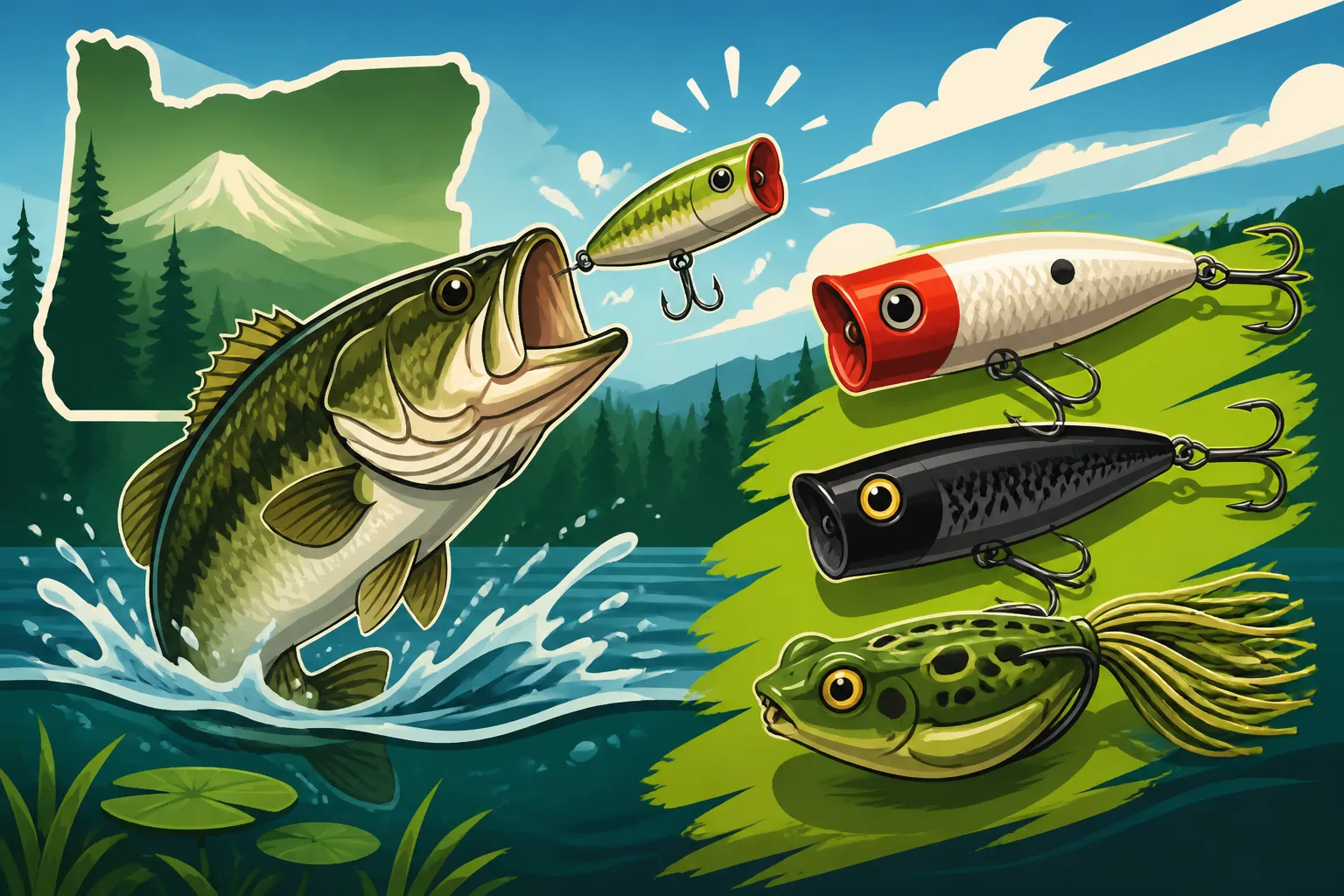
Poppers and chuggers are arguably the most iconic topwater lures, and for good reason. They feature a concave or cupped face that "pops" or "chugs" water when twitched, creating a distinct splash and gurgle. This action perfectly imitates a struggling baitfish or a frog splashing on the surface, drawing attention from a distance.
These lures are fantastic for targeting bass holding tight to cover, like submerged timber, docks, or thick weed edges. The commotion they create can pull fish out from heavy cover that might ignore subtler presentations. I've had incredible success with poppers in the calm, warm backwaters of the Columbia River, especially during the early morning hours. Give it a pop, let the ripples die, and then pop it again. Sometimes a long pause is all it takes for a curious bass to commit. When you're just starting out, a good popper is one of the Oregon Fishing Techniques for Beginners you should definitely try.
Walk-the-Dog Baits: The Hypnotic Glide
Walk-the-dog baits, often called "stick baits," are sleek, cigar-shaped lures with no built-in action. Their magic comes from the angler's retrieve. By rhythmically twitching the rod tip while reeling in slack, you make the lure "walk" from side to side across the water's surface in a mesmerizing zig-zag pattern. This action is incredibly realistic, mimicking a distressed baitfish struggling to swim.
These lures are fantastic in open water, along sparse weed lines, or over submerged flats where bass have room to chase. The subtle, gliding action is often what triggers strikes from wary bass that might shy away from more aggressive splashes. I've found these to be particularly effective for smallmouth bass in the deeper, clearer waters of reservoirs like Lake Billy Chinook, where a more natural presentation can make all the difference. Practice that walk-the-dog retrieve, and you'll unlock a whole new level of topwater excitement.
Prop Baits: Adding a Mechanical Element
Prop baits take the concept of a stick bait or a popper and add one or two small propellers, either at the front, back, or both. These propellers spin when the lure is retrieved, creating a buzzing or sputtering sound and a trail of bubbles that mimics a frantic baitfish or even a buzzing insect. The added commotion can be just the ticket when bass need a little extra encouragement to strike.
There are many variations of prop baits, from subtle single-prop designs to aggressive double-prop models. They excel in situations where you need to create a bit more noise and disturbance than a simple walk-the-dog, but perhaps less splash than a chugger. Think about fishing slightly choppier water or areas with moderate cover. The visual and auditory cues from a prop bait can be irresistible. You can browse a wide range of these on Amazon to see the different configurations available.
Buzzbaits: The Unrelenting Commotion
Buzzbaits are unique in the topwater family because they're designed for a fast, continuous retrieve. They feature a propeller blade that rotates rapidly, churning water and creating a loud, gurgling buzz as the lure skims across the surface. This creates an urgent, "fleeing prey" presentation that can provoke aggressive reaction strikes.
These lures are exceptional for covering a lot of water quickly, especially in areas with scattered cover, lily pads, or submerged grass. The constant noise and visual disturbance don't give bass much time to think—they just react. Buzzbaits are often most effective in warmer water when bass are highly active and willing to chase. If you're targeting largemouth in weedier lakes, a buzzbait can be an absolute powerhouse, forcing reluctant fish to commit. For more on general lures, check out our Oregon Bait and Lure Guide.
Frogs and Soft Plastic Topwater: The Weedy Water Warriors
When you're fishing in truly heavy cover—think dense lily pads, thick mats of vegetation, or submerged timber that would snag any other lure—soft plastic topwater lures, particularly hollow-bodied frogs, become your best friend. These lures are designed to be weedless, meaning their hooks are tucked away, allowing them to glide over and through the nastiest cover without snagging.
The appeal of a frog is obvious: bass love to eat frogs! You can work them with short twitches, long pulls, or simply retrieve them steadily, letting them slide over obstacles. The key is to wait for the bass to fully engulf the lure before setting the hook. Beyond frogs, other soft plastic topwater options include soft plastic worms rigged weedless and fished on the surface, or even weightless flukes twitched just under the surface to create a V-wake. These are indispensable tools for getting to those bass that live in otherwise unreachable hideouts. You might be surprised at the variety you can find on Amazon for these specialized baits.
Factors for Choosing the Right Topwater Lure in Oregon
Choosing the right topwater lure isn't just about what looks good in your tackle box; it's about matching your presentation to the specific conditions you encounter on Oregon's diverse waters. What works wonders on a calm morning on the Umpqua River might be completely ignored in the choppy afternoon waters of the Columbia. Understanding these factors will significantly increase your success rate.
Water Conditions and Clarity: Matching the Mood
Water clarity and surface conditions play a huge role in how bass perceive your lure. On calm, clear days, especially in lakes like Diamond Lake where visibility is high, a more subtle approach often works best. Think walk-the-dog baits with a natural finish, or smaller poppers that create a gentle ripple. The bass can see the lure clearly, so an exaggerated splash might spook them.
Conversely, in murkier water, or on days with a slight chop from the wind, you need lures that create more disturbance to get noticed. This is where loud chuggers, prop baits with aggressive propellers, or even buzzbaits truly shine. The noise and vibration they generate help bass locate the lure even when visibility is poor. Consider the overall water color too; darker lures might be more visible against a bright sky in clear water, while brighter colors can stand out in stained water.
Cover and Structure: Where the Bass Hide
Bass are ambush predators, and they love to hide in and around cover. The type of cover dictates the best topwater lure choice. If you're fishing dense lily pads, matted grass, or heavy weeds in a warm lake, a weedless hollow-bodied frog is your absolute go-to. It glides effortlessly over the vegetation without snagging, allowing you to present your bait right where the bass are hiding.
For sparser cover, like isolated clumps of reeds, scattered submerged timber, or docks, poppers and walk-the-dog baits are excellent choices. You can work them precisely around these structures, enticing strikes from lurking bass. Buzzbaits are ideal for covering long stretches of scattered cover quickly, drawing reaction strikes as they whiz by. Knowing your fishing spot and the cover present is paramount for success, whether you're targeting smallmouth bass in rivers or largemouth in lakes. For a deeper dive into bass habitats, check out our Oregon Bass Fishing Guide.
Time of Day and Season: The Bass's Feeding Schedule
Just like us, bass have peak feeding times, and these often coincide with low-light conditions. Dawn and dusk are prime topwater windows in Oregon. During these periods, bass feel more comfortable moving into shallower water and feeding aggressively on the surface. On overcast days, the topwater bite can extend throughout the day because the diffused light makes bass less wary.
As for seasons, topwater fishing generally heats up as the water warms in late spring and continues strong through summer and into early fall. During these warmer months, bass are more active and willing to chase fast-moving or noisy surface baits. In the cooler parts of spring or late fall, bass might be less inclined to commit to a topwater, but a slow-moving frog or a carefully worked popper can still produce. Understanding the Best time of year to fish in Oregon can make all the difference in your fishing strategy.
Bass Activity Levels: Reading the Fish's Mood
Sometimes bass are aggressive and ready to smash anything that moves; other times, they're lethargic and require a more subtle presentation. Learning to "read" their activity level is a skill that comes with experience. If you're seeing a lot of boils, jumps, or baitfish scattering on the surface, chances are the bass are active, and you can get away with noisier, faster-moving topwater lures like buzzbaits or aggressive chuggers.
If the fish seem less active, or you're getting short strikes where they just swat at the lure without committing, it's time to slow down. Opt for a walk-the-dog bait with long pauses, or a popper that you work very slowly, letting the ripples dissipate between twitches. Sometimes, just leaving the lure motionless for an extended period after a twitch can be the trigger. Don't be afraid to experiment with retrieve speed and cadence until you find what the fish want on that particular day.
Here's a quick reference table for choosing your topwater lures:
| Lure Type | Primary Action | Best Conditions | Target Bass (General) | Retrieve Style |
|---|---|---|---|---|
| Popper/Chugger | Splashing, gurgling | Calm to slight chop, around dense cover | Largemouth, Smallmouth | Pop, pause, pop; varying cadence |
| Walk-the-Dog Bait | Side-to-side glide | Calm to light chop, open water, sparse cover | Largemouth, Smallmouth | Consistent rod twitching, reel slack; rhythmic |
| Prop Bait | Sputtering, buzzing, bubbling | Moderate chop, slightly stained water, scattered cover | Largemouth, Smallmouth | Steady retrieve with pauses; twitching |
| Buzzbait | Loud gurgle, rapid surface | Warmer water, low light, covering broad areas | Largemouth | Fast, steady retrieve; often non-stop |
| Hollow-Body Frog | Gliding, popping | Heavy weeds, lily pads, matted vegetation | Largemouth | Twitch, pause, slide over cover; wait for engulf |
Tips and Techniques for Effective Topwater Bass Fishing in Oregon
Even with the best lures, the way you present them can make or break your topwater success. It’s all about understanding how to entice those bass and then how to seal the deal once they commit. Developing these skills will not only help you catch more bass but also make your time on Oregon's beautiful waterways even more rewarding.
Reading the Water and Making the Perfect Cast
Before you even make your first cast, take a moment to "read" the water. Look for visual cues: subtle disturbances, schooling baitfish, shady pockets under docks, submerged logs, or dense weed lines. These are all prime locations where bass might be lurking, waiting to ambush prey. When fishing for Oregon Warmwater Fish Species, knowing these spots is half the battle.
Your cast needs to be accurate and often delicate. When fishing cover, try to land your lure just beyond the target and then retrieve it into the strike zone. This minimizes spooking any fish holding tight to the cover. For areas like rocky banks on the John Day River, casting parallel to the bank can keep your lure in the strike zone longer for smallmouth bass. Remember, sometimes the biggest challenge is getting the lure to the fish without scaring it away.
Varying Your Retrieve: Finding the Rhythm
This is perhaps the most critical aspect of topwater fishing. Rarely will a bass respond to a monotonous retrieve. Bass are curious but cautious creatures, and an erratic, "struggling" presentation is often what triggers them. Start with a standard retrieve for your chosen lure—a steady retrieve for a buzzbait, a pop-pause-pop for a popper, or a steady cadence for a walk-the-dog.
However, be ready to experiment. Vary your pauses; sometimes a longer pause is irresistible, especially for less active fish. Change your speed; quick bursts followed by stillness can mimic a fleeing baitfish. If you're getting follows but no strikes, try speeding up, or conversely, slowing down dramatically. Sometimes just a tiny twitch of the rod tip, making the lure quiver in place, is all it takes. Think like a wounded prey animal and try to replicate that motion. Our guide on How to fish for smallmouth bass in Oregon delves deeper into these nuanced techniques.
Setting the Hook Like a Pro: Don't Jump the Gun!
This is where many anglers make mistakes with topwater. The explosive strike can be startling, and our natural instinct is to yank the rod back immediately. However, bass often "slurp" or "boil" on the lure, not always engulfing it on the initial splash. If you set the hook too early, you'll pull the lure away from the fish before it has a chance to get the hooks in its mouth.
The key is to wait until you feel the weight of the fish, or at least see the lure disappear completely and feel the line tighten, before you sweep your rod sideways or upwards. This slight delay allows the bass to fully take the bait. It takes practice and discipline, especially when a monster largemouth blows up on your frog! Count "one Mississippi" after the strike, then set the hook. This patience will translate to many more landed fish.
Recommended Gear for Topwater Success
Having the right gear makes a difference. For most topwater applications in Oregon, a medium-heavy to heavy casting rod, around 6'6" to 7'6" in length, is ideal. This provides the backbone needed to cast heavier lures, work baits effectively, and fight big bass out of cover. A fast tip is beneficial for accurate casting and imparting subtle action.
Pair this with a baitcasting reel with a gear ratio of 6.3:1 to 7.1:1, offering a good balance of power and retrieval speed. For line, I highly recommend braided line, especially for fishing in heavy cover. Braid has no stretch, providing excellent sensitivity and the power to rip lures free from weeds or pull bass out of thick stuff. A 30-50lb test braid is a common choice. In clearer water or with lures that have treble hooks (like poppers or walk-the-dog baits), you might consider adding a short fluorocarbon leader (12-20lb test) to your braid for better stealth and abrasion resistance. Building a solid setup, much like selecting a Best rod and reel setup for Columbia River salmon for different species, is crucial for your success.
Many anglers find it convenient to acquire specialized topwater rods and reels from online platforms like Amazon, ensuring they have gear specifically designed for this exciting technique. Having a dedicated setup can really boost your confidence and performance when those bass decide to strike from the surface. Remember, understanding the best places, such as the Best fishing spot for largemouth bass in Oregon, and using the right equipment are all part of a successful strategy.
Disclaimer
This article is for general informational purposes only and does not constitute professional advice. Laws, prices and regulations vary by location and change over time. Consult a qualified professional for guidance on your specific situation.