Best rod and reel setup for Columbia River salmon
Trying to navigate the seemingly endless choices for fishing gear can be absolutely overwhelming, especially when you're targeting powerful Columbia River salmon. It feels like every angler has a different opinion, and the sheer number of rod lengths, reel types, and line weights can leave you scratching your head, wondering if you'll ever pick the "right" setup. This guide is here to cut through the confusion and give you a clear, comprehensive breakdown of the best rod and reel combinations to conquer those incredible Chinook and Coho salmon.
Understanding the Demands of Columbia River Salmon Fishing
Before we dive into the nitty-gritty of specific gear, it's crucial to understand what makes fishing for salmon on the Columbia River such a unique challenge. These aren't your average trout; they are powerful, often aggressive, and live in an environment that demands robust, reliable equipment.
The Power of Columbia River Chinook and Coho
Let's be real, hooking into a mature Columbia River Chinook salmon, often called a "King," is like trying to stop a freight train with a piece of string if you're not properly equipped. These magnificent fish can range from 15 to over 50 pounds, with some of the larger fall Chinook pushing even heavier. When they hit your lure or bait, they do it with incredible force, and their subsequent runs are legendary for stripping line off your reel at an alarming rate. Coho, or "Silvers," might not be as heavy, but their acrobatic jumps and relentless fighting style make them equally demanding opponents. Your gear needs to withstand these explosive surges and provide enough leverage to turn a strong fish away from snags or other boats. Using undersized or flimsy gear almost guarantees a heartbreaking story of "the one that got away," often accompanied by a broken rod tip or a stripped reel.
Diverse Fishing Methods on the Columbia
The Columbia River is a massive and diverse fishery, offering a multitude of techniques to target salmon. Each method places slightly different demands on your rod and reel. For instance, if you're trolling with herring or Super Baits from a boat, you'll need a rod that can handle the constant pull of the gear, absorb the shock of a strike, and have enough backbone to lift lead weights off the bottom if you temporarily snag. Back-trolling, a popular technique where you drift downstream slowly while presenting baits like Kwikfish, requires a sensitive rod tip to detect subtle bites but still demands substantial power to fight fish in current. Bobber and jig fishing, especially for Coho in shallower bays or tributaries, benefits from a longer rod for casting distance and line mending, but still needs a strong butt section to handle aggressive takes. Even anchor fishing, where you're holding a stationary position in the current, might involve different rod actions depending on whether you're using heavy sinkers with divers or drifting lighter presentations. Your choice of rod and reel setup truly depends on your preferred style of Oregon Salmon Fishing Techniques.
Navigating Columbia River Conditions
Beyond the fish themselves, the Columbia River presents its own set of environmental challenges. The sheer size of the river means strong, often unpredictable currents that require heavy weights to keep your gear in the strike zone. These currents also exert tremendous pressure on your line, demanding robust reels with smooth drag systems that won't falter under prolonged stress. Depths can vary dramatically, from shallow flats to deep channels, and the bottom is often littered with snags – old logs, rocks, and debris – which makes a powerful rod essential for pulling free when you get hung up. The weather can also shift rapidly, from calm mornings to windy, choppy afternoons, underscoring the need for durable, corrosion-resistant gear. If you plan to fish specific sections, understanding Oregon Fishing Zones Explained can also influence gear choices for local conditions.
Selecting the Ideal Fishing Rod for Columbia River Salmon
Your fishing rod is your direct connection to the fish, acting as an extension of your arm. For Columbia River salmon, it needs to be tough, sensitive, and powerful. Skimping on your rod will lead to frustration, lost fish, and potentially, a broken heart.
Rod Length and Action for Salmon
When it comes to rod length for Columbia River salmon, most anglers find their sweet spot between 8 feet 6 inches and 10 feet 6 inches. A longer rod, say 9 feet to 10 feet 6 inches, is often preferred for techniques like bobber and jig fishing, where you need to cast a good distance and manage line effectively in the current. The extra length also helps with line mending, keeping your bait or lure in the strike zone longer. For trolling or back-trolling, an 8-foot 6-inch to 9-foot 6-inch rod provides excellent leverage and makes it easier to handle fish around the boat.
Rod "action" refers to where the rod bends. For salmon, you generally want a moderate-fast to fast action. A moderate-fast action rod will bend through the top third or half of the blank, offering a good blend of sensitivity, casting distance, and shock absorption. This action helps prevent hooks from tearing out of a salmon's mouth during powerful head shakes. A fast action rod, bending primarily in the top quarter, provides maximum sensitivity for detecting subtle bites and quick hook sets, which can be critical when fishing baits in current. However, too fast an action can sometimes lead to pulled hooks if you're not careful. The "backbone" of the rod – its lower section – must be incredibly strong, regardless of the action, to apply consistent pressure and turn those powerful Chinook Salmon in Oregon.
Rod Power for Heavy Lures and Strong Fish
Rod "power" is essentially its lifting strength, and for Columbia River salmon, you'll typically be looking at medium-heavy (MH) to heavy (H) power ratings. This power rating dictates the range of lure weights and line sizes the rod is designed to handle. For example, a medium-heavy rod might be rated for 15-30 lb line and lure weights from 1/2 to 2 ounces, perfect for many trolling or back-trolling applications with Kwikfish, Spin-N-Glos, or Brad's Super Baits. A heavy power rod might jump to 20-50 lb line and handle lures up to 4 or 6 ounces, necessary when you're using heavier lead or targeting monster fish in strong currents where you need serious lifting power.
The rod's power ensures you can effectively cast heavy weights and lures, maintain control in strong currents, and most importantly, apply enough pressure to subdue a large, feisty salmon. Imagine trying to throw a 3-ounce cannonball sinker with a light trout rod – it just won't work. Likewise, trying to muscle a 30-pound King salmon away from a submerged log with an underpowered rod will result in a snapped blank or a lost fish every time. Brands like Lamiglas, G. Loomis, and Shimano make excellent salmon rods that meet these power requirements, offering specific models designed for the rigors of river salmon fishing. You can often find a great selection and read reviews from fellow anglers on sites like Amazon.
Material and Construction Considerations
The materials and construction of your rod are paramount for durability and performance in the demanding Columbia River environment. Most quality salmon rods today are made from graphite, fiberglass, or a composite blend.
- Graphite rods are known for their lightness and sensitivity, allowing you to feel even the slightest tap from a fish. They are powerful for their weight but can be more brittle than fiberglass if abused. High-modulus graphite offers the best sensitivity and lightness but can also be the most expensive.
- Fiberglass rods are incredibly durable and flexible, making them great for absorbing the shock of a violent strike and keeping a fish pinned. They are generally heavier and less sensitive than graphite but are often favored for trolling or downrigger applications where shock absorption is key.
- Composite rods blend the best of both worlds, offering a good balance of sensitivity, strength, and durability.
Beyond the blank itself, pay close attention to the components. Guides should be durable, with ceramic or stainless steel inserts that can withstand the abrasive forces of braided line and heavy use. Fuji guides are a common high-quality choice. The reel seat should be robust and securely hold your chosen reel, ideally made of corrosion-resistant materials. The handle material is usually cork or EVA foam. Cork offers a traditional feel and good grip, while EVA foam is very durable, easy to clean, and provides excellent grip even when wet. A comfortable and well-designed handle, often with a fighting butt, will make a huge difference during a long day of fishing or a prolonged battle with a trophy salmon.
Choosing the Right Reel for Columbia River Salmon Battles
A reliable reel is just as critical as your rod. It's the engine that controls your line, manages the drag, and ultimately allows you to land those impressive salmon.
Baitcasting vs. Spinning Reels for Salmon
For most serious Columbia River salmon anglers, baitcasting reels, particularly those with a level-wind feature, are the weapon of choice.
-
Baitcasting Reels: These reels sit on top of the rod and are designed for heavy-duty applications. They offer superior power, direct control, and exceptional cranking strength, which is invaluable when battling large fish in strong currents. The line comes straight off the spool, reducing line twist, and their drag systems are typically very robust and smooth. Level-wind baitcasters simplify line management, laying the line evenly back on the spool as you retrieve. They do require a bit more practice to master casting and prevent backlashes, but for precision and power, they are hard to beat for techniques like trolling, back-trolling, and even heavy bobber fishing. Popular options include the Shimano Tekota or Daiwa Lexa series.
-
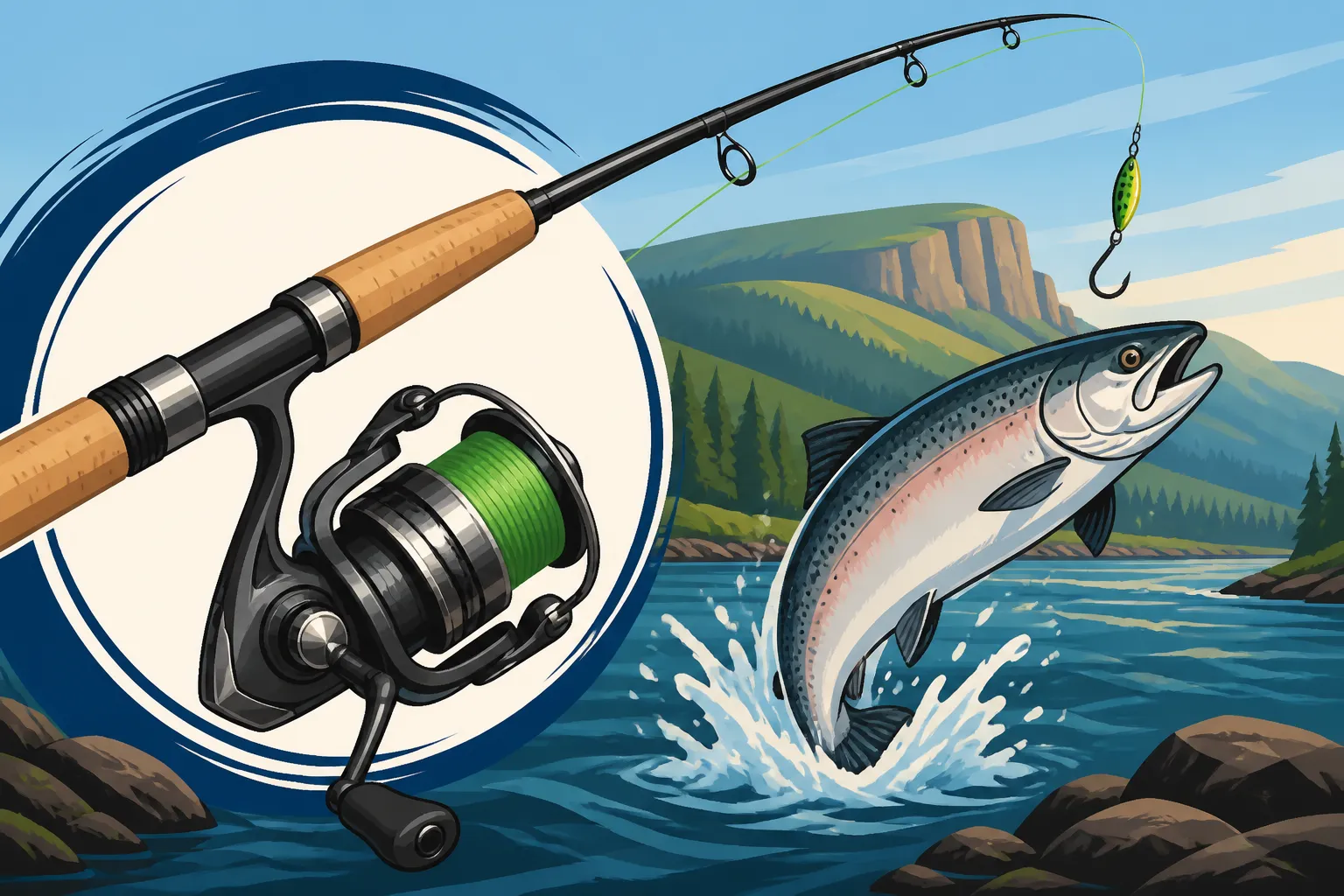
Spinning Reels: While less common for dedicated heavy salmon fishing on the main Columbia, spinning reels still have their place. They are user-friendly, excellent for casting lighter lures or baits, and can be a good choice for beginners or those targeting Coho Salmon in Oregon in more accessible areas or tributaries. Their open-face design makes them less prone to backlashing. However, they generally lack the raw power and direct line control of a baitcaster, and their drag systems, while good, might not withstand the prolonged, searing runs of a giant King salmon as effectively. For light jigging or tossing spinners in calm waters, a heavy-duty spinning reel (sizes 4000-6000) can work, but for the true grind of big river salmon, baitcasters usually win out.
Gear Ratio and Drag System Importance
These two features are absolutely critical for a salmon reel.
-
Gear Ratio: This number tells you how many times the spool rotates with one full turn of the handle. A lower gear ratio (e.g., 4.1:1 or 5.0:1) means more cranking power, making it easier to reel in heavy fish or heavy lead weights against the current. This is often preferred for trolling or deep-water applications. A higher gear ratio (e.g., 6.0:1 or 7.1:1) provides a faster retrieve, which can be beneficial for quickly taking up slack line after a bite or for rapidly bringing in a lure for another cast. For Columbia River salmon, a mid-range gear ratio (around 5.0:1 to 6.0:1) is often a good compromise, offering both power and speed.
-
Drag System: This is arguably the most important feature on a salmon reel. When a large salmon makes a powerful run, the drag system allows line to peel off smoothly under tension, preventing your line from breaking or your rod from snapping. You need a drag system that is incredibly smooth, consistent, and capable of applying significant pressure. Cheap, jerky drags are a recipe for disaster, causing line breaks or allowing the hook to pull free. Look for reels with carbon fiber or multiple-disc drag systems that can handle 20+ pounds of max drag. The ability to fine-tune your drag throughout a fight is essential, allowing you to gradually wear out a fish while protecting your line. Many anglers will test their drag settings before hitting the water, ensuring it engages smoothly and consistently.
Line Capacity and Spool Material
You're targeting big, powerful fish that love to make long runs in a big river. This means you need a reel with ample line capacity. For Columbia River salmon, a reel that can hold at least 200-250 yards of 20-30 lb monofilament or its equivalent in braided line is generally considered the minimum. Many anglers prefer even more, especially when using lighter braided line, as that extra capacity provides a crucial buffer when a big King decides to make a 100-yard dash downstream.
The spool material itself should be durable and corrosion-resistant. Aluminum is a common choice, being strong and relatively light. Many quality reels designed for saltwater or heavy freshwater use will feature anodized aluminum spools and other components to resist the corrosive effects of moisture and grime. A high-quality spool will also ensure your line lays evenly and casts smoothly, which can be surprisingly important over a long day of fishing. Checking out options on Amazon can give you a good idea of various manufacturers like Penn, Abu Garcia, and Daiwa who offer reels with excellent line capacity and durable construction.
Essential Line and Terminal Tackle for Success
Even the best rod and reel combo is only as good as the line and terminal tackle connecting it to the fish. This is where many battles are won or lost.
Choosing the Right Fishing Line
For Columbia River salmon, anglers typically employ a combination of braided main line and monofilament or fluorocarbon leaders.
-
Braided Line (Main Line): Braided line has become incredibly popular for salmon fishing due to its zero stretch, thin diameter, and incredible strength. The lack of stretch provides unparalleled sensitivity, allowing you to feel every bump, bite, or subtle change in current. Its thin diameter means less water resistance, allowing your gear to get deeper faster and hold bottom more effectively in strong currents. Most anglers opt for 30-65 lb test braided line as their main line. The higher test allows for greater strength when pulling on snags or fighting monster fish. Brands like PowerPro or Seaguar are common choices. Because braided line is opaque, many anglers will connect it to a leader via a barrel swivel or a knot like the FG knot or Albright knot. If you're wondering What pound test line for Chinook salmon, braid is almost always the answer for the main line.
-
Monofilament or Fluorocarbon (Leaders): While braid is excellent for the main line, its visibility can spook wary salmon. This is where monofilament or fluorocarbon leaders come in.
- Monofilament leaders are less visible than braid and offer some stretch, which can act as a shock absorber during a powerful strike or head shake, reducing the chance of a pulled hook. They are also more abrasion-resistant than braid when rubbing against rocks or fish teeth. Typically, 15-30 lb test monofilament is used for leaders, depending on the target species and water clarity.
- Fluorocarbon leaders are nearly invisible underwater due to their refractive index being close to that of water. They are also highly abrasion-resistant and have very little stretch. While often more expensive, fluorocarbon is a favorite for clear water conditions or when fish are particularly finicky. You'll typically use 15-25 lb test fluorocarbon for salmon leaders. The specific choice between mono and fluoro often comes down to personal preference and water conditions.
Hooks, Swivels, and Leaders
Your terminal tackle needs to be as robust as the rest of your setup. Don't let a weak link ruin your day.
-
Hooks: For salmon, you need sharp, strong, high-quality hooks. The size will vary depending on your bait or lure, but generally, you'll be looking at sizes from 2/0 to 5/0 for single hooks, or trebles for certain lures. Whether you prefer Owner, Gamakatsu, or another reputable brand, ensure they are chemically sharpened and strong enough not to straighten under extreme pressure. Barbless hooks are often required in certain fisheries or for wild fish, so always check the current Oregon Fishing Regulations Explained. When preparing your bait, understanding How to tie a spinner for salmon fishing correctly also contributes to effective hook presentation.
-
Swivels: Heavy-duty barrel swivels or ball-bearing swivels are essential for preventing line twist, especially when trolling or using lures that spin. Use swivels rated for significantly higher pound test than your main line to ensure they don't become a weak point. Good quality swivels will handle the stress of strong currents and fighting fish without seizing up.
-
Leader Length: The length of your leader can vary from just a few feet to over 6 feet, depending on the technique, water clarity, and how spooky the fish are. For trolling herring, you might use a shorter, stiffer leader, while for bobber and jig, a longer, lighter leader might be preferred for a more natural presentation.
Weighting Systems and Bait Presentation
Effectively presenting your bait or lure in the strong Columbia River currents almost always requires weight.
-
Sinker Types:
- Cannonball sinkers are round and heavy, commonly used for trolling or plunking where you want your gear to stay put or dive quickly. They come in various weights, from a few ounces up to 20 ounces or more for extreme currents.
- Pyramid sinkers are good for holding bottom in current due to their shape.
- Lead pencil sinkers or slidder weights are often used for back-bouncing or drift fishing, allowing your bait to roll or bounce along the bottom more naturally.
- Diving devices like divers and flashers are also part of the weighting and presentation system, pulling your lure down and attracting fish.
-
Sinker Size: The size of your sinker will depend directly on the current speed, depth, and the type of fishing you're doing. There's often a bit of trial and error involved to find the optimal weight that keeps your gear in the strike zone without hindering its action or becoming too heavy to manage. You might carry a range of weights, from 2 ounces up to 16 ounces or more, particularly if you're fishing different depths or current speeds on the same trip. This is especially true for How to Fish for Fall Chinook on the Columbia where conditions can change rapidly.
Putting it All Together: Recommended Setups by Technique
Now that we've covered the individual components, let's look at how to combine them into effective setups for common Columbia River salmon techniques. Remember, these are general guidelines, and experienced anglers often fine-tune their setups based on personal preference and specific fishing conditions.
Trolling and Downrigger Setups
Trolling is a bread-and-butter technique for salmon on the Columbia, whether you're pulling spinners, Brad's Super Baits, or cut-plug herring. This method often requires rods that can handle sustained pressure and have a good bend to absorb the initial strike.
For trolling without a downrigger (using lead weights or divers to get depth), a rod in the 8-foot 6-inch to 9-foot 6-inch range with a moderate-fast to fast action and medium-heavy power is ideal. This length provides good leverage and allows for easier handling of your gear around the boat. Pair this with a sturdy baitcasting reel (like a Shimano Tekota 500 or Daiwa Saltist 30) with a gear ratio around 5.0:1 or 6.0:1, spooled with 30-50 lb braided line. Your leader will typically be 20-30 lb monofilament or fluorocarbon, 3-5 feet long, connected via a heavy-duty swivel to your main line and then to your lure or bait.
When using downriggers, where the downrigger ball takes your line to a specific depth, the rod's primary role is to detect the strike and fight the fish. A slightly shorter, more flexible rod (7-foot 6-inch to 8-foot 6-inch) with a softer tip but strong backbone, often fiberglass or a composite, works well. The softer tip absorbs the boat's motion and indicates a strike when the line pops from the downrigger clip. The reel should still be a robust baitcaster with excellent drag, spooled with 30-50 lb braid. The leader setup remains similar, tailored to your specific lure.
Bobber and Jig / Anchor Fishing Setups
These techniques are popular for targeting salmon in specific holding areas, often near structure or in slower currents. They require rods with good casting distance and sensitivity, coupled with reels that can handle bursts of power.
For bobber and jig fishing, especially for aggressive Coho or Chinook in shallower water, a longer rod is a huge asset. Look for a rod between 9 feet and 10 feet 6 inches, with a moderate-fast to fast action and medium-heavy power. The extra length helps you cast lighter jigs or baits further, allows for better line control (mending your line to keep the bobber drifting naturally), and provides a wider arc to fight jumping fish. While some anglers use spinning reels for bobber and jig, a lightweight, high-quality baitcaster (like a Daiwa Lexa 300 or Shimano Curado 300) with a fast retrieve ratio (6.0:1 or higher) spooled with 30-40 lb braid is often preferred for precision and power. Leaders are typically 15-25 lb fluorocarbon, 2-4 feet in length, depending on water clarity, attached to your jig or baited hook.
Anchor fishing, where you sit stationary in a boat and cast out baits or lures, is similar in gear requirements to heavy bobber and jig. You'll want a powerful rod (8-foot 6-inch to 9-foot 6-inch, medium-heavy to heavy power, moderate-fast action) capable of casting heavier weights (often 6-12 oz cannonball sinkers with divers or flashers) and holding bottom in strong currents. A robust baitcasting reel with a lower gear ratio (4.0:1 to 5.0:1) and a very strong drag is key, spooled with 50-65 lb braid. Your leader will be heavier, 25-40 lb monofilament or fluorocarbon, often 3-6 feet long, depending on your presentation and how far you want your bait to drift from the main line.
Back-Trolling and Back-Bouncing Setups
These methods involve drifting downstream with the current, presenting your bait or lure in a very natural way. They demand gear that offers both sensitivity and the brute strength needed to fight a fish while managing current.
Back-trolling (often done with Kwikfish, Wiggle Warts, or similar plugs) typically uses a moderate-fast action, medium-heavy power rod around 8 feet 6 inches to 9 feet 6 inches. The length provides good leverage and allows for a clean angle as you drift downstream. The rod needs enough give to allow the plug to "work" properly but plenty of backbone to turn a fish. A durable baitcasting reel with a mid-range gear ratio (around 5.0:1) and a smooth, powerful drag is standard, spooled with 30-50 lb braided line. Leaders are generally 20-30 lb monofilament or fluorocarbon, 4-6 feet long, connected to your plug.
Back-bouncing is a highly effective technique where you bounce a weighted bait or lure directly along the river bottom as you drift. This requires an extremely sensitive rod to feel the bottom and detect subtle bites, but also immense power. A rod in the 8-foot 6-inch to 9-foot range with a fast or extra-fast tip but a heavy power rating in the butt section is ideal. Often, these rods have a composite construction with a sensitive graphite tip and a powerful fiberglass butt. The reel should be a baitcaster with a lower gear ratio (4.1:1 to 5.0:1) for maximum cranking power, spooled with 40-65 lb braided line. Leaders are typically 25-40 lb fluorocarbon, 1-3 feet long, connected to a dropper weight system and then to your baited hook. This setup is particularly effective for How to Fish for Sturgeon on the Columbia as well.
Reel Type Comparison for Columbia River Salmon
Here’s a quick comparison to help you choose between the two main reel types for salmon fishing.
| Feature | Baitcasting Reel | Spinning Reel |
|---|---|---|
| Power | Excellent (direct drive, strong gears) | Good (less direct drive, gears can be smaller) |
| Control | Superior (thumb control for casting & retrieve) | Good (finger control) |
| Casting | Requires practice (risk of backlashing) | Easy (less prone to backlashes) |
| Line Twist | Minimal (line comes straight off spool) | Moderate (line wraps onto spool) |
| Drag System | Typically very robust and smooth | Good, but often less capacity/strength than baitcasters |
| Sensitivity | Excellent (direct feel through spool) | Good (feel through line roller) |
| Best For | Trolling, back-trolling, heavy jigging, anchor fishing | Lighter lures, bobber & jig (esp. for Coho/trout), beginners |
Remember, while a baitcasting reel is generally preferred for the most demanding Columbia River salmon scenarios, the best setup is always the one you are most comfortable and proficient with.
Disclaimer
Fishing regulations can change frequently. Always consult the latest Oregon Department of Fish and Wildlife (ODFW) regulations before heading out on the water. This guide is for informational purposes only and does not supersede official regulations.