What is a drift boat guide trip
Many anglers hear the term "guided fishing trip" and picture a general outing, but in Oregon's diverse waterways, the type of boat—and how it's used—makes all the difference. If you've been curious about what a drift boat guide trip entails, this guide is here to shed light on this incredibly popular and effective method for exploring Oregon's legendary rivers, helping you understand if it's the right adventure for your next fishing excursion.
What Exactly is a Drift Boat Guide Trip?
At its heart, a drift boat guide trip is an intimately guided fishing experience on a river, utilizing a specially designed boat that moves with the current. Unlike powerboats that rely on motors to propel them against or across the current, a drift boat is built to drift downstream, allowing for a stealthy approach and precise presentations to fish. It's a method deeply ingrained in the culture of Pacific Northwest angling, offering an unparalleled way to immerse yourself in the river environment.
The Boat Itself: Designed for Rivers
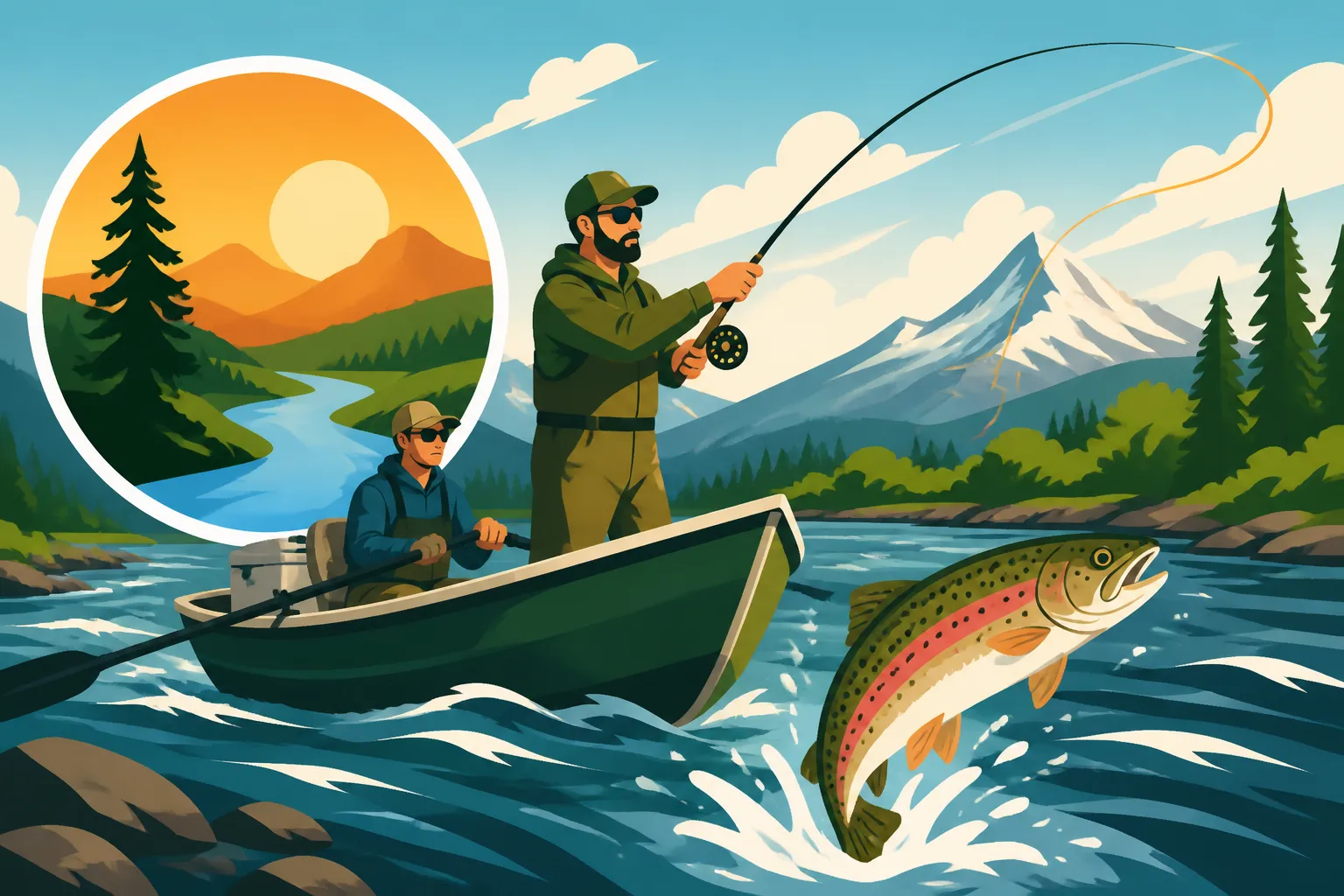
Let's talk about the star of the show: the drift boat. These aren't your typical lake boats or ocean vessels. Imagine a craft with a flat bottom, a pointed bow, and distinctively flared sides, usually made of fiberglass or aluminum. This unique design allows them to glide over shallow riffles and navigate through rapids with remarkable agility and stability. The flat bottom minimizes draft, meaning they don't sit deep in the water, which is crucial for accessing prime fishing runs that might be too shallow for other boats. The flared sides help deflect water, keeping you dry even through lively rapids. Crucially, they are propelled primarily by oars, often handled by the guide standing in a central rowing station, giving them incredible control over the boat's speed and positioning relative to the current. This silent movement is a huge advantage, as it minimizes disturbance to the fish below.
Think about standing knee-deep in a river, trying to cast to a seam you know holds fish. Now imagine being able to float silently to that seam, presenting your fly or lure perfectly, without spooking the fish. That's the advantage of a drift boat. The boat becomes a stable, comfortable fishing platform that can get you to spots unreachable by foot, and without the noise and wake of a motor, which can often put fish down. It's a truly harmonious way to interact with the river, placing you right in the heart of the action while respecting the tranquility of the environment.
The Art of the Drift: Navigating Oregon's Waters
The "drift" in drift boat is key. It's the art of moving downstream with the flow of the river, with the guide constantly adjusting the boat's speed and angle using oars. This isn't just letting the boat go where it pleases; it's a highly skilled maneuver. A good guide knows how to "hold" the boat in a productive fishing run, slowing its progress to match the speed of the current, allowing anglers to present their offerings naturally. They can also precisely position the boat so anglers can cast into specific eddies, riffles, or deep pools where fish are known to hold.
This precise control is what makes drift boat trips so effective, especially for species like salmon and steelhead that often hold in specific lies and require delicate presentations. The guide is essentially a highly skilled chauffeur and fishing expert rolled into one, putting you exactly where you need to be. While a small electric motor might sometimes be used for minor adjustments or to move quickly between drifts, the essence of the trip remains the quiet, current-driven movement. This technique allows for a serene experience, often allowing you to hear the sounds of the river and wildlife around you, rather than the drone of an engine.
Why Drift Boats Shine on Oregon's Rivers
Oregon is blessed with countless incredible rivers, from the rushing Deschutes River Fishing Guide to the iconic Rogue River Fishing Guide and the coastal gems like the Nestucca River Fishing Guide. Drift boats are perfectly suited for these environments for several reasons. Firstly, they offer access to miles of prime water that would otherwise be inaccessible. Many of Oregon's best fishing stretches are surrounded by private land or steep canyon walls, making bank access challenging or impossible. Drift boats open up these otherwise hidden havens.
Secondly, their silent operation is a massive advantage. Fish, especially wary species like wild steelhead, are incredibly sensitive to vibrations and noise. A drift boat glides over the water, minimizing disturbance and allowing for a more natural approach. This stealth factor often translates to more hook-ups and a less pressured fishing experience. Lastly, they provide a stable and comfortable platform from which to fish. Anglers can stand and cast, or sit comfortably while drifting, enjoying the scenery and focusing on their presentation. You're not just fishing; you're experiencing the river in a truly immersive way, covering vast stretches of incredible water while enjoying a comfortable ride.
What to Expect on Your Drift Boat Adventure
Embarking on a drift boat trip is a truly unique experience. It’s not just about catching fish (though that's certainly a big part of it!), but also about the journey, the scenery, and the quiet rhythm of the river. Knowing what to expect can help you prepare and fully enjoy your day.
The Day's Flow: From Launch to Takeout
A typical drift boat trip usually begins early in the morning, meeting your guide at a predetermined launch point. This could be a public boat ramp or a more discreet access point, depending on the river and target species. After a quick safety briefing and getting acquainted with the boat, you'll shove off, often with the guide expertly backing the boat into the current. The day will then unfold as a series of drifts, punctuated by stops at particularly promising holes or runs. You might spend a significant amount of time actively fishing from the boat as you drift, making casts and presentations from various angles as the current carries you along.
Your guide will constantly be assessing the water, adjusting the boat, and offering advice on casting, retrieve, or fly/lure selection. There will typically be breaks for lunch, which might be a streamside picnic or a quick bite on the boat, giving you a chance to relax and soak in the surroundings. Some trips might involve getting out of the boat to wade fish a specific stretch if conditions allow and it's particularly productive. The day concludes at a designated takeout point downstream, where a shuttle vehicle (often arranged by the guide) will be waiting to transport you back to your starting point. It’s a full day, typically 6-8 hours, packed with fishing opportunities and stunning views.
Gear, Techniques, and Targeted Species
One of the great advantages of a drift boat is its versatility, accommodating various fishing techniques and targeting a wide range of species. For fly anglers, drift boats are exceptional for presenting nymphs, streamers, and dry flies to trout, or swinging large flies for Oregon Steelhead Fishing Techniques or Oregon Salmon Fishing Techniques. The guide can position the boat to allow for ideal mends and drifts, covering water thoroughly. Gear anglers will find themselves casting spinners, drifting bait, or pulling plugs and divers, often covering long stretches of water with precision. Your guide will provide all the necessary fishing gear, including rods, reels, and tackle, customized for the day's conditions and target species.
In Oregon, drift boats are iconic for chasing migratory fish like Chinook and Coho salmon, and both summer and winter steelhead runs. On rivers like the Willamette River Fishing Guide or the Columbia River Fishing Guide, you might be targeting powerful spring Chinook. On smaller coastal rivers, you could be focused on winter steelhead. Beyond these prized anadromous fish, drift boats are also fantastic for trout fishing on rivers like the Deschutes, or even smallmouth bass on the John Day River. The specific species you target will depend on the river, the season, and your personal preferences, all of which you'll discuss with your guide beforehand.
Safety First: Your Guide's Expertise
While drift boat trips offer thrilling access to remote river stretches, safety is paramount, and your guide is your primary safety officer. Professional guides are highly experienced navigators of their specific rivers. They understand the currents, the rapids, potential hazards, and how the water changes with flow conditions. They are trained in first aid and often carry extensive safety equipment. You'll be provided with personal flotation devices (PFDs) and instructed on their proper use.
The guide's experience extends beyond just getting you down the river; they know the best lines to take through rapids, how to handle unexpected obstacles, and how to safely assist anglers, especially when netting powerful fish. Their intimate knowledge of the river is invaluable, ensuring a smooth and secure trip even in challenging conditions. You're in capable hands, allowing you to relax and focus on the fishing and the beauty of your surroundings.
Who Should Consider a Drift Boat Trip in Oregon?
Drift boat trips offer a unique blend of adventure, instruction, and natural immersion, making them appealing to a broad spectrum of anglers. Whether you're a seasoned pro or just starting out, there's likely a drift boat experience that's perfect for you.
Anglers of All Skill Levels
One of the beautiful aspects of a drift boat guide trip is its accessibility. For beginners, it's an incredible learning opportunity. Your guide will provide personalized instruction on casting techniques, reading the water, and proper fish handling. You're in a controlled environment where the boat is doing most of the work to get you into position, allowing you to focus on developing your skills. Many guides are fantastic teachers, patient and encouraging, turning a first-time angler into a more confident one.
Experienced anglers, on the other hand, benefit from the guide's local knowledge and access to prime, less-pressured water. Even if you know how to cast a fly like a pro, a local guide will know the subtle nuances of a particular run, what flies or lures are working that day, and how to consistently put you on fish. They understand the intricacies of Oregon Fishing Season Dates and Limits and can adapt quickly to changing conditions. It allows veteran anglers to fish smarter, not just harder, often leading to opportunities for trophy fish they might not find on their own.
The Experience Seeker: More Than Just Catching Fish
A drift boat trip is so much more than just a fishing expedition; it's a full-sensory immersion into Oregon's natural landscape. Imagine floating quietly past towering old-growth forests, watching eagles soar overhead, or spotting deer grazing on the riverbanks. The tranquility of being on the water, away from the hustle and bustle, is a profound experience in itself. Many people book these trips not just for the fish, but for the chance to unplug, reconnect with nature, and explore stunning, remote areas of Oregon that are otherwise unreachable.
The camaraderie with your guide is also a huge part of the experience. They're often passionate storytellers, local historians, and expert naturalists, sharing insights about the river, its ecosystem, and the creatures that call it home. It's an opportunity to learn about Oregon Salmon Species Guide or Oregon Trout Species Guide in their natural habitat, and to gain a deeper appreciation for conservation. Whether you're sharing a laugh about a missed fish or marveling at a wildlife sighting, these moments often become the most cherished memories of the trip.
Comparing to Other Guided Options
When considering a guided trip in Oregon, you might encounter other options like jet boat trips or even more static bank fishing scenarios. Drift boat trips offer a distinct middle ground. Jet boats, with their powerful engines, are fantastic for covering immense distances quickly, especially on large rivers like the Columbia. They can run upstream against strong currents to reach distant fishing grounds, making them ideal for certain fisheries or when time is of the essence. However, they come with engine noise and a less "intimate" feel.
Bank fishing, while accessible, is often limited to a few popular spots, which can become crowded and pressured. It restricts your ability to move and find fish, relying heavily on fish coming to you. A drift boat, conversely, offers the best of both worlds: the ability to cover significant mileage quietly and precisely, accessing remote sections of river with a minimal footprint. You get the stealth of wading with the range of a motorized boat, all while providing a comfortable and stable platform for focused fishing.
| Feature | Drift Boat Guide Trip | Jet Boat Guide Trip | Bank Fishing (Guided) |
|---|---|---|---|
| Primary Propulsion | Oars (with current), minimal motor use | Powerful jet engine (against current) | Foot travel, stationary |
| Stealth/Noise | Very high stealth, low noise | Moderate noise, lower stealth | Very high stealth (if done carefully) |
| River Access | Excellent, covers miles of inaccessible water quietly | Excellent, covers huge distances quickly | Limited to specific access points, often crowded |
| Comfort | High, stable platform for standing/sitting, smooth ride | High, faster travel can be bumpier, can be noisy | Variable, can involve walking/wading over uneven terrain |
| Ideal For | Precise presentations, tranquil experience, covering water sections, fly fishing, lure/bait drifting | Covering vast distances, reaching distant runs quickly, fast-moving fish | Specific known holes, wade fishing, budget-conscious |
| Pace | Moderate, focused on specific drifts and runs | Fast-paced travel between fishing spots | Slow, stationary |
| Interaction with Guide | High, constant communication and instruction | High, but travel time can be louder | High, direct instruction and assistance |
Planning Your Oregon Drift Boat Trip
So, you're convinced a drift boat trip is the way to go! Excellent choice. Now comes the exciting part: planning your adventure. A little preparation goes a long way in ensuring a memorable and successful day on the water.
Choosing the Right River and Season
Oregon offers a kaleidoscope of drift boat opportunities, and the "best" choice really depends on what you want to catch and when you plan to go. If you dream of wild summer steelhead on a dry fly, the upper Deschutes River or sections of the Rogue are legendary. For powerful winter steelhead, the coastal rivers like the Wilson River Fishing Guide or the Alsea are renowned. Spring Chinook runs are popular on the Willamette and Columbia, while fall Chinook can be targeted on many coastal rivers and the lower Columbia.
Do some research on Oregon Fishing Seasons Explained and consider what species are active during your travel dates. For example, if you're visiting in October, you're likely looking at fall salmon and possibly early winter steelhead on certain systems. If it's August, summer steelhead or trout are probably your target. Communicate your preferences with potential guides, as they'll be able to recommend the best options for the time of year you're interested in.
Finding a Reputable Guide
Finding the right guide is crucial for a successful drift boat trip. Word-of-mouth recommendations are excellent, but online resources are also incredibly helpful. Websites like FishingBooker allow you to browse licensed guides, read reviews from past clients, and see photos of their boats and catches. When evaluating guides, look for those with specific experience on the river you want to fish and the species you're targeting. Check their websites or profiles for their guiding philosophy—do they focus on instruction, or just putting fish in the boat? What's included in their trip price?
Don't hesitate to call or email potential guides to discuss your expectations and ask questions about their experience, what they provide, and what you need to bring. A good guide will be happy to chat and make sure their trip aligns with what you're looking for. Always ensure they are licensed and insured, which is a requirement for professional guides in Oregon. This also covers important details like understanding Oregon Fishing Regulations Explained and ensuring all required tags and endorsements, such as the Oregon Combined Angling Tag Guide, are properly addressed.
Preparing for Your Day on the Water
Once you've booked your guide, they'll provide a detailed list of what to bring, but here are some general essentials for an Oregon drift boat trip:
- Layered Clothing: Oregon weather can be famously unpredictable. Dress in layers so you can adjust to temperature changes throughout the day. Quick-drying, moisture-wicking materials are always a good idea, and a waterproof outer shell is crucial for rain or spray.
- Rain Gear: Even on a sunny forecast day, a light rain jacket and pants can save your trip if a squall rolls in.
- Sun Protection: Sunglasses (polarized are highly recommended for seeing fish and structure!), a wide-brimmed hat, and sunscreen are vital, even on cloudy days. The reflection off the water can be intense.
- Oregon Fishing License and Tags: Make sure your Oregon Fishing License Guide is valid for the day of your trip and that you have any necessary tags or endorsements for the species you'll be targeting (e.g., salmon/steelhead tag, Columbia River Basin Endorsement). Your guide cannot provide these for you.
- Food and Drinks: While some guides might offer snacks or drinks, it's always a good idea to bring your own water bottle, lunch, and any preferred snacks. Staying hydrated and energized is important.
- Camera: To capture those memorable moments and stunning scenery!
- Gratuity: If you had a great experience, showing your appreciation for your guide's hard work is customary and always welcomed.
Most guides will provide all the necessary fishing equipment, including rods, reels, and tackle, but if you have a favorite rod you prefer to use, check with your guide beforehand if it's appropriate to bring. Preparing adequately ensures you can fully relax and focus on the incredible experience of fishing Oregon's rivers from a drift boat.
Disclaimer
This article is for general informational purposes only and does not constitute professional advice. Laws, prices and regulations vary by location and change over time. Consult a qualified professional for guidance on your specific situation.