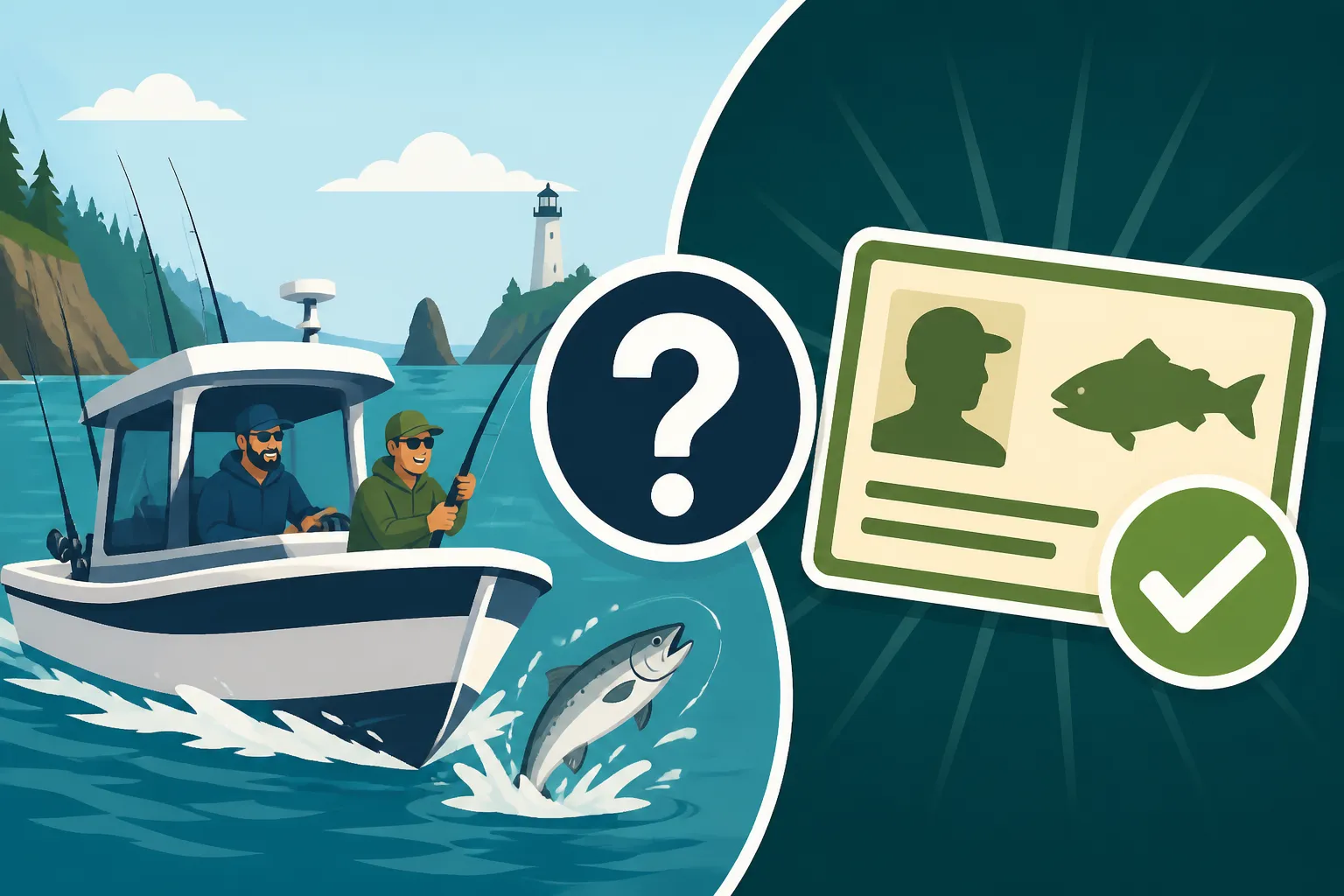
Do fishing charters in Oregon include your license?
It's incredibly common for anglers, especially those new to Oregon or just trying out a charter for the first time, to wonder if their fishing license is included in the charter fee. After all, you're paying for a guided experience, often with all the gear provided, so it feels natural to assume everything's covered. However, this isn't usually the case in Oregon, and misunderstanding this can lead to frustrating delays or even fines if you show up unprepared. This guide will clarify exactly what you need to know about fishing licenses when booking a charter in Oregon, so you can focus on the thrill of the catch.
The General Rule: Licenses Are Usually Your Responsibility
Let's cut right to it: in Oregon, fishing licenses are almost always the individual angler's responsibility, even when you're going out on a charter boat. This isn't a ploy by charter companies to squeeze a few extra bucks out of you; it's deeply rooted in how fishing regulations are structured and enforced. A fishing license is a personal permit, an official document issued by the state that grants you, the individual, the legal right to participate in angling activities.
Why Charter Operators Can't Just Give You a License
Think of it this way: your driver's license allows you to operate a car, not the car itself. Similarly, an Oregon fishing license is tied to your identity, not to the vessel you're fishing from. Charter operators are licensed to guide fishing trips and carry paying passengers, but they aren't authorized to issue personal fishing licenses to their clients. That falls under the purview of the Oregon Department of Fish and Wildlife (ODFW).
If a charter operator were to somehow provide a license for you, it would essentially be a workaround of state regulations, and that's just not how the system works. Each angler, regardless of age (with some exceptions for very young children, which we'll cover later) or experience, needs their own valid license and any required endorsements. Trying to fish without one, even on a reputable charter, can lead to significant penalties, including fines and the forfeiture of any caught fish. Your charter captain, who is legally responsible for ensuring all their clients are compliant, could also face repercussions. It's simply not a risk worth taking for anyone involved.
Understanding Your Personal Angling Permit
This idea of a personal permit means that you need to purchase your license and any necessary tags or endorsements in your own name, with your own identification information. Whether you're a seasoned angler or someone just dipping their toes in the water, that piece of paper (or digital equivalent) with your name on it is your ticket to legally participate. It's a system designed to ensure accountability, track angler effort, and gather essential data for fish management and conservation efforts.
When you book a trip, say through a platform like FishingBooker, the charter listing or the captain themselves will almost always explicitly state that clients are responsible for their own licenses. This isn't to be inconvenient; it's a crucial heads-up to ensure your trip goes smoothly and legally.
Specific Oregon License Requirements for Charter Fishing
Navigating Oregon's fishing license system can feel a bit like reading hieroglyphics for the first time, especially with all the different options and endorsements. However, for most charter trips, it boils down to a few key items. Understanding these will save you a lot of headache. For a complete overview, check out our Oregon Fishing License Guide.
The Base Angling License
First and foremost, you'll need a basic angling license. This is your foundation. Oregon offers different types depending on your residency and how long you plan to fish.
- Resident vs. Nonresident: Oregon differentiates between residents and nonresidents. Generally, if you've lived in Oregon for at least six consecutive months, you qualify as a resident. Nonresident licenses are typically more expensive, reflecting the fact that residents contribute to the state's conservation efforts through taxes. If you're visiting Oregon for a trip, you'll definitely need a nonresident license. You can find more details on Oregon Nonresident Fishing License Cost.
- Annual vs. Daily Options: For charter trips, you have choices:
- Annual Angling License: If you plan on fishing multiple times throughout the year in Oregon, an annual license is usually the most cost-effective option. It covers you from January 1st through December 31st of a given year.
- 1-Day or Multi-Day Angling License: For those just doing a single charter trip or a short fishing vacation, the Oregon 1-Day Fishing License or other multi-day options are perfect. These provide coverage for a specific number of consecutive days, which aligns well with the typical duration of a charter trip. These are fantastic for visitors who might only be in the state for a weekend or a week. You'll want to ensure your chosen day(s) perfectly align with your charter booking.
Essential Endorsements for Ocean and Columbia River Charters
Beyond the base angling license, certain types of charter fishing trips will require additional endorsements. These are like add-ons that grant you permission to fish in specific areas or for certain species.
- Oregon Ocean Endorsement: If your charter is taking you out into the vast Pacific Ocean for salmon, halibut, lingcod, or rockfish, you will need an Oregon Ocean Endorsement. This is a mandatory stamp of approval for anyone fishing in marine waters beyond the immediate bays and estuaries. Even if you're just fishing for bottom dwellers near the shore on an ocean charter, this endorsement is required. It helps fund the management of Oregon's vital marine fisheries.
- Oregon Columbia River Basin Endorsement: Planning a charter trip on the mighty Columbia River, especially for salmon or steelhead? Then the Oregon Columbia River Basin Endorsement is a must. This endorsement helps fund fisheries management and restoration efforts specific to the Columbia River system, which is a shared resource between Oregon and Washington. This is particularly important for those iconic spring and fall Chinook runs.
Special Tags for Specific Species
While the base license and endorsements cover where you can fish, specific tags are required for what you can keep when it comes to certain prized species. These tags are critical for monitoring harvest levels and are often part of the Oregon Combined Angling Tag Guide.
- Salmon and Steelhead Tag: If your charter is targeting salmon or steelhead and you intend to keep any of these highly regulated species, you'll need a Oregon Salmon and Steelhead Tag Requirements. This tag, often called a "catch record card," must be carried with you and filled out immediately upon retaining one of these fish. It's how the state tracks harvest numbers.
- Halibut Tag: For those thrilling offshore halibut trips, a separate Oregon Halibut Tag Requirements is usually required in addition to your ocean endorsement and base license. Halibut are a heavily managed species, and this tag helps ensure sustainable fishing practices.
- Sturgeon Tag: If your charter focuses on the prehistoric sturgeon in the Columbia or lower Willamette, and there's an open retention season, a Oregon Sturgeon Tag Requirements will be necessary. Sturgeon fishing in Oregon is often catch-and-release, but during designated retention periods, this tag is crucial.
It's always a good idea to confirm with your specific charter captain exactly what licenses, endorsements, and tags are needed for the type of fish they'll be targeting and the area they'll be fishing in. They are the experts on the water and will know the most current regulations.
How to Acquire Your Oregon Fishing License Before Your Trip
So, you know what you need. Now, how do you get it? Fortunately, Oregon has made it quite easy to obtain your fishing license, whether you prefer the digital convenience or a more traditional in-person purchase.
Online Purchase and Instant Access
The most convenient way to get your Oregon fishing license is online through the Oregon Department of Fish and Wildlife (ODFW) licensing system. This is a fantastic option for planning ahead or even making a last-minute purchase from your phone while traveling.
- Ease of Use: The ODFW website is designed to walk you through the process step-by-step. You'll create an account, input your personal information (name, address, date of birth, etc.), select the licenses and endorsements you need, and pay securely.
- Instant Gratification: Once purchased online, you'll often receive an email confirmation with a temporary license or a link to print your official license immediately. Many anglers simply save the digital version to their phone, which is typically accepted as proof of license by game wardens in Oregon. This means no waiting for mail or rushing to a store. For more on this, you can check out Can I use my phone as proof of an Oregon fishing license?.
- Planning Ahead: Even if your trip is weeks or months away, you can purchase your annual license or specific multi-day licenses in advance. This takes one more thing off your pre-trip checklist. Our guide on How to Renew an Oregon Fishing License Online might also be helpful if you're a returning angler.
In-Person Options
If you prefer a face-to-face transaction or need a physical copy printed for you, there are plenty of places to buy your Oregon fishing license.
- Sporting Goods Stores: Major retailers like Cabela's, Bass Pro Shops, and even local sporting goods stores across Oregon are authorized license agents. These are great spots because you can also pick up any last-minute tackle or gear you might need. Check out Oregon Fishing License at Sporting Goods Stores for more details.
- ODFW Offices: You can visit an ODFW office directly, though their hours might be more limited.
- Other Vendors: Many smaller shops, marinas, bait and tackle stores, and even some grocery stores, especially in popular fishing towns along the coast or rivers, are licensed to sell ODFW products.
When buying in person, remember to bring a valid form of identification. If you're purchasing a resident license, you may need to show proof of residency.
Checking with Your Charter Ahead of Time
Even with all this information, the best advice is always to communicate directly with your charter operator well in advance of your trip. When you book, or shortly after, send them a quick email or make a call. They can confirm precisely what licenses and tags are necessary for the specific type of trip you've booked and for the particular season. They'll also be able to tell you if there are any specific local regulations or emergency closures you should be aware of.
For example, if you book a fishing adventure through a site like FishingBooker, many charter listings will include a "What to Bring" section that explicitly lists license requirements. This makes it easy to see what's expected before you even finalize your booking. Taking this proactive step ensures you're fully prepared and can enjoy your time on the water without any worries.
What Charters Do Typically Provide (and Why it's Valuable)
While fishing charters generally don't include your personal license, they provide an immense amount of value that makes the cost well worth it, especially for those looking for a successful and hassle-free experience. When you step aboard a reputable Oregon fishing charter, you're not just buying a boat ride; you're investing in expertise, specialized equipment, and a significantly higher chance of catching fish. This is why so many anglers, from beginners to seasoned pros, choose to go with a guide.
Gear, Expertise, and Safety
This is where charters truly shine. Imagine trying to buy all the specialized rods, reels, downriggers, nets, and safety equipment needed for a deep-sea halibut trip or a salmon run on the Columbia. The cost would be astronomical!
- Top-Notch Equipment: Charters provide high-quality, well-maintained fishing gear specifically suited for the target species and fishing conditions. This means you don't have to worry about buying expensive equipment or having the wrong tackle. They'll have everything from heavy-duty rods for tuna to sensitive setups for trout.
- Invaluable Expertise: This is perhaps the biggest draw. Charter captains and their crews are local experts. They know the waterways intimately, understand fish behavior, track migration patterns, and stay up-to-date on fishing reports. They know where the fish are, when they're biting, and how to catch them. This local knowledge is accumulated over years, sometimes decades, on the water. They can teach you Oregon Fishing Techniques for Beginners and help refine your skills.
- Safety First: Charter boats are rigorously inspected and outfitted with all necessary safety gear, including life vests, first-aid kits, communication devices, and navigation equipment. Captains are trained in marine safety and emergency procedures, providing a secure environment, which is especially important when heading out into the Pacific Ocean.
Bait, Tackle, and Local Knowledge
Beyond the big-ticket items, charters handle all the smaller, but equally crucial, details that contribute to a successful fishing trip.
- Fresh Bait and Lures: Sourcing the right bait and lures can be a challenge. Charters provide fresh, appropriate bait (like herring for salmon or squid for bottom fish) and an array of proven lures and tackle. They know what's working right now in specific conditions, saving you time and money experimenting.
- Navigational Prowess: Your captain doesn't just know where the fish are; they know how to get there safely and efficiently. This includes navigating tricky channels, reading tides, understanding currents, and avoiding hazards.
- Fish Cleaning Services: Often, once you've successfully landed your catch, the crew will clean and fillet your fish for you, preparing it perfectly for your cooler. This is a huge convenience after a long day of fishing!
The Convenience Factor and Why it's Worth It
Ultimately, a charter trip is about convenience, learning, and maximizing your chances of a memorable day on the water. You show up, hop on the boat, and everything else is handled. No need to worry about boat maintenance, launching, navigation, or having the right gear. It's an immersive experience designed for you to enjoy the fishing.
For travelers or those without their own boat, charters offer the only practical way to access some of Oregon's best fishing grounds, whether it's the offshore waters for Pacific Halibut off Oregon or the deep channels of the Columbia for White Sturgeon in Oregon. When you consider the comprehensive package of equipment, expert guidance, safety, and local knowledge, the value of an Oregon fishing charter truly shines through, making it a fantastic investment in your angling adventure. Using a platform like FishingBooker to browse Oregon Fishing Charters allows you to compare different operators and find the perfect fit for your needs, ensuring you have a great experience.
Here's a quick summary of what's typically expected:
| Item | Angler's Responsibility | Charter's Responsibility |
|---|---|---|
| Fishing License | Yes (Base license + endorsements/tags) | No (Assist with info, but not provided) |
| Fishing Rods & Reels | No (Unless preferred personal gear) | Yes (High-quality, suited for target species) |
| Bait & Tackle | No | Yes (Fresh bait, appropriate lures, terminal tackle) |
| Fuel & Boat Operation | No | Yes |
| Safety Equipment | No | Yes (Life vests, first-aid, communications) |
| Expert Guidance | No | Yes (Captain's knowledge of spots, techniques, conditions) |
| Fish Cleaning | No (Often provided by crew at end of trip) | Yes (Often included or available for a small fee) |
| Food & Drink | Yes (Personal snacks, beverages) | No (Some may offer water, but plan for your own) |
| Weather-Appropriate Clothing | Yes | No |
Disclaimer
This article is for general informational purposes only and does not constitute professional advice. Laws, prices and regulations vary by location and change over time. Consult a qualified professional for guidance on your specific situation.