White Sturgeon in Oregon
One of the most thrilling experiences an angler can have in Oregon is coming face-to-face with a white sturgeon. These ancient, powerful fish can be incredibly elusive, making the pursuit both challenging and immensely rewarding. This guide will dive deep into everything you need to know about white sturgeon in Oregon, from understanding their biology and habitats to mastering the techniques for finding and safely catching these magnificent creatures, helping you prepare for your next big adventure.
The Majestic White Sturgeon of Oregon: An Overview
There's something truly awe-inspiring about a white sturgeon. When you're out on the water, whether it's the mighty Columbia or a quieter stretch of the Willamette, the mere thought that these prehistoric giants swim beneath your boat can send a shiver of excitement down your spine. For many anglers, myself included, the white sturgeon represents the ultimate freshwater challenge in Oregon. It’s not just about the fight; it’s about connecting with a fish that has witnessed millennia of change, a true living fossil right in our backyard.
What Makes White Sturgeon So Special?
What is it about the white sturgeon that captures the imagination of so many? Well, for starters, their sheer size is legendary. These are the largest freshwater fish in North America, capable of growing to incredible lengths and weights. Imagine reeling in a fish that's longer than you are tall and weighs more than a small person! Beyond their impressive dimensions, their appearance is unique—armored plates instead of scales, a shark-like tail, and barbels that sweep the riverbed for food. They are survivors, perfectly adapted to their environment over millions of years, which makes every encounter feel like a brush with history. There's a certain mystique that surrounds them, a feeling of ancient power that few other fish can convey. For many, landing one is the pinnacle of their angling career.
Historical Presence and Modern Challenges
White sturgeon have been a vital part of Oregon's aquatic ecosystems and cultural heritage for centuries. Indigenous peoples have long revered them, relying on them for sustenance and incorporating them into their traditions. Early European settlers quickly recognized the value of these fish, leading to extensive commercial fisheries in the past. However, these historical pressures, coupled with habitat alteration from dam construction, have significantly impacted sturgeon populations. Today, while some populations are robust, others are struggling, making conservation efforts more critical than ever. We've learned a lot from the past, and now the focus is on sustainable management to ensure future generations can continue to marvel at these incredible fish. It's a delicate balance, trying to provide angling opportunities while fiercely protecting these slow-growing, long-lived creatures.
Understanding White Sturgeon Biology and Habitat in Oregon
To truly appreciate white sturgeon, and to increase your chances of finding them, it helps to understand a bit about their biology and how they interact with their environment. These aren't your typical trout or bass; they operate on a different biological clock and have very specific needs that define their existence in Oregon's waterways.
Physical Characteristics and Lifespan
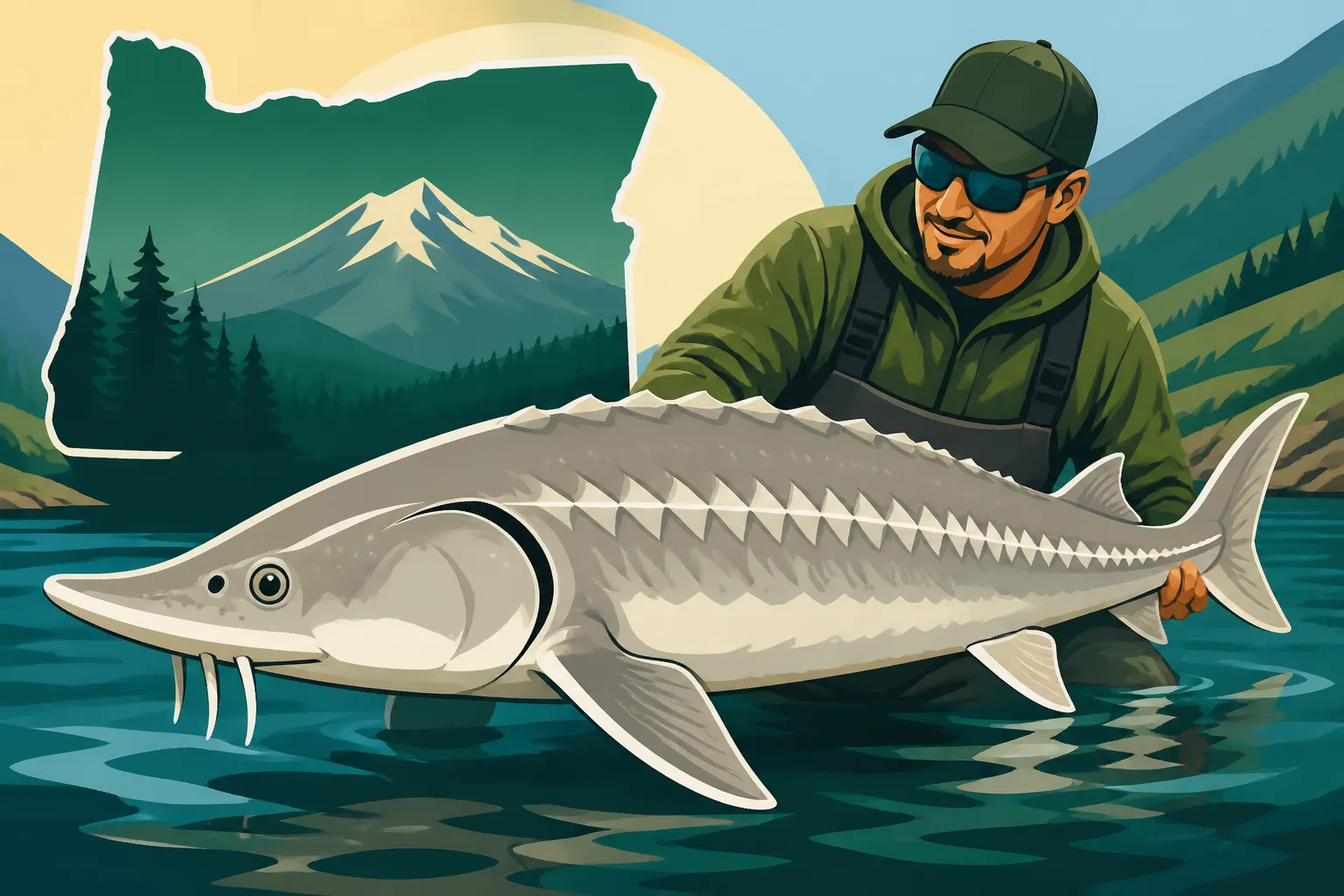
White sturgeon are truly distinct among freshwater fish. Instead of scales, their long, torpedo-shaped bodies are covered with five rows of bony plates called scutes, which offer protection. They have a flattened, shovel-like snout with four barbels (whisker-like sensory organs) near their mouth, which they use to detect food on the riverbed. Their mouth is protractile, meaning it can extend outwards like a vacuum to suck up prey. These fish are incredibly long-lived, with some individuals reaching well over 100 years old! Their slow growth and extended lifespan mean that every large sturgeon you encounter has been a living part of the ecosystem for decades, perhaps even a century. That makes catching and releasing them safely even more important, as these are truly irreplaceable members of our aquatic community.
Preferred Habitats and Migration Patterns
White sturgeon in Oregon primarily inhabit large, slow-moving rivers with soft, silty or sandy bottoms, though they can also be found in bays and estuaries. The deep channels and scour holes of the Columbia River are classic sturgeon haunts, offering both refuge and abundant food. These fish are largely benthic, meaning they spend most of their time on or near the bottom. While they don't undertake the massive, ocean-spanning migrations of salmon, sturgeon do move throughout river systems. They might migrate upstream to spawn in areas with suitable gravel beds, or move downstream to feed in more productive estuarine environments. Their movements are often influenced by water temperature, flow rates, and food availability. Understanding these patterns is key to predicting where they might be at different times of the year. For instance, knowing how fish move within the Columbia River Fishing Guide can make all the difference.
The Sturgeon's Diet and Role in the Ecosystem
White sturgeon are opportunistic bottom feeders, and their diet is quite varied, shifting based on what's available in their environment. Young sturgeon might feed on aquatic insects and crustaceans, while larger adults prey on a wide array of fish, including shad, smelt, eulachon, and even smaller salmon and steelhead. They'll also consume clams, mussels, and worms. Their role in the ecosystem is significant; as long-lived, large predators, they help to regulate populations of other fish and invertebrates, contributing to the overall health and balance of the river system. They are also scavengers, cleaning up the riverbed. Their presence is a sign of a relatively healthy river, even if specific populations face challenges.
Where to Find White Sturgeon in Oregon
When you're dreaming of tangling with a white sturgeon, knowing where to go is half the battle. Oregon offers some fantastic opportunities, but like any good fishing secret, it pays to know the prime spots and what makes them tick. It’s not just about showing up with a rod; it’s about understanding the lay of the land, or rather, the lay of the riverbed.
The Columbia River: Oregon's Sturgeon Stronghold
Without a doubt, the Columbia River is the undisputed champion for white sturgeon fishing in Oregon. This magnificent river, stretching from the interior to the Pacific Ocean, provides ideal habitat for these giants. Areas like the Bonneville Pool, The Dalles Pool, and the John Day Pool are famous for their sturgeon populations, with both legal-sized retention opportunities (when seasons are open and regulations allow) and fantastic catch-and-release fishing for oversized fish. The lower Columbia, especially around the Astoria and Longview areas, also sees significant sturgeon activity, particularly during periods when smelt or shad are abundant. If you're looking for your best shot at a true monster sturgeon, the Columbia is where you need to be. Many anglers even hire guides specializing in Sturgeon Guide Trips on the Columbia to navigate these waters effectively.
Other Notable Oregon Waters for Sturgeon
While the Columbia River gets most of the glory, it's not the only place where you can find white sturgeon in Oregon. The Willamette River, particularly its lower reaches closer to the Columbia, also holds a healthy population of sturgeon. You might not encounter the same numbers or the sheer size of the largest Columbia River fish, but the Willamette offers a more accessible and often less crowded experience, especially for those in the Portland metropolitan area. Other smaller tributaries that feed into the Columbia or Willamette might occasionally host sturgeon, particularly juvenile fish, but these opportunities are much rarer and generally not targeted by anglers. Checking regulations specifically for Is Willamette River sturgeon catch-and-release only? is crucial before you head out.
Identifying Prime Sturgeon Fishing Locations
Once you're on the river, how do you pinpoint where the sturgeon might be? These fish prefer deep holes, channels, and areas with slower currents, often near structure like submerged logs, rock piles, or ledges where food can accumulate. Look for distinct changes in depth using your fish finder. Often, areas downstream from major rapids or dams will have deep scour holes where sturgeon can rest and feed. Tributary mouths, where smaller rivers join larger ones, can also be productive as they concentrate baitfish. Pay attention to local knowledge and guide reports, as sturgeon can be creatures of habit. If you see baitfish on your sonar, that’s a good sign, as sturgeon are rarely far from their food source.
Oregon's White Sturgeon Management and Conservation
Sturgeon fishing in Oregon is a privilege, not a right, and that comes with a significant responsibility. The state takes the management of these ancient fish very seriously, implementing strict regulations to protect their populations and ensure their survival for generations to come. It’s a delicate dance between providing angling opportunities and safeguarding a species that is inherently vulnerable due to its long lifespan and slow reproductive cycle.
Strict Regulations for Sturgeon Fishing
Oregon has some of the most comprehensive and stringent regulations for white sturgeon, and for good reason. These rules cover everything from retention seasons and daily bag limits to specific slot limits (a size range within which fish can be kept) and the use of barbless hooks. The goal is to protect both the small, vulnerable juvenile sturgeon and the large, irreplaceable breeding adults, allowing only a portion of the middle-sized fish to be harvested. Before every trip, it is absolutely paramount to consult the most current Oregon Fishing Regulations Explained booklet or the Oregon Department of Fish and Wildlife (ODFW) website. Ignoring these rules can lead to significant penalties, and more importantly, can harm the very resource we cherish. You also typically need an Oregon Sturgeon Tag Requirements in addition to your regular fishing license if you plan to retain one, even if you are just targeting them.
Catch-and-Release Practices and Their Importance
Given the conservation status and slow growth of white sturgeon, catch-and-release fishing is a cornerstone of responsible angling in Oregon. Many areas, especially for the larger "oversized" sturgeon, are strictly catch-and-release only. This practice allows anglers to enjoy the thrill of catching these magnificent fish without impacting their breeding populations. However, simply releasing a fish isn't enough; it must be done correctly to minimize stress and injury. Proper techniques involve reducing fight time, keeping the fish in the water as much as possible, supporting its body, and using appropriate tools for hook removal. Guides often emphasize these practices, and learning How to catch and release sturgeon safely is just as important as learning how to catch them in the first place.
Conservation Efforts and Future Outlook
The ODFW, along with various conservation groups, is actively involved in numerous efforts to protect and restore white sturgeon populations. These efforts include habitat restoration projects, careful monitoring of population dynamics, and ongoing research into sturgeon biology. Public education and angler cooperation are also critical components. When anglers adhere to regulations, practice safe catch-and-release, and report violations, they become active partners in conservation. The future of white sturgeon in Oregon depends on this collective commitment. While challenges remain, the dedication to managing this species sustainably offers hope that future generations will continue to witness the power and grace of these ancient giants. Understanding the Columbia River sturgeon slot limit explained is a prime example of a regulation designed for conservation.
Fishing for White Sturgeon in Oregon: Techniques and Tips
Alright, so you're geared up, you know where they live, and you understand the rules. Now for the exciting part: how do you actually go about catching one of these magnificent creatures? Fishing for white sturgeon isn't like casting for trout; it requires specialized gear, specific techniques, and a hefty dose of patience. But trust me, the reward is absolutely worth the effort.
Essential Gear for Sturgeon Anglers
Tackling a white sturgeon demands heavy-duty gear. Forget your ultralight spinning rod; you'll need a stout rod, typically 7 to 9 feet long, with a heavy or extra-heavy action and a strong backbone to handle the immense power of these fish. Paired with this, a robust baitcasting or conventional reel with a reliable drag system is essential. Load it up with at least 80-pound braided line, as you'll be fishing in strong currents and potentially snaggy bottom. A heavy leader, often 100-200 pound test monofilament or fluorocarbon, is necessary to withstand their rough mouths and the abrasive riverbed. Don't forget heavy pyramid or cannonball sinkers (4-16 ounces, depending on current), strong circle hooks (sizes 7/0 to 12/0), and a large, soft-mesh landing net or a sturdy tail rope for handling. You can find many of these specialized items, from heavy lines to oversized hooks, on Amazon with quick delivery, ensuring you're ready for your trip.
Best Baits and Rigging for Sturgeon
Sturgeon are primarily bottom feeders, so your bait needs to be presented right on the riverbed. When it comes to bait, fresh is almost always best. Common choices include squid, lamprey, sand shrimp, anchovies, and various cut baits like shad or salmon scraps. Some anglers swear by cured baits or even combinations. The key is to use a bait that has a strong scent and stays on the hook well against the current.
Your rigging is crucial. A popular and effective setup is a sliding sinker rig. Here’s a basic overview in a table format:
| Component | Description |
|---|---|
| Main Line | Heavy braided line (80-150 lb test) from your reel, tied directly to a heavy-duty swivel. |
| Sliding Sinker | A pyramid or cannonball sinker (4-16 oz) slides freely on your main line above the swivel. The weight depends on current strength; it needs to hold your bait firmly on the bottom. |
| Swivel | A strong barrel or SPRO swivel (rated for 200+ lbs) connects your main line to your leader, preventing line twist and stopping the sinker from sliding down to the hook. |
| Leader | A heavy monofilament or fluorocarbon leader (100-200 lb test, 18-36 inches long) is tied to the other end of the swivel. This is where the hook attaches. |
| Hook | A large, sharp circle hook (7/0 – 12/0) is tied to the end of the leader. Circle hooks are preferred for their effectiveness and for minimizing gut-hooking, aiding in safe release. |
For specific recommendations, you can consult guides on the Best bait for sturgeon fishing on the Columbia. The idea behind the sliding sinker is that when a sturgeon picks up the bait, it feels minimal resistance from the sinker, allowing it to mouth the bait before feeling the hook.
Safe Handling and Release Techniques
Catching a large sturgeon is an incredible experience, but safely releasing it is paramount for the species' survival. Remember, these fish can grow to be truly massive, and mishandling them can cause serious harm. Here are key practices:
- Minimize Fight Time: Use appropriate gear to land the fish as quickly as possible without over-stressing it.
- Keep it Wet: Sturgeon should remain in the water whenever possible. If you must bring a small to medium-sized fish out for a quick photo, do so gently and support its entire body. Large, oversized sturgeon should never be removed from the water.
- Use Proper Tools: Have long-nosed pliers or a hook-remover ready to quickly remove the hook. If the hook is deeply set, cut the line as close to the hook as possible rather than tearing at the fish's mouth. Circle hooks significantly reduce this issue.
- Support the Fish: If you do lift a sturgeon, support its belly and tail, distributing its weight evenly. Never lift a sturgeon by its head or tail only, as this can damage its internal organs or spine.
- Revive if Necessary: For a tired fish, hold it gently in the current, facing upstream, until it can swim away under its own power. You’ll feel it kick strongly when it’s ready.
By following these guidelines, you ensure that the majestic white sturgeon you catch today can continue to thrive and provide incredible angling opportunities for years to come.
Disclaimer
This article is for general informational purposes only and does not constitute professional advice. Laws, prices and regulations vary by location and change over time. Consult a qualified professional for guidance on your specific situation.