Oregon Sturgeon Tag Requirements
It can be incredibly confusing to navigate the labyrinth of fishing regulations here in Oregon, especially when you're targeting specific species like sturgeon. Many anglers get caught up wondering if they truly need a separate tag for sturgeon, how to get one, and what happens if they don't have it. This guide is designed to demystify the Oregon sturgeon tag requirements, ensuring you're fully prepared and compliant for your next big catch.
Understanding Oregon's Sturgeon Management
Sturgeon, particularly the majestic White Sturgeon, are a cornerstone of Oregon's angling heritage. However, these ancient fish are also incredibly vulnerable, taking many years to reach maturity and facing various environmental pressures. Because of their unique biology and importance, the Oregon Department of Fish and Wildlife (ODFW) has implemented strict management protocols, and sturgeon tags are a crucial part of that system. It's not just about catching a fish; it's about safeguarding a species for generations to come.
Why Sturgeon Tags are Necessary
The primary reason for sturgeon tags is conservation. Think about it: if every angler could simply catch and keep sturgeon without any tracking, it would be impossible to manage the population effectively. The ODFW needs accurate data on how many sturgeon are being harvested each year, from what locations, and by how many anglers. This data helps them make informed decisions about seasons, bag limits, and overall population health. Without these tags, we'd be flying blind, and the consequences for sturgeon could be dire.
Imagine a scenario where sturgeon populations are declining rapidly, but ODFW has no way of knowing how many are being taken by anglers. By requiring a tag, and the associated reporting, they can see in real-time if harvest rates are unsustainable and adjust regulations accordingly. It's a small administrative step for us, but a giant leap for sturgeon survival. It also ensures that the privilege of retaining these incredible fish is managed responsibly, preventing overfishing and ensuring sustainable angling opportunities.
The Role of ODFW in Sturgeon Conservation
The Oregon Department of Fish and Wildlife bears the significant responsibility of managing and conserving all of Oregon's fish and wildlife resources, and sturgeon are certainly a high-priority species. Their work extends far beyond just setting seasons and limits; it involves extensive research, habitat restoration, and enforcement. ODFW biologists spend countless hours studying sturgeon migration patterns, spawning habits, and overall health to paint a comprehensive picture of the population. This scientific groundwork directly informs the regulations we see, including the need for a specific tag.
For instance, much of their research focuses on understanding the reproductive success of sturgeon in different river systems, like the Columbia and Willamette. They monitor juvenile survival rates and assess the impact of various factors, from water quality to commercial shipping. The data collected from sturgeon tags, which includes details about where and when a sturgeon was caught and retained, feeds directly into these complex population models. It's a collaborative effort, with anglers playing a key role by adhering to the rules and accurately reporting their catches. Without this partnership, ODFW's conservation efforts would be significantly hampered.
What an Oregon Sturgeon Tag Entails
So, you're ready to head out for some sturgeon fishing. You've got your rod, your favorite bait, and you're thinking about the thrill of a big fight. But before you even cast a line with the intention of retaining a sturgeon, you absolutely need to understand what the Oregon sturgeon tag actually is and what it covers. It's more than just a piece of paper; it's your legal permission and your commitment to responsible angling.
Components of the Sturgeon Tag
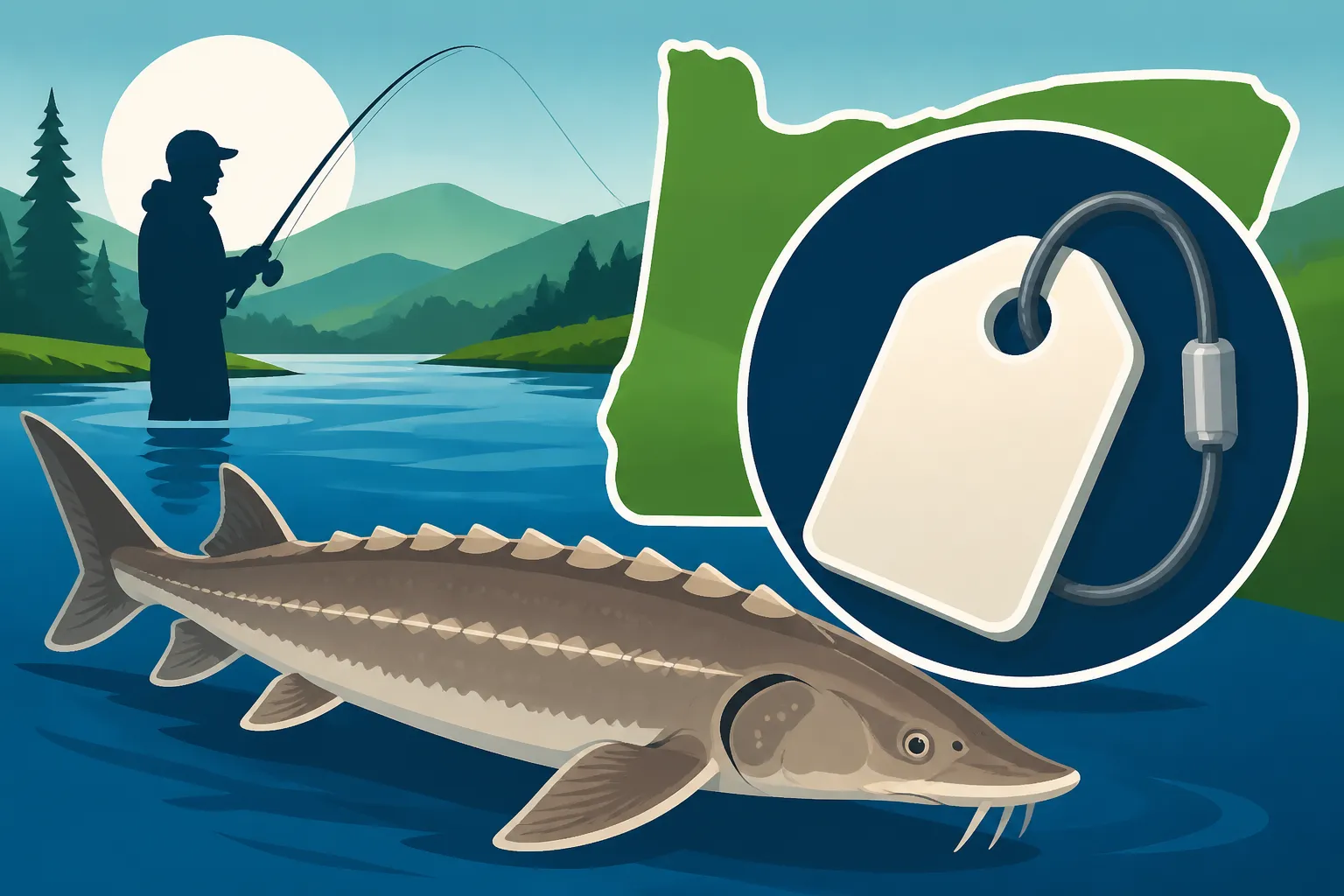
An Oregon sturgeon tag isn't a standalone license; it's typically an endorsement or a separate tag that you purchase in addition to your standard Oregon Annual Angling License. It often comes in the form of a physical card or a section within a larger combined angling tag, much like what you'd see for salmon and steelhead. When you purchase it, you'll receive a unique tag number. The critical part of this tag is its "punch-out" or "validation" system. As soon as you decide to retain a legal-sized sturgeon, you are required to immediately punch or mark your tag to indicate the catch. This act effectively "uses up" one of your allowed sturgeon retentions for the year, and it's how ODFW tracks individual harvests.
The tag also usually includes a space for you to record crucial information about your catch, such as the date, location (river or bay), and the length of the sturgeon. This immediate, on-the-spot recording is vital. It's not something you do when you get home; it's part of the process of legally taking the fish. Keep in mind that specific tag designs and requirements can change, so always refer to the latest Oregon Fishing Regulations Explained before you head out. These details are paramount for compliance.
Species Covered by the Tag
While Oregon has a few species of sturgeon, the primary focus of the recreational fishery and thus the sturgeon tag is the White Sturgeon. These are the giants we all dream of catching, and they are the species managed for retention in specific areas and during specific seasons. It's important to note that Green Sturgeon, another species found in Oregon waters, are federally protected and are strictly catch-and-release only. There is absolutely no retention allowed for Green Sturgeon, and they are not covered by any recreational tag for keeping.
Therefore, when you purchase an Oregon sturgeon tag, you are specifically acquiring the right to retain a legal-sized White Sturgeon, subject to all other prevailing regulations such as open seasons, specific waterbody rules, and slot limits. Fishing for sturgeon without the correct tag, even if you intend to release them, can lead to serious fines if you are found to be targeting retention-size fish in a retention area without the proper documentation. Always confirm the species before considering retention, and if you're ever unsure, the safest bet is always to release the fish unharmed.
Age Requirements and Exemptions
The question of age requirements for fishing licenses and tags often pops up, especially when planning a family outing. In Oregon, generally, anyone 12 years of age or older needs to possess a valid fishing license. This rule typically extends to all required tags and endorsements, including the sturgeon tag, if they intend to participate in the retention of a sturgeon. So, if your 14-year-old is hoping to keep that legal sturgeon, they'll need their own Oregon Youth Fishing License and the appropriate sturgeon tag.
However, there are a few nuances. Children under 12 typically do not need a license or tag to fish in Oregon. If a child under 12 catches a sturgeon and it's retained, it generally falls under the adult's bag limit and requires the adult's sturgeon tag to be validated. It’s a good idea to clarify this detail directly with ODFW if you're planning a trip with very young anglers. Furthermore, there might be specific exemptions for certain groups, such as those participating in Oregon's annual Oregon Free Fishing Days, where license and tag requirements are waived for a limited period. Always double-check the current regulations for any specific age-related exemptions or unique circumstances, as they can sometimes change year to year.
How and Where to Acquire Your Sturgeon Tag
Getting your sturgeon tag is a straightforward process, but it's one you absolutely cannot overlook. Many anglers plan their entire trip, get all their gear ready (maybe even ordered some new bait hooks from Amazon!), only to realize they've forgotten this crucial piece of paperwork. Don't be that angler! Securing your tag ahead of time ensures a smooth, legal, and stress-free fishing experience.
Purchasing Your Tag Online
In this digital age, purchasing your Oregon fishing license and associated tags online is probably the easiest and most convenient method. The ODFW licensing system is robust and allows you to buy everything you need from the comfort of your home, even late at night if you suddenly decide on a last-minute trip. When you visit the official ODFW licensing portal, you'll first need to purchase your general angling license, and then you can add specific tags and endorsements, including the sturgeon tag.
The process is usually intuitive: you create an account, select the licenses and tags you need, enter your payment information, and you're good to go. After successful purchase, you'll typically receive a temporary permit via email that you can print out or store on your mobile device as immediate proof of purchase. The physical tag, if required, might be mailed to you later, but having the digital proof is usually sufficient for immediate fishing. This method is incredibly helpful for planning, as you can sort out all your Oregon Fishing License Costs and tags well in advance. Just make sure your printer is working or your phone is charged!
In-Person Purchase Options
For those who prefer a more traditional approach, or who find themselves needing a tag on the fly, there are plenty of brick-and-mortar locations where you can purchase your Oregon sturgeon tag. These include ODFW offices, various sporting goods stores, and even some local tackle shops and general stores throughout the state. Places like Bi-Mart, Fred Meyer, and even some independent tackle shops often serve as licensed vendors for ODFW.
When purchasing in person, you'll generally need a valid form of identification, such as a driver's license. The staff at these locations are usually very knowledgeable and can often help you navigate the different license and tag options, ensuring you get exactly what you need for your planned fishing adventure. It’s always a good idea to call ahead to confirm their hours and that they process ODFW licenses, especially if you're heading to a smaller, more remote location. This option is great for getting direct answers to any questions you might have about Where to Buy an Oregon Fishing License or specific regulations.
The Importance of Timely Acquisition
Procrastination can be an angler's worst enemy when it comes to licenses and tags. While you can often buy your sturgeon tag last minute, waiting until the very moment you're about to hit the water can lead to unnecessary stress and potential complications. Imagine driving all the way to your favorite sturgeon spot on the Columbia River, only to realize the local tackle shop is closed, or the online system is having a momentary hiccup. You might be forced to either fish catch-and-release only, or worse, pack up and go home without wetting a line.
It's far better to acquire your sturgeon tag days, or even weeks, before your planned trip. This gives you peace of mind, ensures you have the physical tag if needed, and allows you to thoroughly review all the associated regulations, like specific Oregon Sturgeon Retention Season Timing or slot limits. Having everything squared away means you can focus on the fishing itself, rather than worrying about paperwork. Plus, some tags, like the Oregon Combined Angling Tag Guide, cover multiple species, so getting it early ensures you're set for whatever bites.
Filling Out and Validating Your Sturgeon Tag
Acquiring your sturgeon tag is only half the battle; knowing how to properly fill it out and validate it is just as critical. This is where many anglers, even seasoned ones, can sometimes make honest mistakes that could lead to penalties. The ODFW relies heavily on the accuracy of your tag information for their conservation efforts, so it's a step that demands attention and precision.
Immediate Tagging Requirements
This is probably the most crucial rule for any angler planning to retain a sturgeon: your tag must be immediately validated upon retaining the fish. "Immediately" means as soon as the fish is brought ashore or into your boat and you decide to keep it. It does not mean after you've taken photos, after you've cleaned the fish, or after you've returned to the boat ramp. The moment you make the decision to keep that legal-sized sturgeon, you must permanently mark your tag.
For most Oregon sturgeon tags, this involves punching out the correct month and day from a series of dates printed on the tag. If your tag is a paper version, it might mean physically writing in the date and time. This act of validation is irreversible and signifies that you have used one of your annual sturgeon retentions. Failing to immediately tag your catch is a violation, equivalent to fishing without a valid tag, and can result in significant fines and penalties. It's a key component of the Oregon Catch Record Card Requirements for all anadromous species.
Understanding Catch Reporting
Beyond the immediate validation, ODFW also requires anglers to report their sturgeon catches. This reporting often happens at the end of the year, or upon request, and is crucial for providing the department with comprehensive data on total harvest numbers. While the immediate tag validation tracks individual fish, the broader catch reporting (often linked to your combined angling tag or a specific catch record card) provides the aggregate data needed for annual stock assessments.
The instructions for annual catch reporting are usually detailed on your license document or the ODFW website. It typically involves entering the tag number, date, location, and size of the retained sturgeon into an online system. This aggregate data helps ODFW understand the overall health of the sturgeon population across the state, identify any emerging trends, and adjust future regulations. Think of it as your contribution to science and conservation. Neglecting to submit this report, even if you didn't catch anything, can lead to penalties, including being charged an additional fee when purchasing your license for the following year. It’s part of your responsibility as a licensed angler.
Consequences of Improper Tagging
The consequences of improper tagging or failing to tag a retained sturgeon are serious. If a game warden or ODFW official finds you in possession of a retained sturgeon that is not immediately and correctly tagged, you could face significant legal repercussions. This isn't just a minor infraction; it's considered a violation of fishing regulations and can be treated as if you were Fishing Without a License Penalties in Oregon.
Penalties typically include substantial fines, confiscation of your gear (including your rod, reel, and even your boat in some severe cases), and the loss of your fishing privileges for a period. The exact fine amount can vary depending on the severity of the violation and whether it's a repeat offense. For instance, being caught with an untagged sturgeon could result in hundreds, or even thousands, of dollars in fines, not to mention court costs. It's simply not worth the risk. Always take the extra few seconds to properly validate your tag and ensure all required information is accurately recorded. If in doubt, review the Oregon Fishing Violations and Penalties section of the ODFW regulations.
Sturgeon Retention Seasons and Limits
Fishing for sturgeon in Oregon is a bucket-list experience for many, offering the chance to battle truly ancient and powerful fish. However, this opportunity comes with very specific rules about when and where you can retain them, and what size they need to be. These rules are constantly updated to protect the species, so staying informed is paramount. You might even want to set a reminder on your phone to check for updates, or look for specific regulation summaries on reputable sites, perhaps even those linked from a fishing forum found via Amazon.
Columbia River Sturgeon Regulations
The mighty Columbia River is arguably the most famous sturgeon fishing destination in Oregon, and as such, it has some of the most complex and strictly enforced regulations. Due to the shared nature of the river between Oregon and Washington, sturgeon management is a joint effort between ODFW and WDFW (Washington Department of Fish and Wildlife), often resulting in reciprocal rules for anglers on both sides. This means that if you're fishing on the Columbia, whether from the Oregon or Washington side, you generally need to abide by the same set of retention rules, and a valid Oregon license and sturgeon tag would typically cover you on the Oregon side, and often reciprocally on the Washington side within the mainstem Columbia. You can read more about Oregon and Washington License Reciprocity on the Columbia to understand these nuances.
Sturgeon retention on the Columbia is typically dictated by specific seasons and quota-based fisheries, meaning they can open and close quite suddenly. The season is usually announced well in advance, but it can close early if the quota is met. These fisheries are often limited to specific zones and often target specific areas like the Bonneville Pool. The slot limit – the minimum and maximum size a sturgeon can be to be legally retained – is also very precise and varies by year and zone. For example, in recent years, the slot limit for White Sturgeon in the mainstem Columbia (excluding specific areas) has often been within the 44-inch to 50-inch fork length range. It's crucial to check the ODFW website or the annual regulations booklet for the exact dates, zones, and slot limits for the current year.
Willamette River and Other Inland Waters
While the Columbia gets most of the sturgeon spotlight, the Willamette River and some other inland waters also hold populations of White Sturgeon. However, the regulations here are often even more conservative. For instance, the Willamette River, particularly around Portland, has historically been a popular spot for sturgeon, but retention opportunities are significantly more limited, often being catch-and-release only for White Sturgeon for much of the year, especially for larger specimens.
When retention is allowed in specific inland waters, it typically comes with very strict slot limits and annual bag limits, which might be even lower than those on the Columbia. It's common to see a statewide annual limit on How many sturgeon can you keep per year in Oregon regardless of where they are caught, often one or two fish. Always assume catch-and-release unless the regulations explicitly state otherwise for the specific section of river or lake you are fishing. ODFW will often outline these rules clearly in their annual regulations booklet, which you can usually find online or pick up at a local sporting goods store. Pay close attention to the specific "zones" and "areas" mentioned in the regulations, as rules can change dramatically from one section of a river to another.
Specific Size and Bag Limits
The concept of "slot limit" is paramount when it comes to sturgeon. A slot limit means you can only keep fish that fall within a very specific size range – not too small, and not too big. This strategy is a crucial conservation tool, as it protects both the juvenile fish (allowing them to grow and mature) and the large, reproductively valuable broodstock (which are vital for future generations). For White Sturgeon in Oregon, the slot limits are measured by "fork length" – from the tip of the nose to the fork in the tail. This is different from "total length" and requires careful measurement.
As discussed, these slot limits are dynamic and can change annually, or even within a season, based on ODFW's population assessments and harvest quotas. In recent years, a typical retention slot limit for White Sturgeon might be, for example, 38 to 54 inches fork length in some specific areas outside the Columbia, while the Columbia might have a tighter 44 to 50-inch slot. Anglers must carry a reliable measuring device and accurately measure their catch before deciding to retain it. If a sturgeon is outside the legal slot, it must be immediately released unharmed. The daily bag limit is typically one sturgeon per day when retention is allowed, and as mentioned, there's usually an annual limit as well. Always refer to the most current ODFW Sport Fishing Regulations for the exact Columbia River Sturgeon Slot Limit Explained and statewide limits for the year.
| Sturgeon Species | Tag Required for Retention? | Typical Retention Status | Annual Bag Limit (Example) | Key Notes |
|---|---|---|---|---|
| White Sturgeon | Yes (with angling license) | Highly Regulated (Season & Slot) | 1-2 fish per year | Primary recreational target. Strict slot limits and season dates vary by waterbody. |
| Green Sturgeon | No (not allowed) | Catch-and-Release Only | 0 | Federally protected. Illegal to retain. |
Note: This table provides general examples. Always consult the current Oregon Sport Fishing Regulations for the most accurate and up-to-date information regarding specific seasons, slot limits, and bag limits, as they are subject to change.
Avoiding Common Sturgeon Tag Mistakes
Even with the best intentions, it's easy to trip up on regulations, especially with something as specific as sturgeon tags. Many anglers, new and experienced alike, fall prey to common pitfalls that can quickly turn a fun day on the water into a frustrating encounter with law enforcement. Let's talk about how to sidestep these common mistakes and keep your fishing trips enjoyable and compliant.
Double-Checking Regulations
This might sound like a broken record, but it bears repeating: regulations change! What was true last year, or even last month, might not be true today. This is especially pertinent for sturgeon, where seasons can be short, slot limits can shift, and quotas can be met, leading to sudden closures. The biggest mistake you can make is relying on outdated information or hearsay from a buddy.
Before every sturgeon fishing trip, take a few minutes to double-check the current ODFW regulations. The official ODFW website is your best friend here. Look specifically for emergency closures, season updates, and any changes to slot or bag limits for the particular body of water you plan to fish. You can even download the latest regulation booklet onto your phone or tablet. Many experienced anglers keep a printed copy in their tackle box, perhaps even a durable, waterproof version they found on Amazon, just in case they lose cell service. It's a small investment of time that prevents huge headaches and potential fines. Being informed about Oregon Fishing Season Dates and Limits is key to a successful and legal outing.
Keeping Your Tag Safe and Accessible
Once you've purchased your sturgeon tag, treat it like gold. It's your legal permission to retain a sturgeon, and without it, or if it's rendered unusable, you're in a tough spot. One common mistake is tucking the tag away in a wallet or tackle box and forgetting about it until it's too late. The tag needs to be accessible and in good condition when you're fishing.
Think about how you'll access it quickly when you hook that trophy sturgeon. Many anglers use a lanyard with a waterproof holder to keep their license and tags readily available around their neck or attached to their vest. This prevents it from getting lost overboard, wet, or damaged. Ensure the tag isn't folded or creased in a way that makes the punch-out sections or information illegible. A damaged or lost tag can be a major inconvenience and might require you to purchase a replacement or, in the worst case, forgo retaining any sturgeon until you get a new one. Remember, you might need to show your Oregon Fishing License Guide and tag to a game warden at any time.
When in Doubt, Ask!
The ODFW regulations can be incredibly detailed and, let's be honest, sometimes a little complex, especially when you factor in specific river sections, zones, and species. If you ever find yourself scratching your head, wondering if you're truly compliant, the absolute best thing you can do is ask for clarification. Making an assumption, even with good intentions, can lead to violations.
Don't hesitate to call your local ODFW office or stop by a ODFW licensing agent. Many tackle shop owners are also incredibly knowledgeable about local regulations and can offer invaluable advice. There are no "stupid questions" when it comes to staying legal. It's far better to make a quick phone call or ask a question before you cast your line than to face a hefty fine later. The ODFW staff are there to help anglers understand and comply with the rules, so take advantage of their expertise. This proactive approach ensures you're always fishing within the spirit of conservation and legality.
Disclaimer
Please remember that fishing regulations, including those for sturgeon tags, seasons, and limits in Oregon, are subject to change frequently. While this guide provides comprehensive and accurate information based on general ODFW guidelines, it is not a substitute for the official Oregon Department of Fish and Wildlife Sport Fishing Regulations. Always consult the current year's ODFW regulations booklet or their official website before any fishing trip to ensure you have the most up-to-date and specific information for your intended fishing location and species. Ignorance of the regulations is not a defense against violations.