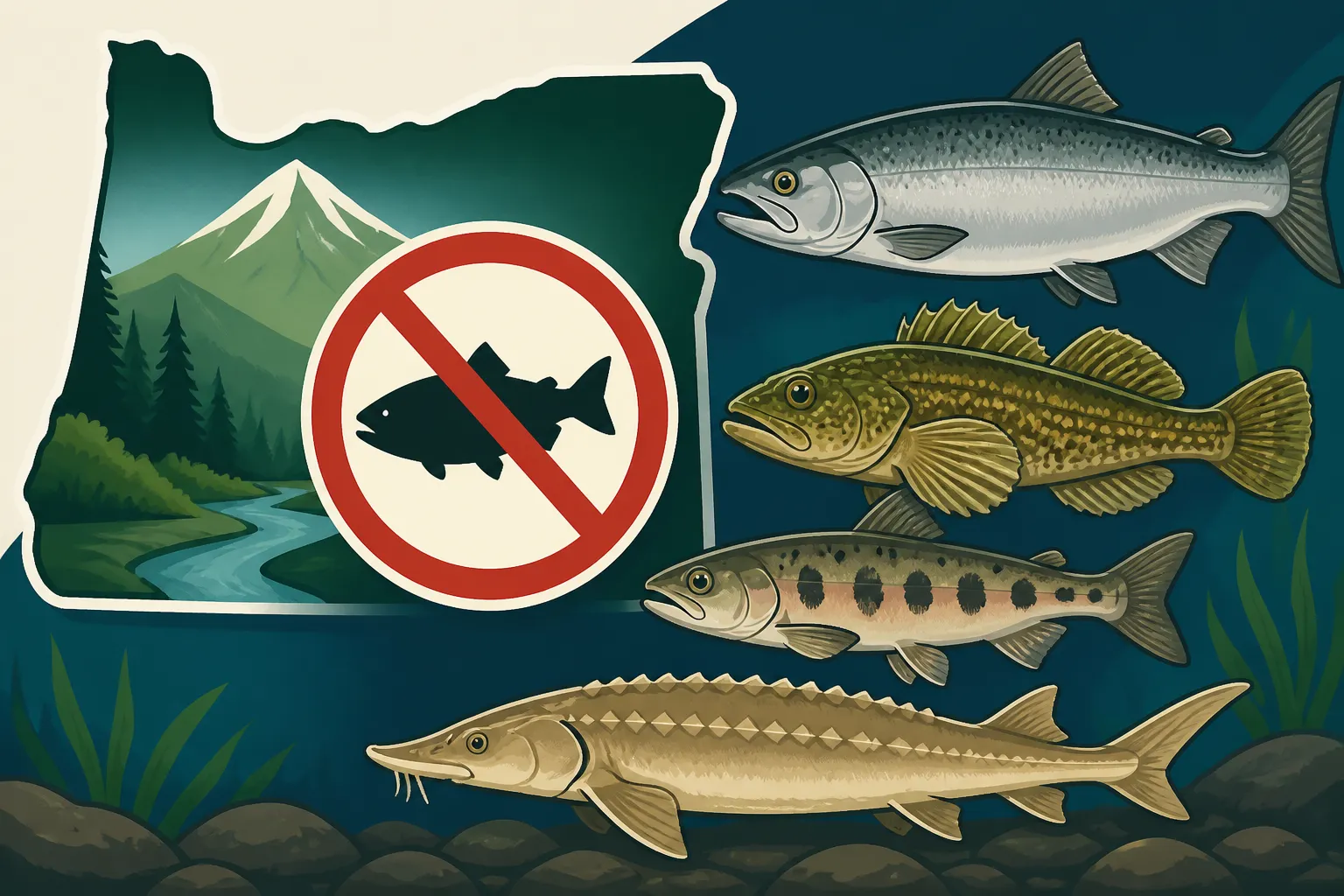
Which Oregon fish are on the endangered species list
There’s a unique feeling that comes with fishing in Oregon, isn't there? The crisp air, the rush of a river, the vastness of the ocean – it's an incredible experience that connects us to nature. But as passionate anglers, it's our responsibility to understand the delicate balance of these ecosystems, especially when it comes to the fish species that are struggling to survive. Many folks wonder about which fish in our beloved state are facing serious threats, often feeling a mix of concern and confusion about the rules. This guide will help you understand Oregon's endangered and threatened fish, why they're in trouble, and what every angler can do to help protect them for generations to come.
Understanding Oregon's Endangered Fish Landscape
It can be heartbreaking to hear that some of our cherished fish species are in danger, especially when we spend so much time enjoying their natural habitats. The reality is, many factors contribute to fish populations declining, and it’s a complex web of environmental, historical, and human impacts. Understanding this bigger picture helps us appreciate the regulations and the importance of responsible angling.
Why Fish Populations Face Such Challenges
Imagine a salmon navigating thousands of miles, only to find its spawning grounds blocked by a dam or its pristine stream now muddied by runoff. This isn't just a hypothetical scenario; it's the lived reality for many fish in Oregon.
- Habitat Loss and Degradation: This is arguably the biggest culprit. When we build roads, clear forests, construct dams for hydropower or irrigation, or expand urban areas, we often destroy or alter the critical spawning grounds, rearing habitats, and migratory pathways that fish need to survive. Agricultural runoff can introduce harmful chemicals and sediment, making waters unsuitable. Dams, in particular, fragment rivers, making it incredibly difficult for migratory fish like salmon and steelhead to complete their life cycles.
- Climate Change: The warming planet isn't just about hotter summers; it's about profound changes to aquatic environments. Rising water temperatures can stress cold-water species, reduce oxygen levels, and alter spawning cycles. Changes in precipitation patterns lead to extreme floods or droughts, impacting river flows and water quality. Ocean acidification also affects the marine food web, disrupting the food sources for anadromous fish when they return to the sea.
- Invasive Species: Sometimes, a new species introduced to a waterway, either accidentally or intentionally, can wreak havoc. These invaders might outcompete native fish for food, prey directly on their eggs or juveniles, or introduce diseases to which native populations have no immunity. This competition can push already vulnerable populations closer to the brink.
- Historical Overfishing: While regulations are much stricter today, historical overfishing, particularly in the early to mid-20th century, significantly depleted many fish stocks, especially salmon and steelhead. Even with modern management, some populations are still struggling to recover from those past pressures.
- Pollution: From industrial waste to everyday litter, pollution takes a heavy toll. Chemical pollutants can directly poison fish, impair their reproduction, or disrupt their hormones. Microplastics are now found throughout aquatic systems, and their long-term effects on fish are still being studied, but they certainly aren't beneficial.
The Different Levels of Protection
When we talk about "endangered," it's not a single, monolithic term. There are different classifications and levels of protection, both at the federal and state levels, that guide how these species are managed and how we, as anglers, interact with them.
- Federal Endangered Species Act (ESA): This powerful law identifies species as either "Endangered" (meaning they are in danger of extinction throughout all or a significant portion of their range) or "Threatened" (meaning they are likely to become endangered in the foreseeable future). Being listed under the ESA brings significant protections, including prohibitions on harming, taking, or possessing the species, and requirements for federal agencies to ensure their actions don't jeopardize the species or destroy their critical habitat. Many iconic Oregon fish, particularly salmon and steelhead, are listed under the ESA.
- Oregon's State Endangered Species Act: Oregon has its own state-level law that provides protection for species found within the state's borders, often mirroring federal classifications or adding state-specific protections for species that might not be federally listed but are still highly vulnerable in Oregon. The Oregon Department of Fish and Wildlife (ODFW) manages these lists and implements state recovery plans.
- Sensitive Species Lists: Beyond "Endangered" and "Threatened," both federal and state agencies maintain lists of "Sensitive Species" or "Species of Concern." These are species whose populations are declining or that face significant threats, but haven't yet reached the threshold for a full endangered or threatened listing. This early warning system allows for proactive conservation efforts, hoping to prevent them from ever needing the full protection of the ESA.
It's crucial to remember that these lists aren't just academic; they translate directly into fishing regulations. Knowing which species are protected helps us understand why certain areas might have strict Oregon Fishing Regulations Explained, specific seasons, or mandatory catch-and-release rules.
Key Endangered and Threatened Fish Species in Oregon
Oregon is blessed with incredible aquatic diversity, but many of our native fish are fighting for survival. These are some of the species that frequently appear on federal and state lists, requiring special attention and protection. It's a sobering thought, but understanding their plight is the first step toward becoming a better steward of our waters.
Iconic Salmon and Steelhead Under Pressure
When most people think of Oregon fishing, salmon and steelhead immediately come to mind. These magnificent anadromous fish, which spend part of their lives in freshwater and part in the ocean, are integral to Oregon's identity and ecology. Unfortunately, many of their populations are in dire straits.
- Chinook Salmon (Oncorhynchus tshawytscha): Known for their impressive size and fighting spirit, many distinct population segments (DPS) of Chinook salmon in Oregon are listed as threatened or endangered under the federal ESA. This includes certain runs of spring Chinook in the Columbia River Basin and some coastal rivers, as well as specific populations in the Snake River. Their epic journey from the ocean to their natal streams to spawn is a marvel, but this journey is fraught with peril. Dams impede passage, altered river flows disorient them, and degraded spawning gravels make successful reproduction challenging. Understanding their status helps explain why there are strict harvest limits and why anglers are often asked to release wild Chinook, particularly during vulnerable spawning runs. If you've ever asked Why are wild salmon endangered in Oregon?, the answer lies in this combination of habitat loss, climate change, and historical impacts.
- Coho Salmon (Oncorhynchus kisutch): While perhaps not as large as Chinook, Coho salmon are incredibly acrobatic and prized by anglers. Similar to Chinook, specific populations of Coho, particularly those on the Oregon coast, are listed as threatened under the ESA. These coastal Coho rely on healthy estuaries and productive freshwater streams for their entire life cycle. Habitat complexity, like fallen trees and deep pools, is crucial for their juvenile rearing. When these habitats are lost or simplified due to human activities, Coho populations suffer immensely.
- Steelhead (Oncorhynchus mykiss): Steelhead are essentially sea-run rainbow trout, famous for their incredible strength and beauty. Many DPS of steelhead, especially those in the Columbia River Basin, Snake River, and some coastal rivers, are listed as threatened or endangered. The distinction between wild steelhead and hatchery steelhead is absolutely critical in Oregon, as wild populations are the ones typically protected. Hatchery fish are often marked with a clipped adipose fin (the small, fleshy fin between the dorsal and tail fins), making them distinguishable from wild fish. This is why it's so important to know How to tell a wild steelhead from a hatchery steelhead before you cast a line, as keeping a wild steelhead is often illegal and carries significant penalties. You'll often find regulations emphasizing Oregon Catch-and-Release Rules for these precious wild fish.
Other Aquatic Species in Peril
While salmon and steelhead often grab the headlines, many other native Oregon fish species are also facing serious threats, playing vital roles in their respective ecosystems.
- Bull Trout (Salvelinus confluentus): These magnificent, native char are perhaps one of the most temperature-sensitive fish in Oregon. Bull trout require pristine, cold, clear water to survive and thrive, often found in the higher elevations of the Cascade and Blue Mountains. They are federally listed as threatened across their range, including in Oregon. Their populations have been severely impacted by habitat degradation, blockages to migration, and competition with non-native species like brook trout. Anglers must be incredibly vigilant when fishing in bull trout habitat. It’s absolutely essential to know Why are bull trout protected in Oregon and understand that in many areas, specific regulations apply, often prohibiting harvest entirely. If you're wondering Can you legally catch bull trout in Oregon?, the answer is almost universally "no," and if you accidentally hook one, immediate and careful release is paramount.
- Klamath River Lamprey and Pacific Lamprey (Lampetra tridentata and Entosphenus tridentatus): These ancient, eel-like fish might not be charismatic in the traditional sense, but they are incredibly important ecologically and culturally, particularly to indigenous tribes in Oregon. Lamprey are anadromous, and their populations have suffered drastically due to dams blocking their passage, poor water quality, and habitat destruction. They play a crucial role in nutrient cycling and are a food source for many other species.
- Lost River Sucker (Deltistes luxatus) and Shortnose Sucker (Chasmistes brevirostris): These two sucker species are endemic to the Klamath Basin in Southern Oregon and Northern California. Both are federally listed as endangered. Their populations have plummeted due to massive changes in the Klamath Basin's hydrology, including water diversions for agriculture, habitat loss, and degradation of lake and wetland environments. They are a critical part of the aquatic food web and their decline signals deeper ecological problems in the basin.
- Oregon Chub (Oregonichthys crameri): This small, unassuming minnow is actually a conservation success story! Once federally listed as endangered, through dedicated habitat restoration and reintroduction efforts, its status was improved to threatened, and then famously delisted from the ESA in 2015, becoming the first fish to be fully recovered and delisted in the contiguous United States. Oregon chub depend on undisturbed, slow-moving backwater habitats in the Willamette River floodplains. While delisted from the federal ESA, it's still considered a sensitive species at the state level, reminding us that continuous conservation is needed even for recovered species.
| Species | Federal ESA Status | Key Threats | Angler Implications |
|---|---|---|---|
| Chinook Salmon (some DPS) | Threatened/Endangered | Habitat loss (dams), climate change, water quality | Strict bag limits, mandatory wild fish release in many areas. |
| Coho Salmon (some DPS) | Threatened | Habitat degradation, estuary health, logging impacts | Specific seasons and bag limits for hatchery fish. |
| Steelhead (some DPS) | Threatened | Dams, habitat loss, temperature, interaction with hatchery fish | Mandatory release of wild (unclipped) steelhead. |
| Bull Trout | Threatened | Coldwater habitat loss, non-native competition, temperature sensitivity | Catch-and-release only, often prohibited entirely. |
| Lost River Sucker | Endangered | Water diversions, habitat loss in Klamath Basin | No directed fishing, incidental catch rare. |
| Shortnose Sucker | Endangered | Water diversions, habitat loss in Klamath Basin | No directed fishing, incidental catch rare. |
| Klamath River Lamprey | Endangered | Passage barriers, water quality, habitat degradation | No directed fishing, incidental catch rare. |
| Pacific Lamprey | Sensitive (State) | Passage barriers, water quality, habitat degradation | No directed fishing, incidental catch rare. |
| Oregon Chub | Recovered (delisted) | Habitat loss (wetlands), non-native species (state sensitive) | No directed fishing, small size makes incidental catch unlikely. |
Note: The status of Distinct Population Segments (DPS) can vary, so always check current regulations for specific river systems.
Conservation Efforts and How Anglers Can Help
It's easy to feel overwhelmed by the sheer scale of the challenges facing our endangered fish, but there's good news: a tremendous amount of work is being done, and anglers are an essential part of the solution. Every single one of us who enjoys Oregon's fisheries has a role to play in their protection and recovery.
The Role of Agencies and Regulations
Oregon isn't just letting these fish disappear. Dedicated professionals at various agencies are working tirelessly on complex, long-term conservation strategies.
- Oregon Department of Fish and Wildlife (ODFW) and NOAA Fisheries: These are the primary agencies responsible for managing and protecting fish populations in Oregon. ODFW oversees state-listed species and implements fishing regulations, while NOAA Fisheries takes the lead on federally listed marine and anadromous species like salmon and steelhead. They conduct research, monitor populations, and develop recovery plans.
- Habitat Restoration Projects: A huge focus is on fixing the damage done. This includes removing old, obsolete dams (when feasible), restoring riparian (riverside) habitats by planting native vegetation to provide shade and stabilize banks, and improving fish passage around remaining barriers. These efforts directly benefit species by giving them back the homes they've lost.
- Strict Fishing Regulations: This is where anglers often feel the direct impact. Regulations like specific seasons, daily bag limits, size restrictions, and gear restrictions (e.g., barbless hooks, bait bans in certain areas) are all designed to protect vulnerable fish populations, especially during sensitive times like spawning runs. You can find comprehensive details in the Oregon Fishing Regulations Explained booklet, which is your go-to resource. These rules aren't meant to frustrate us; they're essential tools for conservation.
- Hatchery Programs: The role of hatcheries is complex and often debated. While hatcheries can supplement fish populations for harvest and sometimes aid in recovery efforts, they also pose risks, such as genetic dilution and competition with wild fish. Understanding Difference between hatchery and wild fish in Oregon is vital, as wild fish often have greater genetic diversity and adaptation to local environments. Agencies are continually working to improve hatchery practices to minimize negative impacts on wild stocks.
- Conservation Funding: Your fishing license fees and dedicated conservation stamps directly contribute to these efforts. When you purchase an Oregon Fishing License Guide or specific tags like a Oregon Combined Angling Tag Guide, you're investing in the future of Oregon's fish.
Ethical Angling and Personal Responsibility
Beyond agency efforts, our individual actions on the water make a profound difference. Being a responsible and ethical angler is one of the most powerful contributions you can make.
- Know Before You Go: Never assume; always check the current regulations for the specific body of water you plan to fish. Seasons, limits, and gear restrictions can change rapidly, sometimes even mid-season due to emergency closures. The online regulation summaries and the physical Where to find the Oregon fishing regulations booklet are indispensable. It’s like studying for a test – you wouldn’t want to fail and harm a protected species.
- Catch-and-Release Best Practices: If you're targeting fish where protected species might be present, or if you practice catch-and-release by choice, proper technique is paramount.
- Minimize Fight Time: Bring the fish in quickly to reduce stress.
- Keep Fish in Water: Avoid removing the fish from the water entirely, especially for photos. A quick snapshot with the fish partially submerged is better.
- Wet Hands: Always wet your hands before touching a fish to protect its slime coat, which is vital for its immune system.
- Barbless Hooks: Using barbless hooks (or crimping barbs) makes hook removal much easier and reduces injury. Many regulations now mandate barbless hooks in certain areas, particularly for steelhead and salmon.
- Proper Hook Removal: Use needle-nose pliers or hemostats to quickly remove the hook. If the hook is deeply swallowed, cut the line as close to the hook as possible; don't try to rip it out.
- Resuscitation: If a fish seems sluggish, hold it gently in the water, facing upstream, allowing water to flow over its gills until it swims away strongly on its own.
You can find excellent resources on proper catch-and-release techniques and specific tools like knotless nets (which reduce scale and fin damage) on retailers like Amazon.
- Reporting Violations: If you witness illegal fishing activities, such as someone keeping a protected species or exceeding bag limits, report it to ODFW. Your vigilance can prevent harm to vulnerable populations.
- Support Conservation Organizations: Consider joining or donating to local and national organizations dedicated to fisheries conservation. Their work often complements government efforts and can provide crucial funding and volunteer power for habitat projects.
- Reduce Your Environmental Footprint: Think beyond just fishing. Support sustainable practices, properly dispose of waste, and advocate for clean water and healthy habitats in your community.
- Buy Smart: When purchasing fishing gear, consider products that promote conservation. For instance, specific types of nets, release tools, or even educational books on fish identification (many available on Amazon) contribute to responsible angling.
Distinguishing Protected Species While Fishing
One of the biggest anxieties for many anglers is the fear of accidentally catching, and worse, harming a protected fish. It’s a completely valid concern, and thankfully, there are concrete ways to help you identify what you’ve hooked. The goal is to be confident in distinguishing a legal, harvestable fish from one that needs to be released immediately and unharmed.
Visual Cues for Identification
Knowing the subtle (and sometimes not-so-subtle) differences between species, and even between wild and hatchery individuals of the same species, is paramount.
- Fin Clips: The Most Common Indicator for Hatchery Fish: This is perhaps the single most important visual cue for salmon and steelhead. Hatchery-raised salmon and steelhead are often marked with a clipped adipose fin. The adipose fin is that small, fleshy fin on the back, between the dorsal fin and the tail. If it’s gone – cleanly clipped off – you’ve almost certainly got a hatchery fish. How can you tell a hatchery fish by its fin? This practice is widespread, and it’s done precisely so anglers and managers can easily differentiate them from wild fish, which retain their adipose fins. This helps protect the wild genetic stock, as wild fish are typically the ones on endangered or threatened lists and require immediate release. Why are hatchery fish fin-clipped in Oregon? It allows for recreational harvest opportunities while protecting the fragile wild populations. However, be aware that not all hatchery fish are clipped, and sometimes a wild fish might have a naturally damaged fin, so when in doubt, it’s always best to release.
- Physical Characteristics: Subtle Differences: Beyond fin clips, other visual cues can help.
- Coloration and Pattern: Wild fish often have more vibrant, natural coloration, while hatchery fish might appear duller or have worn fins from tank rearing. For instance, bull trout are uniquely identified by their light spots on a darker body, often with white leading edges on their fins, and lack the black spots typical of rainbow trout. Always look for these specific characteristics to correctly identify a bull trout, as they are almost universally catch-and-release only.
- Fin Shape and Condition: Wild fish generally have perfect, unfrayed fins, whereas hatchery fish might show some wear or minor deformities from their time in crowded hatchery ponds.
- Mouth and Head Shape: Sometimes, subtle differences in jaw length or head profile can help distinguish between similar species. For example, knowing the difference between a spring and fall Chinook can sometimes come down to subtle differences in body shape and coloration as they approach spawning.
- Location and Timing: Your geographic location and the time of year are also crucial pieces of the identification puzzle. Knowing which species are expected in certain river systems or ocean zones, and during what seasons, can narrow down the possibilities. For instance, if you're fishing in a known bull trout stream, every fish that looks remotely like a char should be treated as a bull trout and released. Similarly, understanding Oregon Fishing Zones Explained can help you anticipate which protected species might be present. Always have a copy of the current regulations, perhaps even a specific fish identification guide found on Amazon, right there with you.
What to Do if You Catch a Protected Fish
Accidentally hooking a protected fish is a moment every responsible angler experiences. What you do in those crucial seconds can determine the fish's survival.
- Immediate and Gentle Release: This is the golden rule. As soon as you realize you've caught a protected species (or if you're uncertain), release it without delay.
- Keep it Wet: Do everything you can to keep the fish in the water. If you must remove it, do so for only a second or two, just enough to unhook, then immediately return it.
- No Photos (Out of Water): While a trophy shot is tempting, removing a protected fish from the water, even for a quick photo, can be incredibly stressful and potentially lethal. The oxygen deprivation and handling stress can be too much.
- Handle with Care: Support the fish horizontally, never by the jaw or gills alone. Wet your hands thoroughly before touching the fish to protect its vital slime coat.
- Quick Hook Removal: Use pliers or hemostats to quickly remove the hook. If the hook is deeply embedded and removal would cause more trauma, cut the line as close to the hook as possible. The hook will often corrode away.
- Understanding Legal Implications: Retaining a federally or state-protected fish is a serious offense. Penalties for Fishing Without a License Penalties in Oregon are steep, and illegally keeping a protected species can result in even more severe fines, loss of fishing privileges, and even jail time. It's simply not worth the risk, or the harm to the fish.
- Using Resources for Quick Identification: Keep a waterproof fish identification card or a regional field guide handy. Many excellent guides are available, and you can often find them on Amazon. Familiarize yourself with the appearance of protected species in your target area before you even leave home. When in doubt, always, always let it go. It's better to release a legal fish than to accidentally keep an illegal one.
The future of Oregon's unique and valuable fish populations relies on the dedication and informed actions of anglers like you. By understanding the threats, recognizing protected species, and practicing ethical angling, you become a vital part of the conservation solution.
Disclaimer
This article is for general informational purposes only and does not constitute professional advice. Laws, prices and regulations vary by location and change over time. Consult a qualified professional for guidance on your specific situation.