How to catch and release sturgeon safely
There's nothing quite like the thrill of hooking into a powerful sturgeon here in Oregon. That initial tug, the deep headshakes, and the sheer force these ancient fish possess can make for an unforgettable battle. But with that excitement comes a significant responsibility, especially when most of our sturgeon fishing is catch-and-release. The thought of harming such a magnificent creature through improper handling is a real worry for many anglers. This comprehensive guide is here to walk you through exactly how to catch and release sturgeon safely, ensuring these incredible fish continue to thrive in our waters for generations to come.
Understanding Oregon's Sturgeon and Why Safe Release Matters
Before we even talk about hooks and lines, it’s crucial to understand the fish we’re after and why proper handling isn't just a suggestion, but a vital act of conservation.
The Majestic White Sturgeon of Oregon
Oregon's rivers, particularly the mighty Columbia and the vibrant Willamette, are home to the incredible white sturgeon. These aren't just any fish; they're living dinosaurs, with some specimens living over 100 years and growing to astounding sizes. Imagine a fish that's been swimming our waters since your great-grandparents were kids! Their slow growth rate and late maturity mean that every single fish is precious.
When you're out on the water, you might hear folks talk about "keepers" and "oversize" or "undersize" sturgeon. While there are very limited opportunities for retention in certain areas at certain times, a huge percentage of sturgeon fishing in Oregon is strictly catch-and-release, especially for the larger, reproductively critical fish. We're talking about a species that can reach lengths well over 10 feet and weigh hundreds of pounds. Protecting these behemoths, which are the backbone of the population, is paramount. Learning more about the unique characteristics of the White Sturgeon in Oregon really helps you appreciate the privilege of encountering one. Understanding How long do white sturgeon live also gives you a sense of their incredible journey.
The Importance of Conservation and Regulation
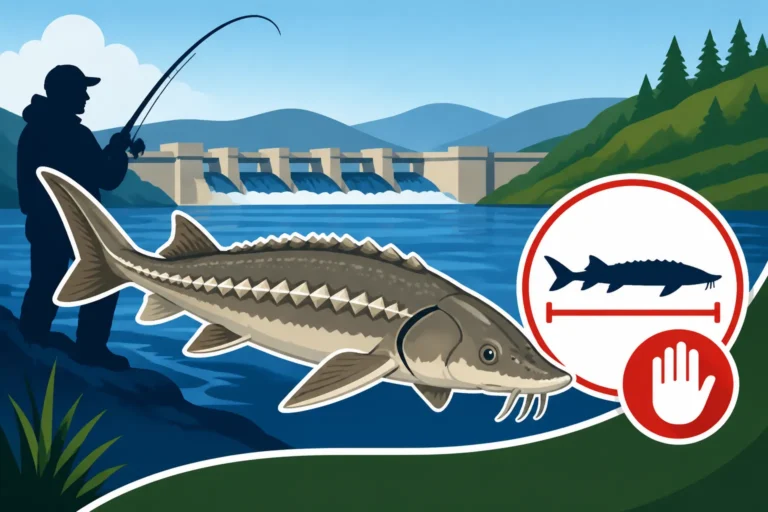
The Oregon Department of Fish and Wildlife (ODFW) has put strict rules in place for sturgeon for a very good reason: to protect these vulnerable populations. These regulations often include specific slot limits, where only fish within a certain size range can be kept (if retention is even open), and anything outside that range must be immediately and safely released. For many areas, it’s entirely catch-and-release, no exceptions. Ignoring these rules or handling fish improperly can not only result in hefty fines and penalties but, more importantly, can cause irreversible harm to an individual fish or even the broader population.
It's not just about avoiding a ticket; it's about being a responsible angler. We owe it to these fish, and to future generations of anglers, to practice the utmost care. You'll find a lot of detailed information about these rules in the Oregon Fishing Regulations Explained, and specifically about size restrictions in the Columbia River sturgeon slot limit explained. It's always a good idea to check the current year's regulations before you head out, as they can change. Also, be aware of specific requirements like the Oregon Sturgeon Tag Requirements, even if you're planning catch-and-release.
Essential Gear and Preparation for Sturgeon Catch and Release
You wouldn't bring a butter knife to a sword fight, and you certainly shouldn't bring light tackle when you're targeting sturgeon. Having the right gear isn't just about catching the fish; it's absolutely critical for fighting them efficiently and ensuring a quick, safe release.
Rods, Reels, and Line Built for Battle
Sturgeon are incredibly powerful, and a prolonged fight can exhaust them to the point of no return after release. This is why having heavy-duty gear is non-negotiable.
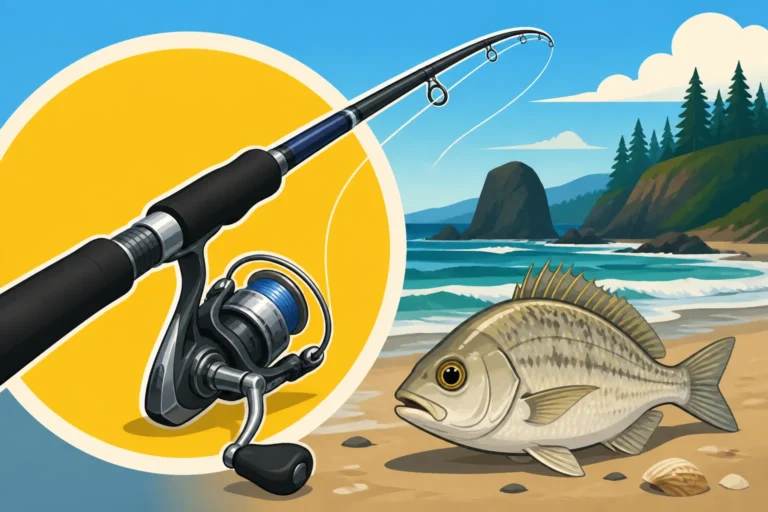
- Rods: Look for stout rods in the medium-heavy to heavy action range, typically 7 to 9 feet long. These rods need a strong backbone to turn a big fish and absorb those powerful runs, but enough tip sensitivity to detect those subtle sturgeon bites. Many anglers favor specialized sturgeon rods, but a good quality saltwater boat rod can also do the trick. Brands like Lamiglas, Fenwick, and Ugly Stik are popular choices, known for their durability.
- Reels: Your reel needs a robust drag system and plenty of line capacity. Large baitcasting reels (like a Penn Squall or an Ambassadeur 7000 series) are popular, as are heavy-duty spinning reels (think Shimano Thunnus or a large Penn Spinfisher). The drag must be smooth and reliable, capable of withstanding the immense pressure a sturgeon can exert. Don't skimp here; a malfunctioning drag can lead to a lost fish or, worse, a fish that's fought to exhaustion.
- Line: Most sturgeon anglers opt for braided line due to its incredible strength and lack of stretch, which helps with hook sets. A good starting point is 50-80 lb test braided line. You'll then tie a heavy monofilament or fluorocarbon leader to the braid – something in the 80-150 lb test range is common. This leader provides abrasion resistance against the sturgeon's rough body and helps absorb shock. For a wide selection of these essential gear items, many anglers find reliable options on Amazon, offering competitive prices and convenience.
Hooks, Bait, and Terminal Tackle
The small details in your terminal tackle can make a huge difference in both your catch rate and, more importantly, the fish's welfare.
- Hooks: This is probably the most critical piece of equipment for safe release. Single, barbless circle hooks are strongly recommended, and often legally required, for sturgeon fishing in many Oregon waters. Circle hooks are designed to hook in the corner of the fish's mouth, minimizing gut hooks. Make sure they are heavy-duty and appropriately sized for the bait and fish you expect (e.g., 6/0 to 9/0). Many responsible anglers will even crimp down the barb on a J-hook if that's all they have, but purpose-made barbless circle hooks are the best choice.
- Bait: Sturgeon are scavengers with a keen sense of smell. Popular baits include squid, sand shrimp, smelt, herring, anchovies, and lamprey. Freshness is key! Make sure your bait is securely presented on the hook. If you’re wondering about the best options, check out specific guides like Best bait for sturgeon fishing on the Columbia.
- Weights: You'll need heavy lead weights to hold your bait on the bottom against strong currents. Depending on the current, this could range from 8 ounces up to 24 ounces or even more. Pyramid weights or flat sinkers are common.
- Swivels and Leaders: Use high-quality, heavy-duty barrel swivels (200 lb test or more) to prevent line twist. The leader material (as mentioned above) should be stout monofilament or fluorocarbon, often 1-3 feet long, connected to your hook. You can find robust pre-tied sturgeon rigs or individual components to build your own on Amazon.
Crucial Handling Tools
Having the right tools at hand before you even hook a fish is key for a quick and stress-free release. These are not optional extras!
- Heavy-Duty Gloves: Sturgeon are covered in bony plates called scutes, which can be sharp, especially on younger fish. Protect your hands with thick, durable gloves.
- Long-Nose Pliers or Jaw Spreaders: These are essential for safely and quickly removing hooks, especially if the hook is deep in the corner of the mouth. Jaw spreaders can help keep the sturgeon's mouth open without you needing to put your hands inside.
- Measuring Device: A flexible measuring tape or a marked boat rail is critical for accurately measuring the fish's length to determine if it falls within a legal slot limit or if it must be released.
- Knotless, Rubberized Landing Net (for smaller fish): For smaller sturgeon, a large, knotless, rubberized landing net can help you temporarily secure the fish without damaging its delicate slime coat or fins. For larger sturgeon, nets are usually impractical, and a careful grab of the leader or a gentle hand on the tail is preferred.
- Heavy-Duty Clippers or Knife: In the rare event a hook is deeply embedded and cannot be removed without causing further harm, you'll need to cut the line as close to the hook as possible. A high-quality pair of clippers can make this quick and clean.
- Camera (Optional, but be quick!): We all love a photo, but prioritize the fish's health over the perfect shot. Have your camera ready and snap a few quick pictures while the fish is still in or very close to the water. Avoid excessive posing.
Here's a quick reference table for your sturgeon handling toolkit:
| Tool | Purpose | Key Feature for Safety |
|---|---|---|
| Heavy-Duty Gloves | Protect hands from scutes, gills, and hooks | Thick, durable material (e.g., leather, synthetic) |
| Long-Nose Pliers | Quick, safe hook removal | Stainless steel, long reach for leverage |
| Jaw Spreaders | Keeping mouth open for deep hook access | Sturdy, spring-loaded to secure mouth |
| Measuring Tape/Stick | Rapid, accurate length assessment for regulations | Clearly marked, waterproof, flexible |
| Knotless Landing Net | Safely secure smaller sturgeon (under ~50 lbs) | Rubberized mesh to protect slime coat and fins |
| Heavy-Duty Clippers | Cutting line for deeply embedded hooks | Sharp, robust blades, rust-resistant |
| Camera | Capturing memories (with minimal delay to the fish) | Waterproof, easily accessible |
The Catch and Release Process: Step-by-Step
Now that you're geared up, let's walk through the actual process of catching and, most importantly, safely releasing a sturgeon. Every moment counts, from the hook set to its swim-off.
Fighting the Fish Effectively
The moment you feel that definitive pull, the game is on. But it's not just about winning; it's about winning quickly and gently.
- Hook Set: With circle hooks, you don't need a massive, sweeping hook set. Instead, when you feel the bite, slowly reel down until the line is tight, and then lift the rod smoothly and firmly to engage the hook. The design of the circle hook will do most of the work, finding the corner of the sturgeon's mouth.
- Minimize Fight Time: This is critical. The longer a sturgeon fights, the more lactic acid builds up in its muscles, making it less likely to recover post-release. Use your heavy-duty rod and reel to apply constant pressure. Pump the rod up and reel down, gaining line whenever possible. Don't let the fish make long, uninhibited runs unless absolutely necessary to prevent a break-off.
- Keep it in the Water: Try to keep the sturgeon submerged as much as possible during the fight. Air exposure adds stress and can damage their delicate gill tissue. If it jumps, let it land naturally.
Landing and Handling the Sturgeon
This is where many well-intentioned anglers make critical mistakes. Always prioritize the fish's health over your desire for a photo or a closer look.
- Boatside or Shallow Water: Once the sturgeon is subdued, guide it alongside your boat or into very shallow water if you're fishing from shore. The goal is to keep as much of its body in the water as possible.
- No Lifting by Tail or Gills: Never, ever lift a large sturgeon by its tail (caudal fin) alone or by its gills. Their internal organs are not designed to support their immense weight out of water in this manner, and it can cause severe, often fatal, internal damage. Small sturgeon (under about 3-4 feet) can be carefully cradled horizontally with two hands or gently netted with a rubberized net.
- Securing the Fish: For larger sturgeon, carefully guide its head onto a soft, wet measuring board or mat if you have one, ensuring the rest of its body remains submerged. If you're on a boat, you might use a lip gripper (often referred to as a Boga grip, which you can purchase on Amazon) to secure its lower jaw, keeping its head stable while you work. If fishing from shore, gently guide the fish to a calm, sandy or muddy bank where it can rest partially submerged without thrashing. Be mindful of Are Oregon sturgeon dangerous to handle?, as their powerful tails can be a hazard.
- No Dragging on Rough Surfaces: Do not drag sturgeon over rocks, gravel, or rough boat decks. This removes their protective slime coat, making them susceptible to disease and infection. If you must move a fish slightly, lift it horizontally with multiple hands or use a wet sling.
Quick Hook Removal and Measurements
Speed and efficiency are your allies here. Every second the fish is out of the water or being handled is an added stressor.
- Immediate Hook Removal: As soon as the fish is secured, grab your long-nose pliers or jaw spreaders and quickly remove the hook. Since you're using a barbless circle hook, it should pop out easily from the corner of the mouth.
- Deeply Embedded Hooks: In the rare case of a deeply embedded hook that cannot be removed quickly and easily, cut the line as close to the hook as possible. Do not try to dig the hook out, as this will cause far more damage than leaving a stainless steel hook to eventually rust out.
- Rapid Measurement: With the fish secured and still largely submerged, quickly take your measurements. Have your measuring tape or boat rail markings ready. Confirm whether the fish is within the legal slot limit for retention (if applicable) or if it's an oversize/undersize fish that must be released. Remember that regulations, such as those covered in Oregon fishing license guide, often specify how to measure.
- Photo Op (Quick!): If you want a photo, take it now, quickly. Keep the fish in the water, or very close to it, and get the shot within seconds. Avoid lifting large fish clear out of the water. If you must lift a smaller fish, support its entire body horizontally.
Releasing the Sturgeon Successfully
The release is just as important as the catch. A proper release gives the sturgeon the best chance of survival.
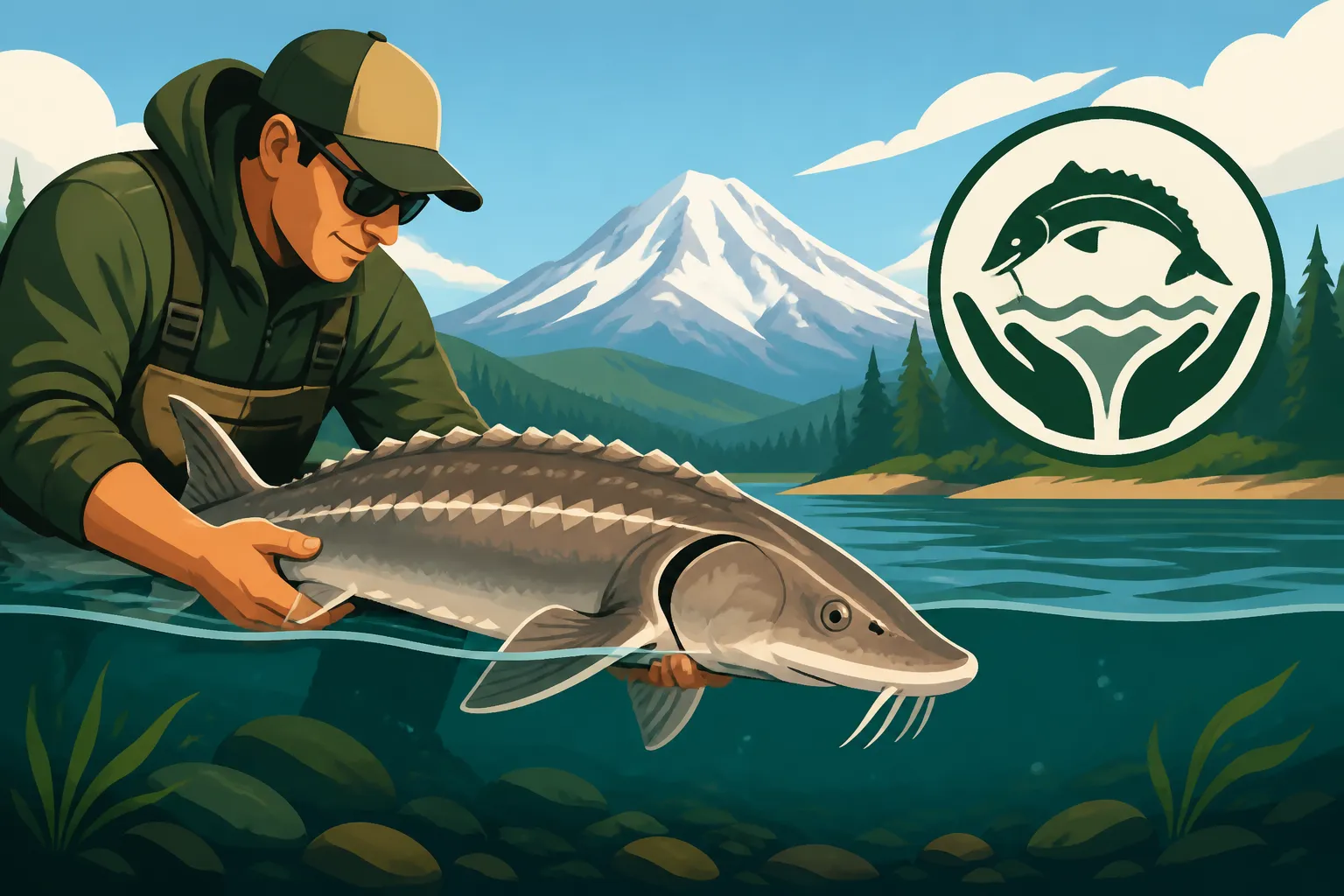
- Gentle Support: Support the sturgeon horizontally in the water, ideally facing into a gentle current. Hold it gently but firmly.
- Revival: Gently move the fish back and forth, allowing water to flow over its gills. This helps to re-oxygenate its blood and aids in recovery. You'll feel it start to gain strength; its tail might give a powerful kick.
- Wait for Strong Recovery: Do not release the fish until it shows strong signs of being able to swim off on its own. It should be able to hold itself upright and give a powerful tail kick when you loosen your grip. It might take a few minutes, especially for larger fish or those that fought hard.
- Soft Release: Once it's revived, gently let go, allowing it to swim away on its own terms. Never toss or drop a sturgeon back into the water. Watch it swim away, ensuring it doesn't just float off belly-up.
- Consider a Guided Trip: If you're new to sturgeon fishing, consider booking Sturgeon Guide Trips on the Columbia. A good guide will not only put you on fish but also demonstrate proper handling techniques. You might wonder How much does a Columbia River sturgeon guide trip cost, but the experience and learning are often invaluable. If you're fishing the Willamette, you'll find that Is Willamette River sturgeon catch-and-release only? is usually the case, reinforcing the need for perfect handling.
Common Mistakes to Avoid and What to Do If Things Go Wrong
Even with the best intentions, mistakes can happen. Knowing what to avoid and how to react in tricky situations can save a fish's life.
Don't Make These Mistakes
Seasoned anglers have seen it all, and many of these mistakes stem from excitement or a lack of understanding. Be aware of these common pitfalls:
- Lifting Large Sturgeon Out of the Water: As reiterated, this is perhaps the most damaging mistake. The internal organs of large sturgeon are not built for vertical lifting out of water, which can cause prolapse and organ damage. Keep them in their element.
- Prolonged Fight Times: While a good fight is part of the fun, an overly long one is detrimental. If you're consistently fighting sturgeon for more than 10-15 minutes, your gear might be too light, or your technique might need adjustment.
- Touching Gills or Eyes: These are extremely sensitive areas. Never put your fingers in a sturgeon's gills or poke its eyes. This can cause injury, blindness, or even death.
- Using Barbed Hooks: Barbed hooks cause unnecessary tissue damage and are much harder to remove, leading to longer handling times. Always use barbless.
- Leaving Hooks in Deep: While cutting the line on a deeply embedded hook is the lesser of two evils, it's still best to avoid deep hooking altogether. Circle hooks greatly reduce this risk.
- Taking Too Long for Photos: Your Instagram feed can wait. The fish's health cannot. Get your photo quickly and get the fish back in the water.
- Dragging Sturgeon on Rough Surfaces: This damages their protective slime coat, which acts as a barrier against disease. Always lift or slide them gently on wet, smooth surfaces.
When a Sturgeon is Not Recovering
Sometimes, despite your best efforts, a sturgeon might seem lethargic or unwilling to swim off. This can be heartbreaking, but there are still steps you can take.
- Continue Revival Efforts: Don't give up too soon. Continue to support the fish in calm water, gently moving it back and forth to force water over its gills. This might take 5-10 minutes, or even longer for a particularly large or exhausted fish.
- Move to Flowing Water (if possible): If you're in a boat, you can slowly motor forward with the fish alongside the boat, holding its head into the current. This gently forces oxygenated water through its gills. If you're on shore, try to guide it to an area with a slight current, being careful not to let it float away.
- Contact ODFW: If, after a reasonable amount of time (say, 15-20 minutes of continuous revival efforts), the fish still shows no signs of life or begins to float away belly-up, contact the Oregon Department of Fish and Wildlife (ODFW). They need to be aware of distressed or deceased fish to monitor population health. You can find their contact information on their official website. Do not attempt to take the fish home, as this is illegal.
Remember, every time you head out for sturgeon in Oregon, you're interacting with a truly special, ancient creature. Treating them with respect and following safe catch-and-release practices ensures that these magnificent fish will continue to grace our rivers for many years to come. Happy fishing, and tight lines!
Disclaimer
The information provided in this guide is for general informational purposes only and is not intended as legal advice. Fishing regulations and license requirements in Oregon can change frequently. Always consult the official Oregon Department of Fish and Wildlife (ODFW) regulations and publications for the most current and accurate information before engaging in any fishing activities. Compliance with all local, state, and federal laws is the responsibility of the angler.