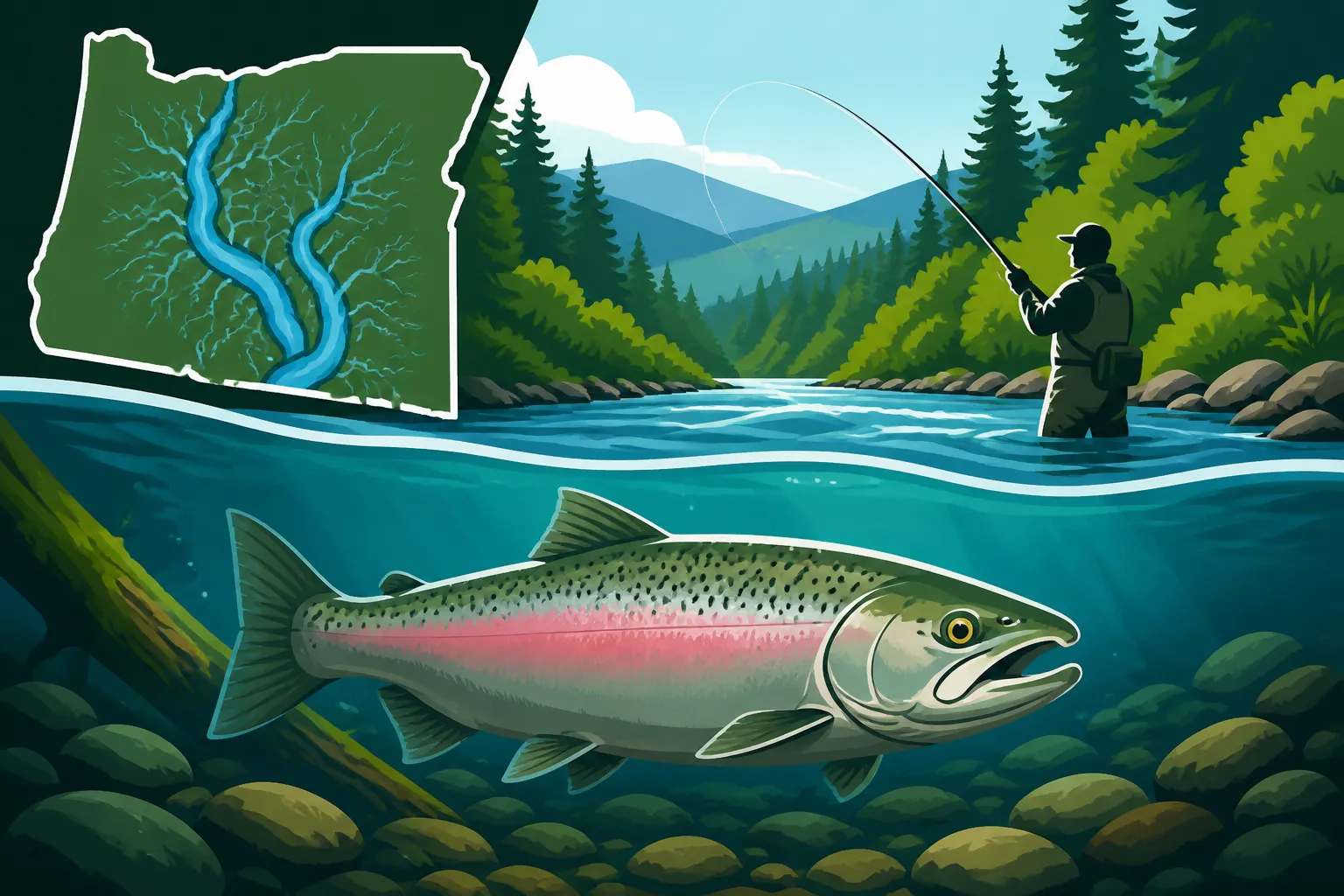
Where McKenzie and Santiam tributaries hold spring Chinook
Trying to pinpoint exactly where those elusive spring Chinook salmon decide to hold up in the smaller tributaries of the McKenzie and Santiam Rivers can feel like searching for a needle in a haystack, especially if you're not intimately familiar with every bend and depth change. It's a common frustration for anglers, feeling like you're missing the secret handshake that gets you to the fish. This guide is here to shed some light on those secretive spots and give you the actionable knowledge you need to increase your chances of finding these prized fish.
Understanding the Journey of Spring Chinook into Tributaries
Before we dive into specific locations, it's really helpful to understand why spring Chinook venture into these smaller streams and what they're looking for. Unlike their fall-run cousins who often spawn shortly after entering freshwater, spring Chinook have a longer journey. They enter the larger river systems much earlier in the year, typically in late spring or early summer, and then spend months holding in deeper, cooler water before migrating further upstream to their final spawning grounds in the late summer and fall. This extended freshwater residency is a key difference.
When we talk about them "holding" in tributaries, we're usually referring to specific spots where they can escape the warmer mainstem temperatures, find refuge from predators, and conserve energy. These aren't necessarily their ultimate spawning beds yet, but rather staging areas. The cooler, oxygen-rich water found in many of the McKenzie and Santiam's feeder streams offers just that. They're looking for deep pools, slow eddies, and areas with overhead cover or significant current breaks. The condition of the main river—think water clarity, flow, and temperature—plays a huge role in how quickly and deeply these fish will move into the tributaries. For a deeper dive into these fascinating creatures, check out our Oregon Salmon Species Guide.
The Role of Water Temperature and Flow
Water temperature is paramount for spring Chinook. They prefer cooler water, generally below 60 degrees Fahrenheit. As the mainstem McKenzie and Santiam rivers warm up through the summer, the cooler inflows from tributaries become incredibly attractive. A sudden drop in mainstem temperature, often due to a cold snap or increased snowmelt, can also trigger fish to push further upstream or into these cooler side channels.
Flow rates are equally critical. Too high, and the fish struggle to hold in a spot and the water can be muddy, making it hard for them to see baits or lures. Too low, and access to some tributaries can become difficult, and the fish might feel exposed. Ideal conditions often involve stable or slightly dropping flows with good clarity. Knowing how to interpret river gauges and understanding the impact of recent weather events is a skill that comes with time, but it's essential for predicting fish movement. You'll often find that the Best Time of Year to Fish in Oregon for spring Chinook in these tributaries aligns with periods of stable flows and moderate temperatures, typically late May through early July, before the peak heat of summer.
Identifying Potential Holding Water
When you're walking the banks of a tributary or drifting in a boat, you need to train your eye to spot prime holding water. Look for:
- Deep Pools: Especially those with a dark, uniform appearance, indicating depth and little current. These are classic resting spots.
- Confluence Areas: Where a smaller stream meets a larger one. The mixing of water temperatures and currents often creates eddies and deeper pockets that attract fish.
- Current Seams: The transition zone between fast and slow water. Fish often sit just out of the main current, conserving energy but ready to dart into the feeding lane.
- Cover: Overhanging trees, submerged logs, large boulders, or undercut banks provide shade and protection from predators.
These are the features that scream "Chinook hideout" to an experienced angler. Remember, spring Chinook are often more aggressive and willing to bite when they first enter a system, but once they settle into holding lies, they can become notoriously finicky.
Key McKenzie River Tributaries for Spring Chinook
The McKenzie River, famous for its wild rainbow trout and prolific steelhead runs, also sees a healthy return of spring Chinook, primarily hatchery-origin fish. While many of these fish continue upstream into the mainstem, some utilize the cooler, oxygenated water of its larger tributaries. Knowing which ones to focus on and what to look for is key. For more general information on fishing this iconic waterway, check out our comprehensive McKenzie River Fishing Guide.
The Mohawk River
The Mohawk River is one of the more notable McKenzie tributaries that sees a spring Chinook run. It flows into the McKenzie near Springfield, and during late spring and early summer, it can attract fish looking for a cool, stable environment. Access can be found at various points, including public parks and bridges, though some areas might require permission from private landowners.
When targeting spring Chinook in the Mohawk, focus on the deeper pools and slower runs, especially near current breaks or where the river widens. The fish here are often looking for refuge, so presenting your bait or lure slowly and deliberately is important. Common techniques include drift fishing with cured eggs or sand shrimp, using enough weight to get your offering to the bottom without snagging. Small Kwikfish or Brad's Wigglers in natural colors can also be effective when back-trolled through deeper holes. Water clarity in the Mohawk can vary; after heavy rains, it might be off-color, so choose your days wisely.
Other McKenzie Feeder Streams and Mainstem Holds
While the Mohawk is a primary tributary, other smaller, unnamed feeder streams and even specific sections of the mainstem McKenzie can hold spring Chinook. Fish will seek out any cool pocket of water, especially during warmer periods. Look for areas where spring creeks or smaller streams enter the main McKenzie, creating a thermal refuge. These confluence zones can be gold mines.
On the mainstem McKenzie itself, before fish commit to a tributary, they often hold in its deeper, slower pools, especially those with significant depth and current seams. Good examples are pools below rapids or large boulders, or where the river slows and creates large eddies. Boaters will often side-drift these areas with eggs, or back-troll plugs like Kwikfish or Mag Lips. For bank anglers, finding these deeper, accessible spots can be a challenge but also highly rewarding. Always be mindful of ethical angling practices, especially when fishing for wild fish; for important rules, consult the Oregon Fishing Regulations Explained.
Prime Santiam River Tributaries for Spring Chinook
The Santiam River system, consisting of the North Santiam and South Santiam, is another fantastic destination for spring Chinook. These rivers flow out of the Western Cascades and eventually converge to form the Santiam, which then flows into the Willamette River. Like the McKenzie, the Santiam system is known for its hatchery spring Chinook, and its tributaries can be key holding areas.
North Santiam River: Lower River to Minto Brown
The North Santiam is a strong producer of spring Chinook, and while many continue upstream, portions of its lower section and specific feeder creeks provide crucial holding water. From its confluence with the South Santiam downstream, particularly in the reaches closer to Salem, the river slows and deepens, creating ideal conditions. Areas around Minto Brown Island Park in Salem, for example, can hold fish that are staging before their final push or seeking refuge from the warmer Willamette.
In these lower, wider sections, fishing from a boat often offers the best access to the prime holding lies. Back-trolling divers with eggs or pulling Brad's Wigglers are common and highly effective methods. Bank anglers can still find success by focusing on accessible deeper pools, especially those with current breaks or nearby public access points. Remember, presentation is everything. Fish that have been holding for a while can be particular. Always ensure you have the appropriate Oregon Combined Angling Tag Guide and Oregon Fishing License Guide before heading out.
South Santiam River: Confluence Areas and Deeper Runs
The South Santiam River joins the North Santiam to form the main Santiam. While it's generally considered more of a winter steelhead fishery, spring Chinook do utilize its waters, particularly in the lower to mid-sections and around its confluence with the North Santiam. The mixing of flows and the creation of deeper, slower water at this convergence can be a magnet for staging Chinook.
Look for larger, slower pools, especially those with gravel bottoms and moderate depth. Confluence zones where smaller creeks enter the South Santiam can also be productive, offering those crucial temperature breaks. Drift fishing with bait, like sand shrimp or cured roe, is a tried-and-true method here, especially when targeting fish holding close to the bottom. Spinners and spoons can also entice a bite in clearer water. Often, the best way to get on these fish is to consult with local tackle shops or check recent fishing reports, or even consider booking a trip through a service like FishingBooker to connect with a guide who specializes in these nuanced fisheries.
Essential Gear and Techniques for Tributary Spring Chinook
When you're chasing spring Chinook in these specific tributaries, having the right gear and understanding the most effective techniques can make all the difference. These smaller waters often require a slightly different approach than the mainstem rivers.
Rods, Reels, and Line Selection
For tributary spring Chinook, you'll generally want a medium-heavy to heavy action rod, typically 9 to 10.5 feet in length. This length provides good line control for drift fishing and enough backbone to handle a powerful Chinook. A quality baitcasting reel, spooled with 20-30 lb braided line, is standard. Braid offers sensitivity and minimal stretch, which is crucial for detecting subtle bites.
Attach a fluorocarbon leader of 15-25 lb test. Fluorocarbon is nearly invisible underwater and abrasion-resistant, which is vital when fishing around structure. The length of your leader will vary based on water clarity and depth, but a 3-6 foot leader is a good starting point. For a more general overview of appropriate setups, explore our guide on the Best Rod and Reel Setup for Columbia River Salmon as many principles apply.
Baits and Lures That Get Results
Spring Chinook in tributaries can be finicky, but a few offerings consistently produce:
- Cured Salmon Roe: This is often the undisputed king of Chinook baits. Fresh, properly cured salmon eggs (roe) are irresistible. You can fish them in a spawn sac or simply drifted on a hook.
- Sand Shrimp: Another natural and highly effective bait. Sand shrimp can be fished whole or in pieces, either drift fished or suspended under a bobber.
- Plugs: Diving plugs like Kwikfish, Mag Lips, or Brad's Wigglers are excellent, especially when back-trolling from a boat or slow-current bank. Choose colors like metallic blue, green, or chartreuse, often with a contrasting belly.
- Spinners and Spoons: In clearer, more aggressive water, larger Colorado blade spinners (sizes 4-6) or heavy casting spoons can trigger strikes. Colors like silver, brass, or painted variations are good choices.
For a broader perspective on what works for salmon, our Best Lures for Oregon Salmon Fishing guide offers many excellent ideas that can be adapted to tributary fishing.
Effective Fishing Techniques
- Drift Fishing: This is a cornerstone technique for tributary salmon. It involves casting upstream and allowing your bait or lure to drift naturally downstream, using just enough weight to bounce along the bottom. The goal is a perfect, drag-free presentation directly into a fish's holding lie. This technique is extensively covered in Oregon Fishing Techniques for Beginners.
- Bobber and Jig/Bait: When fish are holding in distinct pockets or slower water, especially near structure, a bobber rig can be incredibly effective. Suspend a jig tipped with bait (like a shrimp or piece of roe) or simply a weighted bait rig under a float, allowing it to drift into the holding zone.
- Back-Trolling/Side-Drifting (from boat): If you're fortunate enough to have a boat, these are often the most productive methods for covering water efficiently and presenting plugs or baits to holding fish. Back-trolling involves using the current to slowly pull your plugs or baits downstream, while side-drifting allows you to cover wide sections of water by drifting sideways, presenting baits to fish as you move. Finding an experienced guide, perhaps through a service like FishingBooker, can be invaluable for mastering these boat-based techniques.
Respecting the Resource and Regulations
Fishing for spring Chinook, especially in smaller tributaries, requires a strong commitment to ethical angling and conservation. Many of these fish are hatchery-bred, but wild Chinook are often present and must be released unharmed. Always carry the current Oregon Fishing Regulations Explained booklet or app to stay informed on specific daily limits, size restrictions, and gear rules, as these can change by river section or time of year. Knowing your fish—how to identify hatchery vs. wild—is critical.
Table: McKenzie vs. Santiam Tributary Spring Chinook Characteristics
| Feature | McKenzie River Tributaries (e.g., Mohawk) | Santiam River Tributaries (e.g., Lower North/South Santiam) |
|---|---|---|
| Primary Run Timing | Late May – Early July (can extend into summer with cool flows) | Late May – Early July (can extend, especially in lower river staging areas) |
| Preferred Water | Deeper pools, confluence zones, slower runs within smaller, cooler streams. | Deeper, wider pools, confluence areas, slower mainstem sections near tributary mouths. |
| Common Techniques | Drift fishing (eggs, shrimp), small plugs (Kwikfish), spinners. | Back-trolling (plugs, eggs), side-drifting (eggs, shrimp), drift fishing. |
| Access | Mix of public access points, bridges; some private land considerations. | More varied, includes larger river access points, parks; some boat required. |
| Water Clarity | Can fluctuate; often clearer than mainstem if no recent rain. | Can be influenced by larger river conditions; often holds color longer. |
| Typical Size | Good-sized hatchery spring Chinook, often 10-25 lbs. | Strong hatchery spring Chinook, often 12-30+ lbs. |
Remember that conditions are always changing, and what worked yesterday might not work today. Staying flexible, observing the water, and adjusting your approach are hallmarks of a successful spring Chinook angler in these beautiful Oregon tributaries.
Disclaimer
Fishing conditions and regulations in Oregon can change rapidly. Always consult the official Oregon Department of Fish and Wildlife (ODFW) website or printed regulations booklet for the most current information regarding seasons, limits, and specific rules for the waters you plan to fish before heading out. Safety should always be your top priority.