Oregon Sturgeon Guide
For many anglers, the thought of pursuing a fish that can grow to truly monumental sizes right here in Oregon is both thrilling and a little intimidating. If you've ever dreamt of battling a living dinosaur, but felt overwhelmed by the specialized gear, unique techniques, or the ever-changing regulations, you're not alone. This comprehensive guide is here to demystify the incredible world of sturgeon fishing in Oregon, helping you understand these ancient giants, where to find them, and how to successfully and responsibly pursue them.
Understanding Oregon's Sturgeon: A Vanishing Giant
Oregon's waters are home to two primary species of sturgeon: the White Sturgeon and the Green Sturgeon. Both are incredible creatures, but they each present distinct experiences and conservation challenges for anglers. Understanding these differences is the first step in appreciating what makes sturgeon fishing so unique and, frankly, so vital to preserve. It’s not just about catching a big fish; it’s about connecting with a true relic of the past.
White Sturgeon: The King of Oregon Rivers
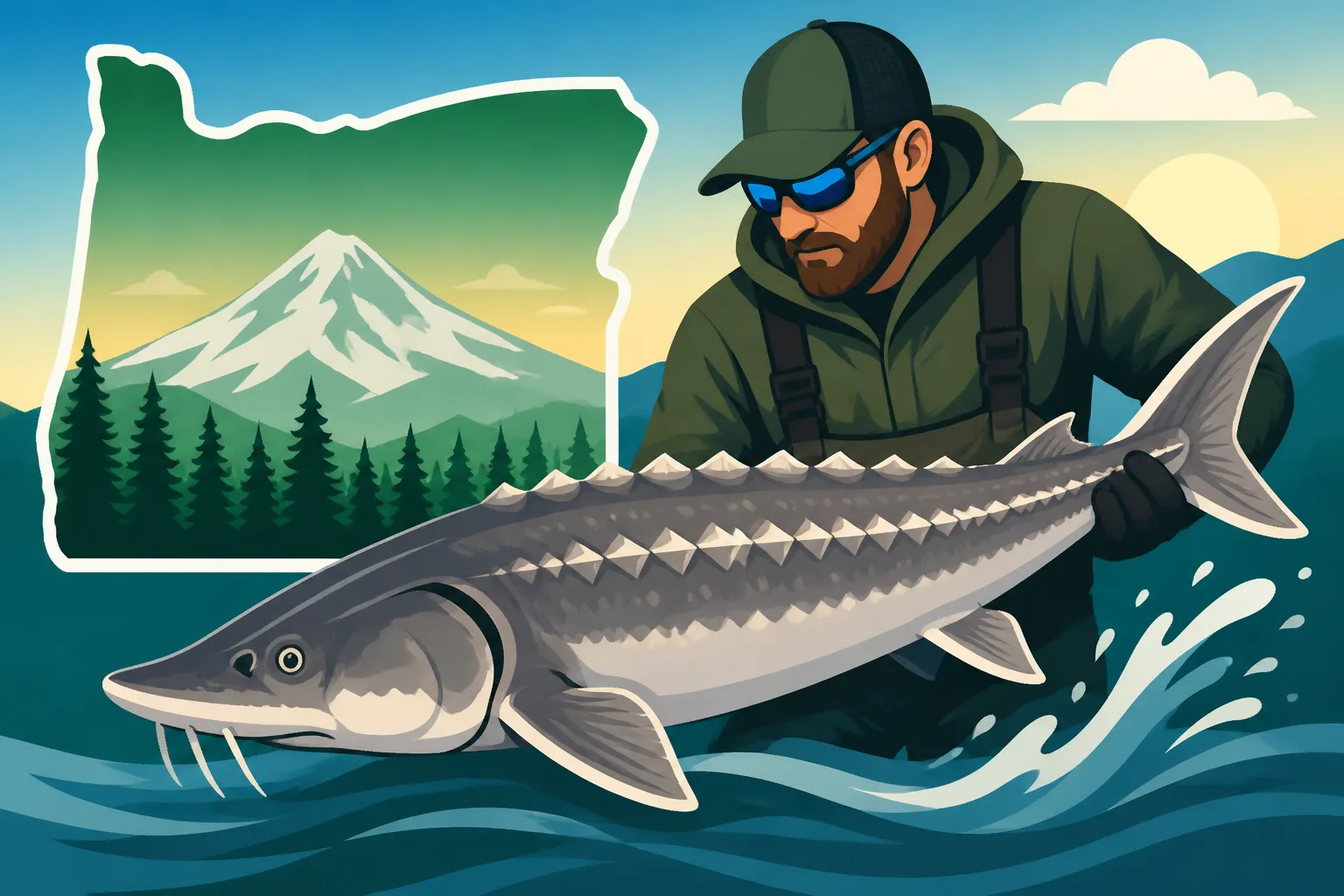
The White Sturgeon ( Acipenser transmontanus ) holds the title of the largest freshwater fish in North America, and it certainly lives up to the hype in Oregon. Imagine hooking into a fish that can easily outweigh you, a creature that has been swimming in these rivers since the time of the dinosaurs. These majestic fish are primarily freshwater residents, although they can venture into brackish estuaries. Their bodies are covered in bony plates, called scutes, rather than scales, and they have four distinctive barbels under their snout, which they use to forage for food on the river bottom.
The sheer size potential of White Sturgeon is what truly captures the imagination of anglers. While many fish caught are in the legal "slot" limit (often 38-54 inches fork length, but this can change frequently, so always check current regulations), they can grow to be well over 10 feet long and weigh hundreds of pounds. The fight they put up is legendary—powerful runs, head shakes, and sometimes even spectacular jumps. It's a test of endurance for both the angler and the tackle. Historically, they were a commercial fishery staple, but overfishing and habitat loss led to significant declines, prompting much stricter regulations, focusing heavily on catch-and-release for larger fish to ensure their survival.
Green Sturgeon: The Protected Traveler
The Green Sturgeon ( Acipenser medirostris ) is a distinct species from its white cousin, and its presence in Oregon's waters is far more transient and protected. These sturgeon are anadromous, meaning they spend most of their lives in saltwater along the Pacific Coast but migrate into freshwater rivers, primarily the Rogue and Umpqua, to spawn. Unlike the White Sturgeon, which can be legally targeted in some areas with specific regulations, the Green Sturgeon is federally protected under the Endangered Species Act.
This means fishing for Green Sturgeon is strictly prohibited. If you accidentally hook one, which is possible if you're fishing for other species in areas they frequent, it must be released immediately and unharmed. You can generally identify a Green Sturgeon by its olive-green or dark grey coloration, a single row of prominent scutes along its sides, and a more pointed snout compared to the White Sturgeon. They also tend to be smaller than the largest White Sturgeon, though still impressive fish, reaching lengths of up to 7 feet. It's crucial for every angler to be able to distinguish between the two species to avoid severe penalties and, more importantly, to protect this vulnerable population.
The Conservation Story: Why Sturgeon Need Our Help
Both White and Green Sturgeon face significant challenges, making their conservation a top priority for wildlife agencies and responsible anglers. For White Sturgeon, decades of overharvesting, coupled with habitat degradation, dam construction, and pollution, severely impacted their numbers. Dams, in particular, block their spawning migrations and alter crucial river flows. While populations have recovered in some areas, they remain vulnerable, especially the larger, older breeding fish that are vital for future generations. That's why catch-and-release practices are so emphasized, particularly for the big broodstock.
Green Sturgeon, as mentioned, are already federally protected, highlighting the dire state of their populations. Their long migrations expose them to numerous threats along the coast and within river systems. As anglers, we have a direct role to play in their survival. This isn't just about following the rules; it's about adopting an ethic of careful handling, prompt release, and supporting conservation efforts. Every fish that swims away healthy contributes to the future of these magnificent species. Understanding their journey and their struggles adds a profound layer of meaning to every fishing trip, making it much more than just a recreational outing.
Where to Find Sturgeon in Oregon: Prime Habitats
When you decide to chase sturgeon in Oregon, knowing where to cast your line is half the battle. These magnificent fish prefer certain types of habitats, primarily deep, slow-moving sections of large rivers with soft, silty bottoms where they can forage for food. While they are present in several Oregon waterways, a couple of rivers stand out as prime destinations for serious sturgeon anglers. Always remember to check Oregon Fishing Zones Explained before heading out.
The Mighty Columbia River: A Sturgeon Stronghold
Without a doubt, the Columbia River is the undisputed king of sturgeon fishing in Oregon. This massive waterway offers a vast expanse of habitat for White Sturgeon, from its lower reaches near Astoria, where tidal influences are strong, all the way up to the Bonneville Pool and beyond. The sheer size of the river means there's a lot of water to cover, but it also holds a robust population of these giant fish, including some true monsters that have managed to avoid capture for decades.
Anglers often target specific areas known for deep holes, channel edges, and slower currents, particularly those downstream of major dams or where tributaries enter the main stem, bringing with them a bounty of food. Popular stretches include the areas around Portland, the Multnomah Channel, and the sprawling Bonneville Pool. Success here often depends on understanding the unique flow and current patterns of the Columbia, which can change dramatically with dam operations and seasonal rainfall. Fishing the Columbia is an adventure in itself, requiring sturdy boats and a keen eye for good water. Many seasoned anglers consider the Columbia the ultimate proving ground for sturgeon fishing, where patience and persistence truly pay off with the chance at a fish of a lifetime.
Willamette River: Urban Sturgeon Fishing
Flowing right through the heart of Oregon's most populous region, the Willamette River offers a surprisingly accessible and productive sturgeon fishery, especially for those living near Portland or Salem. While it might not boast the sheer numbers of the Columbia, the Willamette holds a healthy population of White Sturgeon, often providing excellent opportunities, particularly during specific seasons. It's truly incredible to think you could be battling a massive sturgeon just minutes from bustling cityscapes.
Much like the Columbia, sturgeon in the Willamette gravitate towards deeper holes, slow eddies, and areas with structure that provides cover and concentrates baitfish. Popular spots include the stretches around the I-5 and I-205 bridges in Portland, as well as the deeper channels further south. Fishing the Willamette has its own charm, often offering a slightly less turbulent experience than the powerful Columbia. Many anglers here rely on smaller boats or even bank fishing in accessible areas, though boat fishing definitely increases your range. The river is also known for its spring Chinook runs, and sturgeon will often follow these migrations, feeding on residual bait and roe, making for interesting multi-species opportunities. Just remember that in some sections, Is Willamette River sturgeon catch-and-release only?, so know before you go!
Other Potential Sturgeon Waters
While the Columbia and Willamette rivers are the main attractions for White Sturgeon, these fish can occasionally be found in other larger river systems in Oregon, particularly those that connect to the Columbia or Pacific Ocean. The Umpqua River, for instance, has historical records of White Sturgeon, and it's also a known migratory route for the protected Green Sturgeon. Similarly, the Rogue River is critical habitat for Green Sturgeon.
It's important to note that outside of the Columbia and Willamette, dedicated White Sturgeon fisheries are less common, and their presence might be more localized or seasonal. If you're considering fishing for sturgeon in other rivers, it's absolutely critical to double-check the very latest regulations for that specific body of water. Rules can vary greatly by river and even by specific zones within a river. Always consult the Oregon Fishing Regulations Explained before planning your trip to ensure you're fishing legally and responsibly, and to avoid accidentally targeting protected species or violating specific size and bag limits unique to those waters.
Essential Gear for Oregon Sturgeon Fishing: Tools of the Trade
Sturgeon fishing isn't your average trout outing. These are powerful, ancient fish that demand robust tackle. Trying to land a true Columbia River giant with gear meant for bass is a recipe for disaster—and a lost fish. Investing in the right equipment isn't just about making the catch; it's about safely handling these majestic creatures and ensuring a clean, fair fight that allows for their successful release.
Rods, Reels, and Line: Built for Battle
Your rod, reel, and line are the frontline in a sturgeon battle, and they need to be up to the task. For rods, think heavy-duty. Many sturgeon anglers opt for fiberglass or composite rods in the 7 to 9-foot range, with a heavy or extra-heavy action. These rods have the backbone to horse large fish and withstand the heavy weights needed to hold bottom in strong currents. The tips, however, are often surprisingly sensitive to detect those subtle sturgeon bites. You can find excellent options for specialized sturgeon rods, sometimes labeled as "catfish" or "striper" rods with similar specs, on platforms like Amazon.
Reels are where things get serious. Conventional reels (also known as baitcasting or level-wind reels) are almost universally preferred for sturgeon. Look for models with a strong drag system, a high line capacity, and durable internal components. Brands like Penn, Shimano, and Abu Garcia offer popular choices. The smooth, powerful drag is crucial for tiring out a big sturgeon without breaking your line or snapping your rod. As for line, braided line is the go-to for many. Its zero-stretch properties offer superior sensitivity, allowing you to feel even the slightest tap, and its incredible strength-to-diameter ratio means you can pack more heavy line onto your reel. Most anglers will spool up with 80-150 lb test braid, adding a long, heavy monofilament or fluorocarbon leader of similar or slightly higher breaking strength to absorb shock and provide abrasion resistance against the sturgeon's rough scutes.
Weights, Rigs, and Hooks: Holding Bottom and Hooking Up
Once you have your rod and reel, the terminal tackle—the bits at the end of your line—become critical. Sturgeon are bottom feeders, so your rig needs to keep your bait pinned firmly to the riverbed, even in heavy current. Pyramid sinkers are a common choice, ranging from 8 ounces to a whopping 24 ounces or more, depending on the current speed. Slinky weights (made from lead shot inside nylon tubing) are also popular as they tend to snag less in rocky bottoms.
The most common sturgeon rig is a simple sliding weight setup. This involves threading your sinker onto your main line, followed by a bead (to protect your knot), and then tying on a heavy-duty swivel. From the other end of the swivel, you attach your leader, which should be 18 inches to 3 feet long. At the end of the leader, you tie your hook. Hooks for sturgeon are robust, sharp, and usually in the size range of 5/0 to 10/0, often an octopus or circle hook style. Circle hooks are particularly favored because they are designed to hook fish in the corner of the mouth, making for easier, safer releases, which is paramount for catch-and-release sturgeon fishing. You can often buy pre-tied sturgeon rigs or components in bulk on Amazon to save time and ensure you have plenty on hand for your trip.
Bait Selection: What Sturgeon Crave
Sturgeon are opportunistic scavengers, and they have a distinct preference for smelly, oily baits. The fresher, the better! Their powerful sense of smell helps them locate food in murky river conditions. What works best can sometimes vary by river and even by season, but some tried-and-true favorites consistently produce results.
One of the most popular and effective baits is fresh salmon or steelhead roe, often from discarded skeins after a successful salmon or steelhead trip. The oily goodness and strong scent are irresistible to sturgeon. Other excellent options include cured herring, anchovies, or sardines. Many anglers will cut these fish into chunks or strips. Lamprey eels are also a fantastic bait when available, as they are a natural food source for sturgeon. For those who can't get fresh fish, commercially prepared scent baits or "sturgeon candy" can sometimes entice a bite, especially when combined with a natural bait. Don't be afraid to experiment with different baits on a given day; sometimes a change can make all the difference. Remember, presentation is key: thread your bait onto your hook securely so it doesn't get ripped off by the current or small fish before a sturgeon finds it.
Oregon Sturgeon Fishing Techniques: The Art of the Catch
Sturgeon fishing isn't about casting and reeling constantly; it's a game of patience, precision, and understanding the subtleties of the river. It's often described as a waiting game, but when the bite comes, it can be explosive. Mastering a few key techniques will significantly increase your chances of success.
Anchoring and Bait Fishing: The Classic Approach
The most common and effective technique for targeting sturgeon in Oregon is anchored bait fishing. This method relies on placing your bait precisely in a known sturgeon holding area and waiting for them to find it. First, you need to find a suitable spot: a deep hole, a channel edge, or a submerged log jam where sturgeon might congregate. Using your boat's sonar is incredibly helpful for identifying these features and even marking individual fish if they're present.
Once you've identified your spot, position your boat upstream of it and drop a heavy anchor, or ideally, two anchors (one off the bow, one off the stern) to hold your position firmly against the current. This prevents your boat from swinging and dragging your baits around. Once anchored, cast your baited rig directly upstream of your boat, allowing the current to carry your heavy sinker and bait down into the target zone. Let out enough line so your sinker can settle and hold bottom without drifting. Then, place your rod in a sturdy rod holder, engage the clicker (if your reel has one), and loosen your drag slightly. The key is to wait for the bite. Sturgeon bites can range from a light tap to a slow, steady pull, or even a sudden, violent yank. Resist the urge to set the hook at the first sign of a bite; often, sturgeon will "mouth" the bait before fully committing. Wait for a solid, sustained pull or a full rod bend, then pick up the rod, reel down to remove slack, and set the hook with a powerful sweep.
Catch-and-Release Best Practices: Protecting the Future
Given the conservation status of sturgeon, especially the protected Green Sturgeon and the vulnerable large White Sturgeon, practicing responsible catch-and-release is not just good etiquette—it's often mandatory and critical for their survival. Oregon has stringent Oregon Catch-and-Release Rules for sturgeon, particularly for oversized fish, and knowing how to handle them correctly is paramount.
When you hook a sturgeon, fight it hard and quickly to minimize stress. Don't let the fight drag on unnecessarily. Once you bring the fish alongside the boat, avoid lifting large fish completely out of the water. Their massive internal organs are not supported out of water, which can cause significant damage. Instead, keep the fish in the water as much as possible. If it's a legal-sized retention fish, use a sturdy net or cradle to bring it aboard for quick measurement and unhooking. For oversized fish, which are strictly catch-and-release, try to remove the hook while the fish is still in the water, ideally using long-nosed pliers or a dehooking tool. If you must bring the head out of the water to remove the hook, do so gently and quickly, supporting the body. Avoid beaching or dragging fish onto shore unless absolutely necessary for measurement and only on soft, wet sand or grass. Take photos quickly, always supporting the fish horizontally if it's out of the water, and never by the tail alone. Finally, gently revive the fish by holding it upright in the current until it's strong enough to swim away on its own. This ethical approach ensures these ancient fish continue to thrive.
Reading the Water: Finding Sturgeon Hotspots
Successful sturgeon fishing goes beyond simply dropping a bait; it involves understanding the river and where these fish prefer to spend their time. Sturgeon are highly sensitive to current, depth, and bottom structure, and being able to "read the water" is a skill developed over time. They seek out areas where food is concentrated and where they can expend minimal energy to feed.
Look for areas with significant depth changes, such as drop-offs, underwater humps, or the edges of main channels. These features often create current breaks and eddies where food accumulates and sturgeon can lie in wait. Confluence points, where a tributary river meets a larger one (like the Willamette joining the Columbia), are also excellent spots, as they bring in fresh nutrients and bait. Pay attention to your fish finder or sonar; not only can it show you depth, but it can also reveal schools of baitfish, which are a good sign, and sometimes even the distinct arch-shaped returns of large sturgeon themselves. Observing other successful anglers can also offer clues to productive areas, but always be respectful of their space. River markers, buoys, and even submerged structures indicated on navigation charts can all point to potential sturgeon habitat. The more you learn about the river's contours and currents, the more effectively you can target these bottom-dwelling giants.
Navigating Oregon Sturgeon Regulations: Stay Legal, Stay Safe
Oregon's fishing regulations, especially for sturgeon, are complex and subject to frequent changes. This isn't to make your life difficult; it's a direct response to the delicate balance of sturgeon populations and the need to protect them while still allowing for recreational fishing opportunities. Ignoring these rules can lead to hefty fines and penalties, and more importantly, harm the very fishery we all want to enjoy.
License and Tags: What You Need Before You Go
Before you even think about dropping a line for sturgeon, you need to ensure you have the proper licenses and tags. For any adult resident or non-resident angler in Oregon, a valid Oregon Fishing License Guide is the absolute first requirement. This license is your basic permission slip to fish in the state's public waters. Without it, you're not just risking a ticket; you're undermining the funding that supports fisheries management and conservation efforts.
Beyond the general angling license, sturgeon often require additional endorsements or tags. For instance, in many areas, you'll need an Oregon Combined Angling Tag Guide. This tag is often required for retention of certain salmon, steelhead, and sturgeon species, and it's where you record any sturgeon you legally retain. Crucially, even if you are planning on strictly catch-and-release fishing, you still need your basic angling license. Always carry your license and any required tags with you while fishing, either in physical form or digitally on your phone, so you can present them if a game warden asks. Regulations can change annually, so before your first trip of the season, take a moment to review the current Oregon Sport Fishing Regulations to make sure you're fully prepared.
Size and Bag Limits: Understanding the Slot
Perhaps the most critical and often misunderstood aspect of sturgeon fishing regulations revolves around size and bag limits, particularly the "slot limit." Oregon's sturgeon fishery for White Sturgeon is primarily a slot-limit fishery, meaning you can only retain fish that fall within a very specific size range (e.g., between 38 and 54 inches fork length). Fish smaller than the lower end of the slot (undersized) and fish larger than the upper end of the slot (oversized) must be immediately released unharmed. The exact dimensions of this slot limit can and do change, sometimes annually or even mid-season, depending on stock assessments. Therefore, checking the Columbia River Sturgeon Slot Limit Explained or other relevant river-specific rules is non-negotiable every time you go out.
The purpose of the slot limit is conservation. The smaller fish are too young to have fully contributed to the breeding population, and the largest fish are the critical broodstock—the most prolific breeders that ensure future generations. By releasing both undersized and oversized fish, anglers help protect the future of the fishery. The daily bag limit typically allows for one legal-sized sturgeon per day, with an annual limit that might vary. This means once you retain a legal fish, you usually cannot retain another until the next day, and once you hit your annual limit, you can no longer keep sturgeon for the remainder of the year, though you can often continue catch-and-release fishing. Always refer to the latest Oregon Daily Bag Limits Explained for current figures.
Seasons and Zones: When and Where You Can Fish
Sturgeon fishing in Oregon is also subject to specific seasons and zones, which dictate when and where you can target and/or retain these fish. Different sections of a river, such as the lower Columbia, the Bonneville Pool, or the Willamette, might have completely different regulations in place. What's open for retention in one zone might be catch-and-release only in another, or completely closed. These zones are often clearly marked in the regulation booklet or on maps provided by the Oregon Department of Fish and Wildlife (ODFW).
Furthermore, retention seasons for sturgeon are often short and highly managed, especially in areas like the Columbia River. These seasons are set to allow for a limited harvest without jeopardizing the overall population. You might find a retention season that lasts only a few days or weeks, or even a specific number of Saturdays, before reverting to catch-and-release only. This is especially true for Oregon Sturgeon Retention Season Timing. It is absolutely critical to consult the most current ODFW regulations, either online or in their physical booklet, before every trip. Emergency closures or extensions can also occur, so checking for updates is a good habit. Understanding these seasonal and zonal rules is essential for a legal and enjoyable sturgeon fishing experience, reinforcing the shared responsibility we all have in protecting these incredible fish.
The Thrill and Challenge of Sturgeon Fishing: More Than Just a Catch
There's something truly primal and exhilarating about sturgeon fishing that sets it apart from almost any other angling pursuit. It's not just about landing a fish; it's about the connection to an ancient lineage and the test of skill, patience, and sheer will power. When you're out on the water, whether it's the vast Columbia or the calmer Willamette, the potential for a truly memorable encounter is always present.
Fighting a Giant: The Ultimate Angling Experience
Imagine your rod tip, previously still for what felt like an eternity, suddenly bowing down, slowly but powerfully. Then, a series of powerful head shakes pulsate up the line, and your drag begins to scream as hundreds of pounds of fish decide to go wherever it pleases. This is the moment a sturgeon fight begins, and it is truly an ultimate angling experience. These fish don't just pull; they use their broad, powerful tails to create immense leverage, often leading to long, sustained runs that can strip hundreds of feet of line from your reel.
Sometimes, a large sturgeon will surprise you with an acrobatic leap, launching its entire prehistoric body clear of the water—a sight that will leave you breathless and forever etched in your memory. The fight can be a grueling test of endurance, sometimes lasting 30 minutes, an hour, or even longer for truly massive fish. Your arms and back will ache, your heart will pound, and you'll question whether your tackle can hold up. But every head shake, every drag-screaming run, every moment of uncertainty only adds to the immense satisfaction when you finally bring that magnificent creature to the boat. It's a true battle of wills, a raw display of nature's power against human determination.
Patience and Persistence: Keys to Success
Unlike active fishing methods like trolling or casting lures, sturgeon fishing is fundamentally a game of patience. You set your baits, you put your rods in holders, and then you wait. And wait. And sometimes, you wait some more. It's not uncommon to spend several hours without a single bite, only for the action to suddenly erupt when a school of sturgeon moves through or the tide changes. This waiting period is part of the experience, offering time to appreciate the river, enjoy the company of friends, or simply disconnect from the hustle and bustle of daily life.
Persistence, however, is just as crucial. It means not giving up after an hour of no bites. It means moving your boat to a slightly different spot, or trying a different bait, or adjusting your leader length if the bite is slow. It means meticulously checking your hooks for dullness and making sure your bait is fresh and presented perfectly. The anglers who consistently catch sturgeon are often those who are willing to put in the time and effort, learning from each trip and adapting their approach. It's a slow burn, not a sprint, but the payoff when that rod finally bends is absolutely worth every minute of waiting.
Responsible Angling: Ensuring Sustainability
Beyond the thrill of the catch, sturgeon fishing carries a significant responsibility. As a venerable species with a long lifespan and slower reproductive cycle, sturgeon are particularly vulnerable to overfishing and improper handling. Therefore, responsible angling is not just a suggestion; it's a vital component of ensuring these magnificent fish continue to thrive for future generations. This goes hand-in-hand with understanding Oregon Fishing Regulations Explained and respecting the fish itself.
This includes using appropriate heavy tackle to minimize fight time and fish stress, especially when the fish are strictly catch-and-release. It means employing circle hooks to reduce gut hooking, allowing for easier and safer releases. It means knowing how to properly measure a fish to ensure it's within the legal slot limit for retention, and being prepared with tools like long-nosed pliers or dehookers for quick removal. Most importantly, it involves keeping oversized and undersized fish in the water as much as possible, supporting their body weight when handling, and reviving them gently until they swim off with vigor. By adhering to these practices, we act as stewards of the fishery, ensuring that the opportunity to connect with these living dinosaurs remains a cherished part of Oregon's angling heritage.
Common Misconceptions and FAQs About Oregon Sturgeon
Sturgeon, being such unique and ancient fish, often spark a lot of questions and sometimes, a few myths. Let's clear up some of the most common queries and concerns you might have about these incredible creatures in Oregon's waters.
Are Oregon Sturgeon Dangerous to Handle?
This is a really common concern, especially when you see photos of truly massive sturgeon. The short answer is: they can be, but primarily due to their sheer power and size, not because they're inherently aggressive or have sharp teeth. Their mouths are soft and rubbery, designed for suction feeding, so they won't bite you. However, their scutes (bony plates) are incredibly sharp, especially on smaller fish. A thrashing sturgeon can easily scrape, cut, or bruise you if you're not careful.
The biggest danger comes from a large fish suddenly thrashing its tail or body when you're trying to unhook or measure it. A powerful tail whack can easily knock you off your feet or out of a boat, and a large fish rolling in a net can be a handful. Always handle sturgeon, especially big ones, with extreme caution. Wear heavy-duty gloves, use long-handled pliers for hook removal, and if possible, keep the fish in the water while working on it. When lifting or moving a fish, always support its body properly. Respect their power, and you'll minimize any risks. For more, check out Are Oregon sturgeon dangerous to handle?.
Are Oregon Sturgeon Safe to Eat?
For White Sturgeon that are caught within the legal slot limit and retained, yes, they are generally considered safe and delicious to eat. Their meat is firm, white, and flaky, often compared to swordfish or halibut. It's excellent grilled, baked, or smoked. However, it's always wise to be aware of any potential consumption advisories, especially for fish caught in specific stretches of rivers.
Like any long-lived, predatory fish, sturgeon can accumulate environmental contaminants, though Oregon's general advisories are typically less stringent for sturgeon compared to some other long-lived species. The Oregon Health Authority (OHA) and ODFW periodically issue fish consumption advisories for various waterways due to mercury, PCBs, or other substances. These advisories usually recommend limiting consumption for certain populations (e.g., pregnant women, young children) or suggest limits on how often you should eat the fish. Before planning a big sturgeon dinner, it's a good practice to quickly check the OHA website for any current, location-specific advisories for the river you're fishing.
How Long do White Sturgeon Live?
This is one of the most fascinating aspects of White Sturgeon: they are incredibly long-lived, truly deserving their "living dinosaur" moniker. White Sturgeon can live for well over 100 years, with some individuals potentially reaching 150 years or more. This incredible longevity is a key factor in their vulnerability. It takes many years for them to reach sexual maturity (often 10-20 years for males and 20-30 years for females), and they don't spawn every year.
This slow growth and late maturation mean that every large, mature sturgeon is incredibly valuable to the population. When a large fish is lost, it represents decades of life and future spawning potential. This is precisely why regulations heavily protect the oversized broodstock through catch-and-release rules. The fact that a sturgeon you catch could have been swimming in Oregon's rivers before your great-grandparents were born adds a profound layer of respect and wonder to every encounter. It’s a powerful reminder of the deep history held within our waterways. For more specifics, consider reading How long do white sturgeon live.
| Sturgeon Species | Primary Habitat | Average Adult Size (Oregon) | Maximum Recorded Size | Conservation Status (Oregon) | Key Identifying Feature | Fishing Status (Oregon) |
|---|---|---|---|---|---|---|
| White Sturgeon | Freshwater rivers, estuaries | 4-8 feet | 10-20+ feet | Vulnerable (specific stocks) | Robust body, distinct large scutes, gray/white belly | Recreational fishery with strict slot and bag limits; C&R for oversized |
| Green Sturgeon | Saltwater, estuarine, migratory into freshwater | 5-7 feet | 7.5 feet | Federally Protected | Olive-green back, single row of prominent lateral scutes, pointed snout | Strictly protected; accidental catch requires immediate, unharmed release |
Disclaimer
This article is for general informational purposes only and does not constitute professional advice. Laws, prices and regulations vary by location and change over time. Consult a qualified professional for guidance on your specific situation.