What do kokanee salmon eat
One of the biggest head-scratchers for new and experienced anglers alike when it comes to kokanee salmon is understanding exactly what these vibrant, landlocked sockeye are eating. It's not like they're chasing after big schools of baitfish or chomping on worms you dig up in your garden. Their diet is incredibly specific, and if you don't understand it, you're going to have a much harder time enticing them to bite. This guide is all about peeling back the layers on the kokanee's menu, from the microscopic organisms they thrive on to how their feeding habits change with the seasons, and most importantly, how you can use this knowledge to fill your cooler.
Understanding Kokanee Salmon: A Freshwater Feeder's Story
Kokanee salmon are a true gem of Oregon's freshwater fisheries, known for their spirited fights and delicious pink flesh. But to truly appreciate them, and to consistently catch them, we need to dive into their unique biology, especially when it comes to what fuels these beautiful fish. They aren't your typical salmon, and their diet reflects that distinction.
Who are Kokanee Salmon?
First things first, let's clarify who we're talking about. Kokanee salmon are essentially sockeye salmon that have adapted to live their entire lives in freshwater lakes and reservoirs, never making the iconic journey to the ocean. They are landlocked, if you will. This means they are completely dependent on the food sources available in their lake environment. In Oregon, you'll find healthy populations in various lakes, from the clear waters of Lake Billy Chinook to the popular Wallowa Lake Fishing Guide. They typically have a life cycle of 3-4 years, growing to a respectable size before returning to tributary streams to spawn, much like their anadromous sockeye cousins.
Their freshwater existence dictates everything about them, including their physical characteristics. They tend to be smaller than their ocean-going relatives, usually ranging from 10 to 20 inches, though some trophy kokanee can push past that. Their silvery flanks, which turn brilliant red in males during spawning season, make them a truly spectacular sight. Understanding this landlocked nature is the first step in unlocking their dietary secrets, as it immediately tells us we won't be looking for marine prey items.
The Importance of a Unique Diet
The kokanee's diet is critical for a few reasons. For the fish themselves, it's about survival, growth, and eventually, successful reproduction. For us anglers, knowing their primary food sources is the cornerstone of effective fishing. Unlike trout or bass, which might eat a wide variety of insects, smaller fish, or crustaceans, kokanee are far more specialized. This specialization makes them incredibly particular, which can be frustrating if you're not clued in.
Because they primarily feed on very small, often microscopic organisms, traditional baits like worms or powerbait, while sometimes effective for stocked trout, rarely fool a kokanee unless they are heavily scented or presented in a very specific way. Their mouths are designed for sifting and filtering, not for gulping down larger prey. This means that if you're not offering something that either is what they eat, or at least looks and smells like it, you're probably just going to be dragging a lure through empty water. It truly dictates your tackle, your presentation, and even the time of day and depth you fish.
The Microscopic Buffet: What Kokanee Primarily Eat
If you were to ask a kokanee what's for dinner, the answer would almost always involve something incredibly tiny, likely invisible to the naked eye, and floating around in the water column. Their entire feeding strategy revolves around these minute organisms, making them filter feeders in many respects.
Zooplankton: The Main Course
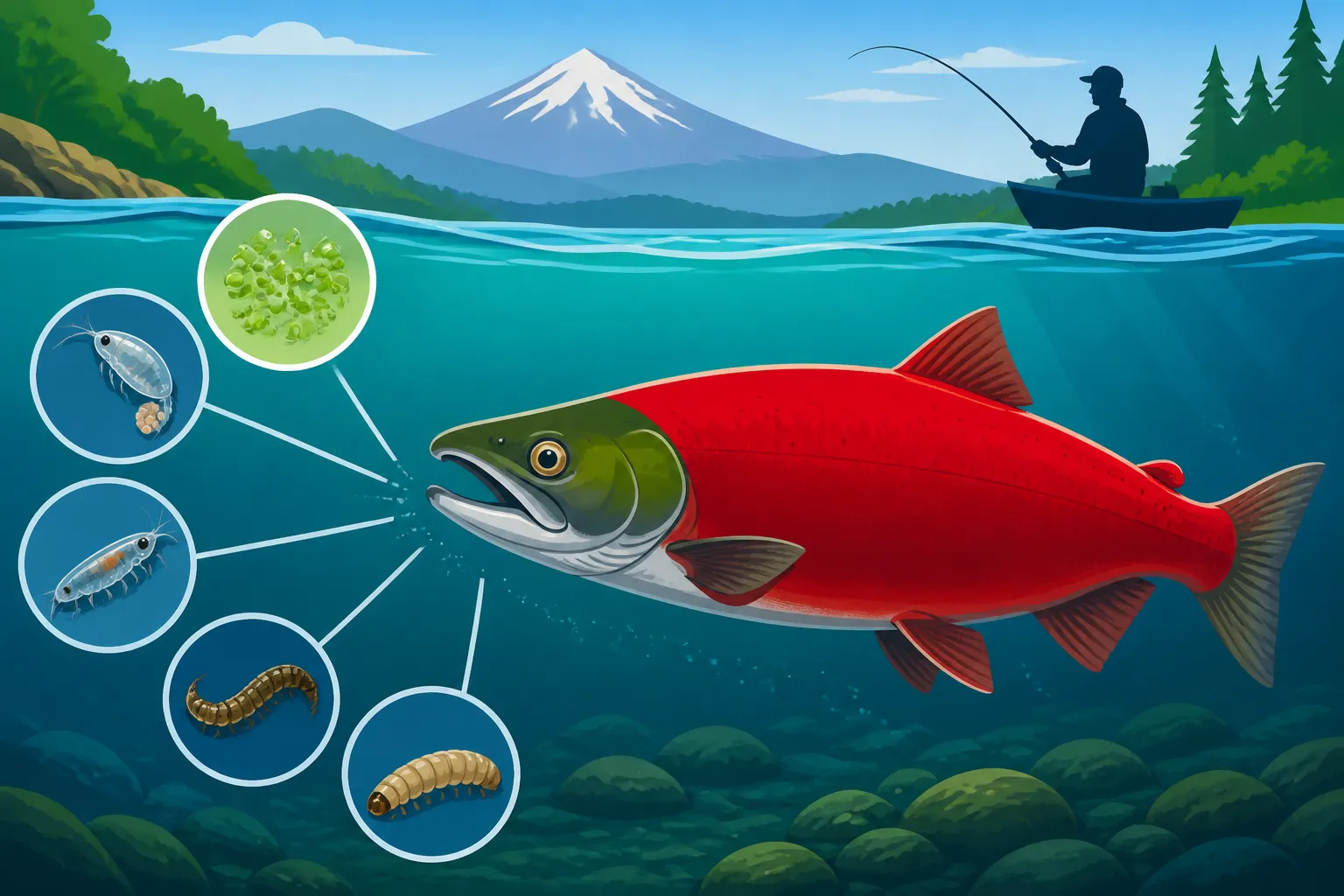
The absolute staple, the bread and butter, the prime rib of the kokanee diet, is zooplankton. These are microscopic animals that drift in the water column of lakes and reservoirs. Think of them as the tiny, living equivalent of dust motes, but far more nutritious. The two main types kokanee key in on are:
- Daphnia (Water Fleas): These are perhaps the most common and important food source. Daphnia are tiny crustaceans, often teardrop-shaped, that propel themselves through the water with antennae. They are abundant in many freshwater lakes, especially those with good water quality and nutrient levels that support the phytoplankton they, in turn, graze on. Kokanee will actively cruise through schools of daphnia, gulping them down by the thousands. When you see kokanee on your fishfinder forming dense schools in the middle of the water column, there's a very high chance they are actively feeding on daphnia blooms.
- Copepods: Another crucial component, copepods are also tiny crustaceans, often slightly more elongated than daphnia, with prominent antennae. They are also incredibly numerous and form a significant part of the kokanee's diet.
These zooplankton species are rich in protein and fats, providing the essential energy kokanee need to grow rapidly. The color of zooplankton can vary, sometimes appearing reddish or brownish, which can influence the color preferences of kokanee for certain lures or baits. When you see guides or experienced anglers talking about "matching the hatch" for kokanee, they're often referring to trying to imitate the size, color, and movement of these tiny zooplankton.
Phytoplankton and Larvae: Supplemental Snacks
While zooplankton are the undisputed kings of the kokanee diet, these fish aren't entirely exclusive. They will also consume other tiny organisms, though usually in smaller quantities or opportunistically.
- Phytoplankton: These are microscopic plant-like organisms, essentially algae, that form the base of the aquatic food web. While kokanee are primarily zooplanktivores (meaning they eat zooplankton), they might inadvertently consume phytoplankton when filtering for zooplankton. In certain situations, particularly when zooplankton are scarce, they might graze on specific types of phytoplankton. However, they lack the specialized digestive systems of true herbivorous fish, so it's not their preferred meal.
- Insect Larvae and Eggs: Occasionally, kokanee might consume very small, free-floating insect larvae or the eggs of other fish, if they happen to drift into their feeding zone. This is usually more of an accidental or opportunistic feeding behavior rather than a targeted hunt. For example, newly hatched midge larvae are extremely tiny and could be an incidental meal. However, don't confuse this with actively hunting larger insects or nymphs like trout might do; it's still about consuming something incredibly small that drifts.
Understanding the dominance of zooplankton in their diet is crucial. It tells you that anything you present to a kokanee, whether it's a lure or bait, needs to be subtle, small, and often scented to replicate the essence of this microscopic food source.
The Role of Water Quality in Food Abundance
The abundance and availability of zooplankton, and therefore kokanee food, are directly linked to the overall water quality and ecosystem health of a lake. It's a chain reaction:
- Nutrient Levels: Lakes with a healthy balance of nutrients (like phosphorus and nitrogen) can support robust phytoplankton blooms.
- Phytoplankton Blooms: These plant-like organisms convert sunlight into energy and are the primary food source for zooplankton.
- Zooplankton Populations: Healthy phytoplankton levels lead to thriving zooplankton populations, creating a rich "buffet" for kokanee.
If a lake experiences poor water quality, such as excessive pollution leading to algal blooms that deplete oxygen, or a lack of essential nutrients, the zooplankton population can suffer. This, in turn, directly impacts the kokanee. A lake with a sparse zooplankton population will likely have fewer, smaller, and less healthy kokanee. Anglers might notice this as tougher fishing, smaller fish on average, or fish with paler flesh color. Conversely, a vibrant lake ecosystem with excellent water quality often produces fat, bright orange-fleshed kokanee, a direct reflection of their rich, zooplankton-heavy diet. This ecological connection highlights why conservation efforts and monitoring lake health are so vital for maintaining productive kokanee fisheries.
Adapting to the Seasons: Kokanee Feeding Habits Through the Year
Just like our own appetites might change with the weather, kokanee salmon adjust their feeding strategies throughout the year. While zooplankton remains their primary food source, the intensity of their feeding, the depths they prefer, and the abundance of that food can fluctuate significantly. Knowing these seasonal patterns is a huge advantage for any angler.
Spring and Summer: High Metabolism, Active Feeding
As water temperatures begin to warm in spring, and especially through the summer months, kokanee metabolism kicks into high gear. This is their prime growth period, and they become incredibly active feeders.
- Spring Blooms: Early spring often sees nutrient turnover in lakes, leading to phytoplankton blooms, which in turn fuel a surge in zooplankton populations. Kokanee will capitalize on this fresh, abundant food supply. They might be found in shallower to mid-depths as the water column stratifies and food becomes available. This is often an excellent time for consistent action.
- Summer Thermocline: By mid-summer, most deep lakes develop a distinct thermocline – a layer of water where the temperature changes rapidly with depth. Kokanee, being cold-water fish, will typically suspend in or just above the thermocline, in the cooler, oxygen-rich waters where their preferred zooplankton also congregate. This means you'll often find them suspended anywhere from 20 to 60 feet deep, or even deeper in very large, clear lakes like Odell Lake. Their feeding is constant, sometimes throughout the day, as they cruise in schools, sifting through the water for their microscopic meals. Lures and baits that mimic these tiny food sources and are presented at the correct depth are key during these months.
During this active period, kokanee can be quite aggressive towards lures presented in their feeding lane. They might strike out of curiosity, irritation, or pure hunger. This is why many anglers have their best success during the warmer months, as the fish are more readily found and are actively searching for food.
Fall and Winter: Slower Pace, Consistent Search
As autumn arrives and water temperatures drop, the entire lake ecosystem begins to slow down. Zooplankton populations may dwindle, and kokanee metabolism also decreases. However, they don't stop eating entirely; they simply become more deliberate in their search.
- Autumn Turnover: Fall brings the "turnover" event in many lakes, where surface waters cool, become denser, and sink, mixing with deeper waters. This can redistribute nutrients and zooplankton throughout the water column, making kokanee a bit more scattered or harder to pattern initially. Their feeding might become more concentrated during specific windows, such as dawn and dusk, when light levels are lower.
- Winter Depths: In winter, under ice or in very cold open water, kokanee will generally hold in deeper, more stable water where temperatures are consistent. While zooplankton are less abundant, the kokanee still need to feed, albeit at a slower rate. They may consolidate into tighter schools, and finding these schools is crucial. Ice fishing for kokanee can be productive, with anglers using small jigs and baits presented slowly at specific depths identified with electronics. Their bites can be very subtle in the cold water, requiring sensitive gear and keen attention. Oregon Winter Fishing Options often highlight the challenges and rewards of this season.
Pre-Spawning Changes: Focused on Survival, Not Just Food
Towards the end of their life cycle, typically in late summer and fall, kokanee undergo dramatic physiological changes as they prepare to spawn. Their bodies transform, their colors deepen to brilliant reds and greens, and their jaws hook in the males. During this phase, their focus shifts almost entirely from feeding to reproduction.
- Diminished Appetite: As they approach spawning, their digestive systems begin to shut down. They become less interested in eating, and their strikes on lures are often more territorial or aggressive rather than a genuine attempt to feed. They are running on stored energy, driven by instinct. This is why targeting pre-spawning kokanee can be more challenging, as you're trying to provoke a reaction strike rather than satisfy hunger.
- Location, Location: During this time, they will migrate towards tributary streams or gravelly shallow areas within the lake where they intend to spawn. Anglers targeting these fish will look for these staging areas, often near stream mouths or along lake edges, rather than the deep, open water where they fed for most of their lives. While you might still catch them, remember they aren't actively trying to feed, which impacts bait and lure selection. For more on their life cycle and species, check out Kokanee Salmon in Oregon.
Angling for Kokanee: Mimicking Their Natural Diet
Now that we understand what kokanee eat, the real fun begins: translating that knowledge into successful fishing strategies. The key is to present something that either directly imitates their tiny food, or at least triggers a predatory or curious response.
Lures and Baits That Imitate Plankton
Since kokanee primarily eat zooplankton, your tackle choices should reflect this. Forget large spoons or plugs; think small, subtle, and often scented.
- Small Hoochies and Squids: These are miniature plastic skirts, often less than 2 inches long, that are designed to imitate small aquatic organisms. They come in a dazzling array of colors, from bright pinks and oranges to subtle greens and blues. The key is their small profile and subtle action in the water. Many anglers will tip these with a kernel of shoepeg corn, which adds a visual attractant and, more importantly, a scent. You can find a vast selection of these on Amazon, often in multi-packs with various colors to experiment with.
- Mini Spoons and Dodgers: While spoons are generally thought of as larger lures, there are very small, lightweight spoons specifically designed for kokanee. These are often used in conjunction with a "dodger" or "flasher" – a larger, reflective attractor blade that creates vibration and flash in the water, mimicking a school of baitfish or drawing attention to the small lure trailing behind it. The dodger doesn't necessarily imitate food, but rather acts as an attention-grabber, while the tiny spoon or hootchie looks like the meal. Colors are critical here; pink, orange, and chartreuse are perennial favorites for Best Lures for Oregon Salmon Fishing when it comes to kokanee.
- Scented Baits and Attractants: This is where the "smell" of plankton comes into play. Kokanee have an incredible sense of smell. Shoepeg corn, soaked in a potent kokanee attractant, is almost universally used. These attractants come in various scents like garlic, anise, krill, or a proprietary blend designed to smell like their natural food. You can purchase specialized kokanee scents on Amazon and pre-soak your corn or apply it directly to your lures. This scent trail is often what seals the deal, drawing fish in from a distance and encouraging a bite, even if the lure itself is a visual imitation.
Remember, the goal is often to trick them into striking, whether out of hunger, curiosity, or even aggression, by presenting something small, flashy, scented, and at the right depth.
Depth and Presentation: Finding the Feeding Zone
Even with the perfect lure, if you're not fishing at the right depth, you're not going to catch kokanee. They are notoriously depth-sensitive, following the thermocline and their zooplankton food source.
- Utilizing Electronics: A good fishfinder is an indispensable tool for kokanee fishing. It allows you to identify the schools of fish, often suspended in the open water. More importantly, it helps you identify the thermocline (which often appears as a distinct, hazy layer on your screen) and the dense clouds of zooplankton that kokanee are feeding on. If you see big arcs of fish just above or within a dense cloud, that's your target depth. Don't be afraid to adjust your depth frequently until you find where the fish are holding and actively feeding.
- Trolling is Key: Most kokanee are caught by trolling. This allows you to cover vast amounts of water and present your lure at a consistent depth. Downriggers are the preferred method for precision depth control, letting you run your lures at exact depths, sometimes stacking multiple lines at different depths to find the productive zone. Without a downrigger, weighted lines or lead core can also be used, though depth control is less precise. Typical trolling speeds range from 1.0 to 1.8 miles per hour, but it's crucial to experiment. Sometimes a slight increase or decrease in speed can trigger a bite. Understanding Oregon Trolling and Boat Fishing Techniques is vital for kokanee.
- Slow and Steady: Kokanee are not typically fast-chasers. Their feeding behavior for tiny zooplankton is more about sifting and gulping. Therefore, a slow, steady troll that allows your dodger and lure to work with a subtle, enticing action is usually more effective than a fast retrieve. Pay attention to your rod tip; the dodger should have a consistent throb, indicating good action.
Finding that perfect combination of depth, speed, and lure action is often what separates a successful kokanee trip from a frustrating one. Remember, these fish live in an expansive aquatic environment, and pinpointing their location and preferences is half the battle.
The Scent Factor: Enhancing Your Offerings
We've touched on scent already, but it's worth emphasizing just how critical it is for kokanee. Their world is one of chemical cues, and a strong, appealing scent can be the ultimate attractant.
- Why Scent Works: Kokanee rely heavily on their olfactory senses to locate food. Even if your lure is small and flashy, adding a scent that mimics their natural diet (or something powerfully attractive like garlic or anise) can make all the difference. It creates a "scent trail" in the water that draws fish in and encourages them to investigate, even if they aren't actively seeing a visible prey item. Think of it like a gourmet chef's aroma wafting down the street – it makes you want to check out the restaurant!
- Application is Key: You can apply liquid or gel attractants directly to your lures, dodgers, and most importantly, your shoepeg corn. Many anglers will pre-soak their corn overnight in their favorite scent before a trip. Reapply scent regularly, especially after catching a fish or if you've been fishing for a while without a bite. The natural oils and slime from fish can neutralize the attractant, so keeping it fresh is important. Brands like Pro-Cure, Pautzke, and Atlas Mike's are popular for their kokanee-specific scents, and you can stock up on a variety of options via Amazon.
- Color and Scent Combinations: Don't be afraid to experiment with different color lures and different scent combinations. Some days, they might prefer pink and garlic; other days, it could be chartreuse and anise. The fish themselves will tell you what they like. Keeping a log of your successful combinations (lure color, dodger color, scent, depth, speed) can help you develop patterns for specific lakes and conditions. This is where the art of kokanee fishing really shines, moving beyond just understanding their diet to mastering the techniques that exploit their feeding habits.
| Season | Primary Food Source | Preferred Depth | Key Angling Strategy | Notes |
|---|---|---|---|---|
| Spring | Zooplankton, emerging larvae | Mid-depths (15-40 ft), following blooms | Trolling small hoochies/spoons, experimenting with depth | Active feeding as water warms, fish are often hungry. |
| Summer | Zooplankton (Daphnia, Copepods) | Thermocline (20-60+ ft), deeper in clear lakes | Precision trolling with downriggers, strong scent focus | Peak growth, consistent feeding in cooler water. |
| Fall | Zooplankton (decreasing abundance) | Variable, shallower towards spawning areas | Target staging areas, reaction strikes, less active feeders | Pre-spawning colors, less interest in eating, more aggressive strikes. |
| Winter | Sparse Zooplankton | Deeper water (40-80+ ft), stable temperatures | Slow trolling or ice fishing small jigs/baits, subtle action | Reduced metabolism, bites can be very light. |
Remember, successful kokanee fishing isn't just about throwing a line in the water; it's about understanding the intricate ecosystem they inhabit and presenting your offerings in a way that truly appeals to their very specific dietary preferences. Good luck out there, and enjoy those delicious kokanee!
Disclaimer
This article is for general informational purposes only and does not constitute professional advice. Laws, prices and regulations vary by location and change over time. Consult a qualified professional for guidance on your specific situation.