Crappie in Oregon
Many anglers in Oregon focus on the big names—salmon, steelhead, and trout—often overlooking the incredible joy and accessibility of chasing panfish. But if you’re looking for consistent action, delicious table fare, and a fantastic way to spend a day on the water, you're missing out if you haven't discovered crappie fishing. This comprehensive guide is here to change that, revealing everything you need to know to successfully target crappie across our beautiful state.
Understanding Crappie in Oregon: The Basics
Crappie are fascinating, prolific, and surprisingly elusive fish once you dig into their habits. They’re a beloved panfish species throughout much of the United States, and here in Oregon, they provide a superb angling opportunity, especially for those looking for a relaxed day or introducing youngsters to the sport. They're part of the sunfish family, known for their flattened bodies and speckled patterns, making them quite distinctive.
Black Crappie vs. White Crappie: What's the Difference Here?
When you’re talking about crappie in Oregon, you’re primarily dealing with two distinct species: black crappie (Pomoxis nigromaculatus) and white crappie (Pomoxis annularis). While they look similar at first glance and often inhabit the same waters, there are some key differences that can influence where and how you target them.
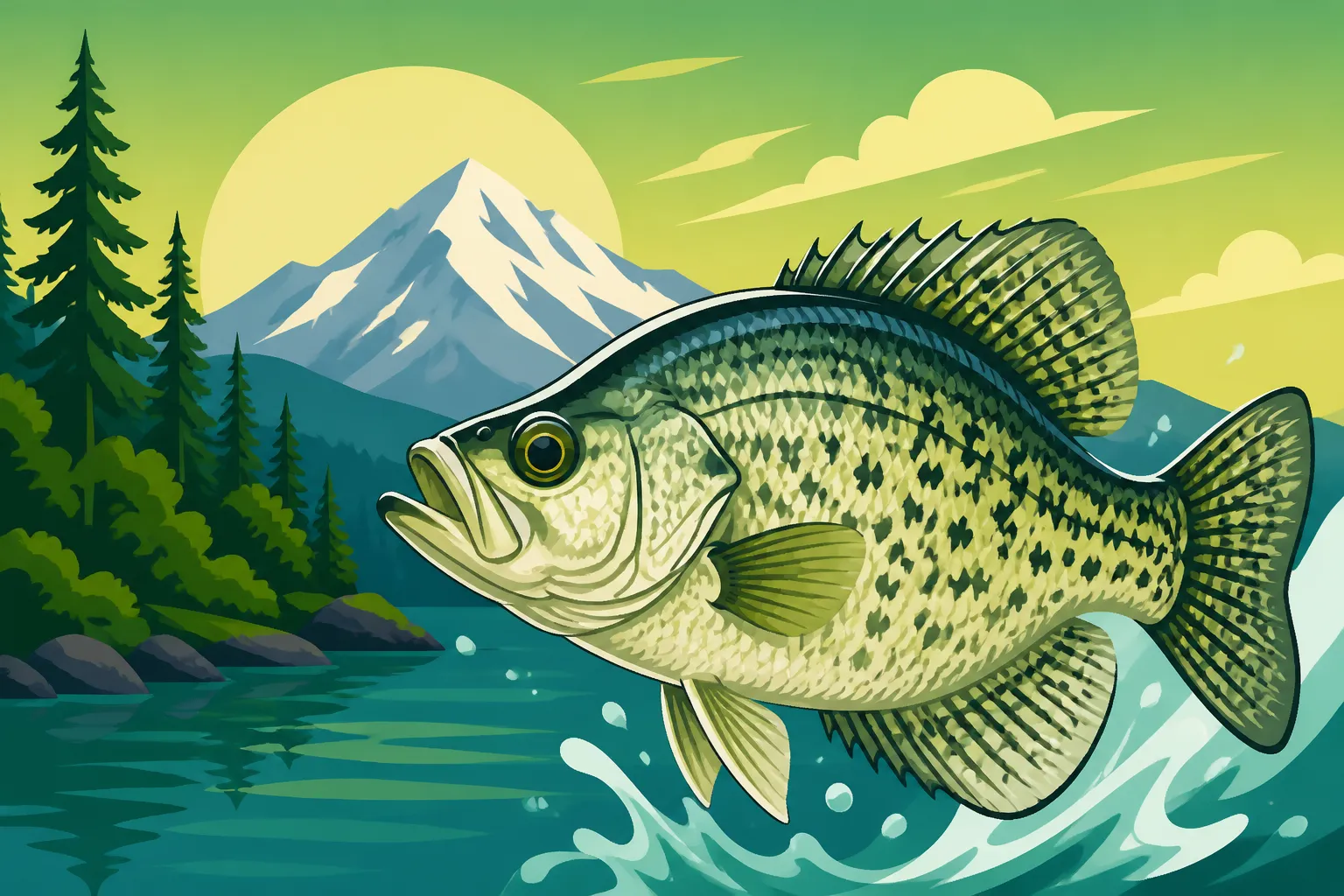
Black crappie tend to be more prevalent in clear water with abundant aquatic vegetation and structure. They have seven or eight dorsal fin spines and a more mottled, speckled pattern that seems scattered across their silver-olive bodies. These spots often look like ink blots. If you’re fishing a lake with lots of submerged brush piles, lily pads, or timber, you’re likely to encounter black crappie. They’re generally a bit more round-bodied than their white cousins.
White crappie, on the other hand, are often found in more turbid, open water environments, including larger rivers, reservoirs with less vegetation, or areas with clay bottoms. They typically have six dorsal fin spines, and their dark markings usually form distinct vertical bars on their sides, though these can fade depending on water clarity and mood. They also tend to have a slightly more elongated body shape. Understanding these subtle differences can sometimes help you fine-tune your approach or predict which species you're more likely to encounter in a given spot. Both species offer excellent fishing and eating! For a broader look at other similar species, check out our guide on Oregon Warmwater Fish Species.
Why Crappie are So Popular (and Underrated!)
Crappie are often called "slab crappie" by devoted anglers, a testament to their broad, plate-like bodies that yield generous fillets. Their popularity stems from several key factors. First, they are incredibly tasty, with flaky, white meat that holds up well to frying, baking, or grilling. Many folks consider them among the best-eating freshwater fish available.
Second, crappie are schooling fish, which means if you find one, you're likely to find many more. This makes for exciting, fast-paced fishing, especially for kids or beginners who thrive on consistent bites. There's nothing quite like dropping a jig into a brush pile and pulling out a crappie on nearly every cast for a solid half-hour! They also tend to be less spooky than trout or bass, making them a bit more forgiving for less experienced anglers. They’re not usually the hardest fighters, but their numbers make up for any lack of individual battle. They’re truly one of Oregon’s most accessible and enjoyable fish species.
Prime Oregon Habitats: Where to Find Crappie
Knowing where crappie live is half the battle when it comes to consistently catching them. These panfish are true structure magnets, loving cover that provides both ambush points for prey and protection from predators. Oregon offers a diverse range of habitats where crappie thrive, from sprawling reservoirs to quiet farm ponds.
Reservoirs: The Crappie Hotspots
Oregon’s larger reservoirs are arguably the best places to target crappie, often boasting healthy populations of both black and white crappie. These vast bodies of water provide the ideal mix of open water, submerged timber, rock piles, and old creek channels that crappie absolutely adore. Think about places like Henry Hagg Lake, Prineville Reservoir, and Brownlee Reservoir.
When water levels fluctuate, crappie will often relate to the newly submerged vegetation or standing timber. If you're on a boat, use your fish finder to locate submerged brush piles, old roadbeds, or sharp drop-offs. These are classic crappie hangouts. On a sunny day, they might be suspended in open water, but more often, they'll be tucked tight to structure. Many savvy anglers even create their own crappie habitats by sinking Christmas trees or bundles of brush in productive areas, although you need to ensure this is allowed by local regulations. Keep in mind that crappie can move around quite a bit, so patience and exploration are key when tackling these larger waters. For advanced techniques, consider learning more about Trolling Techniques for Oregon Reservoirs.
Lakes and Ponds: Hidden Gems
Beyond the major reservoirs, countless smaller lakes and ponds across Oregon hold excellent populations of crappie. These can range from publicly accessible municipal ponds to private farm ponds (always ask permission before fishing private land!). These smaller bodies of water often warm up faster in the spring, leading to earlier spawning activity and more accessible shallow-water fishing.
Look for areas with lily pads, cattails, fallen trees, or docks. Crappie will hold tight to this cover, especially during the warmer months. These spots are often perfect for bank fishing or targeting with a small canoe, kayak, or float tube. Places like Fern Ridge Reservoir or smaller community ponds often get stocked or have established populations. Don't be afraid to try some of the less-talked-about spots; a little detective work on maps can often reveal a hidden crappie haven. These smaller, more intimate settings are fantastic for a peaceful day of angling, and they can be incredibly productive, yielding some surprisingly large "slabs" for those willing to explore.
River Backwaters and Sloughs: Don't Overlook Them
While crappie are often associated with lakes, don't overlook the potential of river backwaters, sloughs, and oxbows, especially on slower-moving river systems like the Willamette or the lower Columbia River. These areas provide calm, warm water and often contain plenty of submerged cover, making them ideal crappie habitat.
During periods of high water or fluctuating river levels, crappie might move into these protected areas to escape strong currents and find stable conditions. Look for sections of the river that have very little flow, dead-end channels, or side pockets with brush and timber. These areas can be fantastic during the spring and fall when crappie are actively feeding. Access can sometimes be tricky, requiring a small boat or even just careful wading, but the reward of finding an untouched school of crappie can be well worth the effort. Always be mindful of currents and fluctuating water levels when fishing river systems.
Gear Up for Crappie: Rods, Reels, and Terminal Tackle
One of the great things about crappie fishing is that you don't need a massive amount of specialized, expensive gear. In fact, simple, light tackle is often the most effective. The key is to have a setup that allows for delicate presentations and can feel the often subtle bites of crappie.
The Right Rod and Reel Setup for Panfish
For crappie, a lightweight spinning rod and reel combo is your best friend. A good starting point is a rod in the 5 to 7-foot range, with an "ultra-light" or "light" power rating and a "fast" or "moderate-fast" action. This kind of rod will allow you to cast small jigs and baits accurately and provide the sensitivity needed to detect those faint crappie taps. It also makes even a modest crappie feel like a real fighter, which is part of the fun!
Pair this with a small spinning reel (something in the 1000 to 2000 size range) spooled with light line. Monofilament line in 4 to 6-pound test is a classic choice, offering good knot strength and a bit of stretch to absorb sudden runs. Some anglers prefer braided line in the same breaking strength for its superior sensitivity and castability, often adding a fluorocarbon leader for stealth. You can find excellent, affordable light tackle setups on platforms like Amazon, perfect for getting started without breaking the bank. Remember, light gear isn't just for fun; it's genuinely more effective for crappie.
Essential Terminal Tackle: Hooks, Sinkers, and Floats
Your terminal tackle for crappie fishing should be small and subtle. For hooks, size 4, 6, or 8 Aberdeen or baitholder hooks are ideal when using live bait. These hooks are thin-wired, which helps them penetrate easily and reduces damage to your bait.
When it comes to sinkers, you'll want small split-shot weights, ranging from BB size up to 1/8 ounce, depending on depth and current. The goal is just enough weight to get your bait down to the desired depth. For fishing around cover, a slip sinker rig can be effective.
Floats (or bobbers) are indispensable for crappie fishing, especially when presenting live bait or small jigs at a specific depth. Both traditional clip-on bobbers and slip bobbers have their place. Slip bobbers are fantastic for fishing deeper water or when you need to cast a long distance, as they allow the bait to fall freely until the line stop. For shallow water or directly beneath the boat, a fixed clip-on bobber works perfectly. Choose small, sensitive floats that signal even the slightest nibble. Having a variety of these items in your tackle box is always a good idea.
Bait and Lure Selection: What Crappie Can't Resist
Crappie are not particularly picky eaters, but they do have their favorites. Live bait is often the most effective, with small minnows (often called "crappie minnows") being the absolute gold standard. Hook them lightly through the lips or just behind the dorsal fin. Worms, especially small pieces of nightcrawlers or red worms, can also be very effective, particularly in stained water.
For artificial lures, small jigs are the undisputed champion. Think 1/32 to 1/8 ounce jigs, often paired with soft plastic bodies like grub tails, tubes, or small swimbaits. Colors can vary, but chartreuse, white, black, and pink are consistent producers. Experiment with different colors and retrieve speeds until you find what the crappie prefer on any given day. Small spinners like those from brands like Panfish Assassin or tiny spoons can also trigger strikes. Crappie also respond well to tiny crankbaits, especially when trolled. Having a diverse selection of these in your tackle box, maybe picked up in a multi-pack from Amazon, will ensure you’re ready for any situation. For more general advice on what to put on your hook, check out our Oregon Bait and Lure Guide.
Tried-and-True Crappie Fishing Techniques
Once you've got your gear sorted and you know where crappie like to hang out, it's time to talk about how to catch them. Crappie are often caught using surprisingly simple, yet highly effective, techniques that rely on finesse and accurate presentations.
Jigging and Vertical Presentation
Jigging is arguably the most popular and effective way to catch crappie, especially when they're holding tight to submerged structure or suspended in schools. This technique involves dropping a small jig directly down to the crappie's depth and then imparting subtle movements to make it dance.
From a boat, use your fish finder to pinpoint crappie schools or brush piles. Once located, position your boat directly over them. Drop your jig down to their depth. You can use a slow, steady lift-and-drop retrieve, or simply twitch the rod tip to make the jig pulsate. Sometimes a completely motionless presentation, especially with a live minnow on the jig, is what triggers a bite. The key is to stay sensitive to your line; crappie bites can be incredibly light, feeling like a slight tap or just added weight. This technique is also fantastic for fishing docks or bridge pilings from shore. If you're new to fishing, mastering this simple technique is a great starting point, as detailed in our Oregon Fishing Techniques for Beginners guide.
Trolling for Suspended Crappie
When crappie are scattered or suspended in open water, often during the warmer months, trolling can be an incredibly effective way to cover water and find active fish. This usually involves dragging multiple lines behind a slow-moving boat, presenting jigs, small crankbaits, or live bait at various depths.
"Spider rigging" is a common trolling technique for crappie, where multiple long rods are set out from the front and sides of the boat, creating a spider-like array. This allows you to present baits at different depths and distances simultaneously. Use a fish finder to identify the depth at which crappie are holding, then adjust your baits accordingly. Speed is crucial here; crappie often prefer a very slow troll, just enough to give your lure some action. Keep an eye on your rod tips for any slight bend or twitch that indicates a bite. This technique is especially useful in large reservoirs where crappie might be chasing baitfish schools in open water.
Using Bobbers and Live Bait Effectively
The classic bobber and live bait setup might seem basic, but it's a timeless crappie catcher, particularly effective for bank anglers, kids, or when crappie are in shallow water around visible cover. It's a fantastic way to keep your bait suspended at a precise depth where crappie are feeding.
Whether using a fixed bobber in shallow areas or a slip bobber for deeper presentations, the principle is the same: bait your hook with a small minnow or piece of worm, set your bobber to the desired depth (often just above the visible cover or fish depth), and cast it out. Watch the bobber closely; a crappie bite can range from a violent dunk to a subtle shimmy. If the bobber moves horizontally, dips slightly, or simply goes still when it should be drifting, set the hook! This method is incredibly visual and rewarding, making it a favorite for many, including families introducing children to fishing.
Mastering the Seasons: When and How Crappie Behave
Crappie behavior is heavily influenced by water temperature and the changing seasons. Understanding these patterns can dramatically increase your success rate, allowing you to anticipate where fish will be and what techniques will work best throughout the year.
Spring Spawning Frenzy: Shallow Water Action
Spring is arguably the best time to target crappie in Oregon, as warming water temperatures trigger their spawning migration into shallow waters. As water temperatures climb into the 50s and low 60s Fahrenheit, crappie move from deeper wintering holes into bays, coves, and flats with protective cover.
During the pre-spawn, they'll be actively feeding to build energy for spawning. Look for them around emergent vegetation, submerged timber, and brush piles in 3-10 feet of water. As spawning begins (when water temps hit the mid-60s), crappie will often be found right on the beds, which are typically shallow, hard-bottomed areas. This is when they are most aggressive and easiest to catch. Small jigs, minnows under a bobber, or even tiny crankbaits cast into these shallow areas can result in non-stop action. This season often coincides with pleasant weather, making for a truly enjoyable outing. For general information about seasonal changes, consult our Oregon Fishing Seasons Explained guide.
Summer Deepwater Strategies
As summer heats up and water temperatures rise, crappie tend to move away from the extreme shallows and seek deeper, cooler water. They'll often school up around main lake points, submerged humps, deep weed lines, and standing timber in 15-30 feet of water or more, especially during the brightest parts of the day.
This is where your boat's electronics become invaluable for locating those deep schools. Vertical jigging or slow trolling with jigs or live minnows becomes the dominant strategy. You might find them suspended over deep water, particularly early in the morning or late in the evening when they move up to feed on baitfish. Pay attention to shaded areas, like bridge pilings or deep docks, which can also hold crappie seeking refuge from the sun. Night fishing can also be highly productive in summer, as crappie are attracted to lights on the water that draw in baitfish.
Fall and Winter: Finding the Schools
Fall can offer another fantastic crappie bite as water temperatures begin to cool, and fish once again move shallower to feed aggressively before winter. They'll often be found in similar locations to the spring pre-spawn, but perhaps a bit deeper as the season progresses, focusing on major creek channels, points, and deep brush piles.
Winter fishing for crappie can be challenging but incredibly rewarding. In colder waters, crappie will typically school up tightly in deep, stable areas like creek channels, basin drop-offs, or massive brush piles. They become less active, and their bites are extremely subtle. Ice fishing, where available and safe in eastern Oregon, is a prime winter crappie pursuit, but open water anglers will need to use sensitive electronics and precise vertical jigging techniques to coax bites. In winter, patience is your best friend, and when you find a school, the action can still be fantastic.
Oregon's Crappie Regulations and Best Practices
While crappie are generally abundant, it's crucial for every angler to understand and follow Oregon's fishing regulations to ensure healthy fish populations for years to come. Being a responsible angler means more than just knowing how to catch fish; it means preserving the resource.
Understanding Daily Bag Limits and Size Restrictions
Oregon generally has quite liberal regulations for panfish like crappie, reflecting their healthy populations in many waters. However, it is absolutely vital to check the current Oregon Sport Fishing Regulations for the specific body of water you plan to fish, as rules can vary by zone, lake, or even by species. Our overarching guide to Oregon Fishing Regulations Explained is a great resource, but always verify for your specific trip.
Typically, for crappie, you'll find generous daily bag limits, often in the dozens, and sometimes no size restrictions at all. This is because crappie can overpopulate certain waters, leading to stunted growth. In such cases, retention is actually encouraged to help thin out the population and allow the remaining fish to grow larger. However, always confirm the specific rules for your chosen destination. Even if you're planning to catch a lot, don't keep more than you can realistically eat or process. Being aware of Oregon Daily Bag Limits Explained is a fundamental part of responsible angling.
Practicing Ethical Catch and Release (or Retention!)
Whether you're catching and releasing or planning to fill a cooler, ethical practices are important. When retaining crappie, bring a cooler with ice to keep your catch fresh. Use a measuring device if there are any size limits, and a stringer or livewell if you're keeping them alive for a short period before cleaning.
If you're practicing catch and release, handle the fish as little as possible. Wet your hands before touching them to protect their slime coat, which is their primary defense against disease. Use pliers or a hook remover to quickly extract hooks, especially if they are deeply set. Avoid dragging the fish through sand or dirt. If a fish is bleeding heavily or appears severely injured, it's often more humane to retain it if legal, rather than releasing it to die. Remember, part of the joy of fishing is ensuring that future generations can enjoy the same opportunities, which means treating the fish and their environment with respect.
| Crappie Species | Dorsal Fin Spines | Body Markings | Preferred Habitat | Common Size Range |
|---|---|---|---|---|
| Black Crappie | 7-8 | Scattered speckles | Clearer water, abundant vegetation | 8-12 inches, up to 15+ |
| White Crappie | 6 | Vertical bars (fades) | Turbid/open water, less vegetation | 8-12 inches, up to 15+ |
Disclaimer
This article is for general informational purposes only and does not constitute professional advice. Laws, prices and regulations vary by location and change over time. Consult a qualified professional for guidance on your specific situation.