Oregon Coast Fishing Spots
Oh, the Oregon Coast! There's nothing quite like the salty air, the crashing waves, and the incredible promise of what might be biting beneath the surface. But let's be real, with hundreds of miles of stunning coastline, trying to figure out where to even start your fishing adventure can feel utterly overwhelming. You want to drop a line where the fish are, but which bay, which jetty, or which offshore reef holds the best chance? This comprehensive guide is here to untangle that confusion, breaking down the prime Oregon Coast fishing spots and giving you the insider knowledge you need to plan a truly successful and memorable trip.
Understanding the Unique Challenges of Oregon Coast Fishing
Before we dive into specific hot spots, it's crucial to acknowledge that fishing the Oregon Coast isn't always like a calm day on a placid lake. It's a wild, dynamic environment that demands respect and preparation. Many anglers, especially those new to saltwater or coastal river fishing, often underestimate the power of the ocean and the nuances of estuarine systems. This isn't just about throwing a line in; it's about understanding the rhythm of the tides, the sudden shifts in weather, and the specific regulations that keep these fisheries healthy.
Coastal Weather and Tides
One of the biggest factors separating a fantastic coastal fishing day from a frustrating washout is the weather. Unlike inland fishing, where a little rain might just mean putting on a warmer jacket, coastal weather can turn treacherous quickly. We're talking about high winds, heavy seas, and dense fog that rolls in with little warning. Even on a seemingly sunny morning, conditions can shift dramatically by afternoon. Many a hopeful angler has arrived at the coast only to find their planned ocean trip cancelled due to rough bars or offshore swells.
Beyond the general weather, tides are absolutely paramount here. The ebb and flow of the ocean dictate everything from where fish feed to when it's safe to cross a bar in a boat. A strong incoming tide might bring baitfish into a bay, activating salmon, while a swift outgoing tide could make crabbing nearly impossible due to the current. Learning to read tide charts and understand how they affect your chosen fishing spot is not just helpful; it's essential. For instance, clamming is only possible during very low tides, and certain bar crossings for boats are only safe during specific tidal windows. Ignoring these can lead to a fruitless trip or, worse, a dangerous situation.
Navigating Regulations and Endorsements
Another hurdle many folks encounter is the sheer complexity of Oregon's fishing regulations when it comes to the coast. It's not just about buying a basic fishing license. Depending on what you want to catch and where you plan to fish, you'll likely need additional tags and endorsements. For example, if you plan to fish for salmon or steelhead, you'll need an Oregon Combined Angling Tag Guide. If your dreams involve heading out into the Pacific for halibut or rockfish, you'll need an Oregon Ocean Endorsement. And if you're hoping to drop some crab pots or dig for clams, a separate Oregon Shellfish License is mandatory.
These aren't just bureaucratic hoops; they're designed to protect our precious coastal resources and ensure sustainable fishing for generations to come. Many people get caught off guard, assuming their standard inland license covers everything. Always, always check the current Oregon Department of Fish and Wildlife (ODFW) regulations booklet or website before you head out. Rules can change seasonally or even with emergency closures, so staying informed is key. Getting caught without the correct endorsement can lead to fines and a ruined day, so a little homework goes a long way.
Northern Oregon Coast: Classic Destinations and Hidden Gems
The Northern Oregon Coast is a treasure trove of fishing opportunities, from the bustling mouth of the Columbia River down to the more serene bays. This region is easily accessible for those coming from Portland or other northern parts of the state, making it a popular choice for day trips and weekend getaways. What's fantastic about this stretch is the sheer variety: you can target trophy salmon, fill your crab pot, or cast for surfperch, all within a relatively short drive.
Astoria and the Columbia River Mouth
Astoria, perched at the mouth of the mighty Columbia River, is legendary among anglers, especially during late summer and early fall. This is where the famous Buoy 10 Fishing Guide fishery takes place, attracting thousands of boats chasing enormous Chinook and Coho salmon as they stage before heading upriver. It's an electric atmosphere, a true spectacle of Oregon fishing. But be warned, it's not for the faint of heart; strong tides, massive boat traffic, and challenging bar conditions are the norm. Successfully navigating this fishery often requires local knowledge or a skilled guide.
Beyond the chaos of Buoy 10, the lower Columbia River itself offers incredible opportunities for salmon, steelhead, and even sturgeon. Bank anglers can find success from various public access points, particularly for coho and fall Chinook. The jetties at the mouth of the Columbia are also fantastic for bottomfishing for rockfish and lingcod, or even casting for surfperch. Don't forget, if you're fishing on the mainstem Columbia, there are often reciprocal agreements with Washington licenses, but always double-check specific rules for your location to ensure you're compliant.
Tillamook Bay: A Salmon and Crabbing Haven
A little further south, you'll find Tillamook Bay Fishing Guide, a massive, sprawling estuary that's renowned for its incredible salmon runs and year-round crabbing. This bay is fed by five major rivers—the Tillamook, Trask, Wilson, Kilchis, and Miami—all bringing in healthy runs of Chinook and Coho salmon, especially in the fall. The sheer size of the bay means there are countless spots to explore, whether you're trolling from a boat, drift fishing from a McKenzie-style drift boat, or plunking from the bank.
Crabbing in Tillamook Bay is practically a religion. Folks come from all over to drop pots, and it's not uncommon to go home with a limit of delicious Dungeness crab. The bay is also a prime spot for clamming during low tides, particularly for cockles and littlenecks. For those who prefer saltwater species, the jetties at Barview offer excellent opportunities for rockfish, lingcod, and greenling. What makes Tillamook so special is its versatility; you can easily combine a morning of salmon fishing with an afternoon of crabbing, making it perfect for families or groups with diverse interests.
Nehalem Bay and Manzanita: Diverse Opportunities
Heading just a bit south from Tillamook, you'll encounter Nehalem Bay, a slightly smaller but equally productive estuary nestled between the charming towns of Nehalem and Manzanita. The Nehalem River boasts strong runs of fall Chinook and winter steelhead, providing excellent fishing from late summer through early spring. While not as large as Tillamook Bay, Nehalem offers fantastic trolling opportunities for salmon, especially near the mouth and in the deeper channels.
Bank access along the Nehalem River and its tributaries is quite good, with numerous parks and pullouts where you can try your luck. Similar to Tillamook, Nehalem Bay is also a fantastic crabbing destination. The calmer waters of the bay make it a popular spot for kayak anglers and those who prefer a less hectic environment than the larger bays. Additionally, the beaches around Manzanita and Nehalem offer decent surfperch fishing, especially during calmer conditions, providing a different kind of coastal angling experience altogether.
Central Oregon Coast: Popular Bays and Offshore Adventures
The Central Oregon Coast is arguably the most visited stretch, dotted with iconic towns like Newport, Depoe Bay, and Pacific City. This region offers a fantastic blend of bay fishing, offshore charters, and unique angling experiences that draw people back year after year. It's a great place to experience the full spectrum of Oregon Coast fishing, from easy access crabbing to adrenaline-pumping tuna trips miles offshore.
Pacific City: Dory Boat Launch and Rockfish Havens
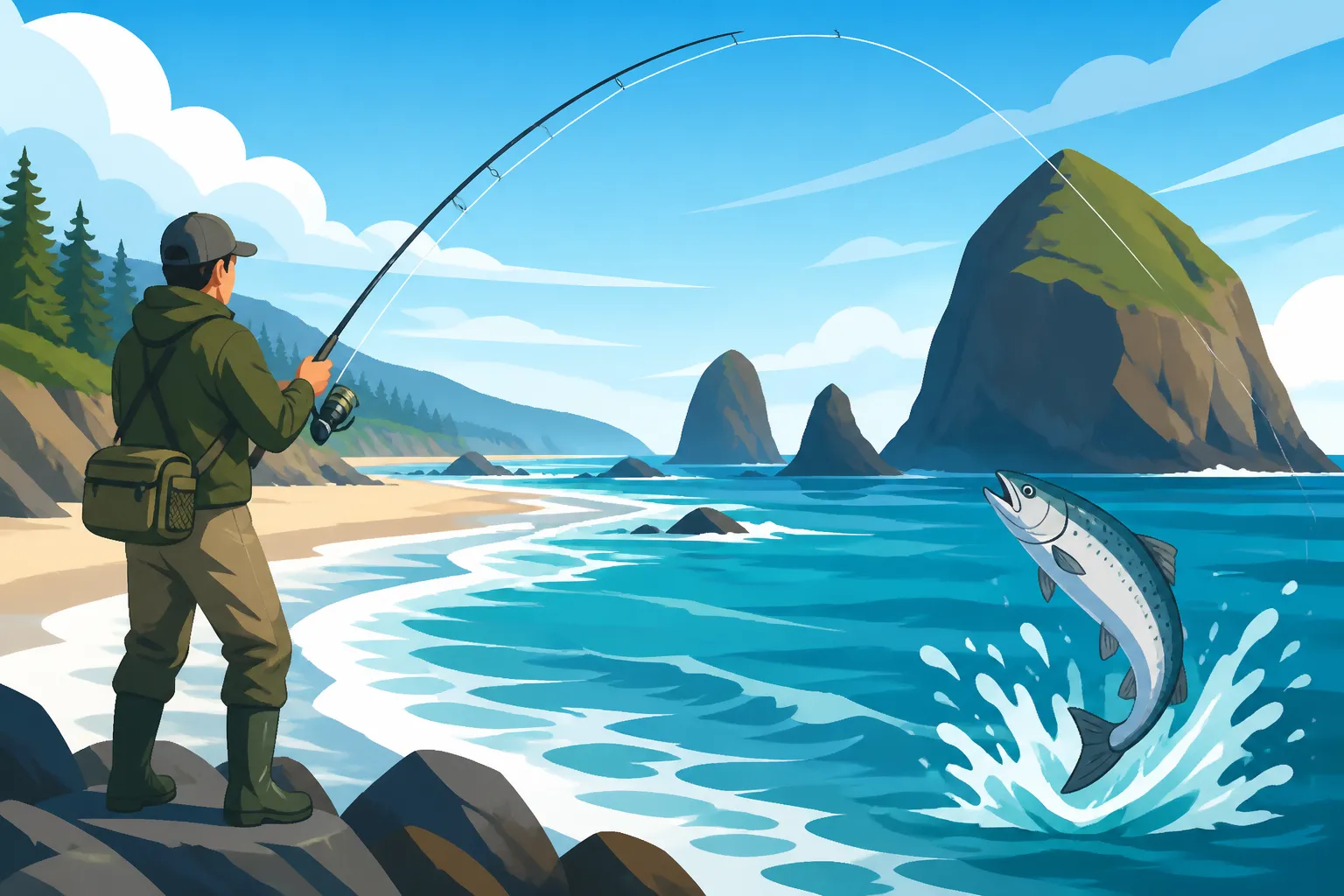
Pacific City is famous for its iconic Haystack Rock and its unique dory boat fleet. Unlike most coastal towns where boats launch from a marina, dories are launched directly from the beach, straight into the ocean. This traditional method offers a truly authentic and exhilarating experience. These dory boats primarily target bottomfish like rockfish and lingcod, often in relatively shallow waters close to shore. It's a fantastic way to experience ocean fishing without venturing too far out.
Beyond the dory boats, the beaches around Pacific City also offer excellent surfperch fishing. The Nestucca River, which flows into the ocean near Pacific City, provides opportunities for salmon and steelhead during their respective seasons. For those looking for a unique coastal fishing adventure, Pacific City definitely delivers a memorable experience, combining rugged tradition with abundant fish. Just be sure to check weather and surf conditions carefully before attempting a dory launch or heading out on your own.
Depoe Bay: Whale Watching and Deepwater Charters
Known as the "whale watching capital of the Oregon Coast," Depoe Bay is also a significant hub for offshore fishing charters. While its tiny harbor is perhaps the world's smallest navigable port, it provides access to some incredibly productive deepwater fishing grounds. Charters out of Depoe Bay often target halibut, lingcod, and various rockfish species, venturing further offshore than the dory boats of Pacific City.
If you're dreaming of a big Pacific halibut, a charter out of Depoe Bay might be your best bet. These trips typically require a longer day and can go many miles offshore, so they're not for the easily seasick. However, the rewards can be substantial. For those who prefer to stay closer to shore, the rocky coastline around Depoe Bay offers some excellent opportunities for shore fishing for rockfish from strategic points, though access can be challenging in many areas. It's a town that truly embraces its ocean-going heritage, and the charter fleet here is experienced and professional.
Newport: Diverse Opportunities from Bay to Ocean
Newport is arguably the most prominent fishing hub on the Central Oregon Coast, offering an incredibly diverse range of angling opportunities. From the bustling bay to deep offshore waters, Newport has something for everyone. Yaquina Bay, the large estuary that Newport sits on, is an absolute hotspot for crabbing year-round. It's also a prime location for clamming, especially for cockles and butter clams, during low tide series. Many visitors rent crab rings or drop pots right from public docks or from boats, making it very accessible.
For those venturing into the ocean, Newport's charter fleet is extensive, offering trips for everything from bottomfish (rockfish, lingcod) to halibut, salmon, and even albacore tuna when they migrate close to shore in late summer. Newport Oregon Fishing Charters are numerous, giving you plenty of options, whether you're a seasoned angler or a family looking for a fun day out. The jetties at the mouth of Yaquina Bay are also fantastic for shore anglers, providing access to diverse species, including surfperch, rockfish, and sometimes even salmon, depending on the season and tide. You can literally spend days exploring all the different fishing options here.
Florence and Winchester Bay: Crabbing and Ocean Access
Further south on the Central Coast, Florence offers access to the Siuslaw River and its estuary, another excellent spot for crabbing and clamming. The Siuslaw River also sees runs of salmon and steelhead, particularly in the fall and winter, providing river fishing opportunities for those willing to explore its reaches. The bar crossing at the mouth of the Siuslaw can be challenging, but for experienced boaters, it provides access to offshore fishing grounds.
Just a bit south of Florence, Winchester Bay is another popular destination, especially for fall Chinook salmon. The Umpqua River, one of Oregon's largest rivers, empties into the ocean here, creating a highly productive estuary. Winchester Bay Oregon Fishing Charters are very active during the salmon runs, trolling for big Chinook within the bay and just outside the bar. Like other major estuaries, Winchester Bay also offers excellent crabbing and some clamming opportunities. It’s a bit more laid-back than Newport but still provides ample access to both bay and ocean fisheries, particularly during the peak salmon season.
Southern Oregon Coast: Rugged Beauty and Abundant Fisheries
The Southern Oregon Coast is characterized by its dramatic cliffs, pristine beaches, and wild rivers that empty into the Pacific. This region often feels a bit more remote and less crowded than the central or northern coasts, offering a true escape for anglers looking for solitude and spectacular scenery alongside great fishing. The rivers here are famous for their robust salmon and steelhead runs, and the offshore waters are incredibly productive for bottomfish and halibut.
Coos Bay: The Largest Estuary
Coos Bay is the largest estuary on the Oregon Coast, offering a vast expanse of water to explore. This makes it a fantastic multi-species fishery. Crabbing in Coos Bay is excellent year-round, with numerous public docks and boat launches available. Like Tillamook and Yaquina, it's also a prime spot for clamming during low tides, with a rich variety of species available.
The Coos River system, which feeds into the bay, supports strong runs of fall Chinook salmon, providing exciting fishing opportunities both in the bay and upriver. Bank anglers can find success, and boaters have ample room to troll. Beyond the bay, the jetties at the entrance offer productive fishing for various rockfish species and lingcod. Coos Bay truly lives up to its "largest estuary" title by providing a huge playground for anglers of all stripes.
Port Orford: Unique Dolly Dock Access
Port Orford is unique on the Oregon Coast because it's the only open-ocean port with a "dolly dock" system. Instead of a protected harbor, boats are lifted by crane and launched directly into the ocean. This ingenious system allows smaller vessels to access incredibly rich offshore fishing grounds that are often too far for similar boats launching from protected bays. Much like Pacific City's dories, this offers a unique and memorable fishing experience.
Charters out of Port Orford focus heavily on bottomfish, including a fantastic variety of rockfish, lingcod, and cabezon. They also target halibut when the season is open. The rugged coastline and offshore reefs here create prime habitat for these species. For shore anglers, the jetties and rocky outcroppings around Port Orford can yield good results for rockfish, though caution is always advised due to the exposed nature of the coastline. It's a fantastic spot for those seeking an authentic, rugged coastal fishing adventure.
Gold Beach and the Rogue River Mouth
Gold Beach sits at the mouth of the legendary Rogue River, a river famous for its incredible runs of salmon and steelhead. The Rogue River Fishing Guide fishery, particularly for fall Chinook, is a huge draw here. Anglers can fish from boats in the bay and just outside the bar, or from various bank access points along the lower river. The Rogue is also known for its strong runs of summer and winter steelhead, providing year-round angling opportunities further upstream.
Like other coastal estuaries, the Rogue River mouth also offers good crabbing. For ocean anglers, charters out of Gold Beach focus on bottomfish and occasional salmon. The sheer wildness and beauty of the Rogue River make fishing here an unforgettable experience, combining stunning natural surroundings with excellent chances at trophy fish. Be sure to check the specific regulations for the Rogue River, as it often has unique rules compared to other Oregon rivers.
Brookings: Southernmost Gateway to Offshore Excitement
Brookings, Oregon's southernmost coastal town, is often called the "Banana Belt" due to its milder climate. This welcoming town is a prime jumping-off point for offshore adventures, especially for those targeting albacore tuna. When the tuna push close to shore in late summer, Brookings becomes a bustling hub for tuna charters. These trips often involve long runs offshore, but the reward of fresh albacore is well worth it for many anglers.
Beyond tuna, charters out of Brookings also offer excellent opportunities for bottomfish (rockfish, lingcod) and halibut. The harbor provides safe moorage and easy access to the ocean. The Chetco River, which flows into the ocean at Brookings, is renowned for its incredible fall Chinook salmon and winter steelhead runs. Bank anglers and drift boaters flock to the Chetco during peak seasons. For those who love the thrill of big game ocean fishing or the challenge of a wild river, Brookings offers a fantastic southern Oregon experience.
Targeting Specific Species Along the Coast
Understanding where to fish is only half the battle; knowing what to fish for and how to catch it is equally important. The Oregon Coast is incredibly diverse in its fisheries, offering opportunities for a wide range of species. Each species often requires specific techniques, gear, and an understanding of its preferred habitat and seasonal movements.
Salmon and Steelhead: River Mouths and Estuaries
The pursuit of salmon and steelhead is a quintessential Oregon fishing experience. These anadromous fish spend most of their lives in the ocean before returning to their natal rivers to spawn. This migration creates incredible fishing opportunities at the river mouths and within the estuaries. Fall Chinook and Coho salmon are the primary targets in bays like Tillamook, Nehalem, Yaquina, and Coos Bay, as well as the Columbia River mouth (Buoy 10). Trolling with bait like herring or anchovies, or with large plugs and spinners, is a common and effective technique for these aggressive biters.
Winter and summer steelhead, on the other hand, are typically targeted further up the coastal rivers. Rivers like the Wilson, Trask, Nestucca, Siletz, Alsea, Umpqua, Rogue, and Chetco all boast strong steelhead runs. For Oregon Steelhead Fishing Techniques, popular methods include drift fishing with roe or artificial baits, float fishing with jigs, and fly fishing with various patterns. The timing of these runs is crucial; winter steelhead usually peak from December to March, while summer steelhead typically arrive from late spring through fall. Always remember to check if a river is open for retention of wild or hatchery fish, as many rivers have strict catch-and-release rules for wild populations.
Bottomfish and Halibut: Offshore Reefs and Structure
For those who love the thrill of ocean fishing, the Oregon Coast offers incredible opportunities for bottomfish and halibut. Bottomfish, a collective term for various rockfish species (black rockfish, blue rockfish, vermilion rockfish, etc.) and lingcod, are abundant on offshore reefs, rocky ledges, and other submerged structures. These fish are generally targeted by jigging with leadhead jigs and soft plastics, or by using bait like squid or herring on spreader bars. Charters from ports like Newport, Depoe Bay, and Brookings frequently offer dedicated bottom fishing trips, often yielding impressive catches. Oregon Bottom Fishing Charters in Oregon are a great way to access these productive areas without owning your own boat.
Pacific halibut are another highly prized species. These large, flatfish inhabit deeper, sandy or gravelly bottoms, often near structure. Halibut fishing is highly regulated, with specific seasons, bag limits, and often size restrictions. Charters are usually the best way to target halibut, as they have the specialized gear and knowledge to find these elusive fish many miles offshore. When the season is open, ports like Newport and Depoe Bay see a lot of halibut activity. Remember, an Oregon Ocean Endorsement is required for these offshore pursuits.
Crabs and Clams: Bays and Beaches
If you're looking for a more relaxed, family-friendly coastal harvest, crabbing and clamming are fantastic options. Dungeness crab are abundant in most of Oregon's major bays, including Tillamook, Yaquina, Coos, and Nehalem. You can drop crab pots from docks, piers, or boats, or even use simpler crab rings. It's a social activity that often involves waiting, chatting, and the excitement of pulling up a full pot. Check the Oregon Crabbing Season Timing as there are often seasonal variations and closures for commercial crabbing, though recreational crabbing is often open year-round in the bays.
Clamming is another popular pursuit, especially during very low tides. Razor clams are found on sandy beaches like Clatsop Beach (north of Tillamook), while bays like Tillamook, Yaquina, and Netarts offer cockles, littlenecks, and butter clams. Each type of clam requires a slightly different digging technique, but the reward of a fresh clam chowder or fried clams is well worth the effort. Always check for biotoxin closures (red tide) before clamming, as these can make clams unsafe to eat. Remember, a valid Oregon Shellfish License is required for both crabbing and clamming.
Essential Gear and Techniques for Coastal Success
Having the right gear and understanding effective techniques can significantly improve your chances of success on the Oregon Coast. It's not just about what you buy, but how you use it in this challenging environment. Investing in quality, saltwater-resistant gear will pay dividends, and learning from experienced local anglers or guides can fast-track your learning curve.
Shore and Jetty Fishing Setups
Shore and jetty fishing are popular and accessible ways to fish the Oregon Coast without needing a boat. For surfperch, a light to medium-action spinning rod (7-9 feet) paired with a reel spooled with 10-15 lb test monofilament or braid is ideal. Small baited hooks (size 2-6) or small grubs and curly tail jigs are effective. For casting into the surf, a pyramid sinker helps hold your bait in place against the waves. When casting from the beach, target troughs, areas around logs, or where waves break differently.
For jetty fishing, which often targets rockfish, lingcod, and sometimes salmon or steelhead entering the bays, you'll need a heavier setup. A medium-heavy to heavy-action spinning or casting rod (8-10 feet) with a reel capable of holding 20-50 lb test line is appropriate. Leadhead jigs (1-4 oz) with large soft plastics or curly tail grubs, or baited rigs with squid or herring, are common choices. Always wear sturdy, non-slip footwear and a life vest when fishing jetties, as they can be slippery and exposed to rogue waves. A long-handled net is also indispensable for landing fish safely from elevated positions.
Boat Fishing and Charter Considerations
If you plan to venture out onto the bays or into the ocean, boat fishing opens up many more opportunities. For bay fishing (salmon, crabbing), a boat of almost any size can work, though understanding tidal currents is crucial. For offshore fishing, a larger, seaworthy vessel (18+ feet) is generally recommended due to the unpredictable nature of the Pacific. Essential boat gear includes a reliable VHF radio, GPS, depth sounder, and all required safety equipment (life vests, flares, whistle).
Many anglers opt for Oregon Fishing Charter Guide services, and for good reason. Charters provide all the necessary gear, bait, and most importantly, the expertise of a licensed captain who knows the local waters, regulations, and fish patterns. This is particularly valuable for species like halibut and tuna, which require specialized knowledge and equipment. Companies often list their charter options online, and platforms like FishingBooker can help you easily compare and book trips based on your preferences and target species. Whether you bring your own boat or hire a guide, make sure your vessel and crew are prepared for the conditions you might encounter.
Reading the Tides and Weather
I can't stress this enough: successful coastal fishing hinges on your ability to read and react to the tides and weather. Always consult a detailed tide chart for your specific location. An incoming tide often brings baitfish into bays and estuaries, making salmon and steelhead more active. Conversely, an outgoing tide can concentrate fish in certain areas or make bar crossings more dangerous. Understanding the difference between a strong "spring tide" (large tidal swing) and a weaker "neap tide" (small tidal swing) is also vital, as they affect currents and access points.
Equally important is checking the marine weather forecast. Websites like the National Weather Service (NWS) Marine Forecast provide detailed information on wind speed, wave height, and bar conditions. Never rely solely on a general forecast; marine forecasts are tailored to the specific conditions at sea and along the coast. If the forecast calls for high winds, significant swell, or dangerous bar conditions, err on the side of caution. No fish is worth risking your life or your boat. A healthy respect for the ocean will keep you safe and ensure you can fish another day.
Planning Your Oregon Coast Fishing Trip
A little foresight and preparation go a long way when planning an Oregon Coast fishing trip. It’s not just about packing your rod and reel; it’s about understanding the regulations, prioritizing safety, and knowing how to find reliable information or assistance. Don't let the details overwhelm you; a well-planned trip is a stress-free trip.
Licenses, Tags, and Endorsements
The first and most critical step is ensuring you have the correct documentation. As we discussed earlier, an Oregon Fishing License Guide is just the starting point. Depending on your target species and location, you might need additional elements. For instance, to fish for salmon or steelhead anywhere in Oregon, including the coast, you'll need an Oregon Combined Angling Tag Guide. If you're heading out into the Pacific Ocean for finfish, the Oregon Ocean Endorsement is a must. And if crabbing or clamming is on your agenda, a separate Oregon Shellfish License is required.
These licenses and tags can typically be purchased online through the ODFW licensing system, at many sporting goods stores (like Bi-Mart or Dick's Sporting Goods), or at local license agents. It’s always best to purchase them before you head out, as cell service can be spotty in some coastal areas, and you don't want to be scrambling at the last minute. Keep your license and all required tags with you at all times while fishing, either physically or digitally on your phone, as game wardens do check.
Safety First: Weather, Tides, and Bar Crossings
Safety cannot be overstated when fishing the Oregon Coast. The ocean is powerful and unforgiving. Always check the marine weather forecast before you leave home and again just before you head out. Conditions can change rapidly. If you're going out on a boat, ensure all safety equipment is on board and in good working order: life jackets for everyone, flares, a whistle, a first-aid kit, and a reliable way to communicate (VHF radio is preferred over cell phone).
For those crossing ocean bars (like the Columbia, Tillamook, Yaquina, Umpqua, or Siuslaw bars), extreme caution is paramount. Bar conditions can be highly dangerous, especially during strong tides, high winds, or heavy swells. Always consult the Coast Guard bar reports for your specific bar before attempting to cross. If in doubt, stay in the bay or don't go out. Many experienced anglers have had to turn back due to unsafe conditions, and it's a wise decision. Never underestimate the power of a breaking bar.
Finding the Right Guide or Charter
For many, especially those new to Oregon Coast fishing or targeting specific offshore species, hiring a guide or charter service is the best way to ensure a safe and successful trip. An experienced guide not only provides all the gear and knows exactly where the fish are biting, but they also prioritize safety and navigate the complex regulations. For instance, if you're looking for a serious halibut or tuna trip, an Oregon Fishing Charter Guide based out of Newport or Brookings will have the right boat, gear, and expertise to get you to the grounds safely and effectively.
When choosing a guide, look for licensed and reputable operators. Online platforms like FishingBooker can be incredibly helpful for researching and booking charters, allowing you to read reviews, compare prices, and see what types of trips are offered. You can find options for Newport Oregon Fishing Charters, Tillamook Bay Fishing Guide trips, or even specific Columbia River Salmon Guide Trips out of Astoria. Don't be afraid to call and ask questions about what's included, what to bring, and their safety protocols. A good guide wants you to have a great time and will ensure you're well-prepared.
| Coastal Fishing Spot | Primary Species | Best Access Type | Key Feature | Considerations |
|---|---|---|---|---|
| Astoria / Buoy 10 | Chinook & Coho Salmon, Sturgeon, Rockfish | Boat, Jetty | Legendary Fall Salmon Run | Heavy Boat Traffic, Challenging Bar |
| Tillamook Bay | Salmon, Dungeness Crab, Clams | Boat, Bank, Pier | Diverse Fishery, Excellent Crabbing | Large Estuary, Tides are Crucial |
| Pacific City | Bottomfish (Rockfish, Lingcod), Surfperch | Dory Boat (Beach Launch), Bank | Unique Dory Boat Experience | Exposed Ocean Launch, Weather Dependent |
| Newport / Yaquina Bay | Bottomfish, Halibut, Salmon, Crab, Clams | Boat, Charter, Jetty, Pier | Most Diverse Options, Active Charter Fleet | Busy Port, Marine Traffic in Bay |
| Winchester Bay | Fall Chinook Salmon, Crab | Boat, Charter, Bank | Prime Umpqua River Salmon Fishery | Bar Crossing for Ocean Access |
| Coos Bay | Salmon, Dungeness Crab, Clams | Boat, Bank, Pier | Largest Estuary, Ample Crabbing Space | Wide Area to Cover, Can Be Foggy |
| Port Orford | Bottomfish (Rockfish, Lingcod), Halibut | Dolly Dock (Crane Launch) | Unique Ocean Access, Abundant Bottomfish | Exposed Ocean Location, Weather Critical |
| Brookings / Chetco River | Salmon, Steelhead, Tuna, Bottomfish | Boat, Charter, Bank | Tuna Fishing Hub, Excellent River Fishing | Offshore Runs for Tuna, Chetco Bar Can Be Tricky |
Disclaimer
Fishing conditions and regulations in Oregon are subject to change. Always consult the latest Oregon Department of Fish and Wildlife (ODFW) regulations before engaging in any fishing activity. This guide is for informational purposes only and should not replace official ODFW publications or professional advice.