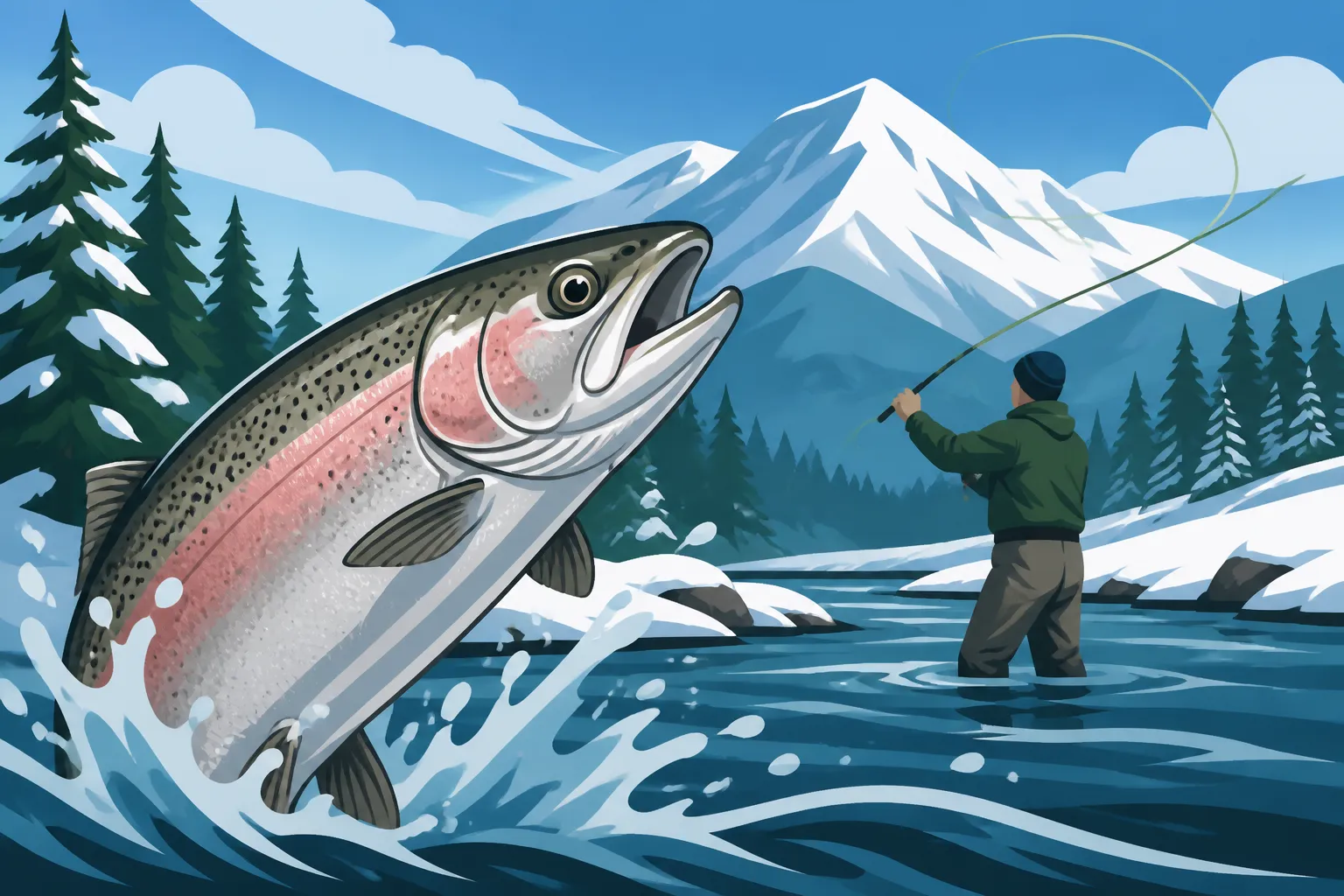
Winter Steelhead in Oregon
Winter steelhead can feel like an elusive ghost in Oregon's cold, rain-swollen rivers. Many anglers, even seasoned ones, find themselves battling the elements and the fish's notoriously finicky nature, often leaving the river empty-handed and frustrated. This comprehensive guide is designed to cut through the confusion, offering deep insights into understanding, targeting, and successfully landing these magnificent winter warriors in the diverse waters of Oregon.
Understanding the Oregon Winter Steelhead Phenomenon
Oregon is renowned for its incredible steelhead fishing, and the winter run holds a special place in the hearts of many anglers. These powerful, ocean-going rainbow trout return to their natal rivers during the colder, wetter months, presenting a unique and often challenging opportunity. They are a true test of patience, skill, and grit, but the reward of hooking into one of these chrome-bright beauties is unparalleled.
The Life Cycle and Return Journey
Winter steelhead, just like their summer counterparts, begin their lives in freshwater streams and rivers. After spending a year or two growing in the river, they transform, becoming "smolts" and migrating to the ocean. Here, they feed voraciously, growing larger and stronger, before an undeniable urge calls them back to the very same gravel beds where they hatched. For winter steelhead, this return typically begins in late fall and continues through the spring, coinciding with high water events and colder temperatures. They navigate treacherous currents, leap waterfalls, and endure harsh conditions, driven by the instinct to spawn. This incredible journey is why they are so revered; they are survivors, strong and determined. Their time in the ocean imbues them with incredible power and a silvery sheen that signals their freshness.
When they enter the river system, winter steelhead are not actively feeding in the same way they did in the ocean. Their focus shifts entirely to reproduction. This can make them incredibly challenging to entice, as they're not necessarily looking for a meal but rather reacting to intruders or simply snapping at something out of instinct or annoyance. Understanding this fundamental aspect of their behavior is crucial. It’s not about finding where they're actively grubbing for food, but rather where they're holding, resting, or moving, and then presenting an offering that triggers a strike. The exact timing of their return, known as the "run," can vary significantly from river to river and even year to year, influenced by ocean conditions, river flows, and rainfall.
Why Winter Steelhead are So Challenging
Let's be honest: winter steelhead fishing isn't for the faint of heart, and it's certainly not always easy. The sheer difficulty is part of its allure for many, but it can also be a source of immense frustration. One of the primary reasons for this challenge is the unpredictable nature of winter weather. Rivers can blow out with heavy rain, turning into chocolate milk, making fishing nearly impossible. Or, conversely, prolonged dry spells can lead to low, clear water, making the fish incredibly spooky and reluctant to bite. These fish are also incredibly wary. After spending years in the vast ocean, they return to the relatively confined space of a river, where they are keenly aware of their surroundings and any potential threats.
Furthermore, their metabolic rate slows in the cold water. They aren't expending energy chasing down prey, so their "take" of a lure or bait can be incredibly subtle—a faint tick, a slight pause in the drift, or just a heavy feeling on the line. Distinguishing a bite from a snag can be a skill that takes years to hone. You'll often hear stories of experienced anglers spending days, even weeks, on the river without a single hookup. This isn't a reflection of their skill, but rather the humbling reality of chasing these elusive fish. Many techniques require precise line control, careful presentations, and a deep understanding of river currents, all while battling the cold, rain, and often slippery riverbanks. It’s a mental game as much as a physical one, demanding persistence and resilience.
Top Oregon Rivers for Chasing Winter Steelhead
Oregon is blessed with an abundance of rivers that host strong winter steelhead runs, each offering a slightly different experience and set of challenges. Knowing where to go and what to expect from specific river systems is half the battle.
Coastal Gems: Wilson, Nestucca, Siletz
When people talk about classic Oregon winter steelhead fishing, the coastal rivers often come to mind first. These rain-fed systems are generally shorter and steeper, responding quickly to rainfall and dropping back into shape just as quickly.
The Wilson River is a perennial favorite, located near Tillamook. It’s known for its consistent hatchery returns and some impressive wild fish. The Wilson is easily accessible with numerous bank access points and boat launches, making it popular with both drift boaters and bank anglers. Its relatively consistent flows and productive water mean that even during high water, there are often holding pockets where fish will stack up. Anglers often find success here with traditional drift fishing techniques using small steelhead jigs, bait, or even pulling plugs. The river holds a good number of fish throughout the winter, often peaking in January and February. For current conditions, always check the river gauges and local fishing reports, which can change daily.
Just a stone's throw away, the Nestucca River offers similar opportunities, though it can be a bit more temperamental. It's a gorgeous river, winding through beautiful coastal forests. Like the Wilson, it receives a substantial hatchery plant, providing ample chances for success, alongside the occasional wild behemoth. The Nestucca is famous for its "sleds" – local drift boaters who meticulously work the prime runs. Bank access can be a bit more limited than the Wilson in some areas, but there are still plenty of spots to explore. Many anglers swear by the Nestucca for its potential to produce truly memorable fish, especially in prime conditions.
Further south, the Siletz River is another fantastic coastal option, flowing into Siletz Bay near Lincoln City. It's often considered one of Oregon's most scenic steelhead rivers. The Siletz typically sees a good early push of hatchery fish in December, followed by a strong wild run in January and February. It's a river that can fish well for both gear and fly anglers, with some beautiful runs and riffles. Access is good, with several boat launches and designated bank fishing areas. All three of these rivers, like many Oregon coastal streams, are subject to Oregon Fishing Season Dates and Limits and specific regulations, including potential barbless hook rules, so always check the latest rules before heading out.
Inland Powerhouses: Clackamas, Sandy, Rogue
While the coast gets a lot of attention, Oregon's inland rivers, particularly those flowing from the Cascade Mountains, offer equally thrilling winter steelhead prospects. These rivers tend to be larger, with different characteristics and longer runs.
The Clackamas River, just outside of Portland, is a true urban treasure for steelhead anglers. It's easily accessible and offers opportunities for both hatchery and wild winter steelhead. The Clackamas is a robust river, often holding its color better than smaller coastal streams during heavy rains, making it a reliable option when other rivers blow out. It's a popular river for drift boaters, but there are also many productive bank fishing spots, especially in the lower and middle sections. Anglers here find success with a variety of methods, from drift fishing with eggs or beads to pulling plugs and even fly fishing in certain sections. Its proximity to a major metropolitan area means it can get busy, but with enough water, there's plenty of room for everyone.
The Sandy River, another Portland-area favorite, is known for its strong hatchery returns and some of the earliest winter steelhead runs in the state. Historically, it's one of Oregon’s most iconic steelhead rivers. The Sandy can be a bit more temperamental with clarity, but when it’s in shape, it's incredibly productive. Fly anglers particularly love the Sandy for its classic riffles and runs, though gear anglers also do exceptionally well. Access is good, with multiple state park access points and boat launches. Like the Clackamas, the Sandy can get crowded, especially on weekends, but the fishing can be exceptional, offering a real chance at a chrome winter fish close to home. Understanding Oregon Fishing Zones Explained can be particularly helpful on these larger river systems.
Further south, the Rogue River stands as a legendary steelhead fishery. While famous for its summer steelhead, the Rogue also boasts a respectable winter run, especially in its lower sections. The Rogue is a much larger system than the coastal rivers, requiring different approaches. Anglers often target winter steelhead here by side drifting from boats or by plunking from the bank in prime areas. It's a river that fishes well for a long season due to its size and diverse habitat. The scenery is also unparalleled, offering a truly wild Oregon fishing experience. The Rogue provides a different kind of challenge and reward, often yielding larger, more powerful fish.
Essential Gear for Your Winter Steelhead Adventure
Having the right equipment can make all the difference between a frustrating day and a successful outing, especially when dealing with the unpredictable conditions of Oregon winters.
Rods, Reels, and Lines: The Right Foundation
For winter steelhead, your gear needs to be robust, sensitive, and capable of handling strong fish in challenging conditions.
Rods: Most experienced steelhead anglers will tell you that a longer rod is a game-changer. For drift fishing or float fishing, an 8'6" to 10'6" spinning or casting rod is ideal. The extra length helps with line control, mending line over currents, and cushioning powerful head shakes. A medium-heavy action is generally preferred, offering enough backbone to fight a strong fish but enough tip sensitivity to detect those subtle bites. Brands like Lamiglas, G. Loomis, and Fenwick are popular among serious steelhead anglers, though there are many excellent options available. If you're looking to start without breaking the bank, there are perfectly capable rods on sites like Amazon that can get you into the game.
Reels: Matching your rod with a reliable reel is crucial. A good quality spinning reel in the 2500-4000 series or a baitcasting reel with a smooth drag system is essential. Steelhead are powerful runners, and a sticky drag can lead to snapped lines and lost fish. Look for reels known for their durability and smooth performance in cold, wet conditions. Shimano and Daiwa are perennial favorites for their robust construction and reliable drag systems.
Lines: Your choice of line depends heavily on your technique and preference.
- Monofilament: Often favored for its stretch, which can act as a shock absorber against powerful runs, and its lower visibility in clear water. A 10-15lb main line is common.
- Braided Line: Offers superior sensitivity and no stretch, allowing you to feel even the lightest takes. However, its lack of stretch means less forgiveness, and it can be more visible in clear water. Many anglers use 20-30lb braid as a main line with a fluorocarbon leader.
- Fluorocarbon Leader: Regardless of your main line, a fluorocarbon leader (8-12lb test) is almost universally used for its invisibility underwater and abrasion resistance. The length of your leader will vary depending on water conditions and technique, but generally ranges from 3-6 feet. This combination provides strength for the fight and stealth for the presentation.
Lures, Baits, and Flies: What They're Biting On
Steelhead are finicky, and what works one day might not work the next. It's always wise to have a diverse selection in your tackle box.
For Gear Anglers:
- Jigs: Marabou jigs, often tipped with a piece of cured roe or a plastic worm, are incredibly effective. Colors like pink, chartreuse, orange, and black are standard producers. They suspend beautifully under a float.
- Drift Baits/Scented Worms: Soft plastic worms or beads that imitate roe are excellent for drift fishing. Colors again tend towards bright, natural egg colors, or even darker tones in stained water.
- Cured Roe: Natural salmon or steelhead roe is a highly effective bait, especially in higher, colored water. It’s messy but often worth it. You can find good curing recipes or buy pre-cured roe.
- Plugs/Wobblers: Steelhead-specific plugs like Luhr Jensen Kwikfish, Brad's Wiggler, or Mag Lip can be deadly when back-trolling from a boat or plunking from the bank. Bright colors and metallic finishes often trigger strikes.
- Spinners/Spoons: While more often associated with salmon, smaller spinners and spoons can also pick up aggressive steelhead, especially in medium to clear water. Mepps and Blue Fox are classic choices.
You can stock up on many of these essentials, from jigs to a variety of soft plastic baits, through online retailers like Amazon, often finding a wider selection of colors and sizes than local shops might carry. This makes it easy to experiment and find what the fish are keying in on.
For Fly Anglers:
- Intruder Flies: These large, flashy flies are designed to move a lot of water and provoke an aggressive strike. They come in countless color combinations.
- Marabou/Rabbit Strip Flies: Simple yet incredibly effective, these flies offer lifelike movement in the water. Popular patterns include the Hoh Bo Spey, Skykomish Sunrise, and various prawn patterns.
- Egg Patterns/Beads: Sometimes, a subtle egg imitation fished under an indicator is what it takes, mimicking dislodged salmon or steelhead eggs.
- Nymphs: Larger stonefly or caddis nymph patterns can sometimes trick a steelhead, especially in clearer water.
Fly anglers often tie their own patterns, but if you're just starting out, there are many excellent commercially tied flies available from specialty shops and larger online marketplaces.
Staying Warm and Dry: Apparel and Accessories
Winter steelhead fishing in Oregon means contending with cold, wet, and often windy conditions. Dressing appropriately isn't just about comfort; it's about safety and endurance.
Layering is Key:
- Base Layer: Moisture-wicking synthetics or merino wool are essential to pull sweat away from your skin.
- Mid-Layer: Fleece or down insulation provides warmth. A vest can be great for core warmth without restricting arm movement.
- Outer Layer: A waterproof and windproof jacket and pants are non-negotiable. Look for GORE-TEX or similar breathable, high-performance materials. You’ll find a wide range of waterproof outerwear suitable for Oregon’s climate on sites like Amazon, often with detailed reviews to help you choose.
Waders and Boots: Good quality breathable waders (neoprene for extreme cold) are a must. Paired with sturdy wading boots that offer excellent grip on slippery rocks, you'll stay dry and secure. Don't forget thick wool or synthetic socks to wear inside your waders for added insulation.
Gloves and Hats: Warm, waterproof gloves that still allow for dexterity are crucial. A warm hat, especially one that covers your ears, will help retain body heat.
Other Essentials:
- Sunglasses: Polarized sunglasses help cut glare, allowing you to see into the water and protect your eyes from stray hooks.
- Pliers/Forceps: Essential for crimping barbs and safely removing hooks, especially important for catch-and-release.
- Net: A large, rubber-mesh landing net is ideal for safely landing and releasing fish without damaging their slime coat or fins.
- Backpack/Vest: To carry your tackle, extra layers, water, and snacks.
- Thermos: Hot coffee, tea, or soup can be a morale booster on a cold day.
- First-Aid Kit: Always a good idea when in remote areas.
Preparing for the elements ensures you can focus on fishing, not on being miserable.
Mastering Winter Steelhead Fishing Techniques
Winter steelhead are notoriously moody, and having a diverse set of techniques in your arsenal will greatly increase your chances of success. It's often about adapting to the specific river conditions and how the fish are reacting.
Drift Fishing and Plunking: River Bottom Strategies
These techniques focus on presenting your bait or lure near the river bottom, where steelhead often hold in deeper, slower currents to conserve energy.
Drift Fishing: This is perhaps the most iconic winter steelhead technique. It involves using pencil lead, slinkies, or other weights to get your offering down to the fish. The goal is a "dead drift," where your bait tumbles along the bottom at the same speed as the current, mimicking something natural floating downstream. You'll typically use a small amount of weight (often adjusted based on current speed) and a leader with your bait or jig. The key is to keep your line as vertical as possible, feeling for the subtle "tick" of a fish taking your bait, rather than the heavier drag of the bottom. This method requires constant attention and careful line management, especially in complex currents. Drift fishing is highly effective in runs, riffles, and seams where fish are likely to be holding. It allows for a very natural presentation, often triggering a bite from even wary fish. Learning to read the water and identify prime holding lies is paramount for successful drift fishing.
Plunking: Sometimes, when the river is high and dirty, or you're fishing from a stationary bank, plunking can be your most effective strategy. This technique involves casting a heavy weight (like a pyramid sinker or a large cannonball weight) and a diver or lead-heavy plug, such as a Kwikfish or a Mag Lip, into a prime travel lane or holding water, then letting it sit. The current makes the plug wobble and dive, attracting fish. The advantage of plunking is that it covers a lot of time in a productive zone with minimal effort, allowing you to relax or even set up multiple rods (where legal, always check Oregon Fishing Regulations Explained). It's especially popular on larger rivers like the lower Columbia or some sections of the Sandy when water levels are high. While it might not be as "active" as drift fishing, it's a proven method for hooking up with winter steelhead, particularly when they're on the move in off-color water.
Float Fishing and Bobber Dogging: Suspending Your Offerings
These techniques excel at suspending your presentation at a precise depth, often over irregular bottoms or in faster currents where traditional drift fishing might snag too frequently.
Float Fishing (Bobber Fishing): This is a fantastic technique, particularly for bank anglers and those new to steelhead fishing, because it clearly signals a bite. You use a weighted float (often a large Drennan or Aero float) to suspend a jig, bait, or even a bead at a specific depth. The float acts as your indicator, moving downstream with the current. When a fish takes your offering, the float will dip, dive, or stop, giving you a clear signal to set the hook. This method is incredibly effective in pocket water, along current seams, and in slower-moving runs where steelhead are holding. The key is to set your depth correctly so your bait is drifting just above the bottom. The float also keeps your line off the water, reducing drag and allowing for a more natural drift. Many anglers find float fishing less fatiguing than constant re-casts required by drift fishing, making it a great option for long days on the water.
Bobber Dogging: A more specialized and dynamic float fishing technique, bobber dogging is primarily done from a drift boat. It involves a specific setup where a weighted float is combined with a slinky or heavy pencil lead attached via a three-way swivel, and a leader with a bait or jig. The "dog" (slinky/lead) occasionally ticks the bottom, while the float helps keep the offering suspended and indicates bites. The boat slowly "dogs" downriver, allowing the presentation to cover prime holding water systematically. This method is incredibly efficient for covering water and presenting baits in a very natural way, often leading to aggressive strikes. It requires coordination between the oarsman and the anglers to maintain the perfect speed and drift. Oregon Steelhead Fishing Techniques further details these nuanced approaches.
Fly Fishing for Winter Steelhead: A Specialized Pursuit
Fly fishing for winter steelhead is often considered the pinnacle of the sport, demanding skill, patience, and a deep appreciation for the pursuit. It's a challenging but incredibly rewarding way to connect with these fish.
Swinging Flies: This classic method involves casting a large, often weighted fly (like an Intruder or a traditional Spey fly) across and downriver, allowing the current to "swing" the fly through likely holding water. The take is often a solid, aggressive grab as the fly sweeps past the fish. This method is incredibly satisfying, as the anticipation of a strong pull on a tight line is immense. Two-handed Spey rods are commonly used for this technique, allowing for longer casts and better line control, but single-handed rods can also be effective in smaller waters. The selection of the right fly, presentation angle, and swing speed are all critical components. It's a method that requires a lot of water covered for each fish, but the experience itself is deeply immersive.
Indicator Nymphing/Egging: While not as glamorous as swinging, nymphing or egging under an indicator is a highly effective fly fishing technique for winter steelhead, especially when fish are lethargic or holding tight to the bottom. It's similar in principle to float fishing with gear, using a visible indicator to detect subtle takes as your weighted nymph or egg pattern drifts naturally downstream. This method is particularly useful in slower, deeper runs or pockets where fish are holding. It allows for a precise depth control and a very subtle presentation, often coaxing a strike from fish that are otherwise unresponsive. It's a technique that prioritizes stealth and accuracy, often leading to more consistent hookups, even if it lacks the dramatic visual of a swinging fly take.
Decoding Winter Steelhead Seasons and River Conditions
Successfully targeting winter steelhead in Oregon isn't just about gear and technique; it's also about understanding the rhythm of the rivers and the timing of the fish runs.
Peak Run Timing Across Regions
The timing of winter steelhead runs can vary significantly between coastal rivers and inland systems, and even from river to river within those regions.
Coastal Rivers: Generally, Oregon's coastal rivers like the Wilson, Nestucca, and Siletz see their first pushes of hatchery winter steelhead in late November and December. This early run is often hatchery-focused, with fish entering the river and moving quickly. The wild winter steelhead typically follow, with runs building through January and peaking in February and early March. The runs on these rivers are highly dependent on rainfall; fresh fish tend to enter the system with each new rain event and subsequent rise in water levels. January and February are often considered prime time on many coastal systems. Keep an eye on river flow graphs for systems like the Wilson River Fishing Guide to predict when conditions might be favorable.
Inland Rivers (e.g., Clackamas, Sandy): Rivers closer to the Willamette Valley, such as the Clackamas and Sandy, tend to have earlier and longer winter steelhead runs compared to many coastal streams. Hatchery fish can start showing up in late November and December, with good numbers available through January and February. The peak for these rivers often extends into March and sometimes even April, especially for the later waves of wild fish. These larger river systems, fed by snowmelt and rain, can sustain longer runs. The Clackamas River Fishing Guide provides specific insights into this system's unique run timings. The Columbia River tributaries also have their own distinct timing, often with a peak in late winter to early spring.
Southern Oregon Rivers (e.g., Rogue, Umpqua): Further south, rivers like the Rogue and Umpqua have unique run timings. The Rogue, being a much larger system, can see winter steelhead entering the lower river in December, with the run building through January and February, and fishing remaining good through March and into April in various sections. These rivers can also be influenced by larger weather patterns, and their fish may hold in different types of water. The extended nature of these runs often means more opportunities over a longer period. For specific regions and rivers, checking local fishing reports and the ODFW website for Oregon Fishing Season Dates and Limits is crucial.
The Impact of Water Levels and Clarity
Water conditions are arguably the most critical factor influencing winter steelhead fishing success. These fish respond directly to changes in river flow and clarity.
High Water / Blown Out Rivers: Heavy rainfall can quickly turn a productive river into a roaring, muddy torrent. When rivers are "blown out" (high and very turbid), fishing becomes extremely challenging, if not impossible. Visibility is zero, and fish often hug the banks or seek refuge in slow-moving eddies. In these conditions, many anglers simply wait for the river to drop and clear. However, sometimes a slight rise with just a touch of color can actually trigger a fresh push of fish and improve fishing, especially for gear anglers using scent and bright colors. When rivers are on the drop and just beginning to clear, often referred to as "falling and clearing," they can be incredibly productive.
Low Water / Clear Conditions: Conversely, prolonged dry spells can lead to low and exceptionally clear water. In these conditions, steelhead become incredibly spooky. Stealth is paramount: longer, lighter leaders, smaller baits or flies, and very subtle presentations are required. Any heavy footsteps on the bank or shadows cast on the water can send fish fleeing. While challenging, low and clear conditions can offer opportunities for sight fishing or presenting flies to visible fish. This is where your ability to read the water, understand where fish might seek refuge, and execute a flawless, delicate presentation truly shines.
Optimal Conditions: The "sweet spot" for winter steelhead fishing often occurs when a river is dropping and clearing after a rain event. This typically means the water level is decreasing, the turbidity is settling, and the river has a slight "green" tint rather than a muddy brown. These conditions often bring a fresh push of fish into the system, and they are generally more willing to bite as they feel more comfortable and less exposed than in crystal clear water. This is when you'll often hear about hot bites and successful days. Keeping an eye on weather forecasts and river gauges is a daily ritual for dedicated winter steelhead anglers. The Oregon Winter Fishing Options often revolve around finding these perfect windows.
Oregon Regulations and Responsible Angling
Understanding and adhering to fishing regulations is not just about avoiding fines; it's about preserving Oregon's incredible fisheries for future generations. Steelhead populations face numerous challenges, and responsible angling is key to their conservation.
Understanding Licenses, Tags, and Endorsements
Before you even think about casting a line, ensuring you have the correct licenses and tags is crucial. Oregon Fishing License Guide is your go-to resource, but here’s a quick overview.
Angling License: Everyone 12 years of age and older needs a valid Oregon angling license. This is your basic permission to fish. Licenses are typically valid for a calendar year, from January 1st to December 31st, regardless of when you purchase them. You can purchase these online, at ODFW offices, or through licensed vendors. For non-residents, there are annual and multi-day options like the Oregon 1-Day Fishing License or options for longer visits.
Combined Angling Tag: For anyone fishing for salmon, steelhead, or sturgeon, a separate "Combined Angling Tag" is required. This tag acts as your catch record card for these species, and you must record your catch immediately after retention. This data is vital for wildlife managers to monitor harvest rates and manage populations. This tag has an associated cost and is essential if you plan to keep any steelhead (hatchery only, in most cases). Understanding Oregon Combined Angling Tag Guide is vital for targeting these species.
Endorsements: Depending on where you plan to fish, additional endorsements might be necessary.
- Columbia River Basin Endorsement: If you plan to fish for salmon, steelhead, or sturgeon in the mainstem Columbia River or its tributaries up to a certain point (e.g., Willamette River up to Willamette Falls), you’ll need this endorsement. This helps fund conservation efforts in the basin.
- Ocean Salmon/Halibut Endorsement: While not directly for winter steelhead, if you plan to combine your trip with other fisheries, be aware that ocean salmon and halibut fishing have their own specific endorsements and regulations.
Always carry your license and tags with you while fishing, either in physical form or digitally on your phone, as game wardens are authorized to check them at any time. Fishing without the proper credentials can lead to significant Fishing Without a License Penalties in Oregon.
Hatchery vs. Wild: Conservation and Release Practices
One of the most important distinctions in Oregon steelhead fishing is between hatchery-origin and wild-origin fish. This distinction underpins many of the state's conservation strategies.
Identification: Hatchery steelhead in Oregon are almost universally marked with a clipped adipose fin – the small, fleshy fin on their back between the dorsal fin and the tail. This is known as an "adipose fin clip." Wild steelhead, on the other hand, will have a full, intact adipose fin. How to tell a wild steelhead from a hatchery steelhead is a crucial skill every angler must learn. Take a moment to clearly identify your fish before deciding to retain it.
Retention Rules: In most Oregon rivers, only hatchery-marked steelhead may be retained. Wild steelhead are typically required to be released unharmed immediately. This regulation is a cornerstone of steelhead conservation, designed to protect and rebuild wild populations while still providing harvest opportunities. There are specific, limited exceptions in some areas or during certain seasons, but the general rule is: no adipose fin clip, no keep.
Catch-and-Release Best Practices: For any fish you intend to release, especially wild steelhead, proper catch-and-release techniques are paramount to ensure their survival.
- Minimize Fight Time: Land the fish quickly to reduce stress.
- Keep Fish in Water: Avoid removing the fish from the water, especially for photos. If you must, do it quickly and gently, holding the fish horizontally and supporting its belly.
- Wet Hands: Always wet your hands before touching a fish to protect its protective slime coat.
- Barbless Hooks: Using barbless hooks (often required in many steelhead waters, see Do you need barbless hooks for steelhead in Oregon?) makes hook removal quicker and causes less damage.
- Proper Hook Removal: Use pliers or forceps to gently remove the hook. If the hook is deeply embedded, cut the line and leave the hook rather than causing further trauma.
- Revive the Fish: Hold the fish gently in the current, facing upstream, until it can swim away under its own power. Do not release a fish until it's ready.
By practicing responsible angling, checking Oregon Fishing Regulations Explained diligently, and respecting the hatchery/wild distinction, we can all contribute to the long-term health of Oregon's incredible winter steelhead resources. These majestic fish are a gift, and it's our responsibility to treat them with the utmost care.
Disclaimer
This article is for general informational purposes only and does not constitute professional advice. Laws, prices and regulations vary by location and change over time. Consult a qualified professional for guidance on your specific situation.