What does a summer steelhead look like
One of the most exciting, yet sometimes confusing, aspects of fishing in Oregon is identifying the exact species you’ve hooked, especially when it comes to the revered steelhead. For many anglers, the thrill of a summer steelhead run is unmatched, but actually knowing what you're seeing in the water or in your net can be a real head-scratcher. This guide aims to clear up that confusion, offering a deep dive into the specific features that define a summer steelhead, helping you distinguish this magnificent fish from its close relatives and other popular Oregon catches.
The Classic Summer Steelhead Appearance: Built for the Journey
Imagine a fish that has traveled hundreds of miles from the ocean, pushing against strong currents, growing lean and muscular. That's the essence of a summer steelhead, and their appearance reflects this incredible journey. They are truly a marvel of adaptation, and understanding their look helps you appreciate their remarkable lifecycle.
Streamlined Body and Distinctive Coloration
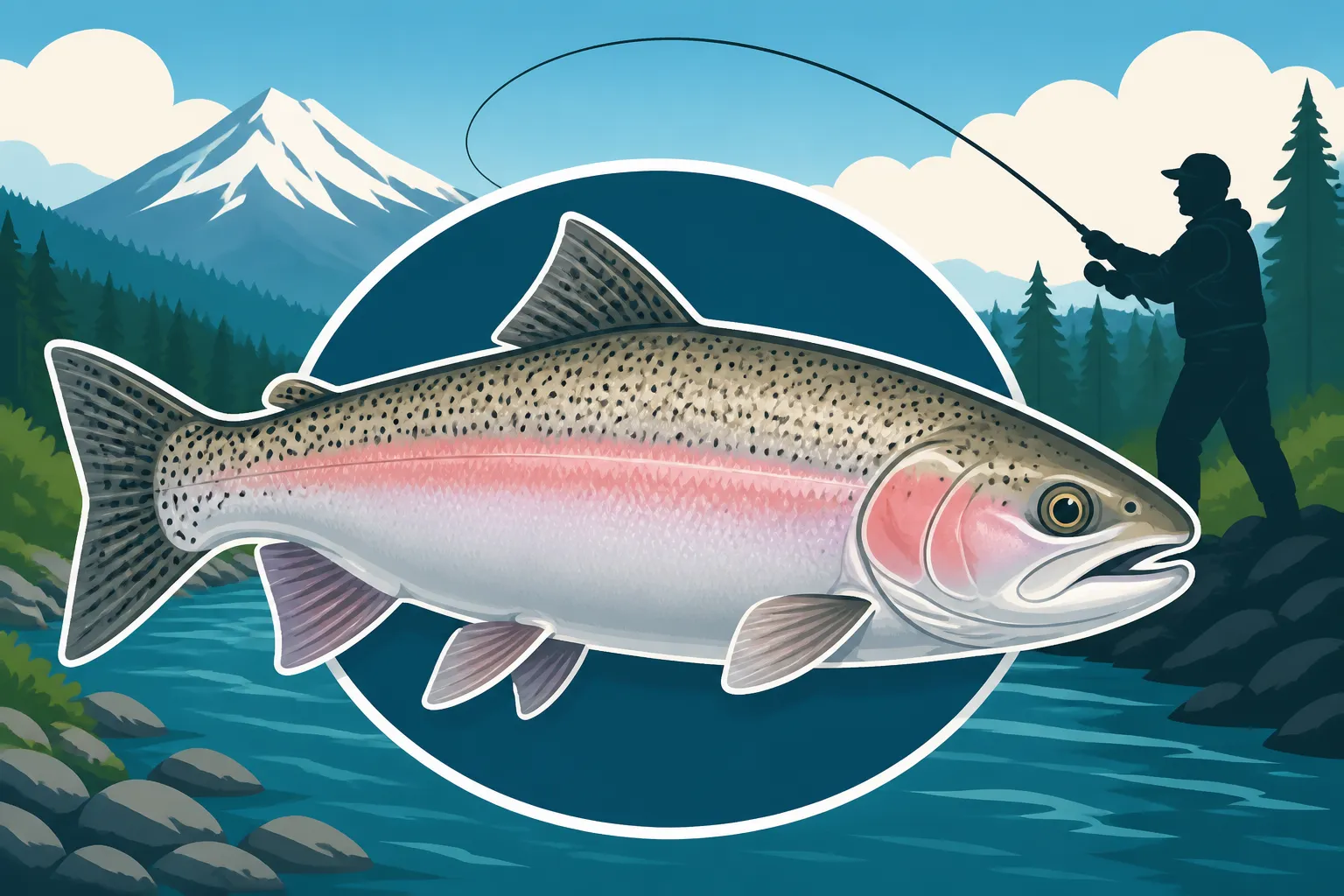
At first glance, a summer steelhead, like its winter counterpart, is undeniably torpedo-shaped, perfectly built for powerful swimming and navigating turbulent rivers. Their bodies are incredibly streamlined, presenting a sleek, almost chrome-like appearance when fresh from the ocean. This silver sheen is a protective camouflage in the open water. As they move further upstream into freshwater systems like the Deschutes River or the Rogue, their coloration begins to subtly shift.
You'll typically see a gradual transition from that bright, silvery ocean phase to a more olive-green or grayish-blue back, often with purple or pinkish hues along the lateral line. This lateral band can be quite pronounced, sometimes fading into a rosy blush on the belly. The belly itself remains a pristine white or silver. What really sets them apart are the abundant, small, distinct black spots. These spots are usually found on the back, dorsal fin, adipose fin, and most notably, extend onto the tail fin. This heavy spotting on the tail is a significant characteristic that helps differentiate them from other salmonids. The intensity and number of spots can vary, almost like a fingerprint, but their presence on the tail is a consistent tell-tale sign.
Key Fin Features and Markings
Beyond the body coloration, the fins of a summer steelhead offer crucial clues to their identity. Their dorsal fin, located on the back, is relatively high and typically spotted. The pectoral fins (behind the gills) and pelvic fins (on the belly) are usually clear or lightly pigmented. A small, fleshy adipose fin, a hallmark of all trout and salmon, is present between the dorsal and tail fins. This fin, too, often bears spots.
The real differentiator, however, is often the caudal fin, or tail fin. As mentioned, the tail of a summer steelhead is almost invariably spotted, with many small, dark spots radiating out onto the lobes. Unlike some salmon species, the tail typically has a square or slightly forked shape, not deeply V-shaped. Additionally, when you're fortunate enough to get a close look, you might notice that the inside of their mouth and gums are white or pale, a key distinction from some salmon species that have black mouths. This seemingly minor detail can be incredibly helpful for confident identification when you're trying to figure out if you've landed a true steelhead or something else. Many experienced anglers carry a small, waterproof field guide, available on Amazon, to quickly reference these kinds of details.
Size and Shape Variations
While there's a "typical" look, summer steelhead can vary quite a bit in size and exact body shape depending on their age, the specific river system, and how long they've been in freshwater. Generally, summer steelhead are known for being incredibly strong and lean. They might not be as girthy as a fall Chinook salmon, but their musculature is phenomenal. Average sizes can range from 22 to 30 inches, with some impressive individuals pushing well beyond that. A "bragging rights" summer steelhead might be 10-15 pounds, though giants exist.
The shape of their head is also worth noting; it's generally proportionate to their body, with a slightly pointed snout. As they mature and get closer to spawning, particularly later in the summer and fall, males can develop a slightly more pronounced kype (a hooked jaw), though not as dramatically as some male salmon. Females typically retain a more rounded snout. The robustness and health of the individual fish also play a role; a freshly run fish will look incredibly vibrant and powerful, while one that has been in the river for months might appear a bit more faded or "spawned out" as its energy reserves are depleted. Understanding these subtle variations is part of the art of Oregon Steelhead Guide fishing.
Distinguishing Summer Steelhead from Other Oregon Fish
One of the biggest challenges, especially for new anglers, is telling the difference between a summer steelhead and other fish that share Oregon's rivers. It's not always as straightforward as you might think, and a mistake can lead to a violation if you keep a protected species.
Summer Steelhead vs. Winter Steelhead: Subtle but Significant Differences
While both are sea-run rainbow trout and share many physical characteristics, there are subtle yet important distinctions between summer and winter steelhead. The most obvious difference isn't visual but when they enter the freshwater systems. Summer steelhead typically enter rivers from late spring through early fall (roughly May to October), while winter steelhead make their appearance from late fall through early spring (November to April).
Visually, summer steelhead often appear leaner and more chrome-bright when they first enter the river because they've just arrived, sometimes carrying more sea lice. They tend to hold that ocean-bright color longer, especially if they enter the river early in the season, as they might spend months in freshwater before spawning. Winter steelhead, on the other hand, often have a more robust, sometimes deeper, greenish-blue hue upon entry and might develop a more prominent reddish-pink lateral stripe more quickly as they are closer to their spawning window after entering the river. However, these color differences aren't foolproof, as the specific river environment and time spent in freshwater will significantly impact a fish's appearance. The key is their entry timing and often the condition upon first encounter in the river system. For more on this, check out Difference between summer and winter steelhead.
Not to be Confused with Resident Rainbow Trout
This is perhaps the most common source of confusion, and for good reason: a steelhead is a rainbow trout ( Oncorhynchus mykiss ). The difference is that steelhead are an anadromous form, meaning they migrate to the ocean and return to freshwater to spawn, while resident rainbow trout live their entire lives in freshwater. Young steelhead smolts look just like young rainbow trout.
The critical distinction in adult fish usually comes down to size and condition. Resident rainbow trout in Oregon's rivers and lakes are generally smaller, often in the 10-20 inch range, though trophy resident rainbows certainly exist. A summer steelhead will almost always be larger and more powerfully built, reflecting its ocean-going life. Resident rainbows typically have a brighter, more defined pink or red lateral stripe and often a more speckled appearance. Crucially, the tail fin of a resident rainbow trout may have spots, but usually not as intensely or as widely distributed as on a sea-run steelhead. If you're fishing in a small stream known only for resident trout, a large, silvery, heavily-spotted fish with a clean, powerful build is very likely a steelhead. Always double-check Oregon Fishing Regulations Explained for rules on keeping resident vs. anadromous trout, as they often differ.
Telling Them Apart from Salmon Species
Oregon is home to several salmon species, and some, particularly early-run Chinook or Coho, can be mistaken for steelhead, especially when they are fresh from the ocean. Here are the key distinctions:
- Chinook Salmon (King Salmon): These are generally much larger and broader-bodied than steelhead, with a more robust head and a thicker caudal peduncle (the narrow part of the body leading to the tail). Their spots are typically larger and more irregular, and while they have spots on the tail, they are usually concentrated on the upper lobe, not spread evenly across both lobes like a steelhead. A definitive characteristic is the mouth: Chinook salmon have black gums and a black mouth interior, whereas steelhead have white or pale gums. Their tail is also typically more deeply forked than a steelhead's.
- Coho Salmon (Silver Salmon): Coho are often more similar in size and shape to steelhead than Chinook. They have a bright, silvery appearance and spots on their back and dorsal fin. However, their spots on the tail fin are usually few and far between, mainly on the upper lobe, or absent entirely. Their mouth also has black gums, but with a white or grey tongue, distinguishing them from steelhead's entirely pale mouth. Coho also tend to have a more defined, slender wrist connecting the body to the tail.
The mouth color is usually the most reliable field mark for distinguishing salmon from steelhead if you can get a clear view. Many anglers keep a small, waterproof card with these identifying features readily accessible, perhaps clipped to a fishing vest that you can grab off Amazon.
Environmental Factors and Appearance Changes
It's important to remember that a fish's appearance isn't static. Just like humans change under different conditions, so do summer steelhead. Their look can be influenced by everything from the water they inhabit to their life stage.
River Conditions and Water Coloration
The river environment itself plays a huge role in how a summer steelhead looks. A fish caught in the crystal-clear, glacier-fed waters of the upper Deschutes might appear much brighter and retain its chrome longer than one caught in a tannic, tea-colored coastal river. The minerals and sediment in the water can subtly stain or polish their scales. For instance, fish in rivers with a lot of volcanic rock might take on a slightly darker, more subdued tone, while those in pristine, gravel-bottomed streams might gleam brilliantly.
Light conditions also affect how we perceive their color. A steelhead pulled from a deep, shaded pool on an overcast day might look darker and less vibrant than one caught in a sun-drenched riffle. This is why relying on a single visual cue, or even just color, can be misleading. Always consider multiple factors when making your identification. Factors like time of day, cloud cover, and water depth can dramatically alter how a fish's colors present themselves to the human eye. Oregon Fishing Zones Explained can help you understand the varied conditions across the state.
Spawning Phase Transformations
As summer steelhead spend more time in freshwater, sometimes overwintering before spawning the following spring, their appearance can undergo significant transformations. Their primary focus shifts from feeding and growing to reproduction, and their bodies adapt accordingly.
Males, in particular, will develop more intense coloration. The pink or red lateral stripe can become a vibrant, fiery band, and their backs might deepen to a darker olive or even blackish hue. The "kype" or hooked jaw becomes more pronounced, designed for sparring with other males. Their bodies can become more slender, almost gaunt, as they burn through their fat reserves. Females also intensify in color, though typically less dramatically than males, and their bellies may swell with eggs. These fish are often referred to as "spawned out" or "dark fish" and are often in a weakened state. Many regulations encourage or mandate catch-and-release for these spawning-phase fish to protect future generations, making careful identification even more crucial. Learning about Oregon Fishing Season Dates and Limits will give you an idea of when these changes are most apparent.
Practical Tips for Identifying Summer Steelhead on the Water
So, you've hooked a beautiful fish, and your heart is pounding. How do you confirm it's a summer steelhead in the moment? It takes practice, but a few key practices can make all the difference.
Observing Behavior and Location
Beyond their physical appearance, how a fish behaves and where it's caught can provide valuable clues. Summer steelhead, having spent months in the ocean building strength, are notoriously powerful fighters. They often make spectacular aerial leaps and long, drag-screaming runs. If you're battling a fish that feels like a freight train and puts on an acrobatic show, you're likely dealing with a steelhead or a strong salmon. Resident trout, while feisty, typically don't have the sheer power of a sea-run fish.
Consider where you are fishing. Are you in a well-known steelhead river like the Deschutes, Rogue, or Sandy? Are you fishing during the recognized Summer Steelhead Run Timing on the Deschutes? If you're in a high mountain lake, it's almost certainly a resident rainbow trout unless that lake is specifically known for anadromous returns (which is rare). In larger, diverse rivers, you might find a mix, which is where visual identification becomes paramount. Pay attention to typical holding water for steelhead: faster runs, tail-outs of pools, and seams where fast water meets slow.
The Importance of Fin Clips (Hatchery vs. Wild)
Perhaps the most definitive way to identify a hatchery-origin steelhead in Oregon is to look for a missing adipose fin. This small, fleshy fin between the dorsal and tail fin is clipped from hatchery-raised steelhead before they are released. This "fin clip" is the state's way of distinguishing hatchery fish, which are often legal to harvest, from wild steelhead, which are almost universally protected and must be released unharmed.
It's absolutely vital to look for this clip. A fish without an adipose fin is a hatchery fish. A fish with an intact adipose fin is a wild fish. While you should always consult the specific regulations for the water you are fishing, generally, wild steelhead must be immediately released. This is a non-negotiable rule designed to protect vulnerable wild populations. Always be prepared to quickly and safely release any wild fish. Many anglers even carry a set of magnifying glasses, readily available on Amazon, for those moments when the light isn't perfect and you need to be absolutely sure about the adipose fin. Learning How to tell a wild steelhead from a hatchery steelhead is a fundamental skill for any Oregon angler.
What to Do if You're Unsure
It happens to the best of us: you've got a fish on the line, you're trying to make an identification, and you're just not 100% sure. In Oregon, when in doubt, the safest and most responsible action is to assume it's a wild fish and release it immediately and carefully. Conservation is always paramount, and an accidental harvest of a protected fish can lead to significant penalties, as outlined in Fishing Without a License Penalties in Oregon (which often extend to unlawful harvest).
Take a quick photo if you can, but prioritize the fish's health. Handle it gently, keep it in the water as much as possible, and use a net designed for catch-and-release. If you're with an experienced angler or guide, don't hesitate to ask for their opinion. Over time, with practice and careful observation, you'll become much more confident in your ability to spot that distinct, powerful, and beautiful summer steelhead. There's truly nothing quite like it.
| Feature | Summer Steelhead | Resident Rainbow Trout | Chinook Salmon | Coho Salmon |
|---|---|---|---|---|
| Body Shape | Streamlined, torpedo-like, lean | Stockier, generally smaller | Very robust, thick-bodied | Streamlined, slightly deeper than steelhead |
| Coloration (Fresh) | Chrome-silver, olive/blue back, pinkish lateral band | Brighter pink/red lateral band, speckled | Dark olive/blue-green back, silver sides | Blue-green back, bright silver sides |
| Spots on Tail Fin | Abundant, small, spread over both lobes | Few, sometimes on upper lobe, or none | Large, irregular spots, mainly upper lobe | Few, mainly upper lobe, or none |
| Mouth Color (Gums) | White/pale gums and mouth interior | White/pale gums and mouth interior | Black gums, black mouth interior | Black gums, white/grey tongue |
| Adipose Fin | Intact (Wild) or Clipped (Hatchery) | Intact | Intact | Intact |
| Average Size | 22-30+ inches | 10-20 inches | 20-50+ pounds | 8-20 pounds |
| Entry Season | Late Spring to Early Fall | Year-round (no migration) | Late Summer to Fall | Late Summer to Fall |
Disclaimer
This article is for general informational purposes only and does not constitute professional advice. Laws, prices and regulations vary by location and change over time. Consult a qualified professional for guidance on your specific situation.