Yaquina Bay Fishing Guide
Oh, the Oregon Coast! It's a place that calls to the soul, but let's be honest, figuring out exactly where to cast your line can sometimes feel like trying to untangle a hundred yards of monofilament after a bird's nest. You want variety, accessibility, and a real shot at bringing home dinner, but where do you even begin with so many incredible bays and rivers? Well, if you've been wondering which coastal gem offers a bit of everything without needing a massive offshore vessel, you've landed in the right spot. This guide is all about helping you unlock the abundant opportunities waiting in Yaquina Bay, a true Oregon fishing hotspot.
Understanding Yaquina Bay's Unique Charm for Anglers
Yaquina Bay, nestled right in Newport, is a fascinating estuary where the freshwater of the Yaquina River meets the Pacific Ocean. It’s not just a beautiful place; it’s a biological powerhouse, offering a huge diversity of fishing and crabbing experiences you won't find in many other spots. The bay itself is relatively deep in some channels but also features extensive tidal flats and marsh areas, creating a mosaic of habitats for various species.
Geographical Layout and Ecosystem
Yaquina Bay is characterized by its deep main channel, which runs right through to the ocean, making it navigable for larger vessels. Flanking this channel are shallower mudflats and eelgrass beds, which are absolute havens for juvenile fish, crabs, and clams. The entrance to the ocean can be a bit tricky, with a bar that needs respect, but it's this direct connection to the Pacific that brings in migratory salmon, halibut, and other ocean species right into the bay's mouth. Think of it as a natural funnel, concentrating all sorts of delicious sea life. The constant ebb and flow of the tides here create strong currents, which are vital for filtering nutrients and bringing in baitfish, keeping the entire ecosystem incredibly vibrant. It’s this dynamic mix that makes Yaquina Bay such a productive spot for anglers and crabbers alike.
Seasonal Highlights for Fishing
One of the greatest joys of Yaquina Bay is its year-round appeal, though the specific targets change with the seasons. Spring often sees the start of halibut fishing just outside the bay, while inside, the dungeness crabbing starts to pick up significantly. As summer rolls in, both spring Chinook and coho salmon begin their migrations, making their way into the bay and river system. This is also a fantastic time for bottom fishing for rockfish and lingcod in the nearshore ocean and even inside the bay in deeper channels.
Come fall, the salmon runs hit their peak, with large numbers of Chinook making their final push upstream, offering incredible opportunities for both boat and bank anglers. This is prime time for filling your freezer with beautiful fillets! Even in winter, when many other fisheries shut down, Yaquina Bay continues to produce. Crabbing remains strong, and dedicated anglers can even find opportunities for a late coho or some excellent bottom fishing on calm days. It truly is a bay that keeps on giving, no matter what time of year you plan your visit.
Prime Fishing Opportunities in Yaquina Bay
When you talk about Yaquina Bay, you're not just talking about fishing for one thing; you're talking about a smorgasbord of possibilities. From tasty crustaceans to hard-fighting salmon, this bay has a little something for everyone. It’s one of the most productive estuaries on the Oregon Coast, drawing anglers from all over.
Crabbing and Clamming in the Bay
Let's be real: for many, Yaquina Bay is crabbing. The bay is legendary for its Dungeness crab, offering some of the best opportunities on the entire coast. You can drop crab pots from docks, like the Newport Bayfront or Abbey Street Pier, or take a boat out into the main channels and set your gear there. The peak crabbing seasons generally coincide with the cooler months, especially from late fall through spring, but Dungeness are present year-round. Remember that specific regulations, including size limits and limits on retaining female crabs, always apply, so checking the current Oregon Department of Fish and Wildlife (ODFW) guidelines is crucial before you head out. Don't forget, an Oregon Shellfish License is a must!
Beyond crabbing, Yaquina Bay is also a fantastic spot for clamming. With extensive mudflats accessible at low tide, you can dig for a variety of bay clams, including cockles, littlenecks, and butter clams. Popular clamming spots can be found around the upper bay towards Toledo and in the tidal flats accessible from South Beach State Park. Digging for clams is a classic Oregon Coast experience, perfect for families, and it's a great way to forage for your dinner. Again, always check ODFW regulations for open areas, bag limits, and any health advisories, especially concerning "red tide," before you put your shovel in the mud.
Targeting Salmon and Bottomfish
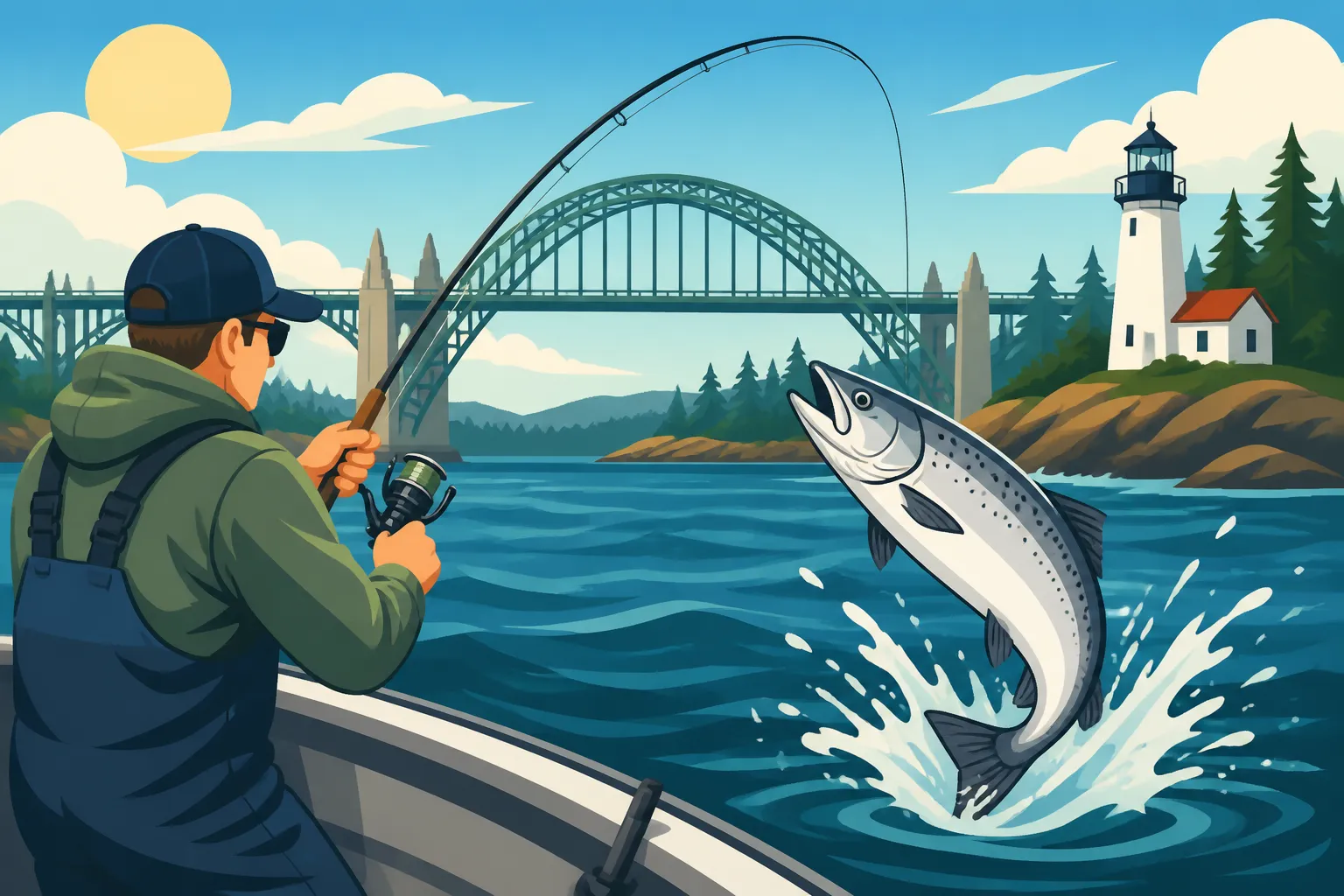
Yaquina Bay sees strong runs of both Chinook and Coho salmon, particularly in the late summer and fall. These fish enter the bay on their journey upstream to spawn in the Yaquina River system. Anglers often target them by trolling with bait like herring or anchovies, or with various spinners and plugs, particularly in the deeper channels near the mouth of the bay and upstream towards Toledo. The bite can be electrifying when the salmon are in, making for an unforgettable experience. For detailed insights on how to land these beauties, our guide on Oregon Salmon Fishing Techniques is a great resource.
For those interested in bottomfish, the areas just outside the Yaquina Bay bar, as well as some deeper rocky structures inside the bay itself, can be incredibly productive. You can expect to catch a variety of rockfish, including Black Rockfish, Blue Rockfish, and China Rockfish, as well as the prized Lingcod. Jigging with metal jigs or fishing with bait like squid on a dropper rig are popular and effective methods. While a dedicated Oregon Ocean Endorsement is typically needed for fishing beyond the bay entrance, understanding the nearshore opportunities can greatly enhance your trip. When the ocean is calm enough to cross the bar, these bottomfish spots can be truly outstanding.
Seeking Sturgeon and Other Estuary Species
Believe it or not, Yaquina Bay also hosts populations of White Sturgeon, particularly during certain times of the year when they move into the bay from the ocean to feed. While not as famous for sturgeon as the Columbia River, dedicated anglers do target them here, usually using bait like herring, shad, or even sand shrimp on a large circle hook fished on the bottom. Remember that sturgeon fishing in Oregon is heavily regulated, often with strict catch-and-release rules or very limited retention windows, so consult the ODFW regulations carefully. Our Oregon Sturgeon Guide provides more in-depth information on these ancient fish.
Beyond these marquee species, the bay also offers opportunities for other estuary dwellers. Surfperch, like the Redtail Surfperch, are often found along sandy areas and near the jetties. These feisty fish are a blast on light tackle and can be caught using small pieces of bait like clam necks or sand shrimp. In the spring, you might even encounter American Shad entering the bay, though they are more commonly targeted further up the larger river systems like the Willamette. The beauty of Yaquina Bay is its constant surprise – you never quite know what might grab your hook next!
Essential Gear and Techniques for Yaquina Bay Success
Hitting the water without the right tools and a game plan can lead to frustration, not fish. Yaquina Bay demands a versatile approach due to its diverse species and varying conditions. Having a good understanding of what gear to bring and how to use it will dramatically increase your chances of success.
Recommended Rods, Reels, and Line
For general bay fishing, a medium to medium-heavy spinning or baitcasting combo is a great all-around choice. Something in the 7 to 9-foot range with a fast action will give you enough backbone for salmon or larger bottomfish, while still being sensitive enough for detecting lighter bites from perch or smaller species. Pair this with a reel spooled with 20-30 lb braided line, which offers incredible sensitivity and strength, especially in the currents of the bay. You’ll want to use a fluorocarbon leader of 15-25 lb test for abrasion resistance and invisibility, typically 3-6 feet long, depending on your target and technique.
If crabbing is your primary goal, you'll need crab pots or rings, a strong buoy line (often weighted to prevent entanglement), and a buoy clearly marked with your ODFW customer ID. A stout rope and a crab measuring gauge are also essential. For clamming, a good clam shovel or raking fork, a bucket or mesh bag, and rubber boots or waders are your best friends. These simple tools, when correctly chosen, make all the difference between a productive day and a frustrating one.
Effective Baits and Lures for Bay Fishing
When it comes to bait, variety is key in Yaquina Bay. For salmon, fresh herring or anchovies fished behind a flasher are consistently effective. Some anglers also find success with sardine fillets or even cured salmon eggs, especially when the fish are concentrated in specific areas. For bottomfish, fresh or frozen squid strips are hard to beat, often tipped onto jigs or bait rigs. Shrimp, either live or dead, is a universal bait that attracts almost everything, from sturgeon and surfperch to hungry crabs.
Lures also play a significant role. For salmon, various plug-cut herring imitations, spoons, and spinners in bright colors like chartreuse, green, or blue can be deadly, especially when trolled. For bottomfish and even some in-bay salmon, metal jigs or soft plastic swimbaits rigged on heavy jig heads are excellent for vertical jigging near structure. It's always a good idea to bring a variety of options, as what works one day might not work the next, and fish preferences can change with the tides and water conditions. Don't be afraid to experiment with your offerings to see what the fish are really keyed in on.
Tactics for Shore, Dock, and Boat Fishing
Yaquina Bay offers opportunities for every kind of angler. From shore or docks, still fishing with bait on the bottom is a common and effective technique for various species, including surfperch, small flatfish, and even occasional sturgeon. Using a slip-sinker rig allows the fish to take the bait without feeling the weight of the sinker, increasing your hook-up ratio. Casting spinners or spoons from the jetties can sometimes entice salmon or aggressive bottomfish, especially during tide changes.
For boat anglers, the options expand dramatically. Trolling is a primary method for salmon, covering more water and allowing you to present your bait or lure at specific depths. Drifting with bait or jigs can be effective for bottomfish over rocky areas or for sturgeon in deeper channels. When crabbing by boat, carefully setting your pots in channels or near drop-offs where Dungeness crabs tend to congregate is crucial. And if you're not confident venturing out on your own, remember that there are many excellent local charter services available. You can easily find and book trips through platforms like FishingBooker, which lists a variety of experienced captains in the Newport area who know Yaquina Bay like the back of their hand. They can provide all the necessary gear and expertise for a successful outing.
Navigating Yaquina Bay's Tides and Weather
Fishing in an estuary like Yaquina Bay is profoundly influenced by the forces of nature. Understanding the tides and paying close attention to weather forecasts aren't just good practices—they're essential for both safety and success. Ignoring them can mean the difference between a full cooler and a frustrating, even dangerous, day on the water.
Interpreting Tidal Charts for Optimal Fishing
Tides are the heartbeat of Yaquina Bay. They dictate everything from water flow and current speed to where certain fish species will be feeding. Generally, the incoming tide brings in cooler, oxygen-rich ocean water, often signaling the arrival of fresh salmon and baitfish. It's often a prime time for targeting salmon near the mouth of the bay or in the main channel, as they push in with the flow. Conversely, the outgoing tide can concentrate bait and predators in specific channels or near structure as the water recedes, making these choke points excellent fishing spots.
For crabbing and clamming, tides are even more critical. Low tides expose the mudflats for clam digging, and the slack tide (the period of minimal water movement between high and low tide) is often considered the best time for setting and pulling crab pots, as the currents are weakest and crabs are more actively moving. Always check a current tidal chart for Newport, Oregon, before planning your trip. Understanding the timing and height of the tides will allow you to plan your day efficiently, whether you're looking for Oregon Crabbing Season Timing or hunting for salmon.
Weather Considerations for a Safe and Enjoyable Trip
Oregon Coast weather can be notoriously fickle, shifting rapidly from sunny to foggy or windy in a matter of hours. This is especially true near the mouth of Yaquina Bay and out on the ocean. High winds can make boating hazardous, kicking up choppy waves inside the bay and creating dangerous bar conditions at the entrance. Fog can roll in quickly, reducing visibility to near zero and making navigation difficult, especially if you're unfamiliar with the area. Always check the marine forecast for Newport and the surrounding coastal waters before you leave home.
Beyond safety, weather also impacts fishing success. Extreme temperature changes, heavy rain, or sudden barometric pressure drops can put fish off the bite. Sunny, calm days are generally more pleasant to fish, but sometimes a bit of overcast weather can actually improve salmon or steelhead fishing by reducing light penetration. If you're planning an ocean trip, even just outside the bar, pay very close attention to wave height and swell period. It's always better to err on the side of caution and postpone a trip if conditions look iffy. There’s no fish worth risking your safety for.
Public Access and Facilities for Anglers
One of the great things about Yaquina Bay is how accessible it is for anglers of all stripes. Whether you're a seasoned boat owner or just looking to drop a line from a public pier, Newport offers numerous options to get you on the water.
Popular Docks and Piers for Anglers
The Newport Bayfront is a hub of activity and an excellent starting point for many anglers. You'll find several public docks and piers along the Bayfront, often bustling with people crabbing, fishing for bottomfish, or trying their luck for passing salmon. The Abbey Street Pier, in particular, is a popular spot for crabbing, easily accessible, and has facilities nearby. These piers are fantastic for families or beginners who want to experience bay fishing without needing a boat. You can set crab rings, cast out for surfperch, or simply soak a bait and see what bites. Just remember to be courteous to other anglers and crabbers, and keep your area clean.
These public access points are also great for soaking up the local atmosphere. You'll see commercial fishing boats, recreational vessels, and plenty of wildlife, from sea lions to various seabirds. It's a truly immersive experience that goes beyond just fishing. And if you forgot any gear or need a quick bait refill, there are often tackle shops right on the Bayfront within easy walking distance.
Boat Launches and Charter Services
For those with their own boats, Yaquina Bay offers several well-maintained public boat launches. The main public ramp is conveniently located near the Bayfront, providing easy access to the main channel and out to the ocean. There's ample parking, though it can get busy during peak seasons. Having your own boat gives you the freedom to explore the bay's deeper channels, troll for salmon, or venture out past the jetties when ocean conditions allow for bottom fishing or crabbing in deeper water.
If you don't have a boat, or simply prefer the guidance of an experienced professional, Newport is home to a robust fleet of fishing charters. These services cater to everything from offshore halibut and tuna trips to in-bay salmon and crabbing excursions. Booking a charter can be an excellent way to experience Yaquina Bay, especially if you're new to the area or targeting a specific species. Companies like Newport Sportfishing or Yaquina Bay Charters are well-regarded, and you can often compare and book trips easily through online platforms like FishingBooker, which provides a convenient way to see available guides and their offerings for a perfect Oregon Fishing Charter Guide experience. They typically provide all the necessary gear, bait, and most importantly, the local knowledge to put you on the fish.
Shoreline Access for Bank Anglers
While much of Yaquina Bay's perimeter is private property or marshland, there are still excellent opportunities for bank anglers, particularly for clamming and some types of fishing. South Beach State Park, located just south of the bay entrance, offers access to the extensive tidal flats and the jetty. This is a prime spot for clamming at low tide. Along the Yaquina River upstream from Newport, there are various informal access points and small parks where you can cast a line, especially for species that move into freshwater.
Bank fishing in Yaquina Bay often involves patience and a willingness to explore. While not every spot will be productive, finding a quiet stretch of bank during a salmon run can yield fantastic results. It’s also a great way to enjoy the tranquility of the bay away from the busier docks. Just be mindful of private property signs and always pack out everything you pack in, helping to preserve these beautiful fishing spots for everyone.
Regulations and Licenses Specific to Yaquina Bay
Navigating fishing regulations can feel like deciphering ancient texts, and Oregon is no exception. But taking the time to understand the rules is not just about avoiding fines; it's about preserving the incredible fisheries we all love. Yaquina Bay, as both an estuary and a gateway to the ocean, has its own set of particular requirements.
Oregon Fishing License and Endorsement Requirements
First and foremost, virtually anyone 12 years or older needs an Oregon Fishing License Guide to fish in Yaquina Bay, even for catch-and-release, and definitely for crabbing or clamming. There are different licenses for residents and non-residents, as well as daily, weekly, or annual options. For those planning to fish for salmon, steelhead, or sturgeon, a Combined Angling Tag is also required, which tracks your catch of these specific species. Our guide on the Oregon Combined Angling Tag Guide covers this in detail.
Furthermore, if you plan to venture out of the bay and into the ocean, even just past the jetties, an Oregon Ocean Endorsement is typically necessary. This covers your ability to fish in the Pacific Ocean for species like halibut, lingcod, and rockfish. Even if you're on a charter, you'll still need your own base fishing license and any applicable tags or endorsements. It's a common mistake to overlook these specific endorsements, so double-check what your planned activities require before you head out.
Species-Specific Regulations and Limits
Beyond the general license, Yaquina Bay fishing is governed by a myriad of species-specific rules. These include daily bag limits, which dictate how many fish or crabs of a certain species you can keep per day, and size limits, which specify minimum (and sometimes maximum) lengths for retention. For Dungeness crab, for instance, you can only keep male crabs that meet a minimum size, and you must release all females. Salmon often have different bag limits depending on whether they are adipose fin-clipped (hatchery fish) or wild, and regulations can change based on the specific run and location within the bay.
Sturgeon fishing is often strictly catch-and-release, with very specific rules about how long you can keep the fish out of water for photos. Bottomfish also have complex regulations, with different bag limits for various rockfish species and lingcod, and specific rules about how to release fish to minimize mortality. These rules are put in place to ensure sustainable populations for future generations, and it’s our responsibility as anglers to know and follow them. Always consult the current ODFW Sport Fishing Regulations booklet, available online and at license vendors, as regulations can change frequently. Our comprehensive Oregon Fishing Regulations Explained can offer a broader understanding.
Checking for Emergency Closures
One of the most frustrating things for an angler is planning a trip, only to arrive and find out the fishery is closed due to an emergency regulation. This can happen in Yaquina Bay for various reasons: low salmon returns, conservation concerns, or even public health advisories like paralytic shellfish poisoning (PSP) or domoic acid outbreaks for shellfish. These closures can occur with very little notice.
To avoid disappointment, always check the ODFW website for the latest news releases and regulation updates before you leave home. They often have an "Emergency Regulations" page that is updated regularly. For shellfish, the Oregon Department of Agriculture (ODA) website also provides current health advisories and closures. A quick check of these resources can save you a wasted trip and ensure you're fishing legally and safely. It's the responsible thing to do, and it helps ensure that Yaquina Bay remains a thriving fishery for years to come.
Yaquina Bay Fishing Quick Reference
Here's a handy table summarizing some key information for common species you might target in Yaquina Bay. Always refer to current ODFW regulations for the most up-to-date and complete information.
| Species | Best Time of Year | Common Baits / Lures | Typical Method | Notes |
|---|---|---|---|---|
| Dungeness Crab | Fall – Spring (year-round) | Chicken parts, fish carcasses | Pots / Rings | Male crabs only, check size limits. Year-round open. |
| Bay Clams | Year-round (low tide) | Shovel, rake | Digging | Check for health advisories (red tide) and open areas. |
| Chinook Salmon | Late Summer – Fall | Herring, anchovies, spinners, plugs | Trolling, casting | Requires Combined Angling Tag. Check run-specific limits. |
| Coho Salmon | Late Summer – Fall | Herring, anchovies, spinners | Trolling, casting | Requires Combined Angling Tag. Often fin-clipped focus. |
| Rockfish | Year-round (ocean access) | Squid, jigs, swimbaits | Jigging, bait | Deeper bay channels & outside bar. Ocean Endorsement needed. |
| Lingcod | Year-round (ocean access) | Live bait, large jigs, swimbaits | Jigging, bait | Outside bar. Ocean Endorsement needed. Aggressive predators. |
| White Sturgeon | Variable | Herring, sand shrimp, shad | Bottom fishing | Often catch-and-release only. Check ODFW for retention. |
| Surfperch | Spring – Fall | Clam necks, sand shrimp | Bottom fishing, casting | Light tackle fun, often near jetties & sandy spots. |
Disclaimer
Please remember that fishing regulations, seasons, and local conditions in Oregon can change. Always consult the most current Oregon Department of Fish and Wildlife (ODFW) regulations before planning any fishing trip. This guide is for informational purposes only and should not be considered a substitute for official ODFW publications.