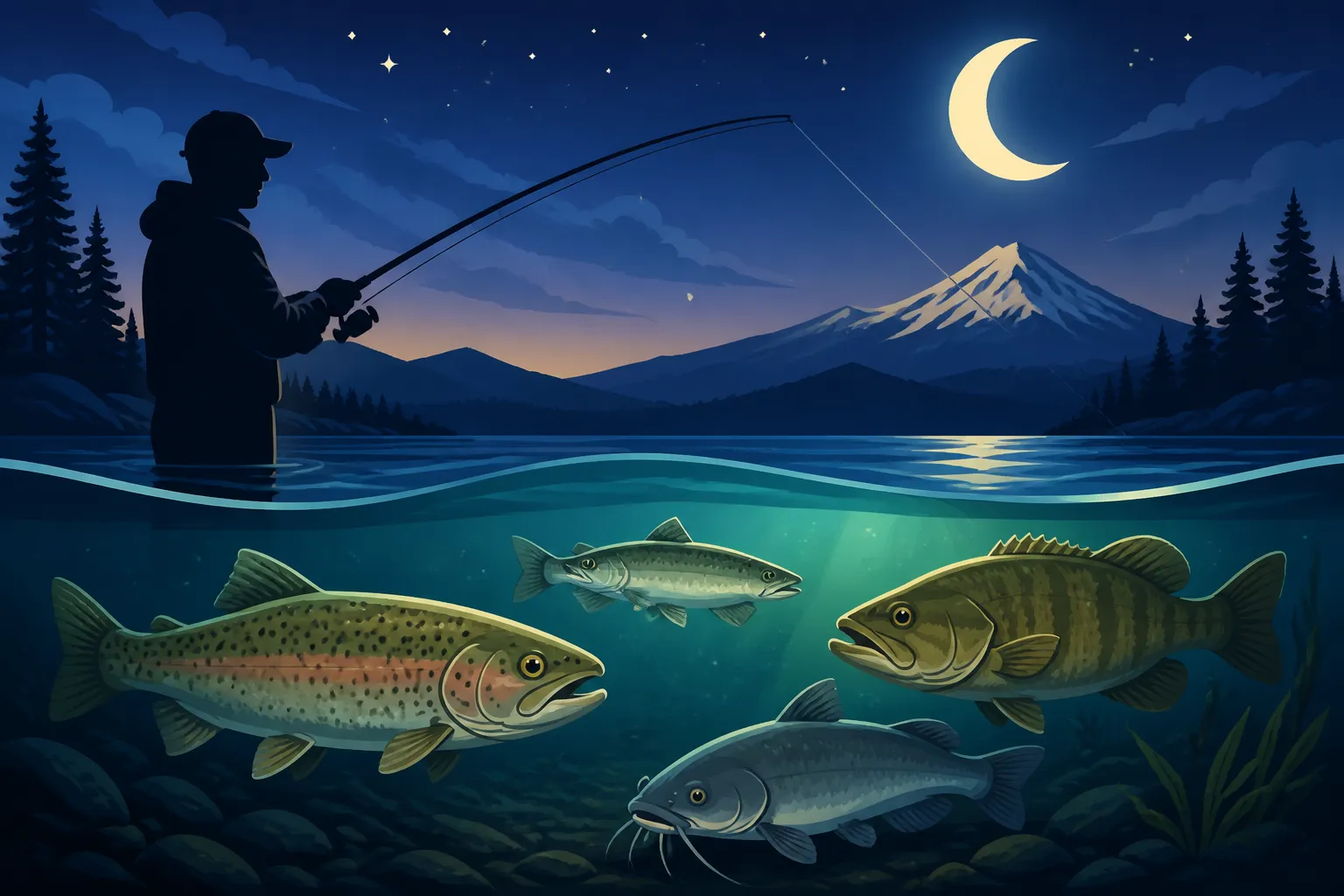
Which Oregon fish are most active at night
Let's be honest, for most of us, fishing conjures images of sunny mornings on the lake or casting lines as the sun dips below the horizon. But what if I told you some of the most exciting, and often biggest, catches in Oregon happen long after the sun has gone to bed? Anglers often overlook the incredible opportunities that unfold under the cloak of darkness, missing out on prime action. This guide is all about shining a light on those hidden gems of the night, revealing which Oregon fish species truly come alive after sundown and how you can successfully target them for an unforgettable angling adventure.
The Unique Thrill of Night Fishing in Oregon
There's something incredibly primal and serene about being on the water after dark. The world changes, the sounds shift, and the typical hustle and bustle of daytime angling gives way to a quiet, almost spiritual experience. It's not just about the tranquility, though; night fishing in Oregon offers some distinct advantages that can lead to phenomenal catches.
Why Fish After Dark?
One of the biggest draws to night fishing is the profound change in fish behavior. Many species, especially larger, more wary fish, become far less cautious once the sun's glare is removed. They move into shallower waters to feed, feeling more secure from predators, including us anglers. This means fish that might be hunkered down in deep, inaccessible cover during the day become active hunters, often closer to shore or in more accessible areas.
Another significant factor, especially during Oregon's warmer months, is water temperature. When summer days bake our lakes and rivers, fish can become sluggish and retreat to cooler, deeper water. As evening sets in and the temperatures drop, these fish become invigorated, moving to feed in more comfortable conditions. This can trigger intense feeding frenzies that simply don't happen in the daytime heat. Plus, you often find that popular spots are far less crowded, giving you a peaceful fishing experience without competing with a dozen other boats or bank anglers. It truly feels like you have the water all to yourself.
A Different Kind of Challenge and Reward
Night fishing demands a different skillset. Your senses become heightened – you rely more on sound, feel, and subtle changes in your line rather than visual cues. Detecting bites can be more challenging, but the reward of hooking into a strong fish in the pitch black is incredibly exhilarating. It forces you to slow down, be more deliberate with your movements, and truly connect with the environment in a new way. You might hear the splash of a feeding fish you'd never see during the day, or feel a subtle tug that you might dismiss if you weren't so focused. It's an opportunity to truly hone your angling intuition. For those seeking a deeper connection to the sport and the thrill of the unknown, night fishing offers a unique and satisfying challenge that day fishing rarely provides.
Oregon's Prime Nocturnal Fish Species
So, who are these mysterious creatures of the night that lurk beneath Oregon's waters? While many fish will feed during low light, some truly shine when the stars come out. These are the species you'll want to target for the most consistent action after dark.
Catfish: The Undisputed Kings of Night
When you think of night fishing, catfish are often the first species that come to mind, and for good reason. Oregon's channel catfish and brown bullhead are incredibly active nocturnal feeders. They have an excellent sense of smell and highly sensitive barbels (whiskers) that allow them to locate food in even the murkiest, darkest conditions. They often move into shallower areas, flats, and edges of weed beds under the cover of darkness, making them more accessible than during the day.
Targeting catfish at night is typically a waiting game, often involving still fishing with bait on the bottom. Think smelly baits – chicken livers, worms, cut bait, or prepared stink baits. Setting up multiple rods with bells or glow sticks on the tips can help you detect those subtle (or sometimes aggressive) bites. Popular spots like the Willamette River, certain sections of the Columbia River, and many warm-water lakes and reservoirs in western and central Oregon are fantastic for night catfishing. Don't forget to check out our Oregon Catfish Guide for more detailed information on these whiskered wonders.
White Sturgeon: Giants Under the Stars
Another incredibly popular and rewarding target for night anglers in Oregon is the white sturgeon. These ancient, massive fish are predominantly bottom feeders, and they use their sensitive barbels and powerful sense of smell to forage for crustaceans, worms, and small fish in the riverbed. While they can be caught during the day, their activity often peaks during periods of low light and throughout the night, especially in the slower, deeper pools of the Columbia River and lower Willamette River.
Sturgeon fishing at night requires heavy tackle and robust bait, as these fish can grow to immense sizes. Popular baits include squid, sand shrimp, worms, and various cut baits. Like catfishing, it's often a stationary game, casting out heavy weights to hold your bait on the bottom. You'll need strong rods and reels capable of handling powerful runs. Patience is key, but the reward of battling one of these prehistoric giants in the dark is truly an experience you won't soon forget. Just remember to be mindful of Oregon Sturgeon Guide regulations regarding retention, as most sturgeon fishing in Oregon is strictly catch-and-release, especially for the larger fish.
Bass: Largemouth and Smallmouth in Low Light
While not strictly nocturnal, both largemouth and smallmouth bass can exhibit incredibly aggressive feeding behavior during twilight hours and well into the night, especially during the warmer months. These predatory fish use the cover of darkness to ambush prey that might be too wary during bright daylight.
Largemouth bass, known for inhabiting dense cover like lily pads, submerged timber, and weed beds, will often move to the edges of these structures or even into shallower open water to hunt. Topwater lures like buzzbaits, poppers, and frogs can be incredibly effective, as their noisy commotion on the surface mimics distressed prey, drawing explosive strikes. How to Catch Largemouth Bass in Oregon lakes offers more insights into their habits. Smallmouth bass in rivers and rocky lakes also become opportunistic feeders, often keying in on crayfish and baitfish. Slow-rolled spinnerbaits, dark-colored jigs, and even topwater lures can entice strikes. The key here is not just darkness, but often the transition from day to night, or even the moonlight providing just enough visibility for them to hunt effectively.
Walleye: Predatory Eyes in the Dark
The walleye, known for its large, light-sensitive eyes, is another species that thrives in low-light conditions. While they are not widespread in Oregon, they are found in the Columbia River and its tributaries like the John Day River, where they are a prized sport fish. Their eyes are perfectly adapted for hunting in dim light, giving them a significant advantage over their prey during twilight and night hours.
Walleye will often move shallower at night, chasing baitfish into accessible areas. Trolling with crankbaits or casting jigs tipped with a worm or soft plastic can be very effective. Look for them over flats, humps, and along structure where baitfish congregate. Anglers who master night fishing for walleye often report some of their biggest catches, as the larger, more cautious fish are less hesitant to bite after dark. How to Catch Walleye on the John Day River provides specific tactics for this fascinating predator.
Other Nighttime Opportunists: Trout and Panfish
While less common, certain trout species, particularly larger brown trout, can become quite active at night, especially during insect hatches or when targeting larger prey. In some cold-water lakes and rivers, a big brown trout that is elusive during the day might be more willing to strike a large streamer or a hefty bait after dark. For more on these elusive beauties, check out our Brown Trout in Oregon guide.
Additionally, some panfish like crappie and yellow perch can be caught at night, often congregating around submerged lights (if legal and safe to use) that attract baitfish and insects. This can be a fun, family-friendly way to enjoy some nocturnal angling.
| Fish Species | Primary Night Activity | Recommended Baits/Lures | Key Locations |
|---|---|---|---|
| Channel Catfish | Heavy Feeding, Shallow Foraging | Stink baits, Cut bait, Worms | Willamette River, Columbia River, Warm-water lakes |
| Brown Bullhead | Bottom Feeding, Near Structure | Worms, Liver, Dough baits | Ponds, Lakes, Slow river sections |
| White Sturgeon | Bottom Foraging | Squid, Sand shrimp, Cut bait | Columbia River, Lower Willamette |
| Largemouth Bass | Ambush Predation, Topwater Strikes | Buzzbaits, Poppers, Jigs (dark) | Weedy lakes, Ponds, River backwaters |
| Smallmouth Bass | Ambush Predation, Crayfish Hunting | Dark Jigs, Spinnerbaits, Topwater | Rocky rivers, Clear lakes |
| Walleye | Chasing Baitfish, Shallow Movement | Crankbaits, Jigs (tipped) | Columbia River, John Day River |
| Brown Trout (Large) | Hunting large prey, Insect hatches | Large Streamers, Minnow imitations, Worms | Coldwater lakes, Rivers with strong insect activity |
| Crappie | Schooling under lights, Cover edges | Small Jigs, Minnows | Lakes, Reservoirs with structure |
Essential Gear and Techniques for Night Fishing
Successfully fishing after dark isn't just about knowing what fish to target, but also how to do it safely and effectively. Your gear setup and chosen techniques will play a huge role in your success and enjoyment.
Lighting the Way: Safety and Visibility
First and foremost, lighting is absolutely crucial for safety and functionality. A good quality headlamp is non-negotiable. Look for one with a red-light setting, as red light preserves your night vision far better than white light, which can temporarily blind you and scare off fish. You can find excellent, durable headlamps on Amazon, often with multiple light settings. Beyond your personal light source, consider glow sticks or small LED lights to attach to your rod tips. These make detecting bites incredibly easy, as any movement of the rod will be clearly visible. For boat anglers, proper navigation lights are a legal requirement, and a strong spotlight can be invaluable for navigating and spotting hazards. Never rely on your phone's flashlight – it's often not bright enough and drains battery quickly.
Organization is also key. It's much harder to tie knots or find specific lures in the dark. Pre-tie as many rigs as possible before your trip, and keep your tackle box neatly organized. Consider a tackle bag with clear, labeled compartments. Some anglers even use small UV lights to "charge" glow-in-the-dark lures, making them shine brighter.
Adapting Your Tackle and Techniques
When it comes to tackle, sensitivity and visibility become paramount. Darker conditions mean you can often get away with heavier line and leaders than during the day, as fish are less likely to be spooked by them. However, detecting subtle bites requires a sensitive rod and reel. Medium-heavy to heavy action rods are common for catfishing and sturgeon, allowing for strong hooksets and managing bigger fish. For bass and walleye, a sensitive medium-action rod helps you feel those lighter taps.
Your bait and lure choices should reflect the change in fish behavior. Scent is often king at night, especially for bottom feeders like catfish and sturgeon. Live baits like worms, shad, or minnows (where legal) are excellent. For artificials, consider dark-colored lures that create a strong silhouette against the moonlit surface or even glow-in-the-dark options. Spinnerbaits with large thumping blades, deep-diving crankbaits that send vibrations through the water, and jigs with scent-impregnated plastics are all great choices. You can easily stock up on a wide variety of these options from Amazon before your next adventure.
Technique-wise, slow and steady wins the race. Fish often feed less aggressively at night, so slower retrieves for lures and patient waiting for bait are usually most effective. When casting, be mindful of your surroundings – trees, bushes, and other anglers are harder to spot. Casting accuracy becomes more of a challenge, but practice makes perfect. For bottom fishing, use enough weight to keep your bait in place, especially in moving water like the Columbia or Willamette.
Safety and Regulations for After-Dark Angling in Oregon
While the allure of night fishing is strong, it's absolutely crucial to prioritize safety and adhere to all Oregon fishing regulations. The darkness adds layers of complexity that require extra vigilance and preparation.
Staying Safe After Sunset
Safety should be your number one concern when venturing out after dark. Here are some critical considerations:
- Go with a Buddy: Never fish alone at night. Having a partner ensures someone is there to help in case of an emergency, whether it's a fall, a lost item, or a medical issue.
- Know Your Location: Fish familiar spots. Navigating new terrain in the dark can be hazardous, with hidden obstacles, slippery banks, or unexpected drop-offs. If you are exploring a new area, do a thorough daytime scout first.
- Dress for the Conditions: Nights in Oregon, even in summer, can get surprisingly chilly. Layer up, and always bring rain gear, even if the forecast looks clear. Hypothermia can be a real risk if you're unprepared.
- Bring Communication: Ensure your phone is fully charged, and consider carrying a portable power bank. A whistle can also be useful for signaling.
- First Aid Kit: A basic first aid kit is essential for any fishing trip, but even more so at night when medical help might be harder to access quickly. Cuts from hooks or slips on rocks are more likely to happen in the dark.
- Hydration and Snacks: Just like daytime fishing, staying hydrated and fueled is important. Pack plenty of water and easy-to-eat snacks.
- Boat Safety: If you're on a boat, ensure all navigation lights are working, you have a sound-producing device, a throwable flotation device, and wear your life jacket. Always check the weather forecast for strong winds or storms, as conditions can change rapidly on the water.
Understanding Oregon's Night Fishing Rules
Oregon fishing regulations are comprehensive, and while many general rules apply 24/7, there are specific considerations for night fishing. It’s absolutely vital to consult the current Oregon Fishing Regulations Explained booklet or the Oregon Department of Fish and Wildlife (ODFW) website before heading out.
Key areas to pay attention to include:
- Open Seasons and Areas: While some areas are open for fishing at night, others may have specific curfews or be closed during certain hours, particularly in sensitive spawning areas or for certain species. Never assume an area is open simply because it’s a popular daytime spot.
- Bag and Possession Limits: Your Oregon Daily Bag Limits Explained still apply at night. You cannot keep more fish than legally allowed, regardless of when you caught them. Wardens actively patrol at night, and violations carry significant penalties.
- Gear Restrictions: Some waters have specific gear restrictions (e.g., fly fishing only, bait restrictions). These don't suddenly disappear after dark. Ensure your chosen techniques and tackle comply with local rules.
- Bait Use: While smelly baits are great for night fishing, always ensure the bait you are using is legal for the specific water body you are fishing.
- Licenses and Endorsements: Of course, your basic Oregon Fishing License Guide and any required endorsements (like the Oregon Combined Angling Tag Guide for salmon/steelhead/sturgeon, or the Oregon Columbia River Basin Endorsement) are still required, even at 2 AM. Always have them readily accessible, whether on your phone or a printed copy. A game warden can and will check licenses at any hour.
- Artificial Light Use: While personal headlamps are fine, using artificial lights to attract fish directly (chumming with light) might be restricted in some areas. Always verify local rules if considering such tactics.
By being prepared, staying safe, and respecting the regulations, your night fishing adventures in Oregon can be incredibly rewarding and create lasting memories. So, grab your headlamp, pack your gear (maybe a few extra glow sticks from Amazon!), and embrace the stillness and mystery of fishing under the stars.
Disclaimer
This article is for general informational purposes only and does not constitute professional advice. Laws, prices and regulations vary by location and change over time. Consult a qualified professional for guidance on your specific situation.