What is a bull trout permit
It’s easy to feel overwhelmed by the sheer number of rules and regulations that come with enjoying Oregon’s incredible fishing opportunities. You might be planning a tranquil day by a pristine mountain stream, only to hear whispers about special permits for certain fish, leaving you wondering, "What exactly is a bull trout permit, and do I even need one?" This guide is here to untangle that confusion, explaining everything you need to know about bull trout, their protected status, and how to get the necessary endorsement to fish legally in their habitats, ensuring your next angling adventure is both enjoyable and compliant.
Understanding Bull Trout and Their Protected Status in Oregon
Oregon's waters are home to a truly remarkable array of fish, and among the most enigmatic and revered is the bull trout. These aren't just any trout; they're a vital part of the state's ecological heritage, and their unique status requires a little extra attention from us anglers.
The Unique World of Oregon's Bull Trout
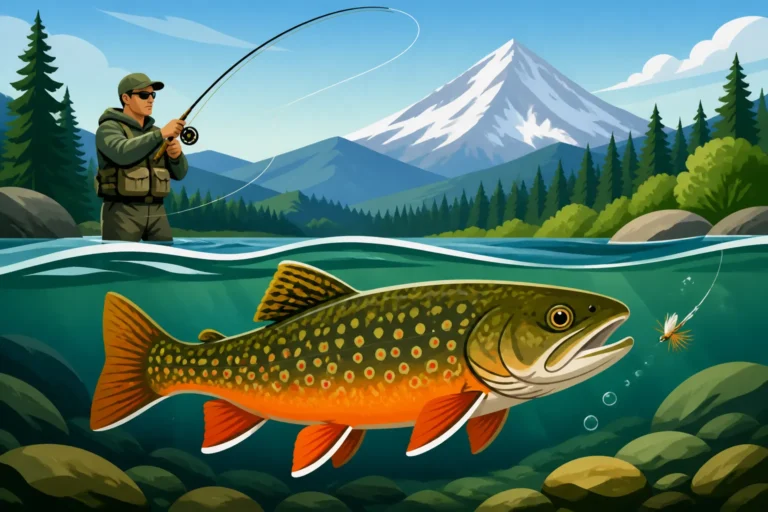
Bull trout (scientific name: Salvelinus confluentus) are magnificent native char, a distinct group of salmonid fish that are quite different from the rainbow or cutthroat trout most people are familiar with. They are characterized by their large heads, powerful jaws, and often striking coloration, which can range from olive-green to bluish-grey on their backs, fading to silvery sides, and sometimes adorned with pale yellow or pinkish spots. During spawning, their bellies and lower fins can transform into brilliant shades of orange, red, or even crimson.
These cold-water specialists thrive in the cleanest, iciest waters of Oregon's pristine rivers and high mountain lakes. They are an apex predator in their native environments, feeding on smaller fish, insects, and even other char. Their presence is a strong indicator of excellent water quality and a healthy ecosystem, making them a true jewel of Oregon's wild places. They can grow to impressive sizes, with some individuals exceeding 20 pounds, though most caught by anglers are considerably smaller. Their life cycles can be complex, with some bull trout remaining in lakes or rivers their entire lives (resident), while others migrate between smaller tributaries, larger rivers, and lakes (fluvial or adfluvial), sometimes traveling hundreds of miles.
Why Bull Trout Need Protection: Conservation Concerns
Despite their resilience and predatory prowess, bull trout populations across much of their historic range, including Oregon, have faced significant declines. This has led to their listing as a "threatened" species under the federal Endangered Species Act (ESA) since 1999. This listing reflects serious concerns about their long-term survival and underscores the critical need for robust conservation efforts.
The primary threats to bull trout are multifaceted. Habitat loss and degradation are major culprits, resulting from factors like logging, mining, road construction, and agricultural practices that can lead to increased water temperatures, siltation of spawning grounds, and barriers to migration. Competition and hybridization with non-native species, particularly brook trout, also pose a significant challenge. Historically, overfishing played a role, but today, strict regulations largely address this. The "threatened" designation means that while their survival isn't immediately imperiled, they are likely to become endangered in the foreseeable future if protective measures aren't maintained and enhanced. For anglers, this status translates into very specific rules designed to minimize any additional stress on these vulnerable populations. Understanding these challenges helps us appreciate why a special permit, or rather an endorsement, is in place. You can learn more about these fascinating fish in our guide to Bull Trout in Oregon.
The Specifics of the Oregon Bull Trout Permit
Navigating the various licenses, tags, and endorsements required for fishing in Oregon can sometimes feel like trying to solve a puzzle. When it comes to bull trout, the term "permit" can be a bit misleading, so let's clarify exactly what it means and why it's a non-negotiable part of responsible angling in certain areas.
What Exactly is a Bull Trout Permit?
Here's the crucial clarification: in Oregon, what is commonly referred to as a "bull trout permit" is actually a free endorsement that you add to your annual angling license. It is not a permit that allows you to harvest or keep bull trout. In almost all waters of Oregon, bull trout fishing is strictly catch-and-release, and retaining a bull trout is illegal and carries significant penalties due to their threatened status.
The primary purpose of this endorsement is for data collection. By requiring anglers to obtain this free endorsement when fishing in waters known to contain bull trout, the Oregon Department of Fish and Wildlife (ODFW) can gather crucial information about angler effort in these sensitive areas. This data helps biologists monitor fishing pressure, understand human interaction with bull trout populations, and inform future management decisions to ensure the species' recovery and protection. Think of it as a way for ODFW to know who's out there, and where, without hindering your ability to fish. It's a simple, no-cost step that contributes directly to conservation. To understand the broader licensing framework, check out our Oregon Fishing License Guide.
Who Needs One and Where It's Required
If you plan to fish in any waters that are specifically designated as bull trout management areas, you must have the Oregon Bull Trout Endorsement. This holds true even if your intention is to target other species like rainbow trout, kokanee salmon, or bass. If bull trout are present in those waters, and you're casting a line, the endorsement is required. It's a preventive measure to ensure that all anglers operating in sensitive bull trout habitats are accounted for.
Some of the most well-known areas in Oregon where this endorsement is typically required include, but are not limited to, the Metolius River and its tributaries, Lake Billy Chinook (which hosts a significant bull trout population), and various other river systems within the Deschutes, John Day, and Umatilla basins. It's imperative to consult the current Oregon Sport Fishing Regulations handbook or the ODFW website for a precise list of waters. Regulations can change, and what was true last year might be different this year. Fishing without the required endorsement in designated waters, even if you don't catch a bull trout or if you immediately release one, can result in fines and other penalties, similar to fishing without a valid angling license. This is part of the comprehensive Oregon Fishing Regulations Explained you should always review before heading out.
How to Obtain Your Oregon Bull Trout Permit
The good news amidst all the rules and regulations is that getting your Oregon Bull Trout Endorsement is incredibly straightforward and, importantly, it won't cost you an extra dime. It's designed to be an easy step in your fishing preparation.
The Simple Application Process
Obtaining your Bull Trout Endorsement is part of acquiring or renewing your standard Oregon angling license. It's an add-on, like selecting other endorsements such as the Columbia River Basin Endorsement or the Ocean Endorsement, but unlike those, it's absolutely free. You don't pay anything extra for it.
Here’s how you typically get it:
- Online: The easiest and most common way is through the ODFW online licensing system. When you purchase or renew your annual angling license, the system will often prompt you to add free endorsements, and the Bull Trout Endorsement will be listed as an option. Simply select it, and it will be added to your license profile at no charge. This method is convenient because you can do it from the comfort of your home. You can find more details on How to Renew an Oregon Fishing License Online.
- In-Person: You can also obtain it at any authorized ODFW license agent throughout the state. These agents include sporting goods stores like Cabela's or Bi-Mart, tackle shops, and some general retail outlets. Just inform the vendor that you need to add the Bull Trout Endorsement to your fishing license, and they will process it for you. You can find nearby locations through our guide Where to Buy an Oregon Fishing License.
- ODFW Offices: State ODFW offices also process licenses and endorsements in person.
It really is that simple. There’s no complex application form specific to bull trout, no essay to write, and no fee to pay. It’s just a checkbox or a verbal request when you’re already getting your main fishing license. This streamlined process ensures that compliance is easy, encouraging more anglers to participate in this vital conservation effort.
Carrying and Using Your Permit
Once you've secured your Oregon Bull Trout Endorsement, whether online or in person, it's crucial to understand how to properly carry and present it when you're out on the water. Just like your main fishing license, proof of your endorsement must be readily available for inspection by law enforcement, such as an Oregon State Police game warden.
When you purchase your license online, you'll usually have the option to print a physical copy. Many anglers prefer this for ease of access and because it’s waterproof if laminated. However, in Oregon, you can also often carry an electronic copy on your smartphone or other mobile device. This digital proof is generally accepted as long as it's clearly visible and accessible. Before relying solely on your phone, though, always double-check the latest ODFW regulations, as technology acceptance can evolve, and certain areas might have limited cell service where a physical copy would be essential. It’s a good idea to have a backup, perhaps a physical copy tucked into your fishing vest or tackle box, just in case your phone battery dies or gets wet. For more on this, consider reading Do I need to print my Oregon fishing license?.
The endorsement itself usually appears as a line item or specific notation on your general angling license document. There isn't a separate, standalone "bull trout permit" card. So, when a game warden asks to see your license, simply present your main angling license, and the bull trout endorsement will be visible there. This seamless integration makes it easy to comply. Remember, game wardens have the authority to check your license at any time in the field, so always be prepared. Learning more about this can be helpful by reading Can a game warden check your fishing license in Oregon?. Carrying appropriate gear, such as a sturdy net for landing fish without excessive handling, can be found readily on sites like Amazon, helping you be prepared for unexpected catches.
Responsible Angling in Bull Trout Waters
Fishing in waters inhabited by bull trout isn't just about having the right endorsement; it's about adopting a mindset of heightened responsibility. Because these fish are a threatened species, every interaction, even a quick catch-and-release, carries conservation significance.
Catch-and-Release Best Practices for Bull Trout
When you're fishing in waters where bull trout are present, the expectation is that if you hook one, you will release it immediately and with the utmost care. This isn't just a suggestion; it's a legal requirement in most Oregon waters, as harvesting bull trout is generally prohibited. To maximize a bull trout's survival chances after being caught, here are some critical best practices:
- Go Barbless: This is perhaps the single most important tip. Using barbless hooks makes hook removal significantly easier and minimizes tissue damage to the fish's mouth. Many anglers even pinch down the barbs on their existing hooks. You can find a wide selection of pre-snelled barbless hooks and crimping tools on Amazon to ensure you're ready.
- Minimize Fight Time: Use tackle appropriate for the size of fish you might encounter. A longer, drawn-out fight exhausts the fish, reducing its chances of recovery.
- Keep Them Wet: The absolute best practice is to keep the fish in the water as much as possible. Avoid dragging it onto the bank or boat. If you need to handle it for hook removal, use wet hands or a wet, rubberized landing net (not abrasive string nets) to support its body. Never hold a bull trout by its jaw or gills, which can cause internal damage.
- Quick Hook Removal: Have your forceps or pliers easily accessible. Remove the hook as quickly and gently as possible. If the hook is deeply embedded and cannot be removed without causing further damage, it's often best to cut the line as close to the hook as possible.
- Revive, Don't Throw: After hook removal, gently hold the fish upright in the water, facing into the current. Allow water to flow over its gills until it regains its strength and swims away on its own. Never just toss a fish back into the water, especially if it appears sluggish.
By following these guidelines, you're not just adhering to regulations; you're actively contributing to the conservation of a magnificent, threatened species. More general catch-and-release guidance can be found in Oregon Catch-and-Release Rules and Oregon Fishing Techniques for Beginners.
Understanding and Reporting Incidental Catches
Even the most careful angler might accidentally hook a bull trout while targeting other species. This is what's known as an incidental catch, and it's a common occurrence in shared habitats. If this happens, the same catch-and-release best practices apply: immediately release the fish with minimal harm. There's generally no need to report a single incidental catch unless explicitly stated in the regulations for a specific area, but always refer to the latest ODFW sport fishing regulations for any area-specific requirements.
However, if you witness any behavior that appears to be illegal, such as someone intentionally trying to harvest bull trout, or if you encounter multiple dead or distressed bull trout that seem related to human activity, it is your responsibility as a conservation-minded angler to report it. You can contact the Oregon State Police fish and wildlife division. Information like location, time, and a description of the incident can be extremely helpful. Knowing how to identify different species is key to responsible angling, and our Oregon Trout Species Guide can help you distinguish a bull trout from other species. Many resources, including detailed fish identification charts and even specialty flies for targeting other species without inadvertently harming bull trout, are widely available on sites like Amazon, making preparation easier.
| Feature | Oregon General Angling License | Oregon Bull Trout Endorsement |
|---|---|---|
| Purpose | Required for all sport fishing in Oregon | Required for fishing in bull trout waters |
| Cost | Varies (resident/non-resident, annual/daily) | FREE (no additional cost) |
| Eligibility | Anyone (with proper ID, age) | Anyone with a valid Oregon angling license |
| Allows Harvest? | Yes (for most species, within limits) | NO (Bull Trout are catch-and-release only) |
| Required For | Fishing for any fish species statewide | Fishing even for other species in designated bull trout waters |
| Obtained Via | ODFW online, license agents, ODFW offices | ODFW online, license agents, ODFW offices (as an add-on) |
| Proof Required | Physical or digital copy of license | Appears on your general angling license |
| Conservation Role | Funds ODFW management programs | Aids in data collection for bull trout recovery efforts |
Disclaimer
This article is for general informational purposes only and does not constitute professional advice. Laws, prices and regulations vary by location and change over time. Consult a qualified professional for guidance on your specific situation.