How to crab from a dock in Oregon
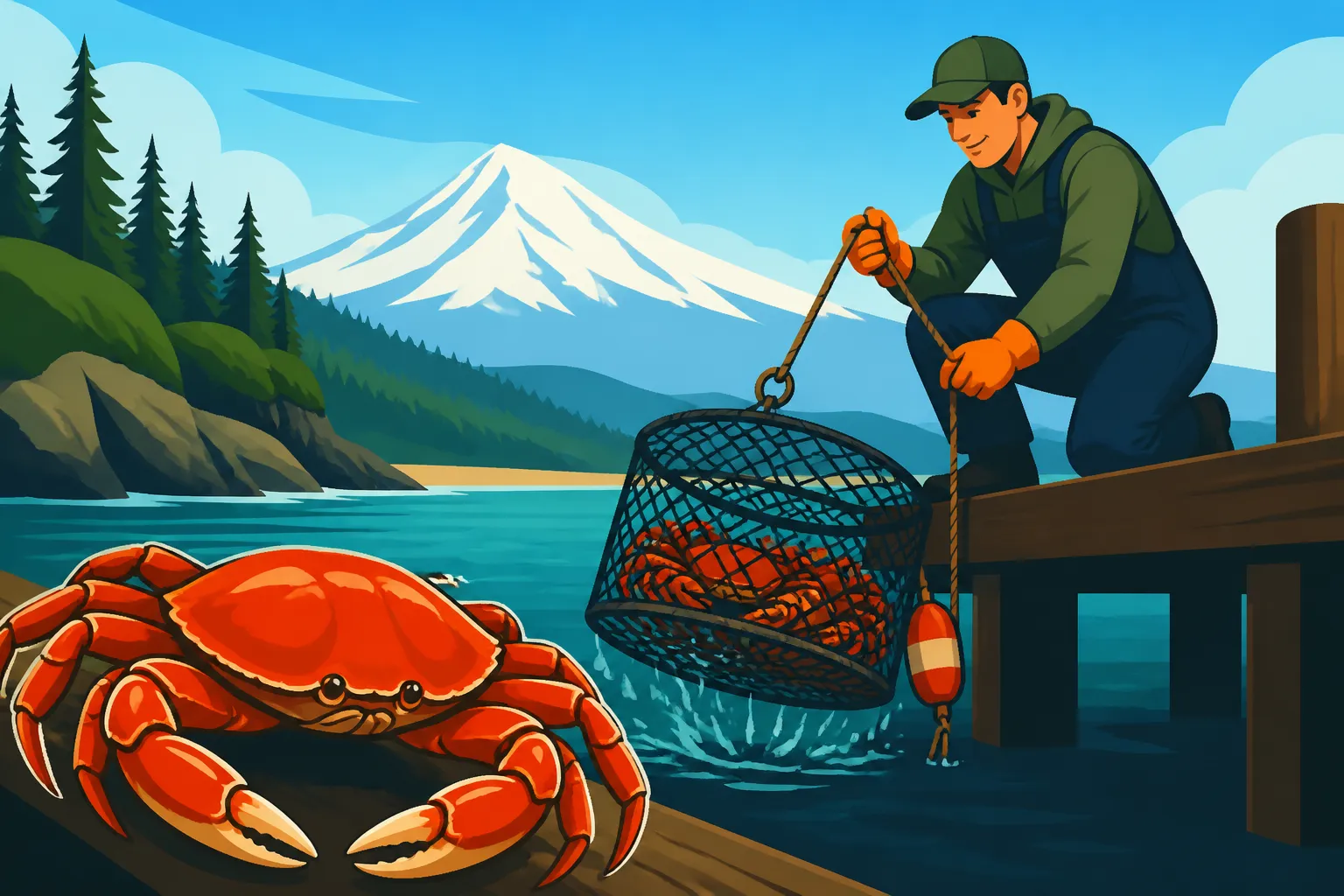
The idea of fresh, succulent crab often conjures images of expensive charters or owning a boat. But let me tell you, there's a wonderfully accessible and budget-friendly way to get your hands on some delicious Dungeness crab right here in Oregon: crabbing from a public dock. If you've ever felt intimidated by crabbing, thinking it's too complicated or requires specialized knowledge, this guide is for you. We're going to break down exactly how you can successfully and ethically crab from an Oregon dock, making it an enjoyable outing for the whole family.
Why Dock Crabbing is Your Go-To Oregon Adventure
Crabbing from a dock isn't just a convenient alternative; it's a fantastic experience in its own right. It strips away a lot of the logistical hurdles that boat-based crabbing can present, opening up this rewarding activity to a much wider audience. It's truly a gem of an outdoor pursuit in Oregon, blending relaxation with the thrill of the catch.
Accessibility and Low Barrier to Entry
One of the biggest advantages of dock crabbing is its incredible accessibility. You don't need to own a boat, maintain a trailer, pay for launch fees, or worry about navigating open water. All you need is some basic gear, a bit of knowledge, and a willingness to spend some time by the water. This makes it an ideal activity for families with young children, individuals new to crabbing, or anyone looking for a more laid-back fishing experience. Public docks are often equipped with restrooms, parking, and sometimes even nearby eateries, adding to the convenience. It’s perfect for a spontaneous afternoon outing or a planned weekend trip without the heavy financial investment or skill curve of other fishing pursuits.
Imagine spending a sunny afternoon watching the water, sharing stories, and waiting for those tell-tale tugs on your crab line. It’s an immersive experience that connects you with Oregon’s bountiful coast in a very direct way. For many, it's a nostalgic activity, bringing back memories of childhood adventures or creating new ones with loved ones. Plus, the minimal gear requirement means you can often pack everything you need into a single tote or backpack, making transport a breeze. If you're wondering about the specifics of getting started, check out our guide on the Oregon Fishing License Guide, which includes details on shellfish licenses.
Prime Locations for Dock Crabbing in Oregon
Oregon's coastline is dotted with fantastic bays and estuaries that are perfect for dock crabbing. These sheltered waters provide ideal habitats for Dungeness crabs, and many communities have made public docks available for recreational crabbing and fishing. Knowing where to go can make all the difference between a frustrating trip and a successful haul.
Some of the most popular and productive spots include the docks around Newport's Bayfront in Yaquina Bay, the public piers in Garibaldi on Tillamook Bay, and the various access points in Coos Bay near Charleston. These locations are well-known for good crab populations and often have amenities nearby. For a deeper dive into specific locations, you might want to read about Yaquina Bay crabbing and fishing spots or Tillamook Bay crabbing and fishing spots. Other notable bays include Netarts Bay and Winchester Bay, which also offer excellent opportunities. When choosing a dock, look for those that are designated for public use and have decent water depth, as crabs tend to prefer areas with some current and structure. You'll often find bait shops or tackle stores nearby these popular spots, which can be super handy if you need to grab last-minute supplies or fresh bait. Always be sure to respect any posted signs regarding fishing or crabbing access, as some docks may have restrictions.
Gearing Up for a Successful Dock Crabbing Trip
Alright, let's talk gear! You don't need a boatload of expensive equipment to get started with dock crabbing. In fact, you can assemble a very effective setup without breaking the bank. The key is knowing what you need and why, ensuring you're prepared for a comfortable and productive day on the water.
Essential Crabbing Traps and Gear
Your choice of trap is fundamental. For dock crabbing, you'll generally be looking at crab rings (often called "pot pullers" or "collapsible traps") or small, collapsible crab pots. Both have their merits.
- Crab Rings: These are circular traps that lie flat on the bottom when deployed. When you pull the line, the sides cinch up, forming a basket that traps any crabs sitting on the bait. They're lightweight, relatively inexpensive, and easy to store. The downside is that crabs can escape if you don't pull them up quickly enough after a soak. For a quick overview of how these work, think of them like a net you quickly pull up before the crabs scatter. Many reliable options can be found online, and I've seen some great starter kits on Amazon.
- Collapsible Crab Pots: These traps are more like traditional crab pots but designed to fold down for easier transport. They have a solid frame and often feature one-way doors, meaning crabs can get in but have a harder time getting out. This makes them more effective for longer soak times and in areas with stronger currents. They're a bit heavier and pricier than rings, but they offer better crab retention.
- Crab Snares: While less common for dock crabbing, snares are also an option. They consist of a bait cage surrounded by monofilament loops that tighten around a crab's legs when retrieved. These are great for active casting from docks or jetties, offering a more "hands-on" approach.
Beyond the trap, you’ll need:
- Rope: Enough length to reach the bottom and extend to the dock with some slack, typically 50-100 feet of durable line.
- Buoy: A brightly colored buoy to mark your trap. Make sure it's distinct enough to identify your gear.
- Bait Cage or Mesh Bag: Essential for securing your bait within the trap, preventing crabs from simply tearing it apart and making off with it before getting caught.
- Crab Measuring Gauge: This is non-negotiable for ensuring you only keep legal-sized crabs. They are usually made of plastic or metal and have precise measurements. You can easily find these at most sporting goods stores or on Amazon.
- Cooler with Ice: To keep your catch fresh. Crabs spoil quickly, so getting them on ice immediately is crucial.
- Heavy-Duty Gloves: Crabs can pinch hard, and their shells are sharp. Protect your hands!
- Bucket or Container: For holding your crabs temporarily before measuring and icing.
- Hand Sanitizer and a Rag: Crabbing can be messy!
The Importance of Good Bait and How to Rig It
Ask any seasoned crabber, and they'll tell you that bait is paramount. Crabs are scavengers, drawn by scent, so the stinkier the better! But it also needs to be durable enough to withstand being picked at for a while.
- What Makes Good Bait: You want something that releases a strong scent trail in the water to attract crabs from a distance. It also needs to be tough enough that they can't simply rip it off your trap and swim away with it.
- Popular Bait Choices:
- Chicken: Raw chicken pieces, especially legs and thighs, are a classic. They're relatively inexpensive, readily available, and their skin and bones hold up well against persistent crab attacks. Many swear by them.
- Fish Carcasses/Scraps: If you've been fishing, save those salmon heads, tuna frames, or other fish scraps. They are incredibly pungent and effective. Just be sure to use fresh, not spoiled, fish. Our article on Best crab pot bait for Yaquina Bay delves deeper into bait options.
- Clam Necks/Guts: These are also highly attractive, though sometimes harder to source in bulk.
- How to Rig It: The trick is to secure your bait firmly inside a bait cage or a robust mesh bag. This allows the scent to leach out while preventing crabs from easily devouring the bait without entering your trap. For crab rings, position the bait in the center. For pots, place it where crabs will have to fully enter the pot to get at it. You can often secure the bait cage with zip ties or strong twine to a central point in your trap. Make sure it won't float out or get easily dislodged by currents or hungry crabs.
Your Step-by-Step Guide to Crabbing from an Oregon Dock
Now that you've got your gear sorted, let's get down to the actual crabbing! It's not rocket science, but there are definitely techniques that increase your chances of success and ensure a smooth, enjoyable experience.
Preparation and Setting Your Traps
Before you even think about dropping a trap, there are a few things to consider. Timing, tide, and responsible deployment are all crucial.
First, check the tides. Crabs are most active and tend to move with the currents, making incoming and high slack tides often the most productive times to set your traps. A strong incoming tide brings in fresh food and new crabs, while the slack tide gives them time to settle and investigate your bait. You can usually find tide charts online for your specific Oregon coastal location. Next, find a good spot on the dock. Look for areas away from heavy boat traffic (if applicable) and where you can safely deploy and retrieve your gear without obstructing others. You might even observe where other successful crabbers are setting their gear – sometimes, imitation is the sincerest form of flattery in crabbing!
Once you've picked your spot, secure your buoy and line to the dock. This is vital! You don't want your precious trap floating away. Use a sturdy knot to tie your line to a dock cleat, railing, or another secure fixture. Make sure there's enough slack in the line for the trap to rest on the bottom, even at high tide, and for you to easily retrieve it. Then, bait your trap generously. Remember our discussion on good bait? Load up that bait cage with your smelly chicken or fish scraps. Secure the bait cage firmly within your trap.
Finally, lower the trap carefully into the water. Don't just toss it in; guide it down to ensure it lands upright on the seabed. If you're using a crab ring, make sure it settles flat. For a pot, confirm it lands right-side up so the entry doors are accessible. Once it's settled, take note of any markers or landmarks to help you remember its exact position, especially if multiple people are crabbing from the same dock.
Now comes the hardest part for many: the waiting strategy. How long should you leave your trap? For crab rings, which are open-top, shorter soak times (15-30 minutes) are often best to prevent crabs from escaping. For closed pots, you can leave them for longer periods, sometimes up to an hour or two. However, I generally recommend checking them more frequently from a dock – every 30-45 minutes – to maximize your chances and keep the excitement level high, especially with kids. It's a balance between letting the bait work its magic and not letting the crabs have too much time to wander off.
Checking Your Traps and Handling Your Catch
The moment of truth! Pulling up your trap is always a thrill. Do it with a steady, consistent motion.
When you're ready to check, pull the trap gently but firmly off the bottom. Avoid jerky movements, as this can dislodge crabs from your trap, especially with rings. Once it breaks the surface, quickly and smoothly bring it onto the dock. Now, the excitement begins! You might have some crabs scurrying around inside.
The first step is to identify your catch. In Oregon, you'll primarily encounter Dungeness crabs and Red Rock crabs. Dungeness Crab in Oregon are prized for their sweet meat and are the main target. Red Rock crabs are smaller, redder, and have thicker, black-tipped claws; while edible, they have less meat and are often released. Focus on identifying the Dungeness.
Next, you need to measure each Dungeness crab. This is critical for legality. Use your crab measuring gauge. The measurement is taken across the back of the shell, directly in front of the widest points of the two spines. It's absolutely crucial to measure accurately. Our guide on How to measure a legal Dungeness crab has more detailed instructions. If a crab is undersized, it must be released immediately.
Then, you need to sex your crabs. In Oregon, you can only keep male Dungeness crabs. Female crabs, with their broader, rounded abdominal flap (apron), must be released. Males have a narrower, triangular apron. This regulation is vital for the sustainability of the crab population. For more information on this, refer to Are female Dungeness crabs legal to keep in Oregon?.
Releasing illegal crabs safely is just as important as keeping legal ones. Handle crabs gently, holding them by the back of the shell to avoid their powerful claws. Return undersized crabs and all female crabs to the water quickly and without causing them harm. Don't drop them from a great height; gently place them back in.
Finally, for keeping legal crabs, transfer them immediately into your cooler filled with ice. A layer of ice on the bottom, then crabs, then more ice, will keep them fresh and also put them into a dormant state, making them easier to handle later. Never keep crabs in standing fresh water, as it will kill them quickly.
Navigating Oregon's Crabbing Regulations and Etiquette
Crabbing is a deeply cherished tradition in Oregon, and keeping it sustainable for future generations means everyone needs to play by the rules. Ignorance of the law is never an excuse, and game wardens do patrol docks. Understanding and adhering to regulations isn't just about avoiding penalties; it's about respecting the resource.
Understanding Licenses, Limits, and Seasons
Before you even cast your first trap, you need an Oregon shellfish license. There's no way around it. Even if you're just harvesting for catch-and-release or for a single day, a license is required. You can purchase these online, at most sporting goods stores, or designated license vendors. Check out Oregon Shellfish License for comprehensive details on acquiring yours. Seriously, don't skip this step; fishing without a license can lead to hefty fines!
Next, familiarize yourself with the daily limits for Dungeness crabs. These limits dictate how many legal-sized male Dungeness crabs you can keep per day. The number is designed to ensure a healthy population. Make sure you know the current limit before you go. Our article on What is the daily limit for Dungeness crab in Oregon provides the specifics. It's easy to get excited and lose count, so pay attention!
Minimum size limits are strictly enforced. As mentioned, you must measure crabs across the back of the shell, just in front of the points. Any crab below the minimum size must be immediately returned to the water. This ensures that crabs have a chance to reproduce before they are harvested. Incorrect measurement or keeping undersized crabs can result in citations.
As we discussed, only male Dungeness crabs can be harvested. Identifying males by their narrow abdominal flap (apron) is crucial. Releasing females ensures the continued propagation of the species. This rule is one of the pillars of sustainable crabbing in Oregon.
While Dungeness crabbing generally remains open year-round in Oregon’s bays and estuaries, there can be specific seasonal considerations or emergency closures due to environmental factors like domoic acid levels (a natural marine toxin). Always check the Oregon Department of Fish and Wildlife (ODFW) website or call their hotline for the latest information on seasons, closures, and advisories, especially if you're planning a trip. For more general timing, see Oregon Crabbing Season Timing. These rules can sometimes change, so a quick check before you head out is always a smart move. You can find the most up-to-date regulations in the ODFW's annual synopsis, which you can usually pick up at license vendors or view online. This document, described in Oregon Fishing Regulations Explained, is your bible for all things regulated in Oregon's waters.
Here's a quick reference for Dungeness crab regulations from a dock:
| Regulation Type | Requirement |
|---|---|
| License | Oregon Shellfish License required for all ages. |
| Species | Dungeness Crab (primary target). Red Rock Crab also legal. |
| Gender | Male Dungeness crabs only. All females must be released. |
| Size Limit | Dungeness: Minimum 5 3/4 inches across the back. Red Rock: Minimum 5 inches. |
| Daily Bag Limit | Dungeness: Check current ODFW regulations (typically 12 per person). Red Rock: Check current ODFW regulations (typically 24 per person). |
| Gear | Crab rings, pots, or snares. Max 3 pieces of gear per person. |
| Identification | Must have a valid form of identification readily available. |
| Seasons | Generally year-round in bays/estuaries, but check for health advisories. |
Best Practices for Sustainable Crabbing and Dock Etiquette
Beyond the letter of the law, there's a spirit of responsible crabbing and good neighborly behavior that makes the experience better for everyone. These aren't just suggestions; they're vital for preserving our precious marine resources and ensuring pleasant dock experiences.
Conservation efforts start with you. Always handle crabs gently, especially those you're releasing. Avoid dropping them or throwing them back roughly. Get them back into the water as quickly as possible. This minimizes stress and injury, increasing their chances of survival and future reproduction. This is particularly important for females and undersized males. Treat every crab with respect.
Dock sharing and being mindful of others is critical. Public docks are shared spaces. Don't hog too much railing space, and be aware of where you're dropping your traps. Don't cross lines with other crabbers, and try not to block walking paths or access points. A friendly wave and a polite conversation go a long way. If someone asks about your bait or technique, be willing to share a tip or two – that's part of the community spirit!
Always clean up your area before you leave. This means no discarded bait, broken gear, or food wrappers left behind. Pack out everything you pack in. Leaving trash is not only disrespectful to other users and the environment, but it can also attract unwanted pests. Many docks have trash receptacles; use them.
Finally, respecting private property near public docks is paramount. Sometimes public access docks are nestled among private businesses or residences. Be mindful of noise levels, especially early in the morning or late at night. Do not trespass on private property to access the dock or retrieve gear. Stick to the designated public areas.
Crabbing from an Oregon dock is an experience that truly embodies the spirit of our beautiful state – accessible, rewarding, and deeply connected to nature. With the right gear, a little patience, and a healthy respect for the rules and the environment, you're all set to enjoy the thrill of the catch and the delicious rewards that follow. Happy crabbing!
Disclaimer
This article is for general informational purposes only and does not constitute professional advice. Laws, prices and regulations vary by location and change over time. Consult a qualified professional for guidance on your specific situation.