Fall Chinook Season Timing on the Columbia
Trying to pin down the exact "best" time for Fall Chinook salmon on the Columbia River can feel like chasing a ghost, especially with how variable river conditions and fish runs can be year after year. It's incredibly frustrating to plan a trip, only to find the fish haven't shown up yet, or worse, have already passed. This guide is here to unravel the mysteries of the Fall Chinook season timing on the Columbia, helping you understand the rhythm of these magnificent fish so you can hit the water when your chances are highest.
Understanding the Columbia River Fall Chinook Run
The Columbia River Fall Chinook run is one of the most anticipated and exciting fisheries in the Pacific Northwest. It's a grand spectacle that draws anglers from all over, eager to test their skills against these powerful, delicious salmon. But to consistently find success, you need more than just good gear; you need to understand the fish itself.
What Makes Fall Chinook Unique?
Fall Chinook, often called "Kings" or "Blackmouth" due to their dark mouths, are renowned for their size, strength, and delectable red meat. They are typically the largest salmon species found in the Columbia River, with individuals often tipping the scales over 20 pounds, and some absolute monsters exceeding 50 pounds. Unlike their spring-run cousins, Fall Chinook enter the river system in late summer and early fall, with a more immediate drive to spawn. They don't linger in freshwater as long, meaning they are often in prime condition when caught, having recently transitioned from their rich ocean feeding grounds. This distinct characteristic influences where and when you'll find them as they migrate upstream.
Their life cycle is fascinating. Most Fall Chinook spend 3 to 5 years in the ocean, bulking up on rich forage fish before their instinctual return to their natal rivers. This long ocean residency contributes to their impressive size. Once they enter the Columbia, their primary goal is to reach their spawning grounds, which can be thousands of miles upriver in the mainstem or its many tributaries. This migratory urgency means they are often actively swimming, making them responsive to various fishing techniques designed to intercept them during their journey. Knowing their biological imperative helps you anticipate their movements and tailor your approach.
The Biology Behind the Run
The timing and strength of the Fall Chinook run are heavily influenced by a combination of factors, starting with conditions in the vast Pacific Ocean. Abundant food sources in the ocean—things like krill, herring, and other baitfish—allow more salmon to survive and grow to a healthy size. When ocean conditions are favorable, we often see larger returns. Conversely, poor ocean conditions can lead to smaller runs and smaller fish. It's a testament to the intricate balance of nature, and something that ODFW (Oregon Department of Fish and Wildlife) and WDFW (Washington Department of Fish and Wildlife) biologists monitor closely to provide their annual forecasts.
Once these powerful salmon hit the freshwater, environmental triggers in the Columbia River system become paramount. Water temperature is a critical factor; Fall Chinook prefer cooler water, typically below 65 degrees Fahrenheit. A sudden drop in river temperature after a warm summer can signal the start of a strong push of fish upstream. Water levels and flow rates also play a significant role. Higher, consistent flows can encourage a steady migration, while low flows or sudden spikes can sometimes stall or scatter fish. The age classes of returning salmon—how many 3-year-olds, 4-year-olds, etc., are in the run—also contribute to the overall size and timing, as different age classes might exhibit slightly different migratory patterns. Understanding these biological underpinnings helps decipher why some years are banner years and others are a bit more challenging.
Peak Season Timing and Variability
Anglers often dream of that perfect window when the river is teeming with salmon, but the reality is that the "peak" of the Fall Chinook season on the Columbia River is a dynamic target. It shifts based on natural rhythms and environmental nudges, making it both challenging and exciting.
General Timeline of the Run
While nature rarely adheres to a strict calendar, we can generally observe a predictable pattern for the Columbia River Fall Chinook run. The earliest fish, often referred to as "August Kings" or "Buoy 10 fish," typically begin to arrive in late July and build through August. This early push is often comprised of the smaller, younger "jack" salmon and some early adult fish, and they congregate heavily in the lower river, particularly around the famous Buoy 10 area at the mouth of the Columbia. This is truly the kickoff of the season, and it's where many anglers get their first shot at these fantastic fish.
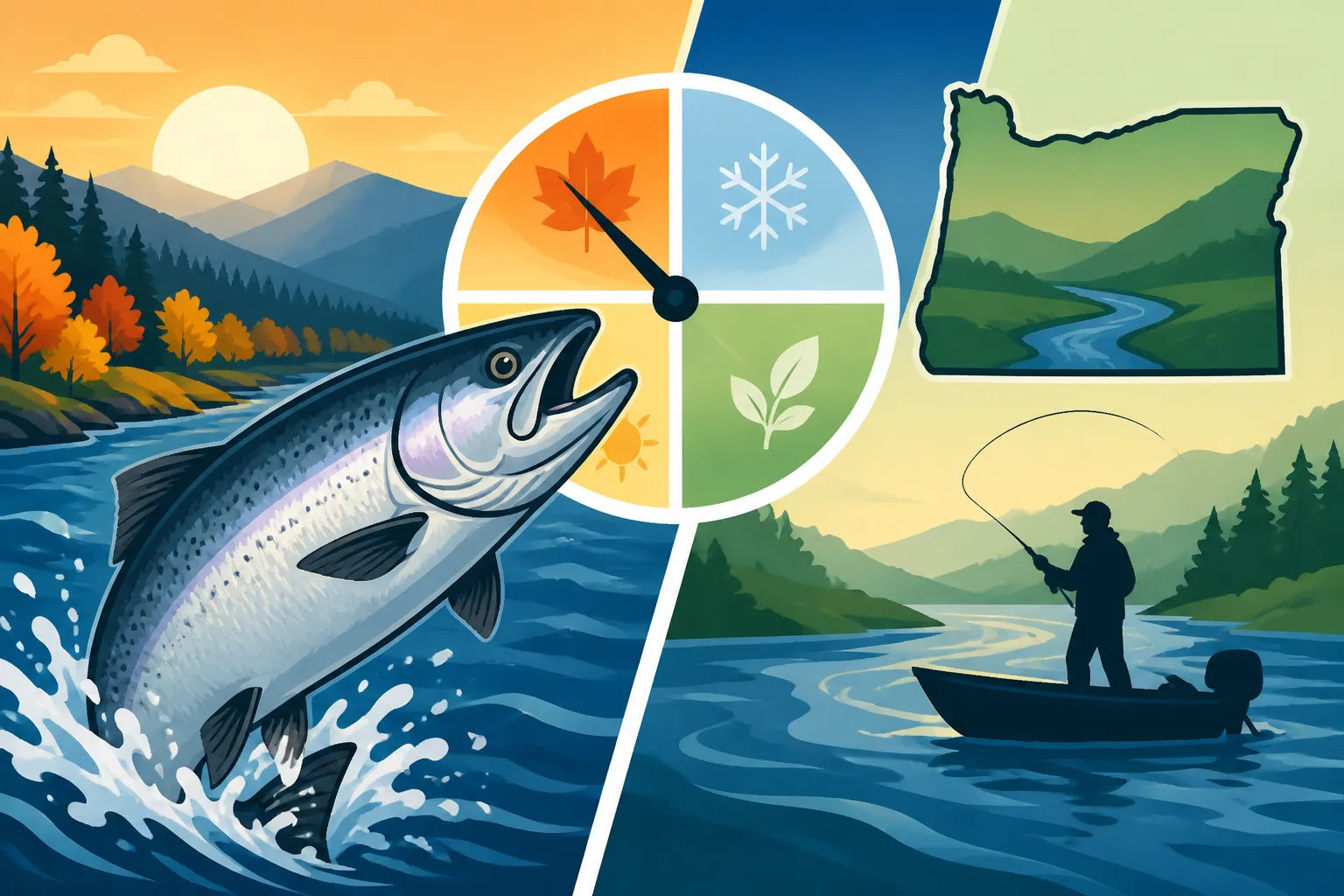
As we move into September, the run usually intensifies significantly. This is often considered the prime time for the mainstem Columbia, from Astoria all the way up past Portland. The bulk of the adult Fall Chinook migrate through the lower and mid-river sections, making this a highly productive period. By October, the run begins to taper off in the lower river but remains strong further upstream as fish push towards spawning grounds in areas like the Hanford Reach, Yakima, and Snake River systems. Late-season fishing in the upper river and tributaries can extend into November, targeting the last of the migrating fish or those gathering in specific spawning areas. For a broader overview of when different species are active, consult an Oregon Fishing Season Dates and Limits guide, but for Fall Chinook, September is often the magic month.
Factors Influencing Peak Timing
Predicting the exact peak can feel like a guessing game, but several factors give us clues. As mentioned earlier, water temperature is huge. A prolonged period of warm water can delay the fish's entry into the river, pushing the peak later into September. Conversely, a cooler-than-average late summer might draw them in earlier. River flow is another critical element; high, steady flows can accelerate migration, while very low flows can slow it down or cause fish to "stack up" in certain areas. Think of it like a highway for fish: a smooth, clear road allows for fast travel, but construction or heavy traffic creates bottlenecks.
Ocean productivity from the preceding years also dictates the overall size of the run, which in turn can influence when the peak occurs. A larger run often means a longer, more spread-out peak, while a smaller run might have a more defined, shorter window. Drought conditions, particularly in upriver tributaries, can also affect fish behavior, sometimes causing them to hold longer in the mainstem Columbia before committing to smaller streams. Keeping an eye on weather forecasts, water temperature gauges, and fishing reports from key areas like Astoria and Vancouver is essential for staying ahead of the curve. These variables create an ever-changing puzzle, making real-time information invaluable for any serious angler.
Key Fishing Zones and Their Timing
The Columbia River is a vast system, and Fall Chinook don't appear everywhere at once. Knowing which stretches of river tend to peak when is key to planning your fishing adventures. Each zone offers a unique experience and often requires different strategies.
The Buoy 10 Fishery
The iconic Buoy 10 fishery, located at the mouth of the Columbia River near Astoria, is where the Fall Chinook season truly kicks off. This area, stretching from Buoy 10 upstream to Tongue Point, is famous for its early-season action, typically from late July through the end of August. Here, the salmon are fresh from the ocean, bright, and incredibly feisty. They are actively feeding as they stage before beginning their upstream migration in earnest. The concentration of fish in this tidal zone can be phenomenal, drawing thousands of boats and anglers.
Fishing here is primarily focused on trolling herring or anchovies behind flashers, or using Brad's Super Bait Cut Plugs, often with a prawn or sardine fillet. The key is to present your offering right in the travel lanes of the salmon, often near channel edges, current seams, or where salinity changes. Because this is a tidal fishery, understanding how the tides influence fish movement and biting activity is crucial. Many experienced anglers prefer the outgoing tide, as it concentrates baitfish and salmon funneling towards the ocean before turning upstream. The action can be fast and furious during peak tides, but it can also be a puzzle to unlock the bite on any given day. If you're new to this fishery, considering a guided trip with one of the many Oregon Fishing Charter Guide services operating out of Astoria can be incredibly beneficial.
Upriver to Portland and Beyond
As August transitions into September, the bulk of the Fall Chinook push further upstream, making the river from Tongue Point to Portland, and then even higher, the hot spot. This mid-river section encompasses areas like Cathlamet, Longview, Kalama, St. Helens, and the Portland metro area. Here, the fish are still in excellent condition and driven to migrate, but the fishing strategies often evolve from those used at Buoy 10. Water depth and current become more consistent, and anglers have more diverse options for targeting fish.
Many anglers continue to troll cut-plug herring or anchovies, but also incorporate heavy divers and larger wobblers or Kwikfish style lures, often "plug cut" to give them an enticing wobble. Plunking, a static bank-fishing technique using heavy weights and spin-n-glo's or Kwikfish, also becomes very effective, especially at popular bank fishing spots. The dams, particularly Bonneville, The Dalles, and John Day, become natural bottlenecks where fish congregate, offering concentrated fishing opportunities both below and sometimes above the fish ladders. For detailed information on where to fish in these diverse areas, exploring a comprehensive Columbia River Fishing Guide can point you to specific boat ramps and bank access points. Remember, the Oregon and Washington License Reciprocity on the Columbia is a huge benefit here, allowing anglers with either state's license to fish the mainstem river.
Upper Columbia and Tributaries
By late September and into October, the main pulse of Fall Chinook has moved even further upriver, into the upper Columbia and its significant tributaries like the Hanford Reach, Yakima River, and the Snake River system. While the sheer numbers might not be as dense as in the lower river earlier in the season, this period offers a chance to target some of the largest, most mature fish close to their spawning grounds. Fishing here often requires specialized knowledge of specific river sections and tributary entry points.
Techniques here might shift towards more aggressive methods like back-trolling heavy Kwikfish or wobblers, especially in the swift currents below the upper dams. In the tributaries, especially smaller ones, anglers might switch to drift fishing bait or small clusters of eggs, or even casting spinners and spoons in holding pools. This late-season fishery can be highly rewarding for those willing to venture further upstream. Always be mindful of specific regulations for these tributaries, as they can vary greatly from the mainstem Columbia, and sometimes require additional tags. Before heading out, it's always wise to consult the Oregon Fishing Regulations Explained to ensure you're compliant with all local rules.
Gear, Techniques, and Preparations for Fall Chinook
Successfully landing a powerful Fall Chinook on the Columbia requires more than just luck; it demands the right gear, effective techniques, and thorough preparation. These fish are strong, and the river itself presents its own challenges.
Essential Gear and Tackle
For Fall Chinook on the Columbia, you're going to want robust gear that can handle hard-fighting fish and often heavy currents. A medium-heavy to heavy action salmon rod, typically 9 to 10.5 feet long, is a good starting point. Pair this with a reliable baitcasting reel capable of holding at least 200-300 yards of 20-30 pound monofilament or 50-65 pound braided line. Braided line, with its no-stretch properties, offers excellent sensitivity and hook-setting power, though many anglers prefer a monofilament or fluorocarbon leader for stealth and abrasion resistance. You can find a wide range of suitable rods and reels on platforms like Amazon, often with helpful reviews from other salmon anglers.
Beyond the rod and reel, your tackle box should be well-stocked. Flashers are crucial for attracting salmon in many techniques, especially trolling; popular choices include 11-inch Pro-Troll or Fish Flash models. Leader material, typically 25-40 pound test fluorocarbon, is essential for tying your bait or lures. Swivels, cannonball or pyramid sinkers (ranging from 2-16 ounces depending on current), and sharp, strong hooks (like Gamakatsu Octopus or Mustad UltraPoint) are non-negotiable. Don't forget a sturdy net with a large hoop and rubberized mesh to protect the fish and prevent snagging your gear, and a good pair of pliers for hook removal. You’ll also need your Oregon Combined Angling Tag Guide to make sure you have the right endorsements for salmon.
Effective Fishing Techniques
There are several tried-and-true techniques for Fall Chinook on the Columbia, and knowing when and where to deploy each one is part of the art.
Trolling: This is arguably the most popular method, especially in the lower and mid-river. Anglers typically troll cut-plug herring or anchovies, often brined and scented, behind an 11-inch flasher. Kwikfish or Mag Lip wobblers are also incredibly effective, either trolled or back-trolled in current. The idea is to cover water, presenting your bait or lure at the depth the fish are holding, often near the bottom or in the mid-column. Maintaining the correct speed and keeping your gear clean and untwisted is paramount.
Mooching: More common in areas where fish are shallower or in specific holding zones, mooching involves drifting bait, usually herring or anchovies, with a slow jigging motion. This technique is often done from a boat, allowing the bait to naturally flutter and sink through the water column. It's a more active, feel-oriented method that can be deadly when fish are less aggressive or concentrated.
Plunking: A favorite among bank anglers, plunking involves casting a heavy weight (up to 16 ounces or more) with a spin-n-glo or Kwikfish attached via a leader, letting it sit static on the bottom. The current activates the lure, giving it an enticing wobble. This method is particularly effective in current seams or eddies where salmon might hold or rest during their migration. Make sure your rod holder is stout – a plunking rod taking a hit can easily go into the river!
Bobber and Jig: While often associated with steelhead, this technique can be very effective for Fall Chinook in certain river conditions, especially in slower currents or when fish are holding in distinct pockets. A large bobber suspends a weighted jig (often tipped with a coon shrimp or prawn) at a specific depth, allowing for a natural, suspended presentation.
For a deeper dive into these methods and more, you might find the Oregon Salmon Fishing Techniques article helpful, as it covers a broad spectrum of approaches for these powerful fish.
Monitoring Regulations and Forecasts
Staying informed is perhaps the most crucial "preparation" you can make. Fall Chinook regulations on the Columbia River are highly dynamic, often subject to in-season adjustments by the Oregon Department of Fish and Wildlife (ODFW) and the Washington Department of Fish and Wildlife (WDFW). These changes can occur with little notice, sometimes closing fisheries or altering bag limits based on run strength and conservation goals. Always check the ODFW and WDFW websites for the most current regulations, emergency closures, and fishing advisories before you head out. These agencies also provide preseason forecasts, giving you an idea of the projected run size and potential season length.
Beyond the regulations themselves, understanding your Fall Chinook Daily Bag Limit on the Columbia River is critical to avoid violations. You'll also need a valid Oregon Fishing License Guide and the specific combined angling tag for salmon and steelhead. Keep your physical or electronic license and any required catch record cards readily accessible while fishing. Losing track of your catch can lead to serious penalties, so always fill out your Oregon Catch Record Card Requirements immediately after retaining a fish. Staying informed and compliant ensures not only a successful trip but also contributes to the sustainable management of this incredible resource.
Maximizing Your Fall Chinook Success
Catching Fall Chinook on the Columbia River is a thrilling experience, but it's rarely as simple as just dropping a line in the water. Anglers who consistently find success understand the nuances of the river, the fish, and how to adapt their strategies to changing conditions.
Interpreting River Conditions
The Columbia River is a living, breathing entity, and its conditions—water clarity, flow rates, and temperature—are constantly in flux, profoundly impacting where and how Fall Chinook behave. Water clarity is paramount; salmon are sight feeders to some extent, and too much turbidity (murky water) can make it difficult for them to locate your presentation. After heavy rains, the river can muddy up, forcing fish to hold in cleaner seams or making bright, noisy lures more effective. Conversely, crystal clear water might call for lighter leaders and more natural bait presentations.
Flow rates, often measured in cubic feet per second (CFS) at various dam sites, dictate the current speed. High flows can scatter fish, push them into shallower, slower eddies, or make it harder for them to fight the current, sometimes causing them to hold in specific spots. Low flows can concentrate fish in deeper channels or pools, but might also make them more wary. Monitoring river gauges and local reports is key. Water temperature, as discussed, influences migration speed and activity. Cooler temperatures usually spur migration, while unusually warm water can make fish lethargic or hold them in cooler pockets. Anglers who regularly check these conditions, often using online resources or local bait shops, gain a significant edge in narrowing down where the fish might be.
The Role of Tides in Tidal Zones
For anglers fishing the lower Columbia River, particularly from Astoria up to around Longview, understanding the tides isn't just helpful – it's absolutely essential. This section of the river is profoundly influenced by the ocean's tides, which dictate current direction, water depth, and often, fish activity. Salmon frequently use the incoming tide to push further upstream with less effort, and the outgoing tide to drop back into deeper water or stage in specific feeding lanes.
Many experienced anglers believe the "slack tide change" – the period just before or after the tide turns – can be excellent. The movement of the water changes, concentrating baitfish and often triggering feeding behavior in salmon. During the strongest parts of the incoming or outgoing tide, fish might hold tighter to structure to conserve energy, and fishing can be more challenging due to the fast current. Learning to read a tide chart and planning your fishing around the optimal tidal windows for your chosen spot can drastically increase your success. This is particularly true for techniques like trolling or mooching, where the current directly affects your presentation. Understanding the nuances of these tidal influences is a major step in How to Fish for Fall Chinook on the Columbia.
Beyond the Mainstem: Tributary Opportunities
While the mainstem Columbia River is the undeniable highway for Fall Chinook, don't overlook the opportunities presented by its many tributaries, especially later in the season. Rivers like the Cowlitz, Lewis, Kalama, Willamette, and Drano Lake (a backwater of the Columbia) can offer incredible fishing as the salmon peel off the main river to reach their spawning grounds. These tributary fisheries often open after the mainstem season has peaked or closed, extending the Fall Chinook opportunity well into late fall.
Fishing in tributaries typically requires a different approach than the big river. Smaller boats, or even bank access, become more viable. Techniques might include drift fishing eggs, beads, or jigs, casting spinners or spoons, or even fly fishing in some designated areas. The fish in tributaries are often more concentrated but can also be more focused on spawning rather than feeding, sometimes requiring a different level of finesse. Always, always check the specific regulations for each tributary you plan to fish, as they often have unique rules regarding gear, bag limits, and even whether certain species can be retained. Some areas might require an Oregon Combined Angling Tag Guide while others might have very specific harvest rules. For instance, you can find quality salmon eggs for drift fishing on Amazon, which can be a game-changer in smaller, clearer tributary waters where a natural presentation is key.
Disclaimer
Fishing regulations, seasons, and forecasts are subject to change. Always consult the official Oregon Department of Fish and Wildlife (ODFW) and Washington Department of Fish and Wildlife (WDFW) websites or their latest printed regulations before heading out on the water. This guide provides general information and should not be used as the sole source for regulatory compliance.