Drift Fishing Techniques for Oregon Rivers
There's nothing quite like the rush of a big fish taking your bait in the swift currents of an Oregon river, but for many anglers, figuring out how to get that perfect presentation can feel like a secret code. You've cast your line, watched it drift, and then… nothing. Or worse, you're constantly snagging, losing precious gear, and getting frustrated. This comprehensive guide is here to demystify drift fishing, walking you through the techniques, gear, and strategies needed to consistently put fish on the line in Oregon's incredible waterways, from battling powerful steelhead to enticing elusive trout.
Understanding the Essence of Drift Fishing in Oregon
Drift fishing isn't just a technique; it's an art form, especially when you're navigating the diverse and often challenging currents of Oregon's many rivers. It's about letting your bait or lure move naturally with the current, mimicking what a fish would instinctively seek out as food. If you've ever watched a piece of grass or a leaf float downstream, you've seen a perfect drift in action.
What Exactly is Drift Fishing?
At its heart, drift fishing involves presenting your offering in a way that allows it to travel freely downstream at the same speed as the current, without any unnatural drag or resistance from your line. Imagine a salmon egg tumbling along the riverbed, or a worm washing downstream after a rain – that's the illusion you're trying to create. Unlike still fishing, where your bait sits in one spot, or trolling, where your boat pulls the lure, drift fishing leverages the river's own energy to move your bait through prime fish-holding lies.
This method is incredibly effective because it targets fish in their natural environment, where they are actively feeding or resting. They aren't chasing a boat or a fast-moving lure; instead, your offering appears as an easy, opportune meal. The subtle presentation often elicits strikes from even the most wary fish, particularly species like salmon and steelhead that are acutely sensitive to anything that doesn't look and feel natural. It's a dance with the river, where your job is to guide, not to dictate.
Why Drift Fishing is So Effective on Oregon Rivers
Oregon's rivers are teeming with diverse fish species, and many of them, especially our beloved salmon and steelhead, are highly adapted to feeding or reacting to items carried by the current. From the broad, powerful Columbia River to the intimate, crystal-clear coastal streams, the varied flows and structures provide countless "holding lies" where fish conserve energy while waiting for food to come to them. Drift fishing excels in these environments.
The technique allows you to cover vast stretches of water efficiently. Instead of casting to one spot and waiting, you're letting the current carry your bait through a long potential strike zone. This natural presentation is key. A bait or lure that tumbles, bounces, and moves with the current is far more appealing to a fish than something that's being unnaturally pulled or held stationary. It taps into their primal feeding instincts, making them more likely to strike. Whether they're actively feeding or simply reacting to an intrusion in their space, a well-presented drift is hard for a fish to ignore. It's also remarkably versatile, adapting to different depths, current speeds, and river structures that you'll find throughout the state.
Key Principles of a Perfect Drift
Achieving that "perfect drift" is what separates a good drift angler from a frustrated one. It's all about control, perception, and subtle adjustments. The first principle is to match the current speed. Your weight and line setup must be just right so that your bait or lure is moving at the exact same pace as the water around it, from the surface to the riverbed where the fish are. If your bait is moving too fast, it looks unnatural; too slow, and it gets dragged.
Secondly, maintaining proper line control is paramount. This means keeping just enough tension to feel a bite, but not so much that you're pulling your bait faster or slower than the current. Excess slack is your enemy, as it prevents you from feeling subtle takes and setting the hook effectively. On the other hand, too much tension creates drag, which can scare fish and cause your bait to lift unnaturally. This delicate balance is often achieved through a technique called "mending" your line, which we'll cover later. Finally, understanding the "strike zone" is crucial. Fish rarely chase food far in a river; they position themselves in currents where food comes to them. Your perfect drift should target these specific lanes and pockets where fish are most likely to be holding, such as behind submerged rocks, along current seams, or in deeper pools.
Essential Gear for Successful Oregon River Drift Fishing
Getting the right gear for drift fishing in Oregon is like assembling a specialized toolkit. You wouldn't use a hammer to drive a screw, and similarly, using the wrong rod or line can make a world of difference in your success and enjoyment. It's not about having the most expensive stuff, but the right stuff for the job.
Rod and Reel Selection
Choosing the right rod and reel is foundational to effective drift fishing. For rods, length is a major factor. You'll typically want something longer than you might use for stillwater fishing, generally ranging from 8'6" to 10'6". This extra length allows for better line control, easier mending (lifting your line off the water to correct its drift), and absorbing the shock of powerful fish. For targeting species like summer steelhead or trout, a rod in the 8'6" to 9'6" range with a medium-light action and moderate power is often ideal. It's sensitive enough to detect subtle bites but still has enough backbone to handle a decent fish. When you're after bigger, more powerful fish like Chinook salmon or winter steelhead, you might step up to a 9'6" to 10'6" rod with a medium to medium-heavy action, offering more power to turn a fish in heavy current. Brands like Lamiglas, Fenwick, and G. Loomis are popular choices, known for their quality and durability in river fishing scenarios. For a more budget-friendly but still reliable option, check out rods from Okuma or Shimano.
When it comes to reels, you have two main choices: spinning or baitcasting. Spinning reels are often favored by beginners for their ease of use and ability to cast lighter presentations. Look for a smooth drag system, which is crucial for fighting strong fish without breaking your line. Sizes in the 2500 to 4000 range are generally suitable. Baitcasting reels, particularly low-profile models, offer superior line control and casting accuracy, especially with heavier weights or in windy conditions. Many experienced river anglers prefer them for drift fishing because of the immediate control they offer over the line release during a drift, allowing for precise depth adjustments and instant hook sets. Ensure your baitcaster has a good braking system to prevent backlashes and a smooth, reliable drag. Regardless of your choice, a reel with a moderate to fast retrieve ratio (e.g., 6.2:1 or higher) is beneficial for quickly reeling in slack line or bringing in fish.
Line Choices and Setups
Your fishing line is the direct connection between you and the fish, so making smart choices here is non-negotiable. For your mainline, braided line has become incredibly popular, often in the 30-to-50-pound test range. Its low stretch offers unparalleled sensitivity, letting you feel every bump and tap, and its thin diameter cuts through current well. However, because braid is highly visible and has no stretch, it's typically paired with a fluorocarbon or monofilament leader. Monofilament mainline, usually 15 to 20 pounds, is still a viable option, especially for beginners. It offers a bit more stretch, which can be forgiving with aggressive strikes, and it's less visible than braid.
The leader material is where stealth comes into play. Fluorocarbon is often the top choice due to its near invisibility underwater, abrasion resistance, and excellent knot strength. You'll want to use a lighter test leader than your mainline – typically 8 to 15 pounds, depending on the species and water clarity. For example, if you're targeting wary summer steelhead in clear water, you might drop down to 8 or 10-pound fluorocarbon. For bigger, stronger fall Chinook in turbid water, you could comfortably go with 12 or 15 pounds. The length of your leader will vary, but usually, 2 to 4 feet is a good starting point, connecting to your mainline with a strong knot like a Surgeon's Loop or a Blood Knot. Always make sure to check Oregon Fishing Regulations Explained before you head out, as some areas may have specific line or leader requirements.
When it comes to knots, practice makes perfect. Strong, reliable connections are critical. The Albright knot or FG knot are excellent for connecting braided mainline to a monofilament or fluorocarbon leader, offering strength and a smooth transition. For connecting terminal tackle, the Palomar knot, improved Clinch knot, or Uni knot are all dependable choices.
Terminal Tackle – Weights, Swivels, and Hooks
The final pieces of your setup, the terminal tackle, are often overlooked but are absolutely crucial for a successful drift. Your weights dictate how your bait gets to the fish. Slinky weights (a shoelace-like material filled with lead shot) are fantastic for drift fishing in rocky rivers, as they tend to roll and bounce over snags rather than getting stuck. Pencil lead, cut to desired lengths and attached with surgical tubing, offers similar snag-resistance. For lighter presentations or slower currents, split shot weights can be crimped directly onto your leader. The key is to use just enough weight to consistently tick the bottom without dragging excessively. You want that natural "thump-thump-thump" feel as your weight kisses the riverbed.
Swivels play a vital role in preventing line twist, especially when using spinners or baits that rotate. Barrel swivels are standard, but crane swivels offer superior rotation and strength for their size. Incorporate a good quality swivel between your mainline and leader, and sometimes above your weight system, to keep your line clean and prevent tangles. Ball-bearing swivels are even better but often pricier. You can find a vast selection of these essential items on Amazon, making it easy to stock up before your next trip.
Finally, hooks. The type and size of hook depend on your bait and target species. For cured roe or shrimp, a sharp, strong single hook in sizes #1 to 3/0 is common. Circle hooks are excellent for promoting jaw hook-ups and increasing survival rates for catch-and-release, while octopus hooks are popular for their wide gap and sharpness. For artificial lures like jigs, you'll use the hook that comes with the lure, or you might choose to tie your own jigs with custom hooks. It is critical to remember that many Oregon rivers, particularly those with wild steelhead populations, require barbless hooks. This regulation is in place to minimize harm to fish, ensuring they can be released safely. Always pinch down the barbs on your hooks, even if not explicitly required, as it’s a good conservation practice. You'll find a huge array of barbless hook options readily available on Amazon or at any local tackle shop.
Popular Drift Fishing Baits and Lures for Oregon Species
The beauty of drift fishing lies in its versatility; you can present a wide array of natural baits or artificial lures, all designed to entice different species under varying conditions. Knowing what to tie on can often be the difference between a slow day and a banner day.
Natural Baits for Salmon and Steelhead
For many seasoned Oregon anglers, cured roe – salmon or steelhead eggs – remains the gold standard for drift fishing, especially for our anadromous species. There's just something about the natural scent, texture, and appearance of real eggs that fish find irresistible. These are often presented in mesh bags, commonly called "roe bags" or "spawn sacks," which can be tied around a hook. The size of the bag can vary from a dime-sized cluster for steelhead to a quarter-sized or larger clump for salmon. Different curing methods and scents can enhance their appeal, with popular choices including Pro-Cure or Pautzke's Nectar. You can also fish single eggs or small clusters of eggs directly on the hook. It's truly a tried-and-true method, incredibly effective for both wild and hatchery fish throughout the state's rivers.
Another highly effective natural bait is shrimp or prawns. These can be fished whole, butterflied, or in chunks, depending on the presentation and species. Peeled coon shrimp, for instance, are a deadly choice for winter steelhead in coastal rivers like the Wilson or Nestucca. Their natural scent plume and white flash are often enough to trigger a bite. The preparation is key: properly cooked and brined shrimp will stay on the hook better and release scent more effectively. Rig them to drift just off the bottom, allowing their natural scent to disperse into the current.
While less common for salmon and steelhead, worms (like nightcrawlers) are classic baits for trout and can sometimes entice a salmon or steelhead, especially in slightly off-color water. They can be rigged to drift naturally, often with a small float or minimal weight to keep them just above the bottom. For a comprehensive look at what fish are biting on, consider consulting an Oregon Bait and Lure Guide.
Artificial Lures for a Wider Appeal
Beyond natural baits, the world of artificial lures offers endless possibilities for drift fishing. Spinners, such as those from Mepps, Blue Fox, or Rooster Tail, are fantastic for covering water and creating flash and vibration that fish can't ignore. They come in various blade styles (e.g., Colorado, Indiana, Willow Leaf) and colors, allowing you to match conditions from bright sun to overcast skies, or clear water to murky flows. Sizes typically range from #3 to #5 for steelhead and trout, and #4 to #6 for salmon. The key is to choose a weight that allows the spinner to reach the fish's depth while still spinning freely.
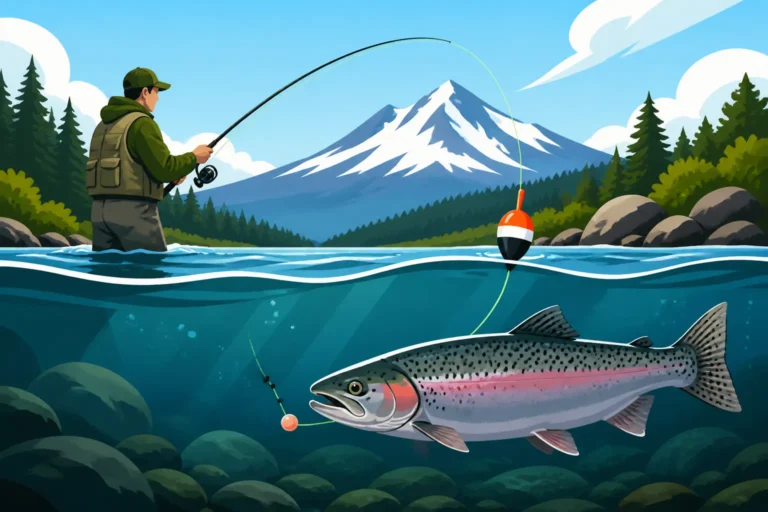
Drift bobbers or floats are indispensable when you want to suspend your bait or lure at a precise depth without it dragging the bottom. Brands like Beau Mac, Thill, or Raven offer excellent options. These are often used with jigs, beads, or small pieces of bait like cured eggs. The float system ensures a perfectly natural, drag-free drift, making it easier to detect subtle bites. This method is particularly popular for steelhead, allowing you to present a small offering to fish that might be holding in a specific lane of current.
Soft plastics and jigs have revolutionized drift fishing in recent years. From scented plastic worms (like Berkley Gulp! or Mad River steelhead worms) to marabou jigs, these lures offer lifelike action and can be infused with powerful scents. Marabou jigs, in particular, are incredibly effective for steelhead, especially when "twitching" them through slower water or under a float. Colors like pink, chartreuse, orange, and black are perennial favorites. The weight of the jig head needs to be matched to the current, ensuring it gets down to the fish without hanging up. Many anglers enjoy tying their own jigs, customizing colors and sizes. You'll find a huge selection of soft plastics, jig heads, and float components on Amazon, making it easy to experiment and find what works best for your local rivers.
Combining Baits and Lures
Sometimes, the most effective approach is to combine the best of both worlds. Hybrid setups are gaining popularity because they offer maximum attraction. For example, a small, scented soft plastic worm or bead can be drifted just above a cured roe bag, providing both visual appeal and a powerful scent trail. Another common technique is to fish a small marabou jig with a tiny piece of shrimp or a single cured egg threaded onto the hook, adding a natural scent to the jig's enticing action.
Adding external scent to artificials is also a powerful tactic. Applying gel or liquid scents (like Pro-Cure Super Gel, Smelly Jelly, or Mike's Lures) to your plastic worms, jigs, or even spinners can significantly increase their effectiveness. These scents mimic natural food sources or fish pheromones, making your artificial presentation even more enticing. For example, combining a brightly colored jig with a generous dab of prawn scent can be a deadly combination for winter steelhead in turbid water, offering both visual attraction and a strong olfactory signal that fish can detect from a distance. Experimenting with these combinations based on water conditions and fish preference can lead to remarkable results, helping you fine-tune your approach for picky fish.
Mastering the Techniques: Casting, Drifting, and Hook Setting
Understanding the gear is one thing, but making it all work seamlessly in the dynamic environment of a river is where the real skill of drift fishing comes into play. It requires careful observation, precise execution, and quick reflexes.
Reading the River: Where Fish Hold
Before you even make your first cast, the most crucial step is learning to "read the river." Fish aren't just everywhere; they strategically position themselves in areas where they can conserve energy and easily ambush prey. Look for current seams, where fast water meets slow water – these are prime highways for fish. Pools offer deeper, slower water for resting, while the head and tail-outs (entrances and exits) of pools are often feeding zones. Riffles (shallow, fast-moving water) can hold fish seeking oxygen or smaller food items, but your weight might need to be adjusted.
Obstructions like logjams, large boulders, and undercut banks create pockets of slower water, eddies, and shelter where fish will hold. Pay attention to changes in water color and depth, as these often indicate structural changes on the riverbed. Understanding the flow dynamics – where the current is weakest or strongest – helps you predict where fish will be waiting. It's like a puzzle, and each river presents a new challenge. For a more detailed breakdown of different river characteristics and how fish relate to them, check out articles on Oregon Fishing Zones Explained. Remember, fish are cold-blooded creatures, and their behavior is heavily influenced by water temperature and oxygen levels, so understanding these factors can also guide your choice of where to cast.
Casting and Presenting Your Drift
The perfect drift starts with the perfect cast. For most river scenarios, you'll want to cast quartering upstream, meaning diagonally upstream and across the current. This gives your weight and bait time to sink to the desired depth before it reaches the prime strike zone. As your lure or bait drifts downstream, you'll need to actively manage your line. This is where feathering the line comes in: lightly touching the spool with your thumb (on a baitcaster) or finger (on a spinning reel) to slow the line's release and control the sink rate.
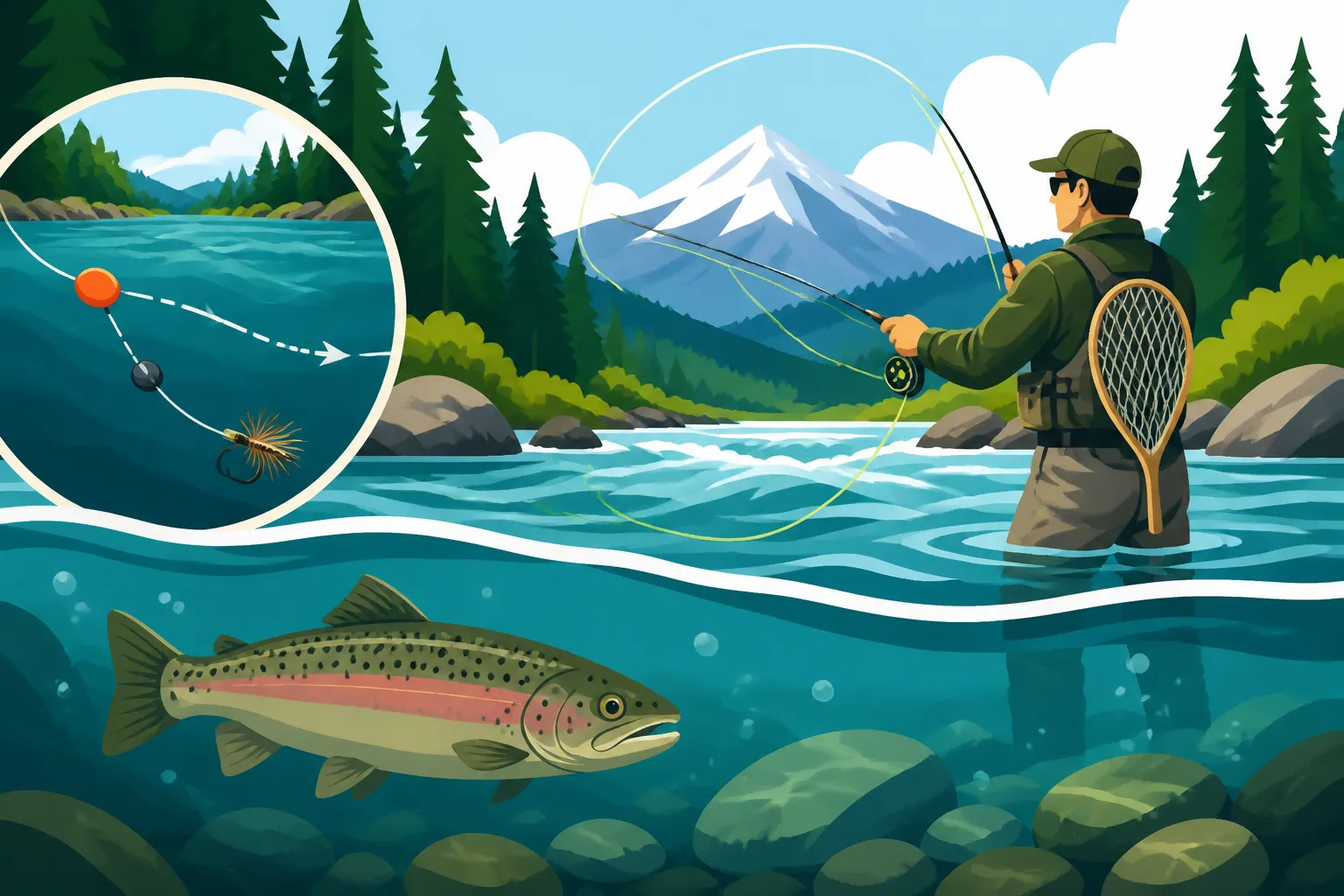
The most important technique for maintaining a natural drift is mending the line. As your line drifts downstream, the current can push the exposed line (the "belly") faster or slower than your bait, creating drag. To counteract this, you'll lift your rod tip and "mend" or "flip" the belly of your line upstream, effectively repositioning it so it's directly above your bait and moving with the same current. This keeps your bait traveling naturally. The goal is to always have your line entering the water directly above your bait with minimal slack, allowing you to feel even the most subtle taps. Adjustments for depth are made by adding or reducing weight, or by casting further upstream to allow more sink time.
Detecting Bites and Setting the Hook
This is often the trickiest part of drift fishing, especially for beginners. Bites can range from an aggressive, rod-bending tug to a barely perceptible "tick" or a sudden stoppage of your line. When your weight is ticking the bottom, it can be hard to differentiate between a rock and a fish. Pay close attention to any anomalies in your drift: a sudden pause, a slight sideways movement of your line, or a feeling of added weight.
With braided line, the sensitivity is incredible, but it also means you'll feel every rock. The key is to look for that different kind of tap – often softer, spongier, or a definite pull. If your line suddenly stops but your weight wasn't ticking the bottom, assume it's a fish. When you detect a bite, don't hesitate. A swift, firm hookset is crucial. Lift your rod sharply and smoothly upstream and slightly to the side to drive the hook home. With species like salmon and steelhead, their mouths are tough, and a wimpy hookset often results in a lost fish. It's a fine line between waiting for the fish to commit and striking too early, and it's a skill that improves dramatically with practice. Trust your instincts and react quickly.
Advanced Drift Fishing Tactics and River Etiquette
Once you've got the basics down, you can start to fine-tune your approach, adapting to ever-changing river conditions and ensuring you're a responsible angler.
Adjusting to River Conditions
Oregon rivers are dynamic, constantly changing with the seasons, weather, and tides. A truly successful drift angler understands how to adapt. High water often means fish will hold closer to the banks, seeking refuge from the strong currents. You might need heavier weights to get down, or brighter, larger baits to stand out in turbid water. Conversely, low water typically makes fish warier, pushing them into deeper, slower pools. Here, lighter lines, smaller baits, and more subtle presentations are often key.
Water clarity is another huge factor. In clear water, stealth is paramount. Think fluorocarbon leaders, natural bait colors, and smaller offerings. In turbid or off-color water (often after heavy rain), fish rely more on scent and vibration, so brighter colors, scented baits, and lures that create more commotion (like loud spinners) can be more effective. Seasonal changes also dictate fish behavior. For instance, steelhead will hold in different types of water depending on whether they are fresh from the ocean in winter or have been in the river for weeks during summer. Understanding How River Flow Affects Steelhead Fishing is particularly important for these conditions, as even minor changes can impact where fish are holding and how they bite.
Bank vs. Boat Drift Fishing
Drift fishing can be effectively done from both the bank and a boat, each offering distinct advantages and requiring slightly different techniques.
Bank fishing is accessible to everyone and allows you to thoroughly work smaller sections of a river. From shore, you'll often make longer casts, allowing your bait to swing through a wider arc as it drifts. You'll typically cover water by walking upstream or downstream, carefully approaching each new run. Bank anglers rely heavily on identifying prime casting lanes and understanding how the current will carry their bait from a fixed position. Places like the Sandy River near Portland offer excellent bank access for drift fishing for steelhead and salmon. For specific recommendations, check out Best Bank Fishing Spots Near Portland Oregon.
Boat drift fishing, typically from a drift boat, raft, or pontoon boat, offers unparalleled access to a river. The ability to slowly float downstream, maintaining your boat's speed with oars, allows you to present perfect, long drifts through miles of prime water. The angler in the boat can make shorter, more precise casts directly into fishy pockets. Boat control is paramount here; the oarsman essentially "steers" the boat to match the current speed, allowing the anglers to make perfectly controlled drifts. This method is incredibly efficient for covering large stretches of river, making it popular on larger systems like the Deschutes River or Rogue River. While boat fishing offers more mobility, it also requires specialized equipment and skill in river navigation.
River Etiquette and Conservation
Beyond the techniques, being a responsible and considerate angler is part of the drift fishing experience in Oregon. River etiquette is simple: respect your fellow anglers. If someone is already fishing a run, give them ample space. Don't crowd them or cut off their drift. If you're walking along the bank, try not to disturb the water where others are fishing. When fishing from a boat, communicate with other boaters and bank anglers, ensuring everyone has a fair shot at the fish.
Conservation is equally vital. Many of Oregon's treasured fisheries rely on strong catch-and-release practices, especially for wild populations. Always handle fish gently, minimizing their time out of the water. Use knotless rubber nets to protect their slime coat, and revive them properly before release. Many areas have barbless hook requirements precisely to aid in safe release, so always check local regulations and consider crimping your barbs even where not mandated. Familiarize yourself with Oregon Catch-and-Release Rules to ensure you're doing your part. Packing out all your trash, avoiding disturbing sensitive riparian areas, and reporting any suspicious activity are all part of being a good steward of Oregon's incredible fishing resources.
Species-Specific Drift Fishing Tips in Oregon
Oregon's rivers are a treasure trove for anglers, each species presenting its own unique challenge and reward for the drift fishing enthusiast. Tailoring your approach to your target species will dramatically increase your success.
Drift Fishing for Oregon Steelhead
Steelhead are often considered the ultimate prize for drift anglers in Oregon, renowned for their power and acrobatics.
Winter Steelhead typically enter coastal rivers (like the Nestucca, Wilson, or Alsea) during the colder, higher water months from late fall through spring. For these chrome beauties, heavier weights are often necessary to get your presentation down in the swollen, sometimes murky flows. Brightly colored cured roe bags, scented plastic worms (especially pink, orange, or chartreuse), or larger marabou jigs under a float are highly effective. Focus your efforts on slower seams, pockets behind logjams, and deeper runs where they might be resting. The bite can be subtle in cold water, so sensitivity is key. You'll often find these fish holding tight to structure or in slower water at the edge of the main current.
Summer Steelhead, particularly on rivers like the Deschutes, Sandy, and Clackamas, typically arrive in spring and can be fished through fall. The water is usually clearer and lower, demanding a more refined approach. Lighter leaders (8-10 lb fluorocarbon), smaller presentations like single cured eggs, small beads, or tiny marabou jigs are often preferred. Fly fishing is also extremely popular for summer steelhead. They tend to hold in faster, oxygenated riffles and at the heads and tails of pools. Presentations need to be extremely natural and drag-free. Being precise with your casts and mends is crucial. If you're specifically targeting these amazing fish, take a deeper dive into Oregon Steelhead Fishing Techniques for more advanced strategies. Learning How to Fish for Summer Steelhead on the Deschutes is a pilgrimage for many anglers.
Drift Fishing for Oregon Salmon
Oregon offers fantastic opportunities for salmon, including Spring Chinook, Fall Chinook, and Coho. Each requires a slightly different approach.
Spring Chinook are revered for their table quality and incredible fight. On rivers like the Willamette and Columbia, these fish arrive in spring. They often hold in deeper, slower pools and current seams. You'll need heavier gear – typically 12-20 lb mainline with 10-15 lb leaders – and substantial weights to get your offering to the bottom. Cured roe (often larger bags), large prawn plugs, or combinations of shrimp and small spinners are effective. Look for them in depths of 15-30 feet or more, often just above structure.
Fall Chinook, especially on the Columbia River (think Buoy 10!), coastal rivers like the Nehalem or Trask, are massive and powerful. The gear needed is often even heavier than for springers, with 20-30 lb mainlines and 15-20 lb leaders to manage these beasts. Large cured roe offerings, spinner-and-bait combos (like a large blade with a prawn or sardine wrap), and Wobbler-type lures are effective. Fall Chinook often stack up in predictable holes and channels, and finding them requires covering water systematically.
Coho Salmon (Silvers) are known for their aggressive strikes and aerial acrobatics. They typically arrive in late summer and fall, often in coastal rivers. They're usually less finicky than Chinook or steelhead. Smaller cured roe bags, bright pink or chartreuse plastic worms, small spinners (#3 or #4), and twitching jigs are all highly effective. They often hold in slightly shallower water than Chinook and will readily chase a well-presented lure. Dive deeper into general tactics with the Oregon Salmon Fishing Techniques guide.
Drift Fishing for Oregon Trout
While salmon and steelhead grab many headlines, Oregon's trout fishing is phenomenal, and drift fishing can be incredibly productive for various trout species.
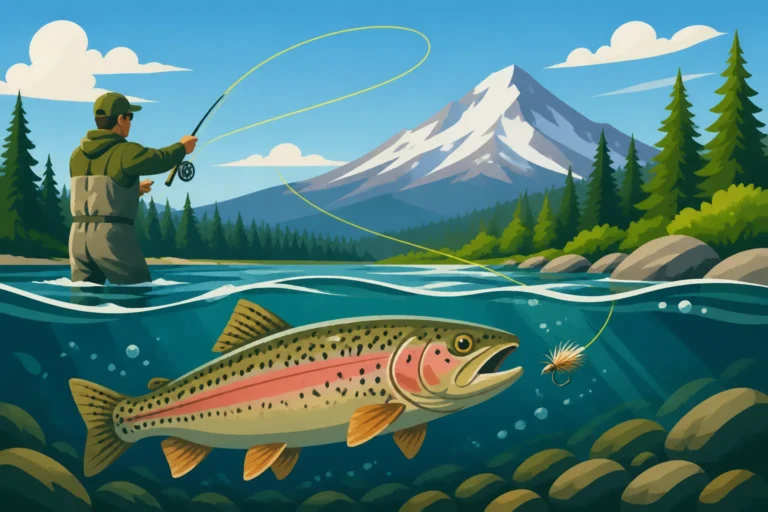
Rainbow Trout are found in almost every river system, from high mountain streams to larger valleys. For resident rainbows, especially in clear water, think finesse. Light leaders (4-6 lb), small split shot, and natural baits like worms, single salmon eggs, or small pieces of PowerBait are excellent. Small jigs and tiny spinners are also very effective. Rivers like the Metolius and McKenzie are famous for their trout, though the Metolius is primarily fly-fishing only in many sections.
Cutthroat Trout, especially sea-run cutthroat in coastal streams, are aggressive and opportunistic. They'll readily take small spinners, worms, and even small flies. Look for them in slower pockets, eddies, and around woody debris. Their bite can be feisty!
Brown Trout, though less common than rainbows or cutthroat in many Oregon rivers, are found in select systems like the Crooked River. They're often ambush predators, so drifting larger worms, minnow-imitating lures, or even small plugs through their suspected lies can be very effective. Regardless of the trout species, scaling down your tackle and presenting your bait as naturally as possible is always the best strategy. For a deeper dive into the world of trout, explore the Oregon Trout Fishing Techniques guide.
| Factor | Light Current / Shallow Water (<5 ft) | Moderate Current / Medium Depth (5-12 ft) | Heavy Current / Deep Water (>12 ft) |
|---|---|---|---|
| Weight Type | Split Shot, Small Pencil Lead | Slinky Weight, Pencil Lead | Heavy Slinky, Large Pencil Lead |
| Weight Size | 1/8 oz – 1/4 oz (1-2 BB shot) | 1/4 oz – 1/2 oz | 1/2 oz – 1 oz+ |
| Leader Test | 4-8 lb Fluorocarbon | 8-12 lb Fluorocarbon | 10-15 lb Fluorocarbon |
| Bait/Lure Size | Small Eggs, Beads, Micro Jigs | Standard Egg Bags, Small Jigs, #3 Spinners | Large Egg Bags, Prawns, #4-5 Spinners |
| Common Species | Trout, Small Steelhead | Steelhead, Coho, Small Chinook | Large Chinook, Winter Steelhead |
| Casting Angle | More Upstream to Sink | Quarter Upstream | Quarter Upstream (Heavier Sink) |
Disclaimer
Fishing regulations in Oregon are subject to change. Always consult the most current Oregon Department of Fish and Wildlife (ODFW) regulations before heading out on the water. This guide is for informational purposes only and should not replace official ODFW publications.