Are stocked trout the same as wild trout?
It's a really common question, and one that often causes a bit of head-scratching for both seasoned anglers and folks just starting out: are those plump, eager trout you catch from a stocked pond really the same as the elusive, wild beauties you might find in a remote mountain stream? The simple answer is no, not really, but understanding why they're different is key to appreciating both types of fish and figuring out how to approach them. This guide will dive deep into the fascinating distinctions between stocked and wild trout, helping you understand their origins, behaviors, and what it means for your fishing adventures in Oregon.
Understanding the Core Difference: Nature vs. Nurture
When we talk about stocked versus wild trout, we're really talking about a profound difference in their upbringing and genetic lineage. It's the classic nature-versus-nurture debate played out in the aquatic world. One has faced the brutal realities of survival since hatching, while the other has been raised in a more controlled, albeit artificial, environment.
The Wild Trout: A Product of Survival
Imagine a tiny trout egg hatching amongst river gravel in a pristine Oregon stream, like a tributary feeding into the Deschutes River Fishing Guide or a cold mountain creek. From the moment it emerges, a wild trout is in a constant battle for survival. It must evade predators like birds, otters, and larger fish. It has to find its own food, navigating complex currents to snatch drifting insects or chase down smaller minnows. This constant struggle hones its instincts and develops its physical prowess.
These fish are truly wild in every sense of the word. Their parents, grandparents, and countless generations before them have all survived similar gauntlets, passing on genes for strength, wariness, and efficient foraging. They learn to be incredibly wary, instinctively seeking cover from shadows overhead or sudden movements on the bank. Their diet is entirely natural, dictated by what their environment provides, leading to a lean, muscular build and often vibrant, camouflaged coloration. Every flicker of their tail, every dart for cover, every successful meal is a testament to natural selection. They are truly the apex survivors of their watery world, and catching one feels like a real accomplishment precisely because of this innate wildness.
The Stocked Trout: Bred for the Angler
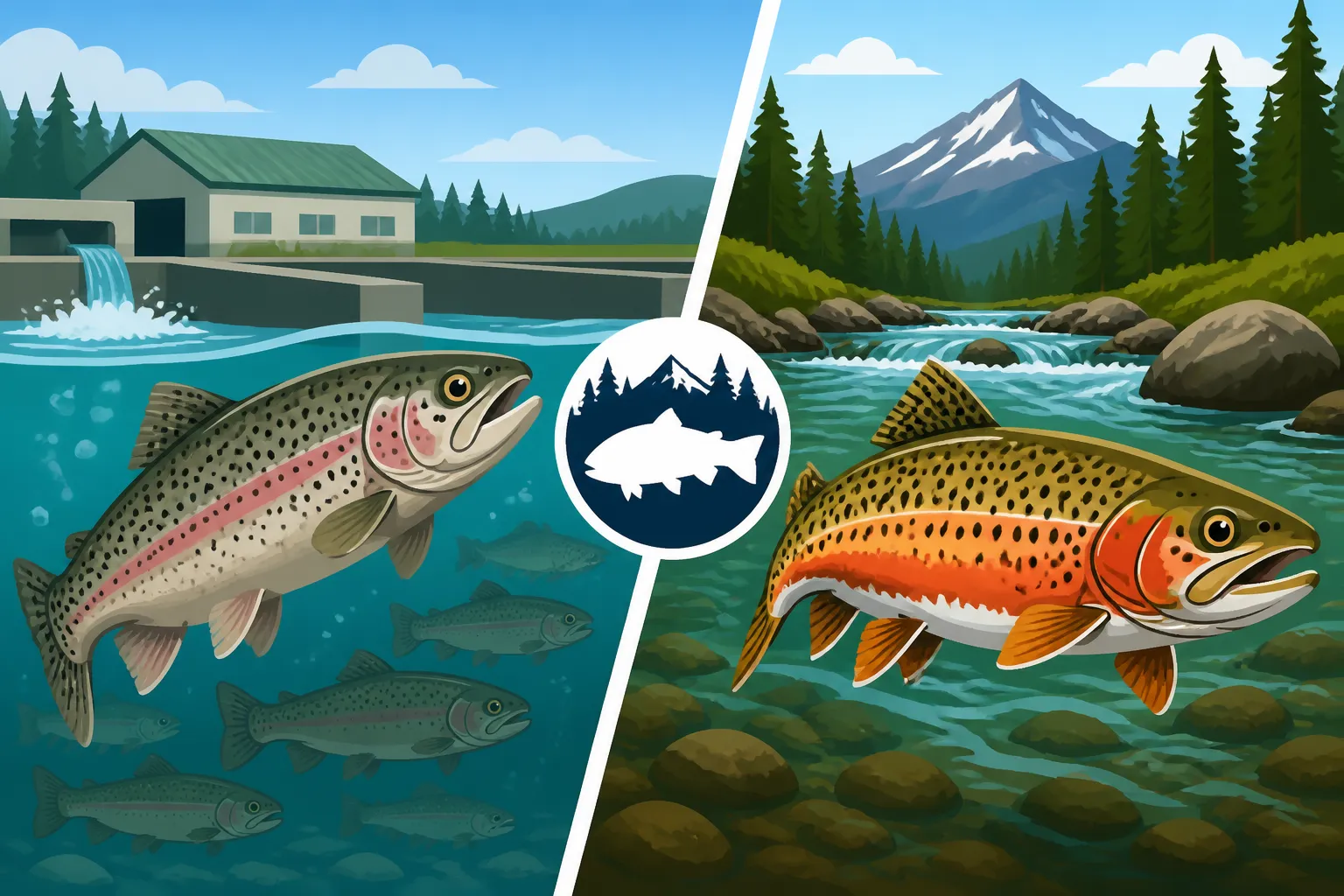
Now, picture a trout egg hatching in a state-of-the-art hatchery facility, perhaps one run by the Oregon Department of Fish and Wildlife (ODFW). These trout are born and raised in controlled conditions, often in concrete raceways with a steady flow of fresh, clean water. Their lives are, by design, much easier than their wild cousins. They receive regular, nutritious pelleted food, which is usually a mixture of proteins, fats, and vitamins. There are no predators to fear, no fierce currents to fight, and no competition for scarce resources.
The goal of stocking programs, like those for Oregon Trout Species Guide, isn't necessarily to create fish that can survive long-term in the wild and reproduce. Instead, it's primarily to provide immediate angling opportunities for the public. These fish are bred for fast growth, disease resistance, and often, a willingness to bite. They are raised in dense populations, accustomed to seeing humans as the source of food rather than a threat. While they are still trout, their entire life experience has shaped them in fundamentally different ways, resulting in distinct physical and behavioral characteristics that anglers will quickly notice.
Physical and Behavioral Discrepancies You'll Notice
The differences between stocked and wild trout aren't just theoretical; they're often quite obvious once you know what to look for. These distinctions manifest in their appearance and how they behave once hooked.
Visual Cues: Spotting the Difference in Appearance
One of the easiest ways to tell a stocked trout from a wild one is by simply observing its physical characteristics. There are a few tell-tale signs that betray a fish's upbringing.
First, let's talk about fins. Wild trout, constantly navigating currents, escaping predators, and rubbing against rocks, tend to have perfectly formed, tapered, and intact fins. Their caudal (tail) fin will be broad and powerful, their dorsal fin erect, and their pectoral and pelvic fins unfrayed. Stocked trout, on the other hand, often spend their hatchery lives in crowded raceways. This crowded environment, combined with constant swimming against concrete walls and rubbing against other fish, can lead to noticeably worn, stubby, or even tattered fins. Their tails might appear rounded rather than sharply forked. This fin erosion is a classic sign of a hatchery-raised fish.
Next, consider coloration. Wild trout typically display vibrant, rich colors that blend seamlessly with their natural habitat. Their spots are often sharp and distinct, their bellies might be golden or red, and their flanks shimmer with iridescence. This coloration is a form of camouflage, vital for survival. Stocked trout, fed a consistent diet and not needing to camouflage, often have a duller, more washed-out appearance. Their spots might be less defined, and their overall color might be a more uniform silver or pale green. You might even notice faint 'stripes' or rub marks along their sides from the hatchery environment.
Finally, there's body shape. Wild trout are lean, muscular, and torpedo-shaped, built for speed and endurance in challenging river currents. They are athletes of the stream. Stocked trout, with their consistent, easy access to food, tend to be a bit chunkier or more "football-shaped." They might have a softer, less firm feel to their flesh, a direct result of their diet and lack of rigorous exercise. This isn't to say a stocked trout isn't a good fish, but their physique clearly reflects their cushy upbringing.
Behavioral Traits: How They Act Differently
Beyond their looks, the way stocked and wild trout behave, especially when you encounter them on the end of your line, is markedly different.
Wild trout are incredibly wary. They've learned caution through necessity. A heavy footstep on the bank, a shadow cast over the water, or an unnatural presentation of bait can send them darting for cover. They are often much more selective about what they eat, keying into specific insect hatches or natural forage. When you hook a wild trout, especially a larger one from a powerful river like the Rogue River Fishing Guide, prepare for a spirited fight. They'll use the current to their advantage, make powerful runs, and often jump, pulling hard all the way to the net. Landing a wild trout is a testament to skill, patience, and often a bit of luck.
Stocked trout, by contrast, are generally much less cautious. They've been conditioned to associate anything falling into the water with food. This makes them relatively easy targets for anglers, which is precisely why they are stocked – to provide a high-probability catch. They often bite readily on a wide variety of baits and lures. While they can put up a decent fight, especially fresh out of the hatchery, it's typically less sustained and powerful than a wild trout of similar size. Their fights are often characterized by quick bursts and then a more manageable retrieve. They might still jump and thrash, but without the innate strength and cunning honed by years of river survival, they tire more quickly. This eagerness and predictability make them fantastic fish for beginners, kids, or anyone looking for a relaxed day of fishing with a good chance of success.
Why Oregon Stocking Programs Matter
Given these differences, one might wonder why Oregon invests so much in stocking trout. The truth is, these programs serve vital purposes, from providing recreational opportunities to playing a role in conservation.
Boosting Angler Opportunity and Accessibility
Oregon is blessed with incredible natural beauty and abundant fishing resources, but not every water body can sustain a robust wild trout population, or the wild populations need a break from fishing pressure. That's where stocking comes in, and it's a huge win for the angling community. The ODFW's stocking schedule means that many lakes, ponds, and even some rivers, especially those easily accessible to urban centers, are regularly filled with ready-to-catch rainbow trout. This creates what are often called "put-and-take" fisheries – you put your line in, and you're likely to take a fish home.
These stocked waters are perfect for families, beginners, or anyone who just wants a fun, low-stress fishing experience without having to trek miles into the wilderness. Imagine taking your kids to a local pond in the Best Fishing Spots Near Portland during Oregon Free Fishing Days and watching their faces light up as they reel in a trout. These experiences build a love for the outdoors and fishing, fostering the next generation of conservationists. Plus, with the sheer volume of fish stocked, anglers have a much higher chance of success, which keeps people engaged and happy. You can find a lot of essential tackle for these trips, from basic spinning rods to a variety of PowerBait colors, easily on Amazon, making preparation simple and accessible.
Protecting Wild Populations
Another incredibly important, though perhaps less obvious, benefit of stocking programs is their role in protecting wild trout populations. Many of Oregon's native trout species, particularly certain runs of Oregon Salmon Species Guide and Oregon Steelhead Guide, face significant conservation challenges due to habitat loss, climate change, and other environmental factors. If anglers only had access to wild fisheries, the pressure on these sensitive populations would be immense and unsustainable.
By providing abundant stocked fisheries, state agencies can divert angling pressure away from wild fish. This allows wild populations to recover, spawn successfully, and maintain their genetic integrity. In many areas, regulations on wild trout are very strict, often mandating catch-and-release only, while stocked waters might have more generous harvest limits. This strategic approach ensures that Oregonians can still enjoy the thrill of fishing while also doing their part to conserve precious wild resources for future generations. It's a delicate balance, but stocking programs are a critical tool in achieving it.
Fishing Strategies for Each Type of Trout
Knowing the differences between stocked and wild trout isn't just academic; it profoundly impacts how you approach your fishing. What works wonders for one might yield nothing for the other.
Techniques for Stocked Trout Success
Since stocked trout are accustomed to an easy meal and less wary, your approach can be more direct and less subtle. The name of the game is appealing to their conditioned feeding habits.
- Bait is King: These fish are practically raised on pellets, so they respond incredibly well to "processed" baits. Popular choices include PowerBait (especially the bright, colorful doughs and nuggets), corn, and marshmallows. Live bait like worms or grubs are also highly effective, as they represent a natural, albeit easy, meal. For example, Best Bait for Oregon Trout Fishing for stocked fish often involves these readily available options.
- Simple Lures: Small inline spinners (like Panther Martins or Mepps), tiny spoons, or even small jigs under a bobber can be very successful. Cast them out, retrieve slowly, and watch for strikes. The flash and vibration often trigger a response from these opportunistic eaters. You can easily stock up on these versatile lures on Amazon before your next trip.
- Focus on Recent Stocking Areas: ODFW often publishes stocking schedules. Targeting lakes or ponds just after a stocking event can lead to incredible action, as the fish are fresh and eager. You don't need to be overly stealthy; they are used to commotion.
- Still Fishing: A common and very effective method is simply setting up a rod with bait on the bottom or under a bobber and waiting. Many stocked trout will cruise predictable patterns, and if your bait is in their path, they'll likely investigate. This is particularly great for beginners and kids, as it requires less active casting and retrieving.
Pursuing Elusive Wild Trout
Fishing for wild trout is often a more challenging, but incredibly rewarding, endeavor. It demands patience, observation, and a deeper understanding of trout behavior and their environment.
- Stealth and Observation: Wild trout are acutely aware of their surroundings. Approach the water quietly, keeping a low profile. Wear natural, subdued colors. Observe the water first: look for rising fish, insect activity, and potential holding lies (areas where fish might rest and feed, like behind boulders or under cut banks).
- Matching the Hatch (Fly Fishing): For many serious wild trout anglers, fly fishing is the ultimate pursuit. This involves meticulously observing the insects present in and around the water (the "hatch") and then selecting an artificial fly that closely mimics their size, shape, and color. This could be a tiny dry fly on the surface, a nymph drifting subsurface, or a streamer imitating a baitfish. Learning How to Fly Fish in Oregon can open up a whole new world of wild trout opportunities, especially in places like the Metolius River.
- Natural Bait and Lure Presentation: If you're using spinning gear, think natural. Small, realistic lures that mimic baitfish or aquatic insects, or natural baits presented without heavy weights or hardware that might spook the fish. Light line and a subtle presentation are critical.
- Reading the Water: Understanding where wild trout hold is paramount. They seek areas that offer cover, current breaks, and access to food. This often means fishing riffles, runs, pools, and eddies. Knowing Oregon Fishing Zones Explained and understanding river dynamics will significantly increase your chances.
- Catch and Release: Many wild trout populations are fragile, and conservation is often a priority. Practicing careful Oregon Catch-and-Release Rules is essential to ensure these magnificent fish can continue to thrive and reproduce. Using barbless hooks and minimizing handling time are good practices.
Taste and Culinary Considerations
For many anglers, the enjoyment of fishing culminates in a delicious meal. Just as their lives differ, so too can the culinary experience of eating a stocked versus a wild trout.
Flavor Profile: A Matter of Diet and Environment
The old adage "you are what you eat" holds very true for trout. The flavor and texture of the fish directly reflect their diet and the environment they've grown up in.
Stocked trout, fed a consistent diet of commercial pellets, tend to have a milder, more uniform flavor. The flesh can sometimes be a bit softer or fattier than wild fish, again, a result of their less strenuous lifestyle and rich diet. Some people describe it as having a "fish farm" taste, though many find them perfectly delicious, especially when fresh. They are a blank canvas for various culinary preparations.
Wild trout, on the other hand, often boast a firmer, leaner, and more complex flavor. Their natural diet of insects, crustaceans, and smaller fish imparts a richer, more nuanced taste. The flesh is typically firmer and can have a more vibrant color, ranging from pale pink to deep orange, depending on their specific diet (for instance, if they've been eating a lot of krill or other carotenoid-rich foods). Eating a wild trout is often considered a true delicacy by gourmands, a taste of the pristine environment they inhabit.
Preparation Tips for Both
No matter if you've caught a spirited wild trout or a feisty stocked one, both can make for an excellent meal with the right preparation.
For stocked trout, because their flavor is milder, they are incredibly versatile. They take well to seasonings and sauces. Simple preparations are often best:
- Pan-fried: Dredge in seasoned flour or cornmeal and pan-fry in butter or oil until golden and flaky. A squeeze of lemon and some fresh parsley are all you need.
- Baked: Stuff with herbs like dill and thyme, slices of lemon, and maybe some thinly sliced onion. Bake in foil or parchment paper to keep it moist.
- Smoking: Their somewhat fattier flesh makes them excellent candidates for hot smoking, which imparts a wonderful depth of flavor.
For wild trout, you'll often want to highlight their natural, delicate flavors. Less is often more.
- Grilling: A whole wild trout, lightly seasoned with salt, pepper, and perhaps a touch of olive oil, grilled over medium heat, allows the natural flavors to shine.
- Broiling: Similar to grilling, broiling quickly cooks the fish while keeping it moist.
- En Papillote (in parchment): This method gently steams the fish with minimal added ingredients, preserving its delicate texture and taste. Add a few sprigs of herbs and a splash of white wine.
Ultimately, whether you prefer the mildness of a stocked trout or the robust flavor of a wild one is a matter of personal taste. Both offer unique rewards for the angler and the chef.
Stocked vs. Wild Trout: A Quick Comparison
To help you keep these distinctions clear, here's a handy comparison chart:
| Feature | Stocked Trout | Wild Trout |
|---|---|---|
| Origin | Hatchery-raised, fed commercial pellets | Born and raised in natural rivers/lakes, natural diet |
| Appearance | Often duller coloration, worn/stubby fins, chunkier body | Vibrant colors, distinct spots, intact/tapered fins, lean body |
| Waryness | Low, accustomed to human presence | High, instinctively cautious of predators/threats |
| Diet | Conditioned to pellets, opportunistic feeders | Selective, natural diet (insects, baitfish, crustaceans) |
| Fighting | Good initial fight, tires faster, less strategic | Powerful, sustained fight, uses currents, often jumps |
| Survival | Lower long-term survival in natural environment | High survival skills, adapted to local conditions |
| Accessibility | Found in easily accessible, regularly stocked waters | Often in remote, pristine, or less pressured waterways |
| Flavor | Milder, sometimes softer/fattier flesh, uniform taste | Firmer, leaner, richer, more complex natural flavor |
| Best For | Beginner anglers, high catch rates, family outings | Experienced anglers, challenge, unique outdoor experience |
Disclaimer
This article is for general informational purposes only and does not constitute professional advice. Laws, prices and regulations vary by location and change over time. Consult a qualified professional for guidance on your specific situation.