Difference between rainbow trout and steelhead
It's easy to get tangled up in the terminology when you're out on the water in Oregon. One of the most common questions, and frankly, a source of endless debate among anglers, is the real difference between a rainbow trout and a steelhead. Many people use the terms interchangeably, or they assume one is just a bigger version of the other. This guide is here to clear up that confusion, diving deep into what makes a "rainbow trout" distinct from a "steelhead" in the beautiful rivers and lakes of our state.
The Underlying Truth: Genetically Identical, Lifestyle Different
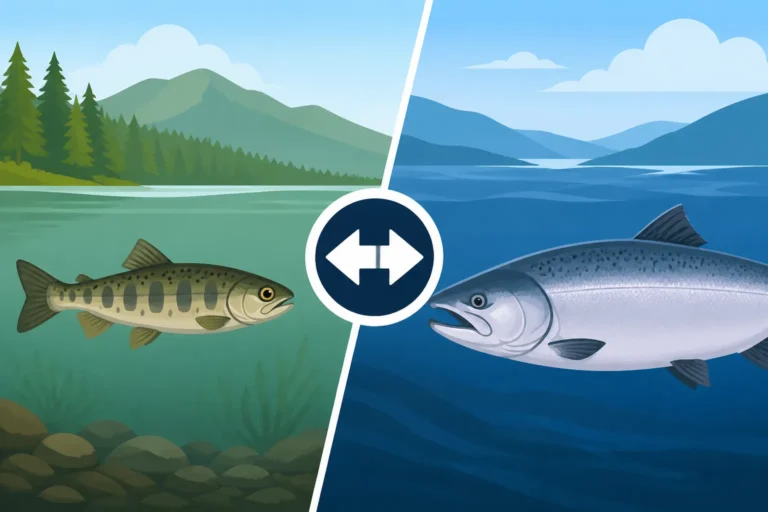
Let's cut right to the chase and demystify things from a biological standpoint. Here's the kicker: rainbow trout and steelhead are, in fact, the exact same species. They are both Oncorhynchus mykiss. Mind blown, right? This single biological truth is the foundation for all the confusion and the key to understanding their differences. The distinction isn't in their DNA, but rather in their life history and behavior.
What is a Rainbow Trout, Really?
When we talk about a "rainbow trout" in Oregon, we're generally referring to the resident, freshwater form of Oncorhynchus mykiss. These are the fish that spend their entire lives in freshwater environments – rivers, streams, and lakes – without ever venturing out to the ocean. They hatch from eggs, grow, mature, and reproduce all within the confines of their freshwater home.
These freshwater rainbows are incredibly adaptable. You'll find them thriving in cold, clear mountain streams, in the productive waters of high desert lakes, and even in the slower, warmer stretches of larger valley rivers. Their diet is varied, consisting of insects, smaller fish, and crustaceans, which contributes to their often vibrant colors. They get their name from the iridescent pink or red band that runs along their lateral line, often fading or intensifying depending on the individual fish, its diet, and the water conditions. They're a cherished catch for many anglers, known for their spirited fight and beautiful markings.
What Makes a Steelhead a Steelhead?
Now, enter the steelhead. A steelhead is simply an anadromous (meaning sea-run) form of Oncorhynchus mykiss. These are the same fish, genetically, but they choose a different life path. Instead of remaining in freshwater, juvenile steelhead migrate from their natal rivers out to the vast, nutrient-rich waters of the Pacific Ocean. They spend one to four years there, growing rapidly, before returning to their freshwater birthplace to spawn.
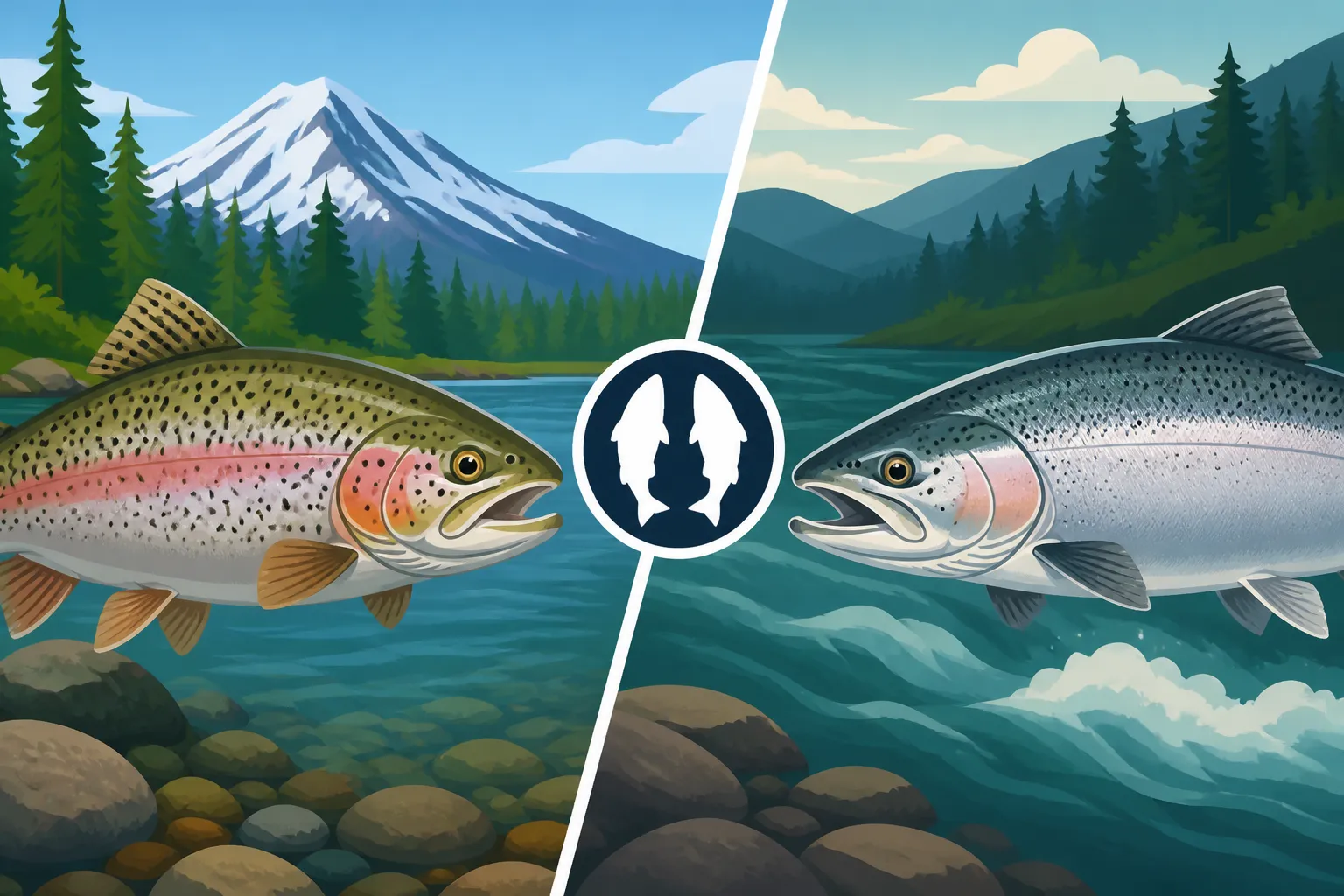
This migration to the ocean fundamentally changes them. They adapt to saltwater, bulk up significantly on marine forage, and typically lose some of their vibrant freshwater coloration, often appearing more silvery or chrome-colored when they first re-enter the rivers. This sleek, metallic appearance is where the name "steelhead" originates. Unlike salmon, which usually die after spawning, many steelhead are iteroparous, meaning they can survive spawning and return to the ocean, only to come back and spawn again in subsequent years. This makes them truly unique and highly prized among anglers.
Key Distinctions Beyond Biology
While their genetic makeup is identical, the divergent life strategies of rainbow trout and steelhead lead to some very practical and observable differences that anglers need to understand. These differences impact everything from where you find them to the gear you'll need.
Habitat and Migration Patterns
The most significant distinction between a resident rainbow trout and a steelhead lies in their habitat and migratory patterns. Rainbow trout are homebodies, content to live out their lives in a single river system or lake. They might move around within that system for food, spawning, or to find cooler water, but they don't undertake epic journeys. You'll find them in almost any fishable freshwater body in Oregon, from small creeks in the Cascades to larger impoundments like Henry Hagg Lake.
Steelhead, on the other hand, are true wanderers. They begin their lives in the same freshwater streams as resident rainbows, but after a year or two (sometimes more), they feel the call of the ocean. They migrate downstream, facing myriad challenges, until they reach the Pacific. After years of growing large and strong in saltwater, they navigate back to their exact natal stream to spawn. This incredible journey often involves battling strong currents, navigating fish ladders, and avoiding predators. Understanding these migratory patterns is crucial for targeting steelhead, as their presence in a river is highly seasonal and dependent on specific water conditions and runs. For more on these journeys, check out our guide on Oregon Steelhead Guide.
Size and Growth Rates
Due to the vastly different environments they inhabit, the average size and growth rates of rainbow trout and steelhead can vary dramatically. Freshwater rainbow trout, while they can grow to respectable sizes in productive lakes or rivers with abundant food, generally don't reach the same proportions as their ocean-going counterparts. A large resident rainbow might be 18-24 inches, with trophy fish certainly exceeding that, but these are often exceptional.
Steelhead, benefiting from the rich food sources of the open ocean, experience explosive growth. When they return to freshwater to spawn, they are typically much larger, often ranging from 24 to 36 inches or more. Some truly massive steelhead can push well over the 40-inch mark, weighing in at impressive double-digit figures. This larger size, combined with their incredible strength and endurance gained from ocean life, makes them one of the most sought-after game fish in Oregon. That sheer power is what differentiates the fight on the end of your line, demanding heavier tackle and different tactics.
Fishing Considerations and Regulations
Given these significant differences in life history, it's no surprise that targeting rainbow trout versus steelhead requires distinct approaches in terms of gear, techniques, and, importantly, adhering to Oregon's fishing regulations. Mistaking one for the other can lead to frustration or, worse, a violation.
Gear and Techniques for Each
When you're chasing resident rainbow trout, especially in smaller streams or lakes, a lighter touch is often key. You might use ultralight spinning gear with 4-6 lb test line, or a 3-5 weight fly rod. Bait like worms, PowerBait, or corn is often effective, as are small spinners, spoons, or dry flies and nymphs. The focus is usually on presentation and finesse, as trout in these environments can be wary. You can find excellent options for smaller trout lures and lighter tackle on Amazon, making it easy to get started. Many anglers start their journey with Oregon Fishing Techniques for Beginners using gear perfect for rainbows.
For steelhead, however, you'll need to beef up your tackle considerably. These powerful fish demand heavier gear: 8-12 lb test line or more on spinning or baitcasting setups, and 8-10 weight fly rods for spey or switch casting. Large spoons, wobblers, drift bobbers with roe, jigs, or big streamer flies are common choices. Steelhead fishing often involves covering a lot of water, understanding river currents, and making precise casts to prime holding lies. If you're looking to upgrade your rods, reels, or even durable waders for battling winter steelhead, Amazon offers a wide selection that can be delivered right to your door. When it comes to specific bait choices, our article on Best Bait for Oregon Trout Fishing offers excellent starting points, but always remember to adjust for steelhead!
Regulatory Differences in Oregon
This is where understanding the distinction between rainbow trout and steelhead becomes absolutely critical. Oregon's fishing regulations treat these two forms of the same species very differently, primarily to protect wild, anadromous steelhead populations. Steelhead runs, particularly wild ones, face numerous environmental challenges, and strict regulations are in place to ensure their survival. You'll find detailed breakdowns in our Oregon Fishing Regulations Explained guide.
Here's a general overview, though always check the current Oregon Department of Fish and Wildlife (ODFW) regulations:
- Size and Bag Limits: Resident rainbow trout often have generous bag limits and can be retained relatively easily, especially hatchery-stocked fish. Steelhead, particularly wild ones, typically have much stricter limits, often requiring catch-and-release, or specific tags like the Oregon Combined Angling Tag Guide and Oregon Salmon and Steelhead Tag Requirements for retention.
- Wild vs. Hatchery: One of the most important distinctions is between wild and hatchery fish. Hatchery steelhead are usually marked with a clipped adipose fin, allowing anglers to differentiate them from wild fish. Wild steelhead are often catch-and-release only in many rivers, or have highly restricted seasons and bag limits. Knowing How to Tell a Wild Steelhead from a Hatchery Steelhead is paramount.
- Seasons and Areas: Trout seasons for resident rainbows are often open year-round in many lakes and ponds, or have specific general stream seasons. Steelhead seasons are far more complex, varying by river, time of year (winter vs. summer runs), and specific zones. It's not uncommon for a river to be open for trout but closed for steelhead, or vice-versa, or for different rules to apply to different stretches of the same river. Violating these rules, even unknowingly, can lead to significant penalties, as detailed in Fishing Without a License Penalties in Oregon.
| Feature | Resident Rainbow Trout | Steelhead (Sea-Run Rainbow Trout) |
|---|---|---|
| Scientific Name | Oncorhynchus mykiss | Oncorhynchus mykiss |
| Life History | Spends entire life in freshwater | Migrates to ocean, returns to freshwater to spawn |
| Typical Appearance | More colorful (pink/red stripe), rounded fins, often spots | Silvery/chrome (when fresh from ocean), elongated, streamlined, often lighter coloration |
| Average Size | 10-24 inches (can vary greatly) | 24-36+ inches (significantly larger due to ocean growth) |
| Habitat | Lakes, rivers, streams, ponds | Rivers (juveniles, spawning adults), Pacific Ocean (adults) |
| Fight | Spirited, acrobatic, strong | Powerful, long runs, incredible endurance, often jumps |
| Regulations | Generally more liberal, often hatchery-focused | Stricter, often catch-and-release for wild, specific tags, complex seasons |
| Common Gear | Light spinning gear, 3-5 wt fly rods | Heavier spinning/casting, 8-10 wt fly rods (Spey/Switch) |
Why the Confusion Persists
Despite the clear biological and behavioral differences, the mix-up between rainbow trout and steelhead is an enduring one. It's a testament to their shared genetics and the nuances of fishing in a diverse state like Oregon.
The "Trout" vs. "Steelhead" Name Game
Part of the confusion simply comes down to language and regional vernacular. In many parts of Oregon, especially areas rich in both resident trout and steelhead, people might colloquially refer to any larger Oncorhynchus mykiss as a "steelhead," even if it's a giant resident rainbow that never saw the salt. Conversely, some might simply call a smaller steelhead a "trout." It’s a habit passed down through generations of anglers, and it doesn't always align with the official biological or regulatory definitions.
Furthermore, the term "trout" is a broad classification that encompasses many species, including brown trout, brook trout, and cutthroat trout, all of which inhabit Oregon's waters. Rainbow trout are just one member of this diverse family. When a fish is a "rainbow trout" by species but a "steelhead" by lifestyle, it creates a semantic tightrope walk that can trip up even experienced anglers. Our Oregon Trout Species Guide and Oregon Salmon Species Guide can help you understand the full family tree.
Catching Both in the Same Waters
Perhaps the most compelling reason for the confusion is the fact that you can, and often do, catch both resident rainbow trout and returning steelhead in the very same stretches of river. Juvenile steelhead (often called "smolts" or "parr" before they migrate) look very much like small resident rainbow trout. When adult steelhead return to spawn, they share the same waters with resident rainbows, making identification crucial when regulatory differences are in play.
Imagine you're casting a lure on a beautiful Oregon river. You hook a fish that puts up a fantastic fight. Is it a feisty resident rainbow or a powerful, ocean-hardened steelhead? The answer often lies in subtle physical cues – the overall color, the condition of its fins, its size relative to its girth, and crucially, the presence or absence of an adipose fin clip. Without proper identification, especially regarding that adipose fin, you might inadvertently violate regulations, particularly those surrounding wild fish. It's why carrying a copy of the current regulations or having them handy on your phone is just as important as your fishing rod. Don't forget, an Oregon Fishing License Guide is your first step to legal angling.
Ultimately, while the genetic identity of rainbow trout and steelhead is fascinating, their differing life histories create two distinct angling experiences in Oregon. Understanding these differences not only enhances your fishing success but ensures you're a responsible steward of our incredible fisheries.
Disclaimer
This article is for general informational purposes only and does not constitute professional advice. Laws, prices and regulations vary by location and change over time. Consult a qualified professional for guidance on your specific situation.