Shad in the Willamette River
There’s a secret, or perhaps not-so-secret, fishery that draws anglers to the Willamette River every spring, offering explosive action and a surprising culinary treat: the American Shad. Many anglers, especially those new to Oregon’s diverse waters, might be scratching their heads about what exactly a "shad" is, or why anyone would specifically target them. But let me tell you, when the shad run is on, it's one of the most exciting and accessible fishing opportunities around, and this guide is going to walk you through everything you need to know to get in on the action on the Willamette.
The American Shad: An Unexpected Oregonian
Before we dive into the nitty-gritty of catching these spirited fish, let's get acquainted with the American Shad (Alosa sapidissima) itself. It’s a fascinating creature with a rich history, a striking appearance, and a fighting spirit that belies its size. While often overshadowed by their more famous salmonid cousins, shad offer a unique angling experience that's both challenging and incredibly rewarding. They’re a significant part of the Willamette River’s ecosystem during their annual migration, creating a vibrant, albeit temporary, fishery.
A Little History on the Willamette
You might wonder how a fish often associated with the East Coast ended up thriving in Oregon's Willamette River. Well, like many things in the Pacific Northwest, their story is one of human introduction. American Shad were actually introduced to the West Coast in the late 19th century, specifically to the Sacramento River in California. From there, they gradually expanded their range northward, finding the Columbia River and its tributaries, like the Willamette, to be ideal spawning grounds. These days, they are firmly established and return by the millions each year. This makes them a unique, almost exotic, catch for many local anglers, offering a different kind of challenge than the typical salmon or steelhead pursuit.
The Willamette River provides an excellent environment for shad, with its long stretches of relatively slow-moving water, gravelly bottoms for spawning, and access to the vast Pacific Ocean for their adult lives. They've truly made themselves at home, and their annual return is now a much-anticipated event for a dedicated group of anglers. Understanding this history gives you a bit more appreciation for these resilient fish as you cast your line into the very waters they've adopted as their own.
Identifying Your Catch: What Does a Shad Look Like?
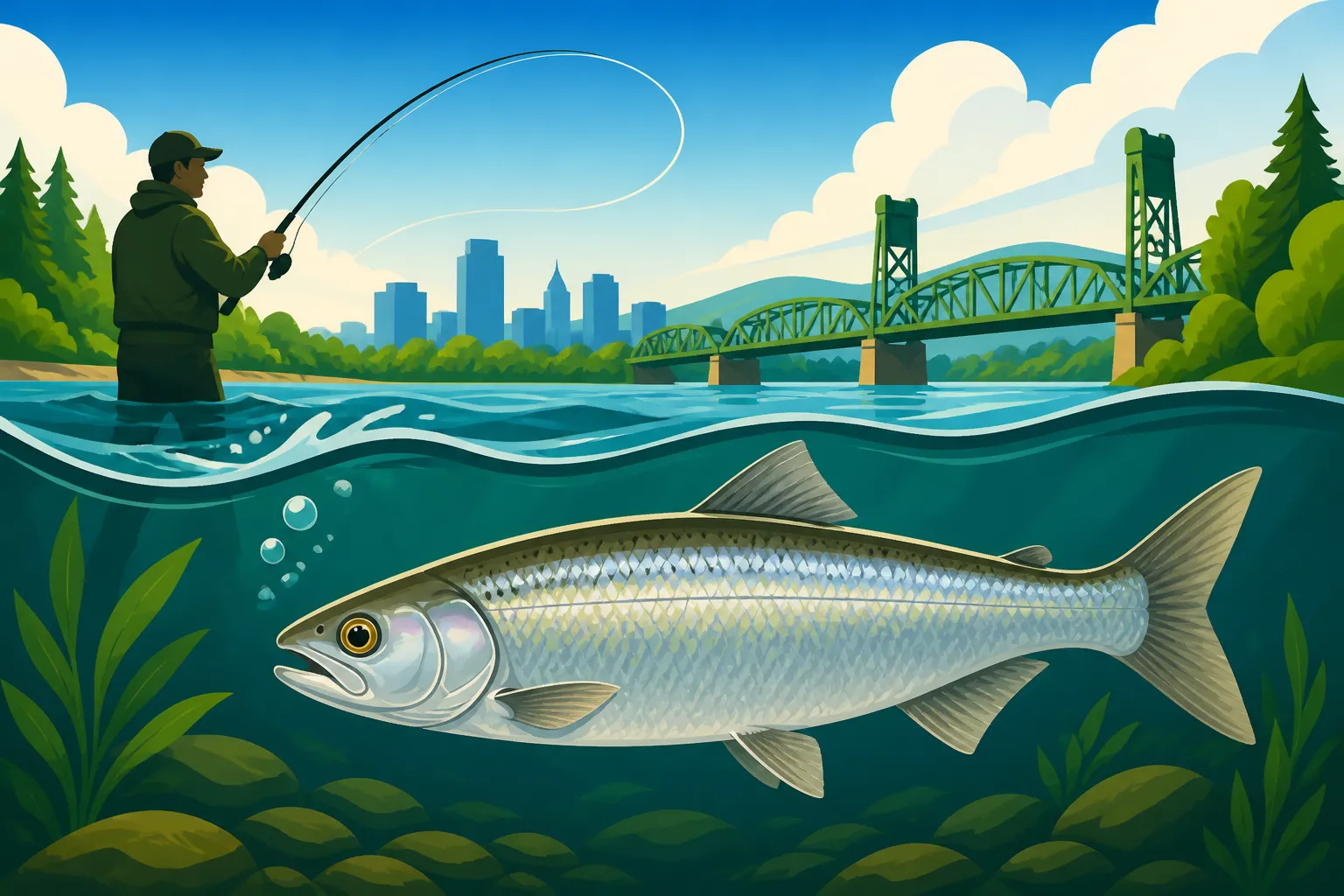
When you hook into a shad, you might initially mistake it for a small salmon or even a large herring, but they have distinct features. American Shad are typically silver-sided with a darker, bluish-green back, often exhibiting a row of distinct dark spots along their upper flanks, though the number and prominence of these spots can vary. Their bodies are deep and compressed laterally, giving them a somewhat "flat" appearance from head to tail. They have a deeply forked tail fin, which is a major contributor to their incredible fighting ability.
Size-wise, most shad you'll encounter in the Willamette range from about 1 to 3 pounds, though some larger individuals can reach up to 5 or 6 pounds. They aren't huge, but what they lack in raw size, they more than make up for in sheer power and acrobatic displays once hooked. Unlike salmon, their mouths are relatively soft, which means hook sets need to be gentle and fights handled carefully to avoid tearing the hook out. Knowing what you're targeting ensures you're ready for the fight and can properly identify your catch amidst the other species that inhabit the Willamette River.
Why the Willamette is a Shad Hotspot
The Willamette River, particularly its lower and middle sections, is the place to be for shad fishing in Oregon. There are several reasons why this river stands out as such a prime destination. Firstly, it offers a relatively unobstructed path for their upstream migration, allowing huge numbers of shad to enter the river from the Columbia. Secondly, the river's flow and water temperature tend to be just right during the peak of the shad run, creating ideal conditions for spawning and attracting vast schools of fish.
Furthermore, the Willamette provides extensive stretches of accessible bank fishing, along with ample boat launches for those who prefer to drift or troll. Locations from the Portland metro area all the way up past Oregon City and into the Corvallis and Albany areas can hold shad. This accessibility means anglers don't have to venture into remote wilderness areas; excellent shad fishing can be found within short drives of major population centers. It’s a truly democratic fishery, open and enjoyable for everyone. If you want to dive deeper into the specific areas, our Willamette River Fishing Guide has more details.
Timing Your Trip: When and Where to Find Shad on the Willamette
Successfully targeting shad on the Willamette River is all about timing and location. These anadromous fish follow a predictable pattern, but river conditions can influence their arrival and concentration. Being in the right place at the right time significantly increases your chances of a memorable day on the water.
Understanding the Annual Shad Run
The shad run on the Willamette River typically begins in late April and can extend through June, with the peak action usually occurring from mid-May through early June. However, Mother Nature always has the final say. Factors like water temperature and river flow dictate exactly when the fish arrive in large numbers. A warm spring can bring them in earlier, while a cold, high-water spring might delay their arrival. Most anglers watch the Columbia River shad counts at Bonneville Dam as an indicator, as the Willamette run usually follows closely behind the initial push into the mainstem Columbia.
During the peak of the run, shad can be incredibly abundant, sometimes forming dense schools that make for non-stop action. This is the time when you hear stories of people catching dozens, even hundreds, of fish in a single outing. It's a sprint, not a marathon, so planning your trip during this window is crucial. Our guide on Best time of year to fish for shad on the Willamette offers more specific monthly breakdowns.
Key Fishing Locations Along the River
While shad can be found throughout a significant portion of the Willamette River during their run, certain spots consistently produce more fish due to current breaks, depth changes, or accessible spawning grounds.
- Oregon City to Willamette Falls: This stretch is arguably the most famous and productive. The falls act as a natural barrier, concentrating shad in the lower sections as they stage for their ascent. The bank access below the falls, particularly near the PGE park and boat ramp, can be fantastic. You'll often see dozens of anglers lining the banks here, all hoping for that tell-tale tug. The currents below the falls are strong, so be prepared with appropriate gear.
- Sportcraft Landing/Meldrum Bar: Further downstream, near Canby, these areas offer excellent boat access and good bank fishing opportunities. The current here is a bit mellower than right below the falls, making it more manageable for some.
- Newberg Pool: Above the falls, the Newberg Pool (the impoundment created by the falls) also holds plenty of shad, especially as the season progresses and more fish make it upstream. Boat fishing is popular here.
- St. Paul/Mission Bottom: This area provides good bank fishing access and a slightly quieter experience than the bustling Oregon City spot.
- Upstream towards Albany/Corvallis: While concentrations might be less dense, shad do push further upriver. If you're looking for less crowded areas or are based further south, these stretches can still offer good fishing, particularly around river bends and deeper pools.
No matter where you choose to fish, looking for areas with moderate current, often near gravel bars or ledges, is key. Shad prefer to swim in the main current but will hold in slightly slower water to rest.
Reading the River: Water Conditions and Shad Behavior
Shad are incredibly sensitive to water conditions. The "sweet spot" for water temperature is generally between 55-65 degrees Fahrenheit. If the water is too cold, they'll hold back in the Columbia; too warm, and their activity can wane. Similarly, river flow is important. High, turbid water from heavy spring rains can spread the fish out and make them harder to locate, while clear, stable flows concentrate them.
Observing the water for signs of fish is also helpful. Sometimes, during calm evenings, you might see shad "rolling" or jumping at the surface, especially near the peak of the run. This is a clear indicator of their presence. Pay attention to local fishing reports and online forums, as conditions can change rapidly. Anglers are often eager to share updates during the hot bite. Remember, always check the Oregon Fishing Regulations Explained before you head out, as rules and emergency closures can impact even this relatively open fishery.
Gear Up for Shad: Rods, Reels, and Terminal Tackle
One of the great things about shad fishing is that you don't need highly specialized, expensive gear to be successful. In fact, many anglers already own much of what's required for this exciting pursuit. However, having the right setup can make a huge difference in your enjoyment and success, especially when dealing with their spirited fights.
Choosing the Right Rod and Reel Setup
For American Shad, a light to medium-light spinning rod is generally preferred. You're looking for something with a sensitive tip to detect those subtle takes, but enough backbone to handle a fighting fish in current. A rod in the 6 to 7.5-foot range with a fast or moderate-fast action works wonderfully. This length provides good casting distance from the bank and enough leverage when a shad decides to make a run. Many common trout or panfish rods fit this bill perfectly. For those who enjoy online shopping for convenience, you can find a wide range of suitable spinning rods on platforms like Amazon, often at very reasonable prices, perfect for adding a dedicated shad setup to your arsenal.
Pair your rod with a lightweight spinning reel in the 1000 to 2500 size class. This size reel balances well with the lighter rods and can hold plenty of line for those long, upstream battles. The key is a smooth drag system; shad are notorious for their sudden, powerful runs, and a sticky drag will lead to broken lines or pulled hooks. Make sure your reel is spooled with fresh line.
Essential Terminal Tackle: Darts, Grubs, and Spinners
When it comes to lures for shad, simplicity and bright colors are your friends. Shad are attracted to movement and flash, and they can be surprisingly aggressive.
- Shad Darts: These are arguably the most iconic and effective shad lures. Darts are small, weighted jigs, typically brightly colored (chartreuse, pink, orange, or a combination) with a small feather or plastic tail. They sink quickly and have an erratic, fluttering action that drives shad wild. You'll want a variety of weights, from 1/8 to 1/4 ounce, to match current conditions. A heavier dart helps get down in faster currents, while a lighter one might be better in slower water or when fish are holding higher in the water column. How to catch shad with a dart lure goes into even more detail about these fantastic little lures.
- Small Grubs and Jigs: Similar to darts, small plastic grubs or curly-tailed jigs (often 1 to 2 inches long) on a lead head also work wonders. Again, bright colors are key. You can find these in various sizes and colors, and they offer a different profile and action that can entice finicky fish.
- Small Spinners: In certain conditions, especially in slower currents or when shad are actively feeding on small baitfish, a small inline spinner (like a Rooster Tail or Panther Martin) in silver, gold, or bright colors can be deadly. Sizes 0 or 1 are usually sufficient. The flash and vibration can be irresistible.
- Swivels and Leaders: While not strictly a lure, a small barrel swivel tied a foot or two above your dart or jig can help prevent line twist, which is common with spinning lures and in strong currents. A light fluorocarbon leader (6-8 lb test) can offer a bit more abrasion resistance and stealth, though many anglers simply tie their main line directly to the dart.
Having a good selection of these small, bright offerings is crucial. Sometimes shad will prefer one color or action over another on any given day, so it pays to experiment.
Line Choices and Leader Knots
For your main line, 6 to 10-pound test monofilament or braided line is ideal. Monofilament is more forgiving due to its stretch, which can help absorb the shocks of a fighting shad and prevent pulled hooks. It's also less visible in clear water. Braided line, on the other hand, offers superior sensitivity and casting distance, making it easier to detect subtle bites and get your lure out further. If you choose braid, consider a 6 to 10-pound test, but you might want to add a fluorocarbon leader of 6 to 8-pound test to provide some stretch and invisibility. Many anglers stock up on their favorite line brands via Amazon for convenience.
As for knots, reliability is paramount. For tying your main line to a swivel or leader, a Palomar knot or an improved clinch knot are excellent choices for monofilament and fluorocarbon. When connecting braid to a fluorocarbon leader, a uni-to-uni knot or an FG knot provides a strong, low-profile connection that can pass smoothly through rod guides. Practicing these knots at home ensures you're not fumbling on the water when the bite is hot.
Mastering the Techniques: How to Catch Willamette River Shad
Once you have your gear ready and you're at your chosen spot on the Willamette, it's time to put those techniques into practice. Shad fishing isn't overly complicated, but a few key strategies will significantly increase your success rate, whether you're casting from the bank or drifting from a boat.
Bank Fishing Strategies
Bank fishing for shad is incredibly popular, especially below Willamette Falls. The key to success from the bank is often about finding current seams and understanding how shad move upstream.
- Casting Upstream and Swinging: This is the most common and often most effective method. Cast your dart or jig slightly upstream and across the current. Allow it to sink and then let the current carry it downstream in an arc, or "swing." As the lure swings, it mimics a drifting insect or baitfish, which shad can't resist. Keep your rod tip up and maintain a slight retrieve, just enough to keep a tight line and feel for bites. The take often happens as the lure completes its swing and begins to hang directly downstream.
- Bottom Bouncing: In areas with heavier current or deeper water, shad might be holding closer to the bottom. For this, you might use a heavier dart or a lead sinker on a dropper loop ahead of your lure. The idea is to lightly "bounce" your offering along the riverbed, allowing the current to move it downstream. This can be especially effective in deeper channels.
- Varying Retrieval Speed and Depth: Don't be afraid to experiment. Sometimes a slower retrieve is key, letting the dart flutter more naturally. Other times, a slightly faster, more erratic retrieve can trigger a strike. Adjust the weight of your dart to fish different depths until you find where the fish are holding. Since shad often school, once you find the right depth and retrieve, you can often replicate success. Do you need a boat to catch shad? The answer is usually no, as bank access is so good.
Remember to be patient, observe other successful anglers, and don't hesitate to move if a spot isn't producing. Shad are migratory, and their exact holding patterns can change throughout the day.
Boat Fishing and Trolling Approaches
For anglers with boats, the Willamette River opens up even more possibilities for chasing shad. Boat fishing allows you to cover more water and access areas that are inaccessible from the bank.
- Drifting with the Current: This is a highly effective method. Position your boat upstream of a known shad holding area (like a gravel bar or a current break) and let the boat slowly drift downstream with the current. As you drift, cast your darts or jigs out and allow them to sink, working them back with a slow retrieve or simply letting them flutter in the current. This method allows you to present your lure to numerous fish as you pass over them. Having a good electric trolling motor can help control your drift speed, making it easier to stay in the prime zone.
- Trolling with Small Spinners: While less common for shad, slow trolling with small spinners or even a dart behind a small weight can sometimes be effective, especially in broader, slower stretches of the river. This is more of an exploratory technique, useful for covering large areas to locate schools of fish. Once a school is found, you can switch to drifting or anchoring and casting.
- Anchoring and Casting: Find a promising current seam or a known holding spot, anchor upstream, and cast repeatedly into the desired area. This is similar to bank fishing but gives you the advantage of precise positioning. This method is particularly useful when you've identified a concentrated school of shad. Just be mindful of other boaters and ensure your anchor is secure in the current.
Safety on the water is paramount. Always wear your life jacket, especially in the swift currents of the Willamette. Be aware of other boats, navigation hazards, and follow all boating regulations.
Fly Fishing for Shad: A Unique Challenge
For the fly fishing enthusiast, chasing shad on the Willamette offers a truly exhilarating experience. While it presents a different set of challenges than spin fishing, the reward of hooking a hard-fighting shad on a fly rod is immense.
- Gear Selection for Fly Fishing: A 6 or 7-weight fly rod is a good all-around choice, offering enough power to cast weighted flies and handle strong fish, but still providing a sporting fight. Pair it with a matching reel that has a smooth drag and capacity for 100-150 yards of backing. A sinking tip or full sinking fly line (Type III or IV) is usually necessary to get your flies down to where the shad are holding in the current.
- Fly Patterns: Shad flies are typically small, weighted, and brightly colored. Think of them as miniature streamers or glorified nymphs. Popular patterns include small Clouser Minnows (chartreuse/white, pink/white), sparse Lefty's Deceivers, or even simple weighted wooly buggers in chartreuse or pink. Size 6 or 8 hooks are common.
- Presentation: Similar to spin fishing, casting upstream and across and allowing the fly to swing through the current is key. Let the current carry your fly downstream, keeping a tight line and feeling for the subtle tugs. Sometimes a slow, short strip-retrieve can add enticing action. The strike can be quite aggressive, so be ready! Fly fishing adds another layer of skill and satisfaction to shad fishing, transforming a casual outing into a true angler's quest. If you're looking for more advanced techniques, our Oregon Fly Fishing Guides article might give you some ideas for general fly fishing principles.
Beyond the Fight: Enjoying Your Shad Catch
While the incredible fight of an American Shad is often the primary draw for anglers, these fish offer more than just a thrilling battle. They can be a surprisingly delicious meal, and participating in the shad fishery is generally a sustainable practice given their abundant numbers.
Shad as Table Fare: A Culinary Surprise
Many anglers, accustomed to salmon or trout, might initially dismiss shad as table fare. However, they are often called "poor man's salmon" on the East Coast for a reason! Shad meat is rich, flavorful, and flaky, with a taste often compared to herring or mackerel, but milder. The biggest challenge with shad is their incredibly bony structure. They have a multitude of fine bones ("pin bones") that can make them tricky to fillet and eat.
Despite this, there are a few traditional ways to prepare them:
- Baking or Broiling Whole: Some adventurous cooks will bake or broil whole shad, allowing the heat to soften the bones enough that they can be easily picked out, or even eaten.
- Smoking: Smoking shad is a popular method that not only imparts a fantastic flavor but also softens the bones to the point where they can be consumed without issue. This is often regarded as one of the best ways to prepare them.
- Shad Roe: The roe (eggs) of female shad is considered a delicacy by many and is often pan-fried with butter. It's rich and flavorful, a true seasonal treat.
If you're willing to put in a little effort, the reward is a unique and tasty fish. Don't be intimidated by the bones; with a little practice or the right preparation method (like smoking), you'll discover why shad have a loyal culinary following. For more ideas on preparation and cooking, check out Are shad good to eat?.
Handling Your Catch: From Hook to Cooler
Once you've landed a shad, proper handling is important, whether you plan to release it or take it home for dinner.
- Catch and Release: If releasing, handle the fish as little as possible. Use a pair of pliers to gently remove the hook. If the hook is deeply set, consider cutting the line to minimize stress. Shad are not typically as hardy as salmon, so getting them back in the water quickly is crucial. Their soft mouths mean hooks can tear out easily, so a quick, clean release is always best.
- Retention for Table: If you're keeping shad, dispatch them quickly and humanely. A swift blow to the head is effective. Then, get them on ice immediately. This is perhaps the most important step for preserving their quality. A good cooler filled with ice will keep your catch fresh. Don't let them sit in the sun or in a warm bucket of water; their flesh will quickly deteriorate.
- Filleting: Filleting a shad is an art form due to the aforementioned pin bones. There are specific techniques to get boneless fillets, often involving intricate cuts around the bone structure. Many anglers simply remove the backbone and cook the fish with the bones in, then carefully separate the meat at the table. If you're serious about boneless fillets, look up some instructional videos online—it's a skill worth learning if you plan on eating a lot of shad.
Regardless of your intent, treat each fish with respect. Part of responsible angling is ensuring that if you harvest a fish, you do so ethically and prepare it well.
Participating in Sustainable Shad Fishing
One of the most appealing aspects of the Willamette River shad fishery is its incredible abundance. Unlike many other species, shad populations are robust, and their numbers allow for a very generous daily bag limit. This makes it a fantastic fishery for families and beginners, as there’s generally no pressure to limit your catch, and the opportunities for success are high. The Oregon Daily Bag Limits Explained will give you the most current information, but typically, shad limits are quite high, if not unlimited in some areas.
This abundance makes shad fishing a truly sustainable pursuit. It provides an opportunity to enjoy fresh, wild-caught fish without impacting sensitive native populations. It’s also an excellent way to introduce new anglers, especially kids, to the joys of fishing because the action can be fast and furious. When the shad are biting, it's a great confidence builder, and it teaches basic angling skills in a forgiving environment. So go out, enjoy the fight, and enjoy the feast, knowing you're participating in one of Oregon's most accessible and sustainable fisheries. Just make sure you always check the current Oregon Fishing Regulations Explained before heading out.
Disclaimer
This article is for general informational purposes only and does not constitute professional advice. Laws, prices and regulations vary by location and change over time. Consult a qualified professional for guidance on your specific situation.