Surfperch Fishing from the Beach
Have you ever stood on an Oregon beach, watching the waves crash and wondered if there was a way to connect with the ocean beyond just a walk? Many of us have felt that pull, that desire to fish the surf, only to be intimidated by the seemingly endless expanse of water and the mystery of what lies beneath. This guide is all about demystifying surfperch fishing from the beach, offering practical, empathetic advice so you can confidently cast your line and enjoy one of the most accessible and rewarding forms of angling our beautiful coast has to offer.
Why Surfperch Fishing is So Accessible and Rewarding in Oregon
There's something incredibly therapeutic about casting a line into the ocean from a sandy beach. No boat needed, no fancy gear required, just you, the sand, and the rhythmic roar of the Pacific. Surfperch fishing isn't just a way to catch fish; it's an experience that connects you deeply with the Oregon coast, offering a peaceful solitude combined with the thrill of a tug on your line. It's truly one of the most beginner-friendly and low-barrier-to-entry fishing opportunities we have.
The Joy of Beach Fishing
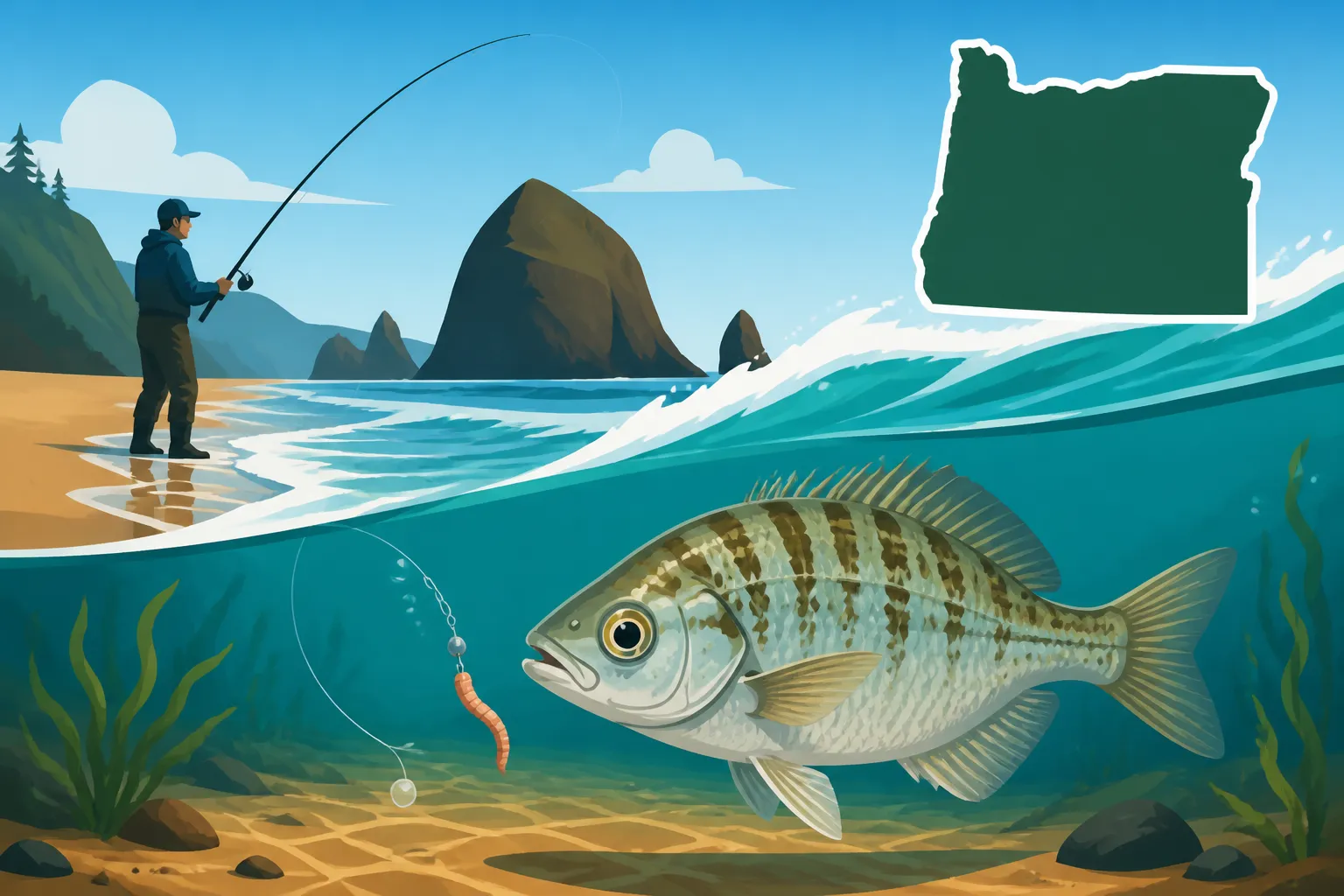
Imagine a crisp, sunny morning on a stretch of beach like Agate Beach near Newport, or even the vast expanse of Fort Stevens State Park. You're bundled up, sipping coffee, and watching the sunrise paint the sky. Suddenly, your rod tip gives a distinct bounce. That's the unmistakable sign of a surfperch, eager for a meal. This isn't high-stress, technical fishing. It's about being present, enjoying the natural beauty, and embracing the simple pleasure of the hunt. It’s perfect for families, solo adventurers, or anyone looking to decompress with a fishing rod in hand. The gear is minimal, the spots are plentiful, and the action can be surprisingly consistent, making it a fantastic gateway into Oregon fishing.
Unlike some other forms of angling that require extensive knowledge of complex techniques or expensive equipment, surfperch fishing allows you to get started with very little. You don't need to know the nuances of fly selection or the intricacies of Oregon Fishing Techniques for Beginners. Instead, it’s about understanding the waves, finding the right bait, and having a bit of patience. The beauty lies in its simplicity, yet it offers enough challenge to keep seasoned anglers engaged. Plus, fresh surfperch, filleted and pan-fried, are an absolute delight, offering a delicious reward for your efforts.
Common Surfperch Species in Oregon
When you're targeting surfperch from Oregon's beaches, you'll primarily be running into a couple of key species, with redtail surfperch being the most prevalent and often the largest. These fish are brilliantly adapted to their wave-swept environment, thriving in the turbulent waters of the surf zone. They're built for power and stability, which makes them a blast to catch, as they put up a surprisingly strong fight for their size.
Besides the abundant redtail surfperch, you might also encounter other species like silver surfperch or striped surfperch, especially in calmer areas or bays. While redtails are often the target due to their size and aggressive bites, these other species are equally fun to catch and contribute to the rich biodiversity of our coastal waters. Knowing what to expect helps you understand their behavior and where to best target them. Each species has its own subtle preferences, but generally, if you're finding one type of surfperch, others aren't usually far behind. For a deeper dive into the types of fish you might encounter, check out our Oregon Saltwater Fish Species Guide.
Essential Gear for Beach Surfperch
One of the great things about surfperch fishing is that you don't need to break the bank to get started. In fact, keeping it simple is often the best approach. The gear requirements are quite modest, focusing on durability and functionality rather than high-tech gadgets. You probably have some of this stuff lying around already, or it's easy enough to acquire without a huge investment.
Rod, Reel, and Line Selection
For surfperch, you want a rod that can handle casting a fair distance and stand up to the corrosive saltwater environment. A medium to medium-heavy spinning rod, typically between 8 to 11 feet in length, is ideal. This length gives you the leverage to cast beyond the immediate shore break, reaching those deeper gutters where perch often feed. Look for rods with a good backbone but a sensitive tip, so you can detect those subtle bites.
Pair that with a saltwater-resistant spinning reel, sized anywhere from a 3000 to 5000 series. Corrosion resistance is key here, so make sure it's rated for saltwater use. For line, a 10 to 15-pound monofilament or braided line is perfect. Monofilament is a bit more forgiving for beginners and handles abrasion well, while braid offers increased sensitivity and casting distance. If you go with braid, consider adding a 20-pound fluorocarbon leader for abrasion resistance and stealth. You can often find decent saltwater spinning combos at local sporting goods stores or even browse options on Amazon to see what fits your budget.
Terminal Tackle: Keeping it Simple and Effective
The beauty of surfperch fishing terminal tackle lies in its simplicity. You'll primarily be using a "high-low" rig. This rig usually consists of a main line with two short leader lines (snoods) coming off it, each with a hook, and a sinker at the very bottom. The idea is to present your bait at two different depths in the water column, increasing your chances of a bite.
Here's what you'll need:
- Hooks: Size 2 to 2/0 baitholder hooks or octopus hooks work wonderfully. They're small enough for a perch's mouth but strong enough to hold a good fighting fish.
- Swivels: Barrel swivels to connect your main line to your leader and prevent line twist.
- Sinkers: Pyramid or Sputnik sinkers, ranging from 1 to 4 ounces. Pyramid sinkers dig into the sand better in heavy surf, while Sputnik sinkers have wires that really grip the bottom, preventing your rig from rolling in strong currents. The weight you choose will depend on the surf conditions – heavier for bigger waves and stronger currents.
- Leader Material: 15 to 20-pound fluorocarbon or monofilament for your snoods and leader section. Fluorocarbon is less visible underwater, which can make a difference in clear water.
These components are readily available at any tackle shop and are relatively inexpensive, allowing you to tie up several rigs beforehand.
Waders and Comfort Gear
While you can fish in jeans, your experience will be infinitely more comfortable and productive with a good pair of waders. Chest waders, especially neoprene ones for cooler Oregon waters, allow you to wade out into the shallow surf, giving you extra casting distance and access to deeper troughs just beyond the immediate wash. They also keep you dry and warm, which is essential for enjoying longer sessions on the exposed coastline. Breathable waders are also an option, particularly for warmer days, and can be worn with layers underneath.
Beyond waders, think about other comfort items:
- Waterproof Rain Gear: Even on sunny days, the Oregon coast can be damp and unpredictable. A good waterproof jacket and pants are invaluable.
- Warm Layers: Fleece, wool, or synthetic layers are crucial to stay warm, even in summer.
- Sun Protection: Sunglasses (polarized are great for seeing into the water), a wide-brimmed hat, and sunscreen are a must.
- Gloves: Neoprene fishing gloves keep your hands warm and protect them from line cuts and fish spines.
- Backpack/Tackle Bag: Something to carry your tackle, extra bait, snacks, and water. A waterproof one is a bonus.
- Pliers/Forceps: Essential for hook removal, especially from smaller fish.
- Fish Bag/Cooler: If you plan on keeping fish, a small cooler or insulated bag with ice is necessary to keep your catch fresh.
Investing in decent waders and rain gear will greatly enhance your enjoyment, allowing you to fish longer and more comfortably, regardless of the coastal weather whims. You can often find good deals on waders and waterproof outerwear on Amazon.
Best Baits and How to Find Them
The old adage "match the hatch" rings true even for surfperch. These fish are opportunistic feeders, but they absolutely have their favorites, and many of these are found right in their own backyard – or rather, their own sandy beach. Using the right bait is arguably the most critical factor in successful surfperch fishing.
Natural Baits: The Perch's Favorite Meals
Surfperch primarily feed on small crustaceans, marine worms, and tiny baitfish that live in or are washed up by the surf. Mimicking these natural food sources is your best bet for consistent action.
- Sand Shrimp (Ghost Shrimp): This is often considered the king of surfperch baits in Oregon. Sand shrimp live in sandy estuaries and can be pumped up with a specialized sand shrimp pump. They are incredibly effective, and their natural scent is irresistible to perch. Fresh is always best, but if you can't find fresh, frozen ones from a tackle shop will work in a pinch. They stay on the hook reasonably well and emit a strong scent.
- Clams (Razor, Bay, or Cockle): Clam necks and pieces of clam meat are another fantastic natural bait. Razor clams are a particularly strong attractant, but any clam meat will do. The trick with clams is they're soft, so they can be easily stripped off the hook by waves or smaller fish. You might need to secure them with a bit of elastic thread or netting. If you're out digging your own Razor Clams on the Oregon Coast, save a few for bait!
- Mussel Meat: Similar to clams, mussels are a natural food source for many bottom feeders. Shuck them and use small pieces. They are a bit tougher than clams, so they tend to stay on the hook better.
- Marine Worms (Bloodworms, Pile Worms): If available at your local tackle shop, these are highly effective. They wriggle and emit a strong scent, making them very appealing. They can be a bit delicate to handle, but the results often speak for themselves.
- Small Baitfish: Sometimes, small pieces of anchovy or herring can work, especially if larger perch are around, but generally, the invertebrate baits are more consistent.
Always use fresh bait if possible. If you're collecting your own, make sure you're aware of any local regulations on harvesting bait.
Artificial Lures and Scent Enhancers
While natural baits are dominant, there are situations where artificial options can be surprisingly effective, especially when paired with a good scent. These are particularly useful if you run out of natural bait or want to cover ground more quickly.
- Soft Plastics: Small grub-tail or sandworm-imitation soft plastics, especially in natural colors like clear, smoke, or motor oil, can fool wary perch. The key is to impart some action with a slow retrieve. Gulp! Sandworms or Gulp! Peeler Crabs are particularly popular and effective, as they are impregnated with scent. They don't have the same natural texture as live bait but their scent profile is a powerful attractant.
- Grub Jigs: Small lead-head jigs (1/8 to 1/4 ounce) tipped with a grub tail can also entice bites. The jig head helps with casting distance and getting the lure down quickly in the current.
- Scent Enhancers: This is where artificials truly shine. Adding a liberal amount of commercially available fish attractant, like Smelly Jelly or Pro-Cure, to your soft plastics or even natural baits can significantly boost their appeal. These scents mimic the natural oils and pheromones of baitfish and crustaceans, making your offering even more enticing. Some anglers even add a dab of shrimp or clam scent to their natural baits to amplify the aroma. It's like putting a little extra perfume on your offering for the fish!
Remember, the goal is to make your bait as enticing as possible to a hungry surfperch. Experimentation with both natural and artificial offerings can often lead to the most success.
Reading the Beach: Finding the Sweet Spots
One of the biggest hurdles for new surf anglers is looking at a vast, seemingly featureless beach and wondering, "Where do I even start?" The secret lies in learning to "read the beach." The ocean is constantly sculpting the sand, creating subtle features that funnel bait and concentrate fish. Once you learn to spot these, your success rate will soar.
Understanding Beach Structure: Undercuts, Rips, and Channels
The surf zone isn't a uniform bathtub; it's a dynamic, ever-changing landscape of sandbars, troughs, and currents. Knowing what to look for can turn a frustrating day into a fantastic one.
- Troughs and Gutters: These are deeper channels running parallel to the beach, often just beyond the breaking waves. They act like highways for surfperch, concentrating food and providing them with a comfortable, less turbulent feeding zone. Look for areas where the waves break, then reform or flatten out for a moment before breaking again closer to shore. That calmer, deeper water in between is often a trough.
- Rips and Run-outs: These are areas where water that has pushed up onto the beach flows back out to sea, creating a current. Rips can be visible as calmer, often darker streaks in the water, where the waves aren't breaking as consistently. They're like conveyor belts, carrying food (and your bait!) to waiting fish. Fish will often stage at the edges of these rips, waiting for an easy meal.
- Undercuts and Structure: While most Oregon beaches are sandy, sometimes you'll find rocky outcroppings, jetties, or even submerged logs. These offer cover and additional food sources, attracting larger perch and other species. Fishing around these types of structures can be highly productive, but be mindful of snags. Even subtle changes in the sand bottom, like small humps or depressions, can create feeding opportunities.
Take some time to observe the beach before you even cast. Watch the waves, look for variations in color and texture of the water, and identify where the wave energy seems to be focused or dispersed. These visual cues will guide you to potential hot spots.
Tides and Timing: When to Hit the Sand
Just like any coastal fishing, the tides play a crucial role in surfperch activity. The movement of water brings in food, provides cover, and dictates where the fish will be positioned.
- Incoming Tide: Generally, the incoming tide is considered the most productive time for surfperch fishing. As the tide rises, it pushes baitfish, sand crabs, and marine worms closer to shore, stirring up the bottom and making food readily available. The surfperch follow this food source, moving into shallower waters to feed. The last two hours of the incoming tide and the first hour of the outgoing tide are often prime time.
- High Tide: While the peak of high tide can sometimes be slower if the water is too deep or still, the periods leading up to and immediately following it can be excellent, especially if there's good current.
- Outgoing Tide: The early outgoing tide can also be productive as food is still being washed out, but as the tide recedes completely, fish tend to move further offshore into deeper waters, making them harder to reach from the beach.
- Low Tide: This is typically the least productive time for fishing, but it's an excellent opportunity to scout the beach. During low tide, you can walk out and visually identify those troughs, sandbars, and channels that will hold fish when the water returns. It's like getting a secret map of the fishing grounds! You can mark these spots in your mind for when the tide comes back in.
Beyond tides, consider other factors. Overcast days can sometimes be better than bright, sunny ones, as they reduce light penetration and make perch less wary. Early mornings and late evenings, especially during an incoming tide, are often the most consistent. Always check the local tide charts for your specific location, whether it's Tillamook Bay Fishing Spots or a stretch of open beach near Newport Oregon Fishing Charters, as tide times vary along the coast.
Effective Techniques for Catching Surfperch
Now that you know what to look for in terms of gear, bait, and location, it's time to talk about the actual "how-to." Surfperch fishing from the beach is straightforward, but a few refined techniques will significantly improve your chances of success. It's not just about chucking a line out; it's about presenting your bait effectively and understanding the subtle signs of a bite.
The Classic High-Low Rig Presentation
The high-low rig is the bread and butter of surfperch fishing, and for good reason. It’s simple to tie, effective at presenting bait at multiple depths, and very forgiving for beginners.
When casting, you'll want to get your rig out beyond the main line of breaking waves, into those troughs and gutters we talked about. A smooth, powerful cast is key. Once your sinker hits the bottom, let it settle. The pyramid or Sputnik sinker is designed to dig into the sand and hold its position, even in moderate currents. Avoid letting your rig roll excessively with the waves, as this can tangle your lines and make it difficult for fish to find your bait.
Once your rig is settled, put your rod in a sand spike, if you're using one, and keep a close eye on the rod tip. Surfperch bites can range from subtle taps to aggressive tugs. It's easy to mistake wave action for a bite at first, but with practice, you'll learn to discern the distinct rhythm of a fish. When you feel a firm tug or see a series of quick, sharp dips, pick up your rod, reel in any slack, and set the hook with a gentle but firm sweep. There’s no need for a massive, powerful hookset; surfperch have relatively soft mouths, and you want to avoid tearing the hook out.
Casting and Retrieving Strategies
While the high-low rig is often fished statically in a sand spike, there are times when a slow retrieve can be more effective, especially if you suspect the fish are actively cruising or if you're exploring a new area.
- Static Fishing (Rod in Sand Spike): This is the most common method. Cast out, let your sinker dig in, and wait. This works well when fish are concentrated in a specific trough and you're letting the natural scent of your bait do the work. It's a great strategy for a relaxed day on the beach. Every few minutes, give your rod a slight jig to stir up the bottom and release more scent from your bait.
- Slow Retrieve/Drifting: Sometimes, slowly reeling in your rig can cover more ground and trigger strikes from actively foraging perch. Cast out, let it settle, then very slowly reel in, pausing occasionally. This simulates a piece of food drifting naturally with the current. This method is particularly useful when you're trying to locate schools of fish or if the bite is slow in one spot. Allow the wave action to give your bait some natural movement as you retrieve. You'll want to make sure your sinker is just barely hopping along the bottom, not dragging heavily.
- Fan Casting: Don't just cast to one spot repeatedly. Try casting in a fan pattern, covering different angles and distances. This helps you locate where the fish are holding on that particular day. One cast straight out, the next slightly to the left, then to the right, systematically searching the trough.
Experimentation is key. Some days, fish want a static bait; other days, they prefer something moving slowly. Pay attention to what the fish are telling you! And always be prepared for other potential catches; sometimes you might hook into a small flounder or even a starry flounder in the surf, especially near Oregon Coast Fishing Spots.
Handling Your Catch and Regulations
Once you've landed a surfperch, handle it with care. They're generally not aggressive, but their dorsal fins can be sharp. Use pliers or forceps to remove the hook cleanly. If you plan to release the fish, do so quickly and gently, supporting its body.
If you're keeping fish for the table, be sure to know the current Oregon fishing regulations. The Oregon Department of Fish and Wildlife (ODFW) sets daily bag limits and sometimes size limits for various species. These regulations can change, so always check the most up-to-date Oregon Fishing Regulations Explained before you head out. For surfperch, limits are often quite generous, allowing you to bring home a good meal. Keep your catch on ice in a cooler to maintain freshness. Filleting surfperch is relatively easy, yielding small but delicious fillets perfect for pan-frying or baking.
| Bait Type | Effectiveness (1-5, 5 being best) | Pros | Cons | Notes |
|---|---|---|---|---|
| Sand Shrimp | 5 | Highly effective, strong scent, natural | Can be hard to find fresh, fragile | Often considered the best bait. |
| Clam Meat | 4 | Natural, readily available | Very soft, easily stripped off hook | Use elastic thread or netting to secure. |
| Mussel Meat | 3 | Natural, tougher than clam | Less readily available than clam, still soft | Good alternative if clams are too soft. |
| Marine Worms | 4 | Strong attractant, natural action | Can be expensive, delicate to handle | Excellent if you can find them. |
| Gulp! Sandworms | 3 | Convenient, durable, scented | Not as natural feel/taste as live bait | Great backup, or for aggressive fish. |
| Small Grub Lures | 2 | Durable, reusable, covers water | Requires more active retrieve, less scent | Best with added scent, good for prospecting. |
Disclaimer
This article is for general informational purposes only and does not constitute professional advice. Laws, prices and regulations vary by location and change over time. Consult a qualified professional for guidance on your specific situation.