Oregon nonresident youth license cost
It can be incredibly confusing to navigate fishing license requirements, especially when you're visiting Oregon with kids from out of state. You want to make sure your young anglers have a memorable time on the water, but the thought of deciphering regulations and figuring out costs can feel like a whole hurdle before the fun even begins. This guide is here to simplify everything, walking you through the specifics of the Oregon nonresident youth fishing license cost and what you need to know to get your child legally fishing.
Understanding the Oregon Nonresident Youth Fishing License Cost
The good news is that Oregon makes it quite affordable for visiting youth to enjoy its incredible fisheries. However, there are some specific age brackets and additional requirements that are important to grasp so you don't run into any surprises.
What is the Current Cost for Nonresident Youth?
Let's get right to the heart of the matter: what will it actually cost you to get your nonresident child fishing in Oregon? For the 2024 license year, an annual Oregon nonresident youth fishing license for individuals aged 12 to 17 costs a very reasonable $10.00. This is for the basic angling license, which covers a wide variety of species and general fishing opportunities across the state.
Compared to an adult nonresident annual angling license, which can run significantly higher, this $10 fee is designed to encourage younger anglers to experience Oregon's abundant lakes, rivers, and coastal waters. It’s a fantastic value, allowing your child to fish for an entire license year (January 1st through December 31st) without needing to buy multiple daily or weekly licenses if your visits are spread out. Imagine the freedom of knowing your teen has their license sorted, ready for any impromptu fishing adventure during your vacation! You can find a broader overview of all costs in our detailed guide on Oregon Fishing License Costs.
Age Requirements for Nonresident Youth Anglers
This is a critical point that often trips people up. In Oregon, the rules for youth licenses are tied directly to age:
- Children under 12 years old: They do not need a fishing license to fish in Oregon. That’s right, if your child is 11 or younger, they can fish for free! This is a wonderful incentive for very young kids to get hooked on fishing without any bureaucratic hurdles.
- Youth aged 12 to 17 years old: If your child falls within this age range, they are required to have an Oregon fishing license. This is where the $10 nonresident youth annual angling license comes in.
It's important to clarify that the age is determined by their actual age at the time they are fishing. So, if your child turns 12 mid-year, they'll need to purchase a license from their birthday onward if they plan to continue fishing. This distinction is vital for avoiding potential issues, and it's a common query we address in our article, Do kids need a fishing license in Oregon?. If you're ever in doubt about what age specifically triggers the requirement, checking our guide on What age do you need a fishing license in Oregon can provide more clarity.
For example, imagine a family from Washington visiting Bend for a summer trout fishing trip. Their 9-year-old can cast away without a license, but their 14-year-old will definitely need that $10 nonresident youth annual angling license. It’s a small detail, but one that can make a big difference in ensuring a smooth and enjoyable outing for everyone.
What the Nonresident Youth License Covers and Additional Needs
While the $10 nonresident youth license is an amazing start, it’s crucial to understand what it actually covers and, perhaps more importantly, what it doesn't. Many specific fisheries in Oregon require additional tags or endorsements, regardless of age, to ensure proper management of popular species.
General Angling Privileges and Limitations
The basic $10 Oregon nonresident youth angling license grants your child the privilege to fish for most common freshwater species like rainbow trout, bass (both largemouth and smallmouth), panfish such as crappie and bluegill, and various other warmwater species. It also covers general marine fish species from shore or docks. Essentially, for a leisurely day fishing for stocked trout in a local pond or trying for bass in a reservoir, this license is usually all they'll need. These are covered under the standard Oregon Fishing Regulations Explained.
However, this foundational license does not include the necessary tags or endorsements for certain high-demand, migratory, or specially managed fish species. This is where many visitors make mistakes, assuming their child is fully covered simply by having the base license. It’s a common misconception, and understanding this distinction can save you a lot of headache later on. For a full breakdown of different permits, you might want to look at Oregon Fishing License Types Explained.
Essential Tags and Endorsements for Certain Species
This is where the financial aspect can get a bit more involved, as these additional tags carry their own separate costs, which are typically the same price for youth as they are for adults, whether resident or nonresident. These tags are absolutely mandatory if your child plans to target the following species:
- Combined Angling Tag: This is the big one. If your youth angler (12-17) wants to fish for salmon, steelhead, or sturgeon, they will need to purchase an Oregon Combined Angling Tag in addition to their $10 annual angling license. For 2024, the Combined Angling Tag costs $33.50. This tag acts as a catch record card, allowing the Oregon Department of Fish and Wildlife (ODFW) to track harvest rates for these vital species. Without it, even if they have the base license, keeping one of these fish is illegal. We have an extensive guide on the Oregon Combined Angling Tag Guide that details everything you need to know about it, including its purpose and how to use it for Oregon Catch Record Card Requirements.
- Halibut Tag: For those adventurous enough to head out on the ocean for Pacific Halibut, a separate Halibut Tag is required. This tag helps manage the limited halibut quota and, for 2024, costs $11.00. You can find more specific details on Oregon Halibut Tag Requirements.
- Columbia River Basin Endorsement: If your youth angler plans to fish for salmon or steelhead in the Columbia River or its tributaries, they might also need this endorsement, which costs an additional $9.75 for 2024. This fee contributes to hatchery programs and fish management efforts in the Columbia River Basin.
Let’s illustrate with a common scenario: A family from Idaho is planning a summer trip to the Oregon Coast, and their 16-year-old is excited to try steelhead fishing on the Siletz River. In this case, the teenager would need their $10 Oregon nonresident youth annual angling license AND the $33.50 Combined Angling Tag. That brings their total license cost to $43.50. It’s still a great deal for an entire year of fishing, but it's clearly more than just the base $10. Knowing this upfront helps you budget and avoid any unfortunate situations on the water that could lead to Oregon Fishing Violations and Penalties.
To make it easier, here's a quick reference table for the 2024 costs for youth licenses and common tags:
| License/Tag Type | Age Group | Resident Cost (2024) | Nonresident Cost (2024) | Primary Coverage/Purpose |
|---|---|---|---|---|
| Annual Angling License | 12-17 | $10.00 | $10.00 | General fishing for most species |
| Annual Angling License | 18+ | $44.00 | $115.00 | Adult general fishing |
| Combined Angling Tag | All (if needed) | $33.50 | $33.50 | Required for Salmon, Steelhead, Sturgeon (catch record) |
| Halibut Tag | All (if needed) | $11.00 | $11.00 | Required for ocean Halibut fishing |
| Columbia River Basin Endorsement | All (if needed) | $9.75 | $9.75 | For salmon/steelhead fishing in Columbia River Basin waters |
Remember, always consult the current ODFW Sport Fishing Regulations for the most up-to-date information, as regulations and costs can change annually.
Purchasing Your Nonresident Youth Fishing License
Once you know what your nonresident youth angler needs, actually getting the license is straightforward. Oregon offers convenient options, primarily through its online system or various authorized vendors across the state.
Online vs. In-Person Purchase Options
The easiest and often most recommended way to purchase an Oregon nonresident youth fishing license and any necessary tags is through the ODFW's online electronic licensing system. You can access it from anywhere with an internet connection, which is a huge convenience for out-of-state visitors planning their trip.
Here’s how the online process generally works:
- Visit the ODFW Website: Navigate to myodfw.com.
- Create an Account: If you don't already have one, you'll need to create an account, which usually involves providing some basic personal information. For a youth, a parent or guardian often creates and manages their account.
- Select Licenses/Tags: Once logged in, you can select the "Nonresident Youth Annual Angling" license and add any other required tags like the Combined Angling Tag or Halibut Tag.
- Complete Purchase: Follow the prompts to complete the payment.
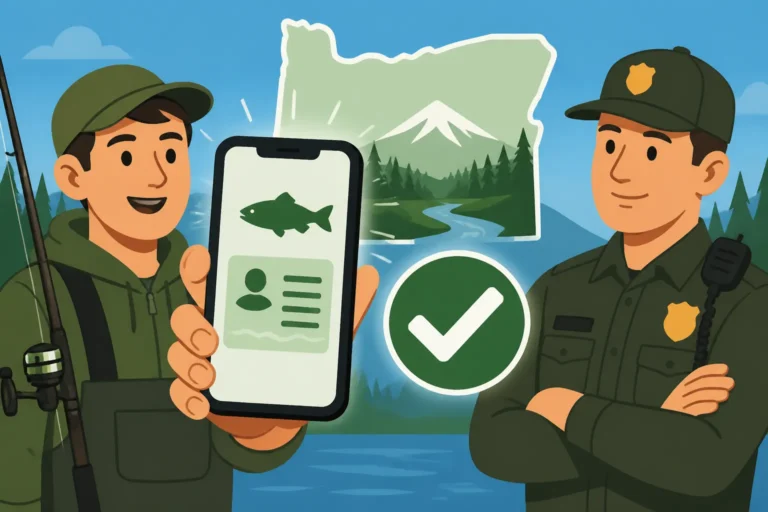
The big advantage of purchasing online is the instant gratification. You get an immediate confirmation and usually a printable document that serves as your temporary license. You can even use your phone as proof of an Oregon fishing license once you’ve completed the purchase online. This is perfect for those last-minute trips or when you simply forget to grab one beforehand. Check out our guide on Oregon Fishing License Instant Download After Purchase for more details.
If you prefer a more traditional approach, you can also purchase licenses and tags in person at various authorized license vendors throughout Oregon. These include many sporting goods stores, tackle shops, and some general retail stores. Locations like Bi-Mart often have licensing capabilities. While this option can be helpful if you have questions for a local expert, it might not be as convenient for nonresidents who are just passing through or arriving late. Our comprehensive guide on Where to Buy an Oregon Fishing License lists common types of vendors and tips for finding them.
Required Information for Purchasing
Whether you buy online or in person, you'll need to provide some basic information for your nonresident youth angler. This typically includes:
- Full Legal Name
- Date of Birth
- Physical Address: Your out-of-state residential address.
- Identification: Often a driver's license number, state ID card number, or another form of government-issued identification. For youth, a parent typically provides this information, and it's linked to the youth's profile.
Having this information readily available will make the purchase process much quicker. It ensures that the license is correctly issued and linked to the individual who will be using it, which is important for regulatory purposes and for ODFW to track angler participation.
Common Misconceptions and Best Practices
It's easy to get caught up in the excitement of planning a fishing trip to Oregon, and sometimes crucial details about licenses can be overlooked or misunderstood. Let's tackle some common myths and offer best practices to ensure your nonresident youth angler has a hassle-free and enjoyable experience.
Dispelling Myths About Youth Fishing Licenses
Navigating fishing regulations, especially for out-of-state visitors, can lead to some persistent misunderstandings. Let's clear up a few:
- Myth 1: "Kids don't need a fishing license at all." As we covered, this is only partially true. While children under 12 are exempt, any nonresident youth aged 12 to 17 absolutely needs that $10 annual angling license. Failing to have one could result in fines, which is a damper no one wants on a family vacation.
- Myth 2: "All tags and endorsements are included with a youth license." This is perhaps the most significant misconception. The $10 youth license is for general angling. As detailed earlier, if your child wants to target salmon, steelhead, sturgeon, or halibut, they will need to purchase the appropriate additional tags (like the Combined Angling Tag or Halibut Tag). These tags are priced the same for youth as they are for adults, making them an added but necessary expense for certain fisheries. This distinction is crucial for understanding the true Oregon nonresident fishing license cost if your family targets these species.
- Myth 3: "Nonresident youth licenses are overly expensive." While the combination of a base license and multiple tags can add up, the base $10 annual nonresident youth license itself is remarkably affordable, especially when compared to adult nonresident licenses or even short-term licenses in other states. For general fishing, it's a great value. If your trip is just for a day or two and your child is 12-17, you might compare it to the Oregon 1-Day Fishing License cost for adults, but you'll likely find the annual youth license still comes out ahead if fishing for more than a couple of days.
- Myth 4: "I can just use my adult license for my child." Licenses are individual. Each angler (aged 12-17 and adults) must have their own license and any required tags or endorsements. You cannot transfer an Oregon fishing license to someone else.
Planning Ahead for a Successful Trip
Being prepared is key to a relaxing and productive fishing trip. Here are some best practices for nonresident families with youth anglers:
- Check Regulations Thoroughly: Before you even leave home, thoroughly review the most current Oregon Sport Fishing Regulations. These regulations are updated annually and sometimes have emergency closures or changes mid-season. Understanding Oregon Fishing Season Dates and Limits and Oregon Fishing Zones Explained will prevent disappointment.
- Purchase Licenses and Tags in Advance: Don't wait until you're at the boat ramp or a remote fishing spot. Purchase all necessary licenses and tags online well before your trip. This ensures you have everything in order, reduces stress, and allows you to confirm details without rushing.
- Carry Proof of License: Always have your youth angler's license (either printed or on your phone as a digital copy) readily accessible when fishing. A game warden can and will check licenses. This is a simple but vital step to avoid any issues.
- Gear Up Appropriately: Make sure your child has the right gear for the type of fishing they'll be doing. Whether it's a simple spin rod for trout or a sturdier setup for salmon, having the correct equipment makes a huge difference in enjoyment and success. Many anglers find it convenient to order essential gear like a small tackle box, a new youth fishing rod and reel combo, or specific lures from reputable online retailers like Amazon before their trip, ensuring they have everything they need without hunting around locally once they arrive. Sometimes, even finding a good pair of polarized sunglasses for glare on the water or comfortable rain gear can be done through Amazon to keep spirits high even if the weather changes.
- Educate Your Child: Spend a few minutes explaining to your child what species they can keep, any size limits, and the importance of adhering to daily bag limits. This fosters responsible angling habits from a young age and is a key part of our guide on Oregon Fishing License Guide.
By understanding the specific costs, age requirements, and additional tag needs for nonresident youth anglers in Oregon, you can ensure your family's fishing adventure is filled with great memories and free from unnecessary complications. Tight lines!
Disclaimer
The information provided in this guide is for general informational purposes only and is based on current available data for the 2024 Oregon fishing license year. Fishing regulations, license costs, and tag requirements are subject to change by the Oregon Department of Fish and Wildlife (ODFW). It is always the angler's responsibility to consult the most recent official ODFW Sport Fishing Regulations and any emergency updates before engaging in any fishing activity.