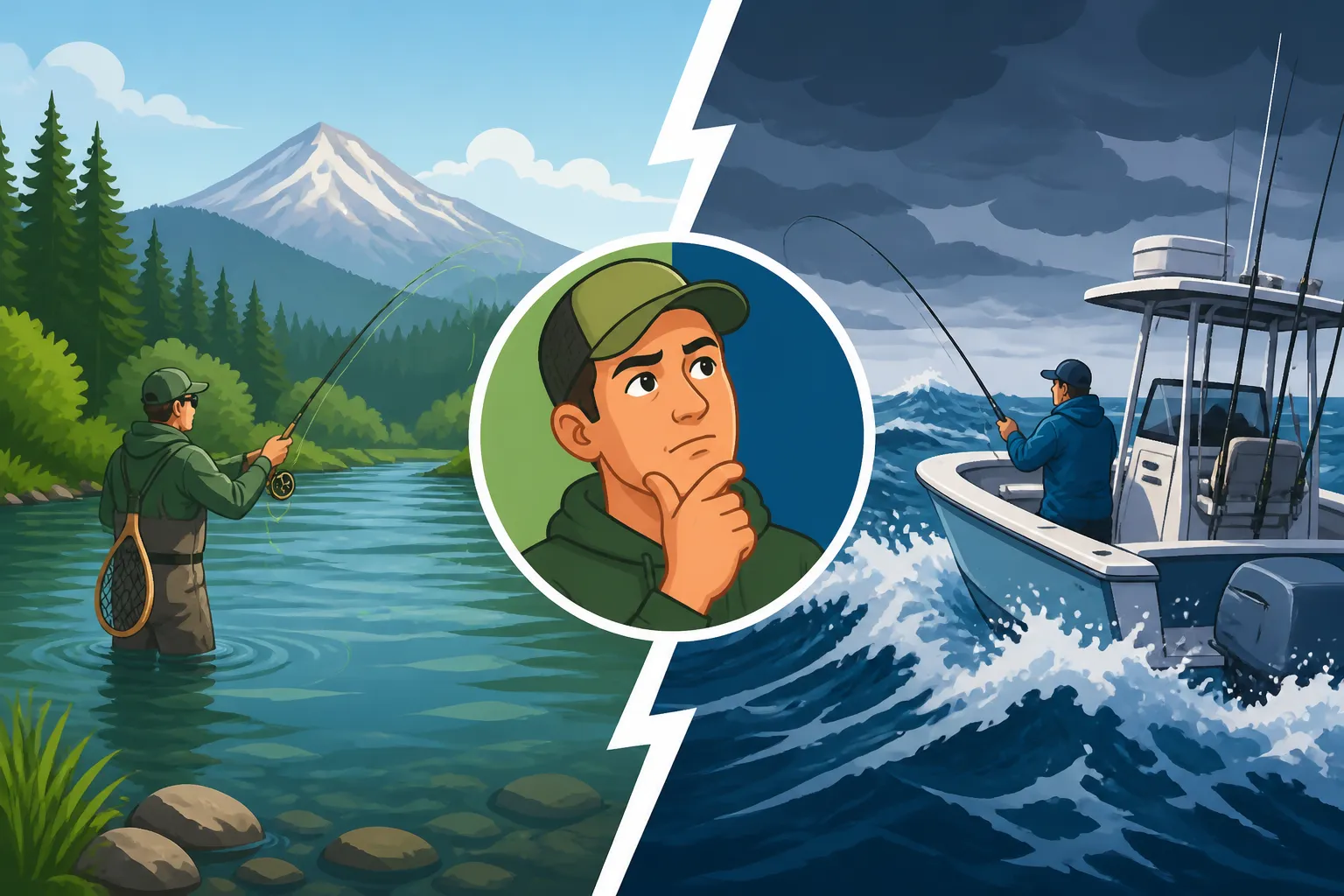
Is a river guide trip calmer than an ocean charter?
It's a common dilemma for anyone planning a fishing trip in our beautiful state of Oregon: you're dreaming of bending a rod and the thrill of the catch, but maybe you're a little wary of rough water, or perhaps you're just looking for the most relaxing experience possible. Many anglers, especially those new to guided trips or sensitive to motion, wonder if a calm river trip is a safer bet than braving the open ocean. This guide will walk you through the distinct characteristics of both river guide trips and ocean charters in Oregon, helping you understand their unique dynamics and ultimately decide which adventure promises the tranquility and excitement you're seeking.
Understanding the Nature of River Guide Trips
When you think of river fishing in Oregon, images of serene, tree-lined banks and gentle currents often come to mind. While many river trips offer just that, it's important to remember that rivers are dynamic systems with their own set of characteristics that can influence the "calmness" of your experience.
The Gentle Flow of Inland Waters
Generally speaking, river trips tend to be less prone to the kind of intense, continuous motion associated with offshore fishing. Rivers, particularly the larger ones like the Willamette or segments of the Columbia, often present long stretches of relatively calm water, especially in deeper, wider sections. Here, the primary motion you'll feel is the steady, downstream drift of the boat, which many find quite soothing. It's a rhythmic, almost hypnotic movement that helps you settle into the fishing experience. You’ll be focused on reading the water, looking for seams and holding lies, rather than bracing against waves. This consistent, predictable motion is often what people are seeking when they ask for a "calmer" trip.
However, not all river sections are perfectly placid. Oregon is famous for its whitewater, and some excellent fishing areas on rivers like the Deschutes or Rogue can involve navigating rapids or faster-moving riffles. While a professional guide is highly skilled at safely maneuvering through these sections, they will definitely add a jolt of adrenaline and a less "calm" sensation to your trip. These moments are usually short-lived and exhilarating, often followed by calmer pools or glides. The overall intensity of the motion is typically much lower than ocean swells, but it's important to be aware that even rivers can have their moments of excitement. You'll want to discuss the specific stretches of river you'll be fishing with your guide, especially if you have concerns about rougher water. Knowing the Best Rivers to Fish in Oregon can help you research typical conditions.
Vessel Types and Stability
The type of boat used on a river trip plays a huge role in its perceived stability and comfort.
- Drift Boats and Rafts: For many of Oregon's renowned rivers, especially those known for steelhead and trout like the Deschutes, McKenzie, or Rogue, traditional McKenzie-style drift boats or rafts are the vessels of choice. Drift boats are open, shallow-draft boats designed to be rowed by the guide, allowing for quiet approaches and precise presentations. They are incredibly stable for their size, especially when floating downstream, and are built to handle moderate rapids with grace. You'll feel the undulations of the water, but they rarely feel unstable. Rafts, particularly larger fishing rafts, offer an even softer ride, absorbing bumps and waves exceptionally well. Both provide an intimate connection with the river, enhancing the feeling of a peaceful float.
- Jet Boats: On larger rivers and estuaries, particularly when targeting salmon or sturgeon on the Columbia or Willamette, jet boats are common. These powerful, aluminum boats can cover long distances quickly and navigate shallow areas. While they can travel at high speeds, when fishing, they are often drifting or anchored, offering a very stable platform. Jet boats are generally much heavier and wider than drift boats, providing a more solid feel on the water. They are excellent for those who want to reach multiple fishing spots efficiently without sacrificing stability. If you're looking into Columbia River Salmon Guide Trips, a jet boat is a likely vessel.
The choice of vessel will be largely determined by the specific river and the target species, but guides always prioritize safety and comfort. Don't hesitate to ask what kind of boat your guide uses when booking, as this can greatly inform your expectations for the trip's "calmness." When considering options, platforms like FishingBooker often include details about the vessel in their guide profiles, which can be super helpful.
Environmental Factors Affecting River Calmness
Even on a river, Mother Nature has a say in how "calm" your trip feels.
- Wind: Wind can significantly impact a river trip, especially on wider stretches or lakes and reservoirs within a river system. Strong winds can create chop on the water's surface, making it feel less smooth and sometimes making casting more challenging. If you're on a drift boat, the guide might have to row harder to maintain position, which can disrupt the peaceful drift.
- Rain and River Levels: While rain itself doesn't make the water "rough" in the same way ocean waves do, heavy downpours can make for a less comfortable trip due to exposure, even if the water remains calm. Fluctuating river levels, often due to dam operations or recent rainfall, can also change the character of the water. Higher flows might mean faster currents, while very low flows can expose obstacles and create more turbulent riffles. Your Oregon Steelhead Guide Trips might take you out in a variety of conditions, so preparing for the elements is always wise.
- Crowds: While not directly affecting water calmness, the presence of many other boats can sometimes create wakes that ripple through the water, especially in popular fishing holes. This can momentarily disturb the serenity, though it's usually not a continuous issue.
Ultimately, river trips typically offer a predictable, generally gentler motion that is less likely to induce motion sickness for most people. The feeling is often one of gliding or floating, with occasional bursts of excitement.
Unpacking the Dynamics of Ocean Charters
Oregon's coastline offers some incredible fishing opportunities, from the powerful Chinook salmon to bottom-dwelling lingcod and rockfish. However, fishing these waters means contending with the vast, open ocean, which operates on a different scale of motion than rivers.
The Open Sea's Unpredictable Rhythms
The defining characteristic of ocean fishing is the presence of swells and waves. Unlike river currents, ocean swells are large, rolling movements of water that travel across vast distances. They can create a continuous up-and-down and side-to-side motion that is quite different from a river's flow.
- Swells vs. Wind Chop: Swells are generated by distant storms and can persist even on otherwise calm days. They create a slow, undulating motion that some find soothing, like a cradle, while others can be very susceptible to motion sickness from it. Wind chop, on the other hand, refers to the smaller, choppier waves created by local winds. When swells and wind chop combine, or when strong winds are present, the ocean surface can become quite confused and rough, leading to more violent pitching, rolling, and slamming of the boat. This is where ocean trips can become significantly less "calm." For deep-sea adventures targeting Pacific Halibut off Oregon or tuna, you'll be heading further out where these conditions can be more pronounced.
- Bar Crossings: Many of Oregon's coastal fishing ports, like Newport, Tillamook Bay, or Winchester Bay, require crossing a bar (where the river meets the ocean). These bar crossings can be notorious for rough, breaking waves, especially on outgoing tides or during stormy weather. While charter captains are highly experienced and will not cross a bar if conditions are unsafe, these short segments can be the roughest part of an ocean trip and a real test of comfort.
The key takeaway here is unpredictability. While a beautiful, flat ocean day can be incredibly calm, conditions can change rapidly. A responsible charter captain will always prioritize safety and will call off a trip if the weather is too severe, but even on "fishable" days, the ocean can offer a much more dynamic and often less consistently calm experience than most rivers.
Offshore Vessel Types and Seaworthiness
Ocean charters utilize vessels specifically designed to handle the rigors of the open sea.
- Larger Charter Boats: These are typically substantial, deep-hulled boats, often 30 to 60 feet or more in length. Their size, weight, and hull design are engineered to cut through waves and provide stability. They are equipped with powerful engines, advanced navigation, and safety gear. The sheer mass of these boats helps them ride over swells rather than being tossed around by every small wave. You'll find these vessels departing from Newport Oregon Fishing Charters or Astoria Oregon Fishing Charters.
- Deck Space and Amenities: Ocean charter boats generally offer more deck space, sometimes enclosed cabins, and often restrooms, providing comfort and shelter from the elements. While they are built for stability, the continuous motion can still be felt throughout the vessel.
- Deep Sea vs. Bay Fishing: It's important to distinguish between true offshore charters and those that stay within protected bays or estuaries (like crabbing or some salmon fishing in Tillamook Bay). Fishing within a bay is generally much calmer, as the landmasses offer significant protection from ocean swells and wind. These trips might feel much more akin to a large river trip in terms of motion.
Regardless of the vessel type, charter captains are experts at navigating ocean conditions and will do their best to find the most comfortable and productive fishing grounds for their clients. Learning How to Choose an Oregon Fishing Guide for ocean trips involves checking their vessel details and safety records.
Environmental Factors Influencing Ocean Calmness
The ocean's temperament is dictated by a complex interplay of environmental factors.
- Weather Systems: Fronts, high- and low-pressure systems, and storm cells directly influence ocean conditions. A strong low-pressure system can generate significant swells and high winds, making offshore fishing uncomfortable or impossible. Clear, high-pressure days, especially in summer, often bring the calmest ocean conditions.
- Wind Speed and Direction: Wind is a major contributor to ocean chop. A moderate breeze blowing against the current or swell can create a "confused sea" with short, steep waves that are particularly jarring. A strong wind can make even a large boat feel small.
- Tides: While less about "calmness" and more about current, strong tidal exchanges, especially around river mouths and jetties, can create turbulent water and standing waves. This is particularly noticeable during bar crossings.
- Seasonal Variations: Generally, summer months (July-September) tend to offer the calmest ocean conditions off Oregon, with less wind and smaller swells. Fall and winter can bring more frequent storms and rougher seas, though there can be "weather windows" of calm. Discussing Best Time of Year to Fish in Oregon can help you plan for calmer ocean days.
In summary, ocean charters can range from glass-smooth, picture-perfect days to exhilaratingly rough rides. The likelihood of experiencing significant motion is much higher than on a river, and motion sickness is a more common concern.
Direct Comparison: Calmness and Comfort on the Water
Let's get right to the heart of the matter: which type of trip is truly calmer?
| Feature | River Guide Trip | Ocean Charter |
|---|---|---|
| Primary Motion | Steady drift or anchor; occasional rapids/riffles. Mostly predictable flow. | Continuous swells, wind chop, pitching, and rolling. Often unpredictable. |
| Vessel Response | Gentle undulations, smooth gliding (drift boats, rafts); stable (jet boats). | Rides over or cuts through waves; can experience significant pitching/rolling. |
| Roughness Source | Fast currents, rapids, strong winds creating chop on wide sections. | Ocean swells, wind-generated waves, combining factors, bar crossings. |
| Predictability | Generally high, conditions usually more localized and stable through a trip. | Moderate to low, conditions can change quickly over large areas. |
| Motion Sickness | Low likelihood for most people. | Moderate to high likelihood, even for those not typically prone. |
| Overall Comfort | Often described as peaceful, relaxing, intimate with the surroundings. | Can be exhilarating and scenic, but often requires more resilience to motion. |
Motion Sickness Potential
This is often the deciding factor for many.
- River Trips and Motion Sickness: For the vast majority of people, motion sickness is rarely an issue on a river trip. The motion is usually a predictable, linear drift or a relatively stable anchor. Any rapids are short and exhilarating rather than continuously nauseating. The focus is on the passing scenery and the fish, not on constantly battling equilibrium. If you've never had issues in a car or on a small lake, you're likely to be perfectly fine on a river.
- Ocean Charters and Motion Sickness: This is where ocean charters present a higher risk. The constant, irregular motion of swells, waves, and the boat's response (pitching up and down, rolling side to side) can trigger motion sickness even in individuals who don't typically experience it. The best defense is preparation: consider taking Best seasickness medicine for an ocean fishing charter before you even board the boat, stay on deck and look at the horizon, avoid reading, and stay hydrated. Even with precautions, some people will still feel unwell. It's simply the nature of being on the open sea.
If motion sickness is a significant concern for you or someone in your group, a river guide trip offers a considerably "calmer" and safer bet in terms of minimizing discomfort.
Overall Experience
Beyond just the motion, the entire ambiance of each trip type differs.
- River Experience: River trips tend to be more intimate and immersive. You're often surrounded by forests, mountains, or agricultural lands, with wildlife sightings (deer, eagles, otters) common. The sounds are primarily natural – rushing water, birdsong, the quiet dip of a oar. Conversation can flow easily, and the focus is often on the technique and the subtle bites of fish in a pristine environment. It's often a deeply peaceful and connecting experience.
- Ocean Experience: Ocean charters offer a sense of vastness and adventure. The horizon stretches endlessly, and the scale of everything feels grander. You might see whales, dolphins, or seabirds. The sounds are dominated by the engine, the waves, and the excited shouts of anglers reeling in big fish. While you're still focused on fishing, there's an undeniable feeling of being out in the wild, powerful elements. The excitement of potentially hooking a massive tuna or halibut is a huge draw, and for many, that adrenaline outweighs any discomfort from the motion. Companies like FishingBooker highlight these different experiences in their trip descriptions, so you can often get a good feel for what to expect.
Making Your Choice: Factors Beyond Just Calmness
While calmness is a key concern, it shouldn't be the only factor in your decision. Your fishing goals, group, and overall preferences are just as important.
Target Species and Techniques
The type of fish you want to catch often dictates where you need to go, and therefore, the type of water you'll be on.
- River Species: If your heart is set on catching legendary Oregon steelhead, native trout, or specific runs of salmon (like spring Chinook in the Willamette or fall Chinook upriver on the Columbia), a river guide trip is your only option. These species thrive in freshwater environments, and the techniques used (fly fishing, drift fishing, bobber dogging) are tailored to river conditions. Want to learn How to Fish for Summer Steelhead on the Deschutes? That's a river trip for sure.
- Ocean Species: If you dream of battling a huge Pacific halibut, reeling in a feisty lingcod or rockfish, or experiencing the thrill of offshore albacore tuna, then an ocean charter is what you need. These saltwater species require specific ocean environments and techniques like deep dropping, trolling offshore, or bottom fishing. Oregon Halibut Charter Guide options will exclusively be ocean-based.
Sometimes, you can get a mix. For instance, some Columbia River salmon fishing happens in the estuary, which has ocean influence but can be somewhat protected. However, if you're targeting true deep-sea species, the ocean's motion is part of the package.
Trip Duration and Accessibility
Consider how long you want to be on the water and how easily you want to get there.
- River Trip Flexibility: River trips can range from half-day floats to full-day adventures. Many popular rivers are easily accessible from major population centers, making for less travel time to the launch point. The focus is often on covering a specific stretch of river rather than vast distances. Many Oregon Fishing Guide Services operate on rivers, offering flexible durations.
- Ocean Charter Time Commitment: Ocean charters are typically full-day affairs, often requiring early morning departures to maximize fishing time and navigate bar crossings during favorable conditions. Travel to coastal towns, check-in, and the steam out to fishing grounds all add to the total time commitment. You'll spend a significant portion of the trip traveling to and from the fishing spots, which can be part of the adventure or a source of increased motion exposure.
If you're looking for a shorter, perhaps more localized experience, a river trip might fit the bill better. If you're up for a full-day adventure that requires a bit more travel and dedication, the ocean awaits.
Consulting with Your Guide or Booking Platform
The best way to manage expectations and ensure a comfortable trip is to communicate openly before you book.
- Ask Direct Questions: Don't be shy about asking your potential guide about typical water conditions for the time of year and location you're considering. "How rough does it usually get?" "Are there any rapids on this stretch?" "What kind of boat do you use?" "What are your cancellation policies for bad weather?" A good guide will appreciate your honesty and provide transparent answers.
- Check Forecasts: For ocean charters, checking the marine weather forecast in the days leading up to your trip is crucial. Look for swell height, wind speed, and direction. If the forecast looks too daunting, discuss alternatives with your guide. River forecasts are more about river flow and temperature, which impact fishing, but generally less about "roughness."
- Utilize Booking Resources: Online platforms like FishingBooker are excellent for comparing different charters and guides. You can often see photos of their boats, read reviews from past clients who might mention comfort levels, and directly message guides with specific questions about water conditions and vessel stability. They can provide valuable insights into what to expect from different Oregon Fishing Charter Guide options.
Conclusion:
So, is a river guide trip calmer than an ocean charter? In almost every circumstance, the answer is a resounding yes. River trips generally offer a more predictable, gentler motion that is less likely to cause discomfort or motion sickness. The scenery is often closer and more detailed, and the overall experience can feel more intimate and serene.
However, ocean charters offer access to a completely different array of species and the thrilling, expansive experience of the open sea. While the potential for rougher water and motion sickness is higher, for many, the allure of a giant salmon, halibut, or tuna makes it worth the risk.
Ultimately, the "best" trip is the one that aligns with your personal comfort level, fishing goals, and sense of adventure. If calmness is your top priority, especially if you're prone to motion sickness, a river guide trip is undoubtedly your best choice for a relaxing and enjoyable day on the water in Oregon. If you're craving the vastness and big-game potential of the ocean and are prepared for potential motion, then an ocean charter offers an unforgettable experience.
Disclaimer
This article is for general informational purposes only and does not constitute professional advice. Laws, prices and regulations vary by location and change over time. Consult a qualified professional for guidance on your specific situation.