Difference between black rockfish and blue rockfish
There's nothing quite like the thrill of feeling that tug on your line when you're bottom fishing off the Oregon coast. But once you've reeled in your catch, a common head-scratcher often arises: "Is this a black rockfish or a blue rockfish?" Many anglers, even seasoned ones, find themselves pausing, trying to distinguish between these two very similar, yet distinct, species. This guide will help you confidently tell the difference, making your fishing experience more informed and ensuring you're always aligned with regulations.
Understanding the Black Rockfish (Sebastes melanops)
The black rockfish, scientifically known as Sebastes melanops, is one of the most common and often targeted rockfish species along the Oregon coast. They're a favorite among anglers due to their widespread availability, aggressive bite, and good table fare. But don't let their commonality fool you; there's more to these dark-colored fish than meets the eye, especially when trying to tell them apart from their bluer cousins.
Physical Characteristics and Appearance
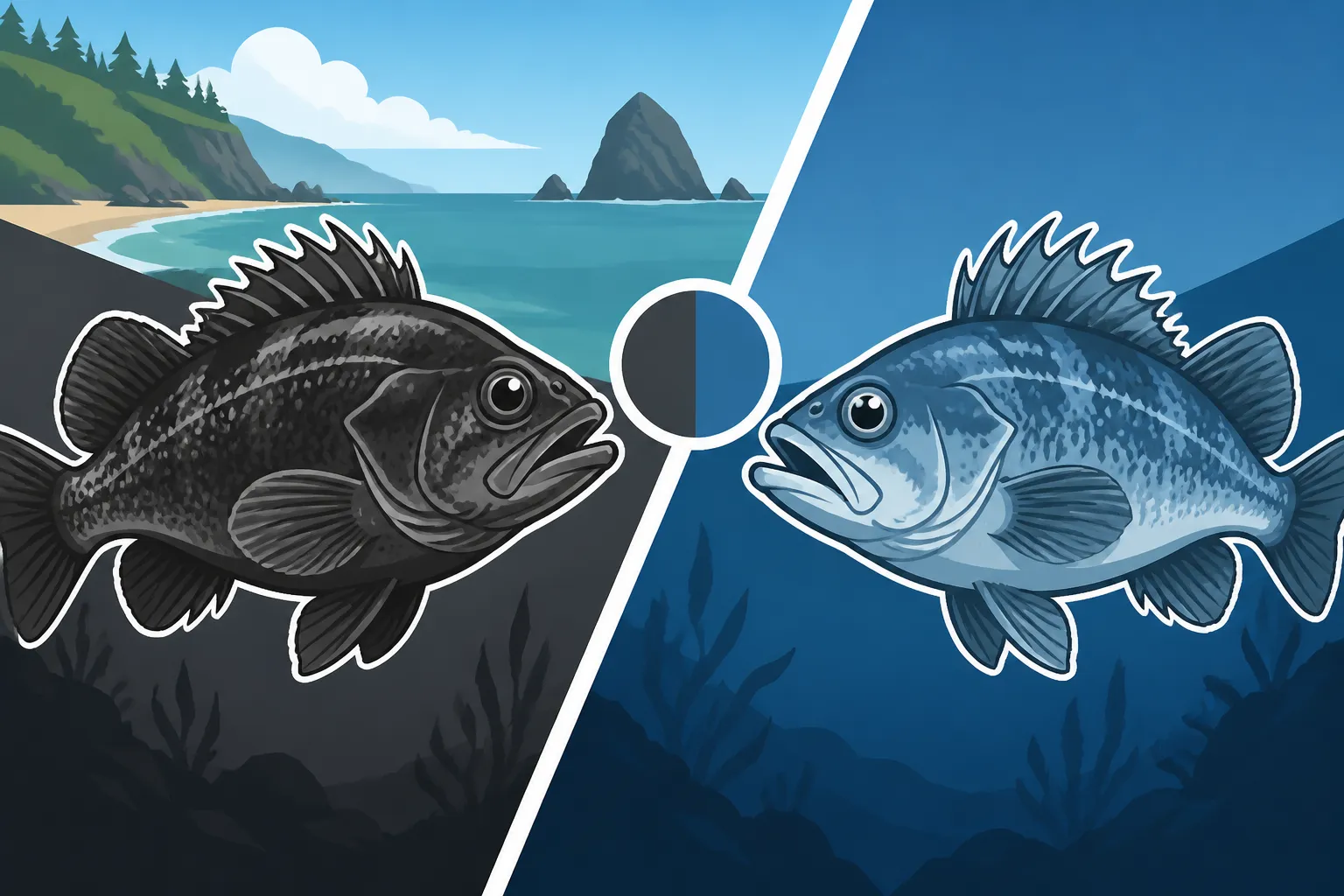
When you pull a black rockfish out of the water, the first thing you'll likely notice is its overall dark, uniform coloration. They typically sport a dusky gray to black body, often with a slightly lighter belly. The key here is uniformity. While they might have some faint mottling or speckling, it's generally subtle and doesn't create distinct patterns. Their fins, including the dorsal, caudal (tail), and pectoral fins, are usually dark, mirroring the body color.
Another important feature is their mouth. Black rockfish have a relatively large mouth that extends back to or slightly beyond the rear margin of the eye. This larger gape is reflective of their diet, which we'll get into shortly. Looking closely, you'll also notice a relatively straight lateral line, which is the sensory line running along their side. They tend to have a slightly more robust, deep-bodied shape compared to blue rockfish, though this can be subjective depending on the individual fish. In terms of size, black rockfish are generally larger than blue rockfish, commonly reaching lengths of 18-24 inches and weighing several pounds, with larger individuals possible.
Habitat, Diet, and Behavior
Black rockfish are structure-oriented fish, meaning you'll almost always find them hanging around rocky reefs, kelp beds, jetties, and other underwater structures. They thrive in depths ranging from the shallow intertidal zone down to a few hundred feet, though anglers most frequently encounter them in shallower to moderate depths, often less than 150 feet. They are known to form schools, sometimes quite large, especially around prominent underwater features. When you find one, you often find many!
Their diet consists primarily of small fish, squid, and larger crustaceans. They are opportunistic predators, meaning they'll readily strike at anything that looks like a meal. This is why jigs, plastics, and bait presentations mimicking small fish are so effective. Imagine a school of black rockfish patrolling a rocky pinnacle, darting out from crevices to ambush unsuspecting baitfish – that's a pretty typical scene. They are generally quite aggressive and will readily hit a lure or bait, making them a blast to catch. For anglers looking to dive deeper into the world of these amazing fish, I highly recommend checking out a comprehensive resource like the Oregon Saltwater Fish Species Guide.
Fishing for Black Rockfish in Oregon
Targeting black rockfish is a fantastic entry point into ocean bottom fishing for many anglers in Oregon. They're found all along our coast, from the rocky shores near Astoria and Tillamook Bay down to the southern stretches near Brookings. Common techniques include jigging with metal jigs, dropping soft plastic swimbaits on lead heads, or fishing with bait like cut herring, squid, or even shrimp. Many anglers use a standard two-hook dropper rig with a lead weight on the bottom. When they're actively feeding, you'll often feel a solid thump as they hit your offering.
Boat anglers will drift over rocky structure or anchor up in a productive spot, dropping their lines down. Shore anglers can find them around jetties, rocky points, and even some piers, though boat access often yields larger numbers. These fish are fighters, especially the bigger ones, so a medium-heavy rod with decent backbone and a reel spooled with braided line is a good choice. You can find a wide array of suitable jigs and soft plastics on Amazon that work wonders for black rockfish. Just make sure to check local regulations for tackle restrictions or specific seasons before you head out. Understanding the Oregon Ocean Endorsement is also crucial for any saltwater adventure.
Getting to Know the Blue Rockfish (Sebastes mystinus)
Now let's turn our attention to the blue rockfish, Sebastes mystinus. While they share the "rockfish" moniker and some habitat with their black counterparts, the blue rockfish has distinct characteristics that, once you know what to look for, make them fairly easy to identify. They're often smaller, but no less interesting to catch, and contribute significantly to the coastal ecosystem.
Distinguishing Features and Coloration
The most immediate differentiator for a blue rockfish is its coloration, which, as the name suggests, is a more vibrant blue-gray. Unlike the uniform dark of the black rockfish, blue rockfish often exhibit a beautiful mottled or streaked pattern on their back and sides, consisting of lighter blue or white patches over a darker blue-gray base. This pattern can vary, but it's typically more pronounced than any faint markings on a black rockfish. Their fins, particularly the dorsal and caudal, tend to be more translucent or lighter in color, often with a bluish tint, and may have subtle light spotting.
Another critical visual cue is their mouth. Blue rockfish have a noticeably smaller mouth compared to black rockfish. It typically does not extend past the middle of the eye. This smaller mouth is a direct reflection of their primary diet. They also tend to have a slightly more slender body profile, often appearing a bit more streamlined. Size-wise, blue rockfish are generally smaller than black rockfish, with adults typically ranging from 10 to 18 inches and rarely exceeding a couple of pounds. If you're holding a fish that's a consistent 20+ inches and uniformly dark, it's almost certainly a black rockfish.
Preferred Environment and Feeding Habits
Blue rockfish are strongly associated with rocky reefs, kelp forests, and other structural habitats, much like black rockfish. However, they tend to prefer shallower depths, often found cruising just below the surface in kelp paddies or around prominent pinnacles that rise close to the surface. You'll frequently find them in depths of less than 100 feet, often much shallower. They are highly social fish and are almost always found in large, dense schools. It's not uncommon to see a huge "cloud" of blue rockfish on your fish finder, suspended mid-water column above structure.
Their diet is quite different from black rockfish, which is why their smaller mouth is such a good indicator. Blue rockfish are primarily planktivores, meaning they feed on zooplankton, tiny crustaceans, and small larval fish that drift in the water column. While they might occasionally take a small baitfish, their main food source is much smaller organisms. This difference in diet is a crucial ecological distinction between the two species and influences how you might effectively target them.
Targeting Blue Rockfish in Oregon Waters
Because of their diet and schooling behavior, targeting blue rockfish requires a slightly different approach than black rockfish. While they will still hit small jigs and plastics, you'll often find more success with smaller offerings that mimic their planktonic food source. Small lead jigs, tiny swimbaits, or even sabiki rigs with multiple small flies can be incredibly effective when you find a dense school. They are often less aggressive than black rockfish, sometimes requiring a more subtle presentation, but when they're on the bite, it can be non-stop action!
Blue rockfish are particularly abundant in rocky areas and kelp forests along the central and southern Oregon coast. They are often caught by anglers bottom fishing for other rockfish species, but if you specifically target them with lighter tackle and smaller lures, you can have a blast. They're excellent eating, though their smaller size means you'll need a few more for a meal. For a deeper dive into general rockfish tactics, explore articles like How to Fish for Lingcod and Rockfish in Oregon. Keeping a good field guide, perhaps one you picked up from Amazon, can be invaluable when you're out on the water trying to distinguish your catch.
Key Differences and Why Accurate Identification Matters
Understanding the subtle and not-so-subtle differences between black rockfish and blue rockfish isn't just about showing off your fish identification skills to your buddies. It plays a role in conservation, helps you understand the ecosystem, and ensures you're following local fishing regulations, which can sometimes have nuances based on species.
Side-by-Side Comparison
Let's lay out the main distinguishing features in a clear comparison to make it easier to remember when you're on the water:
| Feature | Black Rockfish (Sebastes melanops) | Blue Rockfish (Sebastes mystinus) |
|---|---|---|
| Overall Color | Uniformly dark gray to black, often with a slight olive tint. | Blue-gray with distinct lighter blue or white mottled/streaked patterns on back and sides. |
| Mouth Size | Relatively large, extends to or slightly past the rear of the eye. | Smaller, typically does not extend past the middle of the eye. |
| Fins | Dark, matching body color. | Often lighter, more translucent, with bluish tints or subtle spotting. |
| Body Shape | More robust, deep-bodied. | More slender, streamlined. |
| Size (Adult) | Generally larger, 18-24+ inches, several pounds. | Generally smaller, 10-18 inches, rarely over 2 pounds. |
| Primary Diet | Small fish, squid, larger crustaceans (opportunistic predator). | Zooplankton, small crustaceans, larval fish (planktivore). |
| Habitat Depth | Broad range, often moderate depths (50-200ft). | Typically shallower (0-100ft), often mid-water column over structure. |
When you've got a fish in hand, quickly look at the mouth size and the overall pattern. If it's a deep, dark, uniformly colored fish with a big mouth, it's likely a black. If it's a bit smaller, has distinct blue mottling or streaking, and a noticeably smaller mouth, you've probably got a blue.
Ecological Roles and Conservation Considerations
While both are "rockfish," their different diets mean they occupy slightly different niches in the marine food web. Black rockfish, as predators of smaller fish and squid, play a role higher up the food chain. Blue rockfish, by feeding on plankton, form a crucial link between the microscopic world and larger marine life. Understanding these roles highlights the incredible biodiversity found even within a single genus like Sebastes.
From a conservation perspective, accurate identification, even if regulations don't always differentiate between specific rockfish species, is important for broader data collection. Fisheries managers monitor catch rates and species composition to understand population health. By knowing exactly what you've caught, you contribute to more accurate reporting, which in turn informs better management decisions. It's a way for every angler to be a citizen scientist! You can learn more about general fishing guidelines in Oregon Fishing Regulations Explained.
Practical Tips for Anglers on the Water
It's one thing to read about fish identification in a guide; it's another to do it quickly and confidently when you're on a rocking boat with a fish flapping on the deck! But with a few practical tips, you can become an expert at telling these rockfish apart.
What to Look For When You Hook One
Once you've landed your fish, take a moment before you unhook it. The best time to identify it is when it's fresh out of the water.
- Check the Mouth First: This is often the quickest giveaway. Does the mouth extend well past the eye (black rockfish) or stop before the middle of the eye (blue rockfish)? This feature is pretty consistent.
- Observe the Color in Good Light: Hold the fish up in natural light. Is the body a uniform dark color, or do you see distinct lighter blue or white streaks and mottling? Sometimes, a wet fish's skin can temporarily obscure patterns, but often they're still visible.
- Note the Size: While not a definitive ID, if it's a truly large rockfish (say, over 20 inches), it's almost certainly a black rockfish. Blue rockfish simply don't grow that big.
- Have a Reference Handy: Keep a good waterproof fish identification card or a printed page from a field guide (you can often find excellent options on Amazon) on board. A quick visual comparison can clear up any doubt. Don't be afraid to take a quick photo if you're unsure, so you can confirm later if needed.
Remember, responsible angling means making sure you know what you've caught. If you're ever in doubt and retention limits apply to specific species, it's always best to err on the side of caution or release the fish if you're not planning to keep it. Checking out the Oregon Daily Bag Limits Explained can help keep you on the right side of the rules.
Gear and Resources for Better Identification
Becoming proficient at identifying fish species in the field takes practice, but there are tools and resources that can make it much easier:
- Waterproof Fish ID Cards: These are fantastic. They typically show common species with key identification features highlighted. You can clip them to your tackle box or keep them in a wet-proof pouch. Many great options are available, and yes, you guessed it, Amazon is a convenient place to find a variety of laminated ID cards specifically for Pacific Northwest marine species.
- Marine Field Guides: A good, comprehensive field guide for Pacific Coast fish is an invaluable resource. While you might not carry the whole book on your boat, familiarizing yourself with the common species beforehand is a huge advantage. These guides often provide detailed illustrations and descriptions.
- Good Lighting: Sometimes, in low light or on an overcast day, colors can be deceptive. A good headlamp or boat light can help you see the subtle patterns and hues more clearly.
- Camera Phone (with waterproof case): As mentioned, a quick, clear photo can be a lifesaver for later identification. Just make sure your phone is protected from the elements! You don't want to lose your device to a rogue wave just for a fish ID.
By using these tools and continually observing the fish you catch, you'll soon develop an intuitive sense for telling black rockfish and blue rockfish apart. This attention to detail not only makes you a more knowledgeable angler but also a more responsible steward of Oregon's incredible marine resources. For those considering taking a guided trip where identification is part of the learning experience, look into Oregon Fishing Guide Services.
In the end, whether you're bringing home a bounty of black rockfish or enjoying the challenge of catching schooling blues, understanding the nuances between these species adds another layer of appreciation to your Oregon fishing adventures. Happy fishing, and may your lines always be tight!
Disclaimer
This article is for general informational purposes only and does not constitute professional advice. Laws, prices and regulations vary by location and change over time. Consult a qualified professional for guidance on your specific situation.