Best bait for stocked rainbow trout in Oregon
Finding the right bait for stocked rainbow trout in Oregon can feel like trying to solve a puzzle, especially when you’re standing in the tackle shop aisle, faced with an overwhelming array of colorful, scented, and squiggly options. It's frustrating when you just want to get out on the water and start catching fish, rather than wondering if you’ve picked the "wrong" thing. This comprehensive guide is designed to demystify the world of trout bait, breaking down the most effective choices and presentation tips to ensure you’re well-equipped for a successful and enjoyable fishing trip.
Understanding Stocked Rainbow Trout Behavior
Before we even dive into specific baits, it's absolutely vital to understand what makes a stocked rainbow trout tick. These aren't your wild, stream-born relatives; they come from a different world, and their feeding habits reflect that upbringing. Grasping this distinction is key to choosing the right bait and presentation.
Why Stocked Trout are Different
When you're fishing for stocked trout in an Oregon lake or pond, you're dealing with fish that have spent a significant portion of their lives in a hatchery environment. This means they’re accustomed to a consistent diet of commercial fish pellets, which are often rich in protein and have a distinct smell. When these fish are first released into a new body of water, they experience a period of adjustment. Initially, they might be a bit disoriented and incredibly hungry, often striking at anything that looks remotely edible or familiar.
As days and weeks pass, these stocked trout begin to acclimate to their new surroundings. They'll start to recognize natural food sources like insects, worms, and small crustaceans. However, their hatchery conditioning often means they retain a strong preference for, or at least a curiosity about, the smells and textures reminiscent of their pellet diet. This dual nature – a genetic predisposition for natural forage combined with hatchery experience – is why a diverse bait strategy can be so effective. They might be eager to snap up a PowerBait one day, and incredibly selective for a tiny worm the next.
Furthermore, these fish are often released in numbers, and while they might be aggressive initially, they can also become "educated" over time. Heavily fished lakes, especially those that are regularly stocked, can see trout become warier of obvious presentations or repetitive baits. This means you sometimes need to think outside the box or offer something a little different from what everyone else is using.
Key Factors Influencing Their Bite
The willingness of a stocked rainbow trout to bite isn't just about the bait; it's also heavily influenced by environmental factors that dictate their comfort and activity levels. Ignoring these can lead to a frustrating day, even with the "best" bait.
First and foremost, water temperature and oxygen levels play a colossal role. Rainbow trout are cold-water fish, generally preferring temperatures between 50-65°F (10-18°C). When water temperatures climb higher, especially during Oregon's warmer summer months, trout become stressed, less active, and much less likely to feed aggressively. Their metabolism slows down, and they'll seek deeper, cooler water. Conversely, in cooler water, they're more energetic and actively forage. This is why you often hear experienced anglers talk about Does trout fishing slow down in hot weather? – it absolutely does, and understanding why helps you adjust your approach.
The time of day and light conditions are also critical. Just like many other fish, stocked trout often feed most actively during periods of low light. This means early mornings, late evenings, and overcast days are frequently the most productive. In bright, sunny conditions, especially in clear water, trout can become skittish and retreat to deeper water or shaded areas. This is particularly true for those that have been in the water for a while. Therefore, understanding the Best time of day to fish for trout in summer is vital; it’s rarely midday!
Finally, the amount of fishing pressure can significantly impact their behavior. In popular, easily accessible stocking locations like Henry Hagg Lake or Diamond Lake, trout might see hundreds of different baits and lures each day. This constant pressure can make them more selective and wary. If everyone around you is throwing the same chartreuse PowerBait, sometimes a change to a natural worm or a different colored artificial can be the trick that makes your offering stand out. Sometimes, simply changing up your presentation or even moving to a less crowded section of the lake can make all the difference.
The Classic and Tried-and-True Baits for Stocked Trout
When it comes to reliably catching stocked rainbow trout in Oregon, there are certain baits that have earned their place in nearly every angler's tackle box. These are the workhorses, the ones you can almost always count on for a bite, especially if the trout have been recently stocked.
PowerBait and Its Variations
If there's one bait synonymous with stocked rainbow trout, it has to be Berkley PowerBait. This stuff is a modern marvel designed specifically with hatchery trout in mind. What makes it so effective? It floats, it’s loaded with scent, and it comes in an astonishing array of colors, often mimicking the very pellets these fish grew up on. The floating property is crucial because it allows your bait to hover just off the bottom, putting it right at eye level for cruising trout, keeping it out of the muck where it might get overlooked.
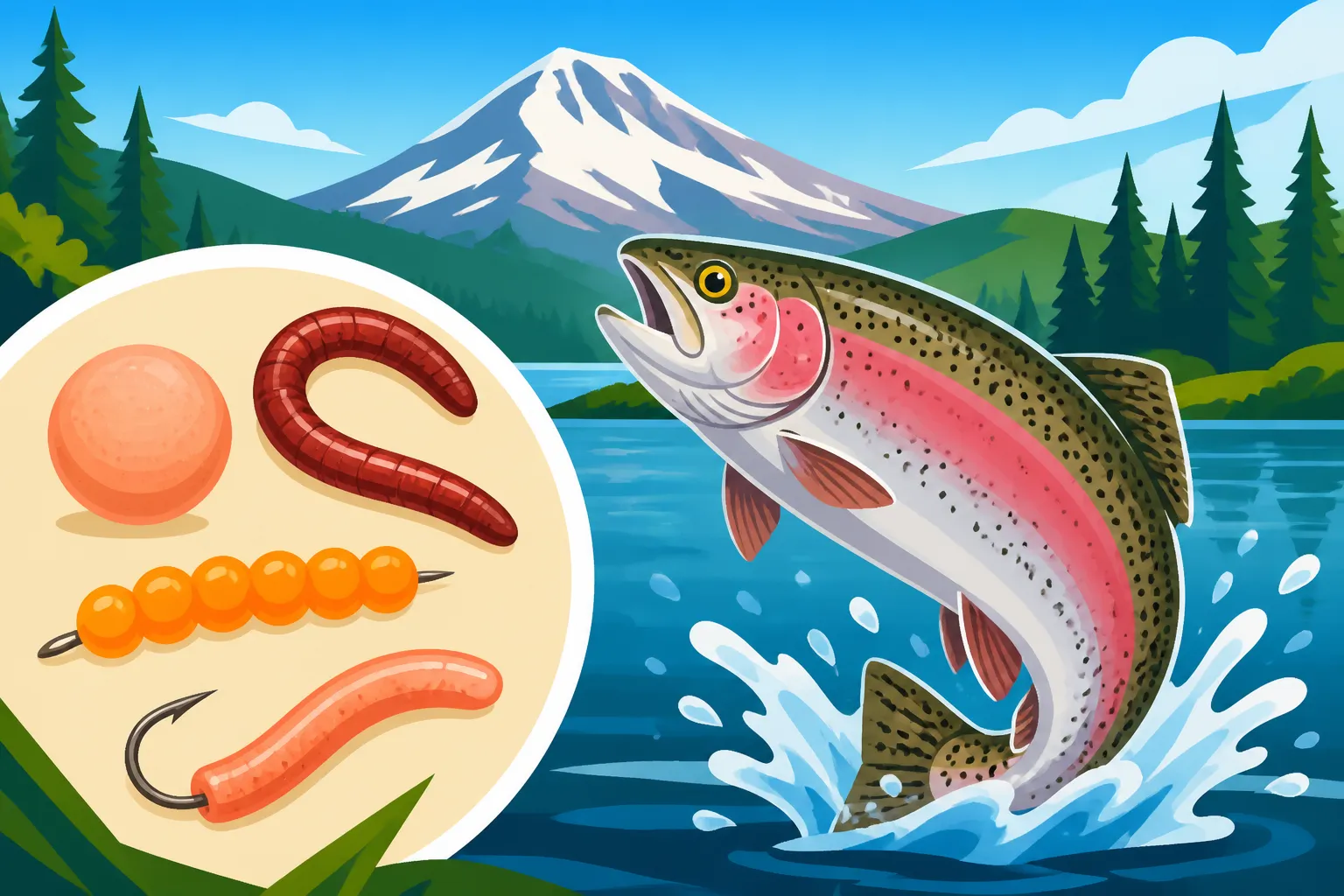
PowerBait comes in various forms, including the classic dough, smaller nuggets, and even Power Worms or Power Eggs. The dough is incredibly versatile, allowing you to mold it into different shapes and sizes around your hook. For many anglers, the classic "marshmallow" shape (or even a small teardrop) that completely covers a treble hook is the go-to. When it comes to color, don't be shy! Bright colors like chartreuse, orange, rainbow, and even white often perform exceptionally well. These vibrant hues offer high visibility, which can be a huge advantage in turbid water or on bright, sunny days when trout might be looking for something flashy. Many anglers carry a selection to test out what the trout are hitting on a given day.
The scent in PowerBait is another major draw. Many variations are infused with strong attractants like garlic, anise, or even fish formulas that are incredibly appealing to trout. This scent trail can draw fish in from a surprising distance, giving them a reason to investigate your offering. You can find an excellent variety of PowerBait, including scented options, at your local tackle shop or conveniently on Amazon. Remember, the goal is often to create a small, scented cloud in the water that tempts curious trout to bite. When rigging PowerBait, it’s most commonly used with a slip sinker that rests on the bottom, a swivel, and a leader of about 12-24 inches, allowing the floating bait to suspend above the sinker. This is a common setup covered extensively in guides on Oregon Trout Fishing Techniques.
Worms and Other Live Baits
Before PowerBait, and still a champion in its own right, the humble worm reigns supreme as a natural, irresistible offering for trout. There’s something timeless about a wriggling worm that trout just can’t seem to pass up. Garden worms, especially nightcrawlers or smaller red wigglers, are fantastic choices. They provide both natural movement and a powerful, organic scent trail that appeals to a trout's instincts.
Rigging worms properly can make a big difference. For nightcrawlers, you might thread a section onto a small, sharp hook (sizes 8-12 are usually ideal, check out What size hook for trout bait fishing for more details) or simply hook it once or twice through the body, allowing the ends to dangle and wriggle enticingly. Red wigglers, being smaller, can often be hooked individually or in a small cluster. The natural, undulating movement of a live worm is often the key trigger for a strike, especially when trout have become wary of stationary, artificial baits.
Beyond common garden worms, other live baits prove incredibly effective. Mealworms, wax worms, and even crickets are highly attractive to stocked trout, particularly those that have been in the water longer and have begun to feed more naturally. These smaller baits are often perfect for targeting trout that are being a bit pickier. You can typically purchase these at most bait shops, larger sporting goods stores like Bi-Mart or even through online retailers like Amazon, ensuring you have a fresh supply for your outing. These natural options are often recommended for those learning Oregon Fishing Techniques for Beginners due to their simplicity and effectiveness.
Salmon Eggs and Marshmallows
Another perennial favorite for stocked trout, natural cured salmon eggs tap into a trout's predatory and opportunistic instincts. Fish eggs are a natural part of a trout’s diet in many wild settings, and even hatchery-raised fish often find their scent and appearance irresistible. They come in various colors, from natural roe-like oranges and reds to brighter fluorescent hues, and different sizes.
To rig salmon eggs, you'll typically use one or two eggs on a very small, sharp hook, usually a size 10 to 14. You want the hook point barely protruding or completely hidden within the egg. They can be fished alone, often with a small split-shot weight a foot or so above the hook, allowing them to drift naturally. Some anglers prefer to combine them with other baits for added appeal or buoyancy.
This brings us to one of the most surprising, yet incredibly effective, baits: the humble marshmallow. Yes, the same kind you roast over a campfire! Mini marshmallows, in particular, are fantastic when paired with other baits. Their primary benefit is buoyancy; they float, lifting your salmon egg or a small piece of worm off the bottom. This presents your bait more naturally in the water column and keeps it out of the weeds or silt. Additionally, marshmallows are porous and readily absorb scents. Many anglers will spray them with a commercial trout attractant (anise, garlic, or shrimp scents work well) before casting. The combination of a floating marshmallow and a scented salmon egg or worm creates a highly visible, buoyant, and fragrant offering that stocked trout find hard to ignore. It’s a simple trick, but one that often leads to success when learning How to Catch Trout in Stocked Oregon Lakes.
Modern Baits and Artificials for a Different Edge
While live baits and scented doughs are fantastic, sometimes stocked trout need a different stimulus, especially if they've seen a lot of static bait. This is where artificial lures come into play, offering flash, vibration, and movement that can trigger strikes from more active or even wary fish.
Small Spinners and Spoons
Artificial lures like small spinners and spoons are incredibly effective for covering water and targeting actively feeding trout. Brands like Mepps, Rooster Tail, and Panther Martin are stalwarts in the spinner world, known for their rotating blades that create flash and vibration in the water. Small spoons from companies like Kastmaster or Little Cleo shimmer and wobble like injured baitfish, providing an erratic action that predatory trout find hard to resist.
When using spinners or spoons, the key is usually a steady retrieve. You want to reel just fast enough to get the blade spinning or the spoon wobbling consistently. Experiment with different retrieve speeds; sometimes a faster retrieve triggers a chase, while other times a slower, more deliberate pace is better. Color selection can also be important: bright, flashy colors (gold, silver, fluorescent orange or chartreuse) often work well in murky water or on sunny days, while more natural patterns (trout patterns, black, brown) can be effective in clear water or on overcast days.
These lures are excellent choices when trout are actively feeding or cruising the water column. They allow you to search for fish rather than waiting for them to find your stationary bait. Many anglers find that actively working a spinner or spoon is a more engaging and dynamic way to fish. For a broader look at artificials, consult an Oregon Bait and Lure Guide.
Soft Plastics and Jigs
Tiny soft plastic baits rigged on jig heads or fished under a bobber are a fantastic, subtle alternative for stocked trout. These include small grubs, tubes, worms (like Berkley Gulp! Alive! Minnows or Earthworm), and creature baits. Their soft texture and lifelike movements can be incredibly enticing, especially for trout that might be finicky or lethargic.
The versatility of soft plastics is a major advantage. They can be twitched and jigged to imitate fleeing prey, retrieved slowly along the bottom, or suspended under a bobber with a gentle motion. Many soft plastics are also scented, adding another layer of attraction that can draw trout in. Colors range from natural baitfish imitations to vibrant fluorescents, allowing you to match the hatch or stand out, depending on the conditions and the trout's mood.
Micro jigs, often just 1/32 to 1/16 ounce, are particularly effective. Tipped with a tiny piece of worm, a mealworm, or a wax worm, they provide a very small, natural presentation that can be deadly for trout holding in deeper water or those that are less aggressive. The key with jigs is often a slow, methodical retrieve with subtle lifts and drops, mimicking an insect or small creature scurrying along the bottom.
Tips for Presenting Your Bait and Maximizing Success
Even with the "best" bait, poor presentation can lead to a fishless day. Stocked trout, while sometimes eager, can also be surprisingly finicky. Paying attention to the small details of how you rig and present your bait can drastically improve your catch rate.
The Importance of Proper Rigging
One of the most overlooked aspects of trout fishing is using the right gear for the job. For stocked trout, this almost always means light tackle. Four to six-pound test monofilament or fluorocarbon line is usually ideal. Heavier line is much more visible to the fish, especially in clear water, and can easily deter a bite. Fluorocarbon line is especially popular for leaders due to its near-invisibility underwater and its abrasion resistance.
The correct hook size is absolutely paramount. Too large a hook, and a trout won't be able to get it into its mouth, or it will be too obvious, making them suspicious. Too small, and you might have trouble keeping the fish on once it bites. For most baits like PowerBait, worms, or salmon eggs, hooks in sizes 8 to 14 are generally recommended. For instance, a size 12 treble hook works well for molding PowerBait, while a size 10 single hook is great for worms. For more detailed guidance, refer to What size hook for trout bait fishing.
Using a leader can also be incredibly beneficial. A short leader (typically 2-4 feet) of lighter line, often fluorocarbon, tied to your main line with a small barrel swivel, serves several purposes. It provides a less visible connection to your bait, prevents line twist (especially important when using PowerBait that spins), and acts as a sacrificial line if you snag, saving your main line.
Reading the Water and Adjusting Your Depth
You can have the perfect bait, but if it's not where the fish are, you won't catch anything. Stocked trout often cruise along shorelines, especially near drop-offs, inlets where fresh water enters, or any submerged structure like logs or weed lines. Look for signs of activity, like rises on the surface, or simply observe where other anglers are having success. Often, if a lake has just been stocked, the fish will remain relatively shallow and close to the release points. You can check the Where to find the Oregon trout stocking schedule to see recent stocking locations.
Depth is perhaps the most crucial variable in trout fishing. Trout might be suspended at various depths depending on water temperature, oxygen levels, and where their food sources are concentrated. In cooler months or early mornings, they might be near the surface. In summer, they often retreat to deeper, cooler water. If you're using floating baits, a bobber is your best friend for controlling depth. Adjust your leader length with a bottom rig until you start getting bites. Don't be afraid to experiment – try fishing at different depths until you find where the fish are holding. What works one day might not work the next, especially with varying weather conditions or if Oregon Trout Season Opening Day brings a lot of pressure.
Scent and Chumming Considerations
Enhancing your bait with additional scents can often provide an edge, particularly in heavily fished waters or when trout are being finicky. Commercial scents from brands like Pro-Cure (anise, garlic, shrimp, krill) can be applied directly to PowerBait, worms, soft plastics, or even artificial lures. These scents leave a potent trail in the water, mimicking natural food sources or simply a strong attractant that draws curious trout from a distance. Many anglers swear by a dab of garlic scent on their PowerBait, claiming it makes all the difference. You can find a wide range of these scent enhancers at most tackle shops or readily available on Amazon.
While the concept of "chumming" (throwing bait into the water to attract fish) is generally restricted or outright illegal in many public waters in Oregon, the use of highly scented baits performs a similar function on a smaller, legal scale. The goal is to create an olfactory beacon that guides trout to your hook.
Always, always be aware of local regulations concerning bait and chumming. These rules can vary significantly by water body in Oregon, and ignoring them can lead to hefty fines. Before heading out, it's always wise to consult the most current Oregon Fishing Regulations Explained for the specific area you plan to fish. Staying informed ensures your fishing trip remains both productive and legal.
Comparing Popular Stocked Trout Baits
To help you decide which bait might be best for your next Oregon trout adventure, here’s a quick comparison of some of the most popular options we've discussed.
| Bait Type | Pros | Cons | Best Conditions |
|---|---|---|---|
| PowerBait | Floats, strong hatchery-like scent, vibrant colors | Can be messy, requires specific rigging for optimal float | Stocked ponds/lakes, still water, all seasons |
| Nightcrawlers | Natural appeal, irresistible movement, widely available | Can be messy to handle, less durable on hook, small fish | All water types, especially after stocking, river/lake |
| Salmon Eggs | Natural food source, good scent, easy to use | Small size can be stolen by small fish, limited action | Clear water, light tackle, calmer days |
| Mini Marshmallows | Floats well, adds buoyancy/visibility to other baits | No inherent scent, very soft, can come off easily | Rigged as a flotation device with other baits, still water |
| Small Spinners | Covers water efficiently, active retrieve, flash & vibration | Can snag easily in heavy cover, requires constant casting | Actively feeding trout, moving water, searching fish |
| Micro Jigs | Subtle presentation, effective for lethargic or finicky fish | Requires finesse to fish effectively, smaller strike zone | Finicky trout, deep water, slow retrieve, vertical jigging |
Disclaimer
Please remember that fishing regulations, including bait restrictions and stocking schedules, can change. Always consult the latest Oregon Department of Fish and Wildlife (ODFW) regulations before heading out on your fishing trip. The information provided in this guide is for general informational purposes only and should not be considered legal advice or a substitute for official ODFW publications.