Best dry fly patterns for Oregon trout
Many an angler has stood beside a pristine Oregon river, watching trout rise to an invisible hatch, only to have their perfectly cast dry fly ignored. It's a frustrating but common experience, proving that not just any dry fly will do. This comprehensive guide is here to demystify the art of dry fly fishing for Oregon trout, breaking down the best patterns for various situations and helping you connect with those elusive, surface-feeding beauties.
Understanding Oregon Trout and Their Dining Habits
When you're chasing trout in Oregon, you're entering a world teeming with diverse waters and equally diverse fish. From the wild coastal cutthroat to the robust rainbows of the high Cascades, each trout species has its preferences, but one thing unites them: their opportunistic nature when it comes to surface food. The challenge, and the immense reward, of dry fly fishing lies in fooling them with an artificial imitation. It's not just about what's on the water, but what they expect to be on the water.
The Finicky Nature of Oregon Trout
Oregon's trout can be notoriously picky, especially in heavily fished waters or during prolific hatches. They see hundreds, if not thousands, of natural insects floating by, making them experts at spotting an impostor. This isn't just about matching the size and color, but also the silhouette and how the fly sits on the water. A subtle drag or an unnatural presentation can send them scurrying, refusing even the most perfect imitation. It's a game of deception where every detail matters, from the length of your leader to the way your fly lands softly on the surface. Understanding the specific trout species you're targeting, whether it's the eager stocked rainbows in a local lake or the wary wild redbands in a clear stream, will inform your fly choice and presentation strategy. If you're new to these diverse fish, our detailed Oregon Trout Species Guide offers a great overview.
Even seemingly identical fish in different stretches of the same river can have varying levels of pickiness. Trout in heavily fished, clear-water streams tend to be far more selective than those in remote, brushy tributaries where fewer anglers venture. Their wariness is a learned behavior, a testament to the angling pressure they face. This means your approach needs to be as adaptable as the trout themselves. Sometimes, simply resizing your fly by one step, or opting for a slightly different shade, can be the difference between a frustrating refusal and a thrilling hook-up.
Matching the Hatch: Why it Matters
The phrase "matching the hatch" is legendary in fly fishing for a reason – it's often the single most critical factor in successful dry fly angling. Trout, particularly those in rivers and streams, become incredibly focused on a specific insect when it's hatching in large numbers. They develop what anglers call a "feeding lane" and a "feeding preference" for that particular bug. If you're casting a large stonefly imitation during a tiny mayfly hatch, you're essentially offering a steak to someone craving a delicate appetizer. Your fly needs to mimic the size, shape, and color of the dominant insects present on or near the water. This means carrying a diverse selection of patterns and being willing to switch frequently based on what you observe. It's an art that combines entomology with angling, requiring patience and keen observation skills. Our guide on Oregon Fishing Seasons Explained can help you anticipate general hatch timings.
While "matching the hatch" is the ideal, sometimes you won't see a clear, defined hatch. In these scenarios, trout might still be looking for surface food, but they aren't singularly focused on one insect. This is where attractor patterns or general imitations come into play, offering a "buggy" enough profile to entice a strike. However, when a hatch is on, ignoring it is a recipe for frustration. Imagine a buffet where everyone is lining up for the same delicious dish, and you're offering something completely different. It's just not going to get the same attention. So, always observe first, and try to deduce what's on the trout's menu.
Essential Dry Fly Categories for Oregon Waters
To effectively match the hatch or at least present something appealing, you need a basic understanding of the main insect groups that trout feed on. Oregon's waters support a rich aquatic insect population, and knowing the core categories will set you up for success. Thinking in categories rather than just individual patterns helps you adapt quickly on the water.
Mayfly Imitations
Mayflies are arguably the most iconic insect in fly fishing, and for good reason. Their delicate, upright wings and predictable hatches provide some of the most exciting dry fly opportunities. Oregon boasts countless species of mayflies, from tiny Baetis (Blue-Winged Olives) that hatch in cool weather to larger Green Drakes and Pale Morning Duns that emerge in warmer months. When trout are keying in on mayflies, they're often looking for that specific silhouette and upright wing profile.
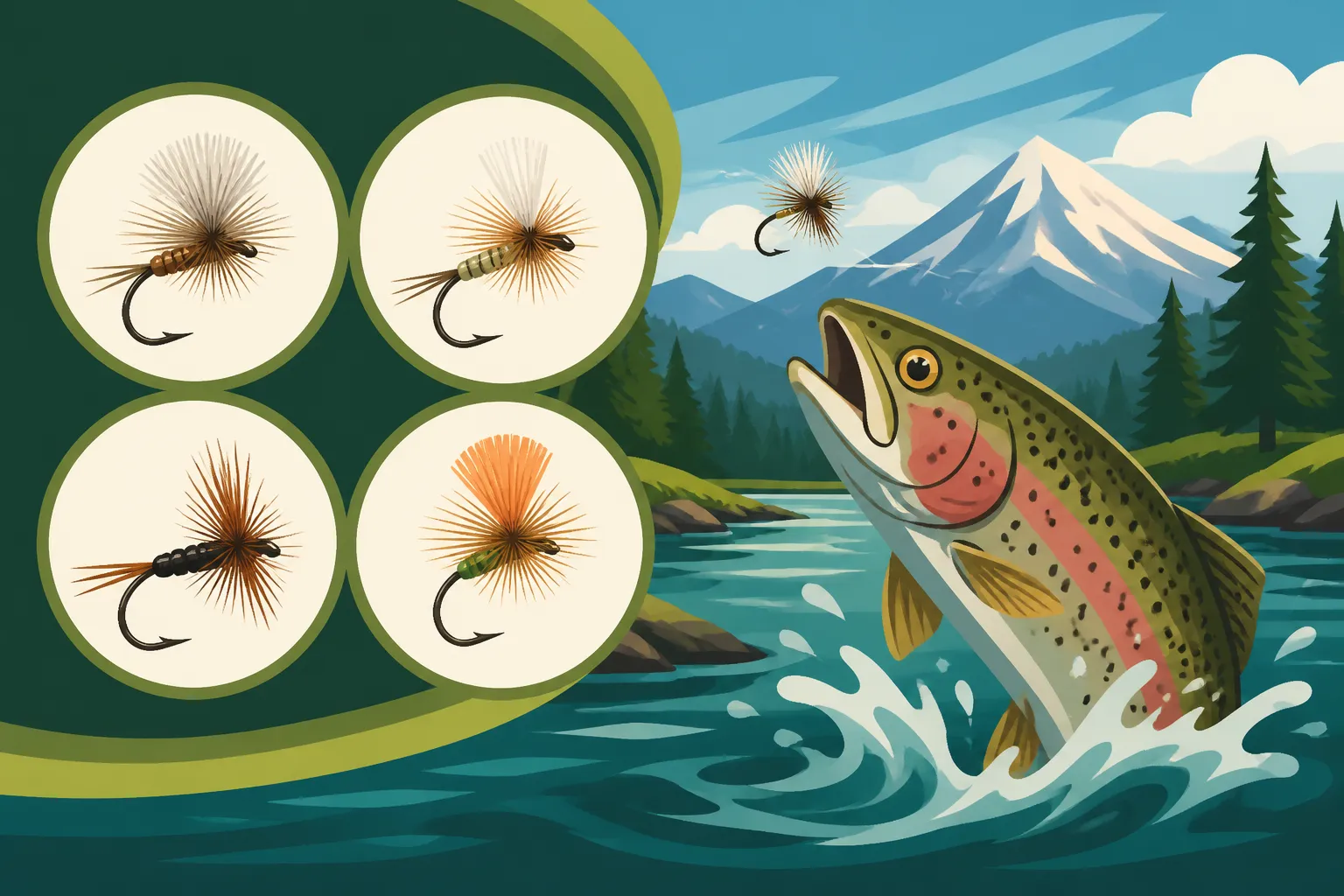
Common patterns like the Parachute Adams, Royal Wulff, and various BWO (Blue-Winged Olive) and PMD (Pale Morning Dun) imitations are staples for good reason. The Parachute Adams, for instance, is a fantastic all-rounder, mimicking many different mayfly species with its dun-colored body and white parachute post that makes it highly visible to the angler. For those truly specific hatches, carrying more precise imitations like a Green Drake or Callibaetis pattern, especially for stillwaters, is crucial. You can find a vast array of these patterns readily available online, perhaps even browsing for specific size and color variations on Amazon before your next outing.
Mayfly hatches can range from a few scattered bugs to an absolute blizzard of insects, and trout reactions will vary accordingly. During a light hatch, a single well-placed imitation might be all it takes. But when the surface is blanketed, trout can become incredibly selective, demanding an exact match in size and color. This is when having a variety of each pattern in your box becomes invaluable. Consider the full life cycle too: trout often feed on the "duns" (the newly hatched insect with upright wings) or the "spinners" (the adults returning to the water to lay eggs, often lying flat). Patterns like the Parachute Adams effectively imitate both.
Caddisfly Imitations
Caddisflies are another incredibly important food source for Oregon trout, often providing more frenetic and splashy rises than the delicate sips seen during a mayfly hatch. Unlike mayflies, caddisflies typically emerge by scooting quickly to the surface or even crawling out onto bankside vegetation. Once adults, they often skitter and dart across the water, making them irresistible to hungry trout. Their flight pattern and the way they lay their wings back along their bodies are key identifying features.
Patterns like the Elk Hair Caddis, Goddard Caddis, and X-Caddis are absolute must-haves. The Elk Hair Caddis is probably the most famous, with its buoyant elk hair wing making it highly visible and floatable, perfect for dead-drifting or imparting a slight twitch. During massive caddis hatches, especially on rivers like the Deschutes or McKenzie, having a good selection of these in different sizes and colors can make your day. Don't forget their "skittering" presentation can be deadly – a slight twitch of the rod tip can bring your fly to life, imitating an egg-laying adult. For deeper dives into presentation, check out our How to Fly Fish in Oregon guide.
The frantic nature of caddisfly hatches can make trout incredibly aggressive. Unlike the subtle sips for mayflies, a trout hitting a caddisfly is often a more violent, splashy take. This can be exhilarating for the angler, but also requires quick reflexes to set the hook. Pay close attention to the size of the caddis on the water; they can range from tiny micros to larger, more substantial insects. Sometimes, trout will key in on the "cripples" or emergers, those caddis that struggle to break free of their nymphal shuck, making patterns like the X-Caddis particularly effective.
Stonefly Imitations
Stoneflies are the big boys of the aquatic insect world, and when they hatch, it's an event. Often found in cleaner, well-oxygenated rivers, these insects can range from small Golden Stones to massive Salmonflies. Their emergence is less delicate than mayflies or caddis, often involving clumsy fluttering and crawling. Trout will aggressively key in on these larger meals, especially during specific hatch windows.
For stoneflies, patterns like the Salmonfly (especially the large orange and black variations), Golden Stone, and Stimulator are essential. The Stimulator is a versatile attractor pattern that can imitate a large stonefly, caddis, or even a grasshopper. These flies are often tied to be buoyant and durable, able to withstand multiple aggressive takes. Fishing stonefly imitations often means targeting bankside structure where the adults might crawl out or fall back into the water. Having a few larger patterns in your box is key, particularly if you're venturing to rivers known for their stonefly hatches. These larger patterns are also great for prospecting when no specific hatch is apparent.
The presence of a significant stonefly hatch can often bring out some of the largest trout in a river, as they recognize the opportunity for a substantial meal. While the hatch itself might only last a few weeks in a given area, the excitement it generates is palpable. When presenting stonefly patterns, don't be afraid to let them hit the water with a bit of a "splat" near the bank – this can often mimic a clumsy natural insect falling in and trigger an aggressive strike. Knowing What rivers in Oregon are fly-fishing only can give you clues as to where these hatches might be particularly prolific and where you'll want these larger patterns.
Terrestrial and Attractor Patterns
Beyond the aquatic insects, trout are also keen opportunists, feasting on terrestrial insects that fall into the water from streamside vegetation. Grasshoppers, ants, beetles, and even moths can become significant food sources, especially during the warmer months when hatches might be sparse or during windy conditions. These patterns often don't need to "match a hatch" as much as they need to look like a juicy, helpless meal.
Hopper patterns (like the Dave's Hopper or Chernobyl Ant), ant patterns (e.g., Cinnamon Ant), and beetle imitations are incredibly effective. The Chernobyl Ant, in particular, is a fantastic attractor that can be fished solo or as the lead fly in a dry-dropper rig. These flies are often more buoyant and provide a larger profile, which can tempt larger trout looking for an easy meal. Furthermore, attractor patterns like the Royal Wulff (which can also double as a mayfly imitation), Humpy, or even a larger Stimulator, don't necessarily mimic a specific insect but rather suggest a substantial food item. They are great "searcher" patterns when you're not seeing a specific hatch, or when you simply want to make some noise and get a trout's attention. Sometimes, trout just can't resist a brightly colored, high-floating bug.
Terrestrial fishing often shines on windy days when natural insects are blown into the water, or on hot, sunny days when aquatic hatches can be minimal. The key to success with terrestrials is often to fish them near the banks, under overhanging vegetation, or along grassy edges where natural insects would typically fall in. These patterns are generally larger and more robust, making them easier to see and cast, which is a bonus for anglers. Always have a few terrestrial patterns ready, especially if you're fishing during the heat of summer. For a contrast in presentation and fly choice, understanding How to fly fish nymphs versus dry flies can highlight when terrestrials are your best bet on the surface.
Top Dry Fly Patterns for Different Oregon Seasons
Oregon's fishing seasons bring distinct changes in insect activity, meaning your dry fly selection will need to evolve throughout the year. What works in a spring shower might be completely ignored in the dog days of summer. Understanding these seasonal shifts is crucial for consistently fooling trout.
Springtime Hatches and Flies
Spring in Oregon is a time of awakening, and for trout anglers, it means the emergence of important insects as water temperatures begin to rise. Often, you'll see early season Baetis (Blue-Winged Olives) hatching, especially on overcast days, offering delicate dry fly opportunities. These are small, dark mayflies that can drive trout into a frenzy. Later in spring, you might encounter larger March Browns or even early caddis hatches.
For early spring, think small BWO patterns like a Parachute BWO or a tiny Dark Hendrickson. As the weather warms and rivers clear, patterns like the Adams, Purple Haze, or an Elk Hair Caddis in a smaller size (like #16-18) become reliable choices. Don't forget to keep an eye out for larger stonefly nymphs starting to migrate, even if you're not seeing adults yet – a large attractor dry fly might still get attention. Remember, spring weather can be unpredictable, so be ready for anything from sunshine to sudden downpours, which can often trigger hatches. This is also when the Oregon Trout Season Opening Day typically occurs, making these early patterns vital.
The variability of spring weather means you need to be prepared for diverse conditions. One day might be cold and rainy, bringing on a fantastic Baetis hatch, while the next might be sunny and warm, prompting caddis activity. Carrying a wide array of smaller, more delicate patterns is key during this transitional period. Also, pay attention to water clarity; snowmelt and spring rains can sometimes make rivers cloudy, in which case larger, more visible patterns might be more effective, even if they're not an exact hatch match.
Summer's Abundance: Caddis and Terrestrials
Summer is prime time for dry fly fishing in many parts of Oregon, particularly in the warmer, drier months when rivers are lower and clearer. Caddis hatches can be prolific and intense, especially in the evenings, leading to explosive rises. Beyond the aquatic insects, summer is when terrestrials really come into their own. Grasshoppers, ants, and beetles are constantly falling into the water, providing consistent, high-protein meals for trout.
During summer, your fly box should be heavy with Elk Hair Caddis in various sizes (from #12-18), as well as specific caddis patterns like a LaFontaine's Sparkle Pupa (emerger) or a Goddard Caddis. For terrestrials, load up on hopper patterns like a Dave's Hopper, a Fat Albert, or a Chernobyl Ant. Black ants in smaller sizes can be deadly when trout are sipping inconspicuously along the banks. And don't shy away from attractor patterns like the Stimulator, especially on larger rivers or when prospecting. Having a good variety of sizes for your top patterns is key – trout can be extremely particular about size, even if the color and shape are generally right. Many anglers find great deals on seasonal fly assortments through online retailers like Amazon, helping them stock up for specific conditions. For more seasonal insights, check out Best Time of Year to Fish in Oregon.
The longer daylight hours and warmer water temperatures of summer mean that trout are often more active and willing to look up for a meal. This is when you can really have fun with bigger, noisier patterns, especially during the middle of the day when hatches might be slack. Focus on the shady banks and pockets, as well as the transition zones where slower and faster currents meet. Evening caddis hatches can be spectacular, sometimes continuing well after sunset, offering a thrilling end to a summer day on the water.
Autumn's Last Hurrah
As summer fades into autumn, Oregon's trout fishing often gets a second wind. Cooler temperatures can bring on fantastic Baetis hatches once again, reminiscent of early spring, but often with more substantial insects. You might also find late-season caddis activity, and larger October Caddis can be a significant draw. Terrestrials remain relevant into early fall, especially on warmer days.
Focus on patterns like the Parachute BWO, various small caddis patterns, and perhaps some larger Trico spinners (if you're lucky enough to hit a Trico fall). The Adams continues to be a reliable choice. This time of year, with fewer anglers on the water, can offer some of the most rewarding dry fly fishing, especially for those patient enough to observe the subtle rises. As the water cools further, you might also find that trout become a bit less selective, making attractor patterns a good bet if no specific hatch is occurring. For more on late-season tactics, consider reading up on Oregon Winter Fishing Options, as some techniques transition into the colder months.
Autumn fishing can be some of the most beautiful, with changing foliage and crisp air. The trout are often eager to feed heavily, packing on calories before winter sets in. While aquatic hatches might be less consistent than in spring or summer, when they do occur, they can be intense. Keep a sharp eye out for fall-specific insects like the October Caddis, which is a surprisingly large and important food source for trout in many Oregon rivers. Don't underestimate the power of a well-presented terrestrial, even in early autumn, particularly on sun-drenched afternoons.
Tips for Maximizing Your Dry Fly Success in Oregon
Having the right flies is only half the battle; knowing how to present them effectively and understanding the environment are equally crucial for success. Dry fly fishing is an art form that blends observation, technique, and a little bit of patience.
Reading the Water and Presentation
Proper presentation is paramount in dry fly fishing. Even the most perfect fly won't fool a trout if it's dragging unnaturally on the surface. Understanding how to read the water – identifying currents, seams, eddies, and riffles where trout hold and feed – is a fundamental skill. Trout typically hold in slower water adjacent to faster currents, waiting for food to drift by. Your goal is to cast upstream of their suspected lie, allowing your fly to drift naturally over them with no drag, just like a real insect. This "dead drift" is often the most effective presentation. Our guide on How to read water for trout fishing goes into much greater detail on this critical skill.
Mending your line (making small adjustments to keep your line upstream of your fly) is crucial for achieving a drag-free drift, especially on complex currents. A soft, accurate cast that places the fly gently on the water, rather than splatting it down, will also significantly increase your chances. Long, fine leaders and tippets are often necessary for stealth, but ensure they are strong enough to handle the fish you expect to catch. When you see a fish rise, try to determine its rhythm and direction, then present your fly a few feet upstream of its last rise, giving it time to spot your offering. The goal is to make your fly appear as natural and unthreatening as possible.
Choosing the Right Gear
While the specific rod and reel might seem secondary to the fly itself, having appropriate gear enhances your dry fly experience. A lighter, softer action fly rod (think a 3-weight or 4-weight in 7.5 to 9 feet) is ideal for presenting delicate dry flies and protecting light tippets. The softer action allows for more precise, gentle casts, crucial for fooling wary trout. Paired with a floating fly line that matches your rod weight, you'll have the sensitivity needed to detect subtle takes and enjoy the fight of even smaller trout.
For leaders, a longer tapered leader (9 to 12 feet) with a thin tippet (5X to 7X, depending on fly size and water clarity) is generally best. Fluorocarbon tippet can be useful for nymphing, but for dry flies, monofilament often floats better and is less visible on the surface. Consider a good quality pair of polarized sunglasses – they are invaluable for spotting fish and reading subsurface structure, and you can find many options from reputable brands on Amazon or at your local fly shop. Don't forget essential accessories like a pair of nippers, forceps, and a floatant to keep your dry flies riding high. A good vest or chest pack to keep your fly boxes organized and accessible will also save you time and frustration on the water.
Observation is Key
Perhaps the most important "tool" in your dry fly arsenal is your power of observation. Before you even make a cast, take time to watch the water. Are there fish rising? If so, what do the rises look like – delicate sips, splashy takes, or head-and-tail rises? What kinds of insects are on the water? Are they drifting, skittering, or fluttering? Turn over a few rocks in the riffles to see what nymphs are present. This "streamside entomology" will provide invaluable clues to what the trout are feeding on. This ties directly into understanding the Best Time of Year to Fish in Oregon for specific hatches.
If you don't see any rises, try prospecting with a general attractor pattern like a Royal Wulff or a Stimulator, especially near structure like undercut banks, fallen logs, or current seams. Pay attention to how your fly drifts, and if you get refusals, don't be afraid to change flies frequently. Start by changing size, then color, then pattern. Sometimes, the trout are just looking for something slightly different. Patience, persistence, and keen observation are the hallmarks of a successful dry fly angler in Oregon. And remember, it's not always about how many fish you catch, but the beauty of the experience itself. For alternative methods, learning How to fly fish nymphs versus dry flies can offer a different perspective when dry flies aren't working, or if trout are simply feeding subsurface.
Where to Find the Best Dry Fly Action
Oregon is blessed with an abundance of diverse fishing opportunities. For those focused on dry fly fishing, certain regions and waters tend to stand out. Rivers in Central Oregon like the Deschutes, Metolius, and Crooked River are renowned for their prolific insect hatches and the challenging, but rewarding, dry fly fishing they offer for wild trout. The Upper Deschutes, especially, is famous for its summer caddis and stonefly hatches. In Western Oregon, the McKenzie and Santiam rivers can provide excellent opportunities, particularly in their upper reaches.
Stillwater dry fly fishing, often overlooked, can also be fantastic on many of Oregon's lakes and reservoirs. Lakes like Davis Lake, various Cascade Lakes, and even smaller ponds can experience tremendous callibaetis or midge hatches, offering exciting surface action. Pay attention to specific regulations for each body of water; some, like sections of the Metolius River, are fly-fishing only and require barbless hooks. Always consult the most current Oregon Fishing Regulations. While we're talking about dry flies, sometimes trout get finicky, and it's worth knowing the Best bait for Oregon trout fishing for when things get tough. Exploring Best Places to Fish in Oregon will give you a broader perspective on potential dry fly destinations.
Essential Dry Fly Patterns for Oregon Trout
Here’s a quick overview of some essential dry fly patterns and what they generally imitate and when they are most effective in Oregon.
| Pattern | Primary Imitation | Best Seasons | Key Characteristics |
|---|---|---|---|
| Parachute Adams | Mayfly (general) | All seasons | White parachute post, grey body, general mayfly profile |
| Elk Hair Caddis | Caddisfly | Spring, Summer, Fall | Deer/elk hair wing, buoyant, excellent general caddis |
| BWO (Blue-Winged Olive) | Mayfly (Baetis) | Spring, Fall, Winter | Small, dark grey/olive body, upright wings, cool weather |
| PMD (Pale Morning Dun) | Mayfly | Late Spring, Summer | Pale yellow/cream body, upright wings, clear water |
| Stimulator | Stonefly, Caddis, Hopper | Summer, Fall, prospecting | Large, shaggy, buoyant, attractor, multiple colors |
| Royal Wulff | Mayfly, Attractor | All seasons, prospecting | Bright white wings, red/peacock body, highly visible |
| Dave's Hopper/Chernobyl Ant | Grasshopper, Terrestrial | Summer, Early Fall | Large, foamy, high-floating, realistic or attractor |
| Griffith's Gnat | Midges, Cluster | All seasons, especially stillwater | Tiny, black, bushy, imitates small midges or clusters |
Disclaimer
This article is for general informational purposes only and does not constitute professional advice. Laws, prices and regulations vary by location and change over time. Consult a qualified professional for guidance on your specific situation.