How to Fish for Fall Chinook on the Columbia
It’s a truly exhilarating experience to hook into a massive Fall Chinook salmon on the Columbia River, but let's be real – this isn't some tiny farm pond where you can just toss a worm and hope for the best. The sheer scale of the Columbia, the power of these incredible fish, and the constantly changing conditions can make it incredibly intimidating for even seasoned anglers. This comprehensive guide is designed to demystify the art and science of targeting Fall Chinook on the Columbia, giving you the detailed knowledge, practical techniques, and confidence to make your next trip a roaring success.
The Allure of Columbia River Fall Chinook
There’s a reason why thousands of anglers flock to the Columbia River every late summer and fall: the Fall Chinook run. These are the kings of salmon, often topping out at 30-50 pounds, with some absolute monsters pushing even further. They're built for power, packing incredible strength that will test your gear and your grit. But before you can even think about battling one, you need to understand what makes these fish tick.
Understanding Their Migration and Behavior
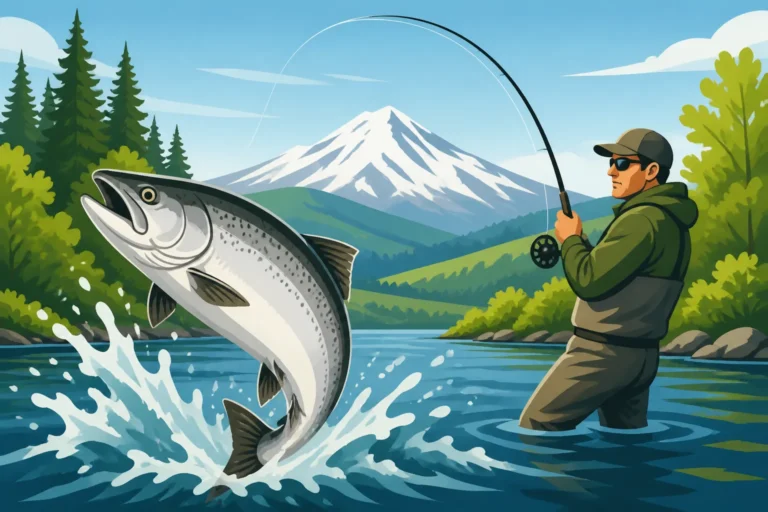
Fall Chinook, often called "Upriver Brights" due to their pristine condition when they enter the river and their ultimate destination far upstream, embark on an incredible journey from the Pacific Ocean into the Columbia. Their migration typically begins in earnest in mid-August and can continue well into October, with peak numbers often seen in late August and September. These fish are driven by an ancient biological imperative: to return to their natal rivers and spawn.
As they transition from saltwater to freshwater, their feeding habits change dramatically. While they were actively gorging on baitfish in the ocean, once they enter the Columbia, their focus shifts from feeding to migration and reproduction. This doesn't mean they won't strike a lure or bait, however. Far from it! They often strike out of aggression, territoriality, or simply as a conditioned response to familiar food items. Understanding this subtle shift in motivation is key to presenting your offerings effectively. They're often holding in deeper channels, along current breaks, or behind structure where they can conserve energy as they push upstream.
Identifying These Powerful Salmon
Distinguishing Fall Chinook from other salmon species, particularly coho (silver) salmon, is important for adhering to regulations and maximizing your fishing experience. Fall Chinook are generally much larger and bulkier than coho. They have a more torpedo-shaped body, and their backs are typically a darker olive-brown to black, fading to silver on their sides and belly. A key identifying feature is their mouth: the inside of a Chinook's mouth, including their gums, is black, and they have irregular, large spots on both lobes of their tail. In contrast, coho typically have white gums, and their spots are usually only on the upper lobe of their tail, if present at all.
Furthermore, you might encounter different types of Chinook. Some are "fin-clipped" hatchery fish, identifiable by a missing adipose fin (the small, fleshy fin between the dorsal fin and the tail). Wild Chinook, which have an intact adipose fin, are often protected and must be released unharmed in many areas. It's absolutely crucial to know your Oregon Fishing Regulations Explained and always check for current updates before heading out. Proper identification helps you stay legal and contribute to conservation efforts.
Prime Times and Locations for the Run
The Fall Chinook run on the Columbia River really kicks off in mid-August, with the legendary "Buoy 10" fishery near Astoria often being the first major hotspot. This area, where the vast Columbia meets the Pacific, sees incredible concentrations of staging salmon. As the season progresses into September, these fish push further upstream. Areas around Longview, Kalama, and Woodland become prime, then as October approaches, the fishery moves into the Portland area and even up into the lower Columbia Gorge.
- August to Early September: The mouth of the Columbia (Buoy 10) is legendary. Fish are fresh from the ocean, bright, and aggressive. This is often the most crowded, but also the most productive period for sheer numbers.
- Mid-September to Early October: As fish move upstream, areas like Cathlamet, Longview, Kalama, and the Willamette River confluence near Portland become hot. These fish are still strong but are beginning their longer journey.
- Late October: While the main push has moved through, some fish can still be found further upriver, and many anglers will have shifted focus to other species or techniques.
Understanding these broad movements allows you to tailor your trip to the most productive areas. Keep an eye on local fishing reports and the Oregon Department of Fish and Wildlife (ODFW) updates, as conditions and concentrations can shift daily. Knowing when Fall Chinook Season Timing on the Columbia is at its peak in specific areas is half the battle.
Gearing Up for the Big River Battle
You wouldn't bring a butter knife to a sword fight, and you certainly don't want to bring inadequate gear when targeting 20- to 50-pound salmon on the Columbia. These fish are powerful, and the river itself demands robust equipment. Investing in the right tools isn't just about catching more fish; it's about making the experience enjoyable and ensuring you can land these magnificent creatures without undue stress on yourself or the fish.
Rod, Reel, and Line for Chinook
For Fall Chinook on the Columbia, you'll need a setup that can handle serious strain.
- Rods: A medium-heavy to heavy action rod, typically 8.5 to 10.5 feet long, is ideal. Shorter rods (8'6" to 9'6") are popular for trolling from a boat, offering good backbone for fighting big fish while being manageable in tight spaces. Longer rods (9'6" to 10'6") are favored by bank anglers or those drift fishing, as they help achieve longer casts and manage line effectively in current. Look for rods with a strong butt section and a sensitive tip. Brands like Lamiglas, Shimano, and G. Loomis are popular choices, known for their durability and performance.
- Reels: A high-quality level-wind baitcasting reel is paramount. You need something with a strong drag system, a large line capacity, and durable internals. Reels like the Shimano Tekota, Daiwa Lexa, or Penn Squall are excellent choices. For heavy-duty trolling, some anglers opt for larger conventional reels without level-wind for maximum power, though they require more skill to operate effectively.
- Line: For your main line, 50- to 65-pound braided line is the standard. Braid offers incredible strength, minimal stretch (which translates to excellent bite detection), and a smaller diameter for its breaking strength compared to monofilament. The lack of stretch is particularly beneficial when setting hooks on long trolls or in deep water. You can find quality braided lines from brands like PowerPro or Seaguar readily available on Amazon.
This robust setup allows you to apply significant pressure on a big Chinook, turning its head and guiding it towards the net. Remember, these fish don't give up easily! If you're looking for more details on specific setups, check out our guide on the Best Rod and Reel Setup for Columbia River Salmon.
Terminal Tackle Essentials: Leaders, Weights, and Swivels
The business end of your fishing setup is where the magic happens, and every component needs to be meticulously chosen and tied.
- Leaders: Fluorocarbon leaders are king for Chinook. They are virtually invisible underwater, highly abrasion-resistant (crucial when fighting fish around structure), and offer excellent knot strength. Depending on water clarity and the technique, leaders typically range from 25 to 50 pounds test, with 30-40 pound fluorocarbon being a good all-around choice for many Columbia River applications. Leader length can vary from 3 to 6 feet, sometimes longer for specific presentations.
- Weights: Maintaining proper depth is critical, especially when trolling or drift fishing. A variety of weights are needed. For trolling, downriggers are often used to get offerings deep, but heavy lead cannonball weights (8-20+ ounces) or large banana weights are also common, particularly when "diver-and-bait" setups are employed. For drift fishing or plunking, pyramid weights or cannonball weights in the 2-8 ounce range are standard, depending on current speed and depth. Slinky weights can be great for snaggy bottoms.
- Swivels: High-quality barrel swivels or ball-bearing swivels are essential to prevent line twist, especially when trolling rotating flashers or spinners. Size 1/0 to 3/0 heavy-duty swivels are typical. Many anglers also use three-way swivels for specific rigging, like setting up a dropper for a lead weight while allowing the lure to run freely on a longer leader. Don't skimp on swivels; a cheap swivel can be the weakest link in your system.
Always tie fresh knots and inspect your leader material regularly for nicks and abrasions. A single flaw can lead to a heartbreaking lost fish.
Choosing the Right Baits and Lures
Fall Chinook can be finicky, and what works one day might not work the next. Having a diverse arsenal of baits and lures is key.
- Cut-Plug Herring/Anchovies: These are arguably the most iconic and consistently effective baits for Columbia River Chinook. Properly brined and cut, they spin enticingly in the water, mimicking an injured baitfish. The scent trail is also a huge draw. Many anglers buy pre-cut or "plug-cut" herring from local tackle shops or online at places like Amazon for convenience, but learning to cut your own is a skill worth mastering.
- Salmon Roe (Eggs): Cured salmon eggs, often presented in a "cluster" or "gob" in an egg loop or small netting, are highly effective, especially for drift fishing or plunking. The natural scent and visual appeal can be irresistible. Many anglers prefer to cure their own eggs, often from a freshly caught salmon, though commercially cured eggs are also available.
- Spinners and Spoons: Large, bright spinners (like the popular "Wiggle Wart" or "Brad's Killerfish" in various colors) and spoons (such as the Silver Horde or Luhr Jensen Kwikfish) are fantastic for trolling. They create flash, vibration, and a predatory profile that triggers strikes. Popular colors often include chartreuse, green, orange, and metallic finishes like chrome or brass.
- Plugs: Diving plugs, often fished behind a diver or on a downrigger, are another staple. Kwikfish and Flatfish in sizes K13 to K16 are go-to choices, often "wrapped" with a sardine fillet or scent to add an extra layer of attraction. The erratic wobbling action of a properly tuned plug can be deadly.
- Soft Plastics and Jigs: While less common for the main Columbia River Chinook fishery, larger soft plastic swimbaits or jigs can sometimes entice a strike, especially in specific backwater areas or when fish are holding tight to structure.
The key is often combining scent (like Smelly Jelly or Pro-Cure) with visual appeal and action. Don't be afraid to experiment with different combinations until you find what the fish are responding to on a given day. For a deeper dive into what to use, check out our article on the Best Lures for Oregon Salmon Fishing.
Mastering Fall Chinook Fishing Techniques
Catching Fall Chinook on the Columbia isn't about one secret trick; it's about understanding and effectively deploying several proven techniques. The method you choose will often depend on whether you're fishing from a boat or shore, the specific location, and the current river conditions.
Trolling: The Dominant Strategy
Trolling is hands down the most popular and often the most effective method for targeting Fall Chinook on the Columbia River, especially in the estuary and lower river sections. This technique involves moving slowly in a boat, dragging baits or lures behind it. The goal is to cover a lot of water and present your offering at the exact depth where the salmon are holding.
- Diver-and-Bait/Lure: This is a classic setup. A large diving device (like a Dipsy Diver or a large Jet Diver) is attached to your main line, followed by a short leader (2-4 feet) to a flasher, and then another short leader (2-6 feet) to your bait or lure (often a cut-plug herring, a Brad's Super Bait, or a Kwikfish). The diver pulls the entire setup down to a controlled depth, while the flasher creates flash and vibration to attract fish, and the bait/lure seals the deal. Speed is critical; typically, 2.0 to 3.5 mph is a good starting point, but you might need to adjust to get the proper action on your lure.
- Downriggers: For precise depth control, especially in deeper water or when fish are suspended, downriggers are invaluable. A heavy cannonball weight (8-15 lbs) is deployed on a wire cable, and your fishing line is attached to this cable with a release clip. Your bait or lure (often a plug, spinner, or cut-plug) is then trolled at a specific depth, and when a fish strikes, the line pops free from the clip, allowing you to fight the fish directly without the weight. This is a highly effective way to target very specific depths, which can be crucial when salmon are in a tight band.
When trolling, pay close attention to your electronics. Your sonar will show you baitfish, structure, and sometimes even the salmon themselves. If you mark fish at 30 feet, adjust your gear to run at that depth. Varying your speed, making slight turns, and changing lures are all part of the trolling game.
Efficient Drift Fishing and Bobber Dogging
For anglers in slower-moving sections of the river or those targeting areas with more defined holding water, drift fishing and its cousin, bobber dogging, can be incredibly productive. These techniques aim to present a bait or lure naturally along the river bottom, mimicking something drifting with the current.
- Drift Fishing: This involves allowing your bait (often cured salmon eggs, a sand shrimp, or a small cluster of coon shrimp) to tumble along the bottom with the current. You use just enough weight (often a "slinky" weight for snaggy bottoms or a lead cannonball/pyramid weight) to maintain contact with the bottom without constantly snagging. The key is to "feel" the bottom as your weight lightly taps along. When you feel an extra "thump" or resistance, it could be a fish, and that's your cue to set the hook. Drift fishing is often done from a boat, slowly motoring upstream and letting the boat drift back down, or by anchoring strategically upstream of a likely holding area and casting downstream.
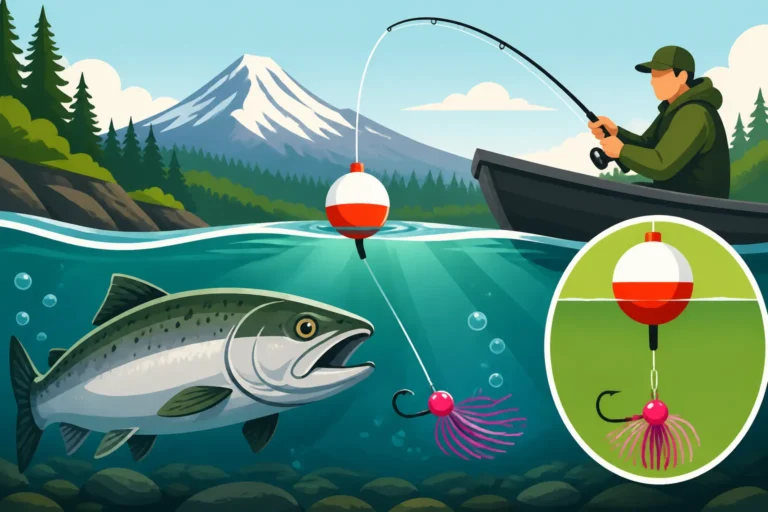
- Bobber Dogging: This is a more active form of drift fishing, typically done from a boat. You use a weighted "dogging" float (a large, often elongated float designed for heavy current) with a lead weight (4-8 oz) and a short leader (1-3 feet) to your bait (often a Brad's Super Bait, a large Corky and yarn, or cured eggs). The float is cast out and allowed to "dog" or slowly tumble along the bottom in the current, keeping your bait in the strike zone. The float acts as a strike indicator, and when it goes down, you've got a bite! This method is highly effective in sections with moderate current and can be particularly good when fish are spread out in larger channels.
Both techniques demand a keen sense of touch and an understanding of how your gear behaves in the current. Practice makes perfect in differentiating a fish bite from a simple bump on the bottom.
Bank Angling: Plunking and Casting from Shore
While boat fishing dominates the Columbia, bank anglers can still find great success, especially for Fall Chinook, thanks to powerful techniques like plunking.
- Plunking: This is a stationary method popular in areas with strong current. Anglers cast a heavy pyramid or cannonball weight (often 6-12 ounces or more) with a spreader bar or a three-way swivel setup. A short leader with a large lure (like a Kwikfish, Flatfish, or a spinner like a Steelie Stinger) or a bait offering (cured eggs or sand shrimp) is attached to the other end of the spreader bar or swivel, allowing it to "wiggle" and "plunk" in the current just off the bottom. The idea is that the salmon, as they migrate upstream, will encounter the lure or bait sitting in their travel lane and strike out of curiosity or aggression. Productive plunking spots often include current seams, the mouths of tributaries, or along riprap banks. Finding areas with good public access, like those found along the Columbia River Fishing Guide, can be key.
- Casting Spinners and Spoons: In some slower-moving sections, or areas with deeper holes accessible from shore, casting and retrieving large spinners or spoons can also be effective. You want to cast upstream and across the current, letting your lure swing down and across the suspected holding water. Vary your retrieve speed and add pauses or twitches to entice a strike. This method requires more active participation than plunking but can be very rewarding.
Regardless of the bank technique, patience is a virtue. Find a good spot, set up comfortably, and be prepared for the distinctive "thump" of a Chinook strike. Always remember to check local access rules and make sure you're not trespassing on private property.
Navigating the Columbia's Hotspots and Challenges
The Columbia River is a massive and powerful waterway, presenting both incredible opportunities and significant challenges. Knowing where to go and how to navigate safely and effectively can make all the difference in your Fall Chinook pursuit.
Key Zones and Access Points from Astoria to the Gorge
The sheer length of the Columbia offers diverse fishing grounds for Fall Chinook. Each section has its own character, prime times, and popular access points.
- Buoy 10 (Astoria to Tongue Point): This is the legendary opening bell of the Fall Chinook season, where the river meets the ocean. Concentrations of fish can be astronomical. Popular boat launches include Hammond, Warrenton, and Astoria East Mooring Basin. Bank access is limited here due to steep riprap and private property, but some opportunities exist at Fort Clatsop or near the Astoria Bridge. This area is intensely fished, so be prepared for crowds and exercise extreme caution when boating, as tides and boat traffic create significant hazards.
- Lower River (Tongue Point to Longview/Kalama): As fish move upstream from Buoy 10, this section becomes prime. Areas around Cathlamet, Longview, and Kalama offer excellent boat and bank opportunities. Popular boat ramps include Skamokawa, Cathlamet, Willow Grove (Longview), and Kalama. For bank anglers, the Kalama River mouth, Woodland (Horseshoe Lake), and various parks along the Washington side provide good access.
- Mid-River (Longview to Portland/Vancouver): This stretch includes major tributaries like the Cowlitz and Lewis Rivers (Washington side) and the Willamette River (Oregon side), which are significant destinations for many Chinook. Boat launches like Woodland, Ridgefield, Frenchman's Bar (Vancouver), and various Portland-area ramps (e.g., Fred's Marina, Coon Street) are busy. Bank anglers often find success at places like Frenchman's Bar, Marine Park in Vancouver, and along the Portland waterfront when regulations allow.
- Upper River (Portland to Bonneville Dam): While fewer in number compared to the lower river, Fall Chinook still push upstream into the Gorge. Fishery here can be more spread out. Boat launches at Camas, Washougal, and Hood River offer access. Bank fishing can be found at specific points in the Gorge, but often requires more scouting.
Always check current boat ramp conditions and parking availability, especially during peak season. You can often find current information on marine forecast sites or local fishing forums.
Safety First on a Major River System
The Columbia River is no place for complacency. Its vastness, strong currents, and unpredictable weather demand respect and proper preparation.
- Boating Safety: If you’re in a boat, make sure it’s in top mechanical condition. Always carry all required safety gear: life jackets for everyone on board (and worn by children 12 and under), throw cushions, flares, a horn, and navigation lights. File a float plan with someone on shore. Be acutely aware of other boat traffic, especially in congested areas like Buoy 10, and learn the rules of the road. Cross big shipping channels with caution.
- Weather and Tides: Conditions on the Columbia can change rapidly. Wind can whip up dangerous waves in minutes, especially on open sections. Always check the marine forecast before you go and monitor it throughout the day. Tides, particularly in the lower river, create powerful currents that can be challenging to navigate, anchor in, or even retrieve your gear from. Understanding the critical role of tides and river flow is not just about fishing success but also safety.
- Hypothermia and Cold Water: The water in the Columbia is cold, even in late summer. A fall overboard can quickly turn serious due to hypothermia. Dress in layers, wear waterproof outerwear, and consider personal flotation devices (PFDs) that are comfortable enough to wear all day.
Never underestimate the power of the Columbia. A successful fishing trip is, first and foremost, a safe one.
Reading the Water for Success
Learning to "read the water" is an art that comes with experience, but some fundamental principles can greatly increase your chances of finding Fall Chinook. These fish, especially once they've been in freshwater for a while, look for places to rest and conserve energy as they move upstream.
- Current Seams: Look for areas where fast water meets slower water. These "seams" create natural resting areas and ambush points for salmon. You might see a visible line on the surface where the water changes texture.
- Depth Changes and Structure: Chinook often hold in deeper channels, depressions, or behind underwater structure like rock piles, humps, or submerged timber. Your boat's sonar or depth finder is an invaluable tool for identifying these features. Don't be afraid to fish deeper than you think; these fish are often on the bottom or suspended just above it.
- Eddies and Backflows: Large eddies (swirling areas of water) provide significant refuge from the main current. Fishing the edges of these eddies, particularly where the main current washes bait into the calmer water, can be very productive.
- Tributary Mouths: The mouths of rivers like the Cowlitz, Lewis, and Willamette are natural congregation points. Chinook headed for these tributaries will stage nearby, and even those continuing up the main stem may pause and feed or rest in these areas.
Understanding these characteristics helps you focus your efforts where the fish are most likely to be, rather than blindly trolling or casting in unproductive water. This is where local knowledge from seasoned anglers can be extremely valuable.
Timing Your Trip for Optimal Success
Catching Fall Chinook on the Columbia isn't just about the right gear and techniques; it's also heavily dependent on timing. The movement of these fish is influenced by a complex interplay of natural cycles and environmental factors.
Understanding Peak Run Timings and Environmental Factors
While the Fall Chinook run broadly spans from mid-August to October, there are definite peak periods and variations that can make or break a trip.
- Run Timing: The "bell curve" of the run often peaks in late August through mid-September in the lower river (Buoy 10 area). As September progresses, the hot spots shift upstream to areas like the Longview/Kalama corridor. By early to mid-October, the primary fishery moves into the Portland area and up towards Bonneville Dam. This progression isn't a hard rule, however.
- Water Temperature: Chinook prefer cooler water. If ocean temperatures are unusually warm, fish might stage longer offshore or enter the river in waves. Once in the river, sudden spikes in water temperature (e.g., during a heatwave) can make fish lethargic. Conversely, a drop in water temperature (from fall rains or cooler nights) can invigorate them and trigger more aggressive behavior.
- River Flow/Level: High, turbid flows (often from heavy rains in the tributaries) can make fishing challenging, dispersing fish and reducing visibility. Conversely, stable or dropping flows can concentrate fish and make them more predictable. Extremely low flows can make fish hesitant to move upstream quickly. Checking the Columbia River's flow rates and turbidity before you go is a smart move.
The best strategy is to consult official ODFW reports and reliable local fishing forums or tackle shops. They often have the most up-to-date information on where the fish are concentrated and what they're biting on. Our Oregon Fishing Season Dates and Limits guide can give you a broad overview, but always double-check current conditions.
The Critical Role of Tides and River Flow
Tides on the lower Columbia River (roughly from Astoria up to around St. Helens) play a massive role in Fall Chinook behavior and angler success. Further upstream, river flow becomes the dominant factor.
- Tides (Lower River):
- Incoming Tide: As the tide pushes in from the ocean, it brings fresh, often cooler, saltwater into the estuary. This can energize salmon and push them upstream. Many anglers consider the last two hours of an incoming tide and the first hour of the outgoing tide to be prime fishing windows, particularly in the Buoy 10 area.
- Outgoing Tide: A strong outgoing tide can create significant current, often sweeping bait and fish out towards the ocean. While challenging, sometimes the beginning of the outgoing tide can be productive as fish funnel through channels.
- Tidal Swings: The biggest tides (new and full moons) create the strongest currents, which can be tough to fish in but also concentrate fish. Neap tides (quarter moons) have weaker currents and can offer more consistent fishing throughout the tidal cycle.
- River Flow (Upper River): From Portland upstream, the influence of ocean tides diminishes, and river flow (measured in cubic feet per second, or CFS) becomes the primary current driver. Stable or slowly dropping river flows are generally preferred. A sudden spike in flow due to heavy rains can scatter fish and introduce too much debris, making fishing difficult. Conversely, very low flows can make fish spooky or less inclined to move.
Understanding the daily tidal charts for Astoria or your specific location, and monitoring the river's CFS levels for areas upstream, is a fundamental part of planning a successful Fall Chinook trip.
Weather Conditions and Their Impact
Don't underestimate the impact of weather on Fall Chinook fishing. While salmon are hardy, certain conditions can make them more or less inclined to bite.
- Wind: Wind is arguably the biggest weather factor on the Columbia. Strong winds can make boating dangerous, create massive chop, and make it nearly impossible to maintain proper boat control for trolling or even effective casting from shore. A moderate breeze, however, can sometimes be beneficial, creating a "chop" on the water that breaks up the surface and makes fish less wary.
- Sunlight vs. Overcast: Many anglers swear by overcast days for salmon fishing. Low light conditions can make fish feel more secure and less hesitant to strike. Bright, sunny days can often push fish deeper or make them more lethargic. However, even on bright days, fishing early mornings or late evenings can be productive as light levels are lower.
- Rain: Light to moderate rain can often turn on the bite, especially if it brings down water temperatures or adds fresh flow to the river. Heavy, sustained rain, however, can blow out rivers, causing turbidity and making fishing extremely difficult. The key is moderation.
- Barometric Pressure: While often debated, some anglers believe stable or slowly falling barometric pressure (often associated with an approaching low-pressure system) can trigger a bite. Rapidly rising pressure (after a storm) might make fish less active.
Ultimately, the best advice is to fish when you can, but always be prepared for the conditions. Have appropriate rain gear, sun protection, and be willing to adapt your techniques based on what Mother Nature throws at you.
Responsible Angling and Post-Catch Care
As a seasoned angler, you know that fishing isn't just about catching fish; it's about respecting the resource, adhering to regulations, and ensuring the sustainability of the sport for future generations. This is especially true when targeting a prized species like Fall Chinook on a shared resource like the Columbia River.
Regulations, Licenses, and Mandatory Tags
Navigating the rules and regulations for salmon fishing on the Columbia can feel like a labyrinth, but it's absolutely non-negotiable.
- Licenses: You will need an Oregon Fishing License Guide to fish the Oregon side of the Columbia, or a Washington fishing license for the Washington side. If you plan to fish from a boat and cross the state line, you'll need to understand Oregon and Washington License Reciprocity on the Columbia, which allows anglers with a valid license from either state to fish certain shared waters. This usually means if you launch in Oregon and fish the mainstem, an Oregon license is fine, but if you venture into Washington tributaries, you'll need that state's license.
- Combined Angling Tag: For salmon and steelhead, you will almost certainly need an Oregon Combined Angling Tag in addition to your basic angling license. This is a mandatory endorsement that covers your ability to retain these species.
- Catch Record Cards/Punch Cards: All salmon and steelhead kept on the Columbia River (and elsewhere in Oregon) must be immediately recorded on your Oregon Catch Record Card Requirements. This is a crucial data collection tool for fisheries managers. Make sure you know How to fill out an Oregon catch record card correctly to avoid violations. Specific harvest codes for fall Chinook, their fin-clip status, and the river section must be accurately noted.
- Daily and Season Limits: Daily bag limits and seasonal limits for Fall Chinook vary depending on the specific zone (e.g., Buoy 10 vs. above Bonneville Dam) and whether the fish is fin-clipped or wild. Wild Chinook are often catch-and-release only. These rules can change mid-season based on run strength, so always check the latest ODFW sport fishing regulations, often found online or at license vendors. Knowing the Fall Chinook daily bag limit on the Columbia River is critical.
Ignorance of the law is never an excuse. Always carry your valid license and tag, know the current regulations, and immediately record your catch.
Ethical Handling and Releasing Fish
Not every fish you hook will be a keeper, and even the ones you plan to keep deserve respectful handling. Proper fish handling minimizes stress on the fish, increasing its chances of survival if released, and preserves the quality of your catch.
- Minimize Fight Time: Use appropriate gear to land fish quickly. A prolonged fight can exhaust a salmon, making it more susceptible to predation or post-release mortality.
- Wet Hands/Gloves: If you need to handle a fish for a photo or release, wet your hands thoroughly before touching it. Dry hands can remove the protective slime layer, making the fish vulnerable to disease. Specialized rubberized gloves can also help protect both you and the fish.
- Keep Fish in Water: If you're releasing a fish, try to keep it in the water as much as possible. Even a few seconds out of the water can cause significant stress. Use a net to secure it while removing the hook.
- Hook Removal: Use needle-nose pliers or a de-hooking tool to quickly and carefully remove the hook. If the fish is deeply hooked and removal would cause excessive damage, cut the line as close to the hook as possible. Barbless hooks can greatly facilitate quick and clean releases.
- Revive the Fish: For released fish, support them gently in the current, facing upstream, until they regain their strength and can swim away on their own. Don't just toss them back; watch them swim off.
Practicing ethical angling ensures that the incredible Fall Chinook fishery remains healthy for generations to come.
Processing Your Catch for the Table
Congratulations! You've successfully landed a Columbia River Fall Chinook. Now, to truly appreciate your harvest, proper post-catch care and processing are key to ensuring the best quality for the table.
- Bleeding the Fish: This is perhaps the most important step for preserving meat quality. As soon as you land a salmon, bleed it by cutting the gill arches. This drains the blood from the flesh, resulting in cleaner, better-tasting meat. Place the fish in a cooler with ice while it bleeds out.
- Icing Down: Get your fish on ice immediately after bleeding. A cooler full of ice slurry (ice and a little water) is ideal. Rapid cooling stops bacterial growth and enzymatic degradation, keeping the flesh firm and fresh. Do not let your fish sit in warm water or on a hot boat deck.
- Cleaning and Filleting: Once back at home or camp, it's time to clean and fillet your catch. A sharp, flexible fillet knife is essential. Remove the guts, then expertly separate the fillets from the bone. Take your time to remove any remaining pin bones and the dark "blood line" along the lateral line for a milder flavor. Many anglers prefer to remove the skin as well, though it can be left on for some cooking methods.
- Storage: If you're not eating the fish immediately, vacuum sealing and freezing are the best options for long-term storage. Properly vacuum-sealed salmon can last 6-12 months in a freezer without significant quality degradation. Label packages with the date to keep track.
There's immense satisfaction in providing fresh, wild salmon for your family and friends. Taking these extra steps ensures that your hard-earned catch tastes as good as the memory of catching it.
Disclaimer
Please be aware that fishing regulations, seasons, and limits are subject to change at any time by the Oregon Department of Fish and Wildlife (ODFW) and the Washington Department of Fish and Wildlife (WDFW). While we strive to provide accurate information, it is always your responsibility to consult the most current official regulations before heading out on the water. This guide is for informational purposes only and does not constitute legal advice.