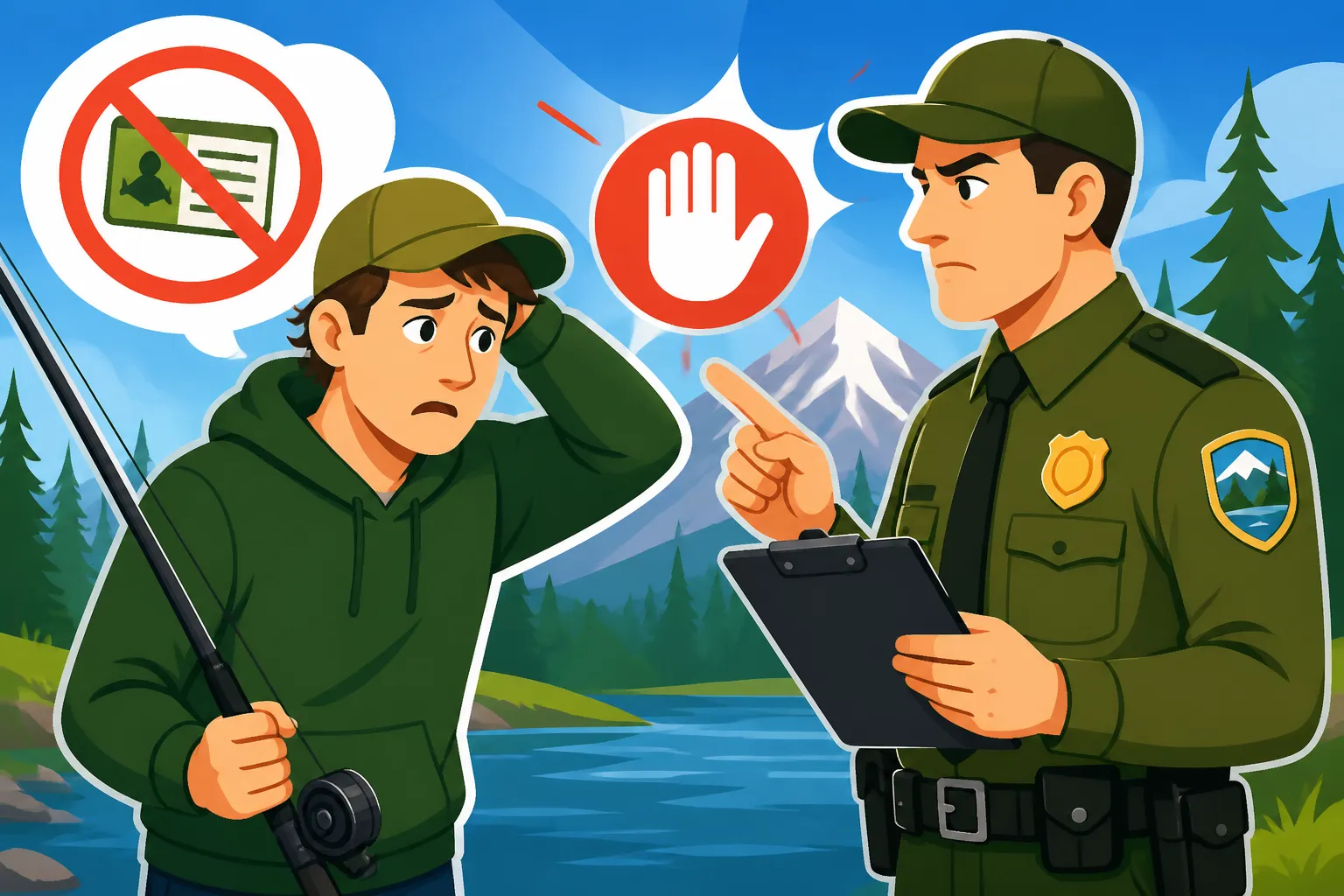
What happens if you get caught fishing without a license in Oregon
There’s nothing quite like the feeling of hitting the water in Oregon, whether you’re casting a line for spring Chinook on the Willamette or chasing trout in a high mountain lake. But that amazing feeling can turn to dread in an instant if you’re approached by an Oregon State Police (OSP) Fish and Wildlife trooper and realize you don't have your fishing license. It’s a common, gut-wrenching scenario that many anglers, even seasoned ones, have worried about. This guide is here to walk you through exactly what happens if you get caught fishing without a license in Oregon, outlining the immediate and long-term consequences, and how to avoid this unwelcome experience altogether.
The Basics: Why an Oregon Fishing License is Non-Negotiable
Let's be real, life gets busy. Sometimes, in the excitement of a planned fishing trip, or simply forgetting the calendar year has rolled over, remembering to renew or purchase that little piece of paper can slip your mind. Maybe you thought you were exempt for some reason, or perhaps you genuinely didn't realize the rules applied to your specific situation. Whatever the reason, the Oregon Department of Fish and Wildlife (ODFW) and the Oregon State Police are pretty clear: if you’re 12 years of age or older and engaged in angling, clamming, crabbing, or harvesting shellfish in Oregon, you need a valid license.
This isn't just about bureaucracy; it's about funding. The money collected from fishing license sales is absolutely vital for managing and conserving Oregon's diverse fish populations, maintaining access points, running hatchery programs, and, yes, funding the enforcement efforts that keep our fisheries healthy and sustainable for future generations. It’s the backbone of everything we love about fishing here. For a complete rundown on all the ins and outs, check out our comprehensive guide on the Oregon Fishing License Guide.
Common Misconceptions About Fishing Without a License
It's astonishing how many well-meaning anglers get caught out due to simple misunderstandings. Let’s clear up some of the most common ones that lead to folks mistakenly thinking they don’t need a license:
First, there's the pervasive myth of "I'm only doing catch-and-release." This is a big one. Many believe that if they aren't keeping any fish, they don't need a license. This is absolutely incorrect. The act of "angling" itself, regardless of whether you intend to harvest or release, requires a license. Whether you're carefully releasing every trout back into the Deschutes or practicing your fly casting, if you have a hook in the water, you need that license. If you're curious about this specifically, you might find our article on Is an Oregon fishing license required for catch-and-release only? enlightening.
Another common misconception is about fishing on private property. Imagine you have a friend with a lovely pond on their land, and you think, "Great, no need for a license here!" Unfortunately, this isn't usually the case. Unless that pond is completely enclosed, has no connection to public waterways (not even intermittently), and the fish were stocked privately with no public funds, you're almost certainly going to need an Oregon fishing license. Most ponds and waterways, even those on private land, are considered to be connected to the public resource. It’s always best to check, but in most situations, assume you need one. Our guide on Do you need a license to fish on private ponds in Oregon? dives deeper into this specific nuance.
And then there's the simple "I just forgot it at home" scenario. While this is certainly understandable, and we’ve all been there with some form of ID or another, it's still considered a violation if you cannot produce proof of a valid license when asked by an OSP trooper. It's not the same as not having a license, but the immediate result is often the same – a citation.
The Role of the Oregon State Police Fish & Wildlife Division
When you're out fishing, whether on a bustling river like the Columbia or a quiet, remote lake, you might encounter an Oregon State Police (OSP) Fish and Wildlife trooper. These aren't just regular police officers; they're specialists specifically trained in wildlife and fishing laws. Their primary role is to enforce ODFW regulations, protect our natural resources, and ensure fair chase and ethical angling practices.
They are incredibly knowledgeable and, frankly, very good at their jobs. They patrol waterways, check boat ramps, visit popular fishing spots, and will often approach anglers to check licenses, bag limits, and gear. Their authority extends to all public waters and adjacent lands, and they have the right to ask you to present your fishing license and any fish you have caught. It’s important to remember they are not just looking for "bad guys" but are actively working to preserve the health of Oregon's fisheries. So, if you're ever wondering, "Can a game warden check your fishing license in Oregon?", the answer is a resounding yes, and they absolutely will. Cooperation and politeness go a long way in these interactions.
Immediate Consequences of Being Caught Without a License
Okay, so you've been approached, and the trooper asks for your license, and your heart sinks because you don't have it. What happens next? The immediate consequences can be quite a shock, especially if you're a first-time offender who truly just made a mistake.
Citations and Fines: What to Expect
In Oregon, fishing without a license is typically categorized as a Class A violation under OAR 635-006-0005. While technically a misdemeanor, for a first offense of simply not possessing a license, it usually results in a civil penalty rather than criminal charges, assuming there are no other aggravating factors. However, "civil penalty" doesn't mean it's cheap or easy.
The base fine for fishing without a license in Oregon is generally in the range of $160 to $170. This is not a trivial sum for a simple oversight! This amount can vary slightly depending on the specific location or any additional local ordinances, but that's a good estimate for a standard first-time offense. The trooper will issue you a citation, much like a traffic ticket, which will list the violation and the fine amount. You'll typically have the option to pay the fine directly or appear in court to contest it. However, unless you actually have a license and simply didn't produce it on the spot (and can provide proof later), contesting it for not having one usually isn't fruitful.
If this isn't your first rodeo and you've been caught without a license before, or if you were also engaged in other illegal activities (like fishing during a closed season or using illegal gear), the penalties become much more severe. These instances can lead to actual criminal misdemeanor charges, higher fines, and mandatory court appearances. It's truly a slippery slope that's best avoided. For more detailed information on various infractions, you can read our article on Oregon Fishing Violations and Penalties, which details a wider range of potential legal issues.
| Violation Type | Typical Classification | Estimated Fine Range (First Offense) | Potential for Gear Seizure | Notes |
|---|---|---|---|---|
| Fishing Without Valid License | Class A Violation (Civil) | $160 – $170 | Yes | Can escalate with repeat offenses or other violations. |
| Failure to Produce License | Class A Violation (Civil) | $160 – $170 | Yes | If you have one but can't show it immediately. |
| Fishing in Closed Season | Class A Violation (Criminal) | Higher, up to $1,000+ | Yes | Often includes mandatory court appearance. |
| Exceeding Bag Limit | Class A Violation (Criminal) | Higher, up to $1,000+ | Yes | Fine per fish over limit, mandatory court. |
| Using Illegal Gear | Class A Violation (Criminal) | Higher, up to $1,000+ | Yes | Mandatory court, possible forfeiture of gear. |
Note: Fines are estimates and subject to change based on specific circumstances, county, and updated regulations.
Potential for Seizure of Gear and Catch
This is often the most painful part for anglers. Beyond the fine, an OSP Fish and Wildlife trooper has the discretion to seize your fishing gear and any fish you have caught. Imagine the scenario: you've spent hundreds, maybe thousands, on your favorite rod and reel, that trusty tackle box filled with lures, and even your boat. You've also just landed a beautiful, legal-sized Chinook salmon after hours of effort. Then, the trooper arrives, discovers you don't have a license, and the next thing you know, all of it—your gear, your boat, and your prized catch—could be confiscated on the spot.
This isn't just about losing your fish; it's about potentially losing valuable equipment that takes time, effort, and money to replace or reclaim. The process to get seized gear back can be lengthy, complicated, and may involve additional fees or legal proceedings, even if it's eventually returned. In many cases, especially for repeat offenses or if the gear was used in a serious violation, it might be forfeited permanently. It's a powerful deterrent and a stark reminder that the state takes its fishing regulations seriously.
Escalating Penalties and Long-Term Repercussions
While a first-time offense might seem like just a hefty fine, the consequences can quickly spiral, especially if you have a history of violations or if your initial infraction is compounded by other unlawful acts.
License Revocation and Future Buying Restrictions
If you're a repeat offender, or if you're caught fishing without a license in conjunction with other serious violations (like poaching, fishing during a closed season, or exceeding bag limits significantly), the ODFW has the power to revoke your fishing privileges. This isn't just about not being able to buy a license for a season; your license can be suspended for months, years, or, in severe cases, permanently.
A license revocation means you are prohibited from purchasing any Oregon fishing license, tag, or endorsement for the duration of your suspension. This can be incredibly frustrating for passionate anglers who rely on fishing for recreation, food, or even their livelihood. Furthermore, Oregon is part of the Interstate Wildlife Violator Compact (IWVC). This compact is an agreement among member states to recognize license suspensions and revocations issued in other member states. So, if your fishing privileges are revoked in Oregon, it's highly likely you won't be able to purchase a fishing license in Washington, Idaho, California, or any of the other participating states either. This means your mistake in Oregon could impact your ability to fish across most of the country. This can be a real wake-up call, emphasizing the importance of staying within the law.
Other Potential Legal Issues
Being caught without a license rarely happens in a vacuum. Often, it's just one piece of a larger puzzle of non-compliance. If you're also violating other regulations at the same time, the penalties for fishing without a license can compound significantly, leading to much more severe legal issues.
Consider a hypothetical scenario: you're caught fishing without a license, but you also happen to have kept an undersized Chinook salmon. Or perhaps you're fishing in a river that is currently closed to retention of a specific species, or you're using bait in a "fly-fishing-only" section of the Metolius River. Each of these additional violations carries its own set of fines and potential legal consequences. Instead of a single civil penalty, you could be facing multiple misdemeanor charges, substantially higher fines, mandatory court appearances, and potentially even community service or jail time, especially if it's a serious poaching offense. The maximum fine for a Class A misdemeanor in Oregon can be up to $6,250 and/or one year in jail.
It’s truly a situation where ignorance is not bliss, and it's always worth taking the time to understand the rules. Our articles on Oregon Fishing Regulations Explained, Oregon Fishing Season Dates and Limits, and Oregon Daily Bag Limits Explained are invaluable resources for staying on the right side of the law. You can't just know about the license; you have to know what you can fish for, where, when, and how much you can keep.
How to Ensure You're Always Legal on the Water
The good news is that avoiding these painful consequences is incredibly simple. A little bit of proactive planning can save you a lot of headaches, fines, and potential loss of your beloved gear.
Checking Your License Status and Expiration
The number one way to avoid trouble is to be absolutely certain your license is current and valid before you even leave the house. Oregon fishing licenses generally expire on December 31st of the year they are purchased, regardless of when you bought them during the year. So, if you bought your annual license in July, it still expires at the end of December. This is a crucial detail many people forget! If you want to dive deeper into this, our post on the Oregon Fishing License Expiration Date provides a thorough explanation.
The easiest way to check your current license status is through the ODFW's online licensing system. You can log into your account at any time to see what licenses you hold and when they expire. Better yet, set a reminder on your phone or mark your calendar for November or early December to check and renew your license for the upcoming year. Many anglers, including myself, have made it a tradition to renew around the holidays as a kind of "gift to ourselves" for the next year's adventures. You can also learn more about the process in our guide on How to Renew an Oregon Fishing License Online.
Convenient Ways to Purchase and Carry Your License
Oregon has made it incredibly easy to purchase and carry your fishing license, eliminating almost any excuse for not having one.
The most convenient option for many is to purchase your license online directly through the ODFW website. It’s a straightforward process that takes just a few minutes. Once purchased, you have two options for proof: you can print a physical copy of your license right at home, or you can save a digital copy to your phone. Many anglers now rely on their smartphones as proof, which is perfectly acceptable. For more on this, check out Can I use my phone as proof of an Oregon fishing license?. This is particularly handy if you’re suddenly deciding to fish on a whim and realize your license has expired.
If you prefer a more traditional route, or you need to ask a question, you can visit an authorized ODFW license agent. These include many sporting goods stores, outdoor retailers, and even some general stores across the state. Places like Bi-Mart and various tackle shops often act as agents, making it easy to pick one up while grabbing bait or other supplies. You can find a list of authorized vendors on the ODFW website, or simply ask at your local fishing shop. Our article on Where to Buy an Oregon Fishing License offers a comprehensive list of options.
Here’s a quick comparison of the common ways to acquire your Oregon fishing license:
| Feature | Online (ODFW Website/Mobile App) | In-Person (Retailer/ODFW Office) |
|---|---|---|
| Convenience | High (24/7 access from anywhere) | Moderate (limited by store hours) |
| Instant Access | Yes (print at home or digital) | Yes (physical printout provided) |
| Payment Options | Credit/Debit Card | Cash, Credit/Debit Card |
| Assistance | Limited (FAQ, online support) | Staff available for questions |
| Required ID | ODFW ID or personal information | Photo ID, personal information |
Remember to always carry either a physical printout or a digital copy on your phone when you're fishing. Having it readily accessible means a quick, positive interaction with an OSP trooper, allowing you to get back to enjoying your time on the beautiful waters of Oregon. And while you're at it, maybe browse some great fishing gear on Amazon to complete your setup – just make sure your license is sorted first!
Disclaimer
Please note that the information provided in this article is for general guidance and informational purposes only. Fishing regulations and penalties in Oregon are subject to change. Always refer to the official Oregon Department of Fish and Wildlife (ODFW) regulations and current year's fishing pamphlet for the most accurate and up-to-date information before heading out to fish.