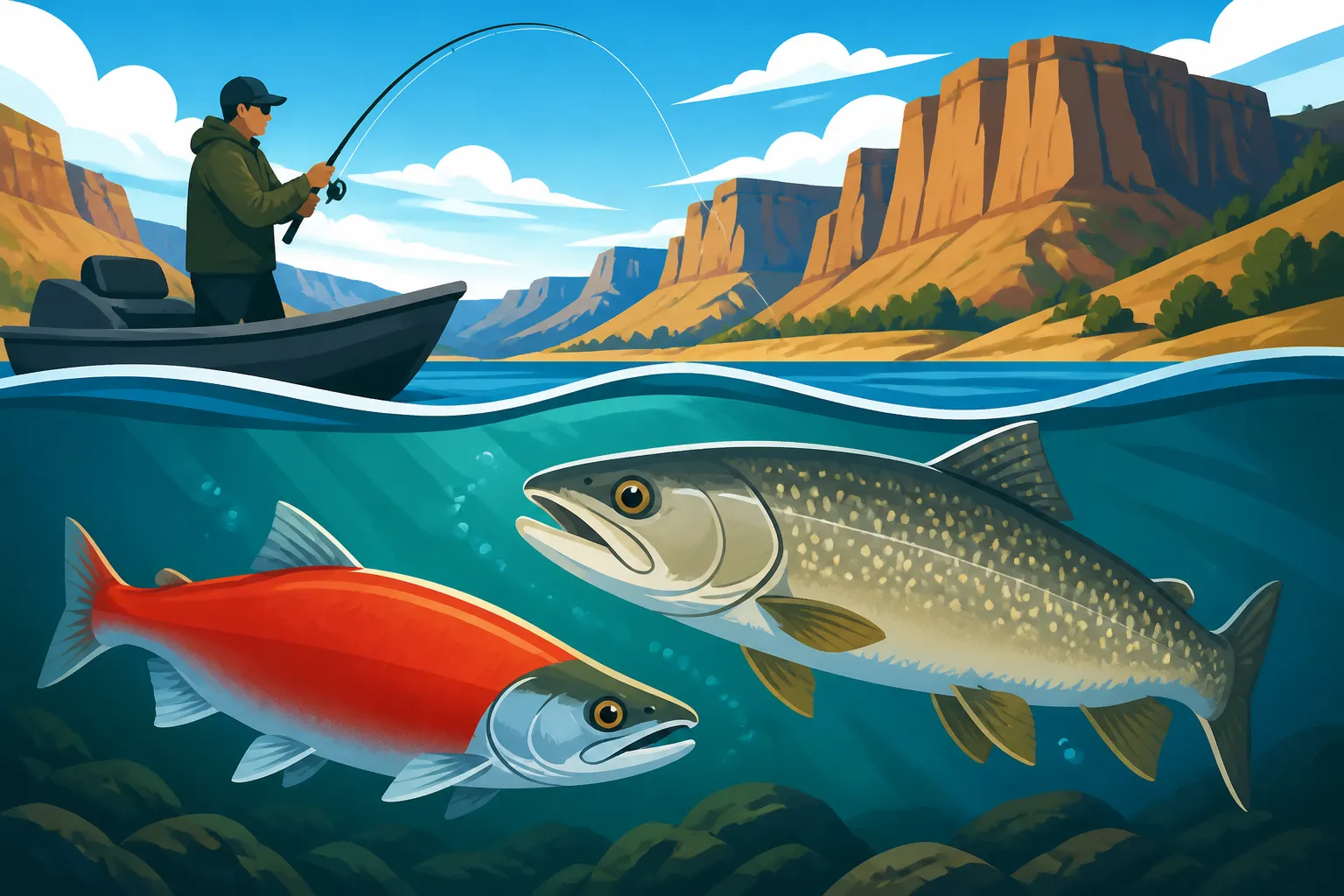
Lake Billy Chinook kokanee and bull trout fishing
Lake Billy Chinook is a breathtaking reservoir nestled in Central Oregon, a place where three powerful rivers — the Deschutes, Crooked, and Metolius — converge. It's a truly stunning backdrop for fishing, but let's be honest, it can also be intimidating. Anglers often struggle with the sheer size and depth of the lake, not to mention the specific techniques needed to consistently catch its prized kokanee salmon and elusive bull trout. This guide is here to unravel those mysteries, providing you with a comprehensive, realistic breakdown of how to approach this unique fishery, helping you find success and truly enjoy your time on these remarkable waters.
Understanding Lake Billy Chinook's Unique Fishery
Fishing Lake Billy Chinook isn't like casting a line into just any other Oregon lake. This place has a character all its own, shaped by its volcanic past and the engineering marvels that created it. Understanding its unique environment is the first step toward unlocking its angling potential, especially when you're after those feisty kokanee and the magnificent, often misunderstood, bull trout.
The Grand Canyon of Oregon's Waters
Imagine a vast, deep expanse of water carved through a dramatic canyon landscape, surrounded by towering basalt cliffs. That's Lake Billy Chinook for you. Formed by the Round Butte Dam, it acts as a confluence for three distinct rivers, each bringing its own ecosystem and nutrient profile. The Deschutes River, renowned for its redside rainbow trout, flows in from the south. The Crooked River, typically warmer and slower, enters from the east. And perhaps most importantly for our targets, the icy-cold, spring-fed Metolius River pours in from the west, creating a thermal stratification that is absolutely critical for the fish we're chasing.
This constant influx of different water temperatures and nutrient loads creates a dynamic environment. It's not a stagnant lake; it's a living, breathing system with distinct arms and currents. Understanding how these river influences affect water temperature, oxygen levels, and baitfish distribution is key to locating your target species. The deep canyon walls themselves also provide significant shade and structure, creating thermal refuges and ambush points for predatory fish throughout the day.
Why Kokanee Thrive Here
Kokanee salmon are, in essence, landlocked sockeye salmon. They don't migrate to the ocean; instead, they spend their entire lives in freshwater. Lake Billy Chinook offers them nearly perfect conditions to thrive. The cold, deep waters of the lake, especially influenced by the Metolius arm, provide the ideal temperature range these fish prefer. Kokanee are filter feeders, primarily consuming zooplankton, and the rich waters of Lake Billy Chinook support a robust population of these microscopic organisms. This abundant food source allows them to grow to impressive sizes, making them a highly sought-after sport fish.
The thrill of catching kokanee lies in their powerful fight and their schooling behavior. When you find one, you've often found a whole school, leading to exciting double and triple hook-ups. They're a truly fun fish to target, offering consistent action if you can crack the code of their preferred depth and feeding patterns. They are also, quite frankly, delicious. If you're eager to learn more about targeting these silver bullets, our comprehensive guide on How to Fish for Kokanee in Oregon dives even deeper into the specifics.
The Elusive Bull Trout Fishery
Now, let's talk about the lake's resident apex predator: the bull trout. These fish are absolute marvels of nature, but they come with a significant asterisk. Bull trout in Oregon are a federally protected species, meaning that all bull trout caught in Lake Billy Chinook, without exception, must be immediately released unharmed. There is no retention for bull trout here, and fishing for them is strictly catch-and-release. This regulation isn't just a suggestion; it's a critical conservation measure to protect these magnificent native fish. You can find more details on this species in our dedicated guide on Bull Trout in Oregon.
Despite the catch-and-release mandate, targeting bull trout offers a unique challenge and immense reward for anglers. They are incredibly powerful, aggressive predators, often growing to impressive sizes in Lake Billy Chinook. Their primary diet consists of other fish, particularly the abundant kokanee, making them a challenging and exciting sport fish to pursue. Finding them requires understanding their predatory nature and their preference for the coldest, deepest parts of the lake, often near structure or where the Metolius River's frigid waters create ideal conditions for them to ambush prey. Respecting them through proper handling and quick release is paramount, ensuring these incredible fish continue to thrive for future generations.
Essential Gear and Techniques for Kokanee
Chasing kokanee on Lake Billy Chinook requires a specialized approach. These aren't your typical trout, and they'll quickly humble an unprepared angler. Dialing in your gear and understanding their feeding habits are the keys to a successful day on the water.
The Right Rods, Reels, and Lines
For kokanee, finesse is often more important than brute strength. You want a light to ultra-light action rod, typically 6 to 7.5 feet long, with a soft tip that can detect their subtle bites and absorb the shock of their headshakes. Kokanee mouths are delicate, so a soft rod tip prevents tearing the hook out. Paired with a small spinning reel spooled with 6-10 pound monofilament or fluorocarbon line, you'll have the sensitivity and stretch needed. Braided line can be used as a mainline for better sensitivity, but a fluorocarbon leader of 4-6 pounds is highly recommended for its invisibility in clear water.
Beyond the rod and reel, downriggers or Dipsy Divers are virtually essential for consistent kokanee success on Lake Billy Chinook. These tools allow you to present your lures precisely at the specific depths where kokanee are feeding. You'll often be targeting fish in the 30-100 foot range, sometimes even deeper, depending on the time of year and water conditions. Having a good fish finder is also crucial for locating schools of kokanee and monitoring their depth.
Lures, Baits, and Scents that Tempt Kokanee
Kokanee are finicky eaters, but they have a few consistent preferences. Their small, upward-facing mouths are adapted for filtering zooplankton, so your lures should mimic small prey or attract attention without being too intimidating.
Popular Lures:
- Hoochies (squid skirts): These soft plastic skirts, often 1.5 to 2.5 inches long, are incredibly effective. They create a lifelike action in the water.
- Wedding Rings: A classic kokanee lure, these consist of a small spinner blade followed by beads and a hook. They create flash and vibration that kokanee can't resist.
- Small Spinners and Spoons: Brands like Dick Nite, Rocky Mountain Tackle, and Shasta Tackle offer excellent options. Look for spoons and spinners in sizes #0 to #2.
- Flasher/Dodger Combinations: Because kokanee often need a bit of extra enticement, running a dodger or flasher ahead of your main lure creates more vibration, flash, and erratic movement, drawing fish in from a distance. The dodger's action dictates the action of the trailing lure.
Baits and Scents:
The secret weapon for kokanee is often a piece of cured Shoepeg corn tipped onto the hook. The corn provides scent, flavor, and a visual target. Some anglers also use maggots or small pieces of shrimp. The key is to heavily scent your bait with attractants like kokanee-specific scents (Pro-Cure is a popular choice for its garlic and krill varieties) or even plain old garlic oil. Reapply scent frequently, as it disperses quickly in the water. Our Oregon Bait and Lure Guide offers more general advice on common fishing attractants you might find useful.
Color Preferences:
Color can be critical and often changes day-to-day. A general rule of thumb:
- Bright Days/Clear Water: Natural colors, clear, silver, blue, green.
- Overcast Days/Deeper Water: Brighter, UV-enhanced colors, pink, orange, chartreuse, glow-in-the-dark.
Always have a variety of colors and lure styles on hand.
Trolling Strategies for Success
Trolling is the most effective method for covering water and finding kokanee schools in Lake Billy Chinook.
- Speed: Kokanee prefer a relatively slow troll, typically between 0.8 and 1.5 mph. Experiment with subtle changes in speed, as this can often trigger a strike.
- Depth: This is perhaps the most crucial factor. Use your fish finder to locate schools of kokanee and baitfish. They often suspend at specific depths where the water temperature and food are ideal. Don't be afraid to experiment with different depths, even if your fish finder isn't marking fish. Sometimes the fish are just off to the side, attracted by your gear.
- Pattern: Don't just troll in a straight line. Incorporate turns, S-curves, and even figure-eights. This variation in boat speed and lure action can make your presentation more enticing. Pay attention to which direction or turn triggers bites.
- Multiple Rods: Running multiple rods at different depths and with different lure combinations increases your chances of finding what the fish want on a given day. Just be sure to adhere to Oregon's regulations regarding the number of rods allowed per angler. If you're looking for more general tips, our Trolling Techniques for Oregon Reservoirs offers a broader perspective.
Here's a quick guide to common kokanee lure color and depth choices, though remember, adaptability is key!
| Light Conditions | Preferred Depth (feet) | Go-To Lure Colors | Lure Types | Notes |
|---|---|---|---|---|
| Bright Sun | 30-60 | Silver, Blue, Clear, Green | Small Spoons, Hoochies, Wedding Rings | More subtle flash, natural hues |
| Overcast/Dusk | 50-80 | Pink, Orange, Chartreuse, UV | Hoochies, Small Spinners, Dodged Rigs | Brighter visibility in low light |
| Deep Water (>80) | 70-120 | Glow, White, Pearl, Hot Pink | Glow Hoochies, Scented Spoons | Maximum visibility, often require flashers |
| Early Morning | 20-50 | Pink, Orange, Green | Wedding Rings, Small Hoochies | Kokanee often feed shallower early |
Targeting Bull Trout Responsibly
While kokanee offer consistent action, bull trout provide an entirely different level of challenge and excitement. Remember, this is strictly a catch-and-release fishery, and protecting these beautiful fish is our shared responsibility.
Locating Their Prime Habitat
Bull trout are cold-water predators. In Lake Billy Chinook, this means they often congregate in areas where the coldest water is present, especially near the confluence of the Metolius River arm. They will also seek out deep pockets, ledges, and submerged structure where they can ambush baitfish. Look for them around points, submerged humps, and areas with significant depth changes.
Using your fish finder to identify these deep, structured areas is paramount. Pay attention to temperature readings if your unit provides them; finding abrupt drops in temperature can indicate bull trout holding zones. They're often found hugging the bottom or suspended just above structure, waiting for an unsuspecting kokanee to swim by. They might also be found patrolling the edges of kokanee schools, just outside the main body of fish.
Lures and Techniques for Bull Trout
Since bull trout primarily feed on other fish, your lures should imitate their natural prey. This means bigger presentations than what you'd use for kokanee.
- Large Spoons: Think 3-inch or larger spoons in silver, blue, or perch patterns. They mimic injured baitfish with their erratic wobbling action. Brands like Little Cleo or Cast Champ can be effective.
- Plugs and Stickbaits: Trolling or casting plugs that dive to different depths and mimic kokanee or other baitfish are excellent choices. Look for models from Rapala, Kwikfish, or FlatFish. Size #5 to #9 can be productive.
- Swim Baits: Soft plastic swimbaits, rigged on a jig head, can be jigged vertically or slow-trolled. Choose natural baitfish colors and sizes from 3 to 6 inches.
- Techniques: You can cast and retrieve these larger lures around known bull trout holding areas or slow-troll them. When trolling, adjust your speed to give your lure the most natural, enticing action. Sometimes a slightly faster troll than for kokanee can entice a bull trout to strike out of aggression. The strike of a bull trout is usually violent and unmistakable.
Catch and Release Best Practices
Because bull trout are a protected species, proper catch-and-release techniques are non-negotiable.
- Minimize Fight Time: Use tackle heavy enough to land the fish quickly, reducing stress.
- Keep the Fish in the Water: Whenever possible, unhook the fish while it's still in the water.
- Use Barbless Hooks: This makes unhooking much easier and less damaging. If your hooks aren't barbless, crimp the barbs down with pliers.
- Handle Gently: If you must remove the fish from the water for a quick photo, support its weight horizontally, never by the jaw or gills. Avoid touching the gills or eyes.
- Revive if Necessary: Hold the fish gently in the water, facing into a mild current, until it regains its strength and swims away on its own.
Your responsibility as an angler here is paramount. Always be aware of the Oregon Fishing Regulations Explained before you even get to the lake, and double-check specifically for any bull trout rules, as they can sometimes change. By adhering to these practices, we ensure that this incredible fishery remains vibrant for generations to come.
Planning Your Lake Billy Chinook Adventure
A successful fishing trip to Lake Billy Chinook isn't just about the right lure; it's also about planning, preparation, and knowing the local logistics and rules. Don't let the administrative side dampen your spirit; tackle it head-on so you can relax and enjoy the majestic scenery and fantastic fishing.
Best Times to Visit and Access Points
Lake Billy Chinook is a year-round fishery, but the prime time for kokanee and bull trout typically runs from late spring through early fall.
- Spring (April-May): As water temperatures begin to rise, kokanee become more active and start moving into shallower, more accessible depths before the heat of summer. Bull trout are also active as they feed on these newly accessible kokanee.
- Summer (June-August): This is often peak kokanee season, though they will be deeper to find cooler water. Early mornings and late evenings can be particularly productive. Bull trout will also be in their deepest, coolest haunts.
- Fall (September-October): As temperatures drop, kokanee begin their spawning run, becoming more aggressive and often moving into shallower water, especially closer to the river mouths. This can also be an excellent time for large bull trout looking for an easy meal.
Access Points:
The primary access point for boaters is through The Cove Palisades State Park. There are multiple boat ramps, including the main marina at Cove Palisades and the Three Rivers Marina, which is closer to the Metolius arm. These spots offer ample parking, restrooms, and often a store for last-minute supplies. Bank fishing opportunities are limited due to the steep canyon walls, but some areas within the state park might offer limited shore access.
Navigating Regulations and Permits
Before you even think about putting a line in the water, you absolutely need to make sure your paperwork is in order. Every angler 12 years and older needs an Oregon fishing license. Our detailed Oregon Fishing License Guide can walk you through all the steps to obtain one, whether you're a resident or non-resident. On top of your standard angling license, if you plan to target salmon, steelhead, sturgeon, or halibut anywhere in Oregon, including the possibility of a kokanee becoming a full-fledged sockeye (which is rare but technically possible in some systems), you’ll need an Oregon Combined Angling Tag. While kokanee are not specifically listed as needing this tag, it's generally a good idea to have it if you're fishing for other game species that might accidentally be caught or if regulations change. Make sure to consult our Oregon Combined Angling Tag Guide for exact requirements.
Additionally, always carry a copy of the current Oregon Sport Fishing Regulations handbook or have the digital version accessible on your phone. Regulations can change, especially for specific fisheries like Lake Billy Chinook, which often has unique rules for species like bull trout. Always check for emergency closures or updates on the Oregon Department of Fish and Wildlife (ODFW) website before heading out. And don't forget your Oregon Catch Record Card Requirements if you're targeting any species that require it.
Maximizing Your Experience with a Guide
Lake Billy Chinook can be a complex fishery, and sometimes, the best way to shortcut the learning curve is to hire a professional. This is especially true if you're new to the lake, new to trolling, or simply want to maximize your chances of success on a limited time frame. A local guide knows the lake's nuances, where the fish are holding, what lures they're hitting, and how to operate specialized equipment like downriggers effectively.
Services like FishingBooker can be incredibly helpful for finding reputable guides in the Central Oregon area. They allow you to browse experienced captains, read reviews, and book trips directly, often with transparent pricing and clear information about what's included. Whether you're interested in a dedicated kokanee trip or want to learn the ropes of responsible bull trout angling, a guide can provide invaluable local knowledge. It can take years to learn a fishery like Lake Billy Chinook, and a good guide distills that experience into a single day, ensuring you have a more productive and enjoyable time on the water. Consider reviewing our guide on How to Choose an Oregon Fishing Guide to ensure you pick the right professional for your needs.
Disclaimer
Please be aware that fishing regulations in Oregon are subject to change. Always consult the latest Oregon Department of Fish and Wildlife (ODFW) regulations before planning your trip and heading out on the water. This guide is for informational purposes only and does not supersede official ODFW regulations.