Smallmouth Bass in Oregon
For many anglers in Oregon, the thought of fishing immediately conjures images of majestic salmon, elusive steelhead, or vibrant trout leaping from crystal-clear rivers. But there's a different kind of fight to be found in Oregon's waters, one that offers aggressive strikes and acrobatic battles that can surprise even seasoned fishermen: the smallmouth bass. Often overlooked, these feisty fish present a unique angling opportunity, especially if you're looking for a challenging fight and a chance to explore some diverse fisheries. This guide will dive deep into everything you need to know about pursuing smallmouth bass in Oregon, from understanding their origins to mastering the best techniques to land them.
Understanding Smallmouth Bass in Oregon
Smallmouth bass, often affectionately called "smallies" by those who chase them, are powerful, predatory fish known for their tenacious fighting spirit. While they might not be native to the Pacific Northwest, they've established a significant presence in many of Oregon's rivers and reservoirs, creating some truly exceptional angling opportunities. They're a fish of structure, current, and clear water, often found lurking near rocks, fallen timber, and current breaks, ready to ambush unsuspecting prey.
A Brief History: How Smallmouth Bass Arrived
Smallmouth bass weren't originally found in Oregon's aquatic ecosystems. Their journey to the state is a classic example of fish introduction, largely by human hands, primarily for sport fishing purposes. These introductions began in the late 19th and early 20th centuries, part of a broader national trend to establish popular game fish in new waters. Early efforts saw smallmouth transported from their native ranges in the eastern and central United States, often by train, and released into various Oregon waterways.
Once introduced, these adaptable fish found suitable conditions in many of Oregon's rivers and lakes, particularly those with rocky bottoms, moderate currents, and abundant forage. They thrived in environments that mimicked their original habitats, successfully reproducing and expanding their populations. While their introduction was driven by recreational desires, their presence has undeniably altered some native ecosystems, leading to ongoing discussions about their management and impact on indigenous species.
Key Characteristics and Identification
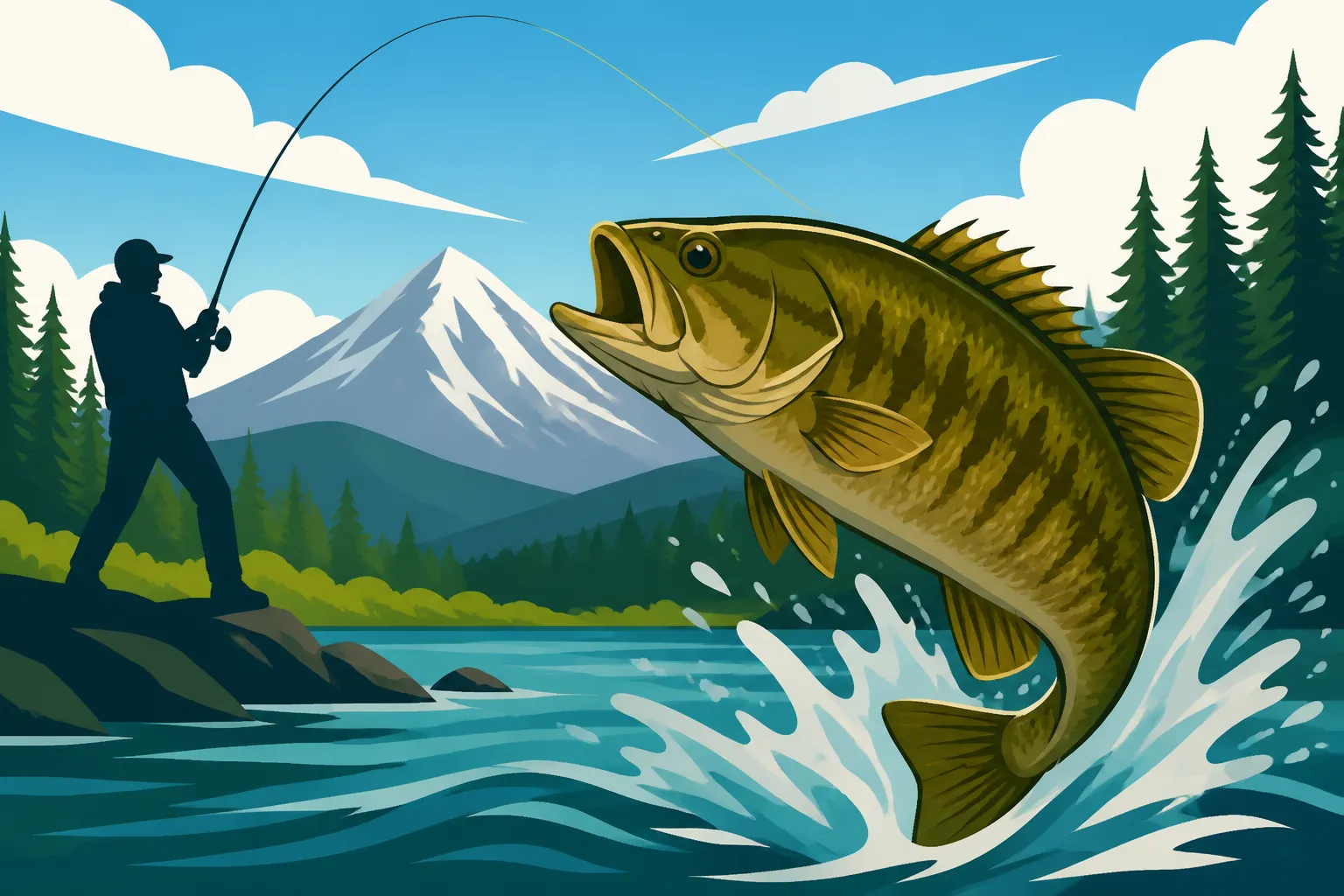
Identifying a smallmouth bass is relatively straightforward once you know what to look for, especially when distinguishing them from their close cousin, the largemouth bass. Smallmouth bass typically have a more streamlined, torpedo-shaped body, often appearing bronze, olive-green, or brown on their backs, fading to lighter shades on their sides and bellies. They often feature distinct vertical bars or blotches along their sides, which can vary in intensity depending on their habitat and mood.
The most defining characteristic, from which they get their name, is the size of their mouth. When closed, the corner of a smallmouth's mouth generally does not extend beyond the middle of its eye. In contrast, a largemouth bass's jaw extends well past the back of its eye. Smallmouth also tend to have red eyes, which can be a striking feature. They are powerful fish for their size, capable of incredible jumps and strong, deep dives, making them an exciting quarry for any angler.
Habitat Preferences in Oregon Waters
Smallmouth bass are particular about where they live, favoring certain types of habitats that provide both shelter and hunting grounds. In Oregon, this typically means rivers with good current, rocky substrates, and a mix of pools and riffles. They love to hide behind boulders, submerged logs, and undercut banks, using these structures as ambush points. The John Day River, for example, is famous for its abundant smallmouth because it offers miles of this ideal rocky, current-laden habitat.
Beyond rivers, smallmouth also do exceptionally well in clear, cool-to-moderate temperature reservoirs and lakes that have plenty of structure. Rocky points, drop-offs, submerged timber, and rip-rap shorelines are all prime smallmouth territory. They aren't as keen on dense, heavy vegetation like their largemouth cousins, preferring the harder bottom structure. Understanding these preferences is key to locating them and improving your chances of a successful day on the water.
Where to Find Smallmouth Bass in Oregon
Oregon offers a surprising number of fantastic smallmouth bass fisheries, spread across different regions of the state. While they aren't in every pond or lake, the places where they do thrive tend to be exceptional, offering anglers diverse environments and plenty of opportunities to connect with these hard-fighting fish. Knowing where to focus your efforts can make all the difference, whether you prefer river float trips or lake-based angling.
Premier River Fisheries
When it comes to smallmouth bass in Oregon, rivers are often the first places anglers think of, and for good reason. These moving water systems provide the perfect combination of current, structure, and insect life that smallmouth crave.
-
John Day River: This is arguably Oregon's crown jewel for smallmouth bass. The John Day, particularly its lower and middle sections, is renowned for its vast, healthy population of smallmouth. The river's rocky bottom, numerous current breaks, and relatively warm summer temperatures create an ideal environment. Anglers can experience phenomenal action here, often catching dozens of fish in a day. It's an excellent destination for float trips, but there are also numerous bank access points, especially around Cottonwood Canyon State Park. The fish here are aggressive and can grow to impressive sizes. John Day River Smallmouth Bass Fishing is a topic many anglers seek out.
-
Umpqua River: Located in Southern Oregon, the Umpqua River also boasts an excellent smallmouth bass fishery, particularly in its main stem and some tributaries. Like the John Day, it offers a diverse mix of rocky sections, slower pools, and good current. The smallmouth here are strong and plentiful, providing great action throughout the warmer months. Access is good, with several public launches and bank access areas.
-
Columbia River: While more famous for salmon and steelhead, the Columbia River and its tributaries, especially in areas with rocky banks and slower current, can hold significant populations of smallmouth bass. Areas around the Bonneville Pool and The Dalles Dam are known for producing some truly large smallmouth, often caught incidentally by anglers targeting other species. Fishing from shore or boat can be productive in these sections.
Reservoir Hotspots
Beyond the rivers, several of Oregon's reservoirs and larger lakes also offer fantastic smallmouth bass fishing, especially during the warmer parts of the year when the fish are actively feeding.
-
Prineville Reservoir: Nestled in Central Oregon, Prineville Reservoir is a consistent producer of quality smallmouth bass. Its rocky shorelines, numerous coves, and varying depths provide ample habitat. The fish here are known for their strong pulls and can be caught using a variety of techniques, from casting plastics to trolling crankbaits. The reservoir is popular for boat anglers, but also offers good bank access in many areas.
-
Owyhee Reservoir: Down in Eastern Oregon, Owyhee Reservoir is a massive body of water known for its rugged beauty and impressive smallmouth bass. The sheer amount of rocky habitat, submerged canyons, and sheer cliffs make it a smallmouth paradise. These fish can get quite large here, and the remote nature of the reservoir often means less fishing pressure, offering a more tranquil experience. It's primarily a boat fishery due to its size and terrain, but well worth the trip for serious bass anglers.
-
Lake Billy Chinook: This stunning reservoir in Central Oregon, formed by the confluence of the Deschutes, Metolius, and Crooked Rivers, is a diverse fishery. While many focus on kokanee and bull trout, the smallmouth bass population is robust, especially in the warmer, rockier sections. Look for them around points and submerged structure, particularly near the confluence areas.
Lesser-Known Gems
Oregon has many smaller lakes and stretches of river that might not be as famous but can still provide excellent smallmouth action, often with fewer crowds. These spots might require a bit more exploration but can be incredibly rewarding. Look for local intelligence or explore areas with similar characteristics to the well-known fisheries. Smaller impoundments and sections of rivers that are too warm for trout but have good rock structure are often prime candidates. Sometimes, the best spots are the ones you discover yourself, away from the well-worn paths. Always check Oregon Fishing Regulations Explained before heading out to any new spot, as local rules can vary significantly.
Fishing Techniques for Oregon Smallmouth
Successfully catching smallmouth bass in Oregon involves understanding their aggressive nature and presenting your lure or bait in a way that triggers their predatory instincts. They're not always subtle, often hitting with a jarring strike that leaves no doubt you've hooked into something feisty. Mastering a few key techniques and having the right gear can significantly improve your success rate.
Essential Gear and Tackle
You don't need a massive arsenal of specialized equipment, but a few key items will make your smallmouth bass fishing much more enjoyable and effective.
- Rods and Reels: A medium-light to medium power spinning rod, around 6'6" to 7' long, paired with a 2500-3000 series spinning reel is a versatile setup. This combination offers enough sensitivity for detecting subtle bites and enough backbone to handle a fighting smallmouth. For heavier cover or larger presentations, a medium-heavy baitcasting setup might be preferred, especially if you're fishing from a boat.
- Line: Opt for 6-10 lb fluorocarbon or monofilament line for main line, or 10-20 lb braided line with a fluorocarbon leader. Fluorocarbon is nearly invisible underwater and offers excellent sensitivity, while braid provides incredible strength and casting distance. You can find quality line options and spare spools on Amazon to keep your reels ready for action.
- Hooks and Weights: A variety of hooks, including straight shank worm hooks (sizes 1/0 to 3/0), offset worm hooks, and jig heads (1/8 oz to 1/2 oz), will cover most soft plastic applications. For weights, an assortment of bullet weights (1/8 oz to 1/2 oz) for Texas rigging and drop shot weights will be essential.
- Net: A small, rubberized landing net is highly recommended. It protects the fish, especially if you plan to release them, and makes landing those acrobatic smallmouth much easier, reducing the chances of losing them at the boat or bank.
Top Lures and Baits
Smallmouth bass are opportunistic feeders and will strike a wide variety of presentations. Having a diverse selection of lures is a good strategy, allowing you to adapt to different conditions and fish moods.
- Soft Plastics: These are arguably the most versatile and effective for smallmouth.
- Grubs and Tubes: Small, single-tailed grubs (2-4 inches) and tube baits (2.5-4 inches) rigged on jig heads are deadly, especially when fished along rocky bottoms or drop-offs. The subtle action of a tube mimics a crawfish, a primary food source for smallmouth.
- Creature Baits and Worms: Texas-rigged creature baits or finesse worms fished slowly along the bottom can entice strikes from wary bass. Colors like green pumpkin, watermelon, and brown are consistently productive. You can stock up on a huge variety of soft plastics from Amazon.
- Swimbaits: Smaller paddle-tail swimbaits rigged on a jig head can imitate baitfish and are incredibly effective when fish are actively chasing prey.
- Hard Baits:
- Crankbaits: Small, shallow-diving crankbaits (1.5-3 inches) in crawfish patterns or baitfish colors are excellent for covering water and triggering reaction strikes, especially around rocky points and ledges. Medium-diving crankbaits can be used in deeper water or from a boat.
- Jerkbaits: Suspending jerkbaits are fantastic for imitating injured baitfish. A "twitch, twitch, pause" retrieve can be irresistible to smallmouth, particularly in cooler water or when they're a bit lethargic.
- Topwater Lures: Poppers, walking baits, and prop baits fished at dawn or dusk, or on overcast days, can lead to explosive topwater strikes that are thrilling to witness.
- Jigs: Finesse jigs or skirted bass jigs, often tipped with a soft plastic trailer, are excellent for probing deeper holes and structure. Crawfish imitations are very popular.
Effective Fishing Strategies
The "how" of fishing for smallmouth bass is just as important as the "what." Different conditions and locations call for different approaches.
- Bank Fishing: For anglers without a boat, bank fishing can still be incredibly productive. Focus on areas with visible structure: rocky points, submerged logs, current seams, and eddy lines. Cast your lures parallel to the bank or fan-cast to cover a wider area. Pay attention to changes in depth or bottom composition. In rivers, walk the banks and target pools downstream of rapids or riffles, where smallmouth often stack up.
- Boat Fishing and Float Trips: A boat or raft opens up many more opportunities, allowing you to cover vast stretches of river or reservoir.
- Drifting: In rivers, drift fishing is a popular and effective method. Position your boat to drift downstream, casting ahead of your drift and working your lure back. This allows you to present your bait naturally with the current. This is a common method for Drift Fishing Techniques for Oregon Rivers.
- Trolling: In larger reservoirs, slow trolling with small crankbaits or swimbaits can be effective for locating schools of smallmouth, especially during the summer.
- Casting to Structure: Whether from a boat or bank, always cast to visible or suspected structure. Smallmouth are ambush predators and will hold tight to cover. Make multiple casts to a single piece of structure from different angles before moving on.
- Reading the Water: Learn to identify potential smallmouth holding areas. Look for current breaks, where slower water meets faster current, creating an ideal ambush point. Seams, eddies, submerged boulders, log jams, and drop-offs are all prime locations. Smallmouth also prefer clear water, so if the river is murky, look for clearer sections or move to a different location.
| Lure Type | Best Conditions / Retrieve | Target Depth | Imitates | Notes |
|---|---|---|---|---|
| Grubs/Tubes | Bounced along bottom, slow retrieve, jigging | Bottom to Mid | Crawfish, Baitfish | Highly versatile, excellent for rocky bottoms. |
| Crankbaits | Steady retrieve, deflect off structure, varying speeds | Shallow to Mid | Baitfish, Crawfish | Good for covering water, triggers reaction strikes. |
| Jerkbaits | Twitch, twitch, pause retrieve | Mid-water | Injured Baitfish | Effective in cooler water, when fish are less active. |
| Topwater Lures | Popping, walking, or chugging retrieve across surface | Surface | Injured Prey, Insects | Thrilling bites, best at low light or overcast conditions. |
| Finesse Worms | Slow drag, shaky head, wacky rig | Bottom to Mid | Worms, Leeches | Great for finicky fish, clear water, and pressured areas. |
| Spinnerbaits | Steady retrieve, slow roll near bottom | Shallow to Mid | Baitfish | Good in stained water, windy conditions, or for aggressive fish. |
Optimal Seasons and Conditions for Smallmouth Fishing
Understanding the seasonal patterns and preferred conditions of smallmouth bass is crucial for consistent success. These fish are ectothermic, meaning their body temperature, and therefore their activity levels, are directly influenced by water temperature. Knowing when and where they're likely to be active will help you plan your trips effectively.
Spring Spawning Action
Spring is a fantastic time to target smallmouth bass as they emerge from their winter lethargy and begin to feed aggressively in preparation for spawning. As water temperatures climb into the 50s Fahrenheit, smallmouth will start moving into shallower, rocky areas. The pre-spawn period, when temperatures are around 50-60°F, is often characterized by intense feeding. Fish are looking to pack on weight, making them eager to strike.
During this time, look for smallmouth staging near spawning beds, which are typically shallow, gravelly, or rocky depressions. Once water temperatures hit the mid-60s, they will begin to spawn. Males will guard the nests, becoming incredibly aggressive towards anything that approaches, making them vulnerable to specific presentations. During this sensitive period, some anglers choose to minimize fishing pressure on bedding fish to allow for successful reproduction. Baits that mimic crawfish or small baitfish are particularly effective during the pre-spawn and early spawn.
Summer Feeding Frenzy
Summer is prime time for smallmouth bass fishing in Oregon. As water temperatures continue to rise (65-75°F), smallmouth become highly active and can be found throughout their habitats. In rivers, they will often school up in current seams, behind large rocks, or in deeper pools, ready to ambush prey. In reservoirs, they'll relate to deep rocky points, submerged humps, and drop-offs, moving shallower during low light conditions or when chasing baitfish.
This is when topwater action can be phenomenal, especially during the early morning and late evening hours. During the heat of the day, focus on deeper structure with crankbaits, jigs, or soft plastics. Summer is also an excellent time for Float Fishing Techniques for Steelhead which can also apply to smallmouth on many rivers, allowing you to cover a lot of water and present your lures effectively. Remember to stay hydrated and protect yourself from the sun during long summer days on the water.
Fall Transition Tactics
As autumn arrives and water temperatures begin to drop (below 65°F), smallmouth bass enter a transition period. They become highly focused on feeding, fattening up for the lean winter months ahead. This can lead to some of the most exciting fishing of the year, as fish become incredibly aggressive. They will often congregate in larger schools, following baitfish into shallower bays or concentrating on deep, rocky points where they can ambush prey.
During the fall, smallmouth can be found at varying depths. Early fall might still see them hitting topwater lures, while as temperatures dip further, they will move deeper, making crankbaits, jerkbaits, and jigs particularly effective. Pay attention to baitfish movements, as smallmouth will follow their food source. Fall fishing can be unpredictable, but a persistent angler can be rewarded with some truly trophy-sized smallmouth that are in peak condition. Always keep an eye on Oregon Fishing Season Dates and Limits as seasonal changes can sometimes impact regulations, although for smallmouth, rules are generally quite open.
Regulations and Conservation: Why No Limits?
One of the most striking differences between fishing for smallmouth bass in Oregon and many other game fish is the often relaxed or non-existent bag limits. While this might seem unusual, it's rooted in the species' non-native status and its ecological impact on Oregon's aquatic environments. Understanding these regulations is key to being a responsible angler.
Oregon's Unique Approach to Smallmouth Limits
In many parts of Oregon, particularly in the most productive smallmouth bass fisheries like the John Day River, you'll find there are often no daily bag limits or size restrictions for smallmouth bass. This "take all you want" approach is quite different from the highly regulated seasons, limits, and sizes placed on native species like salmon, steelhead, and trout. The reasoning behind this liberal regulation stems from the fact that smallmouth bass are not native to Oregon.
Their introduction, while providing excellent sport fishing, has also raised concerns about their potential impact on native fish populations. Smallmouth are effective predators, and in some systems, they can compete with or prey upon juvenile salmonids and other native species. Therefore, Oregon's fisheries managers often encourage anglers to harvest smallmouth bass to help manage their populations and potentially mitigate their impact on native fish. This creates a unique opportunity for anglers who enjoy keeping their catch for the table.
Ecological Concerns and Management
The presence of smallmouth bass in Oregon is a double-edged sword from an ecological perspective. On one hand, they provide a thriving, accessible sport fishery that attracts many anglers and generates economic activity. On the other hand, their predatory nature and competition for resources can pose challenges for native fish species, some of which are already facing conservation concerns. For example, the presence of smallmouth in rivers like the John Day, which also supports wild steelhead, leads to careful management considerations. Do smallmouth bass hurt salmon populations? is a frequently asked question among concerned anglers and conservationists.
Fisheries managers continually monitor smallmouth populations and their interactions with native species. The liberal harvest regulations are a direct tool used to manage these populations. This doesn't mean smallmouth are considered "trash fish," but rather a non-native species that requires a different management approach compared to Oregon's indigenous aquatic fauna. Therefore, anglers contribute to this management strategy when they choose to harvest smallmouth bass.
Responsible Angling Practices
Even with liberal regulations, practicing responsible angling is always important. If you choose to harvest smallmouth bass, do so ethically and legally. Know the specific regulations for the water body you are fishing, as some areas might have different rules. For instance, while statewide, there might be no limits, a specific stretch of river or lake could have unique guidelines that you can find in the Oregon Fishing Regulations Explained booklet.
If you are practicing catch-and-release, handle the fish with care to ensure their survival. Wet your hands before touching the fish, support its body, and minimize its time out of the water. Use barbless hooks or pinch down barbs to make unhooking easier and reduce harm to the fish. Even though they are non-native, these fish deserve respect, and careful handling ensures they can continue to provide sport for future anglers. Being a responsible angler means understanding not just how to catch fish, but also how your actions impact the broader aquatic environment.
Disclaimer
This article is for general informational purposes only and does not constitute professional advice. Laws, prices and regulations vary by location and change over time. Consult a qualified professional for guidance on your specific situation.